Putna Monastery, Romania
The Jerusalem of Romanian Orthodoxy, where Stephen the Great rests beneath five centuries of unbroken prayer
Understand sacred places, explore living traditions, and learn how to engage respectfully with Pilgrim Map.
Access has not been verified. Check current local guidance before planning a visit.
Putna, Suceava, Romania
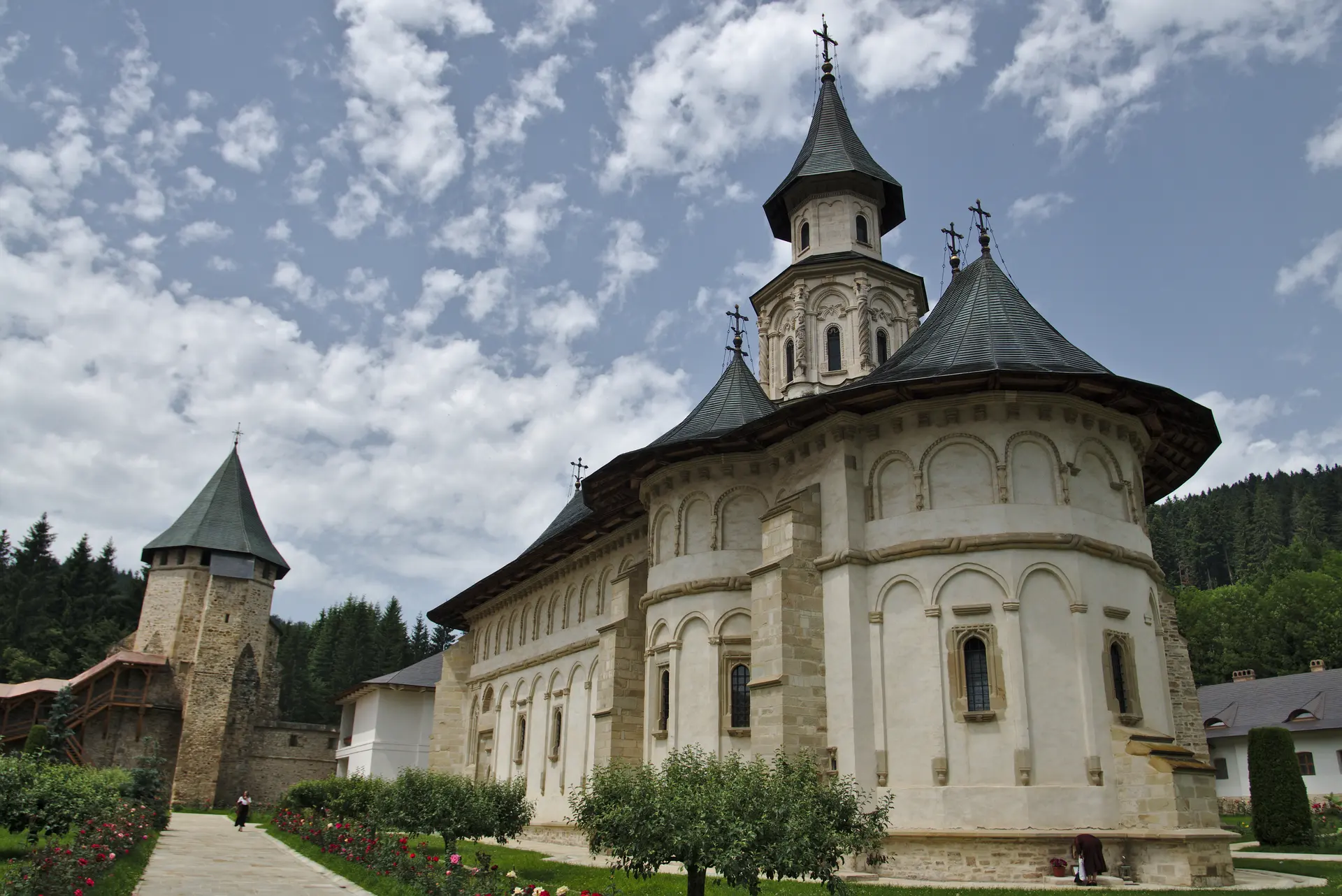
Image of Putna Monastery, Romania. Image source · CC-BY-4.0
Visit essentials
A quick read before you go
- Duration
- Allow 2 to 3 hours to visit the monastery complex and museum thoroughly.
- Access
- Located approximately 30 km northwest of Radauti in Suceava County, Bukovina region.
Overview
Tradition says Stephen the Great shot an arrow from a hilltop and built his greatest monastery's altar where it landed. The legend may be apocryphal, but Stephen did found Putna in 1466 after conquering Kilia citadel, following his practice of building a church after each military victory. By his reign's end, he had founded approximately 44 religious buildings across Moldavia.
Putna was his burial church. He chose the site with his spiritual father, Daniel the Hermit, a hesychast monk whose cave two kilometers away was carved from rock with fifteenth-century tools and bare hands. The cave remains a pilgrimage site rooted in the solitary-prayer tradition from which the monastery grew.
Approximately 60 monks still keep canonical hours from 4:30 a.m. through evening compline. Putna's museum preserves exceptional medieval liturgical cloths and epitaphs from workshops Stephen patronized; with illuminated manuscripts and icons, they form one of the richest surviving collections of fifteenth-century Orthodox material culture.
Romania's national poet Mihai Eminescu called Putna the Jerusalem of the Romanian people, where faith, national identity, and historical memory converge. Canonized in 1992, Stephen rests here; his tomb draws believers and inheritors of a cultural tradition guarded for over five hundred years.
Why this place is sacred
Five centuries of prayer leave their mark. At Putna, the mark is in the quality of attention that the space seems to hold. The monastery sits in a valley along the Putna River, enclosed by forested hills that create a natural boundary between the monastic world and the world beyond. The transition, crossing that boundary, is one visitors consistently describe as palpable.
The tomb of Stephen the Great concentrates much of the devotional energy. Here lies a ruler who built approximately 44 churches and monasteries, defended Orthodox Moldavia against Ottoman expansion, and was canonized five centuries after his death. For Romanian visitors, approaching the tomb carries the weight of national history as much as religious devotion.
For others, the sheer duration of veneration — the millions of prayers offered at this stone over five hundred years — creates its own field of significance.
Two kilometers from the monastery, Daniel the Hermit's cave introduces a different quality entirely. The cave was carved from living rock by a man who chose solitude as his path to God. Visiting it requires a walk through forest, and the shift in atmosphere is striking — from the communal worship of the monastery to the raw, stripped-down practice of a single prayer-warrior.
The cave reminds visitors that Putna's origins lie not in princely ambition but in the hesychast tradition of seeking God through stillness.
The monastery's collection of medieval embroideries and manuscripts adds another dimension. Objects made with devotional care five centuries ago carry a quality that glass cases cannot entirely contain. The textiles, in particular, represent a tradition in which every stitch was understood as an act of prayer.
Each year, approximately 600 pilgrims walk 78 kilometers from Suceava to Putna in a cross-procession that recreates a medieval pilgrimage route. This living practice, undertaken primarily by young people, connects the monastery's ancient significance to the present moment. The pilgrims arrive having given their bodies to the journey, and their arrival at Putna carries an energy that enriches the site for everyone present.
Stephen the Great founded Putna as his dynastic burial church, a center of monastic prayer for the salvation of his family and his realm. The location was chosen by his spiritual father Daniel the Hermit, giving the foundation a contemplative warrant that transcended political calculation. The monastery served simultaneously as a spiritual center, a cultural workshop producing embroideries and manuscripts, and a school of rhetoric, logic, and grammar for clerics and chroniclers.
Putna suffered fires, earthquakes, and the destructions of war across the centuries, requiring repeated reconstruction by successive Moldavian rulers. Under Austrian Habsburg occupation of Bukovina (1775-1918), the monastery served as a stronghold of Romanian national identity, preserving Orthodox faith and cultural memory under foreign rule. The Communist period brought its own pressures. Through all of this, the monastic community endured. Stephen the Great and Daniel the Hermit were canonized together in 1992, formally recognizing what devotion had long maintained.
The museum, inaugurated in 1976, now makes the medieval collections accessible to the public.
Experience and orientation
Putna announces itself through setting before architecture. The road follows the Putna River through forested hills, and the monastery appears in a valley where the landscape seems to have made space for something. The entrance carries you from the modern road into a courtyard where time operates differently — not stopped, but layered, so that the 15th century and the 21st century coexist without contradiction.
The church holds Stephen the Great's tomb, and this is where many visitors begin and end. The stone that covers the ruler who defended Moldavia for 47 years draws a specific quality of attention — part reverence, part recognition that history has a physical weight. Romanian visitors often stand here for a long time, quietly processing a connection that is simultaneously national, religious, and personal.
International visitors, unfamiliar with Stephen's history, frequently report being moved by the solemnity of the space and the obvious devotion of others.
The museum is a revelation. The medieval embroideries — liturgical cloths, epitaphs, and vestments produced under Stephen's patronage — represent a caliber of textile art that rivals anything produced in contemporary Byzantium. Seeing these works up close, recognizing the devotional labor embedded in each thread, connects the visitor to a cultural tradition that valued craft as prayer.
Attending a service transforms the visit from observation to participation. The chanting of 60 monks in a space designed for exactly this purpose — the transmission of liturgical prayer through human voices in stone chambers — produces an acoustic and spiritual experience that no recording can replicate. The canonical hours begin at 4:30 AM, and those who arrive for the early offices encounter the monastery in its most essential mode.
The walk to Daniel the Hermit's cave takes approximately 30 minutes through forest. The cave itself is small, rough-hewn, and radically simple — a counterpoint to the monastery's cultural richness. Standing inside the space where Stephen's spiritual father prayed, you understand that the monastery's origins lie not in power but in solitude.
Arrive early if possible. The monastery before the tour buses is a different place — quieter, more itself. Consider beginning with the church and tomb rather than the museum, allowing the spiritual center of the site to establish itself before the intellectual engagement of the collections.
If the liturgical schedule permits, attend Vespers at 5:00 PM. The evening light in the church, the monastic chanting, and the settling of the day create conditions that reward presence.
Allow time for the walk to Daniel the Hermit's cave. The forest path is its own preparation, and the cave offers something the monastery cannot — a direct encounter with the hermit tradition that preceded and grounded Putna's communal life.
Context and lineage
Stephen the Great began building Putna on July 10, 1466, following his conquest of the Kilia citadel. According to popular tradition, he stood on a nearby hilltop and shot an arrow — the spot where it landed marked the location of the altar. Whether or not the legend is historical, it captures the character of a ruler who understood the founding of sacred buildings as inseparable from military victory.
The site was chosen not by Stephen alone but by his spiritual father, Daniel the Hermit. A hesychast monk who had lived for years in a cave carved from rock two kilometers from the monastery, Daniel guided the selection through what Orthodox tradition understands as spiritual discernment — listening for God's guidance in choosing the location where prayer and worship would be concentrated.
Construction took three years. Metropolitan Teoctist consecrated the monastery on September 3, 1470, in a ceremony attended by Stephen and his entire family. The dedication to the Dormition of the Theotokos (the Falling Asleep of the Mother of God) placed the monastery under the protection of the Virgin Mary.
Putna quickly became one of Moldavia's most important cultural centers. Workshops produced embroideries of exceptional quality. A scriptorium copied and illuminated manuscripts. A school taught rhetoric, logic, and grammar to the clerics and chroniclers who would preserve Moldavian history. The monastery was simultaneously a house of prayer, a center of learning, and a statement of Moldavian cultural independence.
Putna's lineage extends through five and a half centuries of continuous monastic life. Successive Moldavian rulers patronized and rebuilt the monastery after fires, earthquakes, and wars. During the Austrian occupation of Bukovina, Putna became a center of Romanian cultural resistance. Under Communism, the monastic community persisted. The canonization of both Stephen and Daniel in 1992 formally recognized the sanctity that generations of pilgrims had already acknowledged.
Today's 60 monks stand in a chain of prayer that reaches back to the 15th century without interruption.
Stephen the Great
saint
Ruler of Moldavia from 1457 to 1504, he built approximately 44 churches and monasteries, often one after each of his 47 victorious battles. He founded Putna as his dynastic burial church. Canonized by the Romanian Orthodox Church in 1992, his feast day is July 2. He is venerated as a defender of Orthodox Christianity against Ottoman expansion.
Saint Daniel the Hermit
saint
A hesychast monk who lived in a cave two kilometers from Putna, Daniel served as Stephen the Great's spiritual father and guided the choice of the monastery's location. His fame was such that Stephen consulted him before battles. Canonized in 1992 alongside Stephen, his cave hermitage remains a pilgrimage site.
Mihai Eminescu
historical
Romania's national poet (1850-1889), who called Putna the Jerusalem of the Romanian people, cementing the monastery's place in Romanian national consciousness and expressing the inseparable bond between Orthodox faith and Romanian identity that the site represents.
Traditions and practice
The daily liturgical cycle at Putna is among the most rigorous in Romania. Midnight Office, Matins, and the canonical hours begin at 4:30 AM. The Divine Liturgy follows at 7:45 AM. Evening Vespers are held at 5:00 PM and Compline at 7:30 PM. This rhythm, maintained by approximately 60 monks, structures each day around the same pattern of prayer that Stephen the Great intended when he founded the monastery.
Veneration of Stephen's tomb is an ongoing practice, with pilgrims approaching with prayers and candle offerings. All-night vigils mark major feast days. The annual cross-procession from Suceava, in which approximately 600 pilgrims walk 78 kilometers with singing and prayers, recreates a medieval pilgrimage route and typically takes place around the Dormition feast in August.
The museum, inaugurated in 1976 and refurbished in 2004, displays the medieval art collection, making the embroideries, manuscripts, and icons accessible to the public for a small entrance fee (approximately 2 EUR). The walk to Daniel the Hermit's cave has become an informal pilgrimage practice, adding a contemplative dimension to the visit.
Feast-day celebrations draw significant numbers: the Dormition on August 15, the feast of Saint Stephen the Great on July 2, and the consecration anniversary on September 3 are all marked with special liturgical celebrations, processions, and pilgrimage.
The liturgical cycle is the most direct way to engage with what Putna offers. If you can attend only one service, choose Vespers at 5:00 PM, when the evening light fills the church and the monastic chanting settles into the dimming space.
Visit Stephen's tomb with the awareness that you are approaching the resting place of a canonized saint. The tradition invites a personal prayer or intention. Light a candle.
Walk to Daniel the Hermit's cave. The 30-minute forest path functions as a transition from the communal life of the monastery to the solitary tradition that preceded it. Inside the cave, the silence has a different quality from that of the church — less structured, more raw.
For those willing to commit to the full experience, participating in the cross-procession from Suceava offers something that no other mode of visiting can: the experience of arriving at Putna on foot, having given your body to the journey, as medieval pilgrims did.
Romanian Orthodox Christianity
ActivePutna is one of the most important Romanian Orthodox monasteries, known as the Jerusalem of Romanian Orthodoxy. It has served as a spiritual, cultural, and national identity center since its founding by Stephen the Great in the 15th century, representing the continuity of Orthodox faith through centuries of foreign domination and political upheaval.
Full daily liturgical cycle maintained by approximately 60 monks: Midnight Office, Matins, and canonical hours from 4:30 AM; Divine Liturgy at 7:45 AM; Vespers at 5:00 PM; Compline at 7:30 PM. Feast-day celebrations with processions and all-night vigils. Veneration of Stephen the Great's tomb. Annual cross-procession from Suceava. Icon veneration and candle lighting.
Hesychast Monastic Tradition
ActivePutna's founding was guided by Saint Daniel the Hesychast, who chose the site through contemplative discernment. The hesychast tradition of inner prayer and spiritual withdrawal has shaped the monastery's character since its inception. Daniel's cave hermitage remains a pilgrimage site that anchors the monastery in the solitary prayer tradition.
Contemplative prayer and hesychast practice within the monastic community. Pilgrimage to Daniel the Hermit's cave. Monastic retreat and spiritual discipline. The tradition of spiritual fatherhood established by Daniel's relationship with Stephen the Great continues to inform the monastery's understanding of the relationship between prayer and action.
Perspectives and open questions
Putna holds meaning simultaneously as a spiritual center, a cultural institution, and a national symbol. Scholars study its medieval art workshops as evidence of a sophisticated cultural tradition. Orthodox believers encounter a living monastery and the tomb of a canonized saint. Romanians of all backgrounds find in Putna something essential about their collective identity. These meanings reinforce rather than compete with each other.
Scholarly perspective
Historians and art historians regard Putna as one of the most important cultural and religious foundations of medieval Moldavia. The monastery's embroidery workshop produced some of the finest Byzantine-style textile art in southeastern Europe, and published scholarship on the collection treats these works as evidence of a cultural sophistication rivaling contemporary Byzantine and post-Byzantine workshops.
Scholars emphasize the monastery's dual role as both a spiritual center and a political instrument of Moldavian statehood, serving as the dynastic necropolis of the ruling family. The cultural output — manuscripts, embroideries, icons — demonstrates a society that invested extraordinary resources in the material expression of its faith. Historians note the monastery's particular significance during the Austrian period as a center of Romanian cultural resistance and national identity preservation.
Living and traditional perspectives
Within Romanian Orthodox tradition, Putna is understood as a divinely appointed site, chosen through the spiritual discernment of Saint Daniel the Hermit and consecrated by the piety and military victories of Saint Stephen the Great. Stephen's practice of building a church after each victory represents the Orthodox understanding that military success is granted by God and must be returned through sacred architecture.
The monastery embodies the inseparable bond between Romanian national identity and Orthodox Christian faith. Putna is seen as a living witness to the faithfulness of the Romanian people through centuries of adversity — Ottoman pressure, Austrian occupation, Communist suppression. The canonization of both Stephen and Daniel in 1992 reinforced what devotion had long maintained: this is holy ground, sanctified by the lives and prayers of saints.
Alternative interpretations
Some visitors and writers note the monastery's location in a valley surrounded by forested mountains as contributing to a concentrated contemplative atmosphere. The connection between the monastery and Daniel the Hermit's cave has been read as creating a sacred landscape linking cenobitic monasticism with the solitary hesychast tradition. The Bukovina region's broader network of monasteries and hermitages is sometimes discussed as a system of spiritual power points comparable to those found in other great monastic landscapes.
Open questions
The exact method by which Daniel the Hermit chose the site remains shrouded in tradition. The arrow-shooting legend of how Stephen selected the altar location has multiple variants and its historical basis is uncertain. Details about the monastery's original appearance before repeated reconstructions are incomplete, and the full extent of the medieval manuscript library and what was lost during various destructions is not fully documented.
Plan your visit
Access and arrival
Located approximately 30 km northwest of Radauti in Suceava County, Bukovina region. Accessible by car via DN2E. Free parking outside the monastery. Public transportation is limited; most visitors arrive by car or as part of organized tours from Suceava or the Painted Monasteries circuit. The nearest railway station is at Radauti. The monastery is approximately 460 km north of Bucharest. Mobile phone signal is generally available in the area. Museum entrance fee is approximately 2 EUR.
Limited accommodation is available in the village of Putna. Radauti, approximately 30 km away, offers a wider range of options. For those exploring the Bukovina Painted Monasteries circuit, Suceava and Gura Humorului serve as larger bases with more accommodation choices. Some monasteries in the region may offer simple pilgrim accommodation; inquire directly.
Respectful visit
Modest dress is required. Women should cover their shoulders and wear skirts below the knee. Sleeveless tops and shorts are not appropriate. Head coverings for women are recommended inside the church. Men should wear long trousers.
Photography is generally permitted in the courtyard and exterior areas. Photography inside the church and museum may be restricted or prohibited. Ask before photographing monks or liturgical services.
Visitors may light candles purchased at the monastery. Small donations are welcomed and support the monastic community.
Monastic living quarters and areas beyond the public courtyard are off-limits. Observe the posted liturgical schedule. Be respectful at the tomb of Stephen the Great — it is a site of active veneration. Follow instructions from members of the monastic community.
The monastery is a functioning religious community, not a museum. The monks' schedule takes precedence over visitor convenience. Respect service times, and do not enter the church during the most sacred moments of the liturgy unless you intend to participate. The museum has its own hours and a small entrance fee.
Current practical details
Address
Str. Ștefan cel Mare 1, 727455 Putna, Romania
Phone
Hours
Hours, fees, and access can change — verify on the official source before you travel. Practical details last checked Jun 2026.
Location
Map loads as you approach this section.
Pilgrim reflections
A portrait of encounter, not a score
Pilgrims describe what they felt, how present they could become, and whether the place would shape a journey. There are no stars and no ranking of traditions.
No reviewed reflections yet
The first pilgrims can help describe the character of being here.
Share a reflection
Available after an account-backed “Been there.” Every reflection is reviewed before publication.
Nearby sacred places
Explore other sacred places in the region. Proximity does not establish access or travel time; check each place’s guidance.

Sucevita Monastery, Romania
Sucevița, Suceava, Romania
13.0 km away
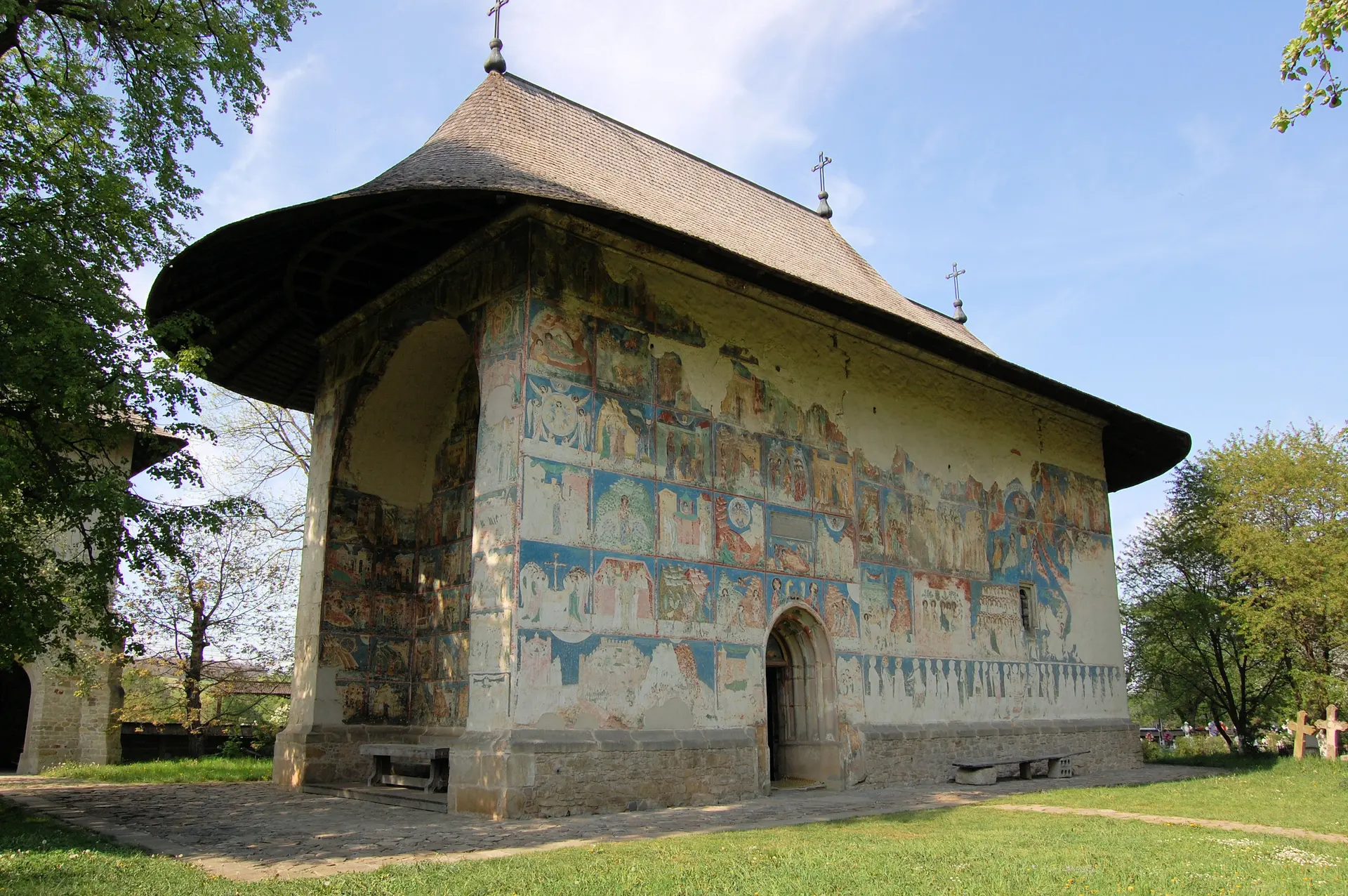
Church of the Beheading of St John the Baptist of Arbore
Arbore, Suceava County, Romania
29.2 km away
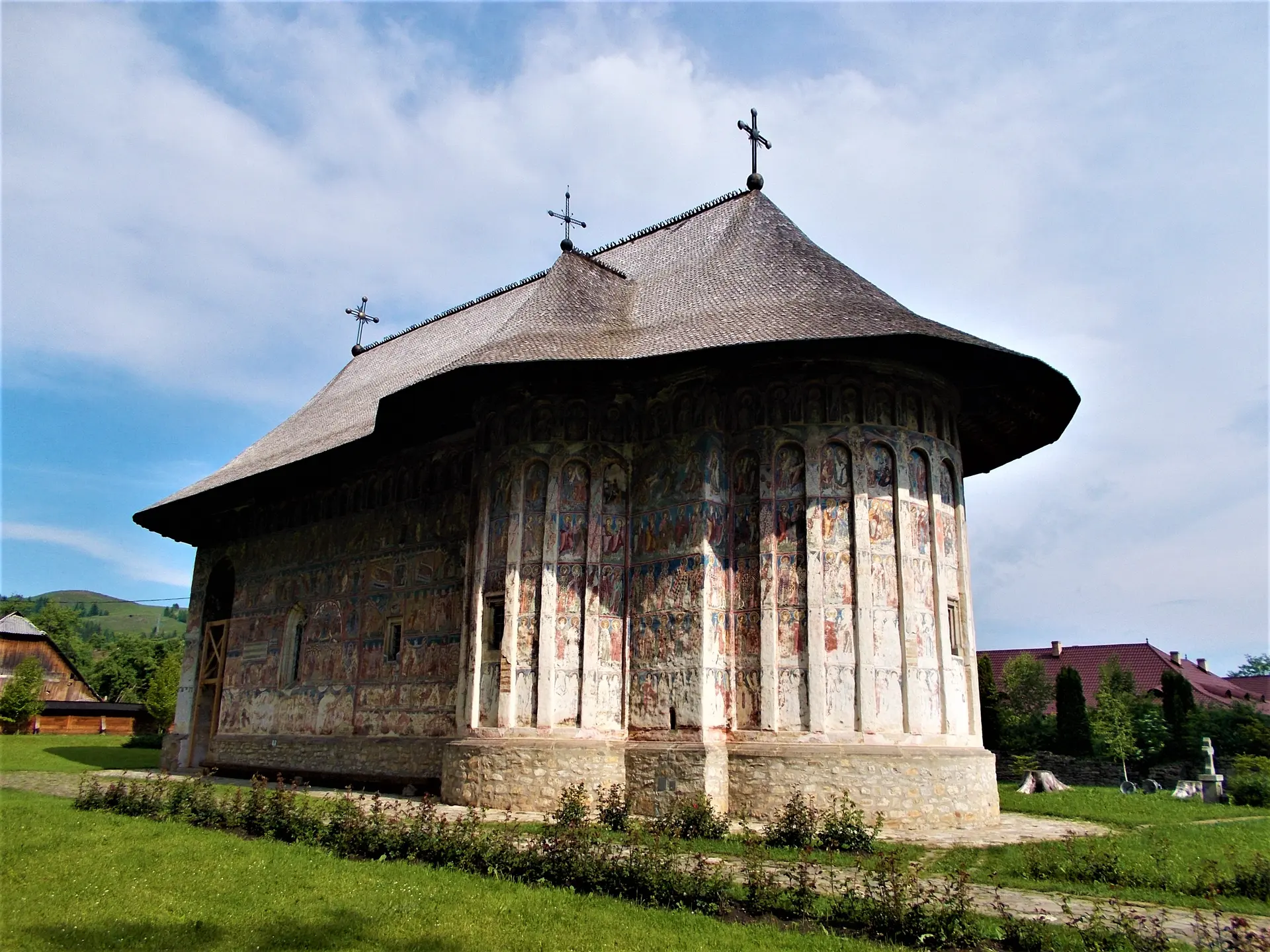
Church of the Assumption of the Virgin at Humor Monastery
Mănăstirea Humorului, Suceava County, Romania
35.9 km away

Voronet Monastery, Romania
Gura Humorului, Suceava, Romania
43.7 km away
Share a photo
Help visitors recognize Putna Monastery, Romania. Every submission is reviewed before publication.