Neamt Monastery, Romania
Romania's oldest monastery, where a Byzantine icon and six centuries of contemplative prayer converge in forested hills
Understand sacred places, explore living traditions, and learn how to engage respectfully with Pilgrim Map.
Access has not been verified. Check current local guidance before planning a visit.
Mănăstirea Neamț, Neamț, Romania

Image of Neamt Monastery, Romania. Image source · CC-BY-SA-4.0
Visit essentials
A quick read before you go
- Duration
- Allow 2 to 3 hours for a thorough visit to the monastery compound, churches, and museum.
- Access
- Located in Vanatori-Neamt village, approximately 10 to 15 km northwest of Targu Neamt in Neamt…
Overview
The forested hills of Neamt County hold a density of monastic life found in few other places in Europe. At the center of this spiritual landscape stands Neamt Monastery, where monks have prayed without interruption for more than six centuries.
Stephen the Great built the current Church of the Ascension in 1497, and it represents the maturity of the Moldavian architectural tradition — a building that achieves grandeur through proportion rather than sheer scale. Inside, the Wonderworking Icon of the Mother of God occupies a place of profound reverence.
Given to the Moldavian ruler Alexander the Good by Byzantine Emperor Manuel II Palaiologos in 1401, the icon carries a direct material connection to Constantinople and the spiritual authority of the Byzantine tradition.
But Neamt's deepest influence is invisible. In the late 18th century, Saint Paisius Velichkovsky brought a community of up to 700 monks to this monastery and established a school of translation that produced the Slavonic Philokalia — a collection of contemplative texts that, when published in Russia in 1793, catalyzed a renewal of hesychast prayer across the entire Orthodox world.
The tradition of the Jesus Prayer, of inner stillness sought through disciplined repetition, found one of its most significant modern expressions here.
The monastery today carries all of these layers simultaneously. The icon persists. The scholarly tradition persists in the library and seminary. The contemplative tradition persists in the rhythm of daily offices and the silence between them. For visitors who arrive attentive to what is beneath the surface, Neamt offers not just history but encounter with a tradition that has been refining the practice of prayer for longer than most nations have existed.
Why this place is sacred
Six centuries of monastic prayer leave a residue that resists easy description. At Neamt, the accumulation is tangible — not as a feeling that can be pointed to, but as a quality of the silence that differs from ordinary quiet. Visitors often struggle to articulate what they encounter, defaulting to words like peace or depth, while sensing that these terms fall short.
The Wonderworking Icon of the Mother of God serves as a focal point for this accumulated devotion. For over six hundred years, monks and pilgrims have prayed before it, brought their suffering and gratitude to it, understood it as a window between worlds. In 2019, the Romanian Orthodox Church formally established July 9 as the icon's feast day, recognizing a veneration that had been practiced informally for centuries.
Paisius Velichkovsky's legacy adds a contemplative dimension that distinguishes Neamt from monasteries of comparable age. The hesychast tradition he renewed is not merely historical — it is a living practice of interior prayer, of seeking stillness at the center of attention. When he arrived at Neamt in 1779 with his community, he brought a discipline of spiritual practice that had roots in the Desert Fathers of the 4th century.
The manuscripts his school produced — 276 patristic translations, including the Philokalia — were copied by hand in these very rooms. The influence radiated outward to Russia, where it shaped the staretz tradition at Optina and beyond.
The setting reinforces everything. The monastery sits in forested hills where the light filters through beech and fir, where the Nemtishor brook provides the only accompaniment to silence. Surrounding the monastery, a network of hermitages, caves, and smaller communities creates a sacred geography — a landscape in which prayer is not an interruption of ordinary life but its underlying texture.
Neamt was founded as a monastic community in the late 14th century under the patronage of Moldavian ruler Petru I Musat. Its original purpose was twofold: to serve as a center of Orthodox worship and prayer, and to contribute to the cultural and spiritual identity of the emerging Moldavian state. The gift of the Byzantine icon in 1401 elevated its status, connecting it directly to the spiritual authority of Constantinople.
The monastery's trajectory traces the major currents of Orthodox history. From its founding through the 15th century, it served as one of Moldavia's most important cultural centers, producing manuscripts and miniature paintings of exceptional quality under Gavril Uric. Stephen the Great's patronage brought architectural refinement. Paisius Velichkovsky's arrival in 1779 transformed the monastery into a center of spiritual renewal that influenced the entire Orthodox world.
Metropolitan Veniamin Costachi's printing press (established 1807) and theological seminary further cemented its role as a place where learning and prayer reinforced each other. Through Ottoman domination, Austrian occupation, and Communist persecution, the monastery endured — adapting, contracting, but never ceasing its daily cycle of prayer.
Experience and orientation
Approaching Neamt, the first encounter is with the setting. The road winds through forested hills, and the monastery appears as a fortified compound — towers, walls, and churches gathered behind defensive architecture that speaks to centuries of uncertainty. Entering through the gate, the shift from the outside world is immediate. The courtyard holds the kind of silence that is not absence of sound but presence of something else.
The Church of the Ascension dominates the compound. Built by Stephen the Great and completed in 1497, it represents the pinnacle of Moldavian sacred architecture — a building that achieves its effect through the harmony of its proportions. Inside, the Wonderworking Icon draws the eye and, for many visitors, something more. Orthodox Christians who understand the icon's six-hundred-year history approach it with visible emotion.
Others, unfamiliar with the tradition of wonder-working icons, often report being unexpectedly moved — caught off guard by a quality they did not anticipate.
The medieval art museum and the library open another dimension of the experience. Seeing manuscripts copied by hand in the 15th century, knowing that Gavril Uric — the first documented Romanian artist — worked within these walls, creates a connection to cultural achievement that is simultaneously intellectual and visceral. The 18,000-volume library, including 600 manuscripts, represents one of the most significant monastic collections in the Orthodox world.
Attending a liturgical service, with traditional Romanian Orthodox chanting resonating within Stephen's church, offers the most direct encounter with what has persisted here for over six centuries. The monastic community maintains this rhythm regardless of who is watching. The services are not performances but the core activity around which everything else at Neamt is organized.
Neamt rewards unhurried visits. Allow the courtyard silence to settle before entering the church. If you arrive during a service, stand quietly at the back and let the chanting work on you. The museum deserves attention — the manuscripts and art it contains are irreplaceable.
For those drawn to the hesychast tradition associated with Paisius Velichkovsky, visiting Neamt is a pilgrimage to a source. The Jesus Prayer, the Philokalia, the tradition of the spiritual elder — these currents that flow through contemporary Orthodox practice found one of their most significant modern channels here.
The surrounding network of monasteries and hermitages invites extended exploration. Sihastria, Secu, Agapia, Varatec, and the hermitages at Sihla and Daniil Sihastrul all lie within reasonable distance, creating the possibility of a multi-day monastic pilgrimage through a landscape unlike any other in Romania.
Context and lineage
According to tradition, hermits settled in the forested hills around the Nemtishor brook before the formal founding of the monastery, drawn by the isolation and natural beauty of the setting. The formalization came under the patronage of Moldavian ruler Petru I Musat, who initiated construction around 1350. The first written record dates to 1407, but the monastery was already well established by then.
In 1401, Byzantine Emperor Manuel II Palaiologos made a gift that would define the monastery's spiritual identity: the Wonderworking Icon of the Mother of God, given to Moldavian ruler Alexander the Good and placed at Neamt. This diplomatic gesture carried profound spiritual weight — it established a direct connection between the monastery and the spiritual authority of Constantinople at a time when the Byzantine Empire itself was in decline.
The original church was destroyed by an earthquake in 1471. Stephen the Great, who made it his practice to build a church after each military victory, constructed the current Church of the Ascension, completing it in 1497 after his triumph over the King of Poland. The building that resulted is now recognized as the finest example of mature Moldavian sacred architecture.
The lineage at Neamt flows through several distinct but interwoven streams. The monastic community has maintained continuous prayer since the 14th century. The artistic tradition, beginning with Gavril Uric's illuminated manuscripts, represented one of medieval Southeast Europe's great cultural achievements. The contemplative tradition, deepened immeasurably by Paisius Velichkovsky, connected Neamt to the Desert Fathers through the hesychast practice of the Jesus Prayer and the transmission of patristic wisdom.
The scholarly tradition, carried forward through the printing press and seminary, ensured that learning and devotion remained partners. Today's monks inherit all of these streams, maintaining them within the rhythm of daily liturgical life.
Gavril Uric
historical
The first documented Romanian artist and the most important representative of Moldavian miniature painting. Working at Neamt in the 15th century, he established a school of calligraphy and illumination that shaped Moldavian artistic tradition. His first known manuscript, dated 1429, is preserved in the Bodleian Library at Oxford.
Stephen the Great
historical
Ruler of Moldavia from 1457 to 1504, he built the Church of the Ascension at Neamt in 1497 after defeating the King of Poland. He founded approximately 44 churches and monasteries during his reign, and the church at Neamt represents the maturity of his architectural patronage.
Saint Paisius Velichkovsky
saint
A Ukrainian-born monk who, after training on Mount Athos, relocated his community of up to 700 monks to Neamt in 1779. He established a multilingual translation school that produced the Slavonic Philokalia and 276 patristic manuscripts. His revival of the hesychast prayer tradition and the elder-disciple relationship directly influenced the Russian staretz tradition, including the famous elders of Optina Monastery. He died at Neamt in 1794 and is buried there.
Metropolitan Veniamin Costachi
historical
Established a printing press at Neamt in 1807 and founded the theological seminary that still bears his name, renewing the monastery's scholarly tradition in the early 19th century.
Traditions and practice
The daily liturgical cycle at Neamt follows the Romanian Orthodox rite, with the Divine Liturgy at its center and the canonical hours structuring the day. The monastic community lives according to the cenobitic rule — prayer, work, meals, and rest shared in community. The Wonderworking Icon of the Mother of God is venerated daily, with pilgrims approaching to pray, light candles, and seek the Theotokos's intercession.
On the feast of the Wonderworking Icon, July 9 (formally established by the Romanian Orthodox Church in 2019), the icon is processed around the monastery church in a solemn ceremony presided over by bishops. The Feast of the Ascension, the monastery's patron feast falling 40 days after Easter, brings special liturgical celebrations and pilgrims from across the region.
The theological seminary, bearing the name of Veniamin Costachi, continues to form young men for monastic and clerical life. The museum is open to visitors, displaying medieval art, manuscripts, and printing equipment that document the monastery's cultural history. The library, with its 18,000 volumes and 600 manuscripts, is available for scholarly research with permission.
Visiting the network of monasteries and hermitages surrounding Neamt has become an informal pilgrimage practice in its own right, with seekers spending multiple days moving between communities that share a common spiritual heritage.
Attend a liturgical service if timing allows. The experience of hearing traditional Romanian Orthodox chanting within Stephen the Great's church connects you directly to a tradition that has been continuous for over five centuries.
When approaching the Wonderworking Icon, do so with the awareness that you are standing where Moldavian rulers, Paisius Velichkovsky, and six centuries of monks have stood before you. The tradition does not require belief from visitors, but it responds to sincerity.
For those familiar with the hesychast tradition or the Philokalia, sitting quietly in the church or courtyard and practicing the Jesus Prayer in the place where the Slavonic Philokalia was produced carries a resonance that reading alone cannot provide.
Romanian Orthodox Christianity
ActiveNeamt is one of the oldest and most important Orthodox monastic foundations in Romania, sometimes called the Jerusalem of Romanian Orthodoxy alongside Putna. It has served as a continuous center of worship, scholarship, and monastic life since the 14th century, preserving Romanian Orthodox identity through centuries of foreign domination and political upheaval.
Daily Divine Liturgy and canonical hours according to the Romanian Orthodox rite. Veneration of the Wonderworking Icon of the Mother of God. Feast of the Ascension of Christ as the patron feast. Theological education through the Veniamin Costache Seminary. Cenobitic monastic life with communal prayer, meals, and work.
Hesychast and Philokalic Tradition
ActiveUnder Saint Paisius Velichkovsky in the late 18th century, Neamt became the center of the hesychast-philokalic renewal that transformed Orthodox monasticism across Eastern Europe. The Slavonic Philokalia, translated at Neamt and published in Russia in 1793, catalyzed a revival of contemplative prayer that continues to shape Orthodox spiritual practice worldwide.
The hesychast tradition centers on the Jesus Prayer — the disciplined repetition of the prayer 'Lord Jesus Christ, Son of God, have mercy on me' as a pathway to inner stillness and communion with God. Related practices include patristic study, the elder-disciple relationship, and contemplative monastic discipline. While the formal translation school no longer operates, the spiritual character it established persists in the monastery's contemplative atmosphere.
Moldavian Manuscript and Artistic Tradition
HistoricalFrom the 14th through 16th centuries, Neamt was the most important center of manuscript production and miniature painting in Moldavia. Gavril Uric, the first documented Romanian artist, established a school of calligraphy and illumination here that shaped Moldavian artistic tradition for generations.
Manuscript copying in Church Slavonic and Romanian, miniature painting and manuscript illumination, icon painting, and bookbinding. The tradition produced works of exceptional quality that were distributed to monasteries throughout Moldavia.
Perspectives and open questions
Neamt Monastery holds meaning that shifts depending on the lens through which you approach it. Scholars see one of medieval Southeast Europe's great cultural institutions. Orthodox practitioners encounter a living source of the hesychast prayer tradition. Art historians find the pinnacle of Moldavian sacred architecture. Visitors of any background often discover something that exceeds their expectations — a depth in the silence that invites return.
Scholarly perspective
Scholars regard Neamt as one of the most historically and culturally significant monasteries in Romania and Southeast Europe. Art historians recognize Gavril Uric's miniature painting school as a major achievement of medieval Moldavian culture, and his first known manuscript (1429) in the Bodleian Library at Oxford testifies to the international significance of the work produced here. The Church of the Ascension is classified as the finest example of mature Moldavian sacred architecture.
The monastery's role in the Paisius Velichkovsky-led philokalic renewal is acknowledged as a watershed moment in Orthodox Christian history. Scholars of Eastern Christian spirituality trace the Russian staretz tradition — including the famous elders of Optina Monastery, who influenced Dostoevsky and Tolstoy — directly to the practices and translations that originated at Neamt. The library's 18,000 volumes and 600 manuscripts constitute one of the most important monastic collections in the Orthodox world.
Living and traditional perspectives
Within Romanian Orthodox tradition, Neamt is understood as a divinely protected center of faith that has endured through six centuries of adversity. The Wonderworking Icon of the Mother of God is held to have protected the monastery and the Romanian people through Ottoman invasions, foreign occupation, and Communist persecution. The monastery is experienced as a living link to the Byzantine spiritual tradition, passed materially through the icon and intellectually through the manuscripts.
The legacy of Paisius Velichkovsky is venerated as a renewal of the hesychast Prayer of the Heart that connects the monastery to the Desert Fathers. The faithful understand Neamt as a place where the Theotokos — the Mother of God — exercises particular protection and intercession.
Alternative interpretations
Some visitors note the concentration of monasteries and hermitages in the Neamt mountains as creating a sacred geography comparable to Mount Athos, Cappadocia, or Meteora — a landscape in which the density of contemplative practice over centuries has saturated the environment with a quality that is sensed rather than measured. The monastery's location in forested hills, with its fortified compound and ancient icon, contributes to an atmosphere that some describe as charged with accumulated spiritual presence.
Open questions
The precise origins of the monastery before the first written record of 1407 remain uncertain, with founding dates ranging from around 1350 to the late 14th century. The full provenance and history of the Wonderworking Icon before its gift by Emperor Manuel II in 1401 is not documented. The extent of manuscripts produced by Paisius's translation school that are now scattered across libraries in Russia, Ukraine, and elsewhere has never been fully catalogued.
The exact identity and biography of Gavril Uric beyond his surviving manuscripts remain largely unknown.
Plan your visit
Access and arrival
Located in Vanatori-Neamt village, approximately 10 to 15 km northwest of Targu Neamt in Neamt County. Accessible by car via the DN 15B road. The nearest railway station is at Targu Neamt. The monastery is approximately 400 km north of Bucharest and 130 km west of Iasi. Contact: +40233.251.580 or +40745.212.708. Mobile phone signal is generally available, though it may weaken in the surrounding forested areas.
Limited accommodation is available in the Vanatori-Neamt area and in Targu Neamt. For those planning a multi-day exploration of the monastic network, Targu Neamt serves as a practical base. Some monasteries in the region may offer simple guest accommodation for pilgrims; inquire directly.
Respectful visit
Modest dress is required throughout the monastery. Women should cover their shoulders and wear skirts below the knee. Head coverings for women are recommended inside the church. Men should wear long trousers.
Photography is generally permitted in the courtyard and exterior areas. Inside the churches and museum, photography may be restricted. Do not photograph monks without their explicit permission.
Visitors may light candles, which can be purchased at the monastery. Small donations are welcomed and support the monastic community.
The library and manuscript collections require special permission to access. Monastic living quarters and seminary areas are off-limits. Follow instructions from members of the monastic community at all times. In the museum, follow proximity instructions and do not touch manuscripts or art.
The monastic community maintains a serious contemplative life. Visitors should be mindful that their presence, however welcome, takes place within a functioning monastery where prayer is the central activity. The library and manuscript collections require special permission to access. Monastic living areas and seminary spaces are not open to visitors.
Current practical details
Address
617502 Mânăstirea Neamț, Romania
Phone
Hours
Hours, fees, and access can change — verify on the official source before you travel. Practical details last checked Jun 2026.
Location
Map loads as you approach this section.
Pilgrim reflections
A portrait of encounter, not a score
Pilgrims describe what they felt, how present they could become, and whether the place would shape a journey. There are no stars and no ranking of traditions.
No reviewed reflections yet
The first pilgrims can help describe the character of being here.
Share a reflection
Available after an account-backed “Been there.” Every reflection is reviewed before publication.
Nearby sacred places
Explore other sacred places in the region. Proximity does not establish access or travel time; check each place’s guidance.
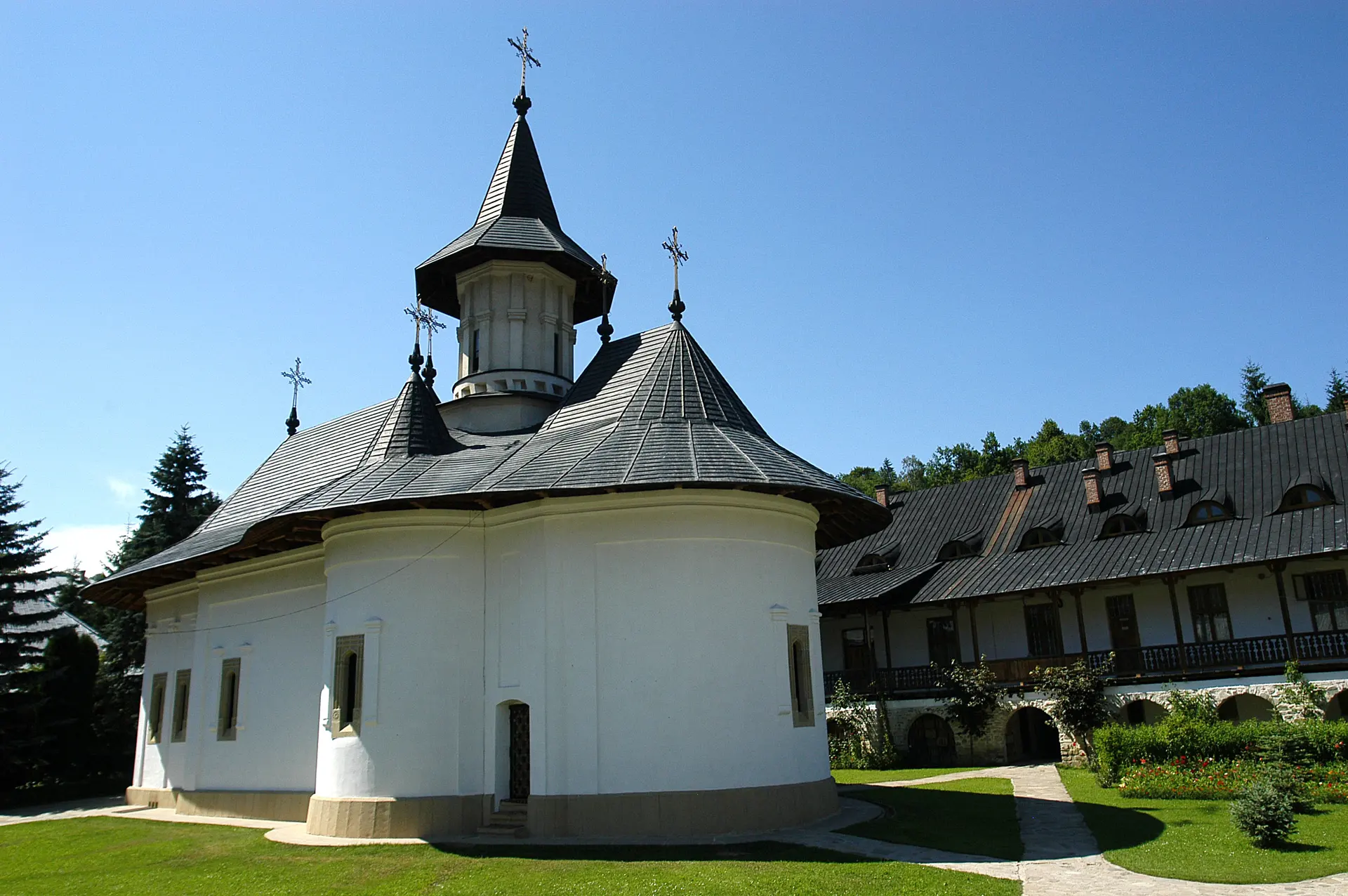
Sihastria Monastery, Romania
Vânători-Neamț, Neamț, Romania
10.2 km away
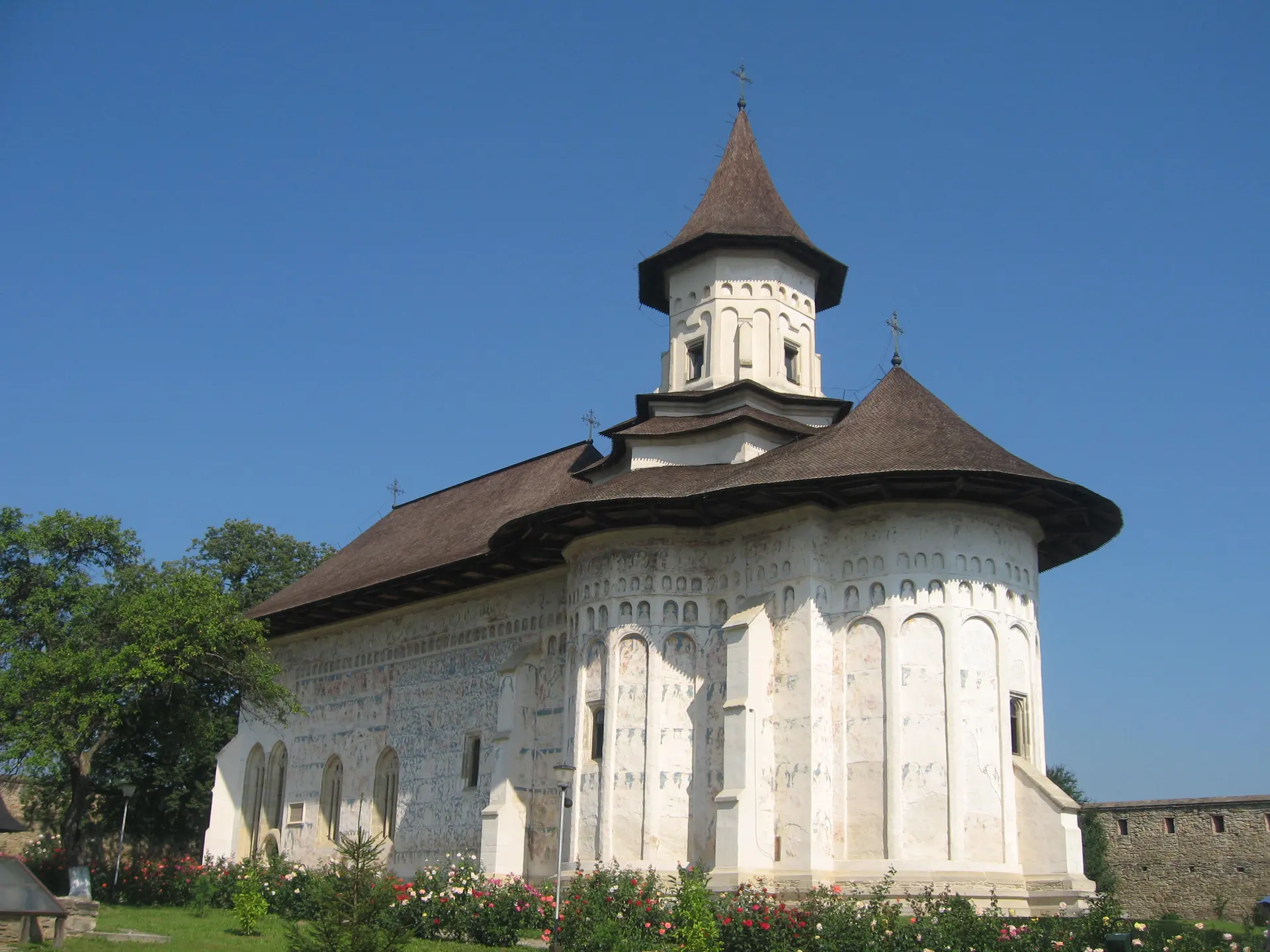
Church of St Nicholas at Probota Monastery
Probota / Dolhasca, Suceava County, Romania
33.6 km away

Voronet Monastery, Romania
Gura Humorului, Suceava, Romania
38.3 km away
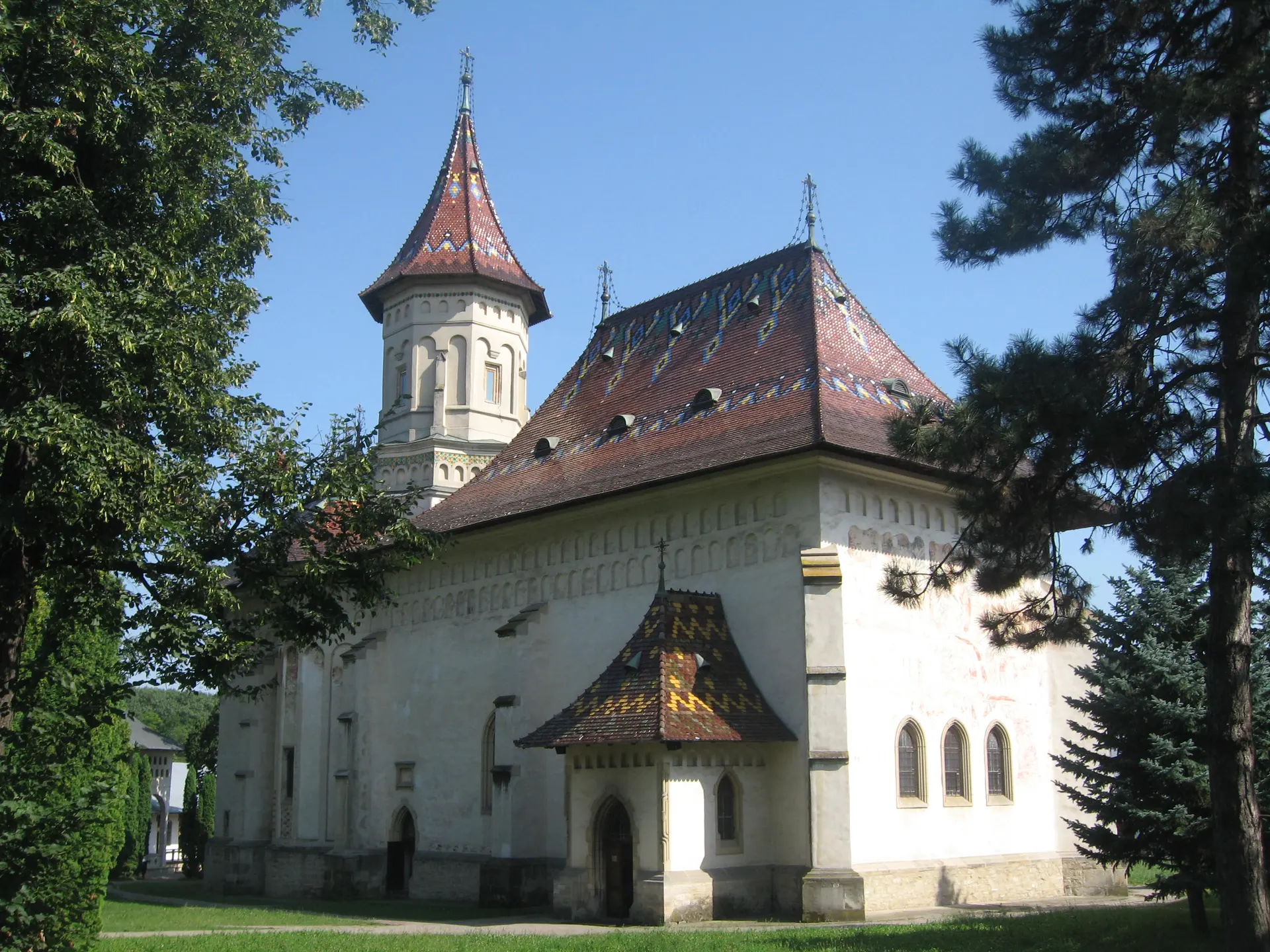
Church of St George at St John the New Monastery
Suceava, Suceava County, Romania
42.3 km away
Share a photo
Help visitors recognize Neamt Monastery, Romania. Every submission is reviewed before publication.