St. Mary Church, Temple Guitling
A Templar-founded church where eight centuries of prayer meet Cotswold stone and valley light
Understand sacred places, explore living traditions, and learn how to engage respectfully with Pilgrim Map.
Access has not been verified. Check current local guidance before planning a visit.
Cotswold District, England, United Kingdom
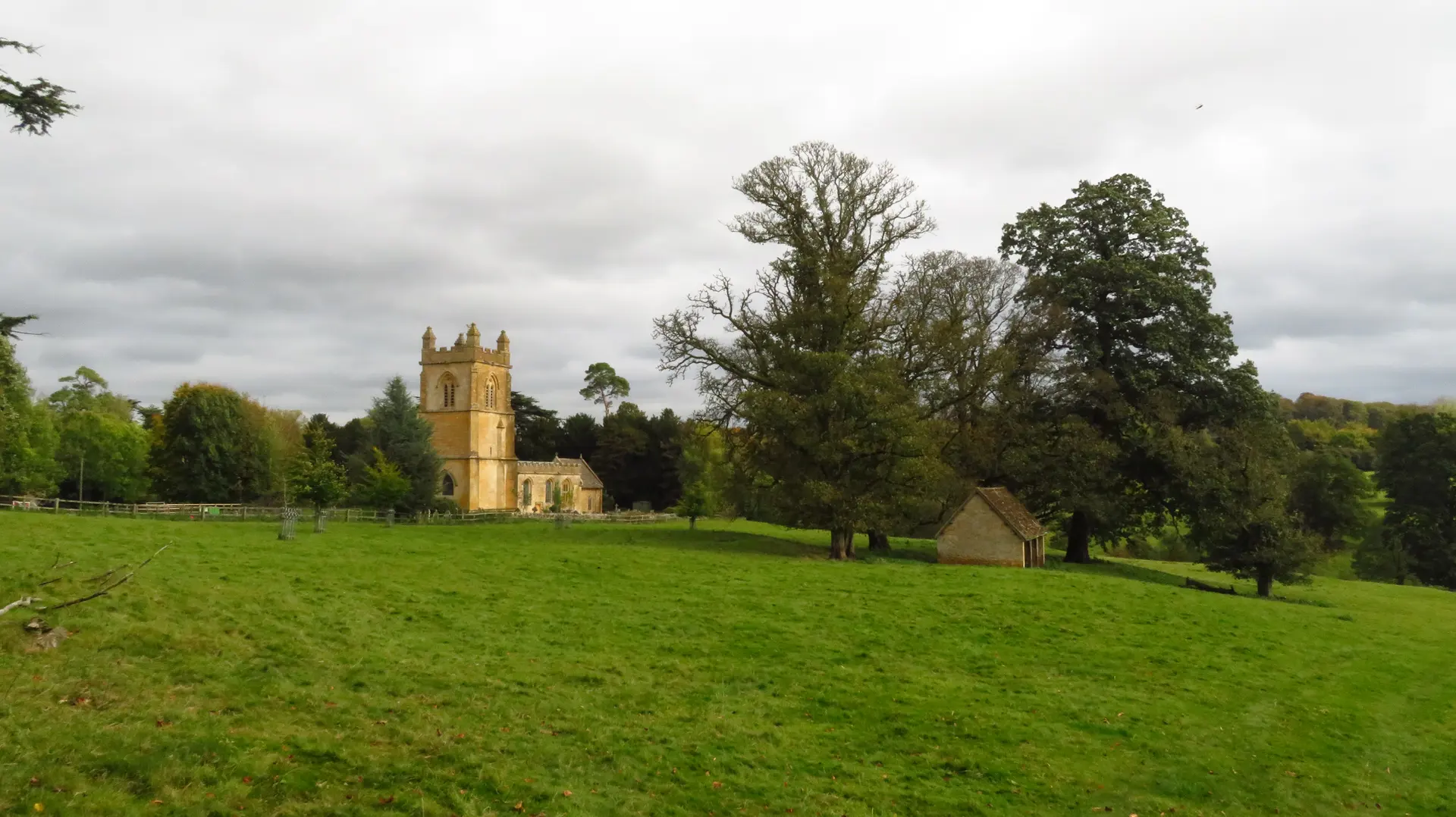
Image of St. Mary Church, Temple Guitling. Image source · CC-BY-SA-2.0
Visit essentials
A quick read before you go
- Duration
- A focused visit to the church interior takes thirty minutes.
- Access
- Temple Guiting is located just off the B4077, about five miles west of Stow-on-the-Wold.
Overview
Temple Guiting's name preserves the Knights Templar presence. Around 1170, warrior-monks charged with protecting Holy Land pilgrims built St Mary's and their preceptory on land donated by Gilbert de Lacy, setting the chancel above the Windrush Valley.
The Order fell in 1308, but worship continued through Tudor rebuilding, Georgian refinement, Victorian restoration, and Heritage Lottery support for more than 850 years. Now one of the Benefice of the Seven Churches, St Mary's holds monthly communion and opens by day for its medieval corbel heads, surviving stained glass, Georgian Decalogue, valley light, and silence.
Why this place is sacred
Eleven medieval corbel heads—beasts, religious figures, human faces, and grotesques—watch outward below the chancel roofline. They were understood as guardians warding evil from the sacred interior. One still bears a Templar cross after eight and a half centuries, marking a house of prayer built by an order joining sacred warfare with protection of pilgrims to Jerusalem.
The churchyard opens across the Windrush Valley, described as idyllic in the word's sense of a small, separate world; honey-coloured limestone warms in the Cotswold light. Through the Templars' arrest and centuries of parish life, eight and a half centuries of continuing prayer underlie the peace visitors report here.
The Templars built St. Mary's as the chapel for their preceptory, a property management center whose revenues supported operations in the Holy Land. A chaplain conducted services for the knights, serving brethren, and their household. The church was embedded within the larger complex of Templar life: hospitality for traveling knights, management of agricultural lands and slate production, the collection and transmission of revenue to the Temple in London.
Unlike some Templar churches designed for public pilgrimage, this was a working chapel for a working community, though the quality of its construction, particularly the corbels, suggests the Templars invested care in their sacred space.
When Edward II ordered the arrest of all Templars in England on January 8, 1308, John de Coningston was preceptor at Guiting. He was eventually transferred to London as a prisoner, later absolved after abjuration. The Order was suppressed in 1312, and its lands passed to the Knights Hospitaller.
The church continued as a parish church, undergoing significant rebuilding in the 16th century when the nave and north transept were largely reconstructed. The tower was rebuilt in the 17th century. The Georgian era brought the most dramatic internal transformation: Rev. George Talbot, rector from 1743 to 1785, remodeled the west end in classical style and installed the ornate Decalogue panels that would later hide for over a century before their 2004 restoration.
The Talbot family also sold nine of the twelve medieval stained glass panels in 1809, an act of uncertain motivation that sent them eventually to the Metropolitan Museum of Art in New York.
Victorian architect J.E. Cutts added the north porch in 1884, completing the accretion of centuries that visitors encounter today. Through all these changes, the 12th-century chancel with its Templar corbels has remained, the oldest surviving fragment of the original foundation.
Experience and orientation
Temple Guiting lies just off the B4077 west of Stow-on-the-Wold. At the village's southern edge, a gravel path without steps reaches the church. Inside, changing light filters through clear and coloured glass. Three fifteenth-century south-window panels, including St James the Less with his fuller's club, came from Flemish or German workshops; nine companions now reside in a New York museum.
Above the north door, ornate Georgian panels carry the Ten Commandments, Creed, and Lord's Prayer after lying hidden for over a century. Their formality contrasts with the rough medieval corbels outside. In the churchyard, views cross Windrush Valley fields that may have been farmed by Templar lay brothers.
St. Mary's rewards those who come with time to spare. A brief visit of thirty minutes allows appreciation of the architectural features and a walk around the churchyard. An hour permits the kind of sitting and looking that lets the place work on you.
Consider beginning outside, circling the chancel to find the corbel heads that watch from just below the roofline. Each face is distinct; one bears the Templar cross. These were carved by masons who believed the boundary between the sacred and the profane needed guarding. Let yourself wonder what they understood that we have forgotten.
Inside, allow your eyes to adjust to the light before seeking out specific features. The 15th-century font, the Georgian pulpit, the Talbot family memorials, the Royal Arms of George II: each tells part of the story of a church that has survived by adapting. But leave time for the stained glass and the Decalogue, and leave time for no agenda at all.
If you seek the full effect, plan your visit for a time when you can stay for the view. Afternoon light falls beautifully across the valley. There is no prescribed practice, only presence.
Context and lineage
In 1086, the Domesday Book recorded the village as Getinge, held by Roger de Lacy. His son Gilbert, likely moved by the religious fervor of the Crusading era, granted land to the Knights Templar sometime around the mid-12th century. Roger de Waterville added additional donations. By 1170, the Templars had established a preceptory here and built their church.
The Knights Templar were a monastic military order founded in 1119 to protect Christian pilgrims traveling to Jerusalem. Their dual identity as monks and warriors set them apart: men who took vows of poverty, chastity, and obedience, yet trained for combat and answered the call to crusade. Their preceptories in England, including Guiting, served as economic bases, managing lands whose revenues flowed to support operations in the Holy Land.
A 1185 survey valued the Guiting preceptory's possessions at eleven pounds, ten shillings, and sixpence halfpenny. The properties included agricultural lands and slate production. A preceptor governed the community, which included knights, serving brethren, and a chaplain who conducted religious services in the church that stands to this day.
The village took the prefix Temple to distinguish it from nearby Guiting Power, a name that persists over seven centuries after the Order's dissolution.
From Templar preceptory to parish church, St. Mary's has passed through many hands. The Knights Hospitaller inherited the Templar properties after 1312, though the church increasingly served the local community rather than any military order. Through the Reformation, the church transitioned to Anglican worship, a continuity of place if not entirely of practice.
The Talbot family left their mark on the Georgian era, remodeling the interior and erecting memorials that remain. The Victorian restoration by J.E. Cutts added the north porch and made necessary repairs. The 20th and 21st centuries brought heritage recognition, with Grade I listing in 1960 and Heritage Lottery funding for the Decalogue restoration in 2004.
Today, St. Mary's serves as one of the seven churches in its benefice, joined with Guiting Power, Cutsdean, Farmcote, Lower and Upper Slaughter, and Naunton. The small congregation gathers monthly for communion with hymns, maintaining the pattern of worship that connects them to eight and a half centuries of predecessors.
Gilbert de Lacy
historical
Son of Roger de Lacy who held Guiting at the time of Domesday. His donation of land to the Knights Templar in the mid-12th century enabled the founding of the preceptory and church.
John de Coningston
historical
The last known preceptor of Guiting, arrested in 1308 with all English Templars and later transferred to London as prisoner. Absolved after abjuration in 1311.
Rev. George Talbot
historical
Rector from 1743 to 1785 who undertook major restoration and remodeling of the church in Georgian classical style. His family's memorials and hatchment remain in the church.
St. James the Less
saint
One of the Twelve Apostles, depicted in the surviving medieval stained glass holding his emblem, the fuller's club. The 15th-century panel connects this church to medieval devotion and craftsmanship.
Traditions and practice
During the Templar era, a chaplain would have conducted services following the monastic pattern: daily offices punctuating the hours, mass for the community of knights and serving brethren. The Order followed Augustinian rule with particular Templar observances. What precise ceremonies occurred in this chapel we cannot know; the Templars were a secretive order, and their records were largely destroyed.
Mediaeval parish worship after the Templar dissolution would have followed Catholic patterns until the Reformation brought the Book of Common Prayer and vernacular services. The Georgian Decalogue, with its commandments, creed, and prayer, speaks to a post-Reformation emphasis on moral instruction and accessible devotion.
The church now holds Holy Communion with hymns every fourth Sunday at 10:00 AM. Fortnightly Friday coffee mornings at the West End provide community fellowship. Between these gatherings, the church stands open during daylight hours for private prayer and quiet visitation.
Refreshments are sometimes available when the church is open, reflecting the tradition of hospitality that has long marked rural English churches. Visitors are especially welcome at Sunday services, where they may experience the church as the worshipping community it was built to serve.
If you come seeking more than historical interest, consider arriving when you can have the church to yourself. The weekday quiet between services offers space for the kind of contemplation the building was made for.
Take time in the chancel, the oldest part of the church, built by the Templars themselves. This is where medieval worship would have centered. You need not reconstruct their practices; simply notice what arises in a space where prayer has been offered for over eight centuries.
If attending a service is possible, the fourth Sunday communion offers an opportunity to experience the church as living community rather than historical artifact. The congregation is small; your presence will be noticed and welcomed.
Anglican Christianity
ActiveSt. Mary's serves as an active Church of England parish church within the Diocese of Gloucester. It is one of seven churches in its benefice, maintaining regular worship and pastoral care for the local community. For parishioners, the church represents continuity with generations of ancestors who worshipped here, and ongoing connection to the worldwide Anglican Communion.
Holy Communion with hymns is held every fourth Sunday at 10:00 AM. Fortnightly Friday coffee mornings provide community fellowship. The church is open during daylight hours for private prayer and visitation. Weddings, funerals, and baptisms mark the passages of community life. Annual celebrations follow the Christian calendar.
Knights Templar
HistoricalThe Knights Templar founded this church around 1170 as the chapel for their preceptory, making Temple Guiting one of the Templar sites in England whose founding can be documented and whose fabric remains visible. The village name itself carries the Templar legacy. The Order's presence here represents the intersection of Crusading spirituality, monastic life, and English agricultural economy in the 12th and 13th centuries.
During the Templar period (c. 1170-1308), the preceptory maintained a chaplain who conducted religious services for the community of knights, serving brethren, and their household. The community followed Augustinian rule adapted for the Order's particular purposes. Hospitality for traveling knights, management of agricultural lands and slate production, and collection of revenues for the Temple in London were integrated with the rhythm of daily prayer.
Perspectives and open questions
St. Mary's Church invites interpretation from multiple angles: architectural history, heritage conservation, parish life, and the fascination surrounding all things Templar. Each lens reveals something genuine; none captures the whole. The church is at once an historic monument, a working place of worship, and a point of contact with a medieval military order that continues to capture popular imagination.
Scholarly perspective
Historians and heritage bodies recognize St. Mary's as an important example of a medieval church with documented Knights Templar origins. The Victoria County History provides authoritative documentation of the preceptory's founding, its property holdings, and the arrest of its last preceptor in 1308. Historic England's Grade I listing recognizes the church's architectural and historical significance, noting the 12th-century chancel with its corbel table, the 15th-century font, the Georgian remodeling, and the Victorian restoration.
The church exemplifies the layered history common to English parish churches: Norman origins visible in the chancel, 16th-century rebuilding in the nave, 17th-century tower reconstruction, Georgian classical refinement, and Victorian addition. Architectural historians value such accretions as living documents of changing tastes and functions.
The medieval stained glass, three panels surviving from an original twelve, has received attention for its likely Flemish or German origins. The fact that nine panels were sold in 1809 and now reside in the Metropolitan Museum of Art raises questions about the dispersal of English church heritage in the Georgian and Victorian periods.
Living and traditional perspectives
For the Church of England, St. Mary's represents the continuity of Christian worship on this site for over eight and a half centuries. The Benefice of the Seven Churches maintains St. Mary's as an active parish, gathering monthly for communion and maintaining the fabric of the building for future generations.
From this perspective, the church's significance lies not primarily in its Templar origins or architectural features but in its ongoing role as a place where the faithful gather, where sacraments are celebrated, where the dead are remembered, and where the community marks the passages of life.
The parish welcomes visitors interested in the heritage, but hopes they will also encounter the church as a living community of faith, however small, continuing a tradition that long predates the Reformation and will, God willing, continue long after the current generation has passed.
Alternative interpretations
The Templar connection inevitably generates interest among those fascinated by the Order's history and the legends that have accreted around it. The Knights Templar occupy a peculiar place in popular imagination, surrounded by speculation about esoteric knowledge, hidden treasures, and secret traditions that supposedly survived the Order's suppression.
At Temple Guiting, such interpretations find little to grasp. This was a working preceptory, managing lands and revenues, not a center of mystery. The carved Templar cross on one corbel is evidence of founding, not esoteric symbolism. Visitors seeking hidden meanings will find instead honest evidence of monastic-military life in medieval England: a community of warrior-monks who built a chapel, prayed, worked the land, and were eventually swept away by the fall of their Order.
This honesty is itself valuable. The Templar legacy at Temple Guiting is real, documented, and tangible, a corrective to the more fanciful stories that attach to the Order elsewhere.
Open questions
Genuine uncertainties remain. The exact site of the medieval preceptory buildings is not precisely known; the preceptory was separate from the church, and its structures have not survived. Archaeological investigation might reveal more, but has not been systematically conducted.
Why the Talbot family sold nine of twelve medieval stained glass panels in 1809 remains unclear. The price of five pounds seems remarkably low even for the period, suggesting they may not have recognized the glass's value. Whether financial necessity or simple underappreciation motivated the sale, the result was the scattering of a complete set of medieval panels between a Cotswold parish church and a New York museum.
What specific practices the Templars conducted in this chancel, we can only infer from what is known of Templar liturgy elsewhere. No firsthand account of worship at Temple Guiting survives.
Plan your visit
Access and arrival
Temple Guiting is located just off the B4077, about five miles west of Stow-on-the-Wold. The church sits at the southern edge of the village, reached by gravel path with no steps. Limited parking is available on the verge near the church; the Village Hall car park offers space for longer stays. Public transport is limited, with the nearest bus services in Stow-on-the-Wold and Bourton-on-the-Water.
The church has some mobility access given the gravel path and lack of steps, though the interior has the typical uneven floors of medieval churches.
Temple Guiting itself has limited accommodation. The wider Cotswolds offer extensive options from bed and breakfasts to boutique hotels, with Stow-on-the-Wold, Bourton-on-the-Water, and the Slaughters all within a short drive. For those seeking to visit multiple churches in the benefice, staying in the area for two or three days allows unhurried exploration.
Respectful visit
No formal dress code applies, though modest attire respectful of a church setting is appreciated. Comfortable shoes are advisable for the gravel path and uneven churchyard terrain.
Personal photography is welcome during visitor hours, without flash. Be mindful not to photograph parishioners without permission or to disrupt services. The exterior corbels are best photographed with a zoom lens given their position below the roofline.
Donations for church maintenance are welcomed. There is no admission fee; this is an active place of worship, not a ticketed attraction.
The church is open during daylight hours. Check the parish website for any special closures. During services, visitors should either participate reverently or wait until worship concludes.
If visiting during a service, maintain appropriate reverence, remaining at the back if you do not wish to participate in the liturgy. The church is active, not a museum; treat it as you would any place where people come to pray.
The Templar connection, while historically significant, should not be romanticized into something it was not. This was a working preceptory, not a center of esoteric mystery. Honor what actually happened here rather than projecting later legends onto this quiet place.
Current practical details
Address
Temple Guiting, Cheltenham GL54 5RW, UK
Hours, fees, and access can change — verify on the official source before you travel. Practical details last checked Jun 2026.
Location
Map loads as you approach this section.
Pilgrim reflections
A portrait of encounter, not a score
Pilgrims describe what they felt, how present they could become, and whether the place would shape a journey. There are no stars and no ranking of traditions.
No reviewed reflections yet
The first pilgrims can help describe the character of being here.
Share a reflection
Available after an account-backed “Been there.” Every reflection is reviewed before publication.
Nearby sacred places
Explore other sacred places in the region. Proximity does not establish access or travel time; check each place’s guidance.
Share a photo
Help visitors recognize St. Mary Church, Temple Guitling. Every submission is reviewed before publication.