Spirit Mountain, Nevada
Where ten tribes emerged into this world, and where the creator Mastamho still dwells
Laughlin, Nevada, United States
Visit essentials
Before you go
- Address
- Spirit Mountain, Nevada 89046, USA
- Duration
- Half day minimum for Grapevine Canyon petroglyphs.
- Etiquette
- Spirit Mountain is an active sacred site.
Overview
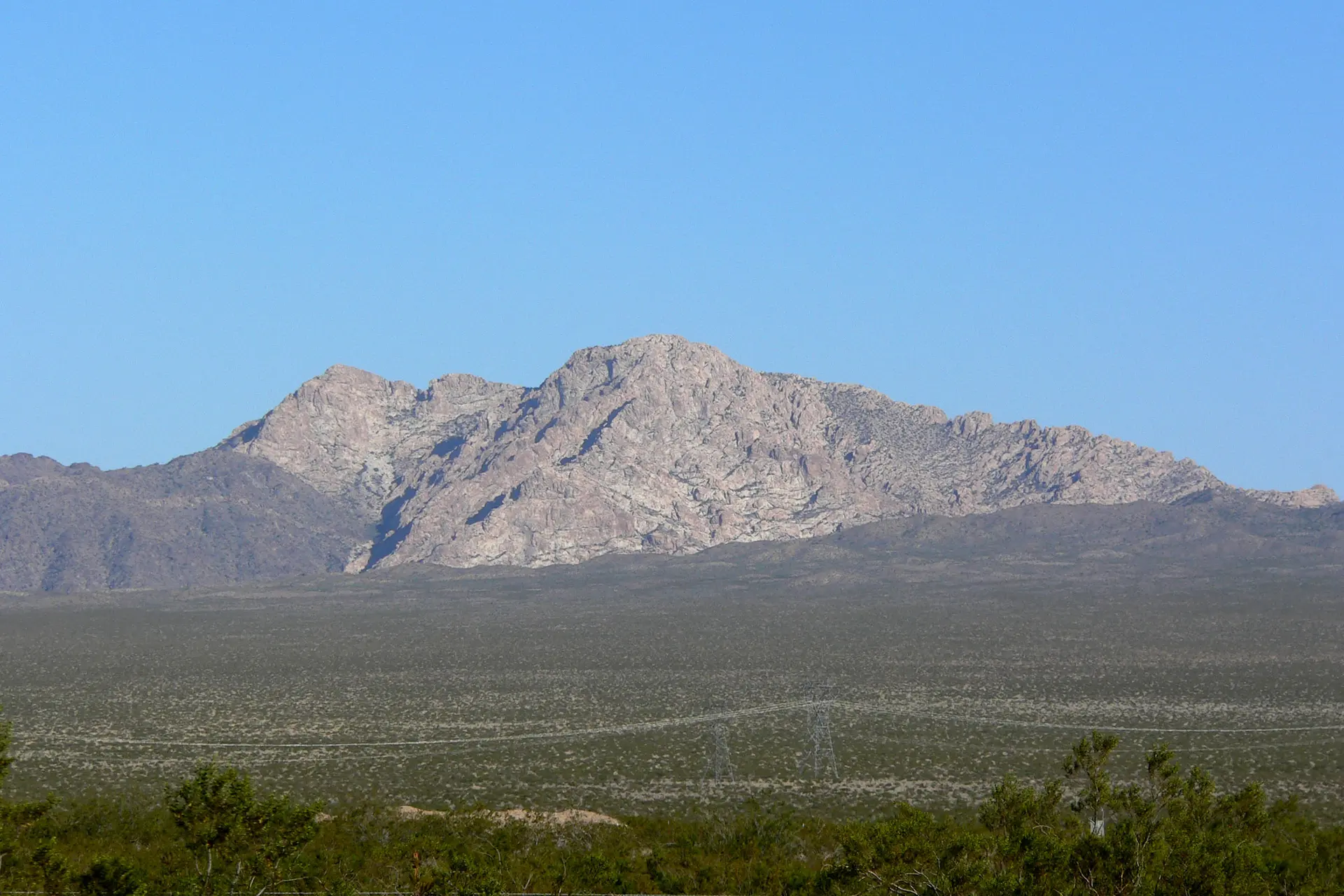
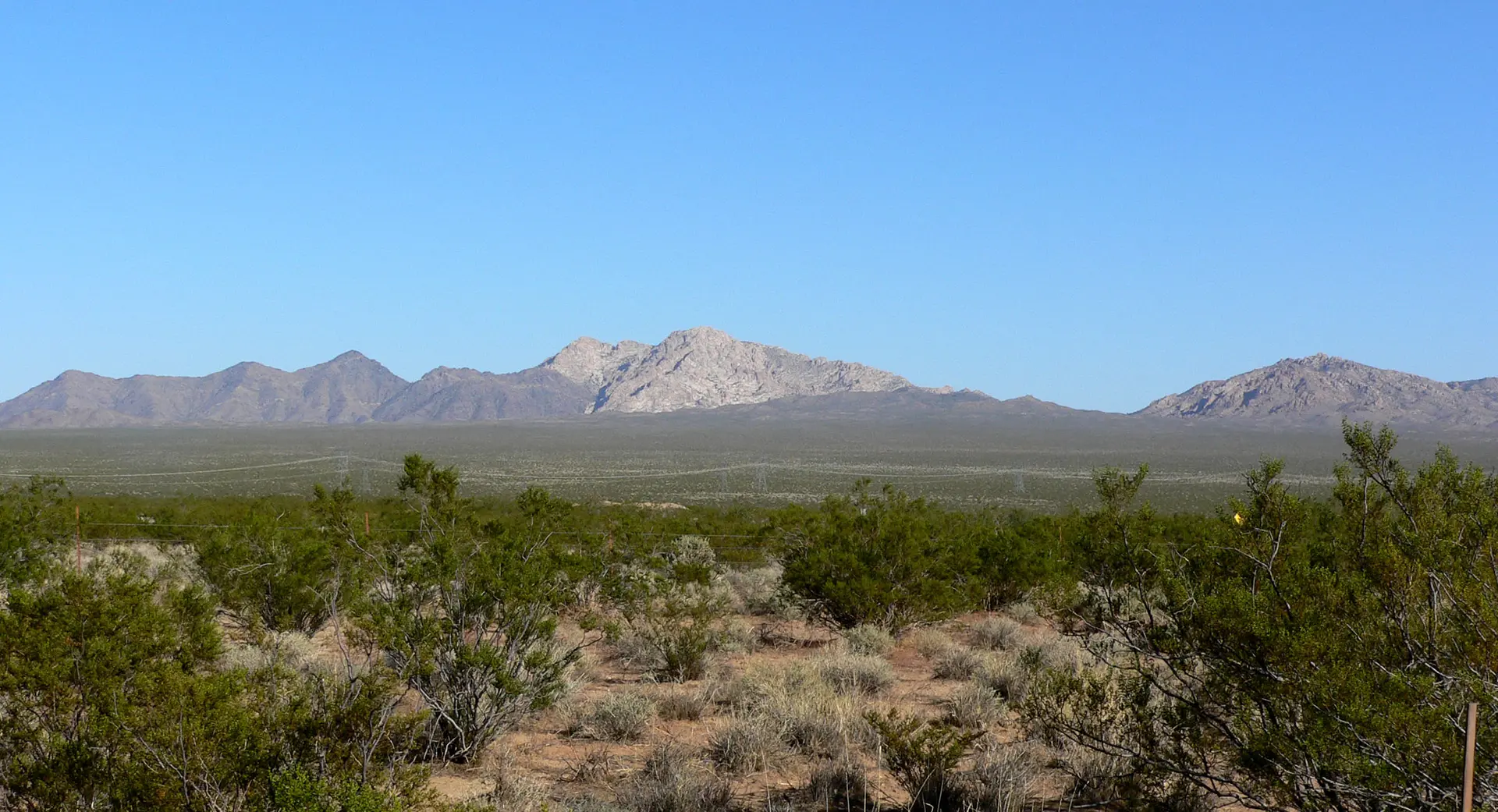
Spirit Mountain—Avi Kwa Ame in the Mojave language, meaning 'highest mountain'—is the white-granite highest peak in Nevada's Newberry Mountains, visible for miles across the Mojave. For ten Yuman-speaking tribes, it is the center of the world: a living creation site rather than an archaeological interpretation imposed from outside.
These communities advocated for the landscape's protection for thirty years. Fort Mojave Tribal Administrator Ashley Hemmers called Avi Kwa Ame 'the point of Mojave creation' and 'a very important and integral part of our history and belief system.' Their efforts led to the 2023 national-monument designation protecting 506,000 acres under the Antiquities Act. At Grapevine Canyon, more than 700 petroglyphs and pictographs record centuries of spiritual seeking at sacred springs beneath the creation site.
Why this place is sacred
Some places are considered thin because seekers have prayed there for centuries. Spirit Mountain is thin because, according to those who hold it sacred, this is where existence itself began. The distinction matters.
For the Mojave and nine other Yuman-speaking tribes, Spirit Mountain is not a place where the sacred is accessed but the place where the sacred acted. Their cosmology locates the creation of humanity at these slopes. Mastamho, grandson of Earth-Mother and Sky-Father, emerged from these foothills to shape mankind. The tribes themselves emerged here, crossing from one dimension into the Earth dimension. To stand at Spirit Mountain is to stand at the origin point.
The physical landscape reinforces this significance. The white granite peak rises dramatically from the desert floor, the highest point in the Newberry Mountains, visible across vast distances. In a landscape of basin and range, Spirit Mountain declares itself. At nearly 5,600 feet, it gathers attention the way a creation site should—unavoidable, singular, set apart.
The petroglyphs at Grapevine Canyon add another dimension to the site's thinness. Over 700 images were carved into rock between 1200 and 1800 AD, created as part of spirit quest rituals. The seekers who made these marks came to the mountain's sacred springs seeking visions, encounters with forces larger than themselves. Each petroglyph represents a moment when someone reached across the boundary between ordinary consciousness and something else. The accumulation of six centuries of such reaching has left its mark.
In 1999, Spirit Mountain became the first landscape in Nevada listed as a Traditional Cultural Property on the National Register of Historic Places. The designation was significant because it emphasized living religious and cultural significance rather than treating the site as mere archaeological artifact. The thinness recognized was not historical but ongoing.
For visitors who do not share Yuman cosmology, the thinness may manifest differently—as silence, as the presence of antiquity, as the knowledge that for thousands of years people have understood this place as the center of everything. The mountain does not require your belief to affect you. It has been affecting people since time began. According to those who know it best, that is not metaphor but fact.
According to Yuman tradition, Spirit Mountain was not built or designated but is simply where creation occurred. Mastamho made Avi Kwa Ame after creating the Mojave people. The mountain marks the place of emergence, where tribes crossed from one dimension into the Earth dimension. The petroglyphs at Grapevine Canyon were created between 1200 and 1800 AD as part of spirit quest rituals—seekers came to the sacred springs below the creation site to seek visions and communicate with the sacred.
The mountain's sacred significance has remained constant through centuries, but its protection has evolved significantly. For approximately thirty years, the Fort Mojave Indian Tribe and allied nations advocated for formal protection of the landscape. In 1999, Spirit Mountain became the first landscape in Nevada listed as a Traditional Cultural Property on the National Register of Historic Places—a designation that recognized living religious significance rather than treating the site as archaeological relic.
The campaign for broader protection continued. In March 2023, President Biden designated Avi Kwa Ame National Monument, protecting approximately 506,000 acres of the Mojave Desert surrounding Spirit Mountain. The proclamation explicitly protects 'sacred space for spiritual uses.' This represented what tribal leaders called a 'major victory'—recognition at the federal level of what the tribes had always known: this landscape is not merely scenery but the center of the world.
Experience and orientation
The drive to Spirit Mountain takes you through classic Mojave terrain—Joshua trees, creosote flats, distant ranges shimmering in heat. From Laughlin, Christmas Tree Pass Road winds toward the Newberry Mountains, and the white granite peak becomes visible long before you arrive. The mountain announces itself against the sky.
Most visitors begin at Grapevine Canyon, accessed via a short drive from Highway 163. The parking area sits at the mouth of a canyon where sacred springs once drew seekers to fast and quest for visions. A short walk brings you to the petroglyphs—over 700 images carved into dark desert varnish on boulder faces. Spirals, human figures, geometric patterns in the distinctive rectilinear style of this region.
The images date from 1200 to 1800 AD, but their meanings remain largely private to the traditions that created them.
Standing among the petroglyphs, the canyon walls rising around you and Spirit Mountain visible above, the weight of centuries is palpable. People have been coming to this exact place for over 800 years, seeking contact with something larger than themselves. The spring that drew them may be diminished now, but the rocks still hold what they recorded.
For those seeking the mountain summit itself, a challenging trail awaits. The Spirit Mountain summit trail runs approximately 3.8 miles with 2,260 feet of elevation gain. The route is steep and slippery, requiring route-finding skills. Views from the summit extend across Lake Mead, the Colorado River, and into Arizona and California. But the summit is not necessary to encounter what the site holds. The creation story is not located only at the peak—it encompasses the entire sacred landscape.
The appropriate stance for visitors is respect and quiet attention. This is not a place to rush through. Sit with the petroglyphs. Let the desert silence settle. Consider that for ten nations, this is where everything began. You are standing at an origin point. Whether you share the belief or not, the weight of that significance is present.
Plan at least half a day for the Grapevine Canyon petroglyphs, longer for the summit hike. Carry abundant water—the desert is unforgiving, and summer temperatures can exceed 110F. The best seasons are late fall through early spring when temperatures moderate. Check conditions before attempting the summit trail; it is rated hard and requires some scrambling. Be aware that certain areas may be in ceremonial use. If you encounter practitioners, give them space and privacy.
Context and lineage
According to Fort Mojave tradition, the creator god Mastamho, grandson of Earth-Mother and Sky-Father, emerged from the foothills of Spirit Mountain to begin the work of shaping mankind. Avi Kwa Ame was made by Mastamho after he created the Mojave people. The creator still resides in the mountain.
For all ten Yuman-speaking tribes—the Mojave, Hualapai, Yavapai, Havasupai, Quechan, Maricopa, Pai Pai, Halchidhoma, Cocopah, and Kumeyaay—Spirit Mountain is the spiritual birthplace of their peoples. Their mythology holds this as the place where the tribes emerged from one dimension into the Earth dimension. The mountain is the 'center of the world' in Yuman cosmology.
Fort Mojave Chairman Timothy Williams has stated: 'Avi Kwa Ame, also known as Spirit Mountain, lays within the vast landscape of the pristine land of Southern Nevada. It is a place we know as our creation. It is the beginning of our traditional songs.'
Spirit Mountain is held sacred by multiple tribal nations. The primary caretakers are the Fort Mojave Indian Tribe, as the Yuman band nearest to Avi Kwa Ame. The site is also sacred to the other nine Yuman-speaking tribes: Hualapai, Yavapai, Havasupai, Quechan, Maricopa, Pai Pai, Halchidhoma, Cocopah, and Kumeyaay. Additionally, the Hopi and Southern Paiute/Chemehuevi peoples consider Spirit Mountain sacred, though it is not their creation site.
The monument designation and preservation efforts involved coalition building across these diverse nations, united by their shared relationship to this landscape.
Mastamho
Creator god in Mojave tradition, grandson of Earth-Mother and Sky-Father. Emerged from the foothills of Spirit Mountain to shape mankind. According to Mojave belief, Mastamho still resides in the mountain.
Timothy Williams
Fort Mojave Chairman who advocated for the monument designation and articulated the mountain's significance: 'It is a place we know as our creation. It is the beginning of our traditional songs.'
Ashley Hemmers
Fort Mojave Tribal Administrator who stated: 'Avi Kwa Ame is the point of Mojave creation; it's a very important and integral part of our history and belief system.'
The Petroglyph Makers
Unknown individuals from Mojave and other Indigenous communities who created over 700 petroglyphs at Grapevine Canyon between 1200 and 1800 AD as part of spirit quest rituals.
Traditions and practice
The traditional practices at Spirit Mountain center on the site's status as creation place. The petroglyphs at Grapevine Canyon, numbering over 700, were created between 1200 and 1800 AD as part of spirit quest rituals. Seekers came to the sacred springs below Spirit Mountain to fast, to pray, and to seek visions. The images they carved into rock recorded their encounters with the sacred.
The Mojave and other Yuman tribes have traditional songs that originate from Spirit Mountain—the beginning of their musical and ceremonial tradition. As caretakers of the mountain, the Mojave maintain responsibilities to the site that have continued through generations. Buffalo skulls, tobacco, and other offerings have been part of traditional practice. Specific details of ceremonies remain private to the communities who practice them.
The Fort Mojave Indian Tribe and other Yuman-speaking tribes continue to use Spirit Mountain for ceremonies and rituals. The 2023 national monument designation explicitly protects 'sacred space for spiritual uses,' ensuring that traditional practice can continue alongside recreational access.
Tribal members make pilgrimages to the creation site. Ceremonial gatherings and observances tied to creation mythology continue. Pan-tribal gatherings bring together representatives of multiple nations who hold the site sacred. The specific details of contemporary ceremonies remain private, as is appropriate for living sacred practice.
The 30-year advocacy campaign that led to monument designation demonstrated the ongoing sacred significance of the landscape. This was not a campaign to preserve a relic but to protect a living relationship between peoples and their place of origin.
Visitors are not invited to participate in Indigenous ceremonies at Spirit Mountain. The appropriate stance is respectful witness. Walk among the petroglyphs at Grapevine Canyon with quiet attention. Consider what it means that people have been coming here for over 800 years seeking encounter with the sacred. Let the desert silence affect you.
If you hike to the summit, carry water and preparation for difficult terrain. The physical challenge of the climb can become its own form of pilgrimage—effort offered in approach to a sacred place.
The most meaningful practice available to visitors is attention. Look at the petroglyphs without trying to decode them. Sit with Spirit Mountain visible above you. Let the fact of this place—that for ten nations it is the center of the world—settle into your awareness. You need not share the belief to be affected by its presence.
Mojave (Fort Mojave) Creation Tradition
ActiveSpirit Mountain is the center of Mojave creation. The creator god Mastamho, grandson of Earth-Mother and Sky-Father, emerged from these foothills to shape mankind and still resides here. The mountain is the beginning of Mojave traditional songs. As the Yuman band nearest to Avi Kwa Ame, the Mojave are the mountain's caretakers.
Traditional ceremonies, ritual songs originating from this location, ceremonial gatherings, spiritual pilgrimages, caretaking responsibilities for the mountain.
Yuman Tribes Creation Site
ActiveSpirit Mountain is the mythical creation site for ten Yuman-speaking tribes: Mojave, Hualapai, Yavapai, Havasupai, Quechan, Maricopa, Pai Pai, Halchidhoma, Cocopah, and Kumeyaay. This is where their ancestors emerged from one dimension into the Earth dimension. The mountain is the 'center of the world' to all Yuman-speaking peoples.
Ceremonial observances, spiritual pilgrimages, creation story recitation, inter-tribal gatherings at the shared origin place.
Hopi and Southern Paiute/Chemehuevi
ActiveThe Hopi and Chemehuevi Paiute peoples consider Spirit Mountain sacred, though it is not their creation site. The mountain holds significance within their broader sacred geography and cosmology.
Sacred site veneration, spiritual observances. The mountain is part of a larger sacred landscape that crosses tribal boundaries.
Grapevine Canyon Spirit Quest Traditions
HistoricalThe petroglyphs at Grapevine Canyon were created between 1200 and 1800 AD as part of spirit quest rituals. Seekers came to the sacred springs below Spirit Mountain to fast and seek visions. The over 700 petroglyphs record these encounters with the sacred.
Spirit quests, fasting, vision seeking at sacred springs, ritual petroglyph creation to record visions and spiritual encounters.
Perspectives and open questions
Spirit Mountain invites one primary interpretation: it is a creation site, sacred to the peoples who emerged here. Archaeological and astronomical perspectives exist but are secondary to the living tradition that holds this mountain as the center of the world.
Scholarly perspective
Archaeological dating places the Grapevine Canyon petroglyphs between 1200 and 1800 AD. The rectilinear style of many images is characteristic of the region. Scholars associate the petroglyphs with spirit quest rituals conducted at sacred springs near Spirit Mountain.
Spirit Mountain's 1999 designation as a Traditional Cultural Property on the National Register of Historic Places was significant because it was the first such listing in Nevada to emphasize religious and cultural integrity over physical archaeology. The listing recognized living sacred significance rather than treating the site as artifact.
The 2023 national monument designation under the Antiquities Act protected approximately 506,000 acres, acknowledging both cultural and ecological significance. The landscape contains Joshua tree forests, desert tortoise habitat, and crucial wildlife corridors, in addition to its sacred sites.
Living and traditional perspectives
For the Fort Mojave and other Yuman-speaking tribes, Spirit Mountain is not subject to interpretation—it is the origin. Mastamho, the creator god, emerged from these foothills to shape mankind and still dwells here. The tribes emerged here, crossing from one dimension into the Earth dimension. The mountain is the center of the world and the beginning of traditional songs.
Tribal leaders have articulated this significance clearly during the monument campaign. Chairman Timothy Williams: 'It is a place we know as our creation.' Administrator Ashley Hemmers: 'Avi Kwa Ame is the point of Mojave creation; it's a very important and integral part of our history and belief system.'
The 30-year advocacy for monument status demonstrated that this significance is not historical but present. The tribes were not preserving a relic but protecting their relationship with the place where everything began. The monument designation was called 'a major victory' by tribal leaders.
Alternative interpretations
Spirit Mountain's significance is primarily known through Indigenous tradition. New Age or alternative esoteric interpretations are not prominently associated with this site. Visitors seeking spiritual experience here are asked to recognize that the site's meaning belongs to the Yuman-speaking peoples and to approach with that understanding.
Open questions
The full meaning and purpose of the 700+ petroglyphs at Grapevine Canyon remain largely unknown to outside observers. The relationship between specific petroglyphs and the visions that produced them is not public knowledge. How ceremonial practices have evolved over centuries is known to practitioners but not documented for outsiders. These are not gaps in research but appropriate boundaries around sacred knowledge.
Plan your visit
Access and arrival
Laughlin, Nevada offers hotels and casinos approximately 6 miles from Grapevine Canyon. Cal-Nev-Ari has limited services. Las Vegas is approximately 90 miles north. Primitive camping is permitted within the monument following BLM regulations—no facilities, pack out all waste.
Respectful visit
Dress for desert conditions. Sturdy hiking boots for trails. Sun protection is essential—hat, sunscreen, long sleeves. Layers for temperature variation between day and night. Bring abundant water; there are no services in the monument.
Photographs of the landscape, petroglyphs, and mountain are permitted for personal use. Do not use flash on petroglyphs. Do not photograph ceremonies or practitioners without explicit permission. No drones over wilderness areas. Commercial photography requires permits.
Do not leave offerings unless you are an Indigenous practitioner engaged in traditional practice. Do not disturb any offerings you encounter—tobacco, prayer items, or other objects. These are sacred, not curiosities.
{"Do not touch or climb on petroglyphs","Do not deface rock surfaces","Stay on designated trails where they exist","Pack out all trash (Leave No Trace)","No motorized vehicles in wilderness areas","No drones over wilderness areas","Give practitioners privacy during ceremonies","Do not photograph ceremonies or practitioners","Watch for rattlesnakes","Carry abundant water"}
Do not touch, rub, or make tracings of the petroglyphs—this damages the ancient rock art. Do not climb on rocks bearing petroglyphs. Do not disturb any offerings you may encounter. Do not attempt to conduct ceremonies of your own devising—the site's significance belongs to the traditions that hold it. If you encounter practitioners in ceremony, give them privacy and do not photograph.
Current practical details
Address
Spirit Mountain, Nevada 89046, USA
Hours, fees, and access can change — verify on the official source before you travel. Practical details last checked Jun 2026.
Location
Map loads as you approach this section.
Pilgrim reflections
A portrait of encounter, not a score
Pilgrims describe what they felt, how present they could become, and whether the place would shape a journey. There are no stars and no ranking of traditions.
No reviewed reflections yet
The first pilgrims can help describe the character of being here.
Share a reflection
Available after an account-backed “Been there.” Every reflection is reviewed before publication.
Nearby sacred places
Explore other sacred places in the region. Proximity does not establish access or travel time; check each place’s guidance.


References
Sources consulted for this page. Source categories describe the publication, not a guarantee that every claim is verified. Traditional accounts and outside interpretations may differ.
- 01Avi Kwa Ame National Monument — Bureau of Land ManagementofficialOfficial BLM management page for the national monument
- 02Honor Avi Kwa Ame — Honor Avi Kwa Ame CoalitionSource contextTribal-led advocacy organization for the monument
- 03Avi Kwa Ame — Sacred Land Film ProjectSource contextDocumentary project on sacred lands
- 04Avi Kwa Ame - A Sacred Place — Avi Kwa Ame CoalitionSource contextDedicated advocacy site for the monument
- 05Grapevine Canyon Petroglyphs and Creation Mythology — Online Nevada EncyclopediaacademicNevada state educational resource
- 06Spirit Mountain Wilderness — Wilderness.netofficialOfficial wilderness area information
- 07Avi Kwa Ame named Nevada's 4th national monument by Biden — Las Vegas Review-JournalacademicMajor regional newspaper coverage of monument designation
- 08The Place Where Shamans Dream: Safeguarding Spirit Mountain — Conservation Lands FoundationSource contextConservation organization documentation
- 09Grapevine Canyon — Friends of Avi Kwa Ame National MonumentSource contextFriends group site information
- 10Avi Kwa Ame National MonumentencyclopediaWikipedia overview with citations
- 11Spirit Mountain (Nevada)encyclopediaWikipedia page on the mountain itself
- 12Grapevine Canyon PetroglyphsencyclopediaWikipedia page on the petroglyphs
- 13Spirit Mountain Grapevine Canyon Nevada — DesertUSAguideRegional desert travel resource
- 14Spirit Mountain (NV) — SummitPostguideMountaineering resource
Share a photo
Help visitors recognize Spirit Mountain, Nevada. Every submission is reviewed before publication.