Newberry Mountains, Nevada
Where the Mojave creator emerged to shape mankind and still dwells among granite spires
Understand sacred places, explore living traditions, and learn how to engage respectfully with Pilgrim Map.
Access has not been verified. Check current local guidance before planning a visit.
Laughlin, Nevada, United States
Visit essentials
A quick read before you go
- Duration
- Half-day for scenic drive and Grapevine Canyon petroglyphs.
- Etiquette
- Spirit Mountain is among the most sacred sites in North America for multiple tribal nations.
Overview
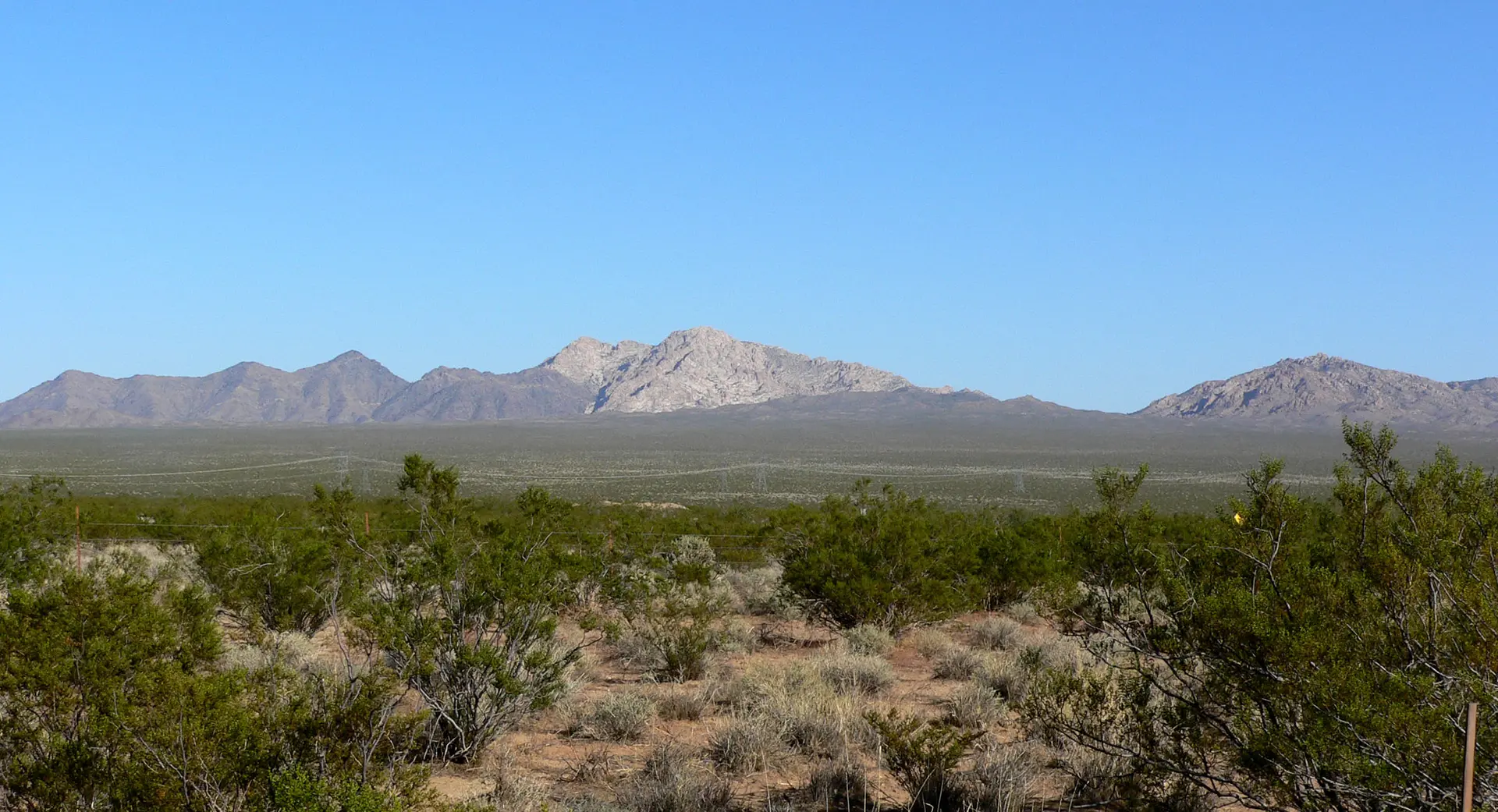
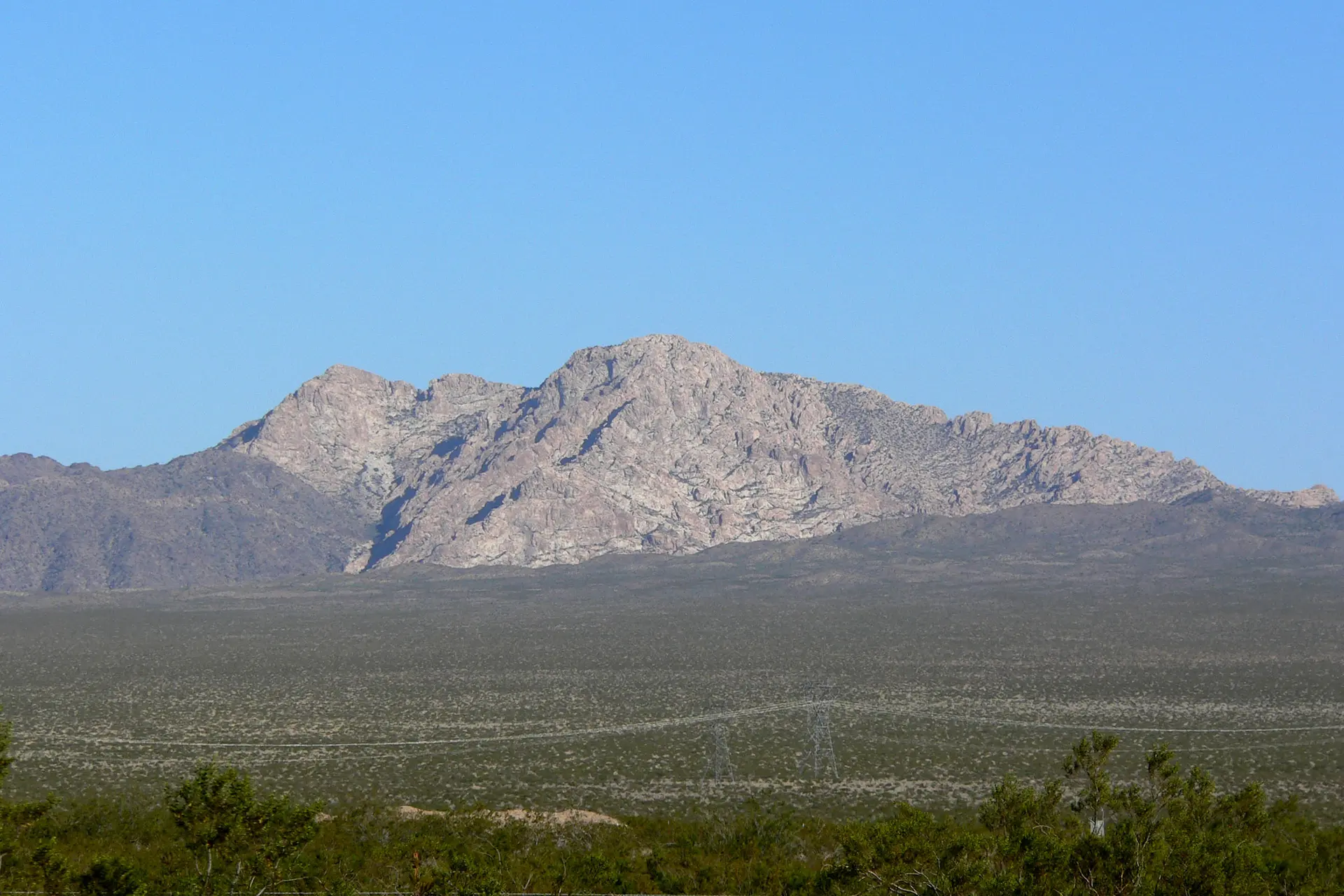
The Newberry Mountains rise from the Mojave Desert like a congregation of stone, their granite spires catching light in shades of white and pink against the vast Nevada sky. At their heart stands Spirit Mountain, known to the Mojave and Yuman peoples as Avi Kwa Ame. This is not merely a landscape of dramatic beauty. It is the place where life began.
For at least twelve tribal nations, this mountain is the creation site. Here, according to Mojave tradition, the god Mastamho emerged from the foothills to begin the work of shaping mankind. He built a house for himself and the people on the summit, made them shout four times to produce daylight, the sun, and the moon, instructed them in the arts of civilization, and sent forth the tribes to their appointed lands.
The Mojave, he told to stay here, near the mountain where it all began.
Mastamho still dwells here. This is not historical remembrance but living belief. When tribal members speak of Spirit Mountain, they speak of it as their church, their place of worship without a physical structure. Elders call it the place where shamans dream, where those seeking guidance come for vision quests, healing rituals, and spiritual renewal through communion with ancestral forces.
The mountain was so sacred that historically, young people could not come close to the summit, only being brought partway up by elders.
In 2023, the mountain gained federal protection as Avi Kwa Ame National Monument, encompassing over 500,000 acres. But for the Fort Mojave, Chemehuevi, Quechan, and other Yuman peoples, protection has never been a matter of policy. They are the mountain's caretakers. They have always been.
Why this place is sacred
There are thin places, and then there are places where the membrane between worlds was never established, where the sacred simply is. Spirit Mountain belongs to the latter category. For the Yuman peoples, this is not a place where heaven and earth draw close. It is the place where they met, where they were joined in the act of creation itself.
The mountain's thinness begins with its physical presence. Granite spires rise to 5,642 feet, composed of white and pink crystalline formations in the south, dark schist and gneiss in the north. A fault line separates these geological realms, as if the earth itself marks a threshold. The Mojave Desert stretches away in every direction, the silence vast and listening. At dawn and dusk, the rocks shift through colors that seem to come from within rather than from the sky.
But the thinness runs deeper than landscape. For over ten thousand years, people have recognized this place as sacred. The petroglyphs of Grapevine Canyon, dating from 1200 to 1800 CE, record centuries of engagement with the mountain's spiritual power. These are not decorations. They are expressions of creation mythology, markers of ongoing relationship with forces that dwell here.
Mastamho, the creator's son, built his house on this summit. According to tradition, he still lives here, still calls people up to instruct them in their life purpose. The mountain is, as one tribal member expressed it, the place where shamans dream. This is where vision quests occur, where healing rituals take place, where the boundary between the visible and invisible thins to transparency.
The Southern Paiute know this mountain as a waypoint on the Salt Song Trail, the ceremonial journey that marks the life cycle of their people. For the Quechan, whose very name means descending down the mountain, Spirit Mountain is the origin from which their ancestors traveled down the river to their lands. For the Hopi, hundreds of miles to the east, this mountain holds a place in sacred geography that predates any written record.
Twelve tribal nations. One mountain. Millennia of prayer. The thinness is not a quality the mountain happens to possess. It is what the mountain is.
Spirit Mountain's purpose is origin. According to Mojave tradition, the creator god Mastamho emerged from these foothills to shape mankind. He journeyed northward to the mountain, built a house for himself and the people, created daylight, sun, and moon, instructed the people in building houses and healing arts, provided food, ordained medicine-men, and separated the various tribes, giving each distinctive customs. The sixth tribe, the Mojave, he ordered to stay in this country, near the mountain.
The purpose extends beyond Mojave tradition. For all Yuman-speaking peoples, this is the emergence site, the place where ancient ancestors came into this world. The mountain served not only as birthplace but as ongoing spiritual center. The horseshoe-shaped enclosures and petroglyphs throughout the region mark it as a landscape of ceremony, vision quest, and shamanic training. Mastamho would call people up the mountain and instruct them in their life purpose.
This was the mountain's original function: to serve as the site where the sacred engaged with the human, where purpose was discovered and renewed.
The sacred character of Spirit Mountain has remained constant across millennia. What has changed is the context in which that sacredness must be protected.
For centuries, the mountain's remoteness in the Mojave Desert provided natural protection. The Mojave and other Yuman peoples maintained their relationship with the mountain through ceremony and stewardship. The Fort Mojave Tribe remained the mountain's recognized caretaker.
The twentieth century brought new pressures. Mining interests, recreational development, and growing tourism threatened the landscape. A particularly contentious issue arose around a Christmas Tree Pass tradition, where non-Native visitors would decorate trees near sacred sites, placing artificial objects in a landscape the tribes held as church.
Protection came incrementally. In 1999, Spirit Mountain was listed on the National Register of Historic Places as a Traditional Cultural Property, recognition that the site's significance derives not from archaeology alone but from ongoing cultural use. The application was so sacred that its contents remain unavailable even through Freedom of Information Act requests. In 2002, the Spirit Mountain Wilderness was established, protecting 33,518 acres.
The most significant protection came in 2023, when President Biden proclaimed the Avi Kwa Ame National Monument, encompassing 506,814 acres. The designation recognized not only the mountain itself but the broader sacred landscape, including Grapevine Canyon petroglyphs and the mountain's visual setting. For the tribal nations who advocated for protection, the monument represents federal acknowledgment of what they have always known: this is sacred ground, requiring care that extends beyond recreational management.
Experience and orientation
The journey to Spirit Mountain begins in the Mojave Desert, that vast expanse of creosote and silence south of Las Vegas. From Highway 95, Christmas Tree Pass Road turns east into the Newberry Mountains, climbing through desert landscape toward the granite heart of Avi Kwa Ame. A high-clearance vehicle is recommended. The road itself is a transition, leaving pavement and the modern world behind.
For most visitors, the first encounter is at Grapevine Canyon, where a short trail leads to one of the most significant petroglyph sites in the Southwest. Hundreds of rock carvings cover the canyon walls, expressions of creation mythology carved over six centuries. Bighorn sheep appear frequently, along with geometric patterns, anthropomorphic figures, and symbols whose meaning remains known only to those who made them and their descendants.
The canyon holds a spring, one of the only water sources in the mountains, which explains why people gathered here for millennia.
The appropriate movement at Grapevine Canyon is slow and attentive. The petroglyphs are not behind glass. They are on living rock, inches from your hand. But they must not be touched. Oils from skin damage the stone, eroding images that have survived centuries of desert wind. Look. Wonder. Photograph if you wish. But leave no mark of your passage.
From Grapevine Canyon, the road continues into the mountains, offering views of Spirit Mountain itself. The peak rises to 5,642 feet, its granite spires catching light. Experienced hikers can approach the summit via unmarked cross-country routes, class 2-3 scrambling that requires route-finding skill. But the mountain's power does not require reaching the top. Even from below, the presence is palpable.
What visitors report is a sense of profound antiquity. The knowledge that people have venerated this landscape for over ten thousand years changes how you see it. The stones are not mere geology. They are the bones of a sacred body. The silence is not empty. It listens. You stand where shamans have dreamed, where young people sought visions, where the Mojave creator made his dwelling. The appropriate response is not performance but presence.
Simply being here, with awareness of what this place means to those who hold it sacred, is enough.
Plan for a half-day to explore Grapevine Canyon petroglyphs and the scenic drive through the Newberry Mountains. A full day allows for hiking Spirit Mountain itself, though this requires cross-country navigation skills and class 2-3 scrambling ability. The monument spans over 500,000 acres, with multiple entry points and no entrance fees. Bring ample water, sun protection, and sturdy footwear. Summer temperatures can exceed 115 degrees; October through April offers the most comfortable conditions for exploration.
The Fort Mojave Indian Reservation lies about 20 miles south and is not open to general tourism.
Context and lineage
The creation story belongs to the Mojave and to all Yuman peoples. According to Fort Mojave tradition, the creator god Mastamho emerged from the foothills of Spirit Mountain to start the work of shaping mankind. He journeyed northward to Avikwame, the sacred mountain, and there built a house for himself and the people.
Mastamho made the people shout four times, and from these shouts came daylight, the sun, and the moon. He created the Colorado River, its plants and animals. He instructed the people how to build houses, ordained and trained medicine-men, provided food. Then came the separation: Mastamho sent forth five tribes, telling them what country to inhabit and how to live. The sixth tribe, the Mojave, he ordered to stay in the adjacent country, near the mountain where it all began.
For the Quechan, whose name means descending down the mountain, the story is one of origin and departure. They began at Spirit Mountain, then traveled down the river to their appointed lands. For the Chemehuevi, the Havasupai, the Hualapai, and the other Yuman tribes, similar accounts trace ancestry to this one mountain. Even the Hopi, whose language belongs to a different family entirely, recognize Spirit Mountain within their sacred geography.
This is not mythology in the sense of stories told for entertainment. This is cosmology, the framework within which these peoples understand reality. The mountain is not like a church. It is their church.
Spirit Mountain is sacred to at least twelve tribal nations: Mojave, Chemehuevi, Quechan, Cocopah, Halchidhoma, Havasupai, Hualapai, Kumeyaay, Maricopa, Pai Pai, Yavapai, and Hopi. The first ten are Yuman-speaking peoples who trace their creation to this mountain. The Hopi connection reflects the mountain's significance across the broader Southwest. The Southern Paiute include Spirit Mountain on the Salt Song Trail, the ceremonial journey marking their life cycle. This convergence of traditions at a single site is remarkable.
Spirit Mountain is not one tribe's sacred place appropriated by others. It is a point of origin that multiple peoples emerged from, each carrying their own understanding of what happened here and what it means.
Mastamho
Son of the creator in Mojave tradition. Emerged from Spirit Mountain to shape mankind, create the Colorado River, instruct the people in civilization, and send forth the tribes to their lands. According to tradition, he still dwells on the mountain.
The Fort Mojave Indian Tribe
Recognized caretakers of Spirit Mountain. The Pipa Aha Macav, the People By The River, trace their earthly origins to this mountain and maintain ongoing ceremonial and stewardship relationships with the site.
President Joseph R. Biden Jr.
Proclaimed the establishment of Avi Kwa Ame National Monument on March 21, 2023, protecting 506,814 acres including Spirit Mountain and surrounding sacred landscape.
Traditions and practice
Spirit Mountain's traditional practices center on the mountain's role as the place where shamans dream. Mastamho called people up to instruct them in their life purpose. Vision quests, in which seekers spent extended periods in prayer and fasting to receive guidance, occurred in the mountain's enclosures and sacred spaces. Healing rituals brought those seeking wholeness into communion with ancestral forces. The training of medicine people took place here, with elders passing knowledge to those called to healing work.
The petroglyphs of Grapevine Canyon, carved over six centuries, represent another form of traditional practice. These images are not merely artistic expression. They record creation mythology, mark sacred sites, and serve ceremonial purposes that outsiders cannot fully understand. The canyon's spring made it a gathering place, and the images accumulated over generations of use.
For Southern Paiute peoples, Spirit Mountain is a waypoint on the Salt Song Trail, the ceremonial journey that tells the traditional life cycle of their people. The trail covers hundreds of miles, connecting sacred sites from Cedar City to Moapa. Spirit Mountain's inclusion on this trail indicates its significance across multiple traditions.
Contemporary practice at Spirit Mountain continues the traditional forms. The Fort Mojave Tribe remains the mountain's recognized caretaker, maintaining ceremonial and stewardship relationships that extend back millennia. Mojave, Chemehuevi, Quechan, Havasupai, Hualapai, Hopi, and other tribal members continue to visit for spiritual purposes, though specific practices remain sacred and private.
The 2023 National Monument designation included provisions for tribal consultation and continued ceremonial access. The monument is managed in partnership with the Fort Mojave and other tribal nations, ensuring that protection serves the interests of those who hold the site sacred.
What visitors may encounter is evidence of ongoing practice: offerings left at significant locations, individuals or groups engaged in quiet ceremony. If you encounter such activity, the appropriate response is to withdraw, to give space, to recognize that your presence as a visitor is permitted but not prioritized over the prayers of those for whom this is home.
Visitors cannot participate in Indigenous ceremonies at Spirit Mountain. What visitors can do is approach with awareness and respect. The practice available to non-Native visitors is witness: seeing the landscape through the lens of what it means to those who hold it sacred, allowing that meaning to affect how you move through the space.
At Grapevine Canyon, move slowly. Consider the generations who carved these images, the ceremonies that took place here, the continuing significance of what you are seeing. Do not touch the petroglyphs. The impulse to make physical contact with something ancient is understandable, but the oils from your skin will damage stone that has survived centuries.
Throughout the monument, carry awareness that you walk on creation ground. For twelve nations, this is where life began. That knowledge changes everything. Let the desert's silence speak. Let the granite peaks instruct. The appropriate practice for visitors is receptivity, the willingness to be affected by a sacred landscape without imposing frameworks that do not belong here.
Mojave (Pipa Aha Macav) Creation Tradition
ActiveSpirit Mountain is the home of Mastamho, the son of the creator, who emerged here to shape mankind. According to Mojave tradition, Mastamho built a house on the mountain for himself and the people, created daylight, sun, and moon, instructed the people in civilization, and sent forth the tribes to their lands. The Mojave were ordered to remain near the mountain. Mastamho still dwells here.
Vision quests, healing rituals, shamanic training. The mountain is described as the place where shamans dream, where Mastamho calls people up to instruct them in their life purpose. Specific practices are sacred and private.
Yuman Tribes Creation Cosmology
ActiveSpirit Mountain is the spiritual birthplace of the Yuman-speaking peoples: Mojave, Chemehuevi, Quechan, Cocopah, Halchidhoma, Havasupai, Hualapai, Kumeyaay, Maricopa, Pai Pai, and Yavapai. This is the place where ancient ancestors emerged into this world. The Quechan name itself means descending down the mountain, referring to their origin here before going down the river.
Each tribe maintains distinct ceremonial practices connected to the mountain as their creation site. The mountain serves as a focal point for shamanic practices, healing rituals, and spiritual renewal.
Southern Paiute Salt Song Trail
ActiveSpirit Mountain is a waypoint on the Salt Song Trail, the ceremonial journey that tells the traditional life cycle of the Southern Paiute people. The trail covers a large area including Cedar City, Kaibab, Shivwits, San Juan, and Moapa.
The Salt Song Trail involves ceremonial songs and practices that mark important spiritual locations. Spirit Mountain serves as one of these sacred waypoints in the life cycle journey.
Hopi Ceremonial Connection
ActiveThe Hopi people, though not Yuman-speaking, consider Spirit Mountain sacred. The mountain holds a place in Hopi spiritual geography and ceremonial practice, reflecting its significance across multiple Indigenous cultures of the Southwest.
Hopi ceremonial connections to the mountain. Specific practices are sacred and private.
Chemehuevi Sacred Practice
ActiveThe Chemehuevi people consider Spirit Mountain among the most sacred places on Earth. The mountain is central to Chemehuevi spirituality and cosmology.
Chemehuevi ceremonial observances at the mountain. Specific practices are sacred and private.
Perspectives and open questions
Spirit Mountain invites understanding through multiple lenses: geological, archaeological, anthropological, and spiritual. What makes this site distinctive is that for the tribal nations who hold it sacred, interpretation is secondary to relationship. The mountain is not data to analyze but dwelling to inhabit, not artifact but home.
Scholarly perspective
Archaeological evidence confirms human presence in the Spirit Mountain region for over 10,000 years. The petroglyphs of Grapevine Canyon, dated to 1200-1800 CE, represent one of the most significant rock art sites in the Southwest. Researchers interpret the images as expressions of creation mythology, though full meaning remains accessible only to the traditions that produced them.
The mountain's significance to Yuman-speaking peoples is well-documented through ethnographic research. The Mojave creation narrative, recorded by anthropologists beginning in the nineteenth century, places Spirit Mountain at the center of cosmology. The consistency of this placement across multiple Yuman tribes, including Mojave, Quechan, Chemehuevi, and others, indicates deep antiquity and regional significance.
The 1999 designation of Spirit Mountain as a Traditional Cultural Property on the National Register of Historic Places represented formal recognition that the site's significance derives from ongoing cultural use, not merely archaeological interest. The application itself was considered so sacred that its contents remain unavailable to the public.
Living and traditional perspectives
For traditional practitioners, Spirit Mountain is not a site to study but a dwelling to approach with reverence. This is the home of Mastamho, who emerged here to shape mankind and still resides on the mountain. It is the creation site for multiple peoples, the place where ancestors came into being. It is, in the words of Mojave practitioners, their church without walls.
The mountain's sacredness is so profound that historically, young people could only be brought partway up the slope. The summit itself was reserved for those with specific ceremonial standing. To approach closer was forbidden. This restriction reflects understanding that sacred power requires careful handling, that proximity to the divine carries responsibility.
Tribal elders call Spirit Mountain the place where shamans dream. This is where vision quests occur, where healing rituals take place, where those called to medicine work receive training. The mountain does not merely commemorate the sacred. It is the place where sacred encounter happens, now as in creation time.
Alternative interpretations
Spirit Mountain attracts some New Age interest due to its dramatic landscape and documented Indigenous significance. However, the appropriate framework for understanding this site belongs to the tribal nations who have venerated it for millennia. External metaphysical systems, however well-intentioned, represent forms of appropriation when imposed on Indigenous sacred geography.
Visitors seeking spiritual experience at Spirit Mountain are asked to recognize that this is not an open altar. The sacred traditions practiced here belong to specific peoples with specific responsibilities. What visitors can do is witness, appreciate, and allow themselves to be affected by the presence of ongoing sacred practice. This is enough.
Open questions
The full meaning of the petroglyphs at Grapevine Canyon remains known only to the traditions that produced them. The complete ceremonial practices of ancient peoples are not recorded. Whether the petroglyphs were created by direct ancestors of the Mojave or by predecessor peoples is uncertain. The total extent of the sacred geography connected to Spirit Mountain, and its relationships to other sites across the Southwest, continues to be understood by traditional practitioners in ways that outsiders cannot access.
These are not gaps to be filled by speculation but mysteries to be respected.
Plan your visit
Access and arrival
Laughlin, Nevada (6 miles east) offers hotels and casinos. Searchlight, Nevada (north) has limited services. Camping available in designated areas within Lake Mead National Recreation Area. Bullhead City, Arizona (east of Lake Mohave) offers additional lodging options.
Respectful visit
Appropriate outdoor attire for Mojave Desert conditions. Summer temperatures can reach 115-120 degrees, requiring sun protection, loose light-colored clothing, and ample water. In cooler months, layers are advisable as temperatures can swing dramatically. Sturdy footwear is essential for canyon trails and cross-country hiking.
Photography is permitted throughout the monument. Never use flash directly on petroglyphs though photographs are welcome. Do not photograph tribal members without explicit permission. Drones may be restricted; check current regulations.
Do not leave offerings. This is not appropriate for non-Native visitors. Any offerings you encounter should be left completely undisturbed.
{"Never touch petroglyphs - oils from skin damage the rock art","Stay on designated trails to protect archaeological resources","Do not remove any artifacts, rocks, plants, or natural features","No camping within Grapevine Canyon","Give space to any tribal members you encounter","Do not leave offerings or disturb offerings left by others","Do not attempt personal ceremonies or spiritual appropriation","Be aware of rattlesnakes throughout the area","High clearance vehicle recommended for Christmas Tree Pass Road","Fort Mojave Indian Reservation is not open to general tourism"}
Do not attempt to conduct ceremonies of your own devising. Do not leave offerings. This is not a site for spiritual appropriation. The sacred traditions that belong here have been practiced for millennia by peoples who maintain ongoing accountability to ancestors and community. Visitors are welcome, but as guests, not as participants in something that does not belong to them.
If you encounter tribal members engaged in ceremony or prayer, withdraw quietly. Do not photograph people without permission. The appropriate stance is not curiosity but respect.
Current practical details
Address
Newberry Mountains, Nevada 89046, USA
Hours, fees, and access can change — verify on the official source before you travel. Practical details last checked Jun 2026.
Location
Map loads as you approach this section.
Pilgrim reflections
A portrait of encounter, not a score
Pilgrims describe what they felt, how present they could become, and whether the place would shape a journey. There are no stars and no ranking of traditions.
No reviewed reflections yet
The first pilgrims can help describe the character of being here.
Share a reflection
Available after an account-backed “Been there.” Every reflection is reviewed before publication.
Nearby sacred places
Explore other sacred places in the region. Proximity does not establish access or travel time; check each place’s guidance.


Share a photo
Help visitors recognize Newberry Mountains, Nevada. Every submission is reviewed before publication.