Sambata Brancoveanu Monastery, Romania
Founded by a martyred prince, revived by a saint, held between mountains and sacred water
Understand sacred places, explore living traditions, and learn how to engage respectfully with Pilgrim Map.
Access has not been verified. Check current local guidance before planning a visit.
Stațiunea Climaterică Sâmbăta, Brașov, Romania

Visit essentials
A quick read before you go
- Duration
- A visit of one and a half to three hours allows time to see the churches, the glass icon museum,…
- Access
- Located in the village of Sambata de Sus, Brasov County, in the foothills of the Fagaras…
Overview
The mountains behind the monastery are the highest in Romania. The Fagaras range holds its snow late into spring, and the streams that feed down through the foothills reach the monastery grounds still cold, still carrying something of the altitude. This is the setting that Constantin Brancoveanu chose when he built his monastery around 1696 — a place where the power of the mountains would reinforce the faith he was trying to protect.
Brancoveanu's story is inseparable from the monastery's meaning. Prince of Wallachia, patron of art and learning, he founded the monastery to strengthen Orthodox Christianity in Transylvania at a time when Habsburg authority was pressing for Catholic conversion. He established a school, a printing press, and a fresco workshop alongside the church. In 1714, the Ottoman sultan demanded he and his sons renounce their faith. Tradition holds that Brancoveanu urged his sons to stand firm. All were beheaded.
Their bodies were thrown into the Bosphorus.
The monastery was destroyed by Austrian forces in 1785, nearly a century after its founding. For over a hundred years it lay in ruins. Metropolitan Nicolae Balan began restoration in the 1920s, and the rebuilt complex was consecrated in 1946. But it was Father Arsenie Boca, tonsured as a monk here in 1940 and appointed abbot in 1942, who gave the monastery its modern spiritual charge.
Known as the guider of souls, he drew tens of thousands of believers through his preaching and pastoral care before the communist regime forced his removal.
The Healing Spring has been documented since the 16th century, predating even the stone monastery. The Spring of Father Arsenie Boca, near the monastery, draws its own stream of pilgrims. Together with the white-arcaded courtyard, the Brancoveanu martyrdom narrative, and the mountain setting, they create a place where the sacred flows in from multiple directions.
Brancoveanu was canonized in 1992. Arsenie Boca was canonized in 2025. The monastery now holds the memory of two saints, both of whom chose fidelity over compromise, separated by three centuries but joined by the same ground.
Why this place is sacred
The monastery occupies a position of unusual power. Behind it, the Fagaras Mountains rise to over 2,500 meters, the highest peaks in Romania. Before it, the Sambata River flows from glacial sources. The monastery sits at the meeting point of these forces — stone above, water below, and between them the white walls of a courtyard designed to hold prayer.
The Brancoveanu architectural style defines the physical experience. The arched colonnades surrounding the church create a cloister effect — an enclosed, protected space where the mountain wildness is held at one remove. The synthesis of Byzantine, Ottoman, and Renaissance elements in the stone carvings gives the eye much to attend to, and the cumulative effect is of a place where disparate traditions were woven together with unusual elegance.
The Healing Spring is the oldest element of the site's sacredness, documented since the 16th century, before Brancoveanu built his monastery. Pilgrims have sought healing from these waters for five hundred years. The Spring of Father Arsenie Boca adds a second source of sacred water associated with the saint's spiritual gifts.
Together they create a site where water — always significant in Orthodox theology as a medium of blessing — is not symbolic but physically present, flowing from the mountains through the monastery grounds.
The martyrdom narrative provides the deepest layer. Brancoveanu's choice — and more powerfully, his encouragement of his sons to make the same choice — represents sacrifice carried to its extremity. The monastery exists because a man believed faith was worth dying for and worth building for in equal measure. That both the man and his spiritual successor three centuries later have now been recognized as saints gives the monastery a layered sanctity that continues to accumulate.
Brancoveanu founded the monastery explicitly to fortify Orthodox Christianity in Transylvania against Habsburg-backed Catholic expansion. It combined functions as a place of worship, a center of learning (with a school and printing press), and a workshop for the distinctive Brancoveanu artistic style.
From Brancoveanu's original foundation, through its complete destruction in 1785, to Metropolitan Balan's restoration in the 1920s-1940s, and the spiritual intensification brought by Arsenie Boca's ministry, the monastery has undergone a cycle of building, destruction, and rebuilding that mirrors its founder's own martyrdom and the broader Christian narrative of death and resurrection. The 1992 canonization of Brancoveanu and the 2025 canonization of Arsenie Boca mark the most recent chapter, elevating the monastery as a pilgrimage destination of the first order.
Experience and orientation
The first impression is of peace. The monastery's position in the Fagaras foothills, surrounded by forests with the mountain wall visible behind, creates a natural envelope of quiet. The sound of water — from the Sambata River and the monastery's springs — provides a continuous backdrop that settles the nervous system before the mind has time to interpret it.
The white arcaded courtyard draws you inward. The Brancoveanu style has a quality of lightness — elegant proportions, stone carvings that reward close attention, an integration with the natural setting that avoids imposing on the landscape. Visitors frequently describe the courtyard as a space of protection, as though the mountains' wildness is being held at a distance by the walls while their presence remains felt.
The emotional center comes when the martyrdom narrative connects with the physical space. Knowing that the man who designed this beauty was beheaded for his faith, that he watched his sons die before him and held firm, transforms the architecture from something merely beautiful into something charged with meaning. The church dedicated to the Martyr Saints Brancoveanu, consecrated in 1993, provides a specific focus for this encounter.
The springs offer a different kind of engagement. Pilgrims fill bottles at both the Healing Spring and the Spring of Father Arsenie Boca. The act of drinking or collecting sacred water is physically participatory in a way that observation is not. Whether or not you share the Orthodox understanding of holy water, there is something in the gesture of receiving water from a spring that has been sought for healing across five centuries.
The glass icon museum, containing over two hundred icons, introduces the distinctly Transylvanian tradition of painting icons on glass — a folk art form combining Orthodox iconography with local craft traditions. These are not the formal icons of Constantinople but the work of village painters expressing faith through available materials.
Allow at least two hours. Begin in the courtyard and absorb the architecture before entering the churches. Visit the glass icon museum for the Transylvanian folk dimension. Walk to both springs, allowing time to sit beside the water. If visiting on August 15 or 16, prepare for large crowds but also for the most intense liturgical experience the monastery offers. The cell of Father Arsenie Boca is a point of particular pilgrimage for those familiar with his life.
Context and lineage
Constantin Brancoveanu, Prince of Wallachia, began construction of a stone monastery around 1696 on a site where a small wooden church already stood. He intended it as a spiritual fortress for Orthodox Christianity in Transylvania, where Habsburg authorities were promoting conversion to Catholicism. The monastery included a church, a school for secretaries, a fresco painting workshop, and a small printing press — combining worship with learning in a pattern characteristic of Brancoveanu's patronage.
On August 15, 1714, the Feast of the Dormition, the Ottoman sultan ordered Brancoveanu and his four sons to renounce their faith. According to tradition, the prince urged his sons to remain steadfast. All five were beheaded in Constantinople. Their bodies were cast into the Bosphorus.
The spiritual lineage at Sambata de Sus runs from Brancoveanu's original foundation through the catastrophe of destruction and the patient work of restoration to Arsenie Boca's transformative ministry and, most recently, his canonization. The monastery's lineage is thus one of faith tested to extremity and found sufficient — a pattern that mirrors the broader Romanian Orthodox experience in Transylvania.
Constantin Brancoveanu
founder
Prince of Wallachia who founded the monastery around 1696 and was martyred in 1714 for refusing to renounce his Orthodox faith. Canonized in 1992 along with his four sons and advisor Ianache Vacarescu. His feast day is August 16.
Father Arsenie Boca
patron_saint
Tonsured at Sambata de Sus in 1940, appointed abbot in 1942. Known as the guider of souls, he attracted tens of thousands through his preaching and spiritual gifts. Persecuted by the communist regime and eventually transferred to Prislop Monastery. Canonized in November 2025.
Metropolitan Nicolae Balan
historical
Metropolitan of Transylvania who initiated the monastery's restoration in 1926 after the property was transferred from the Brancoveanu family to the Sibiu Archdiocese. He oversaw the rebuilding and consecration in 1946.
Traditions and practice
The monastery follows the Romanian Orthodox rite with daily Divine Liturgy, Matins, Vespers, and Compline. The Dormition of the Mother of God on August 15 is the primary patronal feast, drawing thousands of pilgrims from across Romania. The Feast of the Holy Martyrs Brancoveanu on August 16 follows immediately. Icon veneration, particularly of the Theotokos, and fasting according to the Orthodox calendar structure the community's devotional life.
Pilgrimage to the Healing Spring, documented since the 16th century, continues as a central practice.
The monastic community follows cenobitic rule, combining liturgical prayer with communal work. A theological academy operates within the monastery, continuing Brancoveanu's original vision of linking learning with monasticism. The museum and library preserve the Transylvanian glass icon painting tradition — over two hundred icons representing a folk art form unique to the region. The Spring of Father Arsenie Boca, near the monastery, has become a major pilgrimage focus since his canonization in 2025.
Holy water from both springs is distributed to pilgrims year-round.
For visitors seeking contemplative engagement, begin in the courtyard and allow the Brancoveanu architecture to settle you into a receptive state. Enter the main church and attend to the liturgical atmosphere — the interplay of candlelight, incense, and chant creates conditions for interior stillness. Visit the church of the Martyr Saints Brancoveanu and sit with the story of the prince who chose death for himself and his sons rather than renounce his faith.
Walk to the Healing Spring and the Spring of Father Arsenie Boca. The act of receiving water from a source believed to heal for five centuries connects you physically to the lineage of pilgrims who preceded you.
Romanian Orthodox Christianity
ActiveThe monastery was founded explicitly to defend Orthodox faith in Transylvania against Habsburg Catholic expansion. Its founder became one of the most revered Orthodox martyrs — a prince who chose death over apostasy and was canonized in 1992. The monastery continues as one of the most important in the Romanian Orthodox Church, with a resident monastic community, theological academy, and major pilgrimage feasts.
Daily Divine Liturgy and canonical hours. Dormition feast on August 15 drawing thousands of pilgrims. Feast of the Holy Martyrs Brancoveanu on August 16. Pilgrimage to the Healing Spring and the Spring of Father Arsenie Boca. Veneration of the Theotokos and the martyr saints. Orthodox fasting calendar strictly observed. Theological education through the monastic academy.
Brancoveanu Artistic Heritage
ActiveThe Brancoveanu style — a synthesis of Byzantine, Ottoman, and Renaissance elements unique to Romania — finds one of its finest expressions at Sambata de Sus. The glass icon painting tradition, preserved in the monastery's museum with over two hundred examples, represents a distinctly Transylvanian folk art that merged Orthodox iconography with local craft traditions. This artistic heritage is understood not merely as cultural patrimony but as a spiritual practice — the creation of beauty as devotion.
Preservation and restoration of Brancoveanu architectural elements. Museum maintenance of the glass icon collection. Continuation of the theological academy in the Brancoveanu tradition of integrating learning with monasticism.
Veneration of Saint Arsenie Boca
ActiveArsenie Boca was tonsured at Sambata de Sus in 1940 and became abbot in 1942, transforming the monastery into a center of spiritual renewal before the communist regime forced his removal. His canonization in November 2025, drawing 15,000 pilgrims to the ceremony at Prislop Monastery, confirmed his significance as one of the most important Romanian Orthodox saints of the modern era. His spring near Sambata de Sus is a major pilgrimage site.
Pilgrimage to the Spring of Father Arsenie Boca near the monastery. Veneration of his memory and spiritual teachings. Visiting his former cell within the monastery complex. Drinking or collecting water from his spring believed to convey healing.
Perspectives and open questions
Sambata de Sus invites reading through the lens of martyrdom, artistic achievement, landscape, and the ongoing question of what sustains faith through catastrophe. Each dimension illuminates the others.
Scholarly perspective
Historians regard the monastery as a significant expression of Constantin Brancoveanu's deliberate policy of strengthening Orthodox Christianity in Transylvania during the late 17th century. Art historians classify it as a representative example of the Brancoveanu style — the synthesis of Byzantine, Ottoman, and Renaissance elements into a distinctly Romanian artistic vocabulary. The monastery's destruction in 1785 and its 20th-century restoration are understood within the broader context of Habsburg religious policies and the Romanian national awakening.
The canonization of Brancoveanu in 1992 and of Arsenie Boca in 2025 are seen as reflecting both genuine religious devotion and the post-communist revival of Romanian Orthodox identity.
Living and traditional perspectives
Within Romanian Orthodox tradition, the monastery is sacred as the foundation of a martyred saint who chose death rather than apostasy. The narrative of Brancoveanu's last hours — encouraging his sons to stand firm, watching them die, then accepting his own death — is one of the most powerful stories in Romanian Christianity. Father Arsenie Boca's legacy adds a contemporary dimension of sanctity.
The Healing Spring is understood as a manifestation of divine grace present at the site since before the monastery existed. Together, these layers create a place where the sacred is understood as both ancient and actively unfolding.
Alternative interpretations
Some visitors note the monastery's position in the energy of the Fagaras Mountains and suggest the site's spiritual power is amplified by the mountain landscape. The Healing Spring has attracted attention from those interested in sacred water sources and their possible energetic properties. These perspectives remain marginal compared to the dominant Orthodox understanding.
Open questions
The full history of the wooden church that preceded Brancoveanu's stone monastery is poorly documented. The precise origins and properties of the Healing Spring remain not fully understood. How much of the current monastery reflects Brancoveanu's original design versus the 20th-century restoration is debated. Some details of Father Arsenie Boca's spiritual gifts and reported miracles remain within the realm of oral tradition rather than documented history.
Plan your visit
Access and arrival
Located in the village of Sambata de Sus, Brasov County, in the foothills of the Fagaras Mountains. Approximately 95 km from Brasov and 85 km from Sibiu. Best reached by car via the E68 highway between Sibiu and Brasov. Public transport is limited; buses run from Fagaras town (about 20 km) but service is infrequent. The road to the monastery is paved. Free parking available.
Mobile phone signal information was not available at time of writing; the area is rural and coverage may vary.
Guesthouses and pensions are available in Sambata de Sus village and surrounding communities. Fagaras, approximately 20 km away, offers a wider range of accommodation. Whether the monastery itself offers overnight retreats for visitors was not documented in available sources; contact the monastery directly for current arrangements.
Respectful visit
Modest dress is required throughout the monastery. Women should wear long skirts below the knee and cover their shoulders. Head coverings are appreciated but not strictly enforced. Men should wear long trousers. Sleeveless tops and shorts are not appropriate.
Photography is generally allowed in the courtyard and exterior areas. Photography inside the churches is restricted, especially during services. Flash photography is not appropriate in the museum. Ask permission before photographing monks.
Visitors may purchase and light candles. Small donations to the monastery are welcomed. The monastery sells religious items, icons, and books.
Maintain silence or speak softly near the churches, especially during services. Do not touch icons, frescoes, or museum artifacts. Respect areas designated as private for the monastic community. No smoking or alcohol consumption within the monastery grounds. Dogs and other pets are typically not allowed inside the complex.
During the August feasts, the monastery draws very large crowds and the contemplative atmosphere changes significantly. If seeking quieter engagement, visit on weekdays outside feast periods. Do not touch icons, frescoes, or museum artifacts. The theological academy areas are not open to visitors. Respect the monks' daily routine and do not interrupt them during prayer or work.
Current practical details
Address
MQQV+WQ, DC79, 507267 Stațiunea Climaterică Sâmbăta, Romania
Phone
Hours
Hours, fees, and access can change — verify on the official source before you travel. Practical details last checked Jun 2026.
Location
Map loads as you approach this section.
Pilgrim reflections
A portrait of encounter, not a score
Pilgrims describe what they felt, how present they could become, and whether the place would shape a journey. There are no stars and no ranking of traditions.
No reviewed reflections yet
The first pilgrims can help describe the character of being here.
Share a reflection
Available after an account-backed “Been there.” Every reflection is reviewed before publication.
Nearby sacred places
Explore other sacred places in the region. Proximity does not establish access or travel time; check each place’s guidance.

Rupestra Sinca Veche Monastery, Romania
Șinca Veche, Brașov, Romania
29.8 km away
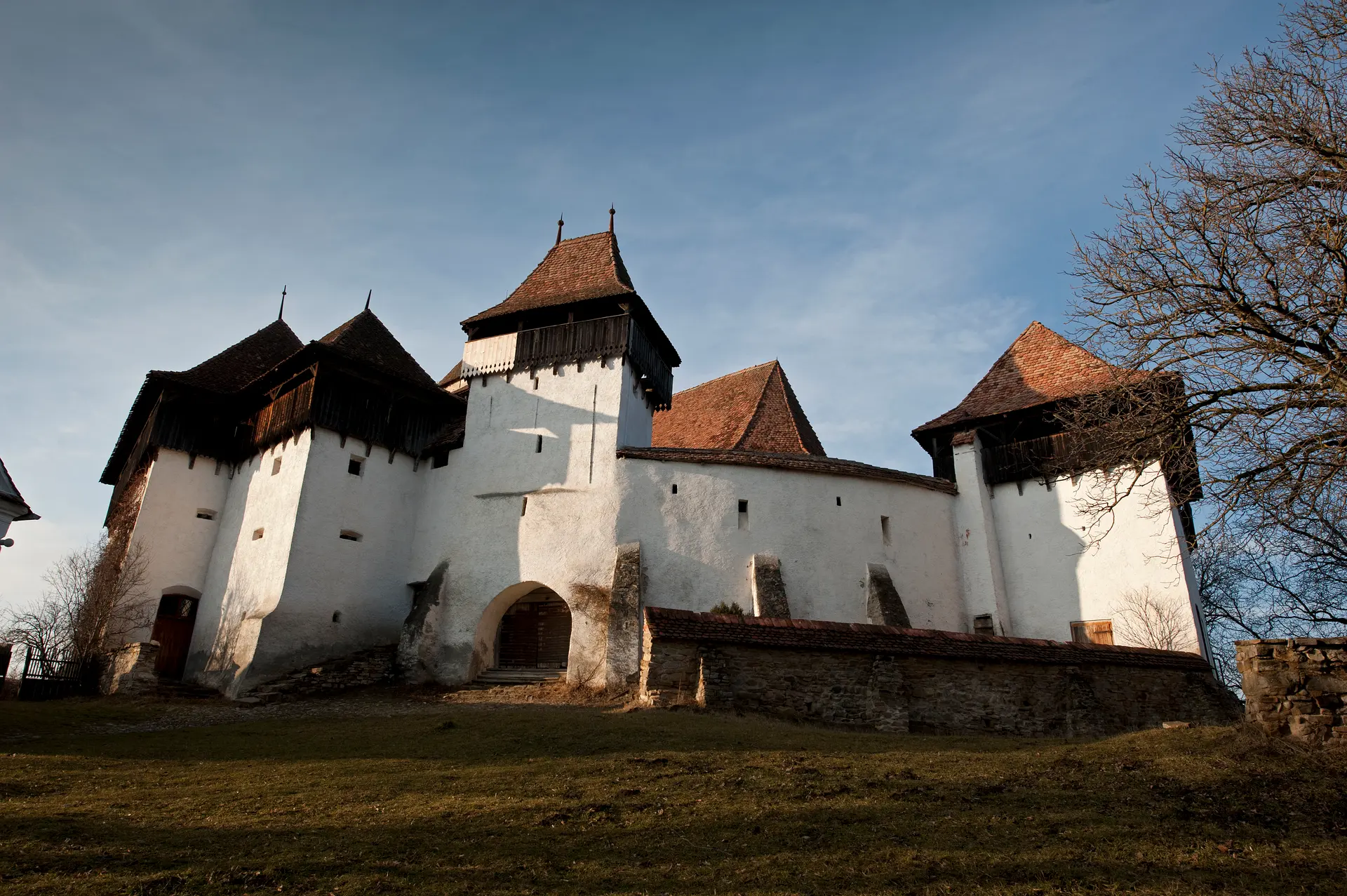
Viscri Fortified Church and Village Ensemble
Viscri, Brașov County, Romania
46.5 km away
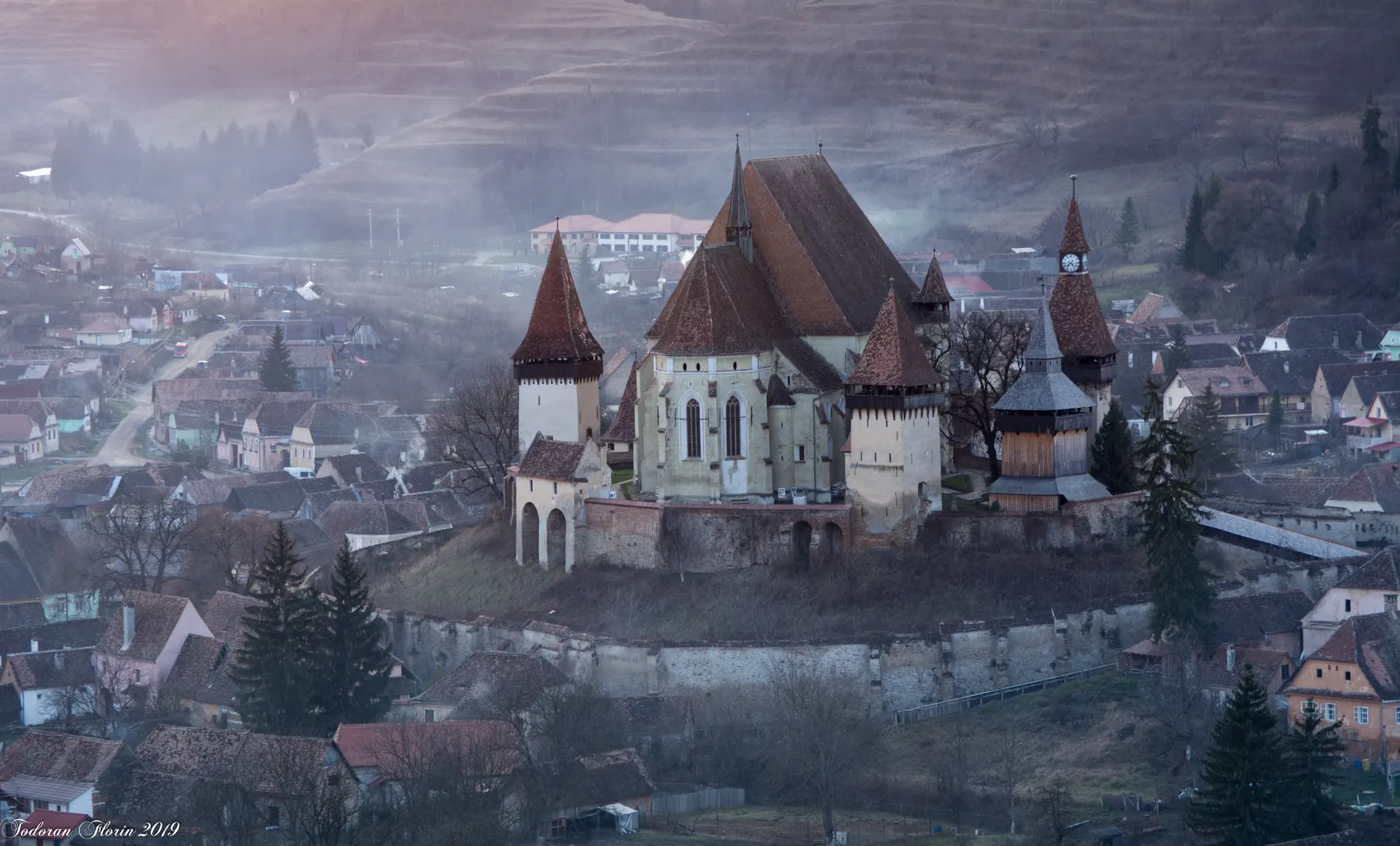
Biertan Fortified Church and Village Ensemble
Biertan, Sibiu County, Romania
53.8 km away
Saschiz Fortified Church and Village Ensemble
Saschiz, Mureș County, Romania
57.5 km away
Share a photo
Help visitors recognize Sambata Brancoveanu Monastery, Romania. Every submission is reviewed before publication.