Selinunte Archeological Park
A city of sanctuaries at the edge of the Greek world
Understand sacred places, explore living traditions, and learn how to engage respectfully with Pilgrim Map.
Access has not been verified. Check current local guidance before planning a visit.
Castelvetrano, Trapani, Italy
Read the sources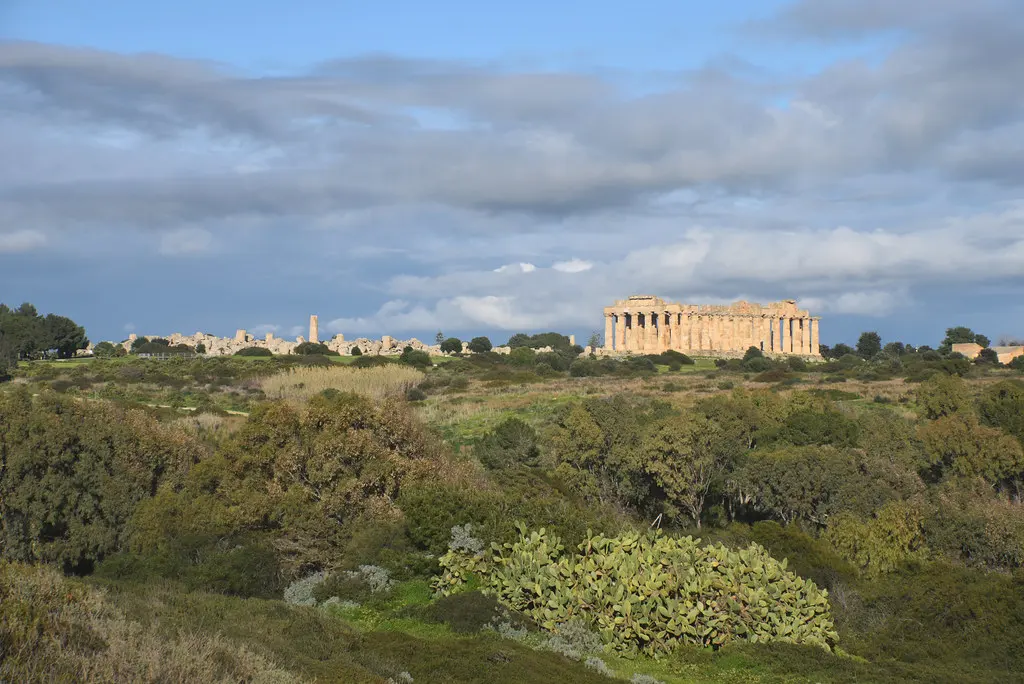
Image of Selinunte Archeological Park. Image source
Visit essentials
A quick read before you go
- Duration
- 2-3 hours minimum to see the major temples.
- Etiquette
- Treat the ruins with respect as both archaeological heritage and sacred ground.
Overview
Founded around 628 BC by colonists from Megara Hyblaea and named for coastal wild celery, Selinunte spent two centuries turning wealth into sanctuaries. By the fifth century BC it held eight monumental temples, a Demeter Malophoros sanctuary drawing Mediterranean pilgrims, and a sacred-architecture reputation across Magna Graecia.
Between Greek Sicily and Carthaginian territory, rivalry with Segesta drew Carthage into Sicilian affairs. In 409 BC Carthaginian forces besieged, breached, and systematically destroyed Selinunte. Partly rebuilt, it was abandoned in 250 BC and never reoccupied. With no medieval city or Renaissance quarrying, the fallen temples remained apart from earthquakes and vegetation until nineteenth-century archaeology.
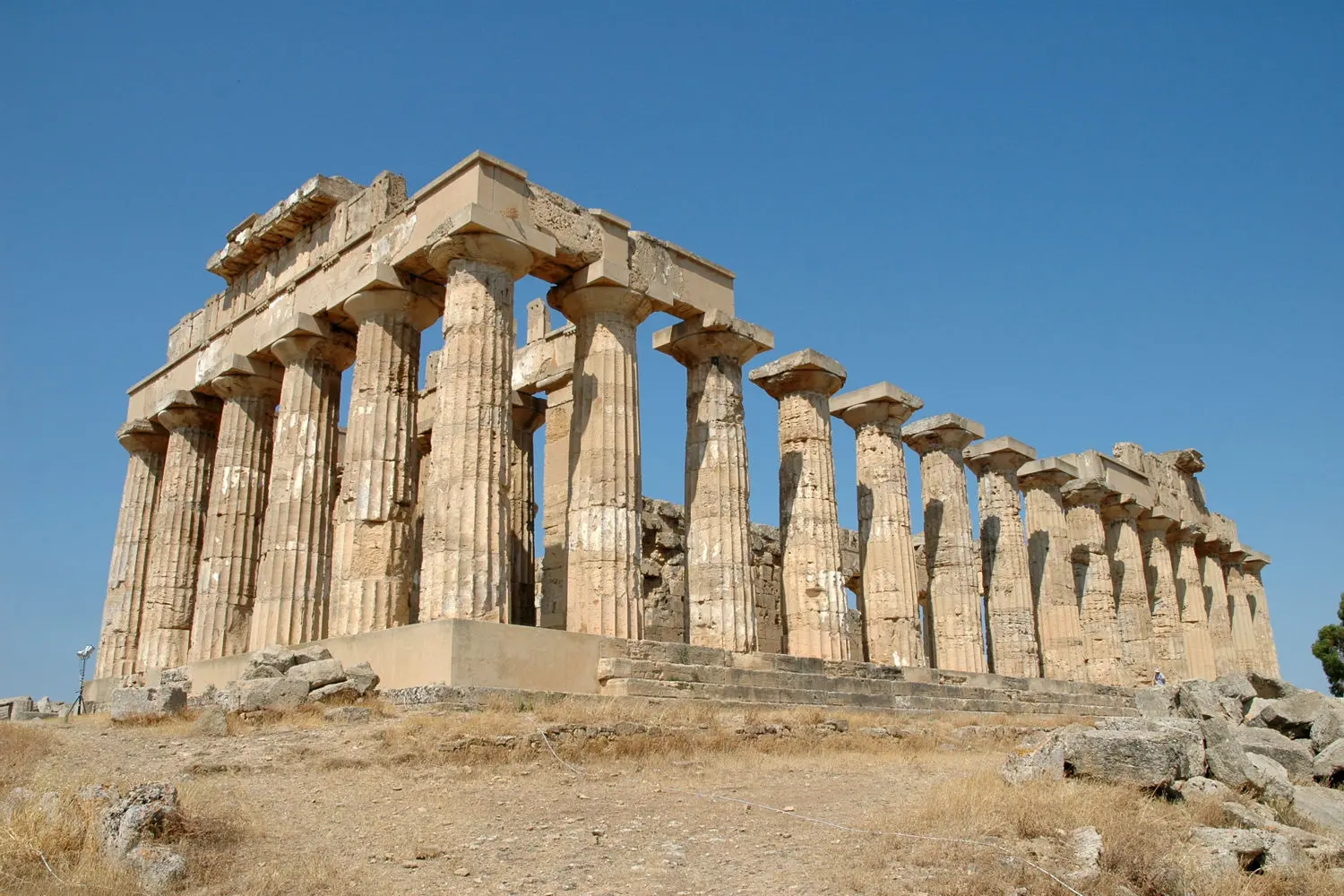
Visitors can still walk a Greek sacred landscape at intended scale. Partially reconstructed Temple E frames the sea; unfinished Temple G is a mountain of tumbled drums, among the largest temples ever attempted and now impossible to complete. A previously unknown temple discovered in 2024 shows how much remains unrevealed.
Why this place is sacred
The thin quality at Selinunte operates differently than at a living sanctuary. No priests serve here. No incense rises. No prayers are offered except the silent ones visitors bring with them. Yet the site possesses a presence that transcends its status as archaeological park.
Part of this comes from scale. Selinunte's builders worked at a size that still impresses. Temple G, had it been completed, would have ranked among the largest temples in the entire Greek world, 113 meters long and nearly 30 meters high. Its fallen columns lie where earthquakes toppled them, each drum weighing tons, collectively forming a landscape of sacred ambition reduced to rubble.
To climb among these stones is to feel both the grandeur of the attempt and the finality of its failure.
Part of the thinness comes from the site's history. Selinunte was not abandoned gradually. It was destroyed deliberately, violently, in 409 BC. The Carthaginian siege lasted nine days. When it ended, 16,000 Selinuntines were dead. The survivors were enslaved. The temples were deliberately damaged. This history charges the ruins with a particular kind of memory, not peaceful decline but catastrophe.
And yet the sacred persists. Recent excavations at Temple R, the oldest sacred building of the colony, uncovered an intact adyton, the inner sanctuary where only priests could enter, along with over 300 votive objects. The archaeologists described it as the spiritual axis around which the first Selinunte was organized. The faithful came here for two centuries, bringing offerings, seeking divine aid, participating in mysteries. That devotion left traces that outlasted the city's destruction.
Walk to the Sanctuary of Demeter Malophoros on Gaggera Hill, where thousands of terracotta figurines were found, each one a prayer from a pilgrim who came here seeking fertility, blessing, hope. The figures are in museums now. But the ground remembers.
Selinunte was a major Greek colonial city whose religious life centered on monumental temples and sanctuaries, particularly the worship of Demeter, Kore, Hera, Apollo, and other deities.
Following destruction in 409 BC and final abandonment in 250 BC, the site was never reoccupied, preserving the ancient sacred landscape. Modern archaeology has gradually revealed the extent and complexity of Selinunte's religious practices.
Experience and orientation
Arrive early. Selinunte sprawls across 270 hectares, and the Mediterranean sun is unforgiving. From the main entrance, you have choices: the Eastern Hill with its row of temples facing the sea, or the Acropolis with the remains of the city center. Both are essential. Plan to walk approximately four kilometers to see everything.
Begin with the Eastern Hill. Three temples stand here, designated E, F, and G because their original dedications remain uncertain. Temple E, probably dedicated to Hera, has been partially reconstructed, its columns rising again to suggest the original appearance of a Greek Doric temple. Walk around it, through it, let the proportions work on you. The metopes that once decorated this temple, masterpieces of Greek sculpture, are now in Palermo's archaeological museum, but the architecture itself creates its own meditation.
Turn to Temple G. This is different. This is ruin on a scale that silences. The temple was never finished. Construction may have continued for a century. Then came destruction. The columns that stood were toppled by earthquakes. They lie where they fell, a chaos of drums and capitals weighing thousands of tons collectively. Climb carefully among them. Feel the weight of ambition and time.
Take the shuttle or walk to the Acropolis, the heart of ancient Selinunte. Temple C, one of the oldest structures, stands partially reconstructed. From here you can trace the ancient street grid, see the remains of houses and shops, understand that this was a city, not just a collection of monuments.
If energy and time permit, walk to the Sanctuary of Demeter Malophoros on Gaggera Hill. This was one of the most famous shrines to the grain goddess in the ancient world. Little stands above ground, but the ground itself is holy, saturated with the prayers of thousands of ancient pilgrims.
The main entrance is near the Eastern Hill temples. A shuttle bus (approximately 8 euros, 2025 prices) connects to the Acropolis. Walking distance to see all major features is approximately 4 km. Allow 2-3 hours minimum.
Context and lineage
Selinunte's founding around 628 BC by colonists from Megara Hyblaea placed Greek civilization at the edge of its westward expansion. The colonists named their city for the wild celery that grew abundantly in the area, adopting the plant as the symbol on their coins.
The settlers immediately began building temples. The earliest, now designated Temple R, dates to around 580 BC and served as the spiritual axis of the young colony. Recent excavations have revealed an intact adyton containing over 300 votive objects, rewriting our understanding of Selinunte's earliest religious life.
By the fifth century BC, the city had accumulated enormous wealth. Thucydides described Selinunte on the eve of the Athenian expedition of 416 BC as powerful and prosperous, possessing great military resources by both land and sea. This wealth was poured into temple construction. Temple E rose between 465 and 450 BC with perfect proportions. Temple G, begun around 530 BC, aimed to create one of the largest temples in the Greek world but was still unfinished when catastrophe came.
The rivalry with neighboring Segesta proved fatal. When Segesta called on Carthage for aid in 409 BC, the Carthaginian general Hannibal Mago besieged Selinunte with overwhelming force. After nine days, the city fell. The destruction was systematic and intentional. Though a reduced settlement continued for another century and a half, Selinunte never recovered. Final abandonment came in 250 BC.
Selinunte served the gods of the Greek pantheon, particularly Demeter and Kore, Hera, Apollo, and possibly Zeus. The Sanctuary of Demeter Malophoros was one of the most important cult sites for the grain goddess in the ancient world. No continuous religious tradition survived the city's destruction and abandonment.
Pammilus
Founder
Hannibal Mago
Destroyer
Vincenzo Tusa
Archaeologist
Traditions and practice
Animal sacrifice on altars before the temples was the central act of Greek worship. The Sanctuary of Demeter Malophoros received thousands of votive offerings, primarily terracotta figurines representing the goddess or her devotees. The Thesmophoria and other female-only festivals celebrated fertility and the agricultural cycle. Recent excavations suggest that elite women played leading roles in the consecration of sacred space.
No active religious community serves Selinunte. The site functions as an archaeological park and cultural heritage site. However, visitors frequently describe contemplative or spiritual experiences among the ruins. The summer performance season brings theatrical and musical events to the ancient theater.
Approach the site as sacred ground, not merely as a museum. Spend time with the fallen columns of Temple G, letting their scale and silence work on you. Walk to the Sanctuary of Demeter Malophoros even if it seems remote. Sit quietly among the ruins and consider the thousands who came here seeking divine help across two centuries of active worship. Let the site teach you about impermanence.
Ancient Greek Religion / Cult of Demeter
HistoricalThe Sanctuary of Demeter Malophoros was one of the most important cult sites for the grain goddess in the Mediterranean world, receiving enormous numbers of pilgrims as evidenced by thousands of terracotta votive statues. Female cults, particularly those of Demeter and Kore, were central to Selinunte's spiritual identity.
Animal sacrifice, deposition of votive offerings, processions, seasonal agricultural festivals, secret female fertility rites during the Thesmophoria, prayers for agricultural prosperity.
Ancient Greek Religion / Temple Worship
HistoricalSelinunte's eight major temples represented the city's wealth, piety, and cultural sophistication. Temple-building on this scale served both religious and political purposes, demonstrating the city's importance on the frontier of Greek civilization.
Animal sacrifice on altars before the temples, processions during festivals, votive offerings, prayers for civic and military success, consultation of priests for divine guidance.
Perspectives and open questions
Selinunte can be understood as an archaeological treasure, as evidence of the grandeur and vulnerability of Greek colonial civilization, as sacred ground still resonant with ancient devotion, or as a meditation on impermanence.
Scholarly perspective
Archaeologists recognize Selinunte as one of the most important sites for understanding Greek colonial religion and temple architecture. The 2024 discovery of a previously unknown temple demonstrates that significant findings remain possible. The intact adyton of Temple R, with its 300 votive objects, has rewritten understanding of the colony's earliest sacred practices.
Living and traditional perspectives
For those who honor the Greek gods, Selinunte represents a major sacred landscape, one of the greatest concentrations of Greek temples in the Mediterranean. The Sanctuary of Demeter Malophoros was among the most important cult sites for the grain goddess in the ancient world.
Alternative interpretations
Some visitors experience Selinunte as a place where the veil between past and present thins, where the devotion of ancient worshippers can still be felt despite the passage of millennia. The fallen columns of Temple G evoke Buddhist teachings on impermanence.
Open questions
The original dedications of most temples remain uncertain. The specific deities worshipped at each sanctuary are often unclear. The circumstances of the 409 BC siege are documented but many details of daily religious practice are lost.
Plan your visit
Access and arrival
Marinella di Selinunte offers hotels and restaurants near the site. Castelvetrano provides additional options. Agrotourism stays available in the surrounding countryside.
Respectful visit
Practical clothing suitable for walking in Mediterranean heat. Sturdy shoes are essential for the terrain. Sun protection is strongly recommended.
Photography is permitted throughout the site. Drones require special permission. Consider photographing not just the dramatic monuments but the quieter corners where the sacred atmosphere persists.
Modern offerings are not traditional at archaeological sites but some visitors leave small tokens. If doing so, leave nothing that will degrade the site or mislead future archaeologists.
Do not climb on unstable structures. Stay on marked paths where indicated. Do not remove any material from the site, including small fragments. The fallen columns of Temple G are fragile despite their massive appearance.
The site is expansive and exposed. Bring water, sun protection, and comfortable walking shoes. Some areas involve uneven terrain. Shuttles are available but do not reach all areas.
Current practical details
Address
Piazzale Bovio Marconi, 91022 Marinella TP, Italy
Phone
Hours
Hours, fees, and access can change — verify on the official source before you travel. Practical details last checked Jun 2026.
Location
Map loads as you approach this section.
Pilgrim reflections
A portrait of encounter, not a score
Pilgrims describe what they felt, how present they could become, and whether the place would shape a journey. There are no stars and no ranking of traditions.
No reviewed reflections yet
The first pilgrims can help describe the character of being here.
Share a reflection
Available after an account-backed “Been there.” Every reflection is reviewed before publication.
Nearby sacred places
Explore other sacred places in the region. Proximity does not establish access or travel time; check each place’s guidance.



References
Sources consulted for this page. Source categories describe the publication, not a guarantee that every claim is verified. Traditional accounts and outside interpretations may differ.
- 01Selinunte - WikipediaSource context
- 02Selinunte - History and Facts | History HitSource context
- 03New Temple Found in Selinunte | Sicily Travel GuideSource context
- 04Selinunte Archaeological Park: A Journey into Ancient Greece in Sicily - Slow SicilySource context
- 05IFA Dig In Sicily Sheds Light on Ancient Female Cult Worship - NYUSource context
- 06Selinunte Archaeological Park | CoopCultureSource context
- 07Selinunte, Major Archaeological Site of Sicily: Complete GuideSource context
Share a photo
Help visitors recognize Selinunte Archeological Park. Every submission is reviewed before publication.