Savitri Mata Mandi (Savitri Temple)
Where a goddess retreated in righteous anger, and now watches over the only place Brahma is worshipped on earth
Understand sacred places, explore living traditions, and learn how to engage respectfully with Pilgrim Map.
Access has not been verified. Check current local guidance before planning a visit.
Pushkar, Rajasthan, India
Visit essentials
A quick read before you go
- Duration
- Allow 2-3 hours for a complete visit.
- Etiquette
- Savitri Temple welcomes visitors of all faiths but expects respectful behavior appropriate to an…
Overview
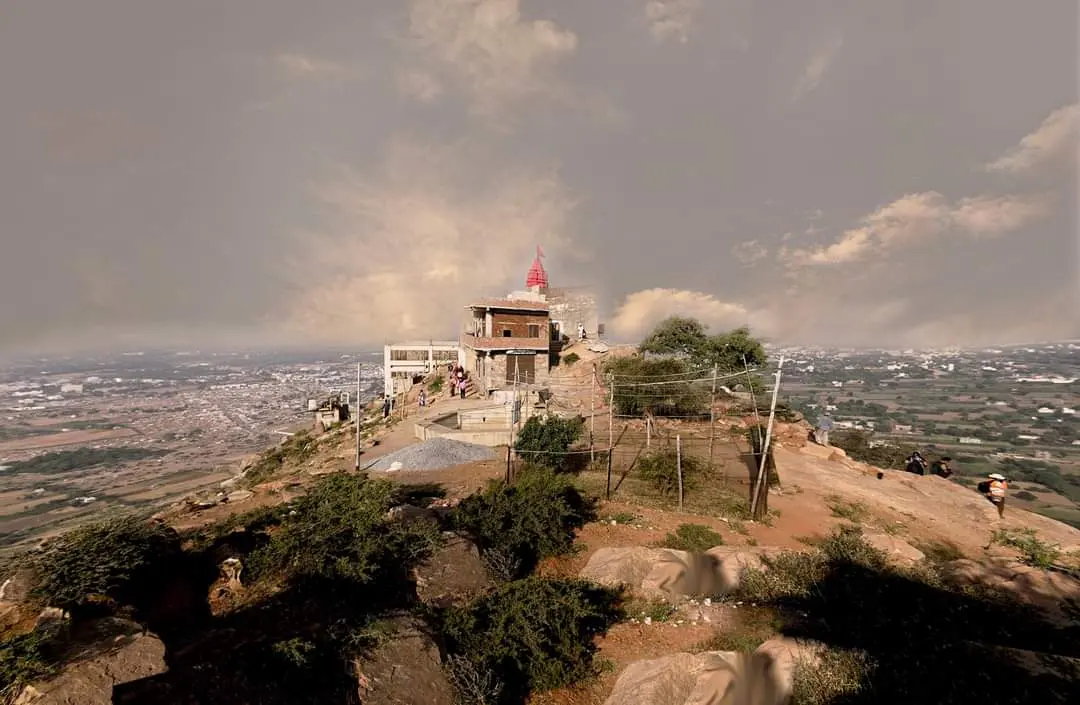
Where Rajasthan's plains give way to Ratnagiri Hill, seven hundred steps—perhaps more—lead to the summit abode of Savitri and a curse echoed through India's temples.
Savitri, Brahma's first wife, cursed him to be worshipped nowhere but Pushkar after he married another woman to complete a sacred ritual. She withdrew to Ratnagiri, merging with its rock and water. Idols believed to date from the 7th century remain in a temple built in 1687 and rebuilt in the early 20th century.
Pilgrims still honor the protocol her anger established by visiting Savitri before Brahma below. A ropeway opened in 2006 for those unable to walk, though many choose the steps as tapas, spiritual heat accumulated through effort. At the summit, Savitri stands between Sharda and Saraswati.
The view takes in Pushkar Lake's fifty-two ghats and the desert beyond. Below, Brahma remains bound by Savitri's decree, receiving active worship in this sole place on earth.
Why this place is sacred
In Hindu understanding, certain places become thin not through human designation but through divine choice. Savitri did not simply withdraw to Ratnagiri Hill; according to tradition, she merged with it. The spring called Savitri Jharna, emerging from the hillside, is understood as her physical presence made water. The stone itself holds her.
This is not metaphor for devotees. When they climb the steps barefoot, they walk upon a goddess. When they reach the summit and stand before idols believed carved in the 7th century, they encounter a presence that has received offerings for over thirteen hundred years. The continuity of worship creates its own thinness, each generation's devotion layering upon the last until the place itself seems saturated.
The panoramic view adds another dimension. From Savitri's summit, pilgrims look down upon the only temple in the world dedicated to Brahma. The creator of the universe, one of the Trimurti alongside Vishnu and Shiva, has no other active shrine. Savitri's curse ensured this. Standing where she stands, seeing what she sees, visitors witness the consequence of divine anger made geography.
The physical challenge of the ascent participates in the sacredness. Hindu tradition understands effort as tapas, literally heat, a spiritual force generated through discipline and sacrifice. Each step up Ratnagiri Hill produces merit. The ropeway offers accessibility, but those who climb speak of the journey as inseparable from the destination.
According to Hindu teaching, Savitri chose this hill as her abode after cursing Brahma for marrying Gayatri in her absence during a yajna, a sacred fire ritual. The temple that eventually rose here was built to honor her ongoing presence, not to commemorate a past event. The idols dating to the 7th century suggest organized worship predating the current temple structure by centuries.
The site's purpose, from its origin, has been relationship with a living goddess who resides in the hill itself.
The temple's physical form has evolved while its essential function remains constant. The current structure dates to 1687, built on what was likely an earlier sacred site. In the early 20th century, the Bangar family rebuilt the temple, giving it its present appearance. The 2006 installation of the ropeway transformed accessibility, allowing elderly and disabled pilgrims to reach the summit. Yet the fundamental act, paying respects to Savitri before descending to Brahma, continues as it has for centuries.
Experience and orientation
The ascent sets the conditions. Whether climbing the stone steps or rising in the ropeway cabin, visitors undergo a transition from the busy streets of Pushkar to the exposed height of Ratnagiri. Those who walk describe the rhythm of the climb entering their bodies, breath and heartbeat synchronized with the rising path. Monkeys appear along the route, uninterested in spiritual seeking, very interested in any food carried openly.
At the summit, something shifts. Visitors consistently describe a sense of accomplishment that exceeds the physical challenge. The temple itself is modest in scale but potent in presence. The three goddesses, Savitri flanked by Sharda and Saraswati, receive offerings in a sanctum that pilgrims view from a designated area outside. The space invites pause rather than hurry.
The views from the hilltop produce their own effect. Pushkar Lake spreads below, its ghats and temples miniaturized by distance. The Brahma Temple, visible from this vantage, takes on new meaning when seen from Savitri's perspective. The desert landscape extends beyond, offering scale that diminishes personal concerns.
Sunrise and sunset draw particular crowds, the changing light transforming both the distant landscape and the immediate temple stones. The cool breeze at altitude contrasts with the heat below. Many visitors describe leaving with a quality of peace that stays with them through the descent and beyond.
Consider approaching Savitri Temple as pilgrimage rather than sightseeing. The distinction lies not in belief but in attention. Arrive early, before the heat and crowds build. If physically able, climb the steps rather than taking the ropeway; let the effort work on you.
Carry water but not food, to avoid monkey encounters. Bring whatever you struggle with, whatever question remains unsettled in your life, as an offering of honest seeking. You need not believe that Savitri literally resides in this hill. You need only be present to what arises in a place where others have sought her for thirteen centuries.
At the summit, resist the urge to immediately photograph. Stand first. Look down at Pushkar, at the temple of a god bound by his wife's decree. Consider what it might mean for a grievance to become geography, for anger to shape the spiritual landscape of an entire tradition. Then, if you wish, take your pictures.
Context and lineage
The story begins with a yajna, a sacred fire ritual that Lord Brahma was performing at the site now known as Pushkar Lake. For such rituals to be complete, the performer's wife must be present. Savitri, Brahma's consort, was delayed. She had been waiting for three companion goddesses, Lakshmi, Parvati, and Indrani, to accompany her. An auspicious moment was passing.
Brahma, facing ritual failure, made a consequential choice. He married a local Gurjar girl named Gayatri, purifying her through passage through a cow, and installed her beside him to complete the ceremony. When Savitri finally arrived and found another woman in her rightful place, her response was fierce. She cursed Brahma to be worshipped nowhere on earth except Pushkar.
To protect the yajna from demons, Brahma had created four hills around the lake: Ratnagiri to the south, Nilgiri to the north, Sanchoora to the west, and Suryagiri to the east, positioning gods upon each. After pronouncing her curse, Savitri chose Ratnagiri as her permanent abode, merging with the hill itself.
Gayatri, empowered by her participation in the yajna, partially mitigated the curse. She blessed Pushkar to become the king of pilgrimages, ensuring that Brahma's worship here would carry special merit. The interplay of curse and counter-blessing shaped Pushkar into what it remains: the sole place on earth where the creator is actively venerated.
The worship tradition at Ratnagiri Hill predates the current temple structure. The 7th century idols suggest organized veneration for over thirteen centuries, transmitted through generations of priests and pilgrims. The temple's 1687 construction formalized what had long been sacred ground. The Bangar family's early 20th century reconstruction preserved continuity while updating the physical structure. Today, temple priests maintain daily aarti ceremonies, performed here before the corresponding rite at the Brahma Temple below, honoring the precedence Savitri established through her curse.
Savitri
deity
The first wife of Lord Brahma and an aspect of the Divine Feminine. She represents devotion, marital fidelity, and the power of righteous anger. According to tradition, she merged with Ratnagiri Hill and continues to reside there.
Brahma
deity
The creator god of the Hindu Trimurti, alongside Vishnu and Shiva. His temple at Pushkar is the only active Brahma temple in the world, a consequence of Savitri's curse.
Gayatri
deity
Brahma's second wife, married to complete the yajna in Savitri's absence. She is associated with the Gayatri Mantra. Her temple sits on Ratnagiri Hill opposite Savitri's shrine.
Sharda and Saraswati
deity
The two goddesses flanking Savitri in the temple sanctum. Saraswati is the goddess of knowledge and arts; Sharda is another form associated with learning and wisdom.
Traditions and practice
The central ritual protocol at Pushkar requires worshipping Savitri before Brahma. This sequence honors her primacy as Brahma's first wife and acknowledges the power her curse holds over divine geography. Temple priests perform morning and evening aarti at Savitri Temple first; the corresponding ceremony at Brahma Temple follows.
Devotees traditionally bathe in Pushkar Lake before ascending to either temple. Many climb the steps barefoot as an expression of devotion, the physical contact with the sacred hill adding to the pilgrimage's merit. Circumambulation of the temple, offerings of flowers and sweets, and prayers for marital harmony and family wellbeing constitute the typical devotional practice.
The Jagarana, a night vigil, takes place on Saptami during the month of Bhado, when devotees remain at the temple through the night in worship. Kartik Purnima, the full moon of Kartik month falling in October or November, coincides with the Pushkar Camel Fair and brings tens of thousands of pilgrims.
Modern pilgrims continue the essential practices while adapting to contemporary conditions. The ropeway, opened in 2006, allows those unable to climb to still reach the summit. Families arrive throughout the day, the morning and late afternoon hours favored for cooler temperatures and better light.
Many visitors combine the temple visit with the larger Pushkar pilgrimage circuit: bathing at the lake ghats, visiting Brahma Temple, ascending to Savitri, and sometimes continuing to the Gayatri Temple on the same hill. Spiritual seekers who stay in Pushkar for several days often return to Savitri Temple multiple times, finding the summit a place of contemplation apart from the busy town below.
If you come seeking meaningful engagement, consider these approaches. Begin your Pushkar pilgrimage at the lake before dawn, participating in or witnessing the morning bathing rituals. Then climb to Savitri before visiting Brahma, honoring the traditional sequence.
If able, take the steps rather than the ropeway. Move slowly. The climb itself is practice. Notice when your mind wanders to the destination rather than the present step. At the summit, before photographing, stand quietly and take in the view. Consider the goddess whose anger shaped the spiritual landscape spread below you.
In the temple sanctum, you cannot enter but can view the three goddesses from the designated area. Offerings can be purchased at the base of the hill. If something in your life involves questions of partnership, fidelity, or the complexities of relationship, bring that honestly into your attention here. Savitri's story encompasses wrongdoing, fierce response, and enduring consequence. It is not a simple tale.
Hindu Shakti Worship
ActiveSavitri Temple is dedicated to Goddess Savitri, the first wife of Lord Brahma and a manifestation of Shakti, the Divine Feminine principle. She represents the power of devotion, marital fidelity, and righteous anger. Her story demonstrates that even creator gods face consequences when they wrong their consorts. The temple houses Savitri in the central position, flanked by Goddess Sharda and Goddess Saraswati, forming a triad of feminine divine presence.
Daily aarti is performed at Savitri Temple before the corresponding ceremony at Brahma Temple below, honoring her primacy. Devotees seek blessings for marital harmony, family prosperity, and the resolution of relationship difficulties. Many climb barefoot as an expression of devotion. The Jagarana night vigil during Bhado month and major gatherings during Kartik Purnima are particularly significant.
Brahma Worship Tradition
ActiveThe Savitri Temple is inseparable from Pushkar's unique position as the sole place on earth where Brahma the creator receives active worship. Savitri's curse made it so. The temple relationship is complementary and sequential: devotees are expected to honor Savitri before descending to Brahma. From the summit of her hill, pilgrims look down upon his temple, seeing the consequence of her decree spread below.
The core practice is the pilgrimage sequence: bathing in Pushkar Lake, climbing to Savitri Temple, then descending to Brahma Temple. This order honors Savitri's primacy and respects the conditions her curse established. Major pilgrimage times, particularly Kartik Purnima, see this sequence performed by thousands of devotees.
Perspectives and open questions
The Savitri Temple invites interpretation from multiple angles: as historical site, as living goddess shrine, as monument to the consequences of marital injustice. Scholarly, traditional, and alternative perspectives each illuminate different dimensions. Honest engagement with the site benefits from holding these together without forcing resolution.
Scholarly perspective
The temple's history can be traced through documented construction dates and archaeological evidence of the 7th century idols, though the exact provenance of those ancient images remains unclear. Scholars understand the Savitri-Brahma-Gayatri mythology as it appears in texts like the Padma Purana, situating Pushkar's unique status as Brahma's sole worship site within the broader patterns of Hindu sectarian development.
The near-total absence of Brahma temples elsewhere in India is a genuine anomaly. Why the creator god of the Trimurti has virtually no active worship outside Pushkar remains a question scholars approach through both textual analysis of the curse narrative and historical examination of sectarian competition between Shaivite and Vaishnavite traditions. The Pushkar mythology provides a narrative explanation, but its historical development is more complex.
Living and traditional perspectives
For devotees, Savitri is not a symbolic figure but a living goddess who chose this hill as her abode and remains present within it. The curse she pronounced on Brahma is not ancient legend but ongoing reality, explaining the observable fact that Brahma temples do not exist elsewhere. The requirement to worship Savitri before Brahma is not custom but protocol established by divine decree.
From this perspective, the pilgrimage to Savitri Temple is encounter with divine presence. The physical effort of the climb generates spiritual merit. The view from the summit is Savitri's view, her perspective on the husband she bound and the town that became the sole place of his worship. Devotees come not to learn about a goddess but to seek her blessing.
Alternative interpretations
Some contemporary spiritual seekers interpret the Savitri-Brahma-Gayatri configuration through esoteric or archetypal lenses. Savitri as the primordial feminine principle, Gayatri as manifest creative power associated with the Gayatri Mantra, Brahma as creative consciousness itself. The hilltop position overlooking Pushkar becomes the witnessing awareness observing creation below.
Others draw connections between the temple's elevated position and concepts of energy or consciousness ascension. The physical climb as metaphor for spiritual rising. These interpretations lack traditional scriptural support but often emerge from genuine experiences visitors have at the site, attempts to articulate something felt but not easily named.
Open questions
Several mysteries persist. The exact origin of the 7th century idols is not well documented. Local traditions speak of Savitri Jharna, a sacred spring emerging from the hill where the goddess merged with the stone, but its current status and location are not clearly described in available sources.
Why Brahma worship effectively disappeared from India while remaining vital in Pushkar alone remains a question with narrative explanation but uncertain historical causation. The relationship between the mythology and the actual historical development of Hindu sectarian traditions invites ongoing inquiry. The site holds more questions than settled answers.
Plan your visit
Access and arrival
Pushkar offers accommodation ranging from budget hostels to heritage hotels. Many pilgrims stay near Pushkar Lake or the Brahma Temple area for convenient access to the sacred sites. During Kartik Purnima and the camel fair, advance booking is essential and prices rise significantly.
Respectful visit
Modest clothing is recommended, with shoulders and knees covered. There are no strict enforcement mechanisms, but dressing appropriately shows respect for the tradition and makes your presence less disruptive to devotees. Many pilgrims remove footwear for the climb and temple visit as an expression of reverence.
Photography is permitted throughout the site and along the trek. The summit views are particularly popular subjects. Be mindful around the sanctum and during ceremonies. The light at sunrise and sunset produces especially compelling images of both the temple and the landscape views.
Flowers, sweets, and incense are traditional offerings at Hindu temples. These can be purchased from vendors at the base of the hill before you begin your climb. Offerings are placed at the temple by priests or in designated areas. If uncertain about the process, observe what other devotees do or ask.
The inner sanctum is viewable but not enterable by visitors. Respectful behavior is expected throughout the temple area. Be mindful of the monkeys who inhabit the hill, as they may grab at belongings, food, or anything that catches their interest.
The monkeys along the climbing path are bold and experienced with tourists. Do not carry exposed food, and secure bags and dangling items. They will grab what they can.
During peak times, particularly Kartik Purnima and the camel fair season, crowds can be substantial. If solitude matters to your experience, visit during off-peak months or in early morning before the day's crowds build.
The steps can be steep and uneven. Proper footwear is essential unless you choose the traditional barefoot approach. Even then, watch your footing. The heat of midday makes the stones hot and the climb more taxing.
Current practical details
Address
FHQ2+VFJ, Badi Basti, Pushkar, Rajasthan 305022, India
Phone
Hours
Hours, fees, and access can change — verify on the official source before you travel. Practical details last checked Jun 2026.
Location
Map loads as you approach this section.
Pilgrim reflections
A portrait of encounter, not a score
Pilgrims describe what they felt, how present they could become, and whether the place would shape a journey. There are no stars and no ranking of traditions.
No reviewed reflections yet
The first pilgrims can help describe the character of being here.
Share a reflection
Available after an account-backed “Been there.” Every reflection is reviewed before publication.
Nearby sacred places
Explore other sacred places in the region. Proximity does not establish access or travel time; check each place’s guidance.



Photo gallery
3 curated photos
Pilgrim glossary
- Mantra
- A sound, word, or phrase repeated as part of meditation or ritual.
Share a photo
Help visitors recognize Savitri Mata Mandi (Savitri Temple). Every submission is reviewed before publication.