Brahma Temple, Pushkar, Rajasthan
A rare temple to the creator-god, beside the lake where Brahma is said to have alighted
Understand sacred places, explore living traditions, and learn how to engage respectfully with Pilgrim Map.
Access has not been verified. Check current local guidance before planning a visit.
Pushkar, Rajasthan, India
Read the sources
Visit essentials
A quick read before you go
- Duration
- 1 to 2 hours for temple and lakefront; a full day or more during the fair.
- Access
- In Pushkar town, Ajmer district, Rajasthan; reached via Ajmer (rail and road), about 15 km away.
Overview
Pushkar's red-spired Jagatpita Brahma Mandir is the most prominent of Hinduism's rare Brahma temples. Beside Rajasthan's sacred Pushkar Lake, it marks where tradition says Brahma performed a yagna and dropped the lotus whose petals created the lakes and named the town. Inside, the four-faced chaturmukha Brahma murti receives darshan with his goose vehicle and a silver turtle set into the floor.
Pushkar, sometimes called the king of tirthas, is ringed by fifty-two bathing ghats and overlooked by hilltop shrines to Savitri and Gayatri. Bathing in the lake—especially on Kartik Purnima—is believed to grant salvation; a seven-day festival around that full moon brings mass devotion, music, ceremony, and the adjoining camel fair.
The standing temple is medieval, commonly dated to the fourteenth century, while renovation traditions name Vishwamitra, Adi Shankara, and Maharaja Jawat Raj of Ratlam. The site's older sanctity appears in the Mahabharata and Puranas. Although devotion often calls this the world's only Brahma temple, scholars describe it more precisely as one of very few.
Why this place is sacred
The threshold quality of Pushkar comes from rarity and pairing. To take darshan of Brahma, the creator who is venerated almost nowhere else, beside a lake whose Kartik Purnima dip is believed to grant salvation, is to stand at an unusual junction in Hindu sacred geography. The hilltop temples of Savitri and Gayatri, Brahma's two consorts, look down over the town and over the legend that explains the temple's existence.
At the fair the synchronized bathing at the ghats and the night music give the place an intensity that visitors describe as both devotional and immersive.
A temple marking the site of Brahma's yagna at Pushkar and the foremost seat of worship of Brahma the creator.
The site's sanctity is ancient, referenced in the Mahabharata and Puranas; the standing structure is medieval, commonly dated to the fourteenth century, with renovation traditions linking it to Vishwamitra, Adi Shankara, and Maharaja Jawat Raj of Ratlam.
Experience and orientation
On an ordinary day the temple offers an unhurried darshan of the four-faced Brahma murti, with the lakeside ghats nearby for sitting at sunrise or sunset. Pilgrims often describe deep devotion at the rare sight of Brahma and a contemplative pull toward the theme of creation the deity embodies. The temple closes for a midday break, roughly 1:30 to 3:00 PM, so early morning or pre-aarti evening are the quieter and more comfortable windows.
Kartik Purnima, the full moon of October or November, changes the register completely. The seven-day fair fills the ghats with synchronized bathing held to be most efficacious of the year, and the town with music, ceremony, and the adjoining camel fair. The desert summers are very hot, so most visitors choose the cooler months. A holy dip at the ghats, often guided by a local priest, is the act many travel for.
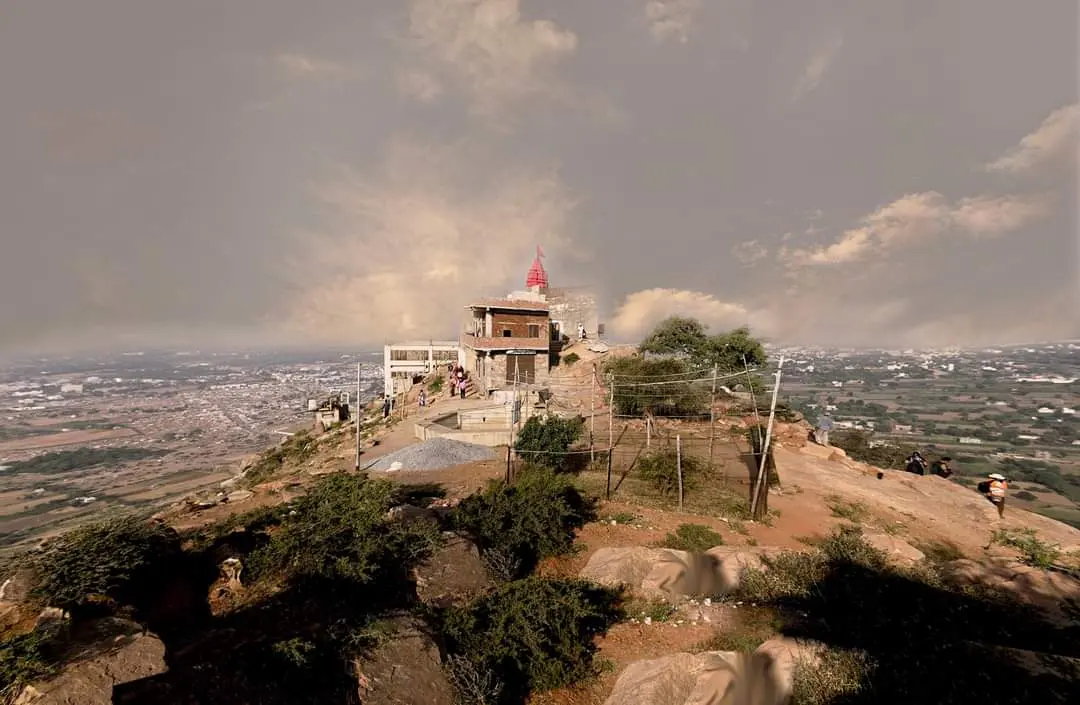
Remove shoes before the sanctum and take darshan of the four-faced murti; then walk down to the lake's ghats for the water and the hilltop views of the Savitri and Gayatri shrines.
Context and lineage
Tradition holds that Brahma performed a yagna at Pushkar; when his consort Savitri was late, he married Gayatri to complete the rite, and the enraged Savitri cursed Brahma that he would be worshipped nowhere except Pushkar, an account that explains the rarity of his temples. A second legend says Brahma dropped a lotus (pushkar) whose petals created the sacred lakes and named the town. The exact original construction date and earliest temple form are not firmly established.
Puranic and devotional Hinduism, sustained as a living pilgrimage centre and one of the five sacred dhams of Pushkar.
Brahma
Creator-god, deity of the temple
Savitri
Brahma's first consort
Gayatri
Brahma's second consort
Vishwamitra
Sage, traditional builder
Maharaja Jawat Raj of Ratlam
Patron of renovation
Traditions and practice
Worship centres on darshan of the chaturmukha Brahma murti and the temple aartis, alongside ritual bathing in the adjoining Pushkar Lake, considered especially efficacious on Kartik Purnima and believed to grant salvation.
Daily aartis are held pre-dawn, after sunset, and later in the evening. The annual seven-day Kartik Purnima fair brings the adjoining camel fair and cultural programmes, with mass bathing at the ghats.
Take darshan unhurried in the early morning, then sit at the ghats for the changing light; if you bathe, a local priest may guide the rite, though it is wise to agree any offering clearly beforehand.
Hinduism
ActiveThe most prominent of the very few temples in India dedicated to Brahma the creator, in the town where Brahma is said to have performed a yagna. Pushkar is counted among the holiest Hindu pilgrimage places, and worship of Brahma here is uniquely sanctioned in tradition.
Darshan of the chaturmukha (four-faced) Brahma murti, aarti, offerings, and ritual bathing in the adjoining Pushkar Lake.
Perspectives and open questions
Pushkar pairs an ancient pilgrimage reputation with a medieval temple structure and a famously rare object of worship.
Scholarly perspective
Scholars treat Pushkar as an ancient pilgrimage centre with a medieval temple structure; Brahma worship here is genuinely rare in Hinduism, where temples to Brahma are few.
Living and traditional perspectives
In Hindu tradition Pushkar is the uniquely sanctioned seat of Brahma worship owing to Savitri's curse, and a supreme tirtha whose lake confers liberation.
Alternative interpretations
Popular accounts often call it the world's only Brahma temple and emphasize the salvific power of the Kartik Purnima dip; the 'only' claim is devotional shorthand rather than literal fact.
Open questions
The exact original construction date and earliest temple form are not firmly established.
Plan your visit
Access and arrival
In Pushkar town, Ajmer district, Rajasthan; reached via Ajmer (rail and road), about 15 km away.
Pushkar offers guesthouses, heritage hotels, and dharamshalas; book well ahead for the Kartik Purnima fair, when the town fills.
Respectful visit
Modest dress covering shoulders and knees; shoes removed before the sanctum.
Not permitted inside the sanctum; allowed in the open courtyard and exterior.
Flowers, sweets, and prayers; ghat rituals may involve flower offerings on the lake.
Maintain silence and decorum; be wary of unsolicited 'Pushkar passport' donation pressure from lakeside touts.
Be aware of unsolicited 'Pushkar passport' donation pressure from some lakeside touts; agree on any priest's fee in advance. The fair brings very large crowds.
Current practical details
Address
Brahma Temple Rd, Pushkar, Rajasthan 305022, India
Hours
Hours, fees, and access can change — verify on the official source before you travel. Practical details last checked Jun 2026.
Location
Map loads as you approach this section.
Pilgrim reflections
A portrait of encounter, not a score
Pilgrims describe what they felt, how present they could become, and whether the place would shape a journey. There are no stars and no ranking of traditions.
No reviewed reflections yet
The first pilgrims can help describe the character of being here.
Share a reflection
Available after an account-backed “Been there.” Every reflection is reviewed before publication.
Nearby sacred places
Explore other sacred places in the region. Proximity does not establish access or travel time; check each place’s guidance.



References
Sources consulted for this page. Source categories describe the publication, not a guarantee that every claim is verified. Traditional accounts and outside interpretations may differ.
- 01Brahma Mandir, Pushkar — Rajasthan Tourism — Department of Tourism, Government of RajasthanofficialOfficial tourism page on the temple's significance and pilgrimage importance.
- 02Brahma Temple, Pushkar — Wikipedia — Wikipedia contributorsacademicConfirms 14th c. structure, Vishwamitra/Adi Shankara/Jawat Raj associations, Savitri-Gayatri legend, status as a prominent but not literally unique Brahma temple.
- 03Pushkar — Wikipedia — Wikipedia contributorsacademicPushkar as one of five sacred dhams; Kartik Purnima fair; Panch Sarovar; camel fair adjunct.
- 04Pushkar Lake — Wikipedia — Wikipedia contributorsacademicSacred lake adjoining the temple; ritual bath on Kartik Purnima believed to grant salvation.
- 05Brahma Temple Pushkar — Indian Heritage Architecture (InHeritage Foundation) — InHeritage FoundationSource contextArchitecture and heritage context, red-spire and hamsa (goose) iconography.
- 06Pushkar Brahma Temple: A Unique Temple for the Lord of Creation — Savaari — SavaariSource contextSignificance, marble-and-stone structure, silver turtle and pilgrim devotions.
- 07Brahma Temple Pushkar: Darshan Timings, Entry & Guide 2026 — RajasthanPlaces — RajasthanPlacesSource contextVisitor etiquette, dress code, photography ban inside sanctum, timings and aarti schedule.
- 08Pushkar Tour — Brahma Temple and Pilgrimage Attractions — Tour My India — Tour My IndiaSource contextPilgrimage framing, Kartik Purnima fair and holy dip practices.
Photo gallery
3 curated photos
Share a photo
Help visitors recognize Brahma Temple, Pushkar, Rajasthan. Every submission is reviewed before publication.