Santa María la Real do Cebreiro
The stone church where a doubting priest's Host is said to have bled
Understand sacred places, explore living traditions, and learn how to engage respectfully with Pilgrim Map.
Access has not been verified. Check current local guidance before planning a visit.
Pedrafita do Cebreiro, Lugo, Spain
Read the sources
Visit essentials
A quick read before you go
- Duration
- A visit to the church and reliquary chapel alone takes roughly 20–40 minutes.
- Access
- On foot, O Cebreiro is reached via the Camino Francés, most commonly by the steep ascent from…
Overview
After the Camino Francés's hardest climbing and O Cebreiro's fog, pilgrims meet Santa María la Real: not a cathedral but a low stone church scarcely larger than a barn, among the oldest buildings in the Camino's network of hospices and shrines.
Around 1300, a Benedictine priest privately doubted Christ's Real Presence in consecrated bread and wine and mocked a peasant pilgrim who had risked a snowstorm to attend his Mass. Catholic tradition says the Host became flesh and the wine blood at consecration, humbling the priest and leaving relics still kept here. A related legend says the carved Virgin tilted her head to witness it and has remained tilted.
Beyond the miracle tradition, the church has continuously fed, sheltered, and blessed people crossing toward Santiago since the 9th century. Visitors stand within that continuity.
Why this place is sacred
The church sits at one of the Camino's genuine thresholds — a foggy, wind-raked mountain pass at roughly 1,293 meters, the first ground in Galicia after the steepest sustained climb of the route from León. Pilgrims arrive here already changed by the ascent, and the church has been positioned to receive them, in one form or another, for over a thousand years.
Its first layer of sanctity is institutional: a monastic hospice attached to the church cared for Camino travelers from the 9th century until Benedictine administration ended in the 1853 disentailment. Its second layer is devotional and specific — the church is custodian of the chalice, paten, and reliquary tied to the Eucharistic Miracle tradition, objects that draw religious pilgrims for their own sake, independent of the building's age.
Its third layer is simply duration: the same modest stone church has received Camino travelers, in some continuous or near-continuous form, since before most of the cathedrals further along the route existed.
Sources disagree on how literally to read that age. English-language heritage writing describes the standing structure as rebuilt in 1965–71 on pre-Romanesque foundations rediscovered in 1962; Spanish and Galician heritage sources tend to describe the church itself, without qualification, as 9th-century pre-Romanesque. Both descriptions likely point to the same underlying history — an old core substantially reconstructed in the 20th century — narrated with different emphasis.
What is not in dispute is that pilgrims have been arriving at this exact point in the landscape, seeking shelter and blessing, since long before either account was written down.
The site began as a pilgrims' hospice — a hospital in the medieval sense, offering food, lodging, and spiritual care to Camino travelers — administered by Benedictine monks and, per one heritage source, dated to 863 CE. The church attached to it functioned as the hospice's chapel and, later, as a parish and pilgrim shrine in its own right.
Oversight passed through several hands: a 1072 donation record shows King Alfonso VI granting the hospital and church to French Benedictine monks from the abbey of San Giraldo de Aurillac; in 1487 the Catholic Monarchs transferred administration to the Benedictine Congregation of Valladolid. Monks continued to run the monastery, hospital, and hostelry until the 1853 disentailment (desamortización) forced their departure, after which the site continued as a parish church and Camino waypoint without resident monastic staff.
In the 20th century the physical church was substantially reconstructed (1965–71) on foundations that had been rediscovered in 1962 — a restoration that, depending on the source consulted, is framed either as recovering the original 9th-century building or as a new structure built on old ground.
Experience and orientation
The climb from Las Herrerías is the steepest sustained ascent on the Camino Francés, and most pilgrims arrive at O Cebreiro spent rather than composed. That exhaustion shapes the experience of the church: it is met not as a destination approached with intention, but as a shelter reached with relief.
Fog is frequent enough on this pass that travelers routinely describe the village appearing suddenly — the round thatched roofs of the pallozas and the low stone church emerging out of white air rather than being seen from a distance.
Pilgrims and travel writers alike single this arrival out as one of the Camino's most affecting moments, less for the building's grandeur, which is modest, than for the timing of it: it is the first stop in Galicia, reached at the point of greatest physical depletion.
Inside, the church's small pre-Romanesque nave is frequently described as intimate rather than monumental — a contrast pilgrims notice consciously, since it comes before the larger and more ornamented churches waiting further along the route toward Santiago. Many make a point of visiting the small chapel holding the chalice and paten associated with the Eucharistic Miracle, treating it as a distinct devotional stop from the church itself.
Arrive, if possible, on foot via the ascent from Las Herrerías rather than by road — the church's effect is bound up with the climb that precedes it. Once inside, resist the urge to move quickly through; the nave is small enough that a few minutes of stillness reveals it fully. The reliquary chapel rewards a slower look: the chalice and paten are unremarkable to glance at and become more legible once you know the story attached to them.
Context and lineage
According to Catholic tradition, sometime around the year 1300 a Benedictine monk celebrating Mass at O Cebreiro privately doubted that Christ was truly present in the consecrated bread and wine.
A devout peasant pilgrim, traditionally named Juan Santín and said to come from the nearby village of Barxamaior, climbed through a violent snowstorm at real risk to himself to attend that Mass; the priest is said to have mocked him for endangering his life over what he called a piece of bread.
Tradition holds that at the moment of consecration the Host visibly turned to flesh and the wine in the chalice to blood, staining the altar linens — a transformation said to have humbled the priest completely. Both men are traditionally said to be buried near the spot inside the church.
In 1486, Queen Isabella I of Castile, on pilgrimage to Santiago, is said to have learned the story and donated a crystal-and-silver reliquary to house the relics; a papal bull of Innocent VIII the following year is cited by devotional sources as certifying the tradition. These accounts descend through Catholic devotional literature and local oral tradition rather than a surviving contemporary record, and are presented here as religious tradition, not verified history.
Administration of the hospice and church passed from the French Benedictines of San Giraldo de Aurillac (from 1072) to the Benedictine Congregation of Valladolid (from 1487), who ran the monastery, hospital, and hostelry until the 1853 disentailment (desamortización) ended resident monastic life at the site. Since then the church has continued as a parish and active pilgrim stop under diocesan rather than monastic care, its physical fabric substantially reconstructed in 1965–71 on foundations rediscovered in 1962.
Juan Santín
traditional
The peasant pilgrim of Barxamaior who, according to tradition, braved a snowstorm to attend Mass and whose faith is said to have prompted the Eucharistic Miracle. Traditionally said to be buried inside the church.
The doubting priest
traditional
An unnamed Benedictine monk who, per the legend, privately doubted the Real Presence of Christ and mocked Santín's devotion, before the reported miracle is said to have shaken his disbelief.
Alfonso VI of León and Castile
historical
King who, per a 1072 donation record, granted the O Cebreiro hospital and church to French Benedictine monks of the abbey of San Giraldo de Aurillac, formalizing early monastic administration of the pilgrim hospice.
Isabella I of Castile
historical
Queen who, while on pilgrimage to Santiago in 1486, is said to have learned of the Eucharistic Miracle and donated the crystal-and-silver reliquary that still houses the associated relics.
Traditions and practice
From the 9th century until 1853, Benedictine monks maintained the hospice attached to the church, offering lodging, food, and spiritual care to Camino travelers as a formal monastic duty. Devotional sources describe centuries of continued veneration of the Eucharistic Miracle relics and an annual liturgical commemoration of the event, alongside a local tradition that the bell tower was rung to help guide travelers through the pass's frequent fog.
Regular Catholic Mass continues at the church under parish administration. Pilgrims routinely stop to have their Camino credential stamped, and many — particularly those walking for religious rather than purely physical reasons — make a specific visit to the small chapel holding the chalice, paten, and reliquary associated with the miracle.
Pause before entering rather than stepping straight from the trail into the nave; the transition from the exposed pass to the small dark interior is part of what the space does. Inside, sit rather than circulate — the church rewards stillness more than inspection. If the reliquary chapel is open, take the time to look at the objects themselves before reading their story, then read the story and look again.
Roman Catholicism
ActiveThe church is dedicated to the Virgin Mary under the title Santa María la Real and ranks among the most venerated stops on the Camino Francés, owing to its association with the Eucharistic Miracle tradition and its historic role as Galicia's gateway church for pilgrims heading to Santiago de Compostela.
Regular Mass, veneration of the Virxe do Cebreiro image, veneration of the Eucharistic Miracle relics (Host, chalice, paten), pilgrim blessings, and stamping of the Camino de Santiago pilgrim credential.
Perspectives and open questions
Santa María la Real invites at least three ways of reading the same small building: as an architectural puzzle about how much of it is genuinely ancient, as a living object of Catholic devotion tied to a specific miracle, and as a popularized curiosity linked, loosely, to Grail legend. The sources held here don't resolve the tension between them, and the church doesn't require that they be resolved.
Scholarly perspective
Architectural and heritage sources broadly agree the church has pre-Romanesque origins connected to a 9th-century Benedictine-linked pilgrim hospice, making it one of the oldest buildings associated with the Camino Francés. They diverge, however, on how much of the visible structure is original fabric versus the product of a documented 1965–71 reconstruction on foundations rediscovered in 1962.
Spanish and Galician tourism-oriented sources tend to describe the standing church simply as '9th-century pre-Romanesque' without foregrounding the 20th-century rebuild; English-language heritage writing foregrounds the reconstruction. Both are likely describing the same layered history from different angles.
Living and traditional perspectives
For the Catholic tradition that maintains it, the Eucharistic Miracle is not primarily a historical claim to be verified but a witnessed transformation of bread and wine into flesh and blood, certified by papal bull in 1487 and honored ever since through the preserved relics and the tilted-head image of the Virgin. Within this framework, the church's significance rests on continuity of devotion at the exact site of the event, not on external corroboration.
Alternative interpretations
A separate, popularized strand of commentary — travel writers rather than the Church or Arthurian scholars — links the Eucharistic Miracle relics to Holy Grail legend, partly because the chalice-and-Host motif entered the coat of arms of Galicia, and speculatively because German pilgrims returning from Santiago may have carried versions of the story home, with some proposing an influence on Wolfram von Eschenbach's 13th-century Parzival.
This connection is a contested curiosity advanced mainly by enthusiasts, not a documented conclusion of either Catholic tradition or Grail scholarship.
Open questions
As with Eucharistic miracle traditions generally, the historicity of the circa-1300 event — its exact date, the identities of the priest and Juan Santín, and the physical transformation itself — rests on Church tradition, later papal certification, and devotional record-keeping rather than any surviving contemporary account. No primary 14th-century record of the event has been located.
Plan your visit
Access and arrival
On foot, O Cebreiro is reached via the Camino Francés, most commonly by the steep ascent from Las Herrerías through La Faba — one of the most physically demanding climbs on the entire route. By car, it is reached via the LU-633 road from Pedrafita do Cebreiro, the nearest municipal seat about 3.5 km away.
O Cebreiro has pilgrim albergues and small guesthouses typical of Camino Francés villages at this stage of the route; no specific accommodation names were verified in available sources. Travelers commonly plan the stop as an overnight after the climb from Las Herrerías rather than a same-day pass-through.
Respectful visit
Covered shoulders and knees are advisable, consistent with general norms for visiting an active Catholic church; no site-specific dress code was documented beyond this.
Photography of the exterior and nave appears to be widely practiced without restriction. Visitors should avoid photographing during active Mass or other liturgical services out of ordinary respect for worshippers.
No offering custom specific to this site is documented beyond standard Catholic practice, such as lighting a candle or leaving a prayer intention.
No documented access restrictions exist. The church and the adjoining pallozas ethnographic museum are open to the public as an active pilgrimage stop, subject to normal parish hours and closure during Mass.
The church remains an active parish; visits during scheduled Mass should defer to the service rather than treat it as a viewing window. As with any small historic church on a heavily walked route, be mindful that quiet is part of what other visitors are seeking, particularly those arriving, as many do, in a state of physical exhaustion.
Location
Map loads as you approach this section.
Pilgrim reflections
A portrait of encounter, not a score
Pilgrims describe what they felt, how present they could become, and whether the place would shape a journey. There are no stars and no ranking of traditions.
No reviewed reflections yet
The first pilgrims can help describe the character of being here.
Share a reflection
Available after an account-backed “Been there.” Every reflection is reviewed before publication.
Nearby sacred places
Explore other sacred places in the region. Proximity does not establish access or travel time; check each place’s guidance.

Monastery of Samos
Samos, Lugo, Spain
22.9 km away
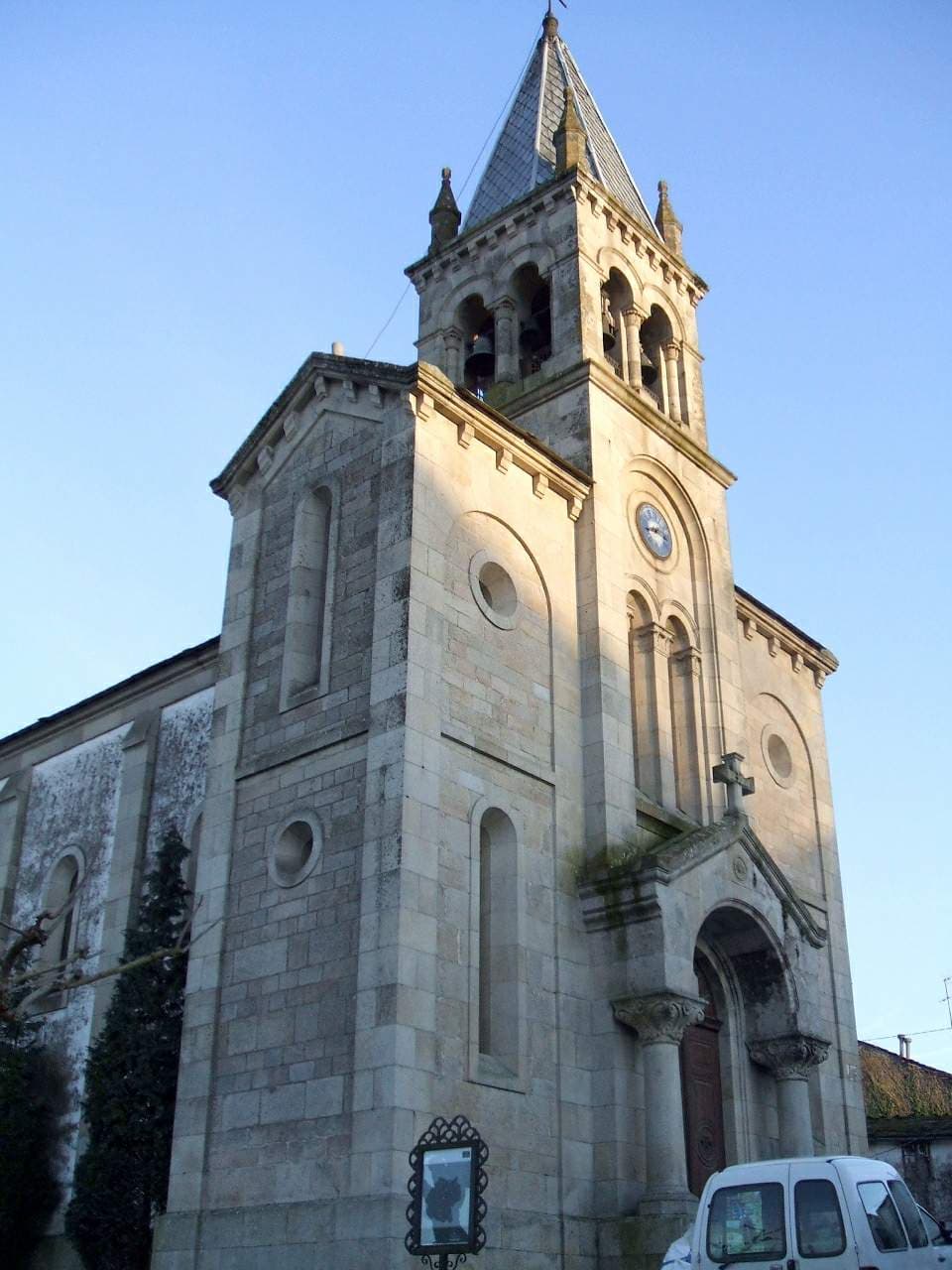
Igrexa de Santa Mariña, Sarria
Sarria, Sarria, Galicia (Lugo), Spain
30.9 km away
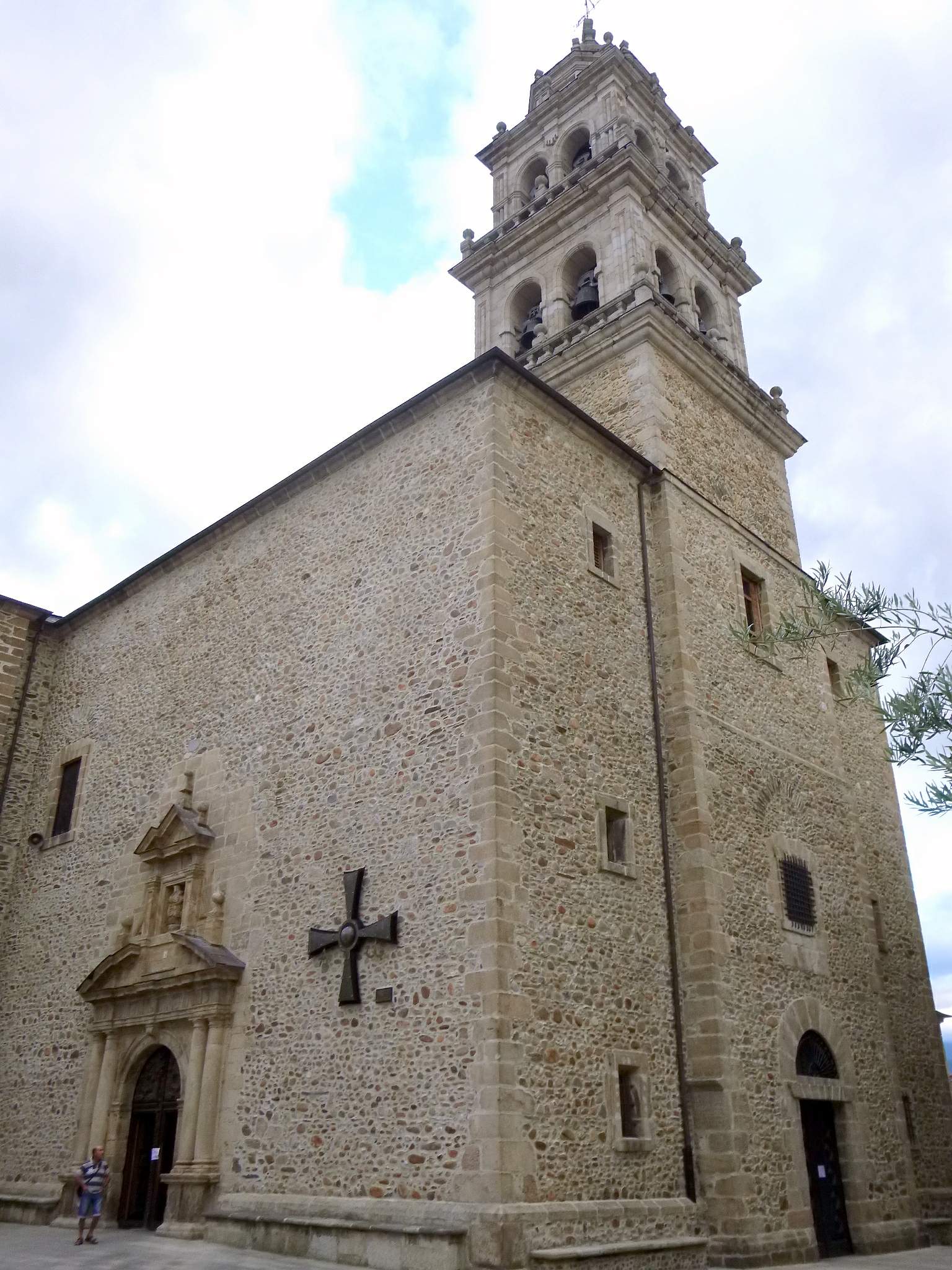
Basílica de Nuestra Señora de la Encina, Ponferrada
Ponferrada, Ponferrada, Castilla y León (León), Spain
41.5 km away
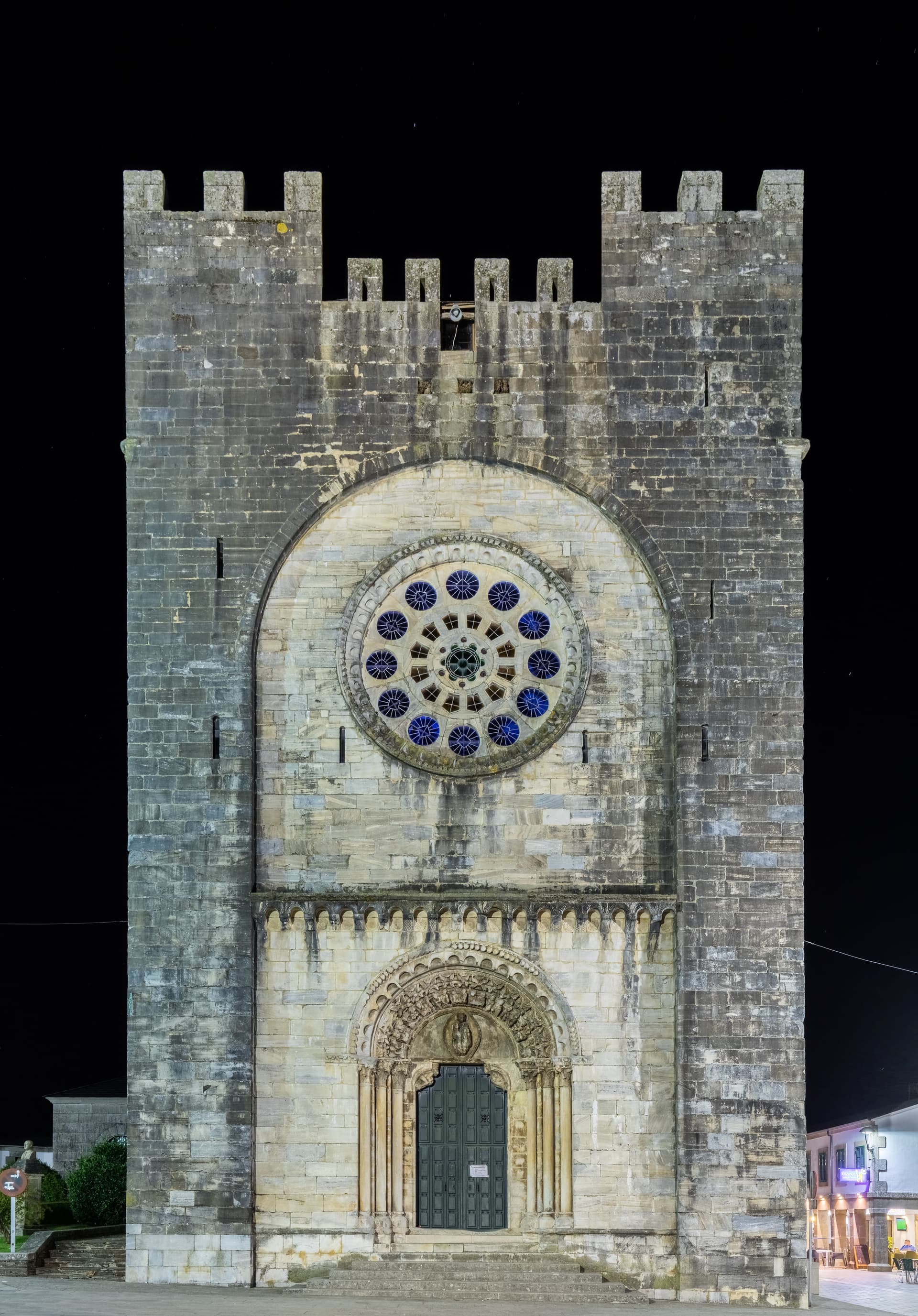
Igrexa de San Xoán ou San Nicolao, Portomarín
Portomarín, Portomarín, Galicia (Lugo), Spain
47.7 km away
References
Sources consulted for this page. Source categories describe the publication, not a guarantee that every claim is verified. Traditional accounts and outside interpretations may differ.
- 01O Cebreiro — Wikipedia — Wikipedia contributorsacademicCoordinates, note on 1965-71 reconstruction on pre-Romanesque foundations rediscovered 1962, pallozas as ethnographic museum/pilgrim refuge, Camino Francés entering Galicia through the municipality, reference to the Holy Grail legend.
- 02Routes of Santiago de Compostela: Camino Francés and Routes of Northern Spain — UNESCO World Heritage CentreofficialConfirms UNESCO World Heritage status (inscribed 1993, extended 2015) for the Camino Francés route, of which O Cebreiro and its church are a constituent stop.
- 03Sanctuary of Santa María la Real Do Cebreiro (O Cebreiro, Lugo) — Senditur.comSource context9th-century pre-Romanesque dating, 863 CE pilgrims' hospice, Benedictine monastic association, 1072 donation record by Alfonso VI, 1487 transfer to Congregation of Valladolid, monks' departure after 1853 disentailment.
- 04Santa María a Real, iglesia de — Xacopedia (Camino de Santiago encyclopedia project)academicPre-Romanesque style and 9th-century origin attributed to founding by the Count of Aurillac; describes rectangular nave and roof construction; movable heritage including 12th-century chalice and paten and Isabella the Catholic's donated ampoules.
- 05O'Cebreiro - Eucharistic Miracle | circa 1300 — Real Presence Eucharistic Education and Adoration Association / eucharisticmiracles.faithspiritualDevotional-tradition account of the 1300 miracle: the doubting Benedictine priest, the peasant pilgrim Juan Santín of Barxamaior, transformation of Host into flesh and wine into blood in a snowstorm. Presented per Catholic tradition, not verified historical fact.
- 06The Eucharistic miracle along the Camino de Santiago — Catholic World ReportSource contextCorroborates the miracle legend narrative, the 1487 papal bull of Innocent VIII certifying the tradition, and the reliquary/chalice/paten donated by the Catholic Monarchs (Isabella I) after her 1486 pilgrimage.
- 07The Miracle of O Cebreiro and the Galician Holy Grail — Mundiplus.comSource contextDiscusses the popular/contested link between the O Cebreiro miracle relics and the Galician coat of arms, and speculative associations with Grail literature (Wolfram von Eschenbach's Parzival). Used only for the popularized/contested esoteric framing, clearly distinguished from the core Catholic Eucharistic-miracle tradition.
- 08The "pallozas" of O Cebreiro — Fundación JacobeaSource contextPre-Roman, presumably Celtic origin of the circular thatched-roof stone dwellings; inhabited until the 1960s; several preserved as ethnographic museum.
- 09O Cebreiro | Camino Frances — Wise PilgrimSource contextPractical pilgrim-guide detail on O Cebreiro as the first Galician village on the Camino Francés, altitude (~1,293 m), the steep ascent from Las Herrerías, and mountain-pass weather considerations.
Share a photo
Help visitors recognize Santa María la Real do Cebreiro. Every submission is reviewed before publication.