Sanctuary of Our Lord of Huanca
Where a fleeing slave saw Christ on a rock, and pilgrims now walk through the night to find healing
Understand sacred places, explore living traditions, and learn how to engage respectfully with Pilgrim Map.
Access has not been verified. Check current local guidance before planning a visit.
Qosqo Ayllu, Cusco, Peru
Read the sources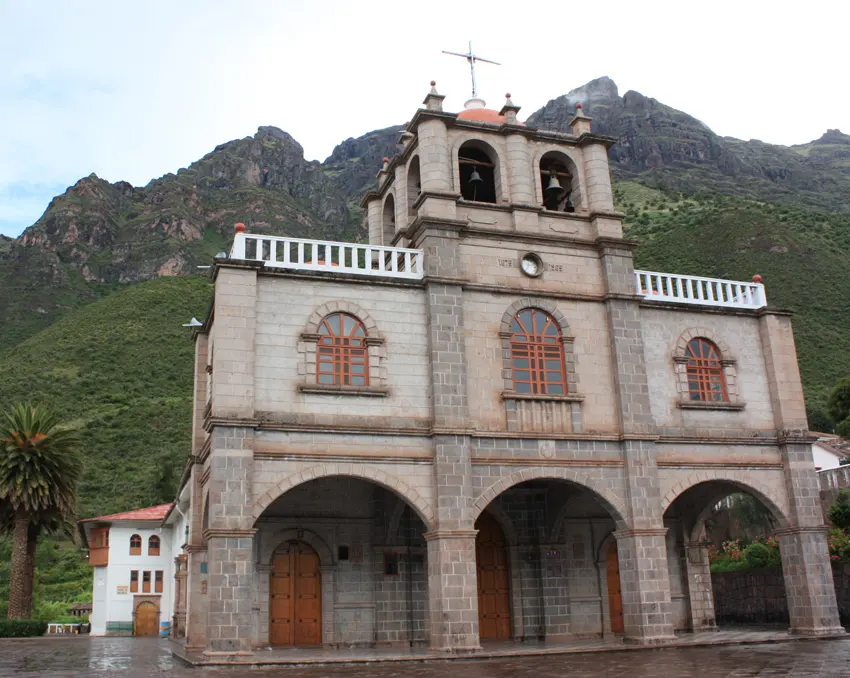
Image of Sanctuary of Our Lord of Huanca. Image source · CC-BY-SA-3.0
Visit essentials
A quick read before you go
- Duration
- Half day by vehicle; full day or overnight for walking pilgrimage.
- Etiquette
- Approach the sanctuary with reverence for a site of healing miracles and the suffering that…
Overview
The Sanctuary of the Lord of Huanca stands in Huanca community, Cusco's San Salvador district, above 3,100 meters. Its origin story belongs to the 17th century, when colonial Peru's mining economy produced wealth and suffering in equal measure.
Diego Quispe, enslaved in the mines of Yasos, defended another slave from punishment and was himself sentenced for the next day. He fled in darkness, walked through Chinchero to Huanca, and spent the night and day praying that pursuers would not find him. When night returned without moonlight, a sudden light illuminated his face. Jesus Christ appeared before him, bleeding from his Passion wounds.
This vision to a fleeing slave in greatest fear founded one of Peru's most important pilgrimage traditions.
An anonymous painter—moved by the story or perhaps witnessing Diego's testimony—painted the bleeding Christ directly on the apparition rock. The sanctuary grew around this sacred icon, and the Lord of Huanca became known as the 'miraculous healer and comforter of the poor,' a title reflecting the people who claimed the devotion.
The story spread through southern Peru to Bolivia, Argentina, and Chile, accumulating accounts in which the lame walked, the sick recovered, and the desperate found hope. Pilgrims from across South America gather on September 14, many walking days or weeks. The route from Cusco alone takes eight to twelve hours on foot; the journey itself becomes an offering.
At the chapel's foot, vendors sell 'alasitas' and 'suertes'—miniatures of hoped-for property titles, cars, university degrees, and homes. Pilgrims have them blessed, carry them home, and place them where they might attract the Lord's favor.
Why this place is sacred
The thin place at Huanca was created in a moment of extremity. Diego Quispe had nothing left—no freedom, no safety, no light to guide his escape. In that darkness, light came. The apparition of the bleeding Christ to a fleeing slave inverts the usual power dynamics of colonial Peru: not the wealthy mine owners but their victims received divine visitation.
The painted rock holds this origin. Though centuries have passed and the image has been protected by the chapel built around it, the stone itself carries the memory of that night. To touch it—as pilgrims do—is to touch the surface that received Diego's terror and transformed it into encounter.
Four centuries of miracles have accumulated around this origin. Each healing, each answered prayer, each testimony of the Lord's intercession has added to the sanctuary's sacred weight. The poor came first—Diego's Christ was the comforter of the poor—and their devotion created the tradition that now draws pilgrims from across South America.
The September 14 pilgrimage creates annual intensification. For days before the feast, the roads fill with walking pilgrims. Some come from Cusco, eight to twelve hours on foot. Others come from Bolivia, Paraguay, Argentina, Chile—journeys that take weeks or months. The physical suffering of the walk becomes offering; arrival becomes grace.
The 'alasitas' and 'suertes'—miniature representations of pilgrims' desires—add a layer of tangible hope. These tiny property titles, cars, degrees, and homes encode what people need: security, mobility, education, shelter. To bless these tokens is to bless the hopes they represent, connecting individual desire to divine providence through the medium of miniature.
Huanca's thinness thus combines origin miracle, accumulated healing, pilgrimage suffering, and material hope into a single devotional complex.
Shrine marking the location of a 17th-century apparition of Christ to Diego Quispe, a fleeing slave. The painted rock where the vision occurred became the focus of healing devotion.
From local apparition site to regional pilgrimage center to international Andean devotion, drawing pilgrims from Peru, Bolivia, Argentina, Paraguay, and Chile.
Experience and orientation
The sanctuary lies 48 kilometers northeast of Cusco, in the district of San Salvador, Calca Province. Two routes connect the city to this sacred site: the common road through Oropesa and San Salvador takes approximately 50 minutes by vehicle. The devotional route on foot from San Jerónimo district takes five to six hours.
If you seek the pilgrimage experience, choose the walking route. Depart San Jerónimo in darkness, joining others whose footsteps trace centuries of pilgrimage. The physical effort becomes prayer; each step an offering. Arrival at the sanctuary after hours of walking transforms encounter with the sacred image.
At the sanctuary, find the chapel built to protect the painted rock where Diego Quispe saw the bleeding Christ. The image, immortalized by an anonymous colonial painter, has been venerated for over four centuries. Take time with this stone—touch it if permitted, let the accumulated devotion of centuries communicate.
Explore the market that surrounds the chapel, where vendors sell 'alasitas' and 'suertes.' These miniatures represent every kind of hope: houses, cars, diplomas, property titles, identification documents, even US dollars. Choose items that represent your own needs or desires. Have them blessed at the sanctuary. Carry them home to place where they might attract the Lord's favor.
If you visit for the September 14 festival, prepare for crowds. Thousands of pilgrims converge, many having walked for days or weeks. The processions, masses, and collective devotion create an experience of Andean Catholic faith at its most intense.
The secondary festival on January 1 draws pilgrims from the Piura coast and valleys who petition for rain or express gratitude for it—a reminder that the Lord of Huanca serves many needs.
The sanctuary is located in the community of Huanca, district of San Salvador, province of Calca, Cusco region. 48 km northeast of Cusco city, accessible by road (50 minutes) or walking pilgrimage (5-6 hours from San Jerónimo).
Context and lineage
Colonial Peru's mining economy depended on forced labor—indigenous and African slaves whose suffering powered the extraction of silver and gold. In the mines of Yasos, Diego Quispe labored under this brutal system.
One day, Diego witnessed another slave being punished. He intervened, defending the victim. For this act of compassion, Diego himself was sentenced to punishment the following day. In darkness, he fled.
His escape took him to Chinchero and then to the Huanca area. He spent the night and day in prayer, asking that his pursuers not find him. When night fell and Diego needed to continue his journey, there was no moon. He was trapped by darkness.
Then light appeared. Before Diego stood Jesus Christ, bleeding from the wounds of his Passion, illuminating the terrified slave's face. The vision of the suffering Christ to a suffering slave created a devotion that would transform religious life across southern Peru.
An anonymous painter—whether a witness to Diego's testimony or someone moved by the story—immortalized the apparition directly on the rock where it occurred. The painted stone became the focus of veneration. Miracles began: the lame walked, the sick were healed. The Lord of Huanca was declared the 'miraculous healer and comforter of the poor.'
The devotion spread beyond Cusco to Bolivia, Argentina, and Chile. The September 14 pilgrimage—timed perhaps to the Feast of the Exaltation of the Cross—became the annual gathering of those seeking the Lord's intercession.
Roman Catholic, within the Diocese of Cusco. The devotion represents Andean Catholic syncretism where indigenous and African devotional patterns merged with colonial Catholicism.
Diego Quispe
Visionary
Traditions and practice
Walking pilgrimage to the sanctuary. Veneration of the painted rock. Prayers for healing and miracles. Acts of penance during pilgrimage (walking on knees, carrying heavy crosses). Processions and masses.
September 14 festival attracts pilgrims from Peru and beyond. January 1 secondary festival for rain petitions. Year-round visitation for prayer and healing. Sale of 'alasitas' and 'suertes' as material expressions of hope.
If possible, walk to the sanctuary rather than driving—the pilgrimage transforms the experience. Purchase 'alasitas' that represent your needs and have them blessed. Take time with the painted rock that holds Diego's vision.
Andean Catholic Pilgrimage
ActiveThe Lord of Huanca represents the synthesis of Catholic devotion with Andean pilgrimage traditions, where the physical journey becomes offering and arrival becomes grace.
Walking pilgrimage, veneration of the painted rock, prayers for healing, purchase and blessing of 'alasitas' and 'suertes,' processions and masses.
Perspectives and open questions
The sanctuary can be understood as a site of liberation theology avant la lettre—where Christ appeared to a slave; as an example of Andean Catholic syncretism; as a healing shrine with centuries of miracle testimony; or as a pilgrimage destination where physical suffering becomes offering.
Scholarly perspective
The devotion demonstrates how colonial religious experience was shaped by social conditions—the 'comforter of the poor' emerged from the suffering of the mining economy.
Living and traditional perspectives
Within Catholic tradition, the apparition to Diego Quispe exemplifies divine preference for the suffering—Christ revealing himself not to the powerful but to a fleeing slave.
Alternative interpretations
The practice of 'alasitas' connects to Andean traditions of miniature representation that predate Christianity, suggesting syncretism at the level of material culture.
Open questions
Whether Diego Quispe was a historical individual or a legendary figure remains uncertain. The anonymous painter's identity is unknown.
Plan your visit
Access and arrival
Limited accommodations near the sanctuary; most visitors stay in Cusco. During the September festival, many pilgrims camp or stay awake through the night.
Respectful visit
Modest dress appropriate for a Catholic sanctuary. Comfortable shoes if walking.
Respect privacy of pilgrims engaged in devotion. Check guidelines for photographing the sacred image.
Donations support the sanctuary. Purchase of 'alasitas' from vendors supports local economy.
Respect devotional spaces and practices. Do not treat 'alasitas' market as mere tourism—these objects carry sacred significance.
The September 14 festival is extremely crowded. Walking pilgrimage requires physical preparation. Altitude at 3,100+ meters requires acclimatization.
Current practical details
Address
G57W+5V, San Salvador 08150, Peru
Hours
Hours, fees, and access can change — verify on the official source before you travel. Practical details last checked Jun 2026.
Location
Map loads as you approach this section.
Pilgrim reflections
A portrait of encounter, not a score
Pilgrims describe what they felt, how present they could become, and whether the place would shape a journey. There are no stars and no ranking of traditions.
No reviewed reflections yet
The first pilgrims can help describe the character of being here.
Share a reflection
Available after an account-backed “Been there.” Every reflection is reviewed before publication.
Nearby sacred places
Explore other sacred places in the region. Proximity does not establish access or travel time; check each place’s guidance.


References
Sources consulted for this page. Source categories describe the publication, not a guarantee that every claim is verified. Traditional accounts and outside interpretations may differ.
- 01The Lord of Huanca: Faith, History, and Peruvian TraditionSource context
- 02Sanctuary of the Lord of Huanca in CuscoSource context
- 03Lord of Huanca Cusco: A Sanctuary of Faith and DevotionSource context
- 04Sanctuary of the Señor de HuancaSource context
- 05Señor de HuancaSource context
- 06The Lord of HuancaSource context
Share a photo
Help visitors recognize Sanctuary of Our Lord of Huanca. Every submission is reviewed before publication.