Salisbury Cathedral
Britain's tallest spire rises above 800 years of worship and the finest Magna Carta surviving
Understand sacred places, explore living traditions, and learn how to engage respectfully with Pilgrim Map.
Access has not been verified. Check current local guidance before planning a visit.
Salisbury, England, United Kingdom
Read the sources
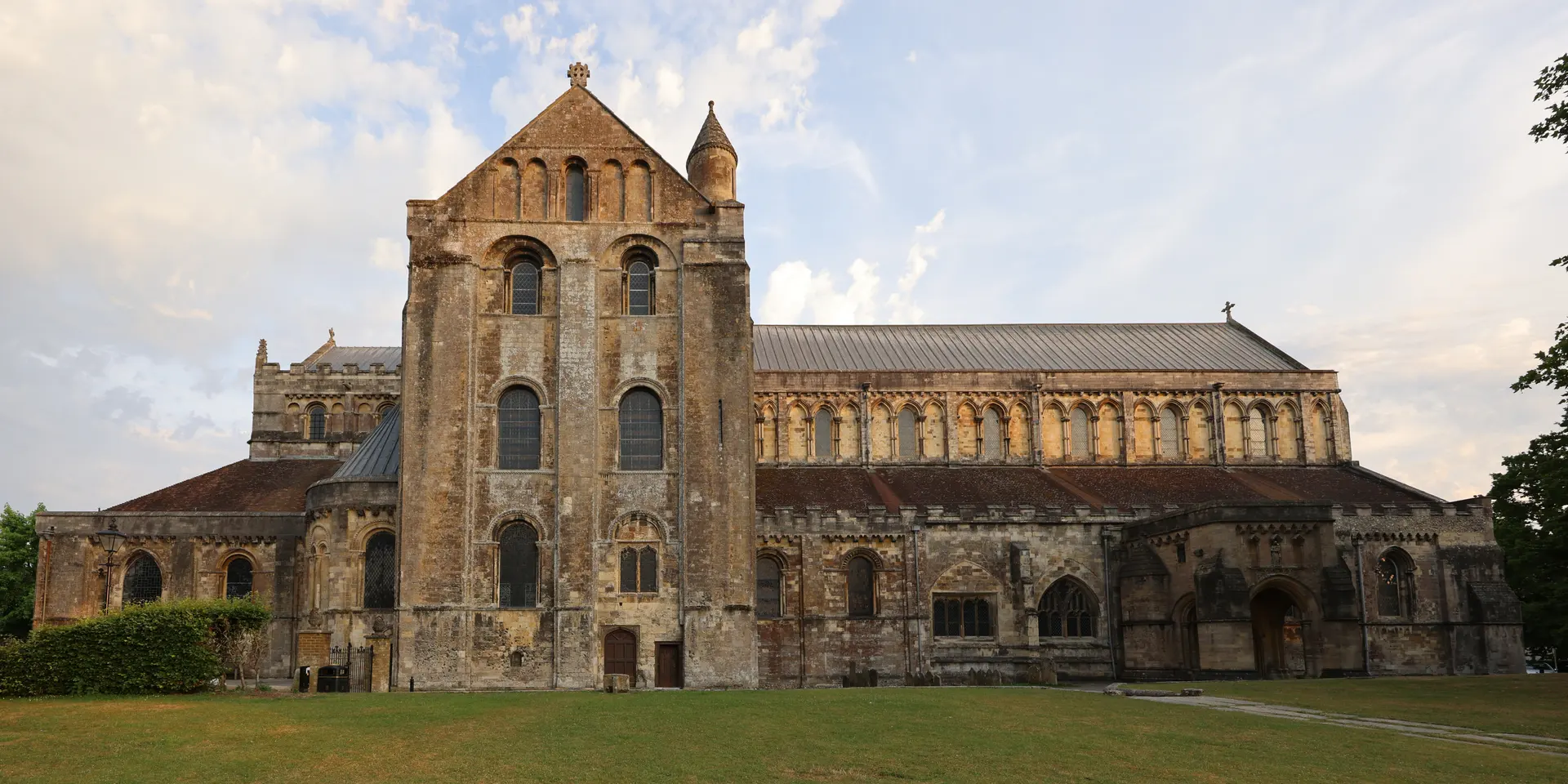
Image of Salisbury Cathedral. Image source · Unsplash License
Visit essentials
A quick read before you go
- Duration
- 2-3 hours including Chapter House, cloisters, and cathedral close
- Etiquette
- Salisbury Cathedral is a living church that welcomes all.
Overview
Salisbury Cathedral's 404-foot spire rises above the water meadows and remains Britain's tallest church spire. The unified Early English Gothic church was built in 38 years, from 1220 to 1258; around 1320, masons added a 6,500-ton spire to foundations only four feet deep. Its survival reflects medieval engineering and later reinforcement.
Inside, lancet windows and clean proportions feel both soaring and intimate. The Chapter House holds one of four surviving 1215 Magna Carta copies, establishing that no one stands above the law. Elias de Dereham, present when King John sealed the charter at Runnymede and later supervisor of cathedral construction, likely brought it here. Guarded for more than 800 years, the document grounds the heavenward building in fundamental human rights.
Why this place is sacred
Unlike cathedrals assembled over centuries, Salisbury was conceived and largely finished within four decades, producing one coherent architectural language. The spire added around 1320 intensifies its upward pull. Its 6,500 tons on shallow foundations bowed the supporting pillars; Christopher Wren added iron bands in 1668, and stabilization has continued. Its improbable survival may suggest engineering genius, fortune, or grace.
The Magna Carta makes justice part of the sacred encounter: power has limits, and kings answer to law. The 1980 Prisoners of Conscience window extends that witness to people who suffered for justice, making the cathedral both living church and guardian of human dignity.
The cathedral was built to replace the earlier cathedral at Old Sarum, where conditions had become difficult. Bishop Richard Poore moved the see to the water meadows by the River Avon, and construction began in 1220. The building was designed to be the mother church of a large diocese and a center of worship and learning. The rapid construction suggests concentrated resources and strong vision. The Sarum Rite developed here became England's most widespread medieval liturgical form.
The main building was completed by 1258 and consecrated. The spire was added around 1320, transforming the cathedral's profile and creating ongoing structural challenges. The Reformation converted Catholic cathedral to Anglican. The Sarum Rite influenced the Book of Common Prayer. Christopher Wren assessed the building in 1668 and added stabilizing elements. Major restoration from 1985 to 2023 addressed centuries of wear. The cathedral continues as living church while serving as heritage site and Magna Carta guardian.
Experience and orientation
The 404-foot spire appears miles away above Wiltshire. Through Britain's largest cathedral close—called by Pevsner 'the most beautiful of England's closes'—the restrained west front emerges. Inside, pointed lancet windows, columns, and changing clear and colored light speak one Early English Gothic language. At the crossing, visibly inward-bowed pillars carry seven centuries of the spire's weight.
The octagonal Chapter House has a slender central pillar, vaulted ceiling, and a frieze of 60 Old Testament scenes. Its glass case protects the finest surviving 1215 Magna Carta, a document central to human rights in a room built for sacred assembly.
At Choral Evensong, one of England's finest cathedral choirs fills the nave through the Book of Common Prayer as daylight fades, continuing centuries of sung worship.
Enter through the west front for the intended progression. The nave leads to the crossing beneath the spire; look up to see the weight's effect on the columns. The Chapter House with Magna Carta is accessed from the east cloister walk. Choral Evensong takes place in the quire at 5:30pm weekdays and 4:30pm Sunday during term time.
Context and lineage
In 1218, Bishop Richard Poore made a decision that would shape Salisbury for centuries: he abandoned the cramped, water-short cathedral at Old Sarum and moved to the meadows by the River Avon. Construction of the new cathedral began in 1220. William Longespée, 3rd Earl of Salisbury (whose name appears in Magna Carta), and his wife Ela laid two of the foundation stones.
Elias de Dereham, a canon who had been present at the sealing of Magna Carta at Runnymede in 1215, oversaw the building work. He likely brought the Magna Carta to Salisbury. The main structure was completed by 1258—38 years of concentrated construction that gave the building its remarkable unity. Around 1320, the great spire was added, an audacious decision that added 6,500 tons to foundations only four feet deep. The structural challenges have never fully ceased, but the spire stands.
Salisbury Cathedral belongs to the great tradition of English Gothic cathedrals but represents a distinct achievement: unified design from rapid construction. The Sarum Rite developed here became England's most widespread medieval liturgical form and influenced the Book of Common Prayer after the Reformation.
Bishop Richard Poore
Elias de Dereham
William Longespée
Sir Christopher Wren
Traditions and practice
Medieval worship followed the Sarum Rite, an elaborate liturgical form that originated here and spread throughout England. The daily offices structured life for the cathedral chapter. The Chapter House hosted meetings. Pilgrims visited seeking spiritual merit. The liturgical year marked time through seasonal observance.
Daily Morning Prayer and Eucharist. Choral Evensong sung by the cathedral choir at 5:30pm weekdays and 4:30pm Sunday during term time. Sunday services include Sung Eucharist at 10:30am. The cathedral hosts concerts, educational programs, and special events. Magna Carta interpretation connects ancient document to contemporary justice concerns.
Attend Choral Evensong for the full experience of Anglican cathedral worship. Visit the Chapter House to contemplate the Magna Carta in its medieval setting. Walk the cathedral close, described by Pevsner as 'the most beautiful in England.' A tower tour offers views from Britain's tallest spire. Simply sitting in the nave, observing light and stone, rewards patient attention.
Church of England/Anglican
ActiveSalisbury Cathedral is the seat of the Bishop of Salisbury and one of England's great Anglican cathedrals. Continuous worship has been maintained since the medieval foundation.
Daily Morning Prayer, Eucharist, and Choral Evensong. Sunday Sung Eucharist. The cathedral choir maintains one of England's finest choral traditions.
Magna Carta tradition
ActiveThe cathedral guards one of four surviving 1215 Magna Carta copies, connecting sacred space to foundational principles of justice and the rule of law.
The Magna Carta is displayed in the Chapter House. Educational programs explore its significance. The Prisoners of Conscience window extends the witness to contemporary struggles for justice.
Choral tradition
ActiveThe cathedral maintains one of England's leading choirs, continuing centuries of Anglican musical worship.
Daily Choral Evensong during term time. Sung Eucharist on Sundays. Services use the Book of Common Prayer. Live streaming extends the tradition beyond the building.
Medieval Catholic worship
HistoricalThe cathedral was built for Catholic worship and developed the influential Sarum Rite, England's most widespread medieval liturgical form.
The Sarum Rite structured elaborate daily offices and seasonal observances. The Chapter House served the cathedral chapter. Pilgrims sought spiritual merit.
Perspectives and open questions
Salisbury Cathedral holds significance as architectural achievement, liturgical influence, and guardian of foundational rights documents.
Scholarly perspective
Architectural historians recognize Salisbury as the finest and most consistent example of Early English Gothic due to its rapid, unified construction. The 404-foot spire is an engineering achievement that has required ongoing stabilization since Christopher Wren's assessment in 1668. The Sarum Rite developed here became England's most widespread medieval liturgical form and influenced the Book of Common Prayer. The cathedral's Magna Carta is the finest preserved of the four surviving 1215 copies.
The building represents a rare moment of coherent vision in medieval cathedral building.
Living and traditional perspectives
The cathedral represents continuity of Christian worship from medieval Catholicism through Anglican reformation to the present. The choral tradition maintains connections to centuries of sacred music. The Sarum Rite, though no longer used, lives on through its influence on the Book of Common Prayer. The building serves as both witness to history and living church.
Alternative interpretations
Some see the cathedral's precise geometry as embodying sacred proportions. The spire's extraordinary height is interpreted as reaching toward divine realms, its survival despite structural challenges suggesting grace. Ley line theories sometimes connect Salisbury to Stonehenge and other sites in alignments across the landscape.
Open questions
The identity of the master masons who achieved such architectural unity remains unknown. The original medieval paint and decoration, now largely lost, would have transformed the interior's appearance. The precise circumstances of the Magna Carta's arrival at Salisbury are not fully documented.
Plan your visit
Access and arrival
Salisbury city center offers excellent accommodation from historic inns to modern hotels. The area around the cathedral close is particularly atmospheric. The wider region has country house hotels and B&Bs.
Respectful visit
No specific requirements. Modest dress appropriate for a place of worship is appreciated.
Photography permitted in most areas. Be mindful of those at prayer and during services. Flash may be restricted in certain areas, including the Chapter House.
Candles available for lighting. Admission charges for visitors support the cathedral's conservation and ministry. Donations beyond admission are welcomed.
The cathedral may close for special services or events. Some areas may have restricted access. Check website for current information.
Ticketed entry required for tourism visits; free entry for worship, prayer, or candle lighting. The cathedral may close for special services or events. Check the website before visiting. Some areas may have restricted access.
Current practical details
Address
Salisbury SP1 2EJ, UK
Phone
Hours
Hours, fees, and access can change — verify on the official source before you travel. Practical details last checked Jun 2026.
Location
Map loads as you approach this section.
Pilgrim reflections
A portrait of encounter, not a score
Pilgrims describe what they felt, how present they could become, and whether the place would shape a journey. There are no stars and no ranking of traditions.
No reviewed reflections yet
The first pilgrims can help describe the character of being here.
Share a reflection
Available after an account-backed “Been there.” Every reflection is reviewed before publication.
Nearby sacred places
Explore other sacred places in the region. Proximity does not establish access or travel time; check each place’s guidance.



References
Sources consulted for this page. Source categories describe the publication, not a guarantee that every claim is verified. Traditional accounts and outside interpretations may differ.
- 01Salisbury Cathedral — Salisbury CathedralSource contextOfficial cathedral website
- 02Salisbury Cathedral — BritannicaencyclopediaScholarly overview
- 03Salisbury Cathedral — A Church Near YouSource contextChurch of England official directory
- 04Salisbury Cathedral — WikipediaencyclopediaWell-referenced article
- 05Salisbury Cathedral and Magna Carta — Visit WiltshireSource contextTourism perspective
Photo gallery
3 curated photos
Share a photo
Help visitors recognize Salisbury Cathedral. Every submission is reviewed before publication.