Ramet Monastery, Romania
Eight centuries of prayer survive in stone, paint, and the daily devotion of ninety-five nuns
Understand sacred places, explore living traditions, and learn how to engage respectfully with Pilgrim Map.
Access has not been verified. Check current local guidance before planning a visit.
Valea Mănăstirii, Alba, Romania
Visit essentials
A quick read before you go
- Duration
- A visit of one and a half to two hours allows time to see both churches, the museum, and the…
- Access
- Located in Valea Manastirii, Ramet commune, Alba County, on the Geoagiu Valley at the entrance…
Overview
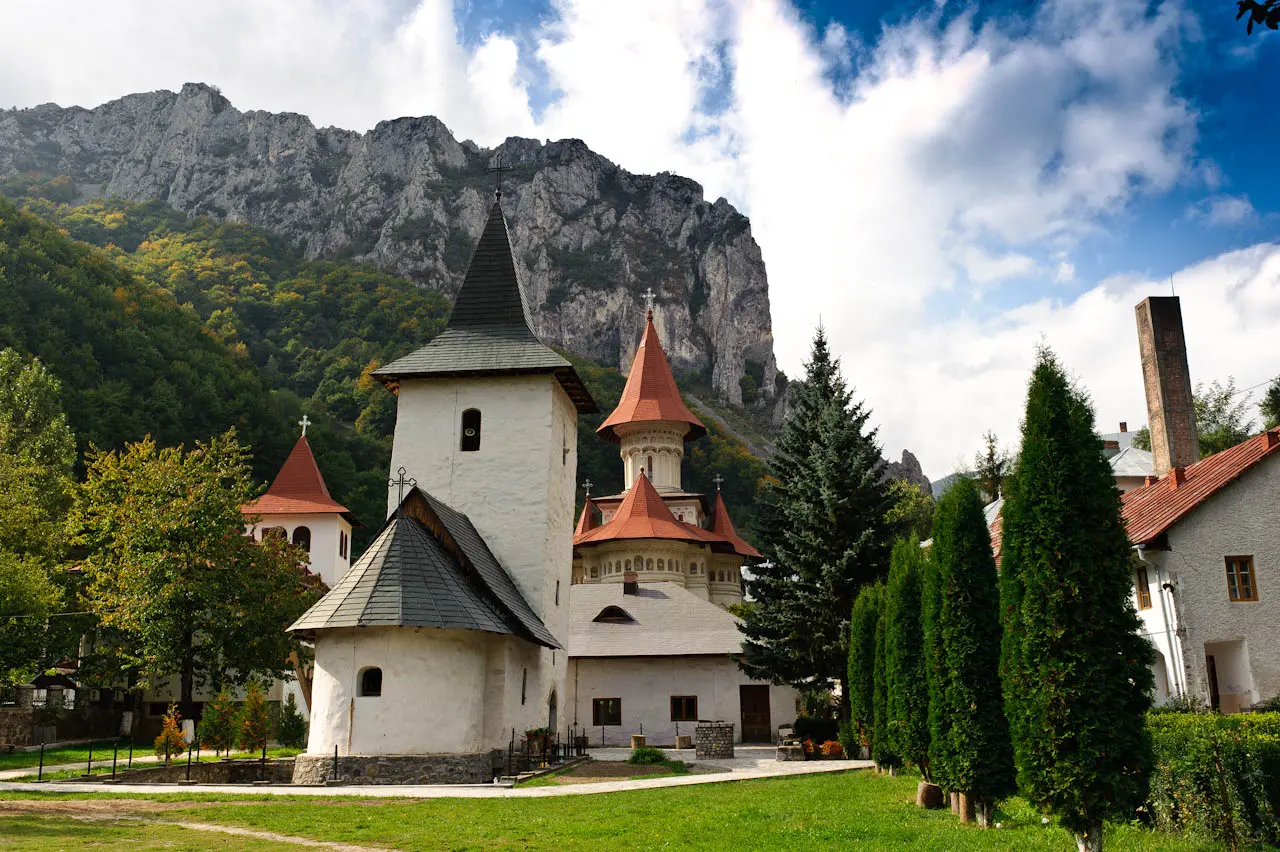
The Ramet valley narrows between limestone walls until the gorge consumes the road; at its threshold stands a monastery that has refused to disappear. Tradition dates its founding to 1214, while the oldest confirmed old-church paintings are from around 1300. People have prayed here for the better part of a millennium. Austrian cannons leveled the monastery in 1762, and reprisals after the Horea revolt shattered it again in 1785. Each time, the community returned.
The old church holds nine layers of wall paintings, generations of devotion laid over one another. The earliest, painted in 1377 by master Mihu from White Cris, rank among the oldest surviving Romanian medieval church paintings. Together they form a palimpsest of prayer and faith persisting through catastrophe.
Approximately ninety-five nuns now maintain daily liturgy, carpet weaving, and bakery work. Saint Gelasius—the fourteenth-century hermit who became Archbishop of Transylvania and was canonized here in 1992—anchors the monastery through traditions of solitary prayer, miraculous healing, and quiet authority.
The gorge's millennia of geological force make the survival of something as fragile as a painted wall feel like its own kind of miracle.
Why this place is sacred
The Ramet valley functions as a natural threshold. As you move deeper along the Geoagiu River toward the gorge, the landscape constricts, the cliffs rise, and the ordinary world falls away. The monastery sits precisely at the point where this transformation occurs, as though placed there by someone who understood how landscape shapes the inner life.
The nine layers of painting in the old church are the most tangible expression of the site's accumulated sacredness. Each layer represents a generation that chose to add its prayers to the walls rather than erase what came before. The 1377 frescoes by Mihu from White Cris are the foundation, but later additions in 1741 in the post-Brancovenesc style and subsequent restorations create a visible archaeological record of devotion spanning centuries.
To stand in this space is to be held by the prayers of people whose names are mostly lost.
Saint Gelasius's presence gives the thinness a personal dimension. In the 14th century, he lived as a hermit near Ramet Creek, father to many hermits on the surrounding mountain. The Hesychast tradition of contemplative inner prayer, which swept through the Orthodox world in that era, found fertile ground here. That tradition of solitary prayer in the mountains predates the current cenobitic community but informs its spiritual character.
The monastery's refusal to convert to Greek Catholicism during the Habsburg persecutions after 1700 adds another dimension. Ramet was one of the few Transylvanian monasteries to remain Orthodox, enduring destruction rather than compromise. This history of resistance imbues the place with a quality visitors sometimes describe as stubbornness made sacred.
The monastery was founded as a monastic settlement, traditionally in 1214 by monks Ghenadie and Romulus. It served simultaneously as a place of worship, a center of Romanian education (hosting the first Romanian school in Alba County in the 16th century), and a spiritual anchor for Orthodox identity in a region where that identity was repeatedly threatened by political and religious authorities.
From its possible beginnings as a hermitage in the 13th century, Ramet grew into a monastery under princely protection, notably under Mihai Viteazul (Michael the Brave) in the late 16th century. The Habsburg period brought destruction and forced closure, but the community always returned. The establishment of a museum in 1969, the construction of a new church between 1982 and 1992, and the canonization of Saint Gelasius in 1992 marked its modern revival.
Today it functions as a large, active convent that also preserves significant cultural heritage.
Experience and orientation
The experience of Ramet begins before you arrive. The road along the Geoagiu Valley draws you through increasingly dramatic terrain, the Trascau Mountains closing in until the monastery appears at the mouth of the gorge. For those who approach on foot through the gorge itself, the walk functions as a natural pilgrimage, the landscape stripping away distraction before you reach the sacred ground.
Entering the old church produces a shift. The space is small, intimate, and dense with painted surfaces. The frescoes surround you, layer upon layer of faces, scenes, and decorative borders accumulated over centuries. The effect is not of looking at art but of being absorbed into a continuous act of devotion. Visitors frequently describe a sense of deep time becoming tangible, the awareness that they stand where seven centuries of worshippers have stood.
The nuns' community adds a dimension that distinguishes Ramet from abandoned heritage sites. The sound of bells, the sight of sisters moving between buildings, the scent of bread from the bakery, the click of looms from the carpet-weaving workshop — these details confirm that the place is alive, not preserved in amber. Visitors often report that the combination of ancient art and contemporary monastic life creates a continuity that is emotionally affecting.
The monastery's museum, with its icons on wood and glass, old service books, and numismatic collection, provides intellectual context. But the deeper experience happens in the old church and in the grounds where the gorge walls frame the sky.
Arrive with unhurried attention. If time permits, walk through the Ramet Gorge before or after visiting the monastery, allowing the landscape to work on you. In the old church, resist the urge to photograph immediately. Let your eyes adjust to the dim light and allow the frescoes to emerge from the darkness.
The feast days — Saints Peter and Paul on June 29, Saint Gelasius on June 30, and the Nativity of the Virgin Mary on September 8 — offer the richest liturgical experiences.
Context and lineage
The founding tradition attributes the monastery to two monks, Ghenadie and Romulus, who settled in the Ramet valley in 1214. Whether this date is historically accurate or a later attribution remains debated, but the oldest confirmed paintings in the old church date to around 1300, confirming a monastic presence by at least the early 14th century.
Saint Gelasius, who lived as a hermit near Ramet Creek before serving as Archbishop of Transylvania in 1377, is the figure who most powerfully shaped the monastery's spiritual identity. He was understood to possess gifts of healing and exorcism, and his solitary prayer life drew other hermits to the surrounding mountains.
The spiritual lineage at Ramet traces from the hermit tradition of the 14th century, through the Hesychast contemplative movement that spread across the Orthodox world, to centuries of cenobitic monastic life. The monastery's continuity through repeated destruction connects it to a broader narrative of Orthodox endurance in Transylvania. The three renowned spiritual fathers of the 20th century carried the tradition of personal spiritual guidance that Saint Gelasius embodied six centuries earlier.
Saint Gelasius of Ramet
patron_saint
A 14th-century hermit who became Archbishop of Transylvania, known for gifts of healing and exorcism. He was the spiritual father of many hermits on Ramet Mountain. Canonized in 1992, his feast day is June 30.
Mihu from White Cris
historical
Medieval master painter who created the 1377 murals in the old church, among the oldest surviving examples of Romanian church painting.
Mihai Viteazul (Michael the Brave)
historical
Prince of Wallachia who first unified the three Romanian principalities. Under his direction the monastery was rebuilt in the late 16th century, cementing its role as a symbol of Orthodox identity in Transylvania.
Fathers Dometie Manolache, Ioachim Popa, and Filotei Stoica
historical
Three renowned 20th-century spiritual fathers at Ramet who attracted pilgrims seeking consolation and guidance, continuing the lineage of holiness established by Saint Gelasius.
Traditions and practice
The monastery's liturgical life follows the Romanian Orthodox rite with services including the daily Divine Liturgy, Matins, Vespers, and Compline. The patronal feasts mark the spiritual high points: the Nativity of the Blessed Virgin Mary on September 8 for the old church, Saints Peter and Paul on June 29 for the new church, the Feast of the Life-Giving Spring on the first Friday after Easter, and the Feast of Saint Gelasius on June 30.
The veneration of relics and icons remains central to the devotional life of the community.
The community of approximately ninety-five nuns follows cenobitic rule, combining liturgical prayer with manual labor. Traditional carpet weaving in the monastery workshop represents a living craft tradition maintained by the nuns. The monastery bakery produces bread and baked goods. A monastic school operates within the complex, and the museum preserves icons on wood and glass, old service books, and ethnographic materials.
The monastery continues to welcome pilgrims year-round and remains an active center for Romanian Orthodox spiritual life in western Transylvania.
Visitors seeking contemplative engagement might attend an early morning liturgy, when the old church is at its most atmospheric and the frescoes glow in candlelight. Afterward, walk through the monastery grounds in silence, noting the contrast between the intimate medieval church and the larger modern one built in 1992. If visiting on a feast day, allow yourself to be carried by the liturgical rhythm rather than observing from a distance.
The nearby Ramet Gorge invites a walking meditation that can precede or follow the monastery visit, letting the landscape prepare or deepen the interior experience.
Romanian Orthodox Christianity
ActiveRamet is one of the oldest Orthodox monastic settlements in Transylvania, with a tradition dating back to at least the 14th century. It was one of the few Transylvanian monasteries to remain Orthodox during the 18th-century Habsburg campaigns to convert Romanian Orthodox to Greek Catholicism, making it a symbol of unwavering faith. The community of approximately ninety-five nuns maintains the full cycle of Orthodox liturgical worship.
Daily Divine Liturgy and canonical hours. Veneration of Saint Gelasius of Ramet with feast day on June 30. Celebration of the Nativity of the Virgin Mary on September 8, Saints Peter and Paul on June 29, and the Life-Giving Spring on the first Friday after Easter. Traditional carpet weaving as a monastic craft. Community life under cenobitic rule.
Hesychast Contemplative Tradition
HistoricalThe monastery's spiritual foundations are linked to the Hesychast movement that spread through the Orthodox world in the 14th century. Saint Gelasius lived as a hermit practicing contemplative prayer before becoming Archbishop of Transylvania. While the current community follows cenobitic rather than eremitic rule, the Hesychast emphasis on interior prayer and direct encounter with the divine remains part of the monastery's spiritual heritage.
Historical practices included solitary prayer and ascetic discipline in mountain hermitages, spiritual direction of hermit communities, and the cultivation of inner stillness through the prayer of the heart. These eremitic practices gave way to communal monastic life, though the contemplative orientation they established persists in the community's devotional character.
Perspectives and open questions
Ramet invites interpretation through multiple lenses: as an art historical treasure, as a monument to Orthodox perseverance, and as a living community whose daily prayers continue a practice reaching back centuries. Each perspective illuminates something the others miss.
Scholarly perspective
Art historians study Ramet primarily for its extraordinary palimpsest of wall paintings, with the 1377 frescoes by Mihu from White Cris recognized as early masterworks of Romanian medieval church painting. The nine layers spanning from the 14th to the 19th century provide a rare continuous record of artistic and devotional evolution. Historians emphasize the monastery's role as a bastion of Orthodox identity during the Habsburg period, when most Romanian Orthodox institutions in Transylvania were pressured to accept Greek Catholic union.
The canonization of Saint Gelasius in 1992, shortly after the fall of communism, is understood within the broader post-communist revival of Romanian Orthodox identity. The monastery's connection to Mihai Viteazul reflects the historical interplay between princely patronage and the preservation of Orthodox monasticism.
Living and traditional perspectives
Within Romanian Orthodox tradition, Ramet is venerated as a place of ancient holiness where monastic prayer has been offered for over eight centuries. Saint Gelasius is understood as a divinely gifted healer and spiritual father whose presence sanctified the valley. The monastery's survival through destruction is interpreted as a sign of divine protection and the indestructibility of genuine faith. The renowned spiritual fathers of the 20th century are seen as continuing the lineage of holiness that Gelasius established.
The monastery's affectionate title, the Cathedral of the Apuseni, reflects its central role in the spiritual life of western Transylvania.
Alternative interpretations
Ramet does not attract significant esoteric or alternative spiritual attention. Its significance is rooted firmly in Orthodox monastic tradition and Romanian cultural heritage. Some visitors note the dramatic limestone gorge setting as having a quality that enhances the spiritual atmosphere, but this observation accompanies rather than supplants the Orthodox framing.
Open questions
The full dating and attribution of the nine layers of wall painting in the old church remain partially unresolved, with some layers not yet fully analyzed. Whether the traditional founding date of 1214 is historically accurate or a later attribution remains debated. The exact relationship between the founding monks Ghenadie and Romulus and later figures like Saint Gelasius is not entirely clear from available sources.
The extent of the monastery's involvement in the Horea, Closca and Crisan revolt and the details of its subsequent destruction are not fully documented.
Plan your visit
Access and arrival
Located in Valea Manastirii, Ramet commune, Alba County, on the Geoagiu Valley at the entrance to the Ramet Gorge. Approximately 34 km from Alba Iulia and 18 km from Teius. Accessible by car on paved roads. Public transport is limited; a car is recommended. Free admission and free parking. Mobile phone signal information was not available at time of writing; check with local providers for current coverage in the Trascau Mountains area.
Chalet Ramet is located approximately 400 meters from the monastery. Guesthouses are available in nearby villages along the Geoagiu Valley. Alba Iulia, approximately 34 km away, offers a full range of accommodation options.
Respectful visit
Modest dress is required throughout the monastery. Women should wear skirts below the knee and cover their shoulders. Head coverings are appreciated in the churches. Men should wear long trousers. Sleeveless tops and shorts are not appropriate.
Photography is generally permitted in exterior areas and the courtyard. Restrictions may apply inside the old church to protect the medieval frescoes. Do not use flash photography inside any of the churches. Always ask permission before photographing the nuns or during services.
Visitors may purchase and light candles. Donations are welcomed and support the monastery's maintenance and the nuns' community. Products from the monastery bakery and the carpet-weaving workshop may be available for purchase. Religious items are sold in the monastery shop.
Maintain respectful silence near the churches, especially during services. Do not touch the medieval frescoes or artifacts in the museum. Respect areas reserved for the monastic community. No smoking or alcohol consumption on monastery grounds.
The medieval frescoes in the old church are extremely fragile. Do not touch the walls or use flash photography. Respect the boundary between public areas and the private spaces of the monastic community. During services, participate silently or remain in the back of the church. The monastery is a working convent, not a museum, and the nuns' daily routine takes precedence over visitor schedules.
Current practical details
Address
DJ750C 12, 517601 Valea Mănăstirii, Romania
Phone
Hours
Hours, fees, and access can change — verify on the official source before you travel. Practical details last checked Jun 2026.
Location
Map loads as you approach this section.
Pilgrim reflections
A portrait of encounter, not a score
Pilgrims describe what they felt, how present they could become, and whether the place would shape a journey. There are no stars and no ranking of traditions.
No reviewed reflections yet
The first pilgrims can help describe the character of being here.
Share a reflection
Available after an account-backed “Been there.” Every reflection is reviewed before publication.
Nearby sacred places
Explore other sacred places in the region. Proximity does not establish access or travel time; check each place’s guidance.
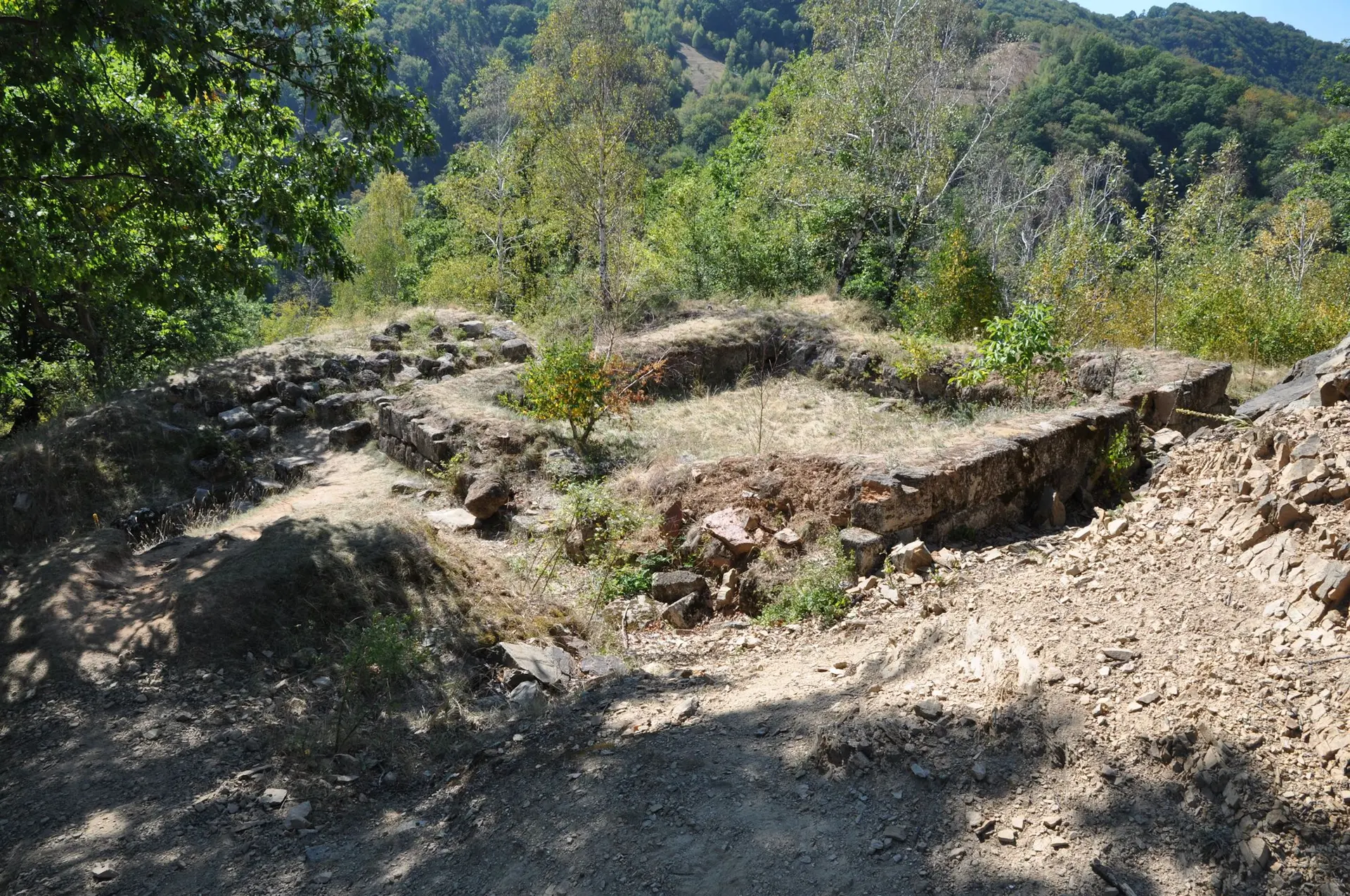
Căpâlna Dacian Fortress
Căpâlna, Alba County, Romania
53.6 km away
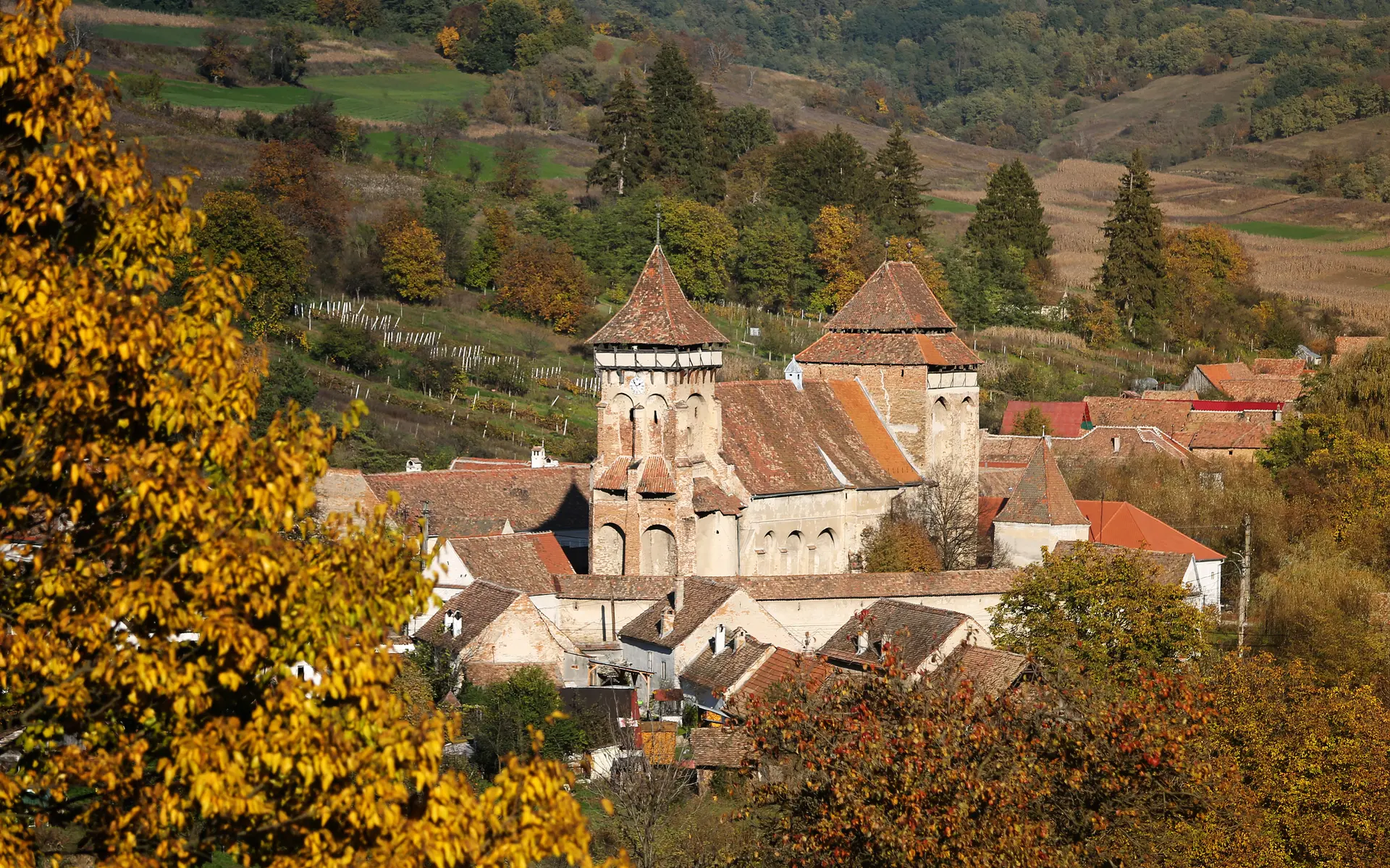
Valea Viilor Fortified Church and Village Ensemble
Valea Viilor, Sibiu County, Romania
63.0 km away
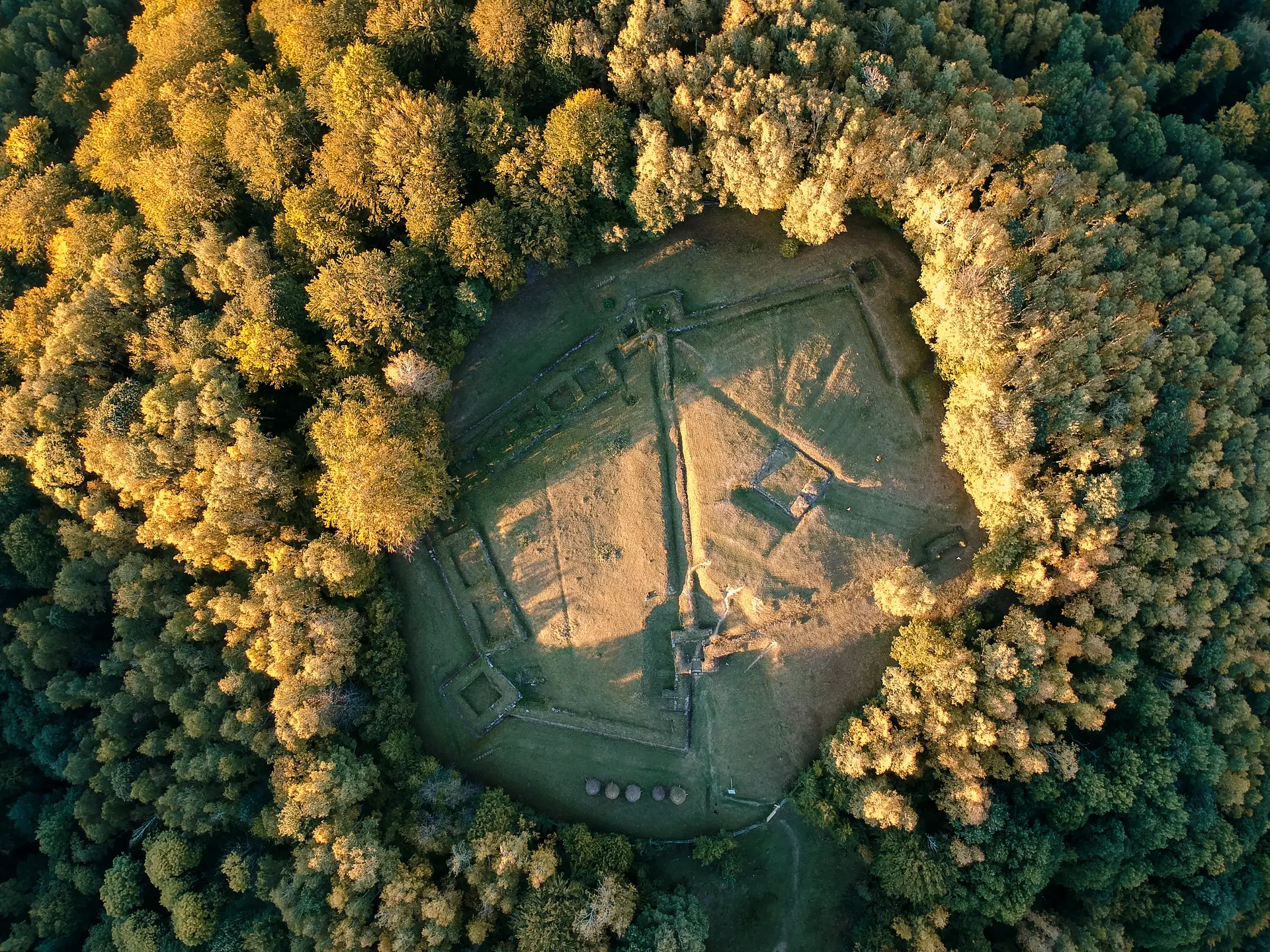
Costești-Blidaru Dacian Fortress
Costești, Hunedoara County, Romania
75.7 km away
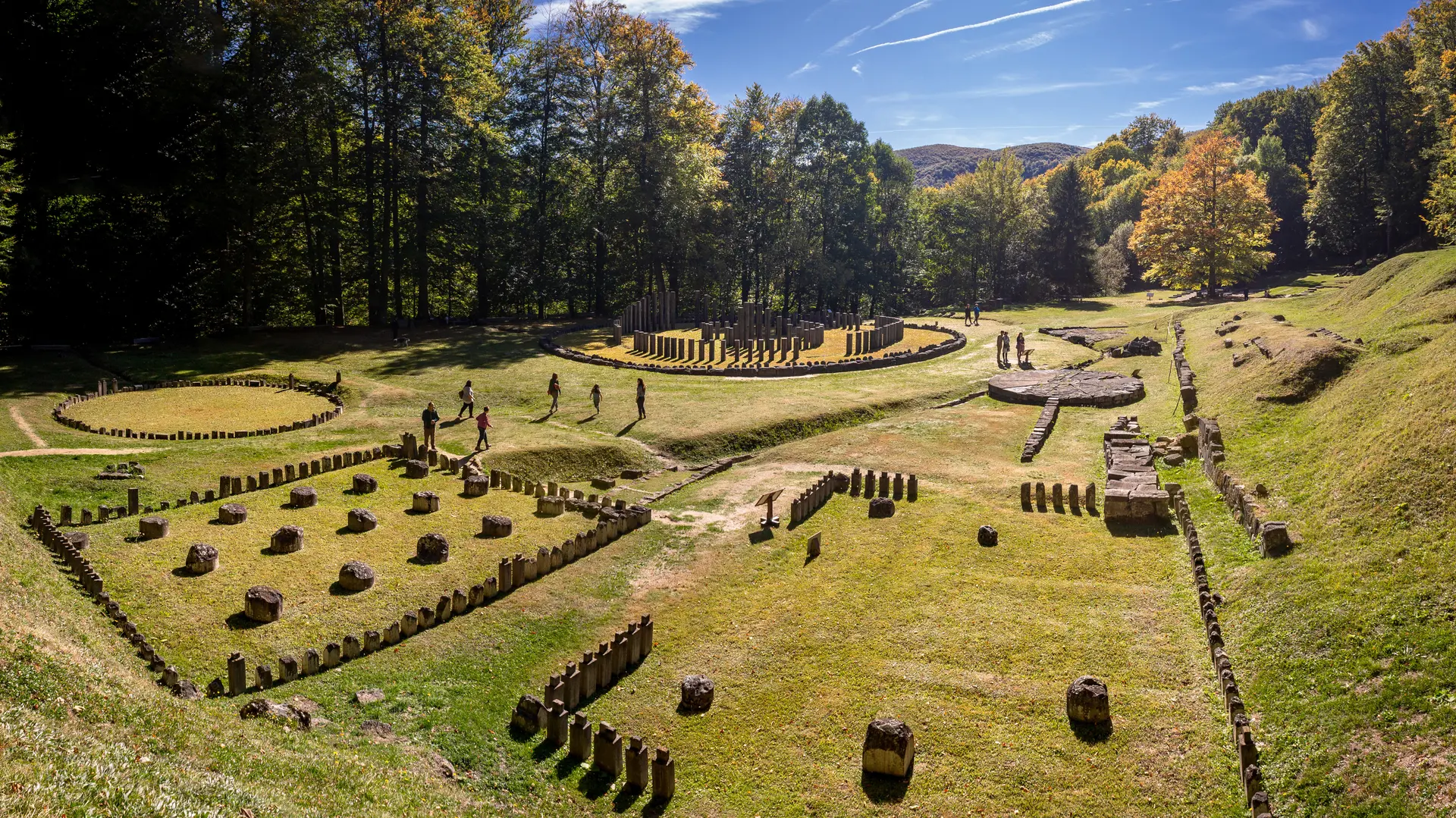
Sarmizegetusa Regia
Grădiștea de Munte, Hunedoara County, Romania
77.5 km away
Share a photo
Help visitors recognize Ramet Monastery, Romania. Every submission is reviewed before publication.