Praying Hands of Mary
Where Celtic myth meets Highland silence in a split stone that defies easy explanation
Understand sacred places, explore living traditions, and learn how to engage respectfully with Pilgrim Map.
Access has not been verified. Check current local guidance before planning a visit.
Fortingall, Scotland, United Kingdom
Read the sources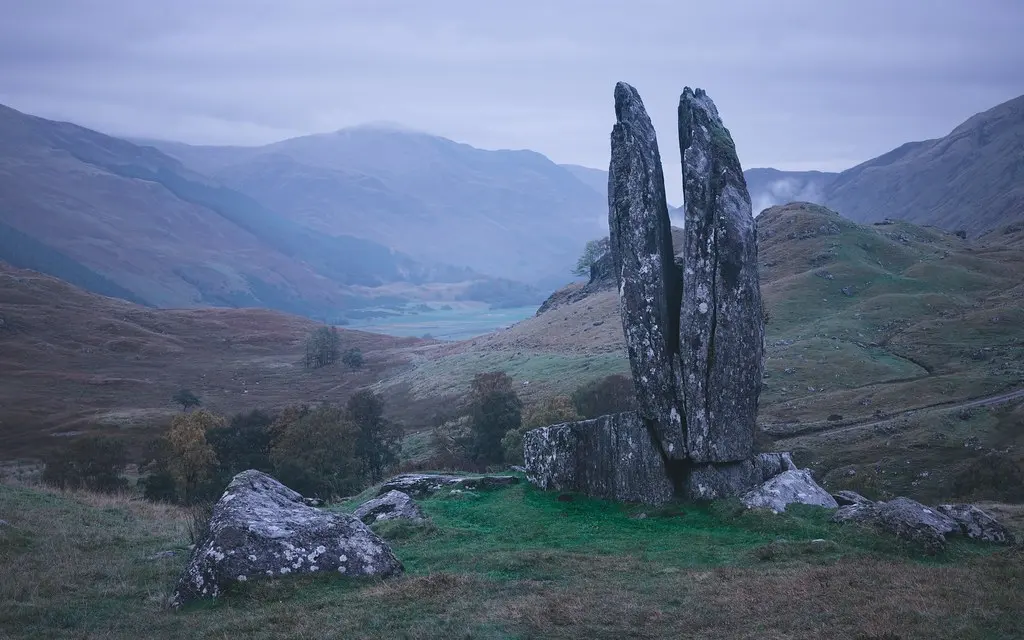
Image of Praying Hands of Mary. Image source
Visit essentials
A quick read before you go
- Duration
- The walk from Camusvrachan takes 35-45 minutes for a reasonably fit walker, covering…
- Access
- From Fortingall, drive nine miles west along the single-track Glen Lyon road to Camusvrachan.
Overview
There is a quality to Glen Lyon that visitors struggle to name. Sir Walter Scott called it the longest, loneliest, and loveliest glen in Scotland, and each word earns its place. The glen stretches over thirty miles into the heart of Perthshire, a narrow corridor between mountains where the modern world grows distant with each mile traveled.
Near the glen's midpoint, a path climbs from the river into a side valley called Gleann Da-Eig. After forty minutes of walking through heather and bracken, the formation appears against the skyline: two tall stones rising together, their tips nearly touching, balanced on a base rock as though placed there with intention. The resemblance to hands raised in prayer is immediate and striking.
The Christian name came later, likely within the past century or two. Older tradition knows this place as Fionn's Rock, where the legendary Celtic hero demonstrated his impossible strength. But names are layers, and this formation has gathered many. What persists beneath all naming is the encounter itself: a shape that should not be here, in a glen that feels set apart from ordinary time, inviting questions that do not resolve into answers.
Why this place is sacred
Glen Lyon is not accidentally sacred. The Gaelic name, Gleann Liomhann, derives from Lugh, the Celtic god of light, skill, and the sun's radiance. To name a place for a god is to mark it as belonging to something beyond human measure. The entire glen functions as sacred geography, a landscape where the veil between worlds has always seemed permeable.
The Praying Hands sits within this consecrated corridor. Some researchers place it on a ley line extending from Staffa and Fingal's Cave through the Cailleach shrine to Fortingall and Croftmoraig stone circles, tracing a network of sacred sites across the Scottish landscape. Whether or not one accepts the concept of ley lines, the concentration of spiritually significant places in this region is striking.
The formation itself presents a riddle. Geologists suggest it may be a glacial erratic, deposited during the last Ice Age as glaciers retreated. But the precision of the split and the evocative placement lead others to propose that Neolithic people raised these stones deliberately, perhaps five thousand years ago. No excavation has resolved the question.
The uncertainty is part of what makes the site compelling: it refuses to be pinned down, holding open the possibility that something deliberate happened here that we cannot quite recover.
If the formation is natural, its purpose is whatever meaning observers bring to it. If human-placed, the intention is lost. Celtic mythology filled the silence with story: Fionn mac Cumhaill, greatest of legendary warriors, split the stone with an arrow to demonstrate his supernatural strength. The narrative transforms an unexplained feature into an anchor for mythological memory, connecting the physical landscape to a world of heroes and wonders.
The Christian name, Praying Hands of Mary, introduced a new layer of meaning, possibly connected to St. Adamnan's seventh-century missionary work in the glen. Adamnan, abbot of Iona and biographer of Columba, sought to establish Christian outposts in territories still devoted to older gods. The renaming of sacred sites was standard practice, overlaying new significance without erasing what came before.
Today the formation carries both names, and visitors approach from multiple traditions, each finding their own meaning in the stone's strange beauty.
Experience and orientation
The experience begins before you reach the stones. The drive along Glen Lyon's single-track road takes you progressively deeper into landscape that seems to belong to an older Scotland. By the time you park at Camusvrachan and begin walking, the modern world has receded. The path follows the Allt Gleann Da-Eig stream, climbing gradually through terrain that demands attention: boggy patches, uneven ground, the possibility of weather changing without warning.
This is not a hardship but a preparation. The body's engagement with the land clears the mind of whatever preoccupied it before. Many visitors report that by the time the formation comes into view, they have entered a different quality of attention, quieter and more receptive.
The encounter with the stones themselves varies. Some feel the presence of vast time, the weight of millennia compressed into this unexplained shape. Others experience the mythological resonance, imagining Fionn's arrow finding its mark. Still others simply sit with the visual fact of it: two stones rising like supplicant hands against the Highland sky, asking nothing, explaining nothing, simply present.
The journey back often feels different from the approach. Visitors describe a sense of having been somewhere that stays with them, an image that returns unbidden in the days and weeks that follow.
Approach the Praying Hands as you would approach any encounter whose outcome you cannot predict. The formation rewards those who arrive without agenda, who give themselves time to simply be present. Bring a question if you like, something genuinely unsettled in your life, and hold it lightly as you walk. The stones will not answer it, but the quality of attention they evoke sometimes allows answers to surface from within.
Context and lineage
According to Celtic tradition, Fionn mac Cumhaill was the greatest warrior of the Fianna, bands of hunter-warriors who served the High King of Ireland and wandered through what is now Ireland and Scotland. Fionn was not merely strong but possessed supernatural abilities, including the gift of prophecy. The story holds that he split this stone with a single arrow, demonstrating power beyond mortal limits.
The tale connects the Praying Hands to a broader Fenian geography. Fionn gives his name to Fingal's Cave on Staffa, and stories place him throughout the Scottish Highlands. These are not random attributions but a mythological mapping of landscape, identifying places where the legendary and the physical touch.
Whether any historical figure underlies the Fionn legends remains unknown. What matters for the site is the narrative's persistence: for centuries, people have understood this formation through the lens of heroic myth, seeing in its split stones evidence of deeds beyond ordinary human capacity.
The formation exists within an unbroken thread of sacred regard. Before Christian missionaries arrived, the glen belonged to older powers. The Cailleach shrine nearby maintains rituals that may stretch back millennia. Stone circles at Fortingall and Croftmoraig mark the landscape as spiritually significant since the Bronze Age. The Praying Hands, whatever its origin, participates in this continuum, holding space for the sacred within a landscape that has always been understood as more than ordinary.
Fionn mac Cumhaill
legendary
Legendary Celtic hero who led the Fianna warrior bands. According to tradition, he split the stone with an arrow, leaving this formation as evidence of his supernatural strength.
St. Adamnan
historical
Seventh-century abbot of Iona who undertook missionary work in Glen Lyon. His efforts to Christianize the region may have contributed to the later attribution of the formation to Mary.
The Cailleach
deity
The Celtic creator goddess and divine hag of winter. Her shrine in Glen Cailleach, near the Praying Hands, represents the only surviving dedicated worship site to her in Britain.
Traditions and practice
No specific traditional rituals at the Praying Hands have survived or been recorded. The Fionn mac Cumhaill mythology would have been transmitted orally, with stories told and retold around fires, connecting listeners to a world where such feats were possible.
The broader sacred landscape of Glen Lyon included rituals at the Cailleach shrine that continue to this day: each spring, stone figures representing the goddess and her family are brought out from their stone house and placed facing the glen; each autumn, they are returned inside. This is considered the oldest continuous pagan ritual in Britain.
Those who visit the Praying Hands today often do so as part of a broader engagement with Glen Lyon's sacred geography. Some walk to the formation as a single destination; others connect it with visits to the Cailleach shrine, the Fortingall Yew, or other sites in the region. The practice most commonly reported is simply presence: sitting with the stones, allowing the silence and strangeness of the place to work without agenda.
Some visitors bring intentions or questions to hold during the walk; others come empty-handed, open to whatever arises.
Let the walk itself be the practice. Leave your phone in your pocket. Notice the quality of your attention as you move through the glen, how it shifts as the modern world falls away behind you. When you reach the formation, give yourself time before reaching for a camera. Sit with what you see. Notice what thoughts arise, what feelings move through you. The stones have stood here for millennia, possibly longer. There is no rush.
If you are drawn to offer something, let it be internal: a moment of gratitude for the journey, an acknowledgment of the mystery you cannot resolve, a willingness to be changed by encounter.
Celtic Mythology (Fionn mac Cumhaill)
ActiveThe formation's older name, Fionn's Rock, connects it to one of Celtic mythology's greatest heroes. According to legend, Fionn split the stone with an arrow fired with superhuman strength. This narrative places the site within the Fenian cycle of stories and connects it to other Fionn-associated places across Scotland, including Fingal's Cave on Staffa.
Contemporary visitors who connect with Celtic mythology may approach the site as pilgrimage, honoring the legendary hero and the stories embedded in the landscape. The formation serves as a physical anchor for mythological memory, a place where the legendary past remains accessible.
Celtic Sacred Landscape
ActiveThe formation exists within a broader sacred geography that includes the Cailleach shrine, the Fortingall Yew, and multiple stone circles. Glen Lyon itself, named for the sun god Lugh, represents a landscape that Celtic peoples understood as inherently sacred, where the boundary between worlds was permeable.
Modern practitioners may visit the Praying Hands as part of pilgrimage connecting multiple sacred sites in the region. The journey through the glen functions as movement through consecrated space, with each site adding to the cumulative experience of encounter with the sacred.
Nature-Based Spirituality
ActiveFor many contemporary visitors, the Praying Hands represents a thin place where the natural world opens into something deeper. The remote Highland setting, the mysterious formation, and the weight of accumulated human attention create conditions for experiences that transcend ordinary tourism.
Visitors approach the site through contemplative hiking, allowing the walk itself to serve as preparation for encounter. At the formation, practices include meditation, silent presence, and openness to whatever arises. The journey matters as much as the arrival.
Perspectives and open questions
The Praying Hands invites interpretation without insisting on any single reading. Geologists, folklorists, contemporary seekers, and those who simply love wild places each find something different here. The formation's power lies partly in this openness: it holds space for multiple meanings without collapsing into any one of them.
Scholarly perspective
Formal academic study of the Praying Hands specifically is limited. The Megalithic Portal classifies it as a 'Natural Stone / Erratic / Other Natural Feature,' reflecting uncertainty about whether the formation is a glacial erratic or was human-raised. No excavation or detailed geological analysis has resolved the question. The broader landscape of Glen Lyon is recognized for its archaeological significance, including Neolithic and Bronze Age sites, but the Praying Hands remains understudied.
Living and traditional perspectives
Celtic tradition knows the site as Fionn's Rock, Clach na Sgoltadh, placing it within the mythology of the Fianna. This interpretation connects the formation to a network of Fionn-associated sites across Scotland and Ireland, reading the landscape as a record of legendary deeds. The glen's name, derived from the sun god Lugh, and the presence of the Cailleach shrine confirm that this was sacred geography in Celtic understanding.
Alternative interpretations
Some interpret the Praying Hands as lying on a ley line connecting Staffa, the Cailleach shrine, Fortingall, and Croftmoraig stone circle. This perspective sees the formation as part of an ancient sacred geography that channeled earth energies across the Scottish landscape. The connection to Fingal's Cave, which also bears Fionn's name, reinforces this network of meaning for those who hold this view.
Open questions
Fundamental questions remain unanswered. Is the formation natural or human-placed? If human-placed, what was its purpose? When and why did the Christian name emerge? What relationship, if any, exists between this site and others in the glen? The Praying Hands keeps its secrets, which is perhaps appropriate for a place that exists at the boundary between the explicable and the mysterious.
Plan your visit
Access and arrival
From Fortingall, drive nine miles west along the single-track Glen Lyon road to Camusvrachan. Two large laybys near the bridge provide parking. Do not drive across the private bridge. The trail follows the Allt Gleann Da-Eig stream up into Gleann Da-Eig. The path is not always clearly marked; a GPS or mapping app is helpful. The nearest train stations are Pitlochry and Aberfeldy; from there, private vehicle or taxi is necessary.
Fortingall has limited accommodation including the Fortingall Hotel. Aberfeldy offers a wider range of options. For those seeking deeper engagement with the landscape, several days in the area allows visits to multiple sacred sites. No camping facilities exist immediately near the Praying Hands; wild camping is legal in Scotland under the Scottish Outdoor Access Code, but must be done responsibly.
Respectful visit
Dress for Scottish Highland conditions, which can change rapidly. Waterproof layers are essential regardless of forecast. Sturdy hiking boots with good grip will serve you on potentially boggy and uneven terrain. The walk is moderate but not trivial.
Photography is welcomed. The formation's dramatic silhouette makes it popular with photographers, particularly at dawn or dusk when light quality intensifies. Be present before being productive: see the place with your eyes before framing it through a lens.
Do not leave physical offerings at the site. If you wish to make an offering, let it be internal: a prayer, a moment of silence, an intention held and released. The site needs nothing from you but your attention.
No formal restrictions govern the site. Use common sense: do not climb on the formation, do not disturb the surrounding landscape, do not leave litter. The terrain and weather impose their own requirements; come prepared for a hill walk in remote Scotland.
Do not leave physical offerings at the site. Do not attempt to climb on or touch the formation in ways that might destabilize it. The stones have endured, but they are not indestructible. Respect the farmers whose land you cross to reach the site. Close gates behind you.
Current practical details
Address
Aberfeldy PH15 2PW, UK
Hours, fees, and access can change — verify on the official source before you travel. Practical details last checked Jun 2026.
Location
Map loads as you approach this section.
Pilgrim reflections
A portrait of encounter, not a score
Pilgrims describe what they felt, how present they could become, and whether the place would shape a journey. There are no stars and no ranking of traditions.
No reviewed reflections yet
The first pilgrims can help describe the character of being here.
Share a reflection
Available after an account-backed “Been there.” Every reflection is reviewed before publication.
Nearby sacred places
Explore other sacred places in the region. Proximity does not establish access or travel time; check each place’s guidance.
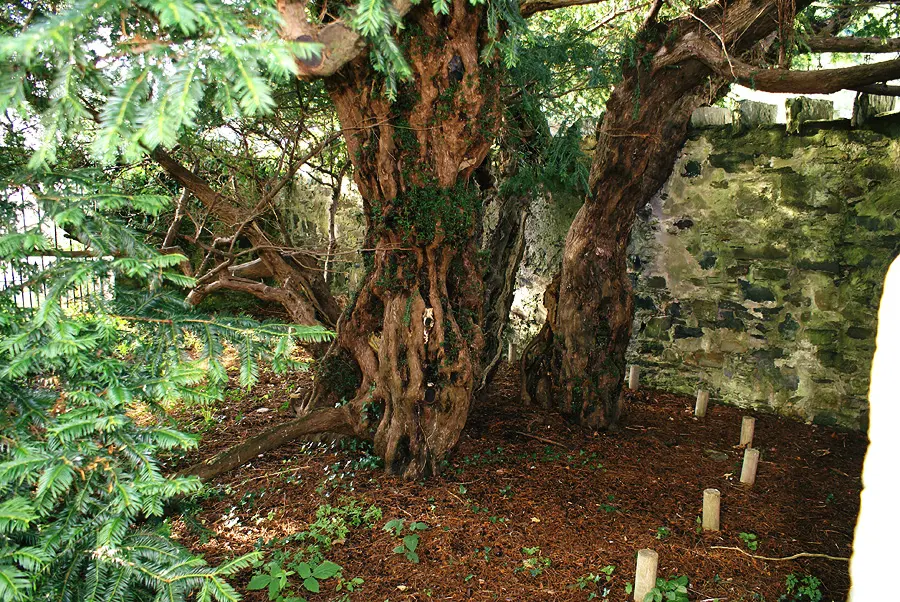
Fortingall Yew Tree and Church, Perthshire, Scotland
Fortingall, Scotland, United Kingdom
13.2 km away
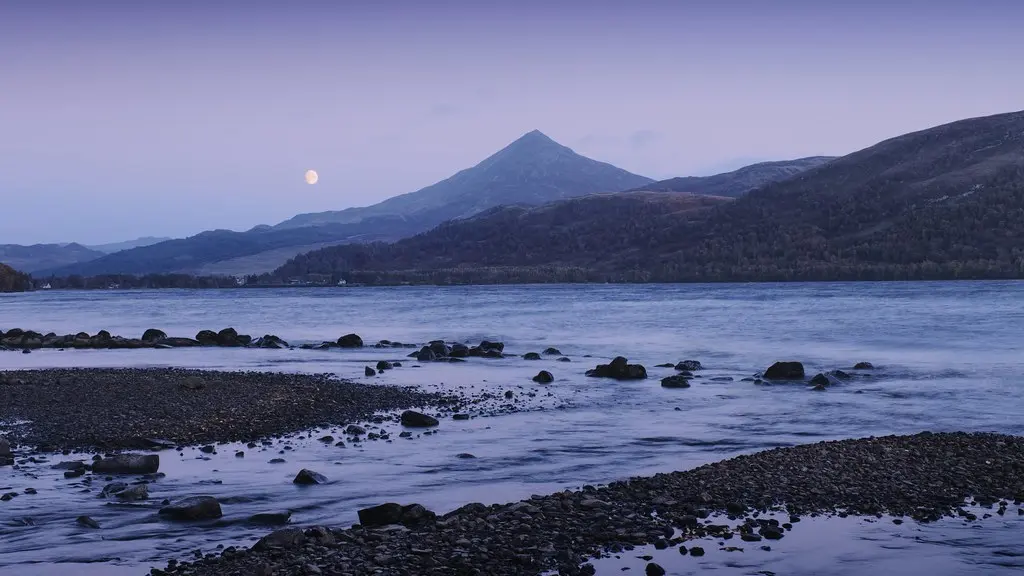
Mount Schiehallion, Scotland
Aberfeldy, Scotland, United Kingdom
13.2 km away
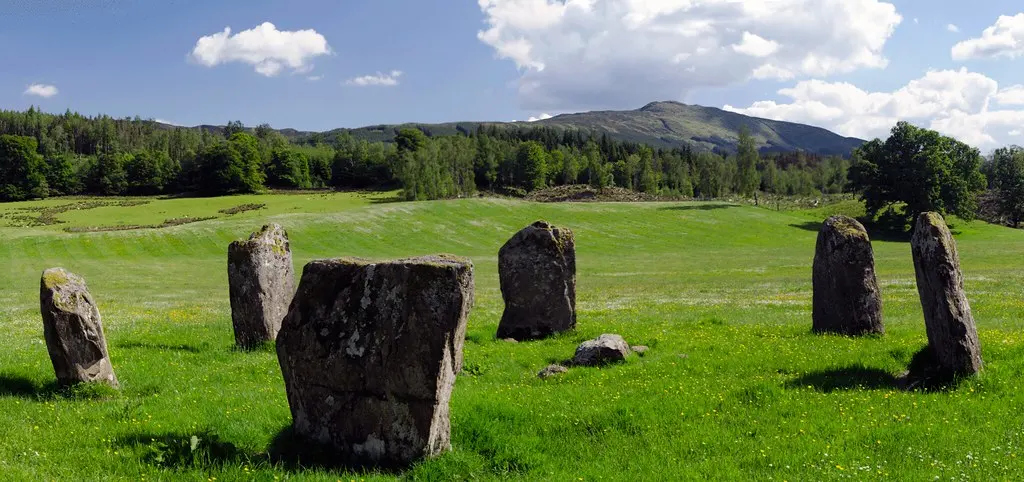
Kinnell stone circle, Killin
Killin, Scotland, United Kingdom
14.1 km away

Croft Moraig Stone Circle, Aberfeldy
Aberfeldy, Scotland, United Kingdom
18.7 km away
References
Sources consulted for this page. Source categories describe the publication, not a guarantee that every claim is verified. Traditional accounts and outside interpretations may differ.
- 01Praying Hands of Mary: A fabled rock in Scotland's 'longest, loneliest and loveliest' glen — The ScotsmanguideComprehensive article on history and visitor information
- 02Fionn's Rock (Praying Hands of Mary) — AllTrailsSource contextTrail information and reviews
- 03The Longest, the Loveliest and the Loneliest — WalkhighlandsSource contextGlen Lyon overview and hiking information
- 04Praying Hands of Mary, Glen Lyon — World Pilgrimage Guide / Sacred SitesSource contextSacred site context and ley line information
- 05Praying Hands, Glen Lyon, Perthshire — Britain ExpressSource contextVisitor information and history
- 06Glen Lyon: Exploring the fabled Praying Hands of Mary — The CourierguideHiking and visitor experience article
- 07Glen Lyon - Praying Hands of Mary Natural Stone / Erratic / Other Natural Feature — The Megalithic PortalSource contextCoordinates and classification
- 08Praying Hands of Mary - Hidden Scotland — Hidden ScotlandofficialVisitor information
- 09The Praying Hands of Mary — Mountains, Myths and MoorlandsblogCultural and mythological context
- 10Stone hunting in Glen Lyon — Antidotal RecallblogLey line and sacred geography context
- 11Early Christianity in Glen Lyon — SenchusSource contextSt Adamnan and Christian history
- 12The shrine of the Cailleach at Glen Lyon — Celtic CountriesSource contextContext on Glen Lyon's Celtic sacred heritage
Share a photo
Help visitors recognize Praying Hands of Mary. Every submission is reviewed before publication.