Peñafrancia Basilica
Where Bicolanos come home to Ina, and a river carries centuries of devotion
Understand sacred places, explore living traditions, and learn how to engage respectfully with Pilgrim Map.
Access has not been verified. Check current local guidance before planning a visit.
Naga City, Camarines Sur, Philippines
Read the sources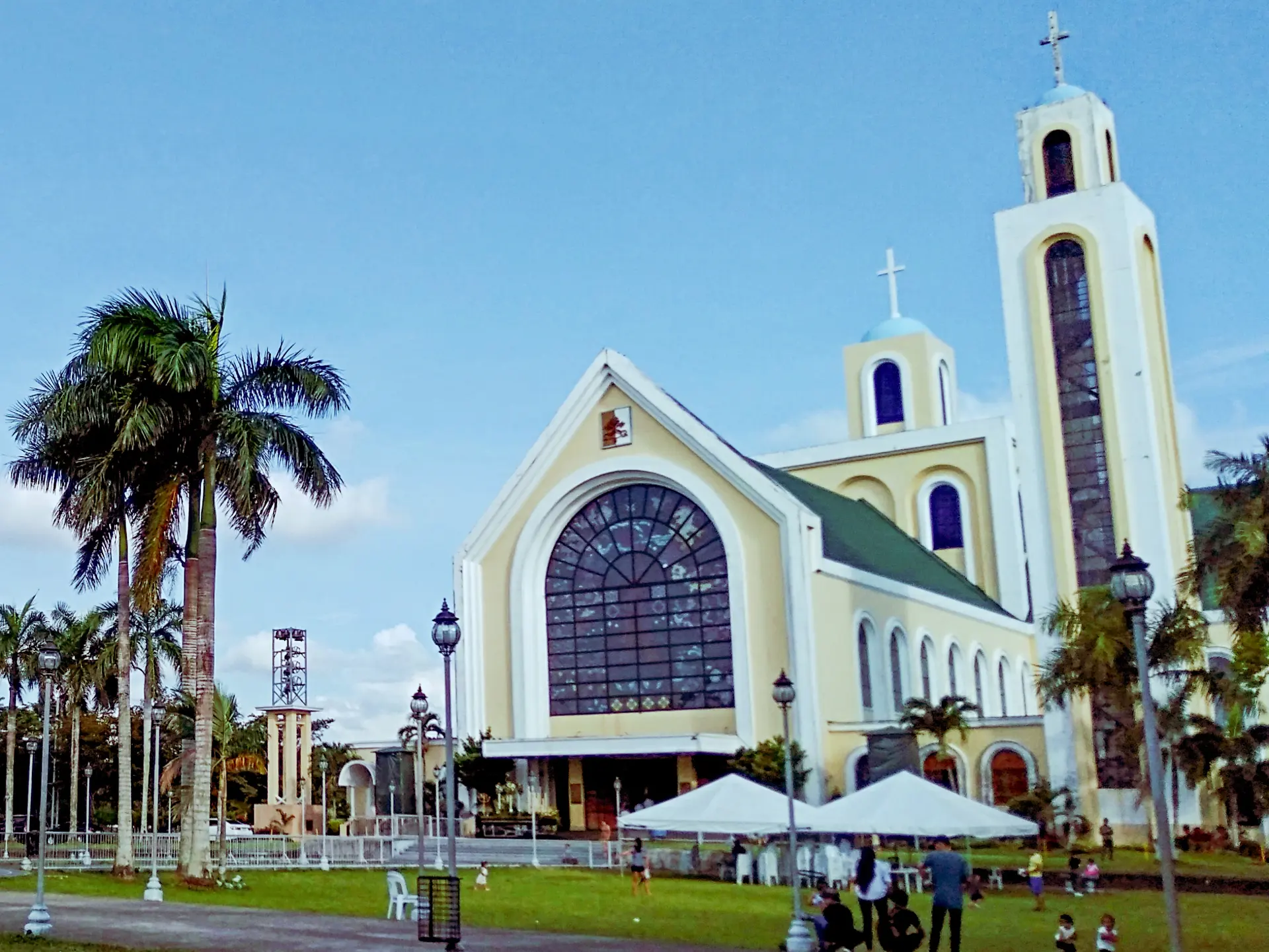
Visit essentials
A quick read before you go
- Duration
- A regular visit to the basilica takes one to two hours, allowing time for the interior, the…
- Access
- The basilica is located on Balatas Road in Naga City, Camarines Sur.
Overview
The Bikol word Ina—Mother—captures what draws over a million pilgrims each September: not a distant heavenly queen, but one who listens, remembers each name, and waits for her people to come home. Peñafrancia Basilica is the Bicol region's spiritual heart, where this intimate Marian devotion has flourished since 1710.
A young seminarian's miraculous healing and a bamboo riverbank chapel grew into Asia's largest annual Marian celebration, while the relationship between a people and their spiritual mother passed through generations of tears and gratitude.
During the festival, Ina's image travels by river from cathedral to basilica. Barefoot men carry her through crowded streets; candles line the Naga River as a flower-laden barge glides home to a hymn every Bicolano knows. The boundary between seen and unseen, mortal and eternal, grows thin.
The devotion is legible even beyond Catholicism: a grandmother weeps before the image, or a young man crosses himself before joining the voyadores who carry Ina through the streets. This is not performance, but people meeting their mother.
Sites inside
Why this place is sacred
The Bicolano devotion to Ina is not abstract theology made accessible. It is something older and more intimate: the recognition that the Divine can wear a mother's face.
This understanding took root in 1710 when Miguel Robles de Covarrubias, a young seminarian who had been healed through the Virgin's intercession, commissioned an image and built a chapel to honor her. The devotion spread rapidly through the Bicol region, not because of ecclesiastical promotion but because people experienced something here. Healings were documented. Prayers were answered. Generations began to speak of the Virgin as they would speak of family.
What makes this place thin is not architecture, however beautiful the basilica may be. It is accumulation: three centuries of mothers bringing sick children, of fishermen seeking safe passage, of the dying asking for peace, of the grateful returning to give thanks. Each prayer adds to the weight of devotion that settles over this ground. Each miracle story, passed from grandmother to grandchild, deepens the expectation that Ina listens, that Ina responds.
The September festival crystallizes this accumulated faith into nine days of intensified presence. When 1.8 million people focus their devotion on a single point, something happens that defies easy explanation. Visitors who arrive as observers often find themselves swept into an experience they had not anticipated. The collective faith creates its own field, its own pull.
The Naga River itself becomes sacred pathway. When the image returns to the basilica by barge, escorted by hundreds of voyadores balanced on the pagoda, lit by candles along both banks, accompanied by the voices of thousands singing 'Resuene Vibrante,' the ordinary world recedes. For these hours, something else is present.
The devotion began as an act of gratitude. Miguel Robles de Covarrubias, suffering from chronic illness while studying in Manila, experienced healing through devotion to Our Lady of Peñafrancia, a Spanish Marian title from Salamanca. Upon his ordination in Naga, he fulfilled his vow by building a chapel and commissioning an image.
From the beginning, the purpose was clear: to make the Virgin's maternal care accessible to the people of Bicol, to give them a mother to whom they could bring their sorrows and joys.
From a bamboo and nipa chapel on the Naga River, the devotion grew. A stone church replaced the original chapel. Then a larger shrine. By 1924, the devotion had become so significant that the image received canonical coronation, only the second Marian image in Asia so honored. The current basilica, completed in 1981 and elevated to minor basilica status in 1985, stands in Balatas, while the original shrine across the river remains a pilgrimage site.
The festival has grown from local celebration to national phenomenon. What draws people has not changed: the belief that Ina hears, that Ina helps, that coming to her presence brings transformation. But the scale has become remarkable. The 2024 centennial of the canonical coronation drew visitors from across the Philippines and the Filipino diaspora worldwide. The 2025 festival saw 1.8 million pilgrims. This is no longer merely regional devotion. It is a national expression of Filipino Marian spirituality.
Experience and orientation
The first thing many visitors notice is the quality of silence in the basilica. Not empty silence, but full silence: the accumulated prayers of three centuries hovering like incense in the air. Then the small details emerge: elderly women moving their lips in quiet petition, young families teaching children to make the sign of the cross, devotees touching the image's manto and pressing it to their faces.
What people report most frequently is comfort. Not theological understanding or mystical transport, but the simple, profound experience of being with a mother who knows your troubles. Many weep without quite knowing why. Others feel a settling, a release of burdens they had not realized they were carrying. The image of Ina, dressed in her traditional garments, seems to look at each visitor personally.
Whether this is projection or something more, the consistency of reports suggests an effect worth taking seriously.
During the September festival, these individual experiences merge into something collective and overwhelming. The Traslacion, when barefoot voyadores carry the image through streets packed with devotees, produces an atmosphere electric with faith. Strangers become family. The boundaries between observer and participant dissolve. Many visitors who came intending merely to watch find themselves praying, crying, joining the masses in calling out to Ina.
The Fluvial Procession on the festival's final evening reaches a different register entirely. As the barge bearing Ina's image moves down the torch-lit Naga River, surrounded by hundreds of voyadores in the water, the hymn 'Resuene Vibrante' rising from thousands of throats, something shifts. Devotees who have attended many times say they still cannot describe it adequately. The sacred becomes palpable.
Come to Peñafrancia with whatever you carry. This is not a place that requires preparation or credentials. The grandmother praying for her grandson's recovery and the curious traveler who wandered in from the street both find space here.
If you arrive outside the festival season, take time to simply sit in the basilica. Notice who else is here, how they pray, what they bring. The Saturday evening mass, followed by the healing prayer with Ina's manto, offers entry into the devotion's heart without the festival crowds.
If you come for the September festival, prepare for intensity. The crowds are massive, the emotions high, the physical demands real. But also prepare to be moved. Even skeptics report being affected by the collective devotion. Let yourself be carried by what moves here. You do not have to understand it to be changed by it.
Context and lineage
The story begins not in the Philippines but in Spain, at a place called Pena de Francia, the Rock of France. In 1434, a Frenchman named Simon Vela received a prophetic vision directing him to search for a buried image of the Virgin. When he and his companions finally unearthed the image, all five men were immediately healed of their ailments: Simon's head wound vanished, eye defects were cured, stomach pain relieved, deafness healed, a crippled finger restored.
The image became famous for miracles, and devotion spread across Spain and to its colonies.
Miguel Robles de Covarrubias was the son of a Spanish official from San Martin de Castanar, near Pena de Francia. While studying at the Universidad de Santo Tomas in Manila, he fell chronically ill. Remembering his family's devotion, he would place a prayer card of the Virgin on whatever part of his body was in pain. He was healed.
Ordained in Naga City as the first diocesan priest from that region, Miguel fulfilled his vow. In 1711, he built a chapel of bamboo and nipa palm on the banks of the Naga River and commissioned a local artisan to carve an image of the Virgin. The devotion he planted has never stopped growing.
Tradition holds that the first miracle in the Philippines occurred during the chapel's construction: a dog killed for its blood to darken the image was thrown into the river and came back to life. Whether or not one credits the account, it established from the beginning that this would be a place of wonders.
The Penafrancia devotion has been shepherded by the Archdiocese of Caceres since its founding. The original bamboo chapel gave way to a stone church in the mid-18th century, then to the old shrine that still stands near the Naga River. When the need for larger facilities became clear, Archbishop Pedro P. Santos conceived the idea of a new basilica in 1960. The current structure, begun in 1976 and completed in 1981, was elevated to minor basilica status in 1985.
Throughout these physical transitions, the devotional practices have remained remarkably consistent. The September festival, the novenas, the healing prayers, the intimate relationship between devotees and their Ina: these have persisted through Spanish colonial era, American occupation, Japanese invasion, and independence. The tradition is not preserved in stone but in the hearts of Bicolanos who pass it to their children.
The canonical coronation of 1924, authorized by Pope Benedict XV and performed by Apostolic Delegate Monsignor William Piani, marked ecclesiastical recognition of what Bicolanos already knew: this devotion was exceptional. A century later, the centennial celebration in 2024 drew pilgrims from around the world, testimony to how far the devotion has spread with the Filipino diaspora.
Our Lady of Penafrancia
deity
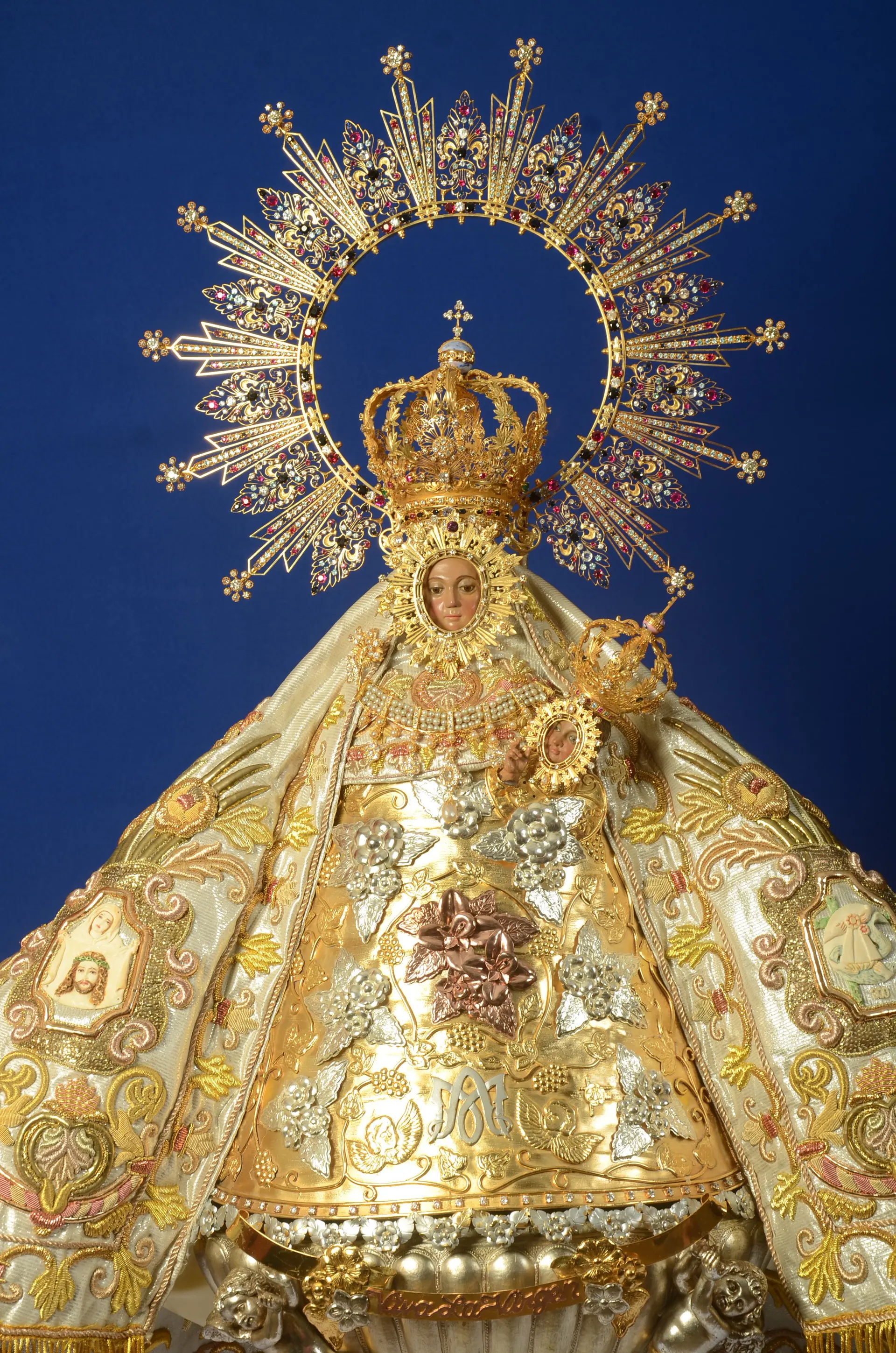
The Virgin Mary under her title as Our Lady of Penafrancia, patroness and queen of Bicol. Called Ina (Mother) by devotees, she is understood not merely as an intercessor but as a spiritual mother with personal care for each of her children.
Divino Rostro
deity
An image of the Holy Face of Jesus that accompanies the Virgin during processions, sailing ahead of her barge during the Fluvial Procession. Venerated in its own right with Friday novenas.
Miguel Robles de Covarrubias
founder
The first diocesan priest ordained in Naga, who established the Penafrancia devotion in 1710-1711 after being healed through the Virgin's intercession. His act of gratitude became the foundation of Bicol's most important religious tradition.
Simon Vela
founder
The 15th-century Frenchman who discovered the original image of Our Lady of Penafrancia in Spain, guided by prophetic vision. His miraculous healing upon finding the image initiated the devotion that would eventually reach the Philippines.
Traditions and practice
The September festival represents the traditional heart of Penafrancia devotion. Nine days of novena at the Naga Metropolitan Cathedral culminate in the Traslacion and Fluvial Procession. During the Traslacion, barefoot male devotees called voyadores carry the image through the streets in a display of faith that moves even secular observers.
During the Fluvial Procession, the image returns to the basilica by barge down the Naga River, escorted by voyadores who balance on the pagoda and pull its ropes through the water.
The hymn 'Resuene Vibrante' accompanies these processions, its melody so deeply embedded in Bicolano consciousness that children learn it before they understand its words. To hear it sung by thousands along the candlelit riverbank is to understand why people travel across the world to be here in September.
The tradition of healing prayer with the manto dates to the devotion's earliest years. Devotees bring the Virgin's cloak to touch their bodies or the bodies of loved ones who are ill. Reports of healings continue to the present day, documented by the shrine and held in devotees' family stories.
Daily mass continues in both Bikol and English, maintaining the devotion's vitality throughout the year. The Saturday novena to Our Lady of Penafrancia draws regular devotees who cannot attend the September festival but wish to maintain their relationship with Ina. Friday novenas honor the Divino Rostro. Wednesday novenas petition Our Mother of Perpetual Help.
The Saturday afternoon healing prayer, following the 4:00 PM mass, offers the most accessible entry point for visitors. The Marian procession winds through the basilica grounds, and those seeking healing may receive blessing with the manto. Devotees bring photos of absent loved ones, items belonging to the sick, petitions written on paper. The atmosphere is intimate despite the crowds.
First Friday devotions include Exposition and Benediction of the Blessed Sacrament, drawing those with particular devotion to the Eucharist. The daily rosary, recited at 6:45 AM and 4:45 PM on weekdays, maintains the rhythm of prayer that underlies all other activities.
If you can visit only once, come for the September festival. The experience of the Fluvial Procession is unlike anything else in Asian Catholicism. Position yourself along the riverbank before sunset, find a spot where you can see both the water and the crowds, and allow yourself to be part of what unfolds.
If the festival is not possible, attend the Saturday evening mass and healing prayer. This weekly ritual captures the devotion's essence: the petition, the faith in Ina's intercession, the tangible blessing with the manto. Come with whatever intention you carry, whatever healing you seek. You need not be Catholic. You need only be sincere.
In the basilica itself, spend time before the image of Ina. Watch how others pray: the whispered conversations with the Virgin, the tears, the long silences. Light a candle. Offer your own petition, however you frame it. The image has been receiving such prayers for three centuries. One more will be welcomed.
If you are drawn to the Divino Rostro, attend the Friday novena. The devotion to the Holy Face adds depth to the Penafrancia experience, reminding that the Virgin points always to her Son.
Roman Catholicism
ActiveThe Penafrancia Basilica is the only basilica in the Bicol Region and the principal shrine for Our Lady of Penafrancia, patroness and queen of Bicol. The devotion represents one of the deepest expressions of Filipino Marian piety, where the Virgin Mary is understood as Ina, spiritual mother with personal care for each devotee. The September festival, the largest Marian celebration in Asia, draws over 1.5 million pilgrims annually.
Daily masses in Bikol and English maintain regular worship. Saturday novenas to Our Lady of Penafrancia, Friday novenas to the Divino Rostro, and Wednesday novenas to Our Mother of Perpetual Help structure weekly devotional life. The Saturday healing prayer with the manto of Ina offers direct encounter with the Virgin's intercession. The September festival, with its Traslacion and Fluvial Procession, represents the tradition's annual climax.
Perspectives and open questions
The Penafrancia devotion invites understanding from multiple angles: the scholarly view of Filipino Catholicism, the traditional faith of Bicolano devotees, and questions that remain open to continuing interpretation. Each perspective offers genuine insight; together they approximate the full picture.
Scholarly perspective
Historians and scholars of Philippine religion recognize the Penafrancia devotion as one of the oldest and most significant Marian traditions in the Philippines, with documented origins in 1710. The devotion represents a successful inculturation of Spanish Catholic piety into Filipino culture: the Virgin Mary became Ina, taking on resonances from indigenous understanding of maternal divinity and family obligation.
The canonical coronation in 1924 and elevation to basilica status in 1985 mark ecclesiastical recognition of the devotion's importance. The Cultural Center of the Philippines' Encyclopedia of Philippine Art includes Ina among its entries, acknowledging her cultural as well as religious significance.
Scholars note the devotion's function in maintaining Bicolano regional identity. The September festival serves as cultural homecoming, reinforcing bonds among Bicolanos wherever they have scattered. The diaspora has spread the devotion to Filipino communities worldwide, from the United States to the Middle East to Europe.
Living and traditional perspectives
For Bicolano devotees, Ina is not a subject of scholarly analysis but a living relationship. She is the mother who never abandons, who listens to every petition, who intercedes with her Son for those who call upon her. The healings attributed to her are not historical curiosities but present realities; devotees return year after year to give thanks for favors received.
The tradition holds that Ina has protected the Bicol region from disasters, that her intercession has saved countless lives, that she knows each devotee by name. This understanding is transmitted not through catechesis but through family practice: children learn to love Ina by watching their parents and grandparents kneel before her image.
The voyadores who carry the image through the streets during the Traslacion understand their role as sacred service. Many go barefoot as penance or devotion. Many have carried Ina for decades, their fathers having carried her before them. This is not performance but prayer embodied.
Open questions
The identity of the local artisan who carved the original 1710 image has been lost to history. The exact location and fate of the first bamboo chapel are uncertain. The details of the first reported miracle, the dog's resurrection, exist in tradition rather than documented record.
Why the Virgin of Pena de Francia, among all Spanish Marian titles, became so deeply rooted in Bicol while other devotions faded remains partly mysterious. Miguel Robles de Covarrubias' family connection provides part of the answer, but the devotion's explosive growth suggests something more: a meeting between a people's need and a particular expression of the sacred.
How to account for the consistency of reported healings and answered prayers across three centuries? Catholic theology offers one framework; psychology another; the devotees themselves simply say that Ina listens. The question remains open, as questions about the sacred tend to do.
Plan your visit
Access and arrival
The basilica is located on Balatas Road in Naga City, Camarines Sur. Naga Airport (WNP) is approximately ten kilometers away, with flights from Manila. By land, buses from Manila take approximately eight to ten hours. From the Naga city center, jeepneys and tricycles provide local transport to the basilica. During the September festival, special transportation arrangements are typically in place, but expect crowds and delays.
Naga City offers lodging ranging from budget pensions to mid-range hotels. During the September festival, accommodations book far in advance; reserve early or expect to stay in neighboring municipalities. Many devotees treat festival attendance as annual homecoming, staying with family rather than in commercial lodging. Visitors without local connections should make arrangements well ahead of September.
Respectful visit
Dress modestly as you would for any Catholic church: shoulders and knees covered, nothing revealing or distracting. This applies to both men and women. During the festival, practical clothing is advisable given the crowds and, for the Fluvial Procession, the evening weather near the river. Comfortable shoes are essential for the Traslacion, which involves hours of standing and slow movement through streets.
Photography is generally permitted in the basilica but should be done respectfully and without flash during services. During the festival processions, photography and video are common and accepted. However, do not let documentation override presence. The most meaningful experiences reported here come from participation, not observation.
Candles, flowers, and monetary offerings are traditional. Candles may be lit in designated areas before the image. Devotees often bring specific petitions, written or held in mind, presenting them silently to Ina. Those who return after receiving favors typically bring thanksgiving offerings. There is no prescribed amount or form; the tradition simply asks for sincerity.
The Traslacion procession has traditionally been participated in by male devotees (voyadores). This is not enforced exclusion but maintained tradition: women have always been central to the devotion in other ways. Respectful silence is expected during mass and prayer services. No eating or drinking inside the basilica. During the festival, certain areas may be restricted for crowd management or safety; follow signage and marshals' directions.
During the September festival, the crowds are massive and the emotional intensity high. Physical safety requires attention: stay aware of crowd movements, particularly during the Traslacion when the voyadores press through packed streets. The Fluvial Procession involves water, darkness, and multitudes. Exercise appropriate caution.
The Traslacion is traditionally a male devotion. Women do not join the voyadores carrying the image, though all may line the streets and participate in prayer. This tradition reflects historical practice rather than exclusion; women are central to the broader devotion.
Be aware that your presence during rituals is a privilege extended by active worshippers. Photography is generally permitted but should be unobtrusive. Silence or quiet conversation is appropriate inside the basilica. During mass and devotions, behave as you would in any church service you were not leading.
Current practical details
Address
J5JX+RXH, Balatas Rd, Naga City, 4400 Camarines Sur, Philippines
Phone
Hours, fees, and access can change — verify on the official source before you travel. Practical details last checked Jun 2026.
Location
Map loads as you approach this section.
Pilgrim reflections
A portrait of encounter, not a score
Pilgrims describe what they felt, how present they could become, and whether the place would shape a journey. There are no stars and no ranking of traditions.
No reviewed reflections yet
The first pilgrims can help describe the character of being here.
Share a reflection
Available after an account-backed “Been there.” Every reflection is reviewed before publication.
Nearby sacred places
Explore other sacred places in the region. Proximity does not establish access or travel time; check each place’s guidance.
Our Lady of Peñafrancia, Naga City, Bicol
Naga, Camarines Sur, Philippines
0.0 km away

Baclaran Church — National Shrine of Our Mother of Perpetual Help
Parañaque, Metro Manila, Philippines
258.0 km away
Quiapo Church (Minor Basilica and National Shrine of Jesus Nazareno)
Quiapo, Manila, Manila, Philippines
262.1 km away
San Agustin Church
Intramuros, Manila, Intramuros, Manila, Metro Manila, Philippines
262.5 km away
References
Sources consulted for this page. Source categories describe the publication, not a guarantee that every claim is verified. Traditional accounts and outside interpretations may differ.
- 01Peñafrancia History - Archdiocese of Cáceres — Archdiocese of CáceresSource contextOfficial diocesan history of the devotion
- 02Peñafrancia 100 - Archdiocese of Cáceres — Archdiocese of CáceresSource contextCentennial celebration of the canonical coronation
- 03One of a kind in the region, the home of Ina - City of Naga — City of Naga GovernmentofficialOfficial city government information
- 04Our Lady of Peñafrancia / Nuestra Señora de Peñafrancia / Ina — Cultural Center of the Philippines Encyclopedia of Philippine ArtSource contextOfficial cultural encyclopedia entry
- 05Peñafrancia Basilica - Wikipedia — Wikipedia contributorsencyclopediaComprehensive article on the basilica's history, architecture, and significance
- 06Our Lady of Peñafrancia - Wikipedia — Wikipedia contributorsencyclopediaDetailed history of the devotion and the image
- 07The Little-Known Story of Our Lady of Peñafrancia — EWTNspiritualAccount of miracles and healings
- 08The Peñafrancia Festival: Asia's Biggest Marian Gathering — Radio Veritas AsiaspiritualCoverage of the annual festival
- 09For the love of Ina: Nuestra Señora de Peñafrancia — RapplernewsNews feature on Bicolano devotion
- 10Healing power draws devotees to 'Ina' — Philippine Daily InquirernewsReport on healing traditions
- 11Basilica Minore of Our Lady of Peñafrancia in Naga City — The Old ChurchesSource contextDetailed architectural and historical information
- 12Our Lady of Penafrancia Basilica, Naga, Bicol, Philippines — Catholic Shrine BasilicaspiritualComprehensive pilgrimage information
- 13Minor Basilica and National Shrine of Our Lady of Peñafrancia Mass Schedule — PhilMassspiritualCurrent mass schedules and devotions
- 14Se Siempre La Reina: Revisiting the Pontifical Coronation of Our Lady of Peñafrancia — PintakasiblogDetailed account of the 1924 coronation ceremony
Share a photo
Help visitors recognize Peñafrancia Basilica. Every submission is reviewed before publication.