Mt. Luo Fu Shan
The alchemist's mountain, where Ge Hong sought immortality among medicinal forests
Understand sacred places, explore living traditions, and learn how to engage respectfully with Pilgrim Map.
Access has not been verified. Check current local guidance before planning a visit.
Huizhou, Guangdong, China
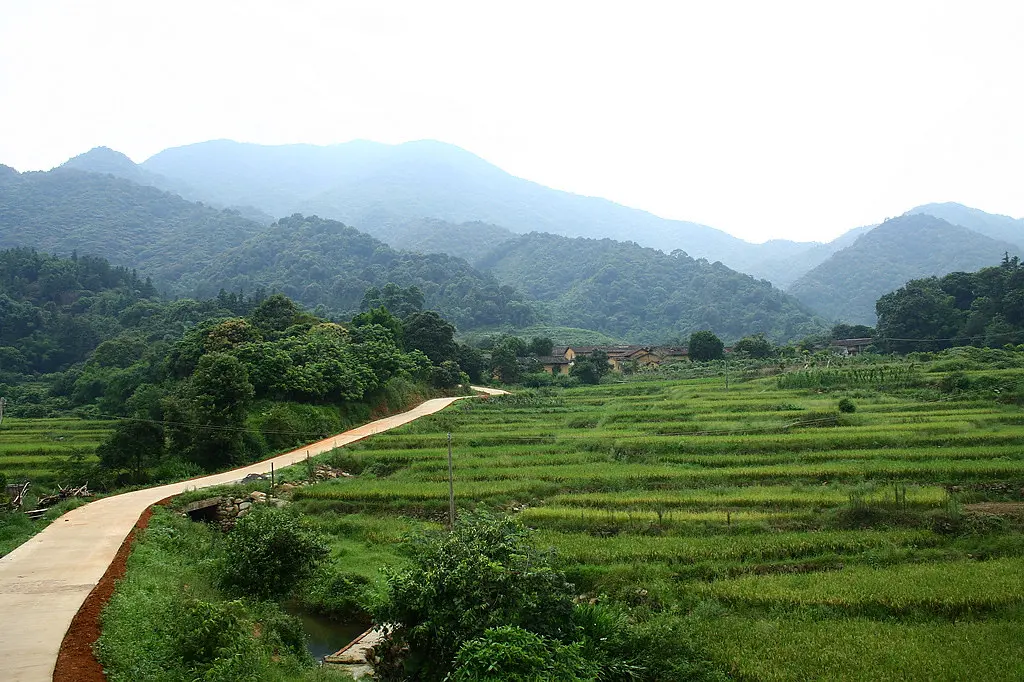
Image of Mt. Luo Fu Shan. Image source
Visit essentials
A quick read before you go
- Duration
- A full day for the main scenic area and the Chongxu Temple.
- Access
- Located in Boluo County, Huizhou City, Guangdong Province, approximately 70 km northeast of…
Overview
Some sacred sites are defined by what happened there long ago. Luofu Shan is defined by what someone tried to do — and the question of whether he succeeded.
Ge Hong came to this subtropical mountain in Guangdong Province around 327 CE. He was a Taoist philosopher, an alchemist, a pharmacologist, and an official who had decided that the most important work remaining in his life was the search for immortality. Not immortality as metaphor — immortality as practice. He believed the right combination of minerals, herbs, meditation, and alchemical technique could transform the human body into something imperishable.
He chose Luofu Shan because it possessed what he needed: cinnabar deposits for his alchemical experiments, an extraordinary diversity of medicinal plants for his pharmacological research, and concentrated qi generated by the mountain's geological and ecological richness. For approximately seventeen years, until his death — or transformation — in 343 CE, he worked.
What he left behind was not the elixir of immortality but something arguably more durable: the Baopuzi, a masterwork that laid foundations for Chinese alchemy, pharmacology, and natural philosophy. His research into medicinal plants at Luofu Shan contributed to the tradition of Chinese herbal medicine that continues to the present day.
The mountain remembers him. The Chongxu Temple, the principal Taoist temple, preserves his memory and teachings. The Wash Medicine Pool where he prepared his herbal medicines and the Alchemy Furnace Site where he conducted his experiments remain as pilgrimage points. Over three thousand plant species grow on the mountain's slopes — a living pharmacy that Ge Hong knew, in part, by species and by property.
In Taoist classification, Luofu Shan is one of the Ten Great Cave Heavens — subterranean paradises where immortals dwell, connected to celestial realms. Whether Ge Hong found his way there remains, by design, an open question.
Why this place is sacred
The thinness of Luofu Shan is intellectual as much as atmospheric. This is a place where the boundary between knowledge and mystery was actively investigated — where one of history's most brilliant minds devoted seventeen years to the question of whether matter could be transmuted and death transcended.
Ge Hong's approach was not mystical in the way that term is often understood. He was empirical, systematic, and methodical. His Baopuzi documents experimental procedures for alchemical operations alongside philosophical arguments for the possibility of immortality. At Luofu Shan, he tested his theories against the mountain's resources — its minerals, its plants, its concentrated vital energy. The Wash Medicine Pool and the Alchemy Furnace Site are not ritual locations but laboratories.
The Taoist tradition records that when Ge Hong died, his coffin was found to be as light as an empty garment. His body had transformed. Whether this represents alchemical success, a metaphor for spiritual attainment, or the consequences of mercury poisoning (a common fate among Chinese alchemists who ingested cinnabar preparations) is a question the mountain itself does not answer.
The Cave Heaven classification adds another dimension. In Taoist sacred geography, the Cave Heavens are not symbolic. They are actual subterranean paradises — complete worlds with their own sky, landscape, and inhabitants — accessible through specific mountains to those of sufficient spiritual development. Luofu Shan's classification as one of the ten greatest of these portals places it at the highest tier of Taoist sacred space.
Luofu Shan served as a center for Taoist cultivation from at least the Qin Dynasty. Ge Hong's residence on the mountain from approximately 327 to 343 CE established its primary identity as a place of alchemical practice and the study of natural philosophy. The mountain was also a center for medicinal herb collection and preparation, connecting Taoist spiritual practice with practical pharmacology.
The mountain's sacred identity crystallized around Ge Hong's legacy, with the Chongxu Temple founded in his memory after his death. Imperial patronage during the Tang, Song, and Ming Dynasties expanded the temple network. Su Shi's visit during the Song Dynasty added literary significance. The Cultural Revolution damaged temples and disrupted practice, but restoration since the 1980s has revived both the religious and cultural dimensions.
Today the mountain functions as a Taoist sacred site, a scenic area, and increasingly a health tourism destination capitalizing on its association with traditional Chinese medicine.
Experience and orientation
Luofu Shan greets visitors with an environment utterly different from the austere granite peaks of northern China's sacred mountains. This is a subtropical mountain — warm, humid, dense with vegetation. The air smells of growth. The forest canopy filters sunlight into green and gold. Waterfalls and streams traverse slopes where over three thousand plant species create what amounts to a living botanical garden.
The Chongxu Temple sits at the heart of the mountain's sacred geography. The temple complex includes halls dedicated to Ge Hong and the Taoist pantheon, and the atmosphere carries the weight of its purpose: this is where one of history's most ambitious quests for understanding the nature of life was pursued. The Wash Medicine Pool, where Ge Hong is said to have prepared his herbal medicines, invites a pause.
Water moves through stone as it has for seventeen centuries, and the plants growing around the pool may include descendants of the species Ge Hong studied.
The Alchemy Furnace Site requires more imagination. The physical traces of Ge Hong's laboratory are long gone, but standing at the location where a man once tried to transmute base metals into the elixir of immortality — and where he may have succeeded in something, if not that — generates its own contemplative force.
The mountain's subtropical character provides a quality of immersion that drier, more exposed mountains cannot. Walking the trails, the visitor is surrounded by life at every scale — from towering trees to ferns to the insects whose sounds fill the forest. The hot springs at the mountain's base offer physical restoration after the day's exploration.
The Chongxu Temple is the essential starting point. From there, trails lead to the Wash Medicine Pool, the Alchemy Furnace Site, and the Huanglongdong (Yellow Dragon Cave). The mountain is large enough for extended exploration. Hot springs and wellness facilities at the base provide a different kind of engagement with the mountain's healing traditions. Wear light, breathable clothing suitable for subtropical conditions and bring rain gear.
Context and lineage
According to Taoist legend, Luofu Shan was formed when two mountains merged — Mount Luo, a terrestrial peak, and Mount Fu, a floating immortals' island from the South China Sea that drifted and attached itself to Mount Luo. The mountain thus carries the combined spiritual power of both earth and heaven.
Ge Hong chose the mountain with the precision of a scientist selecting a laboratory. His research required specific conditions: cinnabar deposits for alchemical operations, a diversity of medicinal plants for pharmacological study, and the concentrated qi that Taoist theory predicted at a site of such geological and ecological richness. He found all of these at Luofu Shan.
When Ge Hong died in 343 CE, Taoist accounts record that his coffin was as light as if empty — his body had been transformed. The Chongxu Temple was founded to mark this event, and the mountain's identity as a place where the boundary between mortal and immortal had been crossed was established.
The religious lineage at Luofu Shan flows from Ge Hong's individual alchemical practice to an institutional Taoist presence maintained through imperial patronage across multiple dynasties. The tradition of herbal medicine connected to Ge Hong's pharmacological research has continued in parallel with formal Taoist practice, creating an unusual site where spiritual cultivation and practical healing have always been intertwined.
Ge Hong (葛洪, 283-343 CE)
Taoist philosopher, alchemist, and pharmacologist whose seventeen years of practice at Luofu Shan produced the Baopuzi and established the mountain's sacred identity. His work contributed to the foundations of Chinese chemistry, pharmacology, and natural philosophy.
Su Shi (Su Dongpo, 1037-1101)
Song Dynasty poet and statesman who visited Luofu Shan and wrote about its lychees. His literary attention added cultural significance to the mountain's sacred and natural identity.
Joseph Needham
British scholar whose monumental Science and Civilisation in China extensively discussed Ge Hong's contributions and their setting at Luofu Shan, bringing the mountain's significance to international scholarly attention.
Traditions and practice
Ge Hong's practice at Luofu Shan was external alchemy — the attempt to create the elixir of immortality through the transmutation of minerals, particularly cinnabar. This was not exclusively spiritual work; it involved procedures that contributed to the development of Chinese chemistry and metallurgy. Alongside his alchemical operations, Ge Hong conducted systematic pharmacological research, studying the mountain's plants for their medicinal properties and documenting his findings.
Subsequent generations of Taoist practitioners shifted toward internal alchemy — meditation and breath cultivation techniques aimed at refining the body's own vital energy. This transition paralleled broader developments in Chinese Taoism and reflected a movement from working with external substances to working with the practitioner's own consciousness and physiology.
Daily Taoist worship services continue at the Chongxu Temple and other active temples. Incense burning and prayers to Ge Hong and the Taoist pantheon maintain the mountain's devotional life. Traditional Chinese medicine consultations and herbal treatments using mountain-grown herbs connect contemporary visitors to Ge Hong's pharmacological legacy.
Health tourism has become a significant dimension of the mountain's contemporary use, with hot springs, nature walks, and clean air therapy drawing visitors who may have no explicit interest in Taoism but who engage with the mountain's healing traditions through a different vocabulary. Qigong and taiji practice in the mountain's parks and temple courtyards provide a more deliberate form of cultivation.
At the Chongxu Temple, spend time with the exhibits explaining Ge Hong's work before visiting the temple halls. Understanding what he was attempting — and the intellectual rigor he brought to it — transforms the visit from tourism into encounter.
At the Wash Medicine Pool, sit quietly. Consider what it means to stand where someone spent years studying the natural world with the dual purpose of healing the sick and transcending death itself. The plants growing around you may include species Ge Hong documented.
If traditional Chinese medicine consultations are available, consider experiencing one — not necessarily for a specific ailment but as an encounter with a diagnostic tradition that traces its intellectual roots, in part, to work done on this mountain.
Walk the trails slowly enough to notice the botanical diversity. Over three thousand plant species grow here. Ge Hong would have known many of them by name, property, and preparation.
Taoism — Ge Hong Alchemical Tradition
ActiveLuofu Shan is one of the Ten Great Cave Heavens in Taoist sacred geography and the site of Ge Hong's seventeen-year alchemical practice. Ge Hong's work at the mountain produced foundational contributions to Chinese alchemy, pharmacology, and natural philosophy.
Veneration of Ge Hong at the Chongxu Temple, study and practice of Taoist internal alchemy, collection and use of medicinal herbs, daily worship services, pilgrimage to the Wash Medicine Pool and Alchemy Furnace Site, and qigong practice in the mountain's natural setting.
Perspectives and open questions
Luofu Shan can be approached as a site in the history of Chinese science, a Taoist sacred landscape, a subtropical biodiversity preserve, or a place where the question of what it means to seek immortality was pursued with extraordinary intellectual commitment.
Scholarly perspective
Scholars recognize Luofu Shan as one of the most important Taoist sacred mountains in southern China and a site of major significance in the history of Chinese science. Ge Hong's work, documented in the Baopuzi, represents a critical juncture in the development of Chinese alchemy, pharmacology, and natural philosophy. Joseph Needham's Science and Civilisation in China extensively discusses Ge Hong's contributions and their setting at Luofu Shan.
The mountain's classification as one of the Ten Great Cave Heavens places it in the highest tier of Taoist sacred geography.
Living and traditional perspectives
In Chinese Taoist understanding, Luofu Shan is a place where the boundary between the visible world and the immortal realms is thin — a Cave Heaven containing within it a complete subterranean paradise. Ge Hong's achievement of immortality at the mountain is understood not as metaphor but as accomplished fact. The mountain's extraordinary plant life is interpreted as evidence of concentrated life-force, making it a natural pharmacy where the ingredients for transformation grow spontaneously.
Alternative interpretations
In modern alternative interpretation, Ge Hong is sometimes compared to Western alchemical traditions as a practitioner who sought the Philosopher's Stone or Elixir of Life. The mountain's classification as a Cave Heaven has attracted interest from those interested in hollow earth theories. Some traditional Chinese medicine practitioners visit the mountain specifically for its herbs, believing that plants grown in concentrated qi have enhanced healing properties.
Open questions
The exact nature of Ge Hong's death at Luofu Shan remains unclear — whether mercury poisoning or spiritual transformation. The full extent of his pharmaceutical research has not been completely reconstructed. The mountain's cave system has not been fully explored or mapped. The relationship between the mountain's geological properties and Ge Hong's specific alchemical operations has not been analyzed by modern geochemistry.
Plan your visit
Access and arrival
Located in Boluo County, Huizhou City, Guangdong Province, approximately 70 km northeast of Guangzhou and 60 km northwest of Huizhou city center. Shenzhen is approximately 100 km south. The nearest major airport is Guangzhou Baiyun International Airport, approximately 1.5 hours by car. High-speed rail to Huizhou South or Huizhou North stations, then bus or taxi. Admission fee for the scenic area. Accommodation available at hotels and guesthouses at the mountain base.
Mobile phone signal is generally available at the main scenic areas. No specific emergency facility information was available at time of writing; check with scenic area management.
Hotels and guesthouses at the mountain base range from budget to mid-range. The nearby cities of Huizhou and Guangzhou offer extensive accommodation options. Hot springs facilities at the mountain base provide a distinctive option.
Respectful visit
Comfortable hiking clothes and sturdy shoes for mountain trails. Light, breathable clothing suitable for warm, humid subtropical conditions. In temple areas, modest clothing is appropriate. Sun protection and rain gear are advisable.
Photography is freely permitted in scenic areas and at temple exteriors. Some temple interiors may restrict photography. Do not photograph Taoist priests without permission.
Incense is available at temples. Traditional offerings of fruit and food may be placed at designated areas.
Do not pick medicinal herbs or other plants from the mountain — the botanical resources are protected. Stay on marked trails. Do not disturb wildlife. Remove hats in temple halls. Do not step on door thresholds. Follow fire safety regulations.
The subtropical climate means high humidity and temperatures, particularly in summer. Adequate water and sun protection are essential. Some trails may be slippery in wet conditions.
Current practical details
Address
Luofu Mountain, Boluo County, Huizhou, China, 516131
Hours, fees, and access can change — verify on the official source before you travel. Practical details last checked Jun 2026.
Location
Map loads as you approach this section.
Pilgrim reflections
A portrait of encounter, not a score
Pilgrims describe what they felt, how present they could become, and whether the place would shape a journey. There are no stars and no ranking of traditions.
No reviewed reflections yet
The first pilgrims can help describe the character of being here.
Share a reflection
Available after an account-backed “Been there.” Every reflection is reviewed before publication.
Nearby sacred places
Explore other sacred places in the region. Proximity does not establish access or travel time; check each place’s guidance.



Share a photo
Help visitors recognize Mt. Luo Fu Shan. Every submission is reviewed before publication.