Parque Nacional Serra da Capivara
Twelve thousand years of human presence painted onto stone in the Brazilian backlands
Understand sacred places, explore living traditions, and learn how to engage respectfully with Pilgrim Map.
Access has not been verified. Check current local guidance before planning a visit.
São Raimundo Nonato, Piauí, Brazil
Read the sources
Visit essentials
A quick read before you go
- Duration
- A minimum of two to three full days is needed to visit the main painted circuits.
- Access
- The gateway town is Coronel Jose Dias, situated near the two main park entrances.
Overview
The Serra da Capivara paintings are testimony. Across hundreds of sandstone shelters in Piauí's dry backlands, unknown hands recorded hunts, dances, trances, births, and gatherings, returning to the same rock faces for thousands of years.
The oldest securely dated paintings reach back more than ten thousand years, placing them among the Western Hemisphere's earliest known artistic expressions. Some researchers argue for far older dates, though the evidence remains fiercely debated. The undisputed scale is extraordinary: more than 30,000 figures at more than 1,200 documented sites across 129,000 hectares of protected parkland, a density of prehistoric expression unmatched in the Americas.
Their makers left no written language or surviving oral tradition; the rock surfaces are all that remain. Figures fixed in mid-dance or mid-hunt show people observing and recording their world with care. Their ceremonies and the cosmology guiding pigment's placement are unknown, but the act mattered enough to continue across hundreds of generations. That continuity, more than any single image, arrests attention.
Why this place is sacred
What makes a place thin is not always the presence of a specific tradition or deity. Sometimes it is the accumulated weight of human attention directed at the same stone, the same view, the same act, over spans of time that dwarf recorded history.
At Serra da Capivara, the Nordeste rock art tradition alone persisted for roughly six thousand years. Consider that span. Every empire in recorded history fits within it several times over. Generation after generation of painters returned to these shelters, chose their pigments, depicted what mattered most. The subjects evolved, the styles shifted, the technique refined from finger-painting to fine brushwork, but the impulse endured: something about these rock faces demanded marking.
The shelters themselves may explain part of the pull. Sandstone overhangs create natural amphitheaters, shaded and cool against the relentless caatinga heat. Many face east, catching the first light. The acoustic properties of the enclosed spaces amplify sound in ways that reward chanting and rhythm. Several occupy positions on the escarpment edge where the view extends across dozens of kilometers of dry scrubland, the horizon unbroken in every direction.
Archaeologists interpret certain painted scenes as evidence of shamanic practice. Figures in apparent trance states, masked dancers, and beings that blend human and animal forms suggest that at least some of these shelters functioned as ceremonial spaces, places where the boundary between worlds was understood to be permeable. The presence of birth scenes alongside hunting and death imagery speaks to a cosmology that held the full cycle of existence within the same sacred frame.
The specific beliefs that animated these paintings are lost. No descendant community maintains a living connection to this tradition. And yet the landscape itself retains a quality that visitors register before they know anything about what the shelters contain. The remoteness, the silence, the dramatic vertical faces of sandstone rising from the flat dry earth create a natural architecture of encounter.
The paintings, when you reach them, feel less like discovery and more like confirmation of something the place already communicated.
The rock shelters of Serra da Capivara served prehistoric communities as habitation sites, ceremonial spaces, and archives of cultural knowledge. Evidence suggests the painted shelters functioned as more than living quarters. The careful selection of surfaces, the layering of images across centuries, and the preponderance of ceremonial and narrative scenes all point to intentional, sustained cultural practice. The Nordeste tradition's emphasis on masked figures, trance postures, and hierarchical symbols indicates organized ritual activity, likely shamanic in nature.
The shelters may have functioned as sites where communities gathered for ceremonies marking seasonal transitions, rites of passage, or communication with the spirit world.
For millennia, successive cultural groups used and reused these shelters, each contributing their own visual language to the accumulating record. The Nordeste tradition gave way to or coexisted with the Agreste tradition around six thousand years ago, bringing a rougher, larger-figured style that may reflect the arrival of different peoples or a fundamental shift in existing cultural expression.
Eventually the painting stopped. When and why remain uncertain, but the practice appears to have ceased sometime within the last two thousand years. The shelters fell silent. For centuries, perhaps millennia, only the caatinga's sparse wildlife visited these painted surfaces.
In the 1970s, Franco-Brazilian archaeologist Niede Guidon arrived and recognized what the landscape held. Her subsequent fifty years of work transformed Serra da Capivara from an obscure region of extreme poverty into a site of global archaeological significance. The park was created in 1979, UNESCO inscription followed in 1991, and the shelters gained a new kind of visitor, one who came not to paint but to look, to try to read what the painters left behind.
The passage from sacred site to heritage site was complete, though what the shelters communicate has not diminished.
Experience and orientation
The first shock is the quantity. You expect rock art, perhaps a few faded figures on a single wall. Instead you find hundreds of figures on a single panel, and then another panel, and another, and you begin to understand that what you are looking at is not scattered graffiti but the sustained creative output of entire cultures across deep stretches of time.
The second shock is the clarity. These are not abstract marks requiring expert interpretation. The figures hunt. They dance in circles. They give birth. They copulate. They wear headdresses and carry objects that might be weapons or ceremonial tools. They run, sometimes in groups, sometimes alone. The scenes have the narrative directness of documentary film, recording moments of unmistakable humanity from a time so distant it defeats comprehension.
Visitors frequently describe an emotional response that catches them off guard. Standing before a panel of dancers frozen mid-movement for ten thousand years, or watching a birth scene painted by hands that crumbled to dust before the pyramids were imagined, something shifts. The distance between yourself and the painter contracts. You are both human. You both found this rock face worth attending to.
The specifics of belief and culture fall away, and what remains is the shared impulse to mark, to witness, to record.
The landscape amplifies this encounter. Serra da Capivara is not a convenient site. It lies in one of Brazil's poorest and most isolated regions, hours from any major airport, deep in the semi-arid caatinga. Getting here is itself a form of pilgrimage. The landscape is austere and beautiful: flat scrubland broken by dramatic sandstone escarpments, a sky that seems to extend further than it does elsewhere. The heat presses down. The silence, once you leave the access roads, is profound.
In this setting, the painted shelters feel less like a museum and more like something you were meant to find.
Begin at the Museu da Natureza near the park entrance in Coronel Jose Dias, where the geological and ecological context prepares you for what the shelters hold. Then enter the park with your required guide and resist the urge to rush between sites. The trails are marked and well-maintained, with elevated walkways that bring you close to the paintings without endangering them.
At each shelter, pause before reading any signage. Look first. Let the figures register on their own terms. Notice which scenes draw your eye and why. The narrative quality of the Nordeste tradition paintings is immediately legible even without expert knowledge; the hunting scenes, the dances, the ceremonies speak a visual language that transcends the millennia separating you from their creators.
If your visit allows multiple days, save the Pedra Furada site for the second or third day, when your eye has been trained by the smaller sites and you can appreciate the layered complexity of this most famous shelter. Plan to be at the Baixao das Andorinhas canyon at dusk, when thousands of swallows pour into the narrow gorge in a spectacle that adds ecological wonder to the archaeological weight of the place.
Carry water and food. There are no services within the park. Wear sun protection and sturdy shoes. The heat is serious, particularly between October and April. But do not let the logistics obscure the purpose. You are walking through a landscape that held human meaning for longer than any living civilization has existed. Let that register.
Context and lineage
No origin myth survives from the cultures that painted these shelters. The people who created the Nordeste and Agreste traditions left no written record, no oral history that endured through the intervening millennia. What they left is the rock art itself, and through it, a visual account of how they lived, hunted, celebrated, and perhaps prayed.
The modern story of Serra da Capivara begins with Niede Guidon, a Franco-Brazilian archaeologist who first encountered photographs of the rock paintings in the 1960s and traveled to Piaui in the early 1970s to see them firsthand. What she found stunned her: not a handful of scattered sites but hundreds, then thousands of painted shelters spread across a vast sandstone landscape in one of Brazil's most neglected regions. She dedicated the rest of her life to their study and protection.
Guidon's work was revolutionary and controversial in equal measure. Her team's excavations at Pedra Furada yielded charcoal and possible stone tools that she dated to fifty thousand years before present, a claim that would, if accepted, rewrite the story of human arrival in the Americas. The mainstream archaeological community pushed back hard, arguing that the charcoal could result from natural fires and the stones from natural fracture. The debate continues, unresolved.
But whether or not the earliest dates hold, the securely documented record of human presence here, reaching back more than twelve thousand years, is extraordinary by any standard.
The painted shelters represent at least two major cultural traditions spanning roughly ten thousand years of active use. The Nordeste tradition, the older and more elaborate, flourished from approximately 12,000 to 6,000 years ago, producing the narrative hunting, dancing, and ceremonial scenes that define Serra da Capivara in the popular imagination. Within this broad tradition, the Serra da Capivara style (c. 12,000-3,730 BP) gave way to the Serra Branca style (c.
7,000-6,000 BP), marking an evolution toward more refined technique and hierarchical imagery.
The Agreste tradition emerged around 6,000 years ago, either replacing or coexisting with the Nordeste tradition. Its rougher, larger figures and less narrative approach suggest a different cultural group or a significant transformation in the existing population's practices. This tradition continued until roughly 2,000 years ago, when rock art production appears to have ceased entirely.
The chain of human presence then breaks. For an unknown span of time, the shelters stood unvisited or visited only incidentally, until Guidon's arrival in the 1970s initiated a new phase: scientific study, institutional protection, and a global audience. The lineage now runs from prehistoric painter to modern visitor, connected by the enduring presence of pigment on stone.
Niede Guidon
historical
Franco-Brazilian archaeologist who discovered the rock art sites in the 1970s and spent over fifty years researching and fighting to protect them. She founded FUMDHAM, secured the park's creation and UNESCO inscription, and built museums and community programs in one of Brazil's poorest regions. Her claims of human occupation at Pedra Furada dating to 50,000 years ago remain among the most contested in American archaeology. She died on June 4, 2025, at age 92.
The Nordeste Tradition Painters
historical
The unnamed generations of prehistoric people who created the dominant rock art tradition at Serra da Capivara over a span of roughly six thousand years (c. 12,000-6,000 BP). Their narrative painting style, featuring dynamic scenes of hunting, dance, ceremony, and daily life, represents the longest sustained artistic tradition documented in the Americas.
The Serra Branca Style Masters
historical
Painters of the Serra Branca style (c. 7,000-6,000 BP), whose work represents the most refined expression within the Nordeste tradition. Their paintings feature hierarchical symbols including headdresses, masks, and ceremonial vestments, suggesting organized societies with complex ritual structures.
Anne-Marie Pessis
historical
Archaeologist and longtime collaborator of Guidon at Serra da Capivara. Her work on the classification and chronology of the rock art traditions, particularly the systematic analysis of painting styles and their evolution, established the framework through which the site's artistic heritage is understood today.
FUMDHAM
historical
The Foundation Museum of the American Man, established by Guidon in 1986 to manage research and conservation at Serra da Capivara. FUMDHAM has operated the park's scientific programs, built community engagement initiatives, and maintained the site through decades of chronic underfunding in one of Brazil's most economically challenged regions.
Traditions and practice
The rock art provides the most extensive visual record of prehistoric ceremonial life in the Americas. Panels across hundreds of shelters depict what archaeologists interpret as group dances, some with masked or costumed figures moving in coordinated patterns. Individual figures in contorted postures suggest trance states, a hallmark of shamanic practice across prehistoric cultures worldwide. Birth scenes, hunting rituals, and what appear to be seasonal gatherings round out a picture of communities whose spiritual and practical lives were woven together.
The painters of the Serra Branca style, working around seven thousand years ago, depicted figures wearing elaborate headdresses, masks, and what appear to be ritual vestments, indicating societies with organized hierarchies and formal ceremonial roles. The presence of such imagery across multiple sites suggests not isolated events but a sustained tradition of structured ritual practice.
The specific meanings of these ceremonies are irrecoverable. No descendant community maintains knowledge of what was performed in these shelters, what the masked figures represented, or what the painters intended their work to accomplish. The visual evidence is rich but mute on the questions that matter most: what did the dancers feel, what did the trance states reveal, what did the birth scenes celebrate or invoke.
No organized spiritual or religious practices take place at the rock art sites today. The park is managed for conservation, research, and heritage tourism by ICMBio and FUMDHAM. Visitors follow designated trails with licensed guides who provide archaeological interpretation.
But interpretation is not the only mode of engagement available. The shelters themselves, with their natural shade, their acoustic enclosure, and their painted walls, remain powerful spaces for contemplative attention. What the painters did here was a form of sustained looking and recording. What visitors can do, in return, is a form of sustained looking and receiving.
At each shelter, give yourself time before your guide begins explaining. Stand or sit in silence and let the figures resolve on the rock surface. Many panels reward extended looking: details that seemed random at first reveal narrative connections as your eye adjusts. The hunting scenes often flow across the rock face like sequences of animation, one figure pursuing another across time as much as space.
Pay attention to the shelter itself, not only the paintings. Notice the quality of shade, the way sound behaves inside the overhang, the temperature difference between the sheltered interior and the caatinga heat outside. These physical qualities are part of why these specific places were chosen. The painters were not decorating random walls. They were selecting environments.
At Pedra Furada, the most famous site, sit with the knowledge that you may be occupying a space where humans gathered tens of thousands of years ago. The dating is disputed, the evidence contested. But the possibility alone, held honestly, produces a quality of temporal vertigo that no amount of certainty could improve upon.
If you visit across multiple days, return to a shelter that moved you and sit with it a second time. The first visit is overwhelmed by novelty. The second allows something quieter, an encounter with the painters as presences rather than subjects of study.
Nordeste Rock Art Tradition
HistoricalThe Nordeste tradition (c. 12,000-6,000 BP) represents the longest and most elaborate artistic tradition documented in the Americas. Characterized by dynamic narrative scenes depicting recognizable human and animal figures in hunting, dancing, ceremonial, sexual, and daily-life contexts, the tradition demonstrates both remarkable continuity and evolution over six millennia. The presence of masked figures, trance postures, and hierarchical symbols strongly suggests organized shamanic and ceremonial practices.
Painters used locally sourced iron oxide ochres and mineral clays to create predominantly red-toned imagery. Techniques evolved from finger-painting in the earliest phases to refined brushwork using tools made from animal fur and plant fibers. The tradition encompasses two major sub-styles: the Serra da Capivara style (c. 12,000-3,730 BP), featuring dynamic narrative compositions, and the Serra Branca style (c. 7,000-6,000 BP), representing the most refined expression with hierarchical symbols including headdresses, masks, and ritual vestments.
Agreste Rock Art Tradition
HistoricalThe Agreste tradition (c. 6,000-2,000 BP) represents a distinct later phase of rock art at Serra da Capivara, characterized by larger, more static figures and a less narrative approach than the Nordeste tradition. Whether this reflects the arrival of different cultural groups, an evolution within existing communities, or some combination remains debated. The tradition marks the final phase of rock art production in the region before the practice ceased entirely.
Agreste painters employed similar pigment materials to the Nordeste tradition but used a distinctly different visual vocabulary. Figures tend to be larger, more isolated, and less embedded in narrative scenes. The shift from the elaborate narrative compositions of the Nordeste tradition to the simpler Agreste approach represents one of the site's enduring interpretive puzzles.
Archaeological Research and Conservation
ActiveSince the 1970s, Serra da Capivara has been the focus of one of the most sustained archaeological research programs in South America. The work of Niede Guidon, FUMDHAM, and successive generations of researchers has produced the classificatory frameworks, chronological sequences, and conservation strategies that make the site legible to visitors today. This tradition of scholarly attention is itself a form of stewardship, ensuring that the paintings are not only preserved but understood.
Ongoing activities include archaeological survey and excavation, rock art documentation and classification, conservation monitoring of painted surfaces, community education programs, museum curation at the Museu do Homem Americano and Museu da Natureza, guide training and certification, and advocacy for continued federal and international funding. Research continues to uncover new sites within the park, and the dating debate around Pedra Furada remains an active area of investigation.
Heritage Tourism and Interpretation
ActiveSerra da Capivara's guided visitor program represents the primary means by which the painted shelters communicate with the contemporary world. The licensed local guides, drawn from surrounding communities, serve as interpreters between the prehistoric record and the modern visitor, translating archaeological knowledge into lived encounter.
Guided tours follow designated trail circuits through the park's open sites, with guides providing archaeological context, pointing out details within the paintings, and managing visitor behavior to protect the art. The guide training program, developed by FUMDHAM, ensures consistent quality of interpretation while providing economic opportunity in a region with few alternatives.
Perspectives and open questions
Serra da Capivara sits at the intersection of several ongoing debates: about when humans first reached the Americas, about the nature of prehistoric spiritual practice, and about how heritage preservation can coexist with severe poverty. Honest engagement with this site requires holding these tensions rather than resolving them prematurely.
Scholarly perspective
Archaeological consensus recognizes Serra da Capivara as containing the largest and most significant concentration of prehistoric rock art in the Americas. The classification of painting traditions into the Nordeste and Agreste frameworks, developed through decades of systematic study by Guidon, Pessis, and their colleagues, is broadly accepted. The chronology of the Holocene rock art, with securely dated paintings reaching back to approximately 10,530 years before present, is well established.
The deep controversy concerns the Pedra Furada excavations. Guidon's team reported charcoal and stone artifacts from layers dating to 50,000 years before present, which if confirmed would place human arrival in the Americas far earlier than any mainstream model allows. Critics, including many prominent archaeologists, argue that the charcoal derives from natural wildfires and the alleged stone tools are naturally fractured rocks.
The debate has softened somewhat as evidence from other sites has pushed back accepted dates for human presence in the Americas to roughly 16,000-20,000 years ago, but the most extreme Pedra Furada claims remain unaccepted by the majority of the field.
What is not debated is the site's global significance. UNESCO inscription in 1991 under criterion (iii) recognized Serra da Capivara as bearing exceptional testimony to the cultural traditions of the earliest human communities in South America. The sheer density and duration of artistic activity here has no parallel in the hemisphere.
Living and traditional perspectives
No surviving indigenous oral tradition relates specifically to the rock art of Serra da Capivara. The prehistoric cultures that created the paintings left no known descendants with maintained cultural memory of the sites. The region's current population descends largely from colonial-era Portuguese settlers and their mixed descendants.
This absence of living traditional knowledge is itself significant: it means the paintings must speak for themselves, without the interpretive framework that living tradition provides at sites like Uluru or the cave paintings of southern Africa where indigenous communities maintain direct connection to the art.
The paintings themselves, however, constitute a visual tradition of extraordinary richness. The narrative scenes, the ceremonial imagery, the layered accumulation of styles across millennia together form a record of cultural practice that, while it cannot be read with certainty, speaks with unmistakable intentionality.
Alternative interpretations
Popular interpretations occasionally frame the rock art as evidence of contact with advanced or extraterrestrial civilizations, particularly given the controversial early dating claims. These interpretations lack archaeological support. The shamanic interpretation of certain imagery, including trance postures, therianthropic (human-animal hybrid) figures, and masked dancers, is a more grounded alternative perspective. Some researchers draw parallels between the Serra da Capivara paintings and shamanic rock art traditions documented on other continents, suggesting shared neurological underpinnings for trance-related imagery across cultures.
This interpretation is respected within the field though not universally accepted.
Open questions
Genuine and profound mysteries remain at Serra da Capivara. Whether humans truly occupied this landscape fifty thousand years ago is a question with implications that extend far beyond this single site, potentially reshaping our understanding of how and when our species colonized the planet. The specific spiritual beliefs encoded in the rock art remain irrecoverable in the absence of any surviving interpretive tradition. Why certain shelters were chosen for painting while adjacent, seemingly identical shelters were left bare is unexplained.
The transition from the elaborate Nordeste tradition to the rougher Agreste tradition, and whether this reflects population replacement, cultural evolution, or some other process, remains debated. The identity of the painters, the languages they spoke, the social structures that organized their lives, and the reason the painting tradition eventually ceased are all questions the rock art poses but cannot answer.
New sites continue to be discovered within the park, suggesting that the full scope of what Serra da Capivara holds has not yet been measured.
Plan your visit
Access and arrival
The gateway town is Coronel Jose Dias, situated near the two main park entrances. Serra da Capivara Airport, approximately 30 minutes from Coronel Jose Dias, has limited and irregular service. The nearest major airport is Senador Petronio Portella in Teresina, the state capital, approximately 530 kilometers away (seven to ten hours by road). Sao Raimundo Nonato, 30 kilometers from the park, serves as the main town for accommodation, food, and services.
A licensed local guide is mandatory and can be arranged through hotels or the town reception center at an approximate cost of R$150 per day for up to eight visitors. Park entrance fees apply. Mobile phone signal is unreliable within the park; confirm current signal coverage with your guide before entering. The nearest settlement with reliable communication and emergency services is Coronel Jose Dias. No public transportation serves the park interior; private vehicle or arranged transport is necessary.
Coronel Jose Dias offers modest inns and a campsite at Sitio do Moco, convenient for early park access. Sao Raimundo Nonato, 30 kilometers away, provides a wider range of hotels and restaurants and serves as the practical base for most visitors. Accommodation throughout the region is simple; this is one of Brazil's poorest areas and tourism infrastructure, while adequate, is not extensive. Book guides and accommodation in advance during the dry season peak months of June through August.
No accommodation or food services exist within the park; bring sufficient water and food for each day's visit.
Respectful visit
Lightweight, breathable clothing suitable for hiking in extreme heat. Sturdy walking shoes with good grip are essential, as trails include uneven terrain and stairways. A wide-brimmed hat and high-SPF sunscreen are not optional. Long sleeves provide both sun protection and defense against thorny caatinga vegetation along some trail sections.
Photography is permitted at all open sites and is encouraged as a way of engaging closely with the art. Avoid flash near painted surfaces, as repeated flash exposure may contribute to pigment degradation over time. Tripods may be restricted at certain locations. The best photographs come from patience: waiting for the right angle of natural light to illuminate the figures, rather than trying to force visibility with artificial light.
Not applicable. No spiritual offerings are traditional or appropriate at these archaeological sites. The most meaningful thing a visitor can offer is attention and care.
Do not touch rock surfaces or paintings. Stay on designated trails and elevated walkways at all times. A licensed local guide is mandatory. Removing any natural or archaeological material is strictly prohibited and carries legal penalties. Some sites are closed for conservation or research and may not be entered regardless of interest. Food consumption should occur at designated rest areas, not near painted shelters.
Do not touch the rock surfaces or painted areas under any circumstances. The pigments are chemically fragile and human contact accelerates deterioration. Stay on designated trails and walkways. Do not attempt to visit sites without a licensed guide, both for the protection of the art and for your own safety in remote terrain. Do not remove any natural or archaeological material from the park.
Current practical details
Address
Rua Doutor Luís Paixão, 188 - Milonga, João Costa - PI, 64770-000, Brazil
Phone
Hours
Hours, fees, and access can change — verify on the official source before you travel. Practical details last checked Jun 2026.
Location
Map loads as you approach this section.
Pilgrim reflections
A portrait of encounter, not a score
Pilgrims describe what they felt, how present they could become, and whether the place would shape a journey. There are no stars and no ranking of traditions.
No reviewed reflections yet
The first pilgrims can help describe the character of being here.
Share a reflection
Available after an account-backed “Been there.” Every reflection is reviewed before publication.
Nearby sacred places
Explore other sacred places in the region. Proximity does not establish access or travel time; check each place’s guidance.

Juazeiro do Norte, Colina do Horto
Juazeiro do Norte, Ceará, Brazil
391.3 km away

Bom Jesus da Lapa, Santuário do Bom Jesus da Lapa
Bom Jesus da Lapa, Bahia, Brazil
519.4 km away
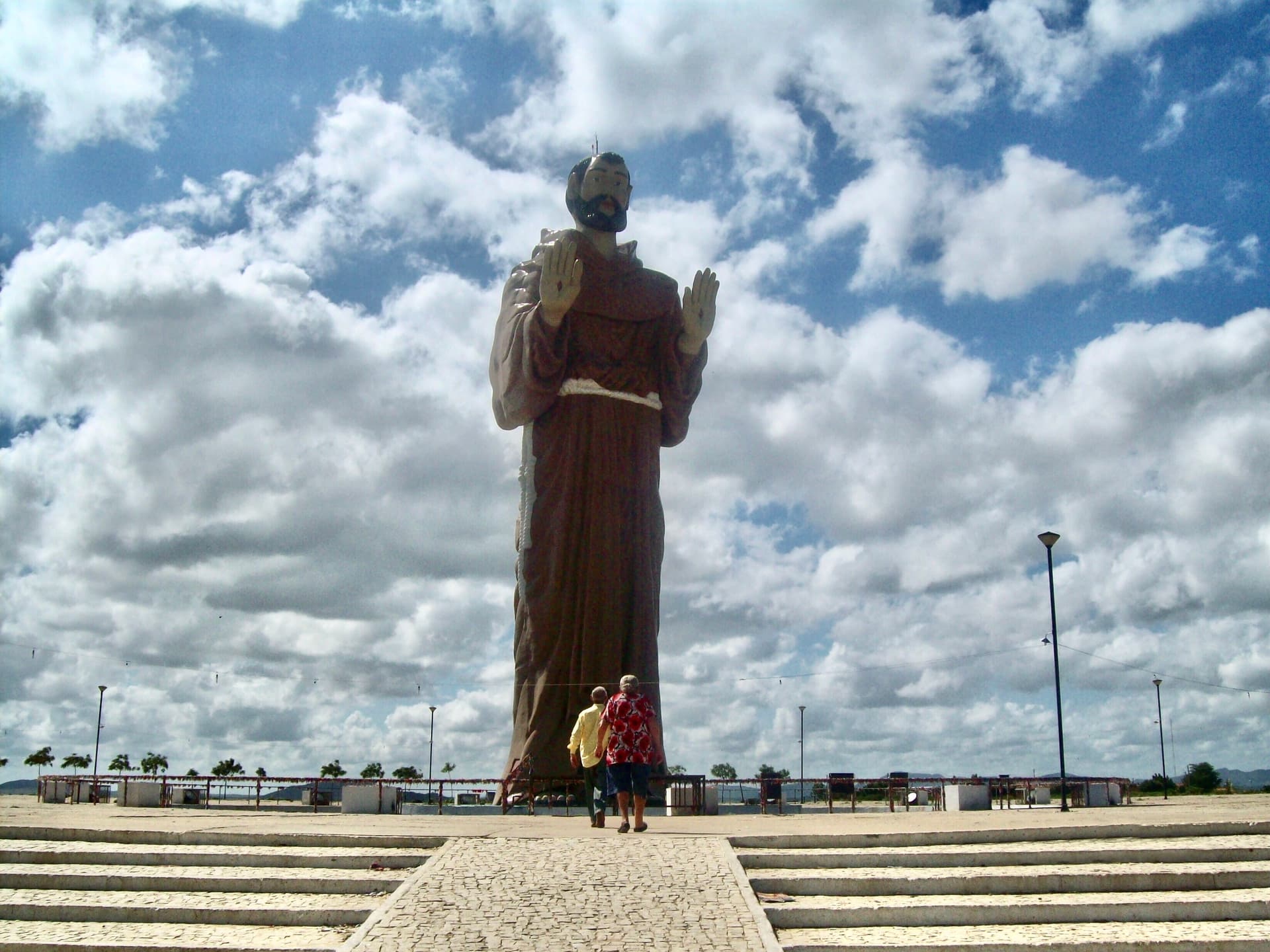
Caninde, Estátua de São Francisco
Canindé, Ceará, Brazil
597.5 km away

Salvador, Nosso Senhor do Bonfim Church
Salvador, Bahia, Brazil
647.2 km away
References
Sources consulted for this page. Source categories describe the publication, not a guarantee that every claim is verified. Traditional accounts and outside interpretations may differ.
- 01Serra da Capivara National Park - UNESCO World Heritage Centre — UNESCOofficialOfficial UNESCO World Heritage listing page with Outstanding Universal Value statement and criteria
- 02America's Oldest Art - The Rock Art of Serra da Capivara — Bradshaw FoundationofficialSpecialist rock art research foundation providing detailed analysis of painting traditions and dating
- 03Chronology of the Rock Paintings in the Serra da Capivara National Park (Brazil) — Palethnologie journal (OpenEdition)academicPeer-reviewed academic article on rock art dating and chronological framework
- 04Niéde Guidon's 50-year fight to protect Serra da Capivara — MongabaynewsIn-depth investigative journalism on conservation challenges and Guidon's legacy
- 05Serra da Capivara National Park, Brazil - Google Arts & Culture / UNESCO — Google Arts & Culture / UNESCOofficialVisual storytelling platform with UNESCO-sourced content
- 06Parque Nacional Serra da Capivara - Official Park Website — FUMDHAM / ICMBioofficialOfficial park website managed by FUMDHAM foundation
- 07Niède Guidon, the archaeologist who discovered hundreds of cave paintings in Brazil, dies at 92 — Associated Press / Phys.orgnewsMajor wire service obituary covering Guidon's life, discoveries, and legacy; died June 4, 2025
- 08Serra da Capivara National Park, Brazil: cultural heritage and society — World Archaeology journal (Taylor & Francis)academicPeer-reviewed article on cultural heritage management and community relations
- 09Serra da Capivara National Park - Wikipedia — Wikipedia contributorsencyclopediaComprehensive overview with references to academic sources; coordinates and park statistics
- 10Serra da Capivara National Park - Wikivoyage — Wikivoyage contributorsguidePractical visitor information including access, guides, and accommodation
Share a photo
Help visitors recognize Parque Nacional Serra da Capivara. Every submission is reviewed before publication.