Our Lady of Atocha
InsideRoyal Basilica of Our Lady of Atocha
Madrid's oldest Madonna, where kings present their children and a Holy Infant feeds the imprisoned
Understand sacred places, explore living traditions, and learn how to engage respectfully with Pilgrim Map.
Access has not been verified. Check current local guidance before planning a visit.
Madrid, Madrid, Spain
Image of Our Lady of Atocha. Image source · CC-BY-3.0
Visit essentials
A quick read before you go
- Duration
- 45 minutes to one hour for the basilica.
- Access
- Calle de Julian Gayarre 1, Madrid.
Overview
The name Atocha belongs to one of Madrid's most familiar places: a train station, a neighborhood, a traffic-clogged avenue. Few who pass through daily register that the name derives from the oldest Marian devotion in the city, rooted in a hermitage that may predate Madrid itself.
The Virgen de Atocha is a small wooden figure, seated, holding the Christ Child and an apple. Art historians date her to the 13th century, making her the oldest surviving sculpture of the Virgin in Madrid. But devotional tradition reaches further, claiming the image was carved by Saint Luke the Evangelist and brought to Spain by Saints Peter and James. Whether Visigothic or medieval in origin, the Virgin has anchored devotion at this site for at least eight centuries.
The royal connection transformed a local devotion into a national one. In 1566, King Felipe II brought his daughter Isabel Clara Eugenia to the sanctuary, initiating the tradition of presenting newborn royal children to the Virgin. The tradition continues: King Felipe VI and Queen Letizia presented both Princess Leonor in 2006 and Infanta Sofia in 2007. Queens present their bridal bouquets to the Virgin after royal weddings. The small wooden Madonna has received the children of Habsburgs and Bourbons alike.
From the Virgin's lap emerged a second devotion of extraordinary reach. According to legend, during the Moorish occupation, Christian prisoners could receive food only from their own children. Childless prisoners faced starvation. Women prayed before the Virgin, and a mysterious child appeared, slipping past prison guards with a basket of bread that never emptied and a gourd of water that never ran dry. The child was identified as the infant Jesus from the Virgin's arms: the Santo Nino de Atocha.
This devotion crossed the Atlantic. In Mexico, the shrine at Plateros in Zacatecas has honored the Santo Nino since 1554. In New Mexico, the Santo Nino Chapel at Chimayo draws pilgrims who leave small shoes as offerings, because the Holy Infant is said to wear out his shoes walking at night to help those in need. From a Dominican basilica in central Madrid, a devotion spread across continents.
Why this place is sacred
The thinness of Atocha is not the dramatic thinness of mountain sanctuaries or ancient caves. It is the thinness of persistence: a devotion that has survived in the same location through Moorish occupation, Reconquista, Habsburg empire, Bourbon restoration, civil war destruction, and the relentless transformation of modern Madrid.
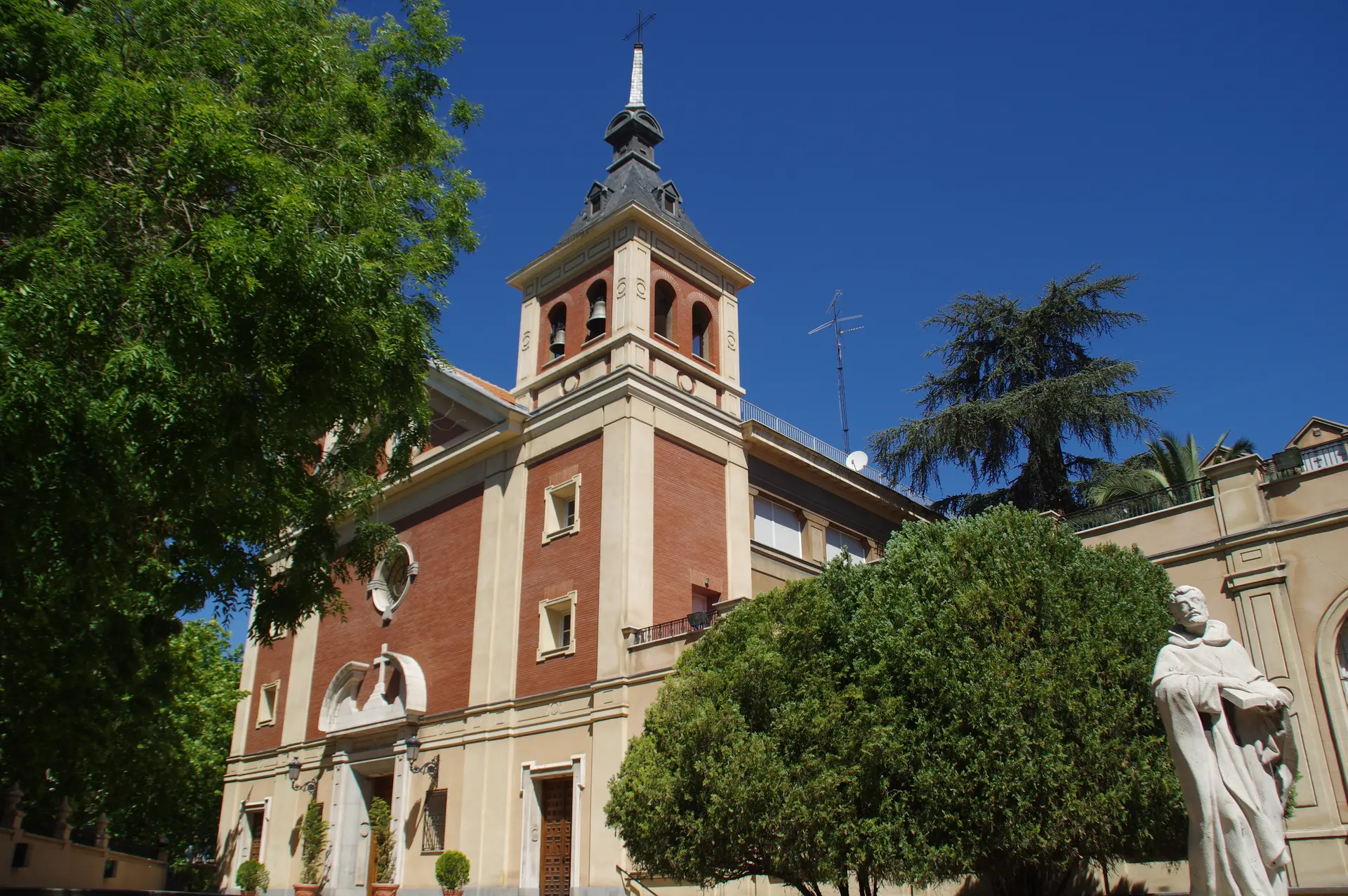
The current building dates to 1951, a reconstruction after the Spanish Civil War destroyed the 1890s Neo-Byzantine church on July 20, 1936. The destruction was thorough. What could not be destroyed was the devotion itself, which resumed in the rebuilt space as though the interruption were merely a pause.
The thinning intensifies when you consider the royal presentations. Since 1566, the small wooden Madonna has received the children of kings. Stand before the same image and you stand where monarchs stood, performing the most personal of acts: offering a child to divine protection. The gap between royal ceremony and private parental vulnerability collapses in this gesture.
But the deepest thinning belongs to the Santo Nino. The legend of the child who feeds the imprisoned speaks to a theology of divine attention to the most forgotten. The Holy Infant does not appear in cathedrals or courts. He appears in prison, with bread for the hungry.
The devotion's migration across the Atlantic and its rootedness among the poor and marginalized of Mexico, New Mexico, and the Philippines testifies to its power: people who have nothing recognize in the Santo Nino someone who comes to those who have nothing.
The practice of leaving small shoes at Santo Nino shrines, because the Holy Infant wears out his shoes walking at night to help the needy, is one of the most tender devotional gestures in Catholic folk religion. The shoes are usually children's shoes, worn and humble. They speak of faith in a God who wears out shoes, who walks through the night, who carries bread.
The original hermitage served the devotional needs of the earliest Christian community in what would become Madrid. The Virgin was patron and protector of the settlement from at least the 7th century.
From a Visigothic-era hermitage to Dominican custodianship from 1523, to the 1890s Neo-Byzantine church, to the 1936 Civil War destruction, to the 1951 reconstruction: Atocha has been continually destroyed and rebuilt while maintaining the same devotion. The Santo Nino de Atocha devotion separated from the original Marian image and developed its own global trajectory.
Experience and orientation
From Atocha station, walk south along Calle de Julian Gayarre. The basilica appears on the left, its 1951 exterior modest compared to the surrounding modern architecture. Enter through the main doors.
The interior is a single nave rising 13.25 meters, simple in proportion but enriched by the stained glass windows installed by Carlos Pascual de Lara, depicting the Mysteries of the Rosary. The colored light transforms throughout the day, creating shifting patterns on the stone floor.
The Virgen de Atocha occupies her place in the semicircular apse. She is seated, holding the Christ Child on her lap and an apple in her hand. The apple, in devotional reading, inverts Eve's apple: where Eve's fruit brought the Fall, Mary's apple symbolizes Redemption. The figure is small and dark, her age apparent in the wood's patina.
Spend time in the quiet. The Dominican atmosphere, cultivated over five centuries of custodianship, creates a contemplative space that contrasts sharply with the city outside. Confession is available daily, and the rhythm of Mass, prayer, and silence structures the hours.
After the church, explore the adjacent Pantheon of Spain, designed in Neo-Byzantine style by Fernando Arbos y Tremanti. Originally the Pantheon of Illustrious Men, it houses the tombs of notable Spanish political figures from the 19th century. The cloister architecture provides another aesthetic layer.
The surrounding area enriches the visit. Retiro Park is a short walk east, and the Prado Museum and Reina Sofia Museum are nearby. The concentration of cultural and sacred sites in this part of Madrid creates opportunities for a full day of exploration.
The basilica is at Calle de Julian Gayarre 1, approximately 400 meters south of Atocha station. The Pantheon of Spain is adjacent. Metro access via Atocha Renfe or Menendez Pelayo on Line 1.
Context and lineage
According to tradition, the image was sculpted by Saint Luke the Evangelist. When the apostles Peter and James came to evangelize Spain, Peter brought the image to what would become Madrid. During the Reconquista, the icon was lost and later found among the esparto grass (tocha or atocha) near Madrid, giving the Virgin her name.
The Santo Nino legend arose from the Moorish period: Christian prisoners could only receive food from children. Childless prisoners faced starvation. Women prayed before the Virgin's image, and a mysterious child appeared with an inexhaustible basket of bread and gourd of water, passing prison guards unseen. The child was recognized as the infant Jesus from the Virgin's arms.
The devotion belongs to the broader tradition of ancient Marian images venerated throughout the Iberian Peninsula, many claiming apostolic origin. The Dominican custodianship from 1523 connects Atocha to the intellectual and devotional traditions of the Order of Preachers. The Santo Nino de Atocha devotion represents one of the most significant examples of Catholic devotional transmission from Spain to the Americas.
Ildephonsus of Toledo
7th-century theologian who described the image, noting the apple in Mary's hand
Felipe II
Initiated the royal presentation tradition in 1566
Fernando Arbos y Tremanti
Architect of the 1890s Neo-Byzantine church and the Pantheon
Traditions and practice
The royal presentation of newborn children has continued since 1566. Queens present their bridal bouquets to the Virgin after royal weddings. Dominican liturgical traditions including the Rosary and Marian feast celebrations structure the devotional year. The Santo Nino devotion, with its tradition of leaving small shoes as offerings, is practiced more actively at the American shrines than at the Madrid basilica.
Daily Mass is celebrated by the Dominican community. Confession is available daily. Personal devotion and candle lighting before the Virgin are continuous. Guided tours of the basilica and Pantheon can be arranged. Marian festival celebrations are described as especially vibrant.
Visit during a weekday morning when the basilica is quietest and the Dominican contemplative atmosphere is most palpable. Attend Mass if your schedule permits, to experience the devotion in its liturgical context. Stand before the Virgen de Atocha and consider the line of kings and queens who have stood in the same place with their children. If you know the Santo Nino devotion from Mexico or New Mexico, recognize that you are at its point of origin.
Roman Catholic Marian Devotion (Patron of Madrid and the Spanish Monarchy)
ActiveOur Lady of Atocha is the oldest patron saint of Madrid and the patron of the Spanish royal family, with documentation from at least 1162. The tradition of royal presentation, initiated by Felipe II, continues to the present.
Daily Mass and Rosary; royal family presentations of newborn children; queen's bridal bouquet presentation; annual Marian feast celebrations; personal devotion and candle lighting.
Santo Nino de Atocha (Holy Infant of Atocha)
ActiveFrom the original Marian devotion arose a distinct devotion to the Christ Child who feeds the imprisoned. The devotion traveled to the Americas and became one of the most widespread folk Catholic practices in the Hispanic world, practiced in Mexico, the Philippines, Colombia, New Mexico, and beyond.
Prayer for protection of prisoners, travelers, and the vulnerable; leaving small shoes as offerings; pilgrimage to shrines in Plateros (Mexico), Chimayo (New Mexico), and the original basilica in Madrid.
Perspectives and open questions
Atocha invites interpretation through Marian theology, Spanish royal history, colonial religious transmission, and the study of folk Catholic devotion. The convergence of royal splendor and popular compassion in a single devotion creates distinctive interpretive richness.
Scholarly perspective
Art historians date the current statue to the 13th century, the oldest surviving Marian sculpture in Madrid. The Prado Museum holds paintings depicting the Virgen de Atocha, confirming her importance in Spanish royal iconography. The Dominican custodianship from 1523 and the continuous royal patronage from Felipe II onward are well documented. The Santo Nino de Atocha devotion is studied as a significant example of Catholic devotional transmission and transformation across the Atlantic.
Living and traditional perspectives
Within Catholic tradition, Our Lady of Atocha is Madrid's celestial mother and the protector of the royal family. Her continuous presence since the Visigothic era is received as evidence of divine favor. The Santo Nino miracle is understood literally: the infant Jesus left his mother's arms to feed the hungry. The apple in the Virgin's hand symbolizes Redemption, inverting Eve's apple.
Alternative interpretations
The Black Madonna tradition associated with the Virgen de Atocha connects her to pre-Christian goddess figures. The disputed etymology of 'Atocha' as a possible derivation from 'Theotokos' places the devotion within Eastern Mediterranean Marian spirituality. The Santo Nino's parallels with trickster-child archetypes in world mythology have attracted cross-cultural analysis.
Open questions
The true age of the devotion remains uncertain. The exact origin of the Santo Nino legend is unclear. Why this particular image became bound to the monarchy is a question that historical contingency may not fully explain.
Plan your visit
Access and arrival
Calle de Julian Gayarre 1, Madrid. Approximately 400 meters south of Atocha train station. Metro: Atocha Renfe (Line 1) or Menendez Pelayo (Line 1). Near Retiro Park, Prado Museum, and Reina Sofia Museum. Free admission. Hours vary: approximately Monday-Friday 7:45-14:00 and 17:00-20:30, Saturdays 11:00-14:00 and 18:00-21:00.
Central Madrid offers accommodation for every budget. The Atocha area is well-served by hotels and transit connections.
Respectful visit
Modest attire: shoulders and knees covered, consistent with Spanish Catholic church standards.
Photography policies vary; confirm on site. Flash photography is typically prohibited. No photography during services.
Candles are available for lighting. Monetary donations support the Dominican community.
The basilica closes during services. The Pantheon of Spain may have separate access arrangements.
Check opening hours carefully as they vary seasonally and are reduced in August. The basilica closes during services.
Current practical details
Address
Av de la Ciudad de Barcelona, C/ Julián Gayarre, 1, y, Retiro, 28014 Madrid, Spain
Phone
Hours
Hours, fees, and access can change — verify on the official source before you travel. Practical details last checked Jun 2026.
Location
Map loads as you approach this section.
Pilgrim reflections
A portrait of encounter, not a score
Pilgrims describe what they felt, how present they could become, and whether the place would shape a journey. There are no stars and no ranking of traditions.
No reviewed reflections yet
The first pilgrims can help describe the character of being here.
Share a reflection
Available after an account-backed “Been there.” Every reflection is reviewed before publication.
Nearby sacred places
Explore other sacred places in the region. Proximity does not establish access or travel time; check each place’s guidance.
Royal Basilica of Our Lady of Atocha
Madrid, Madrid, Spain
0.0 km away

Royal Basilica of San Francisco el Grande
Madrid, Madrid, Spain
2.7 km away

Monastery of San Lorenzo de El Escorial
San Lorenzo de El Escorial, Madrid, Spain
44.2 km away

Shrine of the Virgen de Gracia
San Lorenzo de El Escorial, Madrid, Spain
44.3 km away
Photo gallery
2 curated photos
Share a photo
Help visitors recognize Our Lady of Atocha. Every submission is reviewed before publication.