Nagore Dargah
Where a Sufi saint's baraka dissolves the boundaries between faiths and worlds
Understand sacred places, explore living traditions, and learn how to engage respectfully with Pilgrim Map.
Access has not been verified. Check current local guidance before planning a visit.
Nagore, Tamil Nadu, India
Read the sources
Visit essentials
A quick read before you go
- Duration
- A basic visit to the dargah takes two to three hours.
- Etiquette
- Nagore Dargah welcomes visitors of all faiths but expects respectful conduct befitting an active…
Overview
Some sacred places belong to one tradition. Nagore Dargah belongs to devotion itself.
Here, in a coastal town of Tamil Nadu, stands the tomb of Shahul Hamid—a Sufi saint who calmed storms, healed kings, and lived with such evident holiness that Hindu rulers built minarets in his honor. The dargah's five towers rise in distinctive profiles, each commissioned by a different benefactor: some Muslim, some Hindu, all reaching toward the same sky.
The saint has been in his tomb since 1570 or 1579—sources disagree, as they often do with those who become larger than history. But for his devotees, Shahul Hamid is not past tense. His baraka, the blessing that flows from those close to God, remains accessible to all who approach with sincere hearts. The Shifa Gunta pool is said to carry healing in its waters.
The tomb itself radiates a presence that pilgrims describe in terms their religious vocabularies cannot quite contain.
What makes Nagore Dargah remarkable is not its age or architecture, though both impress. It is the living demonstration that devotion to the sacred can dissolve the categories humans use to divide themselves. For nearly five hundred years, Hindus and Muslims have gathered here without requiring either to become the other. They come for blessing. They come for healing. They come because something in this place answers something in them.
The Kanduri festival each November draws millions. But on any ordinary day, you will find pilgrims washing their hands at the entrance, removing shoes, approaching the tomb with the particular quality of attention that marks genuine seeking. The saint does not ask their religion. Neither should you.
Why this place is sacred
In Sufi understanding, certain individuals achieve such closeness to the Divine that they become waliy—friends of God. Their spiritual state does not end with death. The tomb of a saint becomes a point where baraka concentrates, where the boundary between seen and unseen thins, where prayers offered gain particular potency.
Shahul Hamid was such a figure. A thirteenth-generation descendant of Abd al-Qadir al-Jilani, the great Sufi master whose followers span the Islamic world, he carried a lineage of spiritual transmission that gave his presence weight. The miracles attributed to him during his lifetime—healing King Achutappa Nayak through the removal of cursed needles from an enchanted pigeon, calming sea storms that threatened sailors, restoring sight to the blind—established him as one through whom divine power moved freely.
The land itself was a gift born of gratitude: two hundred acres donated by the Hindu king he healed. That a Hindu ruler would give land for a Muslim saint's shrine, that Hindu masons would build it, that Hindu rulers would later add minarets—this is not incidental. It speaks to a quality of holiness that transcends the divisions humans impose on the sacred.
The Shifa Gunta pool adds another dimension. Pilgrims come specifically for its waters, which are believed to carry the saint's blessing for physical and spiritual healing. The pool predates modern hygiene concerns about shared bathing; what draws people is older than science, and the reports of healing—impossible to verify, impossible to dismiss—continue.
Perhaps most significantly, the dargah sits at the convergence of centuries of devotion. Each pilgrim who has come seeking adds to the accumulated weight of human intention. Whatever one believes about spiritual physics, places where millions have prayed carry something. Visitors feel it before they have language for it.
Shahul Hamid chose Nagore. According to traditional accounts, he meditated for forty days in a cave at nearby Vanjur before settling in this coastal area, where he lived as a healer, teacher, and intercessor until his death. The dargah arose naturally after his passing—devotees could not let such a saint rest unmarked.
The shrine that grew over his tomb served, as such shrines do, as a place where the saint's ongoing spiritual presence could be accessed by those seeking blessing, healing, guidance, and intercession.
What began as a simple tomb has grown over five centuries into one of South India's most significant Sufi shrines. Hindu rulers contributed substantially to its expansion—the tallest minaret, Periya Manara, standing forty meters high, was built by the Maratha ruler Pratap Singh of Thanjavur after his prayers for a son were answered. This pattern of interfaith patronage continued through the centuries, with ninety-five percent of the original builders reportedly being Hindu.
The shrine's influence spread beyond India. Tamil Muslim migrants to Singapore built their own Nagore Dargah in 1828-1830, now a national monument, demonstrating how the saint's baraka traveled with his devotees. The annual Kanduri festival has grown from local commemoration to an event drawing millions, with the Tamil Nadu government recognizing its cultural significance.
Today, the dargah operates under court-appointed management following historical disputes, but the spiritual function continues uninterrupted. The rituals performed, the prayers offered, the healing sought—these remain consistent with what pilgrims have done here for nearly five hundred years.
Healing traditions
Sufi healing and royal gratitude tradition
Nagore's history remembers Shahul Hamid healing King Achutappa Nayak of Thanjavur. Devotional tellings describe the king's affliction being linked to an enchanted pigeon and ending through the saint's intervention. Royal gratitude and later patronage helped shape the dargah. The healing story is a traditional account of the saint's power and a relationship across religious communities, not a diagnosis of sorcery.
Ways to participate
Offer a respectful prayer and ask the dargah's custodians about permitted offerings or public observances. If interested in the Shifa Gunta water tradition, confirm current access and safety directly; bathing is optional. A quiet visit or an act of charity can express the same intention without purchasing a promised cure.
These accounts describe religious traditions and reported experiences. They do not promise a cure or replace medical care.
Experience and orientation
The first thing many visitors notice is the quiet. Not silence—there are prayers, conversations, the sounds of any living sacred place—but a particular quality of stillness that persists beneath the surface activity. People speak of entering a different atmosphere as they pass through the entrance, as though the threshold marks more than physical boundary.
The architecture itself creates a sense of arrival. The five minarets, each with its own character, announce that this is a place of significance. The Indo-Islamic style, blending Dravidian elements with Muslim architectural traditions, speaks to the site's nature before any explanation is offered. Stone and craft have absorbed something of the devotion that built them.
At the tomb itself, visitors observe Muslims and Hindus approaching with equal reverence, using different vocabularies for the same seeking. The Hindu devotees call the saint Nagore Andavar—Ruler of Nagore, God of Nagore—incorporating him into their devotional framework without apparent contradiction. The Muslim pilgrims see him as a waliy whose intercession carries prayers to God. Both light candles. Both make offerings. Both come away speaking of blessing received.
The Shifa Gunta pool draws those seeking healing. The act of bathing in waters believed to carry the saint's baraka is itself an act of faith, regardless of outcome. Visitors describe not only physical effects but a sense of being cleansed of something less tangible than dirt—worry, perhaps, or the accumulated weight of ordinary life.
During the Kanduri festival, these individual experiences multiply into something collective. The fourteen days of commemoration, culminating in the anointing of the tomb with sandal paste, create an atmosphere where the boundary between observer and participant dissolves. The sandal paste procession, with pilgrims pulling the chariot through Nagore's streets, generates a quality of communal devotion that participants describe as both exhausting and transformative. The millions gathered create not mere crowd but congregation.
Approach Nagore Dargah as a pilgrim, not a tourist. This does not require changing your beliefs—only your attention. The site receives visitors of all faiths openly, but it responds to sincerity.
Before entering, you will wash your hands and feet at the stations provided. This is not mere hygiene but preparation: you are about to enter a space that asks something different of you. Take the washing as invitation to set aside what you carried in.
Inside, notice who else is here. The mix of Hindu and Muslim devotees, the variety of ages and circumstances, the common quality of attention despite different approaches—this itself is teaching. Whatever the saint offers, it appears to be available to all who seek.
If you come with a specific intention—healing, guidance, blessing for a difficulty—hold it lightly. The Sufi tradition emphasizes that outcomes belong to God, not to our demands. What you can do is arrive open, present your heart honestly, and trust that what serves you will come.
Context and lineage
Shahul Hamid came from a lineage of saints. His family traced descent through thirteen generations to Syed Abd al-Qadir al-Jilani, the great Sufi master of Baghdad whose followers constitute one of Islam's largest spiritual orders. Born in Manikpur (in present-day Uttar Pradesh), Shahul Hamid eventually traveled south, guided by whatever promptings guide such figures to their destinations.
He spent forty days in meditation at a cave in Vanjur, two kilometers from Nagore. Traditional accounts describe this period as a deepening of spiritual states already well-established. When he emerged and settled in Nagore, he lived as Sufi saints live: in prayer, in teaching, in service to those who sought him.
The story that would shape the dargah's future involved King Achutappa Nayak of Thanjavur. The Hindu ruler suffered from an affliction that his own healers could not address. Shahul Hamid perceived its source: sorcery had been worked through an enchanted pigeon, needles piercing its body to pierce the king. The saint found the pigeon in the palace, removed the needles, and the king was healed.
In gratitude, Achutappa Nayak donated two hundred acres of land. This act—a Hindu king giving land for a Muslim saint—established the pattern that would continue. When Shahul Hamid died, devotees of both faiths built his tomb. The minarets that followed were commissioned by rulers whose gratitude for answered prayers transcended religious category.
The spiritual lineage of Nagore Dargah flows from Abd al-Qadir al-Jilani through thirteen generations to Shahul Hamid. The Qadiriyya order this lineage represents emphasizes divine love, service to humanity, and the accessibility of God's blessing through saints who have achieved closeness to the Divine.
The physical lineage of the shrine's construction weaves Hindu and Muslim threads together. The original builders were overwhelmingly Hindu. The minarets were added by rulers of both faiths. The current structure embodies centuries of contributions from communities that secular categories would separate but devotion has united.
Since Shahul Hamid's time, the dargah has been managed by various figures and structures, currently including court-appointed committees following historical disputes over administration. The spiritual function has continued unbroken regardless of administrative arrangements. The annual Kanduri festival, now in its 470th occurrence, maintains the commemoration his first devotees began.
Shahul Hamid
saint
The 16th-century Sufi saint whose tomb the dargah enshrines. A thirteenth-generation descendant of Abd al-Qadir al-Jilani, he was known for miracles of healing and protection, particularly calming sea storms and healing King Achutappa Nayak. His baraka continues to draw pilgrims of all faiths.
Abd al-Qadir al-Jilani
founder
The great Sufi master of Baghdad (1078-1166 CE) who founded the Qadiriyya order. Shahul Hamid's spiritual authority derives partly from his lineage connection to this figure, whose followers span the Islamic world.
Achutappa Nayak
historical
The Nayak king of Thanjavur whose healing by Shahul Hamid led to the land grant upon which the dargah was built. His gratitude established the interfaith character of the shrine from its inception.
Pratap Singh
historical
The Maratha ruler of Thanjavur (1739-1763) who built the tallest minaret, Periya Manara, after his prayers for a son were answered. His contribution exemplifies the ongoing Hindu patronage of the shrine.
Traditions and practice
The core practice at Nagore Dargah is ziyara—the pilgrimage visit to a saint's tomb to seek blessing (baraka) and intercession. Devotees approach the tomb with respect, offer prayers (often including the Fatiha), and present offerings of flowers, cloth coverings (chadar), and incense. The belief is that the saint, though physically departed, remains spiritually present and accessible, capable of carrying prayers to God with particular efficacy.
Ritual bathing in the Shifa Gunta pool follows ancient patterns of purification and healing. The waters are believed to carry the saint's blessing for physical ailments and spiritual cleansing. Pilgrims immerse themselves with specific intentions, trusting in the baraka transmitted through water that has served this purpose for centuries.
The pigeon in the account of King Achutappa Nayak belongs to the shrine’s transmitted healing story. Visitors can learn that story without purchasing or releasing animals.
Traditional South Indian elements blend with Islamic practice: the nadaswaram, a wind instrument central to Tamil temple worship, is played during ceremonies. This is not syncretism imposed later but original character—the shrine has always been a place where traditions meet without requiring resolution.
The Kanduri festival, held annually during the Islamic month of Jamathul Aagir, represents the fullest expression of contemporary practice at Nagore Dargah. The fourteen-day commemoration of Shahul Hamid's death anniversary (urs) follows a structured progression. The first day's flag hoisting (Kodiyetram) marks the opening. Days two through seven feature continuous Quranic recitation. Day eight brings fireworks representing truth dispelling falsehood.
Day nine sees the sandal paste procession (Santhanakoodu), when a chariot bearing the paste is pulled through Nagore's streets by thousands of pilgrims. Day ten—the most sacred—culminates with the Khalifa anointing the tomb with the sanctified paste.
On ordinary days, devotees continue the practices that festival time intensifies. The shrine welcomes visitors from dawn through night, with internal doors opening during specific hours. Muslims and Hindus approach the tomb according to their own devotional forms, united by the seeking that brings them.
Qawwali performances—the Sufi devotional music tradition—occur during festivals and special occasions. The music serves not as entertainment but as spiritual practice, its rhythms and poetry designed to open the heart and facilitate states of divine remembrance.
As a visitor, you are welcome to participate in the devotional atmosphere without pretending to beliefs you do not hold. Approach the tomb with respect. If you wish to make an offering, flowers and incense are appropriate. If you wish simply to sit in the presence of the shrine and observe, this too is honored.
Ask the dargah attendants about current access to the Shifa Gunta and whether any water practice is permitted and suitable. Prayer at the shrine does not require entering the pool, and water should not be assumed safe to drink.
If your visit coincides with Kanduri, allow yourself to be part of the collective devotion. Joining the sandal paste procession, or simply being present for the tomb anointing, offers experience of communal sacred practice that individual visits cannot replicate.
Take time to visit the associated sites: the Vanjur cave where Shahul Hamid meditated, the Silladi shrine facing the Bay of Bengal where he offered daily prayers. These locations add dimension to understanding who the saint was and why this place became what it became.
Sufi Islam (Qadiriyya Order)
ActivePrimary tradition. Nagore Dargah is the tomb-shrine of Shahul Hamid, a thirteenth-generation descendant of Abd al-Qadir al-Jilani who founded the Qadiriyya order. The shrine embodies Sufi devotional practices centered on the veneration of saints and seeking their intercessory blessing (baraka). It ranks among India's most important Sufi shrines alongside Ajmer Sharif, Hazrat Nizamuddin Dargah, and Haji Ali Dargah.
Daily prayers at the shrine, offerings at the tomb, Quranic recitation, ritual bathing in the Shifa Gunta pool, participation in the annual Kanduri festival, qawwali devotional music performances, and seeking the saint's intercession for healing and blessing.
Hindu Devotional Practice
ActiveSignificant syncretic tradition. The dargah has attracted Hindu devotees since its founding, with Hindu rulers and communities contributing substantially to its construction. The site exemplifies South Indian religious culture where sacred figures transcend religious boundaries. Hindu devotees address the saint as Nagore Andavar—Ruler of Nagore—incorporating him into their devotional framework.
Pilgrimage and darshan of the saint's tomb, offerings and votive practices, participation in Kanduri festival, release of pigeons commemorating the saint's miracle, playing nadaswaram during worship, and seeking blessings for healing and wish fulfillment.
Perspectives and open questions
Nagore Dargah invites interpretation from multiple angles. The Sufi understanding of the saint's ongoing baraka, the Hindu incorporation of him as Nagore Andavar, the scholarly analysis of syncretism and shared sacred geography—each offers genuine insight while remaining incomplete alone. The site's power may lie precisely in its resistance to single explanation.
Scholarly perspective
Scholars recognize Nagore Dargah as a significant example of Sufi shrine culture in South India and a remarkable instance of Hindu-Muslim religious sharing. The site exemplifies what some scholars call 'composite culture' or 'shared sacred spaces'—places where devotional practice crosses boundaries that theology might maintain.
Historical analysis confirms the substantial Hindu role in the shrine's construction and patronage. The fact that Hindu rulers built minarets, that Hindu musicians play during Islamic ceremonies, that Hindu pilgrims approach the tomb alongside Muslims—these are not anomalies but the site's essential character from its founding.
The dargah's location within a broader sacred geography is notable. The proximity of Velankanni Church (Catholic), numerous Hindu temples, and other sacred sites creates what researchers call a 'pilgrimage cluster'—a region where multiple traditions' sacred locations coexist and sometimes interact. Pilgrims visiting one site often visit others, creating unofficial multi-faith pilgrimage circuits.
Living and traditional perspectives
From the Qadiriyya Sufi perspective, Shahul Hamid was a waliy—a friend of God whose spiritual attainment granted him karamat (miraculous powers) during life and whose baraka (blessing) continues to flow from his tomb. As a thirteenth-generation descendant of Abd al-Qadir al-Jilani, he represents an unbroken chain of spiritual transmission (silsila). The dargah is not merely a memorial but a point where the saint's presence remains accessible.
Hindu devotees understand Shahul Hamid as Nagore Andavar—a divine figure whose power transcends religious category. From this perspective, the saint is not Muslim but holy, not historical but present. The Hindu tradition of approaching powerful spiritual figures regardless of their tradition's label makes such incorporation natural. Many Hindu pilgrims visit seeking the same blessings—healing, protection, divine favor—they might seek at a Hindu temple.
Alternative interpretations
Some visitors describe a felt sense of energy or presence at Nagore. Such personal language should not replace the Sufi understanding of baraka as blessing, or imply that distinct Muslim and Hindu traditions teach the same theology. Neither a visitor’s sensation nor the pool’s religious significance establishes a measurable healing force.
Open questions
Genuine mysteries remain at Nagore Dargah. The exact dates of Shahul Hamid's life remain uncertain—sources disagree on both birth year (1490 or 1504) and death year (1570 or 1579). The mechanism by which the Shifa Gunta is believed to facilitate healing—whether baraka, spiritual energy, psychological effect, or something we lack vocabulary to describe—remains beyond empirical verification.
The question of why certain figures become saints while others equally holy do not remains unanswered. Why did Shahul Hamid draw devotees of both faiths while other Sufi saints remained within Muslim communities? The interfaith character of this particular dargah may reflect his particular quality of holiness, the circumstances of his time, or factors we cannot recover.
Perhaps most significantly, what visitors actually experience at the tomb—the sense of presence, the reported healings, the feelings of blessing—resists explanation that would satisfy all frameworks. The experiences are too consistent to dismiss, too various in their interpretation to reduce to any single mechanism.
Plan your visit
Access and arrival
Nagapattinam offers lodging at various price points. Simple guest houses near the dargah serve pilgrims. More comfortable hotels are available in Nagapattinam town. For those making a multi-faith pilgrimage including Velankanni, accommodations cluster around that site as well. During Kanduri festival, book well in advance—the entire region fills with pilgrims.
Respectful visit
Modest dress is required. Clothes should cover the upper body entirely and legs below the knees. Traditional attire—shalwar kameez, sari, or similar—is respectful but not mandatory. What matters is that your clothing does not distract from the devotional atmosphere or show disrespect to those for whom this is a place of prayer.
Photography is permitted in outer areas but should be practiced with awareness. Do not photograph individual worshippers without their explicit permission. Do not use flash near the tomb or during prayers. Drones are prohibited due to privacy and security concerns. Consider whether your desire to document the experience conflicts with your ability to have it.
Appropriate offerings include flowers, incense, cloth coverings (chadar), and candles. These can be purchased near the shrine. The release of pigeons is a traditional practice commemorating the saint's miracle. Offerings are presented at the tomb with prayers or intentions.
Ask the dargah attendants which areas are open to you and follow current signs at the tomb and pool. Remove shoes wherever directed. Some inner spaces may have restricted access; do not assume that access to the wider complex includes every ritual space.
Women cannot enter the main shrine's inner sanctum. This restriction reflects historical practice at many dargahs and continues at Nagore. Women may visit the outer areas and participate in other practices.
Do not photograph individual worshippers without permission. The presence of cameras can disrupt the devotional atmosphere. Drones are prohibited.
During Kanduri festival, crowds become intense. If you seek the contemplative experience the shrine offers on quieter days, visit outside the festival period. If you seek the power of collective devotion, the crowds are not obstacle but context.
Current practical details
Address
Nagore, Nagapattinam, Tamil Nadu 611002, India
Phone
Hours
Hours, fees, and access can change — verify on the official source before you travel. Practical details last checked Jun 2026.
Location
Map loads as you approach this section.
Pilgrim reflections
A portrait of encounter, not a score
Pilgrims describe what they felt, how present they could become, and whether the place would shape a journey. There are no stars and no ranking of traditions.
No reviewed reflections yet
The first pilgrims can help describe the character of being here.
Share a reflection
Available after an account-backed “Been there.” Every reflection is reviewed before publication.
Nearby sacred places
Explore other sacred places in the region. Proximity does not establish access or travel time; check each place’s guidance.

Basilica of Our Lady of Good Health, Vailankanni
Vailankanni, Tamil Nadu, India
15.4 km away

Vaitheeswaran Koil — Vaidyanathaswamy Temple
Vaitheeswarankoil, Tamil Nadu, India
44.1 km away
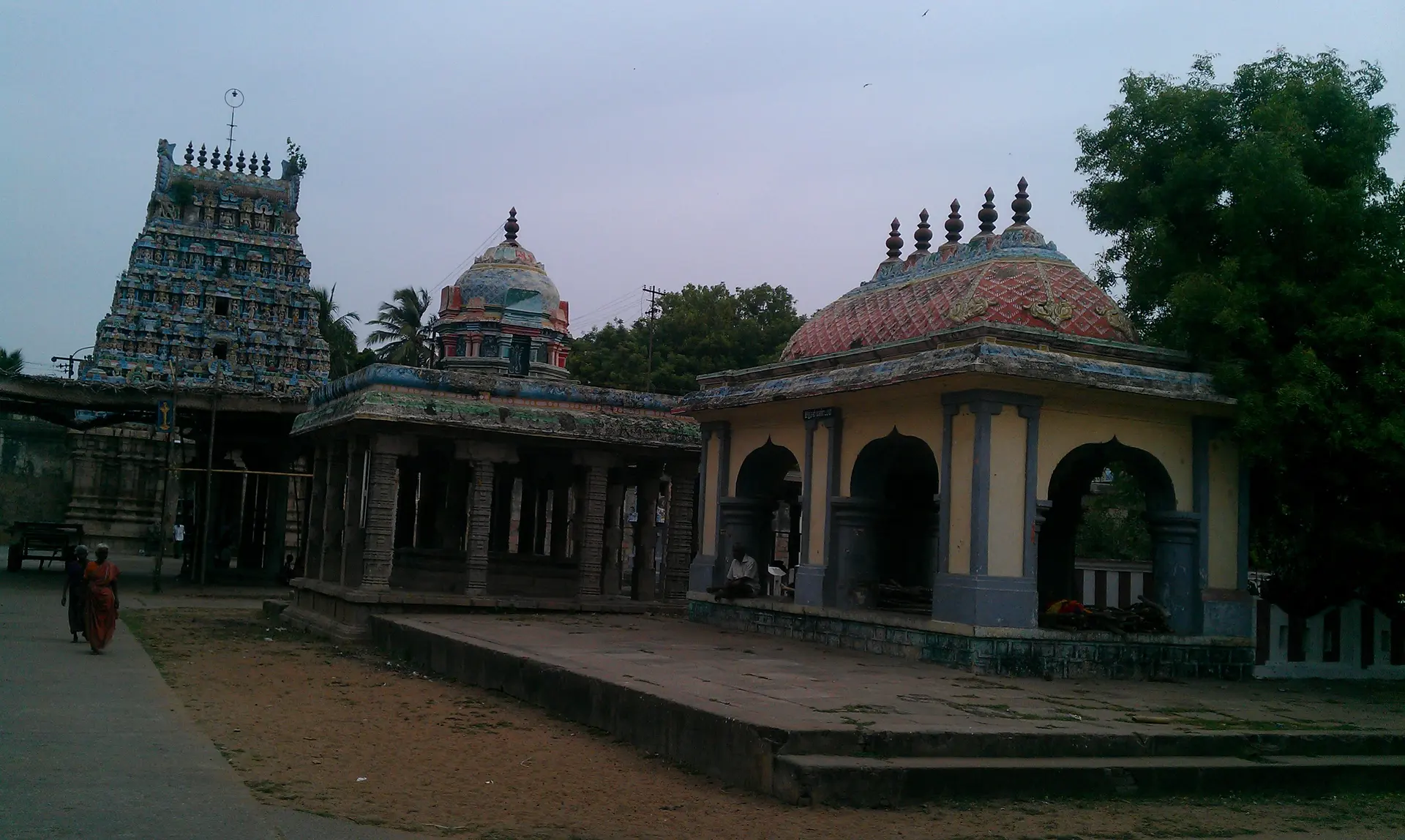
Sri Mahalingaswamy Temple
Priranavidagam, Tamil Nadu, India
46.8 km away

Kalahasteeswarar Temple, Kumbakonam, Tamil Nadu
Kumbakonam, Tamil Nadu, India
53.3 km away
References
Sources consulted for this page. Source categories describe the publication, not a guarantee that every claim is verified. Traditional accounts and outside interpretations may differ.
- 01Nagore Dargah Shariff Official Website — Nagore Dargah ShariffofficialOfficial shrine website with authoritative information on practices and history
- 02History - Nagore Dargah Shariff — Nagore Dargah ShariffofficialOfficial historical account from shrine administration
- 03Nagore - Eco Heritage — C.P.R. Environmental Education Centre (CPREEC)officialGovernment-affiliated heritage documentation
- 04Nagore Dargah - Tamil Nadu Tourism — Tamil Nadu TourismofficialState tourism board official information
- 05Kandhuri Festival at Nagore Dargah - Nagapattinam — Ministry of Culture, Government of IndiaofficialOfficial government festival documentation
- 06Former Nagore Dargah - Singapore — National Heritage Board, SingaporeofficialDocumentation of Nagore Dargah's influence on diaspora communities
- 07Nagore Dargah - Wikipedia — Wikipedia contributorsacademicComprehensive coverage with citations; serves as primary structural reference
- 08Nagore Shahul Hamid - Wikipedia — Wikipedia contributorsacademicDetailed biography of the saint with historical context
- 09Hazrat Shahul Hameed Nagori: The Saint of Nagore — Adnan Faizi, New Age IslamspiritualDetailed account of saint's life and miracles from Islamic perspective
- 10Nagore Dargah Kanduri Festival - Travel and Tour World — Travel and Tour WorldguideRecent news coverage of 2025 festival preparations
- 11Nagore Dargah - Thanjavur Info — Thanjavur InfoguideLocal tourism guide with practical visitor information
- 12History — Nagore Dargah ShariffofficialSupports the attributed account or visitor practice in the healing section; not evidence of clinical efficacy.
- 13Shahul Hamid — traditional accountsencyclopediaSupports the attributed account or visitor practice in the healing section; not evidence of clinical efficacy.
- 14Nagore Dargah Reviews - TripAdvisor — TripAdvisor contributorsguideVisitor reviews providing practical insights
Share a photo
Help visitors recognize Nagore Dargah. Every submission is reviewed before publication.