Thillai Nataraja Temple, Chidambaram, Tamil Nadu
The cosmic dance and the empty space — Shiva as Nataraja and as the formless akasha of the Chidambara Rahasyam
Understand sacred places, explore living traditions, and learn how to engage respectfully with Pilgrim Map.
Access has not been verified. Check current local guidance before planning a visit.
Chidambaram, Tamil Nadu, India
Read the sources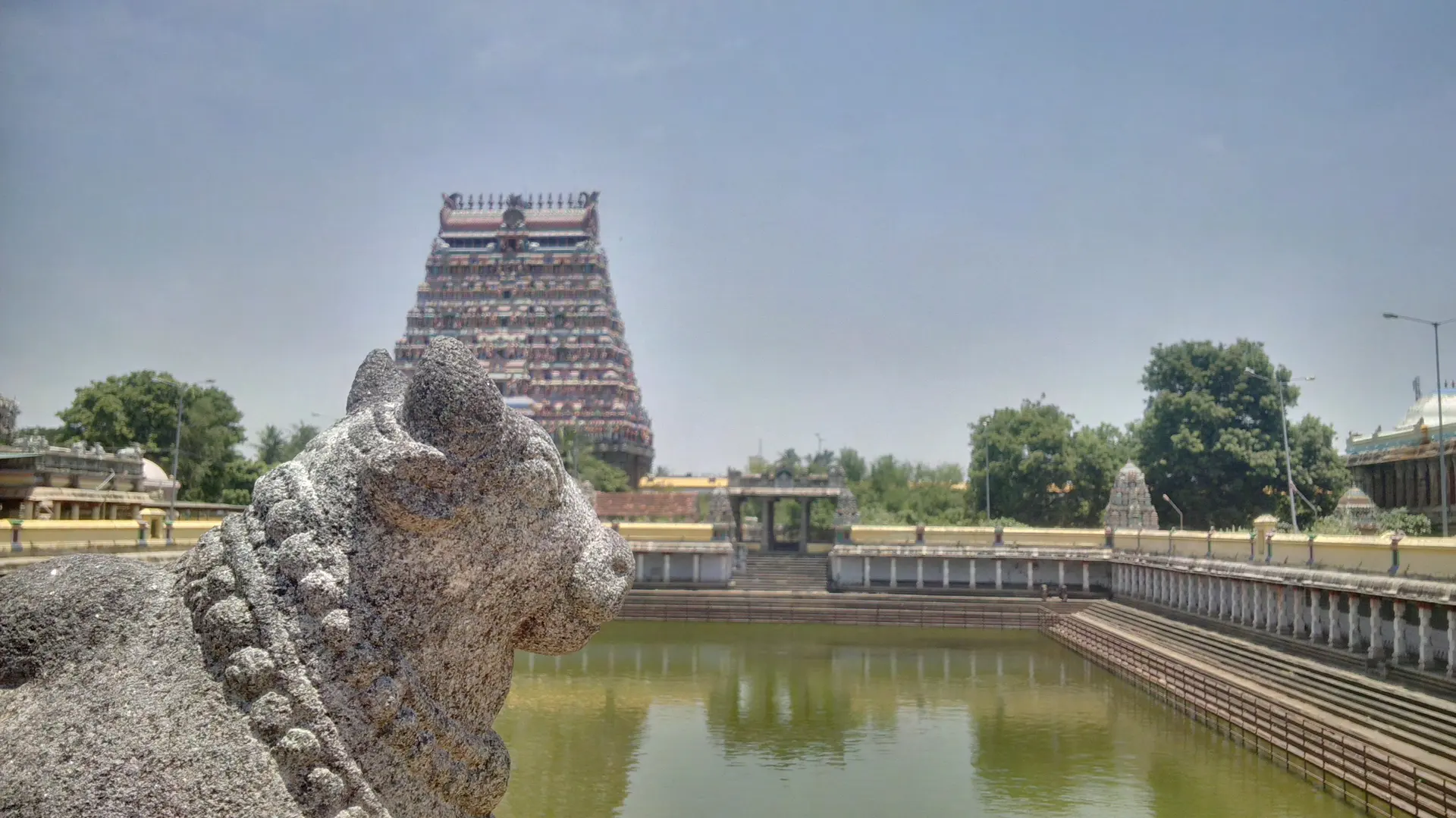
Image of Thillai Nataraja Temple, Chidambaram, Tamil Nadu. Image source · CC-BY-SA-4.0
Visit essentials
A quick read before you go
- Duration
- Allow 3–4 hours for a full visit (the complex covers roughly 40 acres).
- Access
- Chidambaram town, Tamil Nadu, approximately 250 km south of Chennai and 60 km south of…
Overview
Chidambaram is the spiritual capital of Tamil Shaivism. When a Tamil Shaiva speaks simply of 'koyil' — the temple — without modifier, this is the one meant. The site appears in the seventh-century Tevaram hymns of the Nayanar poet-saints as 'Thillai Ambalam,' the hall at Thillai, and is the principal temple of Shiva as Nataraja, the Lord of Dance.
The Ananda Tandava performed here is at once cosmogony, preservation, destruction, illusion, and liberation — the five eternal works of Shiva enacted as a single dance.
The temple is also one of the five Pancha Bhuta Sthalams, the Tamil pilgrimage of the five elements, and uniquely embodies akasha — space, ether, the most subtle of the elements. The central mystery, the Chidambara Rahasyam, is an empty space within the Chit Sabha (Hall of Consciousness): when the curtain is drawn back during specific aartis, devotees behold no image, only space garlanded and lit by lamps. The empty space is Shiva.
Around this small intimate sanctum stands a 40-acre complex with four colossal gopurams aligned to the cardinal directions, each carved with the 108 karanas of Bharatanatyam — the foundational dance postures. The temple is administered by the Podhu Dikshitar community, about 360 hereditary priestly families, whose ancient administrative right was confirmed by the Supreme Court of India in 2014.
Why this place is sacred
Chidambaram concentrates several rare elements. The Chidambara Rahasyam — the empty curtained alcove that devotees travel hundreds of kilometres to see — operates as a teaching prop more vivid than most images: at the moment of curtain-drawing, the inner sanctum is revealed to contain nothing visible, only space, garlands, and lamp-flame. Pilgrims widely report tears at first sight.
The amber light of the Chit Sabha's tiled roof gives the inner sanctum a warmth distinct from the granite mass of the outer complex. The small Nataraja bronze and the adjacent Sphatika crystal lingam are approached closely. The Dikshitar priests' Tamil-Sanskrit chanting, transmitted by oral tradition through hereditary lineage, gives the rituals a continuity rarely felt in temples administered by state endowments departments.
And the 108 karanas carved on the gopuram pillars — the earliest comprehensive sculptural record of Bharatanatyam's foundational dance vocabulary — make this the historical wellspring of Indian classical dance.
A Tamil Shaiva temple of Shiva as Nataraja and as formless akasha — the akasha sthalam of the five Pancha Bhuta, sung from the seventh century by the Nayanar poet-saints.
A shrine at Thillai is attested in the Tamil Shaiva canon from the 6th–7th century. The present granite temple complex is a Chola creation, with major construction between the 10th and 13th centuries under Aditya I, Parantaka I, Rajaraja I, Rajendra I, Kulottunga I, and Vikrama Chola. The four monumental gopurams (each over 40 m) were built in successive phases. Continuing patronage through the Pandyas, Vijayanagara rulers, and Nayaks of Madurai followed through the 17th century.
Administered by the hereditary Podhu Dikshitar community by oral tradition; their administrative right confirmed by the Supreme Court of India in 2014.
Experience and orientation
The Chidambara Rahasyam is the experience most pilgrims travel for. During specific aartis — most reliably the Arthajama puja at approximately 10 PM — the curtain in the Chit Sabha is drawn back. What is revealed is space: an alcove containing no image, only garlands of bilva and lamp-flame. The pattern of pilgrim response is consistent and well-documented: many fall silent, many weep, many describe a quality of recognition that surprises them. The empty space is the lesson.
It teaches what no image can — that the formless aspect of the divine cannot be seen, only attended to.
The scale of the inner sanctum tends to surprise visitors used to South Indian gopuram-driven layouts. After passing through the four colossal gopurams and the great outer mandapas, the Chit Sabha and the adjacent Kanaka Sabha are small, low-roofed, and intimate. The Nataraja bronze stands within a few feet; the Sphatika crystal lingam catches lamp-flame at close range.
Bharatanatyam students often spend hours at the four gopurams photographing the 108 karana reliefs — the canonical postures from which the entire dance grammar derives.
Allow 3–4 hours for a full visit (the complex covers roughly 40 acres). Time your visit around the puja schedule to include at least one curtain-drawing of the Chidambara Rahasyam — the Arthajama puja at approximately 10 PM is the most reliable. Early-morning Palli Yezhuchi at 6:30 AM is the quietest slot. For the great Margazhi Tiruvathirai festival, plan well ahead — accommodation in Chidambaram is fully booked weeks before.
Context and lineage
Tamil tradition relates that the sage Patanjali (the snake-bodied compiler of yoga) and the sage Vyaghrapada (the tiger-footed) came to Thillai to witness the cosmic dance of Shiva. Shiva performed the Ananda Tandava for them in the Chit Sabha, defeating his rival Kali in a dance competition by performing the urdhva tandava — a posture Kali could not match because of feminine modesty.
The temple commemorates both the dance and the witnessing sages; their images stand at the entrance to the Chit Sabha. The Chidambara Rahasyam — the empty curtained space — was instituted as the supreme darshan of formless Shiva.
Tamil Shaiva Siddhanta, with a Vaishnava Divya Desam co-sanctum (Govindaraja Perumal) in the same complex — one of the rare functioning Shaiva-Vaishnava combined sanctities in South India.
Patanjali
Sage of the Yoga Sutras; traditional witness, with Vyaghrapada, of Shiva's Ananda Tandava in the Chit Sabha
Vyaghrapada
Tiger-footed sage; co-witness of the cosmic dance, his image stands at the entrance to the inner sanctum
Nayanar poet-saints (6th–9th c.)
Sambandar, Appar, Sundarar — the Tamil Shaiva poets whose Tevaram hymns establish Chidambaram as 'Thillai Ambalam' in the canonical landscape
Cholas (10th–13th c.)
Imperial patrons — Aditya I, Parantaka I, Rajaraja I, Rajendra I, Kulottunga I, Vikrama Chola — under whom the present granite complex and the great gopurams were built
Podhu Dikshitar community
About 360 hereditary priestly families who have administered the temple by oral tradition for centuries; their right confirmed by the Supreme Court of India in 2014
Traditions and practice
Daily six-time puja schedule (Palli Yezhuchi 6:30 AM, Kala Sandhi 7 AM, Uchi Kala 12 noon, Sayaraksai 6 PM, Irandam Kala 8 PM, Arthajama 10 PM); abhishekam to the Sphatika lingam in the Kanaka Sabha; ceremonial Chidambara Rahasyam darshan when the curtain is drawn back; recitation of Tirumantiram and Tevaram by hereditary Oduvars; offering of bilva, lotus, jasmine.
Two main annual festivals: Margazhi Tiruvathirai / Arudra Darshan (December–January) is the most important Nataraja festival, marking the full moon under the Arudra star — the moment Shiva is said to have first revealed the cosmic dance; the Nataraja and Sivakami bronzes are processed and the great mahabhishekam is performed. Aani Tirumanjanam (June–July) is the second major festival, with another grand abhishekam. The temple's car festival (Brahmotsavam) occurs twice yearly.
For a single visit, time your stay to include the Arthajama puja at ~10 PM — the curtain-drawing of the Chidambara Rahasyam. Bharatanatyam students and Carnatic musicians often begin their careers with an offering at the temple; the 108 karana reliefs on the gopurams are the canonical reference. For the most powerful single experience, attend the Margazhi Tiruvathirai festival in December–January.
Tamil Shaiva Hinduism (Nataraja and akasha tradition)
ActiveChidambaram is one of the supreme tirthas of the Tamil Shaiva canon, sung by the four Tamil Shaiva poet-saints (the Nayanars) in the Tevaram. The principal temple of Shiva as Nataraja and as the akasha (space, ether) sthalam of the Pancha Bhuta.
Daily six-time puja; abhishekam to the Sphatika lingam in the Kanaka Sabha; ceremonial drawing-back of the curtain in the Chit Sabha to reveal the akasha space; recitation of Tirumular's Tirumantiram and Tevaram hymns by Oduvars.
Vaishnava devotion (Govindaraja Perumal)
ActiveWithin the same temple complex, the Govindaraja Perumal sub-shrine is one of the 108 Divya Desams of the Sri Vaishnava tradition, sung by the Alvars. The co-presence of Nataraja and Govindaraja in a single complex is among the rare functioning Shaiva-Vaishnava combined sanctities in South India.
Separate Vaishnava puja routine in the Govindaraja sub-shrine; Tamil Vaishnava festivals observed alongside the main Shaiva calendar.
Perspectives and open questions
Chidambaram is read in art-historical scholarship as the principal temple of the Chola devotional revolution and the historical wellspring of the Nataraja icon as world art; in Tamil Shaiva tradition as 'the temple' simply; and in tantric and Advaita literature as the supreme darshan of formless Shiva.
Scholarly perspective
Art-historians treat Chidambaram as the principal temple of the Chola devotional revolution that produced the Nataraja bronze as a major icon of world art (10th–12th c.). The 108 karana reliefs on the gopurams are the earliest comprehensive sculptural record of Bharatanatyam's foundational dance vocabulary. The temple is the historical centre of the South Indian Shaiva Siddhanta tradition.
Living and traditional perspectives
The Podhu Dikshitar community — about 360 priestly families — has administered the temple for centuries by oral tradition. Tamil Shaiva tradition treats Chidambaram as 'koyil' simply — when a Tamil Shaiva speaks of 'the temple' without modifier, Chidambaram is meant. The temple is the spiritual capital of Tamil Shaivism.
Alternative interpretations
Tantric Shaiva readings interpret the Chidambara Rahasyam as the supreme darshan of the formless — Shiva as akasha, pure space, the substrate within which all phenomena arise. Advaita Vedanta literature cites the Rahasyam as a vivid teaching prop for the doctrine that Brahman is nirguna (without attributes). The temple's coordinates and the placement of the Chit Sabha have been variously interpreted as encoding cosmic and human-body correspondences.
Open questions
The exact origin date of the Chidambara Rahasyam (the empty curtained space) as a ritual institution is unknown; it is attested by the early-medieval period but its inception is unrecorded. The historical sequence of the four gopurams' construction continues to be debated. The transmission lineage of the Dikshitar community is oral and only partially reconstructible.
Plan your visit
Access and arrival
Chidambaram town, Tamil Nadu, approximately 250 km south of Chennai and 60 km south of Pondicherry on the Chennai-Trichy coastal corridor. Nearest railway: Chidambaram station (~1 km from the temple). Nearest airport: Trichy (~170 km) or Chennai (~250 km). Frequent state-transport and private buses from Chennai, Pondicherry, Madurai, and Trichy.
Chidambaram town has a range of pilgrim accommodation from trust-administered dharamshalas to mid-range hotels. Book well ahead for Margazhi Tiruvathirai season (December–January).
Respectful visit
Traditional dress required: men in dhoti or veshti (some priests may ask men to remove shirts before sanctum entry); women in sari, half-sari, or salwar-kameez. Western clothing acceptable in outer corridors but discouraged in the inner sanctum.
Strictly prohibited inside the temple. Permitted in the outer streets and around the four gopurams.
Bilva leaves, lotus, jasmine, panchamrita, vibhuti, and traditional sweets. Offerings through the Dikshitar priests at the sanctum.
Inner sanctum traditionally restricted to Hindus. No leather inside (belts, wallets deposited). Mobile phones often deposited at the entrance. The Chidambara Rahasyam darshan is shown only during specific aartis.
The inner sanctum (Chit Sabha and Kanaka Sabha) is traditionally restricted to Hindus. The Chidambara Rahasyam darshan is shown only during specific aartis — plan timing accordingly; consult the Dikshitar priests on arrival for the day's schedule.
Current practical details
Address
Chidambaram, Tamil Nadu 608001, India
Phone
Hours
Hours, fees, and access can change — verify on the official source before you travel. Practical details last checked Jun 2026.
Location
Map loads as you approach this section.
Pilgrim reflections
A portrait of encounter, not a score
Pilgrims describe what they felt, how present they could become, and whether the place would shape a journey. There are no stars and no ranking of traditions.
No reviewed reflections yet
The first pilgrims can help describe the character of being here.
Share a reflection
Available after an account-backed “Been there.” Every reflection is reviewed before publication.
Nearby sacred places
Explore other sacred places in the region. Proximity does not establish access or travel time; check each place’s guidance.

Vaitheeswaran Koil — Vaidyanathaswamy Temple
Vaitheeswarankoil, Tamil Nadu, India
22.8 km away
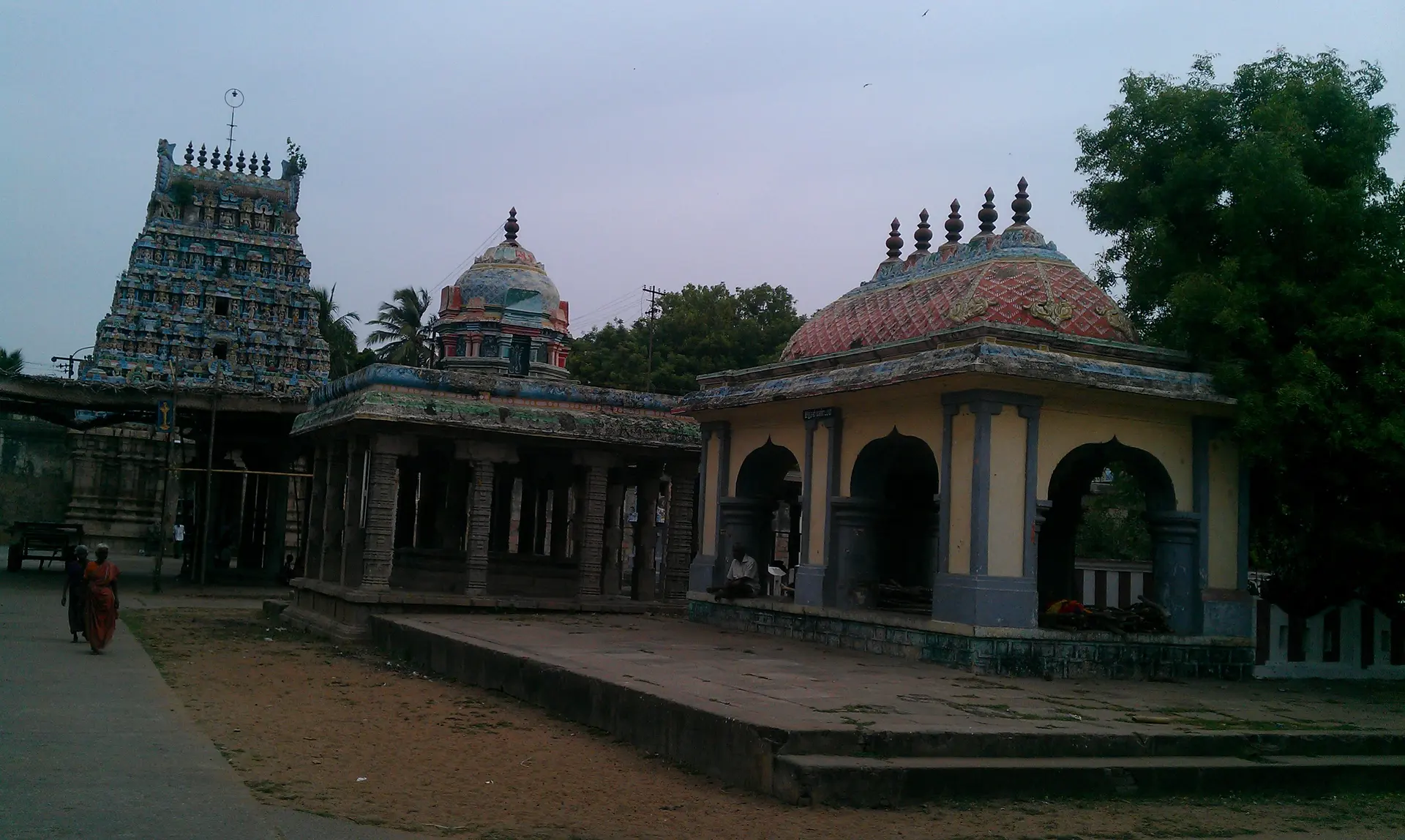
Sri Mahalingaswamy Temple
Priranavidagam, Tamil Nadu, India
52.1 km away

Kalahasteeswarar Temple, Kumbakonam, Tamil Nadu
Kumbakonam, Tamil Nadu, India
59.2 km away
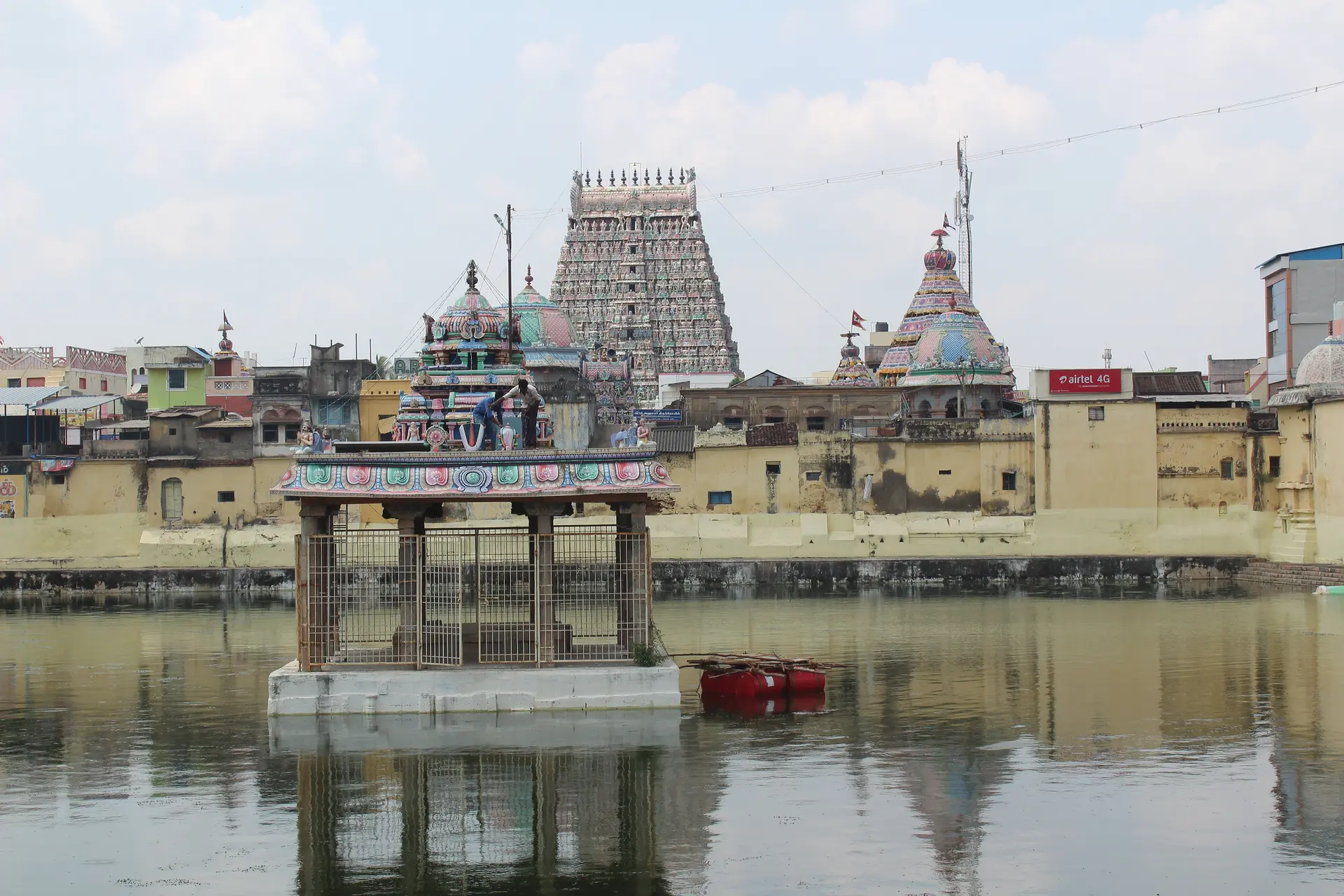
Adi Kumbeswarar Temple, Kumbakonam, Tamil Nadu
Kumbakonam, Tamil Nadu, India
60.3 km away
References
Sources consulted for this page. Source categories describe the publication, not a guarantee that every claim is verified. Traditional accounts and outside interpretations may differ.
- 01Nataraja Temple, Chidambaram — Wikipedia — Wikipedia contributorsencyclopediaComprehensive overview: Chola foundation and expansion, Pancha Bhuta Sthalam (akasha), Chidambara Rahasyam, Dikshitar community, Ananda Tandava iconography, daily six-puja schedule.
- 02Padma Kaimal, 'Shiva Nataraja: Shifting Meanings of an Icon' — Padma Kaimal, The Art Bulletin, Vol. 81, No. 3 (Sept 1999)academicSeminal art-historical analysis of the Ananda Tandava Nataraja bronze and its Chidambaram origins; argues against universalist readings and grounds the icon in 10th-12th c. Chola devotional politics.
- 03B. Natarajan, 'The City of the Cosmic Dance: Chidambaram' (1974) — B. Natarajan / Orient LongmanacademicStandard scholarly monograph on the temple's history, architecture, and theology, including the Chidambara Rahasyam.
- 04Pancha Bhuta Stalam — Wikipedia — Wikipedia contributorsencyclopediaConfirms Chidambaram as the akasha (space/ether) sthalam in the canonical Pancha Bhuta listing alongside Tiruvannamalai (fire), Jambukeswarar (water), Kalahasti (air), and Ekambareswarar (earth).
- 05Tamil Nadu Tourism — Chidambaram — Tamil Nadu Tourism Development CorporationofficialTourism description: location 250 km from Chennai, gopurams, Govindaraja Perumal sanctum, festival calendar.
- 06C. Sivaramamurti, 'Nataraja in Art, Thought and Literature' (1974, National Museum) — C. Sivaramamurti / National Museum of IndiaacademicAuthoritative study of the Nataraja icon's iconography, the five-act dance (creation, preservation, destruction, illusion, liberation), and its Chidambaram theological context.
- 07Supreme Court restores Chidambaram temple administration to Dikshitar community (2014) — The HindunewsConfirms the Supreme Court's January 2014 ruling on hereditary Dikshitar administration of the temple.
- 08Tirumular's Tirumantiram and the Tevaram hymns (Tamil Shaiva canon) — Tirumular, Sambandar, Appar, Sundarar (translations: T. N. Ramachandran et al.)spiritualPrimary Tamil Shaiva canonical sources (6th-9th c.) that establish Chidambaram as Thillai Ambalam and one of the supreme tirthas of the Tamil Shaiva landscape.
Photo gallery
2 curated photos
Share a photo
Help visitors recognize Thillai Nataraja Temple, Chidambaram, Tamil Nadu. Every submission is reviewed before publication.