Monastery of Valvanera
La Rioja's patroness, discovered in a hollow oak by a repentant bandit
Understand sacred places, explore living traditions, and learn how to engage respectfully with Pilgrim Map.
Access has not been verified. Check current local guidance before planning a visit.
Anguiano, La Rioja, Spain
Read the sources
Visit essentials
A quick read before you go
- Duration
- A basic visit to the church and Camarín de la Virgen can take under an hour; a guided tour…
- Access
- Located on road LR-435, in the municipality of Anguiano, La Rioja, at over 1,000 meters…
Overview
Valvanera sits at over a thousand meters in the Sierra de la Demanda, reached by mountain roads through forest that thins only at the sanctuary itself. The setting matters to the story: according to tradition, a bandit named Nuño Oñez, having preyed on travelers through these same mountains, was moved to remorse and retreated into a cave to live in penance.
Guided — in some tellings by an angel, in others by a dove and bees — he and a companion priest found an ancient image of the Virgin hidden inside a hollow oak, beside a spring that is said to still flow at the site.
Whatever the truth of that story, first recorded centuries after it supposedly happened, the monastic community that formed around the discovered image has proven durable. Documented from around 990, expanded through royal donation, rebuilt across Romanesque, Gothic, and Baroque campaigns, the monastery survived a nineteenth-century disentailment that emptied it for decades before Benedictine monks from Montserrat returned in 1883, greeted by a pilgrimage of seven thousand people.
The Benedictines themselves departed in 2018, and the sanctuary is now administered by priests of the Instituto del Verbo Encarnado — a change in custodianship that has not interrupted the daily rhythm of Mass, adoration, and pilgrimage that defines the site today. Our Lady of Valvanera remains La Rioja's patroness, and the region's largest annual pilgrimage still converges on this single mountain valley each September.
Why this place is sacred
Valvanera belongs to a recognizable category of Iberian Marian shrine: the hidden image, recovered from concealment by a figure whose own transformation becomes part of the site's meaning. Nuño Oñez's story follows the pattern closely — a man of violence turned penitent, led by a sign (a dove, bees, an angel depending on the telling) to an image that had been deliberately hidden, perhaps during a period of persecution or invasion centuries earlier.
The hollow oak and the spring beside it are named in the tradition and, in the case of the spring, still pointed to today.
What sets Valvanera apart from many such shrines is the sheer continuity of what followed the discovery. A hermit community formed around the image, was formalized as a Benedictine house by the late tenth century, and — except for a roughly forty-year interruption during Spain's nineteenth-century church disentailment — has maintained some form of religious life on this exact site for over a thousand years.
The forested isolation of the Sierra de la Demanda, more than a thousand meters up, has reinforced rather than diminished this continuity: there is little reason to be here except for the monastery itself, and that singularity of purpose has held.
The carving now venerated in the Camarín de la Virgen is generally dated by art historians to the Romanesque period, later than the ninth-century date the legend implies for the original discovery — a discrepancy most plausibly explained by a lost founding-era object having been replaced by the surviving Romanesque image, though this is inference rather than settled fact.
A hermit and later Benedictine monastic community formed around a discovered Marian image, intended as a site of prayer and penance; formalized under the Rule of St. Benedict by the late tenth century.
Traditional late-ninth-century discovery → hermit community → Benedictine monastery documented by 1016 → church consecrated 1073, expanded through Romanesque, Gothic, and Baroque campaigns → disentailment and abandonment (1835/1839–1883) → Benedictine return from Montserrat (1883) → canonical coronation of the image (1954) and declaration as Patroness of La Rioja (1965) → Benedictine departure and IVE administration since 2018, with the property donated to the Diocese of Calahorra y La Calzada-Logroño in 2021.
Experience and orientation
Getting to Valvanera means driving into the Sierra de la Demanda on the LR-435, the forest closing in as the road climbs past 1,000 meters. There is no easy or incidental way to arrive; the monastery is the destination, not a stop along some other route, and this deliberateness shapes how most visitors describe the approach — as a departure from ordinary travel into something more focused.
The church itself moves through several centuries in its own structure: the surviving late-Gothic nave, the Baroque Camarín de la Virgen (1630) behind the main altar where the image is enshrined, and the neoclassical Santo Cristo hermitage nearby. The Camarín is where most visitors linger — a small, ornamented chamber built specifically to house and display the carved Virgin and Child, the culmination of the pilgrimage even for those who arrive as tourists rather than devotees.
Guided tours extend the visit into the monastery's winery, where a small fee includes a tasting of Valvanera liqueur — a detail that surprises many visitors but fits naturally into a region whose Catholic and winemaking identities have never been separate. The Saint Matthew's Day offering of the year's first grape must to the Virgin, each September 21, makes this connection explicit and ongoing.
At over 1,000 meters in the Sierra de la Demanda, this is a high-mountain arrival where winter conditions can shape the approach.
Context and lineage
According to tradition recorded in the Historia Latina compiled by Abbot Rodrigo de Castroviejo in 1419 (itself derived from an earlier thirteenth-century vernacular account, possibly by Gonzalo de Berceo), a bandit named Nuño Oñez de Montenegro had preyed on travelers in the Sierra de la Demanda until, moved to remorse after robbing a humble farmer, he retreated to a cave near Anguiano to live in prayer and penance.
Joined by a priest, Domingo de Brieva, the two were guided — in some versions by an angel, in others by a dove and bees — to a hollow oak tree, where they found an ancient image of the Virgin Mary hidden among beehives, beside a spring said to still flow at the site. The discovered image became the object around which the monastic community formed.
The first documented abbot, Don Sancho, is placed around 990, with the earliest firmly dated documentary reference from 1016 (some sources cite a 1035 vineyard-purchase deed as the oldest surviving document). The first church was consecrated in 1073.
Expansion continued through royal donation, notably from King García III of Pamplona, and through successive rebuilding campaigns: a Romanesque church in 1183 (of which only a tower survives), a late Gothic church in the late fourteenth century that still stands, the Baroque Camarín de la Virgen in 1630, and the neoclassical Santo Cristo hermitage in 1782.
The community was expelled during Spain's mid-nineteenth-century ecclesiastical disentailment and the buildings stood empty for decades before Benedictine monks from the Abbey of Montserrat re-established the community in 1883, arriving to a pilgrimage of some seven thousand people.
That Benedictine presence continued until 2018, when the community departed and the sanctuary passed to the administration of priests from the Instituto del Verbo Encarnado; the Benedictine order formally donated the property to the Diocese of Calahorra y La Calzada-Logroño in July 2021.
Traditional late-9th-century hermit discovery → Benedictine monastery documented from c. 990–1016 → church consecrated 1073 → successive Romanesque, Gothic, and Baroque rebuilding through 1782 → disentailment and abandonment (1835/1839–1883) → Benedictine return from Montserrat (1883) → Instituto del Verbo Encarnado administration since 2018, property donated to the Diocese of Calahorra y La Calzada-Logroño in 2021
Nuño Oñez de Montenegro
Legendary founder
Domingo de Brieva
Legendary co-founder
Don Sancho
First documented abbot
García III of Pamplona
Royal patron
Traditions and practice
Benedictine monastic offices under the Rule of St. Benedict were observed continuously by the resident community from the medieval period until 2018, save the nineteenth-century interruption. The canonical coronation of the image took place on 15 October 1954, and the declaration as Patroness of La Rioja followed in 1965.
Daily Mass (weekdays 8:00 am; Saturday 12:30 pm and 6:00 pm; Sunday and holidays 12:30 pm), daily readings and morning worship, and daily Eucharistic adoration at 7:00 pm are maintained by IVE priests. The annual patronal romería takes place on the second Sunday closest to 8 September, featuring a Eucharistic celebration and procession. On 21 September (Saint Matthew's Day), local wine producers offer the year's first must to the Virgin following the grape harvest.
The 'Valvanerada,' an overnight roughly 63 km pilgrimage walk from Logroño, is held annually on the last Saturday in April.
If visiting outside the September romería, take the guided winery tour — it is the clearest way to see how the sanctuary's devotional calendar and the region's agricultural calendar are the same calendar, most visibly at the Saint Matthew's Day must offering. Spend time at the Camarín de la Virgen itself rather than treating it as a quick stop after the nave; it is where the site's four building campaigns converge on a single object.
Roman Catholicism (Benedictine monastic heritage, now IVE-administered)
ActiveValvanera is the most important Marian shrine in La Rioja; its venerated image has been the region's official patroness since 1965 and was canonically crowned in 1954. The site anchors La Rioja's regional Catholic identity and hosts the region's largest annual pilgrimage.
Daily Mass and Eucharistic adoration, confession by appointment, guesthouse retreats, the annual patronal romería with Eucharistic celebration and procession, the Valvanerada overnight pilgrimage walk, and the Saint Matthew's Day grape-must offering.
Perspectives and open questions
Valvanera is read through Catholic devotional tradition, through scholarly treatment of its founding legend as later hagiography, and through the region's own sense of Marian and viticultural identity.
Scholarly perspective
Historians generally treat the Nuño Oñez discovery narrative as a foundational legend recorded in later medieval hagiographic literature — the 1419 Historia Latina, itself derived from an earlier thirteenth-century vernacular text — rather than a contemporaneous historical record. The monastery's actual institutional history is documented from the late tenth or early eleventh century onward through donation charters and property deeds.
The venerated carving itself is dated by art historians to the Romanesque period, later than the legendary ninth-century discovery date, a discrepancy scholars attribute either to a gap between an original founding-era cult object (now lost) and the surviving Romanesque replacement, or to imprecision in the legendary chronology.
Living and traditional perspectives
Within Catholic tradition, the discovery of the image is understood as a supernatural event: Nuño Oñez's conversion and the angelic guidance to the hidden statue are recounted as miraculous, and the image itself is venerated as the continuously miraculous embodiment of the Virgin's patronage over La Rioja since the ninth century.
Alternative interpretations
No significant alternative or esoteric interpretive tradition — such as ley-line or pre-Christian continuity claims — was identified for this site. The dove-and-bees imagery in some retellings echoes wider Marian apparition motifs found at other hidden-image shrines across Iberia, but no source treats this as evidence of pre-Christian cult continuity specific to Valvanera.
Open questions
The precise original date and provenance of the venerated carving remain unresolved, with specialist descriptions ranging across the ninth through twelfth centuries, and the exact founding date of the monastic community before its first securely dated documents (1016 or 1035) is not established with certainty.
Plan your visit
Access and arrival
Located on road LR-435, in the municipality of Anguiano, La Rioja, at over 1,000 meters elevation in the Sierra de la Demanda mountains. No public transit directly serves the site; private vehicle is the standard means of access, and winter snow can affect mountain roads.
An on-site guesthouse is available for retreats and groups seeking time in a monastic setting, operated by the current administering community.
Respectful visit
No specific dress code is published by the monastery's official site; as an active Catholic church and religious house, modest dress consistent with general church-visiting etiquette in Spain is expected, though not explicitly stated in available sources.
No explicit photography policy was found; general convention at active Spanish sanctuaries is to permit respectful photography in public areas but to avoid photographing during active liturgy or in private/cloistered areas.
The Saint Matthew's Day (21 September) offering of the year's first grape must to the Virgin is the site's clearest documented communal offering, tied to the regional wine harvest; devotional candle-lighting is typical at Marian shrines of this kind, though not specifically documented for Valvanera.
Cloistered and residential areas of the monastery are not open to the general public. Confession and spiritual attention are available only by prior appointment through the reception/guesthouse office.
Respect monastic enclosure and arrange confession or spiritual direction in advance through the reception or guesthouse office. Winter snow can affect access; no specific seasonal closure is documented.
Location
Map loads as you approach this section.
Pilgrim reflections
A portrait of encounter, not a score
Pilgrims describe what they felt, how present they could become, and whether the place would shape a journey. There are no stars and no ranking of traditions.
No reviewed reflections yet
The first pilgrims can help describe the character of being here.
Share a reflection
Available after an account-backed “Been there.” Every reflection is reviewed before publication.
Nearby sacred places
Explore other sacred places in the region. Proximity does not establish access or travel time; check each place’s guidance.

Monastery of Santa María la Real de Nájera
Nájera, La Rioja, Spain
17.3 km away
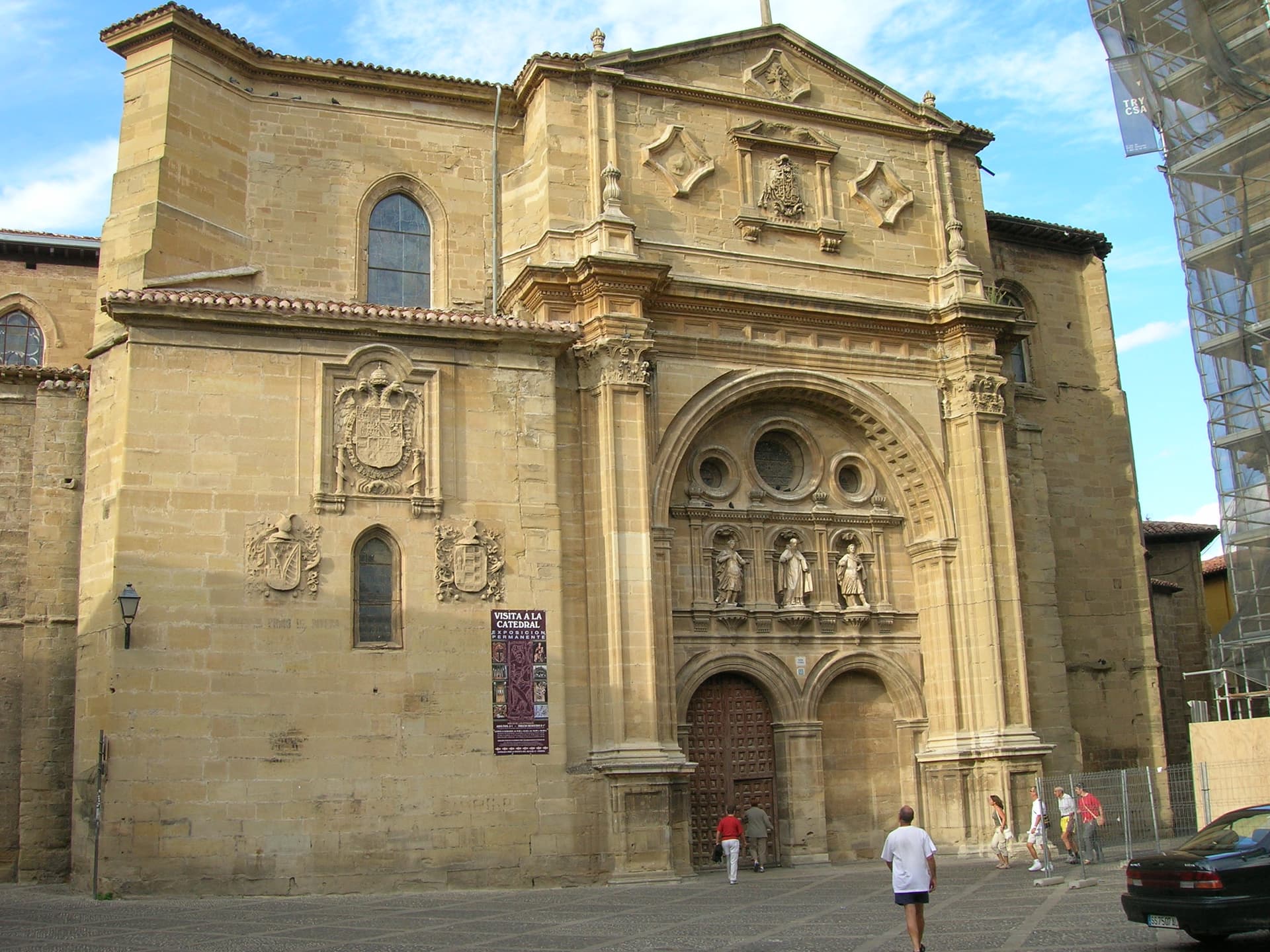
Santo Domingo de la Calzada Cathedral
Santo Domingo de la Calzada, La Rioja, Spain
17.4 km away
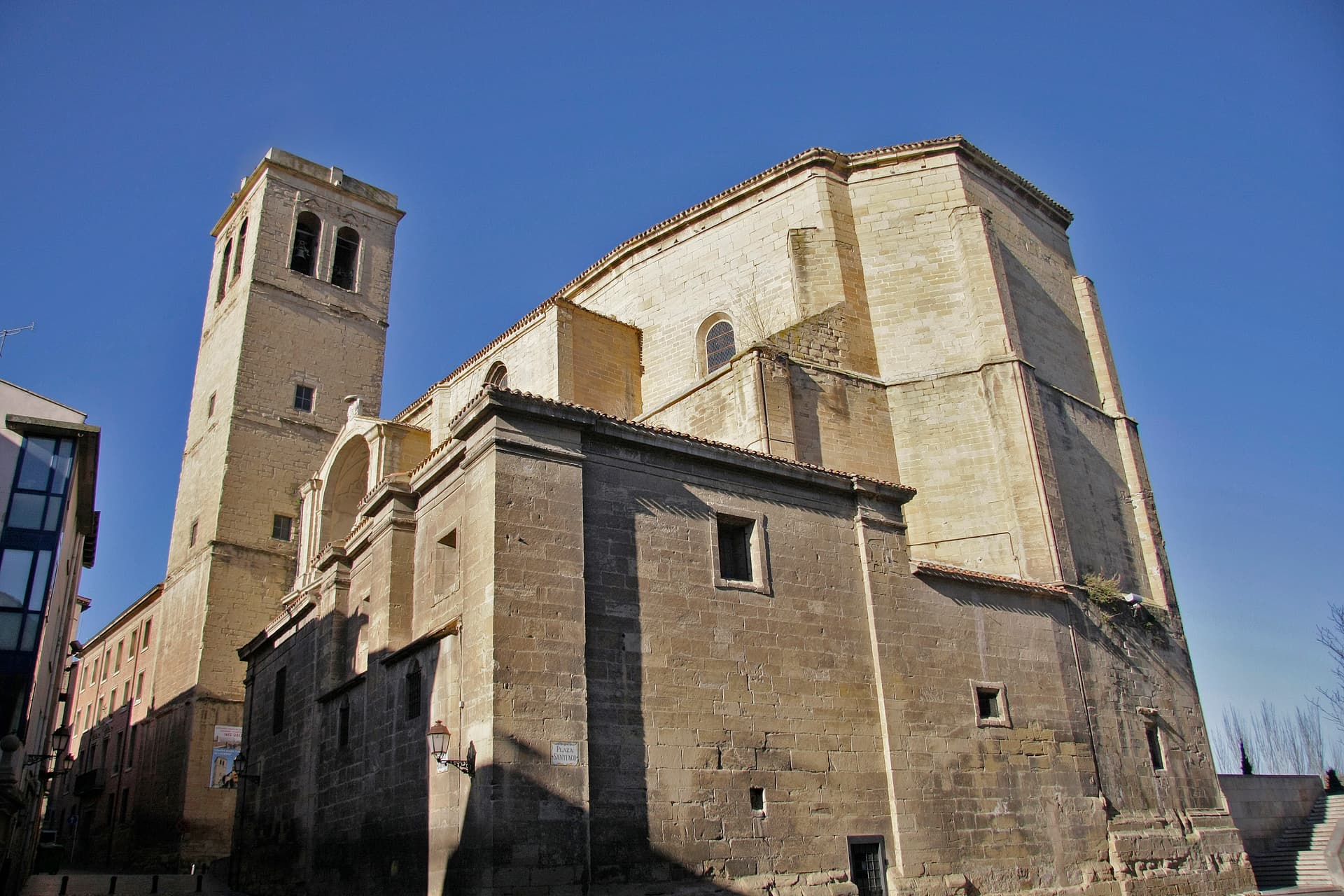
Iglesia de Santiago el Real, Logroño
Logroño, Logroño, La Rioja, Spain
39.4 km away

Monastery of Santo Domingo de Silos
Santo Domingo de Silos, Burgos, Spain
58.7 km away
References
Sources consulted for this page. Source categories describe the publication, not a guarantee that every claim is verified. Traditional accounts and outside interpretations may differ.
- 01Monasterio de Valvanera — official site (Monastery / Valvanera Virgin / Accommodations pages) — Monasterio de Valvanera (Instituto del Verbo Encarnado)officialPrimary source for current operations, hours, mass schedule, guesthouse, and the legend of Nuño Oñez.
- 02Monasterio de Nuestra Señora de Valvanera — La Rioja Turismo — Gobierno de La Rioja (regional tourism board)officialRegional government tourism authority; corroborates location, patroness status, and guesthouse details.
- 03Monasterio de Valvanera — Ayuntamiento de Anguiano — Ayuntamiento de Anguiano (municipal government)officialCorroborates location and basic history.
- 04Monasterio de Valvanera — Wikipedia — Wikipedia contributorsacademicDetailed history of founding legend, architectural phases, Mendizábal disentailment, Benedictine return in 1883, 2018 departure and handover to IVE, and 2021 property donation.
- 05Nuestra Señora de Valvanera — Wikipedia — Wikipedia contributorsacademicCovers the veneration of the image itself, 1954 canonical coronation, and 1965 declaration as Patron Saint of La Rioja.
- 06The miraculous story of La Rioja's Valvanera monastery — AleteiaspiritualFullest English-language narrative of the founding legend, etymology of 'Valvanera,' the Smaragdo manuscript, and the 1883 pilgrim return story.
- 07Monasterio de Valvanera — Arteguías — Arteguías (Spanish art/heritage guide)Source contextCorroborates architectural evolution and the Camarín de la Virgen.
- 08Virgen de la Valvanera — Románico Digital — Románico DigitalacademicPhysical description and dating debate for the venerated carving.
- 09Historia — Ilustre Capítulo de Caballeros de Nuestra Señora de Valvanera — Ilustre Capítulo de Caballeros de Nuestra Señora de ValvaneraspiritualCorroborates feast-day and patroness history from a devotional perspective.
- 10Sesenta años como patrona de La Rioja, la Virgen de Valvanera: Quién encontró su talla y dónde estaba oculta — COPE La RiojaSource contextMarks the 60th anniversary of the Virgin's declaration as patroness.
Share a photo
Help visitors recognize Monastery of Valvanera. Every submission is reviewed before publication.