Luistari Burial Ground
Finland's largest Iron Age cemetery, read through a Viking-era noblewoman's grave
Understand sacred places, explore living traditions, and learn how to engage respectfully with Pilgrim Map.
Access has not been verified. Check current local guidance before planning a visit.
Eura, Satakunta, Finland
Read the sources
Visit essentials
A quick read before you go
- Duration
- 30–60 minutes for the self-guided trail and information boards; allow longer if combining with…
- Access
- Luistari lies just off Highway 43 near Kauttua, a few kilometers south of Eura church along the…
Overview
Luistari holds no living devotion—no altar, pilgrimage, or annual rite—but evidence. More than 1,300 burials were placed on this low ridge above the Eurajoki river between the late 6th and 13th–14th centuries CE, the largest concentration of Late Iron Age graves in Finland and among the Nordic countries' largest.
In 1969, a sewage-trench crew found a silver-decorated Viking Age sword, beginning more than two decades of excavation led by archaeologist Pirkko-Liisa Lehtosalo-Hilander. The famous 'Eura noblewoman's' costume, swords, spearheads, imported beads, and isotope traces of migrants who died far from their origins made this field Finnish archaeology's single richest view of how one community dressed, ate, traded, and buried its dead through the transition from pre-Christian custom toward the early Christian era.
Today it is a restored ancient park with information boards, a marked trail, sheep on the grass, and a small summer exhibition tent. There is little to see and much to know.
Why this place is sacred
Most Finnish Iron Age cemeteries yield partial, ambiguous evidence — a handful of disturbed graves, corroded metal fragments, uncertain dating. Luistari is the exception, and that exception is what makes it significant rather than any singular sacred quality of the ground itself.
Over roughly seven centuries of near-continuous use, generation after generation buried their dead in the same low sandy ridge, and because the soil chemistry and depositional conditions happened to preserve organic material unusually well, archaeologists recovered not just bone and metal but traces of wool, linen, and leather — enough to reconstruct entire garments.
The site's 'thinness,' if it has any, is retrospective: it is thin in the sense that the veil between the present and a specific, richly documented Iron Age community is unusually easy to see through here, because so much survived intact.
Isotopic analysis of teeth and bone has since shown that some of the people buried at Luistari grew up eating a different diet, in a different place, than the local population — direct physical evidence of long-distance mobility and integration into this community, over a thousand years before anyone thought to ask the question.
Burial ground for the local Iron Age and early Medieval community of the Eura river valley; the site's earlier, mostly destroyed Bronze Age and Early Iron Age layer suggests still older settlement and cremation-burial use predating the main inhumation cemetery by well over a millennium.
From scattered Bronze/Early Iron Age cremation burials, to an apparent gap of several centuries, to continuous inhumation burial from the late 6th century CE through the Viking Age and into the 13th–14th century, followed by abandonment, rediscovery in 1969, and conversion into a managed archaeological park.
Experience and orientation
There is not much left to look at. That is the first thing to accept about Luistari, and once accepted, it reframes the visit. The 1,300-plus graves excavated here were backfilled decades ago; the ridge is grass now, kept trim by grazing sheep, marked by a walking trail and a series of information boards that tell you what lay beneath each point on the path.
Standing at the site itself gives you almost none of the sensory drama that heritage tourism trains visitors to expect — no standing stones, no chamber to crouch into, no obvious boundary between sacred and ordinary ground. What Luistari asks of a visitor is closer to what it asks of the archaeologists who worked it for over twenty years: patience with absence, and a willingness to let the eye do less work than the mind.
Read a board describing the reconstructed noblewoman's grave — where an unusually dense scatter of bronze spirals preserved fragments of wool cloth and an apron for over a thousand years — and then look at the flat grass where that grave was, and the gap between artifact and imagination becomes the actual content of the visit. In summer, a staffed exhibition tent narrows that gap with finds, photographs, and reconstructions; outside the exhibition season, the boards alone carry the story.
Walk the marked trail slowly and read each information board in sequence rather than skimming for the 'best' point — the story here accumulates across the full circuit rather than concentrating at one dramatic spot.
Context and lineage
In 1969, workers digging a sewage trench in Eura struck a silver-decorated Viking Age sword. The find triggered rescue excavation, which quickly revealed the scale of what lay beneath: a burial ground eventually shown to contain more than 1,300 graves. Sustained fieldwork continued through the 1970s, 80s, and into the 1990s, returning periodically as funding allowed, and established Luistari as the type-site for Finnish Late Iron Age burial archaeology.
One grave in particular — that of a woman buried around 1020–1050 CE, excavated in the very first season — yielded enough preserved textile and bronze ornament to allow full reconstruction of her clothing, published in 1982 and still known as the 'Eura noblewoman's' costume.
Luistari sits within a dense cluster of Iron Age heritage sites in the Eura river valley, including the nearby Käräjämäki cemetery and Kauttua hillfort, that together document one of the most continuously inhabited and archaeologically visible corridors of prehistoric settlement in Finland.
Traditions and practice
The burial rite itself — supine inhumation, often with hands crossed on the chest or abdomen, in wooden coffins or structures, accompanied by clothing, jewelry, weapons, and tools appropriate to the deceased's status — is known only through excavation, not through any surviving text or oral account, since it predates or coincides with the earliest, still-uncertain stages of Christian influence in the region.
Active scholarly and scientific research continues at Luistari: isotopic and osteological studies published as recently as 2022–2024 continue to extract new information about diet, mobility, and population history from remains excavated decades ago. This is best understood as a living tradition of archaeological inquiry rather than a dormant site — the questions being asked of Luistari's dead are still evolving.
Walk the full marked trail rather than a single stop, read each information board attentively, and if visiting in summer, spend time in the exhibition tent before or after the walk so the objects and the ground inform each other.
Pause at the approximate location of the noblewoman's grave and consider the disproportion between the small, corroded fragments actually recovered and the complete, wearable costume reconstructed from them — that act of reconstruction is itself part of what the site has to offer a visitor.
Finnish Iron Age burial custom (pre-Christian to early Christian transition)
HistoricalLuistari documents a community's shift from Bronze/Early Iron Age cremation to nearly seven centuries of inhumation burial spanning the Merovingian Period, Viking Age, and into the early Medieval/Crusade period, capturing the material culture of a Finnish community during the gradual, still-debated arrival of Christian influence in the region.
Inhumation burial, typically supine with hands crossed on chest or abdomen, in coffins or wooden structures, accompanied by clothing, jewelry, weapons, and tools reflecting the status and role of the deceased.
Archaeological and scientific research tradition
ActiveLuistari remains an active subject of scholarly inquiry: peer-reviewed isotopic and osteological studies published as recently as 2022–2024 continue to extract new findings about diet, migration, and population composition from the excavated remains, decades after the original fieldwork concluded.
Laboratory analysis (isotopic, osteological, zooarchaeological) of previously excavated material; publication in international academic journals; periodic public communication of findings through Finnish media.
Perspectives and open questions
Luistari's meaning depends almost entirely on the lens brought to it: to archaeology it is a type-site, to isotope science a population record, and to the visitor standing on an empty field, largely an act of imagination guided by signage.
Scholarly perspective
Archaeologists regard Luistari as the single most important reference site for Finnish Late Iron Age material culture, its scale (over 1,300 excavated graves) and preservation conditions making it the primary evidence base for reconstructing period clothing, weaponry, trade contacts, and — through recent isotopic work — diet and population mobility between roughly 600 and 1130 CE.
Living and traditional perspectives
No continuous folk-religious or oral tradition connects to Luistari; the site predates surviving Finnish folk-religious testimony by centuries, so there is no living traditional voice to set alongside the archaeological one.
Open questions
The specific beliefs behind burial orientation, the selection of particular grave goods for particular individuals, and the pace and nature of the shift from cremation to inhumation remain open to scholarly interpretation rather than settled fact. Isotopic evidence that some individuals buried at Luistari grew up elsewhere raises further open questions about how migrants were received and integrated into local burial custom, questions the skeletal record can gesture toward but not fully answer.
Plan your visit
Access and arrival
Luistari lies just off Highway 43 near Kauttua, a few kilometers south of Eura church along the Eurajoki river valley (Satakunta region), with on-site parking. There is no direct public transit to the site; a car is effectively required.
Mobile phone signal is generally reliable throughout the Eura area under standard Finnish rural network coverage, but GPS navigation can place a pin imprecisely for a rural heritage site like this — following road signage toward 'Luistari' from Highway 43 is more reliable than trusting a single mapped address. No keyholder or booking contact is required; the outdoor park is freely open.
For current exhibition-tent hours or any access questions, contact Eura Municipality (Euran kunta) via eura.fi, the site's official steward.
Respectful visit
No specific dress requirements. Wear sturdy outdoor footwear suited to an open grass field that can be uneven or damp underfoot, especially outside summer.
No restrictions identified; the site is an open-air public heritage park and photography of the landscape, trail, and information boards is unproblematic.
Not applicable — no tradition of leaving offerings exists at this site, and visitors should not introduce one; nothing should be added to or removed from the ground.
Stay on the marked trail and avoid disturbing the sheep that graze the park for maintenance. Removing artifacts, digging, or using metal detectors is illegal under Finnish heritage protection law at all designated ancient monument sites, Luistari included.
Treat the grass field as what it is — a burial ground for over 1,300 people, most now anonymous — even though nothing marks individual graves above ground; stay on the marked trail, and do not attempt any digging or metal-detecting, which is prohibited by law at protected ancient monument sites in Finland.
Location
Map loads as you approach this section.
Pilgrim reflections
A portrait of encounter, not a score
Pilgrims describe what they felt, how present they could become, and whether the place would shape a journey. There are no stars and no ranking of traditions.
No reviewed reflections yet
The first pilgrims can help describe the character of being here.
Share a reflection
Available after an account-backed “Been there.” Every reflection is reviewed before publication.
Nearby sacred places
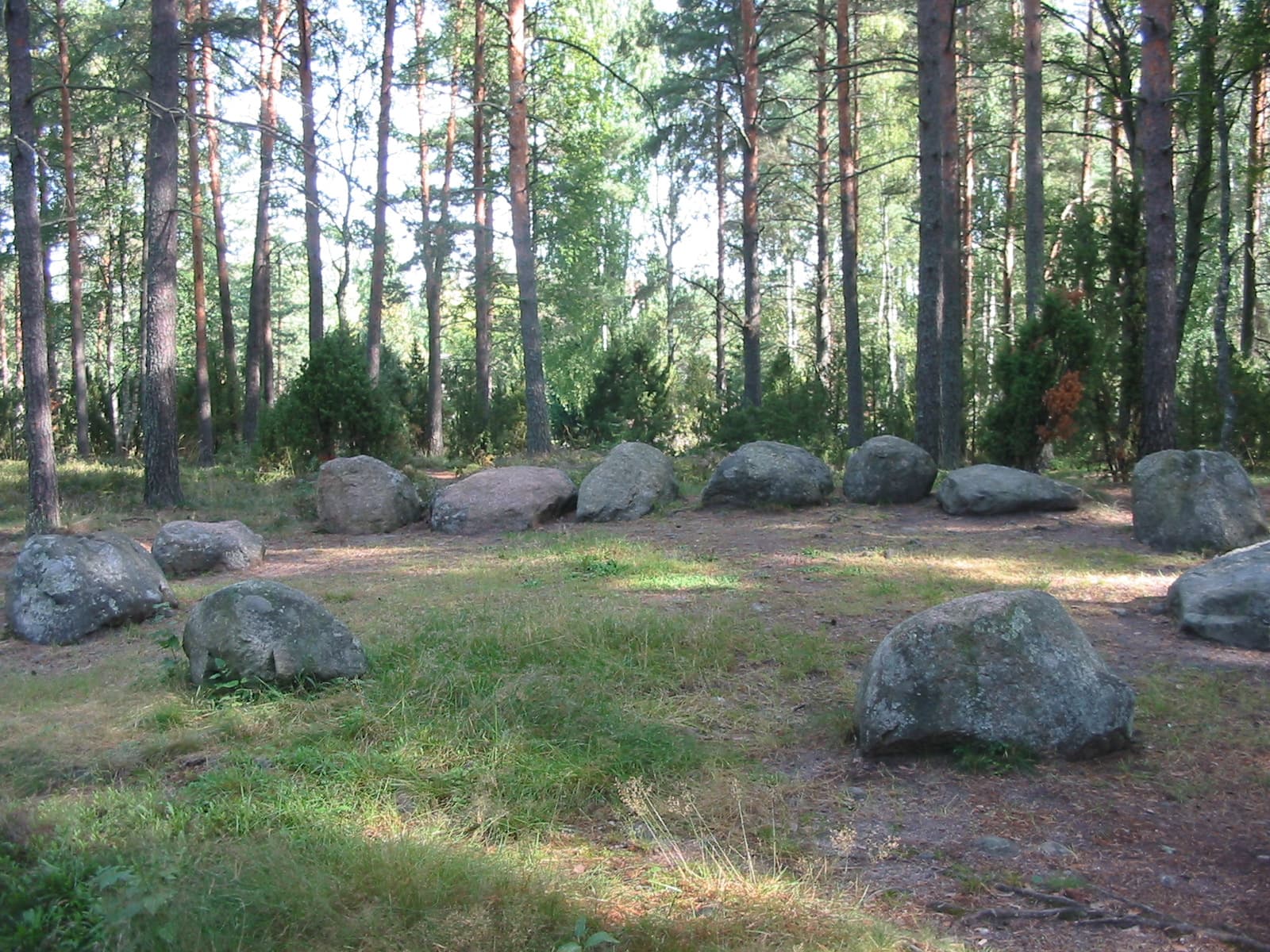
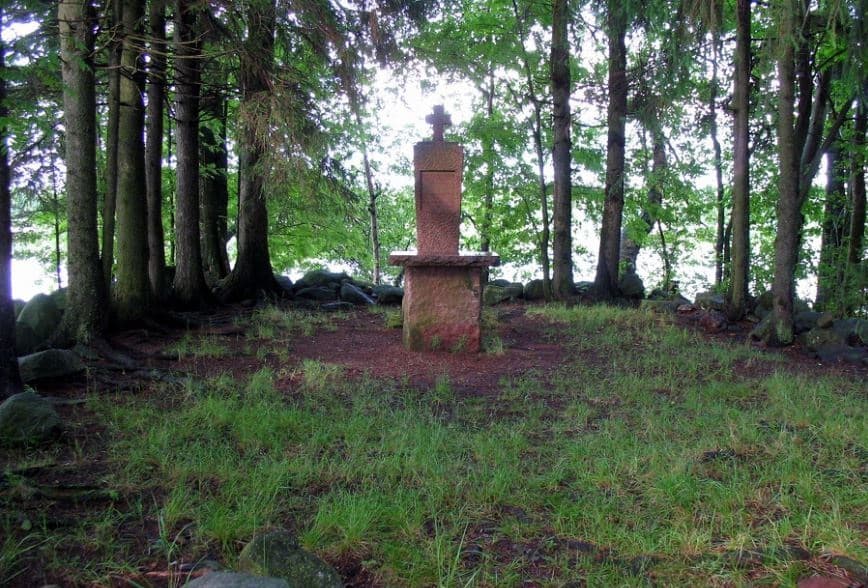
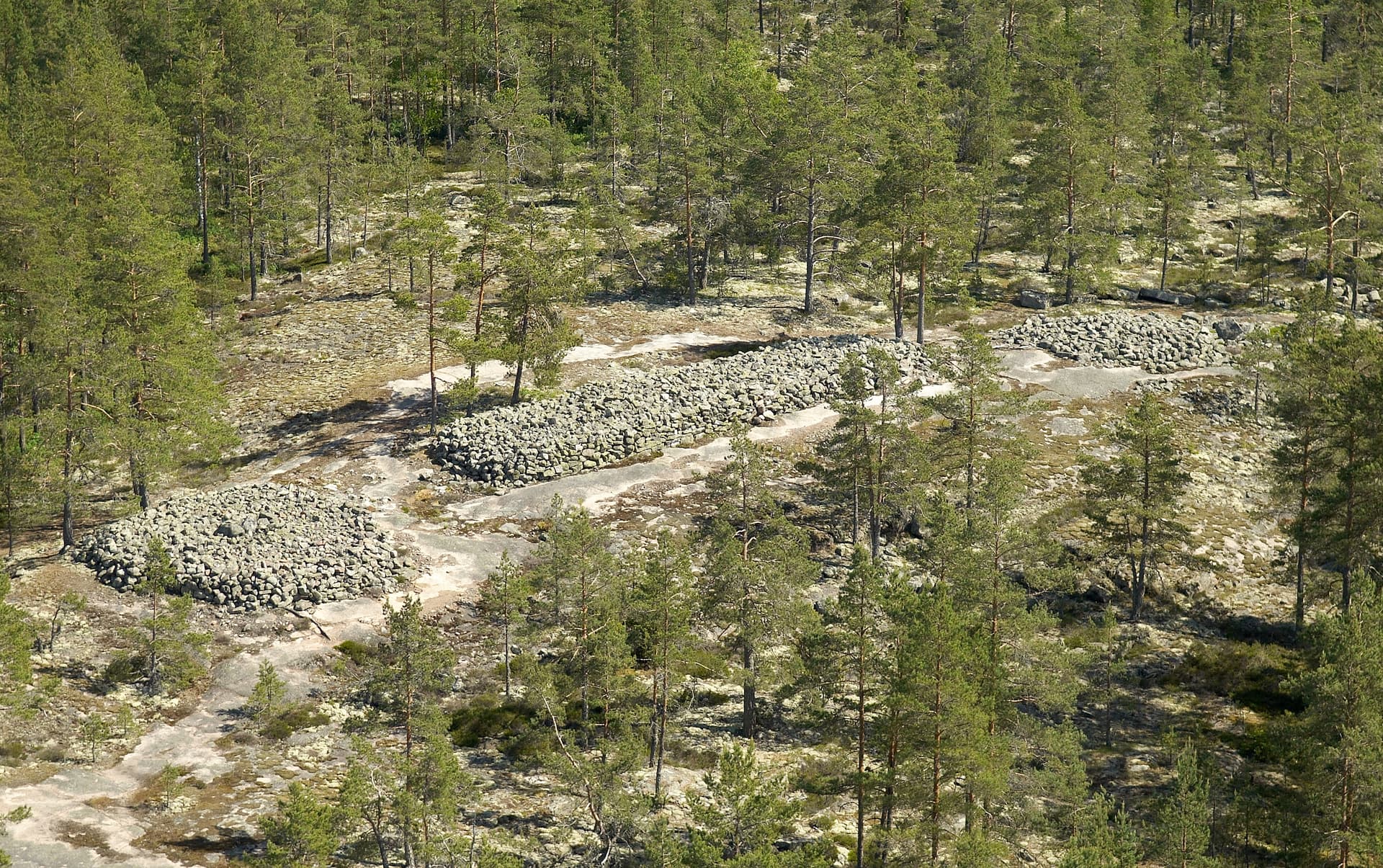
Explore other sacred places in the region. Proximity does not establish access or travel time; check each place’s guidance.

References
Sources consulted for this page. Source categories describe the publication, not a guarantee that every claim is verified. Traditional accounts and outside interpretations may differ.
- 01Multi-isotopic evidence reveals the emergence of a cosmopolitan community at the Luistari cemetery in Eura, Finland, during the early Medieval period (600-1130 CE) — Springer Nature — Archaeological and Anthropological SciencesacademicPeer-reviewed isotopic study confirming population mobility and dating range at Luistari
- 02Isotopic insights into the early Medieval (600-1100 CE) diet in the Luistari cemetery at Eura, Finland — Springer Nature — Archaeological and Anthropological SciencesacademicPeer-reviewed diet/isotope study of Luistari skeletal population
- 03The Origins of Viking Age Dogs in Luistari, Eura, Finland — International Journal of Osteoarchaeology (Wiley)academicPeer-reviewed zooarchaeological study of dog burials at Luistari
- 04Luistari — Euran kunta ("Euran 100 helmea") — Eura MunicipalityofficialMunicipal heritage page: history, excavation, Eura noblewoman grave, ancient park, sheep grazing, exhibition tent
- 05Käräjämäki — Euran kunta ("Euran 100 helmea") — Eura MunicipalityofficialConfirms Käräjämäki as a separate, nearby Iron Age cemetery within walking/short driving distance of Luistari in the same Eura prehistoric cluster
- 06Luistari — Wikipedia (Finnish) — Wikipedia contributorsencyclopediaConfirms coordinates, discovery in 1969, excavation directed by Pirkko-Liisa Lehtosalo-Hilander 1969-1992, grave count, notable finds
- 07Käräjämäki (Eura) — Wikipedia (Finnish) — Wikipedia contributorsencyclopediaDescribes Käräjämäki as an extensive Iron Age cemetery on a sand ridge in Eura, used c. 550-1200 CE, part of the same dense prehistoric settlement area as Luistari
- 08Pirkko-Liisa Lehtosalo-Hilander — Wikipedia — Wikipedia contributorsencyclopediaBiography of the archaeologist who directed the Luistari excavations 1969-1992
- 09Isotooppitutkimus raottaa rautakautisen kalmiston saloja: Kala oli Euran Luistarin perusruokaa, mutta keitä olivat hylkeensyöjät? — YlenewsFinnish public broadcaster coverage of the isotopic diet research, accessible summary of academic findings
- 10Luistari Burial Ground, Eura, Finland — SpottingHistoryguideVisitor-oriented summary; confirms current sparse visible remains, proximity to Sammallahdenmäki (~20 km) and Kauttua Ironworks (~1 km)
Share a photo
Help visitors recognize Luistari Burial Ground. Every submission is reviewed before publication.