Leirfall rock carvings
A Bronze Age ritual theatre carved into stone, where processions of the dead still walk after three millennia
Understand sacred places, explore living traditions, and learn how to engage respectfully with Pilgrim Map.
Access has not been verified. Check current local guidance before planning a visit.
Stjordal, Trøndelag, Norway
Read the sources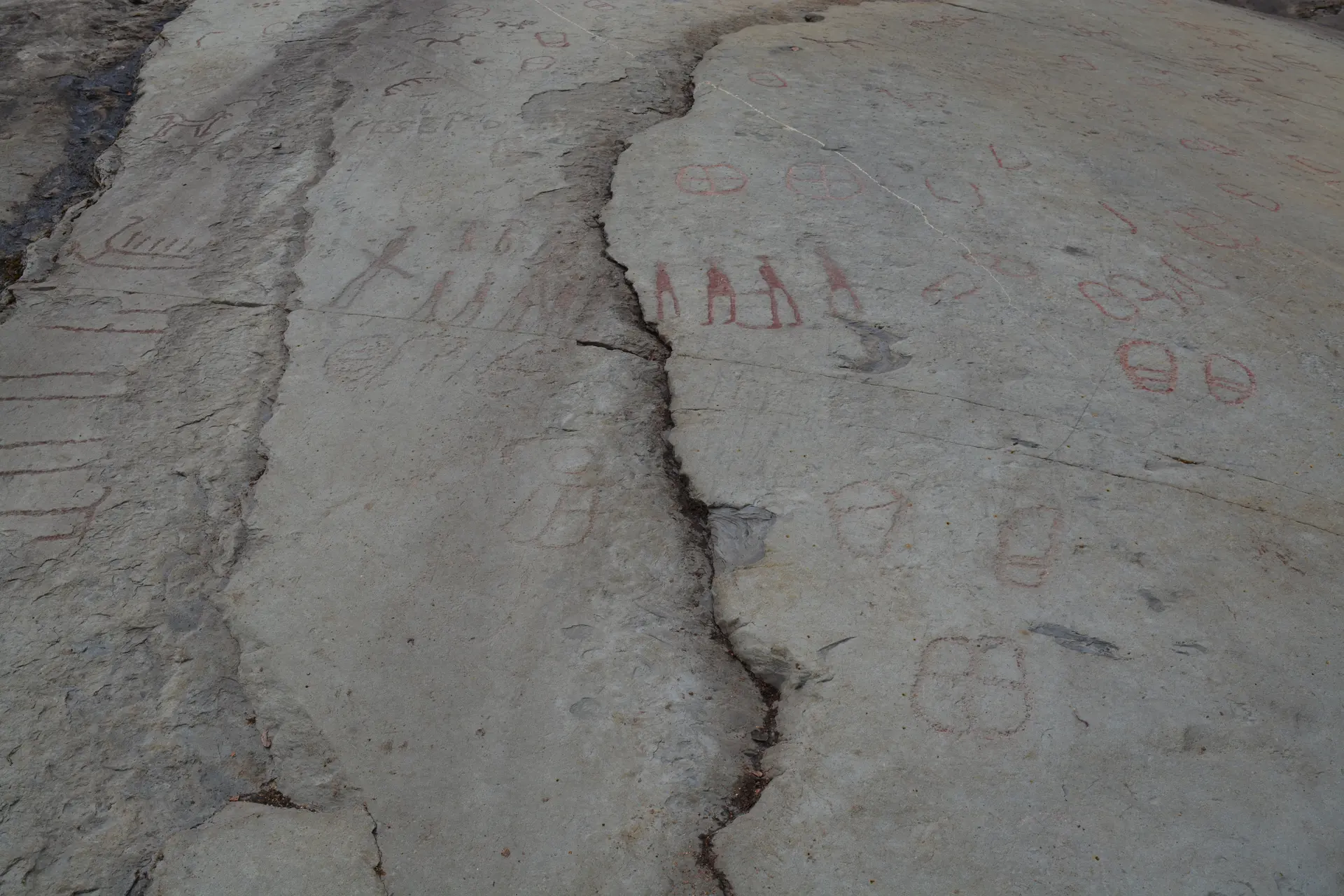
Image of Leirfall rock carvings. Image source · CC-BY-SA-4.0
Visit essentials
A quick read before you go
- Duration
- Ninety minutes to explore all four fields thoroughly, engage with on-site guides or information…
- Access
- Located in Hegra, Stjordal Municipality, Trondelag county, central Norway.
Overview
Beside Solemsbekken in the Stjordal valley east of Trondheim, near enough to the E14 for traffic noise, four south-facing rock fields hold between nine hundred and twelve hundred Bronze Age figures. Communities added boats, horses, sun-circles, and footprints from roughly 1700 to 500 BCE, sometimes years or decades apart, creating a ritual palimpsest over more than a millennium.
In Leirfall 3, called by Professor Sverre Marstrander Norway's most important petroglyph discovery after 1945, thirteen armless people process behind a sword-bearing leader twice their height. No parallel exists in Norwegian rock art. Scholars debate whether they are living or dead and whether this depicts a funeral or initiation. What remains certain is the scene's careful creation roughly three thousand years ago and its continuing power despite unresolved meaning.
Why this place is sacred
Leirfall is a layered rock face, not a single composition: figures joined one another over at least twelve hundred years in a cross-generational conversation.
Nearly eight hundred of roughly one thousand figures are footprints, adult and child-sized. Kalle Sognnes noted that many are too small for adults, possibly recording children's initiation into the community. They make present people whose reasons remain unrecoverable.
The south-facing outcrop beside Solemsbekken forms a natural amphitheatre. Sognnes interpreted it as ritual theatre before an audience; nearby Stjordal sites with distinct motifs may have formed a processional network, with Leirfall's figures and footprints marking a central gathering place.
By 800 BCE, carvers worked among images already seven or eight centuries old. Their beliefs are irrecoverable, but the enduring evidence shows that this place mattered profoundly and repeatedly.
Archaeological consensus holds that Leirfall served as a major ritual centre for the Stjordal valley throughout the Bronze Age, roughly 1700 to 500 BCE. The carvings are classified as jordbruksristninger, agricultural rock art, associated with farming communities whose ritual life centred on fertility, death, and the movements of the sun.
The site likely hosted multiple overlapping ceremonial functions: funeral processions for the dead, fertility rites including what scholars interpret as a holy wedding scene, initiation ceremonies for young community members, and solar boat rituals connected to the widespread Nordic Bronze Age belief in the sun travelling across the sky by vessel. The rock face itself appears to have functioned as both record and stage, a surface where ritual actions were both performed and permanently inscribed.
The carvings accumulated gradually over the entire Bronze Age period. Professor Marstrander's stylistic dating places the earliest figures around 1700 BCE and the latest around 500 BCE, though some estimates extend the period of active use to two thousand years or more. The site was discovered in stages between 1910 and 1961, with Leirfall 3, the main and most significant field, coming to scholarly attention in the mid-twentieth century. The land was brought under state ownership in 1972.
Management responsibility is shared between NTNU University Museum and the regional county administration, with conservation financed by Riksantikvaren, the Norwegian Directorate for Cultural Heritage. Bergkunstmuseet, the Rock Art Museum operated as part of Stiklestad Nasjonale Kultursenter, was established at the site to present and interpret the carvings for visitors.
Experience and orientation
Parking and information boards beside the E14 lead a short distance to Solemsbekken. The ordinary agricultural setting suggests that Bronze Age sacred life was integrated into daily landscape, not isolated from it.
The rock slopes south. Red-painted figures are immediately visible; unpainted forms emerge in oblique early-morning or late-afternoon light, requiring low and distant viewing angles.
Leirfall 3 measures about twenty by five metres and holds more than six hundred and fifty figures in five groups. Thirteen armless figures move right to left behind a sword-bearing leader about twice their height. Sognnes proposed that absent arms may signify the dead in a funeral procession, but the interpretation remains uncertain.
About fifty vessels include thirteen boat types identified by Sognnes. Some have likely horse-head prows, perhaps ceremonial, connecting them to the pan-Nordic idea of the sun carried by vessel and Denmark's Trundholm sun chariot.
Footprints dominate and many appear child-sized. Beyond spectacle, they suggest an intimate transition or acknowledgment of a young person's community place, though the lost ceremony's specifics remain unknown.
Leirfall lies in Hegra, within Stjordal Municipality, Trondheim region, central Norway. The site is approximately thirty-five kilometres east of Trondheim and very close to Trondheim Airport Vaernes, making it unusually accessible for a rock art site of this significance. Signposted access from the E14 motorway leads to dedicated parking with information boards. The carved outcrop is a short walk from the parking area. The site comprises four fields, with Leirfall 3 being the largest and most significant.
Bergkunstmuseet, the on-site rock art museum, provides additional context and is open during the summer season. Summer guides are available on-site during the warmer months.
Context and lineage
The Bronze Age communities of the Stjordal valley began carving figures into the south-facing rock outcrop at Leirfall sometime around 1700 BCE. These were farming and seafaring peoples whose material world included boats, horses, weapons, and sun-symbolism typical of the Nordic Bronze Age. They left no written records, no founding narrative, no explanatory text beside their images.
What they left instead was the rock itself, marked and re-marked over roughly twelve hundred years with figures that scholars have spent decades attempting to interpret. The carvings accumulated slowly. Many years, perhaps many decades, separated the addition of new figures. Each generation inherited a rock face already dense with the marks of their predecessors, and each generation added their own. The result is not a single composition but a layered record of ritual intention, a palimpsest in stone.
The lineage connecting present-day visitors to the Bronze Age carvers is decisively broken. No continuous tradition of practice survived the transition from the Bronze Age to the Iron Age, let alone the further disruptions of the Viking period and the arrival of Christianity in Norway. The specific beliefs, rituals, and cosmology of the communities that created these carvings vanished with them.
What remains is the physical evidence of their devotion: stone marked with intent by people whose names, language, and worldview are irrecoverable. The site entered modern awareness through staged discoveries between 1910 and 1961, was brought under state ownership in 1972, and is now managed as cultural heritage by professional archaeological and museum organisations.
Some interpretive connections can be drawn to later Norse mythology, particularly regarding ship burial traditions and solar symbolism, but these parallels should be treated with caution given the vast temporal distance.
Bronze Age farming communities of Stjordal
Sverre Marstrander
Kalle Sognnes
Gordon Turner-Walker and Eva Lindgaard
Traditions and practice
Scholars have proposed several interconnected ritual functions based on the carved imagery. The iconic procession of thirteen armless figures, led by a sword-bearing leader twice their height, almost certainly depicts an actual ritual procession. Sognnes suggested the armless figures may represent the dead, being led in a funeral procession toward or past the rock face.
The sexual intercourse scene in Leirfall field 2 has been interpreted as depicting a holy wedding, a hieros gamos, within a belief system centred on agricultural fertility. The overwhelming predominance of footprints, many child-sized, points toward initiation ceremonies in which young members of the community were formally recognised, their presence stamped into the sacred rock.
The boat figures, some decorated with animal-head prows suggesting ceremonial adornment, connect to the pan-Nordic Bronze Age belief in the sun being transported across the sky by vessel. Symbols matching those found on decorated grave cists appear on the upper panels, linking the site to death and burial rites.
Sognnes proposed that these were not isolated rituals but stations along a ritual migration route connecting different rock art sites in the Stjordal valley, each location associated with a specific theme: fertility here, death there, initiation elsewhere. The rock face itself, he argued, functioned as a theatre or stage where rituals were performed before an assembled audience gathered on the natural amphitheatre of the sloping ground.
No organised religious or spiritual practices take place at Leirfall today. The site serves as a protected cultural heritage monument managed by Bergkunstmuseet, the Rock Art Museum, which is part of Stiklestad Nasjonale Kultursenter. Occasional special events, such as nattlysing, the night-time illumination of the rock art, offer atmospheric viewing experiences that reconnect the carvings with their likely original context of firelit ceremony. The site's proximity to St.
Olav's Way, the medieval pilgrimage route to Nidaros Cathedral in Trondheim, places it within a broader landscape of spiritual travel, though the rock art predates the Christian pilgrimage tradition by more than two millennia.
Approach the carved rock face slowly, allowing the figures to emerge from the stone rather than searching for them. The red-painted carvings are immediately visible, but the unpainted ones require patience and oblique light. Begin at one end of Leirfall 3 and move along the face, letting the arrangement of the figures guide your pace. When you reach the procession of thirteen figures, pause. Consider the care someone took, three thousand years ago, to record this scene.
The leader is twice the height of the followers. The followers have no arms. They walk in a line toward something the carver understood but did not explain.
Turn your attention to the footprints. They are easy to overlook, yet they constitute the vast majority of the carvings. Notice how many are small. Imagine a child brought here for a ceremony, feet measured against the rock, presence recorded in stone. The act of carving a footprint is intimate in a way that the grander figurative scenes are not. It says: someone stood here. They were small. It mattered enough to make permanent.
If the site has a summer guide, engage with their interpretation. The density of meaning in these carvings is not self-evident, and scholarly context transforms faint marks on stone into a window onto a vanished world. If visiting without a guide, the information boards provide essential orientation. Allow at least forty-five minutes for a thorough exploration, longer if you wish to sit with the carvings and let them work on you at their own pace.
Bronze Age Scandinavian Religion
HistoricalLeirfall is one of the largest Bronze Age agricultural rock art sites in the Nordic region, with approximately nine hundred to twelve hundred figures carved over a period stretching from roughly 1700 to 500 BCE. The site is the only publicly accessible location in central Norway containing exclusively Bronze Age carvings. Marstrander described Leirfall 3 as the most important petroglyph discovery made in Norway after 1945. The carvings preserve evidence of a complex ritual system encompassing funeral processions, fertility rites, initiation ceremonies, and solar mythology.
Multiple overlapping ritual practices are proposed by scholars based on the carved imagery. Funeral processions are evidenced by the iconic group of thirteen armless human figures led by a sword-bearing leader, with the absence of arms possibly signifying death. Fertility rites are suggested by the sexual intercourse scene in Leirfall field 2, interpreted as a holy wedding within an agricultural fertility cult. Initiation ceremonies are indicated by the large number of child-sized footprints. Solar boat ceremonies are reflected in boat figures with animal-head prow decorations, connected to the pan-Nordic Bronze Age belief in the sun travelling across the sky by vessel. Sognnes proposed these were stations along a ritual migration route connecting different rock art locations in the Stjordal valley.
Archaeological Research and Conservation
ActiveLeirfall has been the subject of sustained academic research since Marstrander's foundational work in the mid-twentieth century. Sognnes's 2011 study in the Oxford Journal of Archaeology established the most comprehensive interpretive framework for the site, proposing the ritual landscape and processional walk theory. Conservation work, managed by NTNU University Museum and financed by Riksantikvaren, represents an ongoing commitment to preserving this irreplaceable record of Bronze Age life.
Active research continues at the site and in the broader Stjordal valley rock art landscape. Conservation practices include regular cleaning of moss and vegetation, biocide treatments using specialised chemical applications, and experimental methods including reversible dissolved calcium carbonate treatment. Bergkunstmuseet, the on-site Rock Art Museum operated as part of Stiklestad Nasjonale Kultursenter, provides public interpretation through exhibits, guided tours, and educational programmes. The site's management balances public access with preservation of the fragile rock surfaces.
Perspectives and open questions
Leirfall presents a paradox common to the richest prehistoric sites: the carvings are remarkably detailed and numerous, yet the beliefs and rituals they record remain substantially beyond recovery. Scholars have developed sophisticated interpretive frameworks based on the imagery, the spatial arrangement of figures, and comparative evidence from across Bronze Age Scandinavia. These frameworks offer plausible and sometimes compelling readings, but they remain readings, not recovered truths. The carvings resist definitive interpretation while simultaneously inviting it.
Scholarly perspective
Archaeological consensus identifies Leirfall as one of the largest concentrations of Bronze Age agricultural rock art in the Nordic region, with figures dating from approximately 1700 to 500 BCE based on stylistic analysis by Professor Marstrander. The carvings are classified as jordbruksristninger, agricultural rock art, a category distinguishing them from the older hunter rock art found elsewhere in Norway. Leirfall is the only publicly accessible site in central Norway containing exclusively Bronze Age carvings.
Professor Kalle Sognnes, the leading researcher on the site, has proposed the most comprehensive interpretive framework. In his 2011 study published in the Oxford Journal of Archaeology, Sognnes argued that the rock face functioned as a ritual theatre or stage where ceremonies were performed before an assembled audience. He identified the site as part of a ritual landscape, a network of rock art locations in the Stjordal valley through which processions moved, each station associated with specific ritual themes.
The iconic procession of thirteen armless figures, he suggested, likely depicts the dead being led in a funeral procession, with the absence of arms possibly signifying death.
The predominance of footprints, seventy-seven percent of all figures, with many identified as child-sized, strongly supports the hypothesis that initiation ceremonies for young community members took place here. The sexual intercourse scene in field 2 has been interpreted within the context of fertility rituals, possibly a holy wedding or hieros gamos. Boat figures, some with animal-head prow decorations, connect to the widespread Bronze Age Nordic belief in the sun being transported across the sky by vessel.
Living and traditional perspectives
No indigenous oral tradition survives from the Bronze Age communities that created the Leirfall carvings. The people who carved these figures spoke a language now lost, held beliefs now unrecoverable, and left no textual record of their intentions. The carvings themselves, along with burial finds and settlement evidence from the broader Stjordal valley, constitute the only evidence of their spiritual world.
Some interpretive connections have been drawn to later Norse mythology, particularly regarding ship symbolism and solar worship, but these parallels span a temporal gap of centuries to millennia and should be understood as suggestive rather than explanatory.
Alternative interpretations
The processional imagery and footprint patterns at Leirfall have attracted interest from those who interpret Bronze Age rock art as evidence of shamanic practices or mystery school initiations. The oversized sword-bearing leader figure has been compared to similar depictions in Indo-European religious art, suggesting possible connections to a shared ritual vocabulary across Bronze Age Europe. The boat-and-sun symbolism is sometimes contextualised within theories of a pan-European solar cult network extending from Scandinavia to the Mediterranean.
A possible human sacrifice scene, with figures in a boat and a sword-wielding figure, has drawn comparisons to later Norse sacrificial practices known as blot. These interpretations represent frameworks through which contemporary researchers and seekers engage with material whose original meaning is no longer directly accessible.
Open questions
The questions Leirfall poses outnumber the answers it offers. Why do the thirteen processional figures have no arms, and does this signify death, spiritual transformation, ritual submission, or something outside modern categories entirely? Why are seventy-seven percent of all figures footprints, and what ritual act did the carving of a footprint represent? What was the relationship between the four Leirfall fields: were they used simultaneously, sequentially, or by different segments of the community?
Did the sexual intercourse scene in field 2 depict a ritual actually performed at the site, or a mythological narrative? What was the exact processional route between the rock art sites of the Stjordal valley, and what ceremonies occurred at each station? Why was this particular south-facing outcrop along Solemsbekken stream chosen for such intensive ritual use over more than a millennium? Does the possible human sacrifice scene depict an actual practice or a story told in stone?
These questions may never be answered. The rock holds its images but not its explanations.
Plan your visit
Access and arrival
Located in Hegra, Stjordal Municipality, Trondelag county, central Norway. Coordinates: 63.468515 N, 11.165328 E. The site occupies a south-facing outcrop along Solemsbekken stream, on the north side of the Stjordal river, close to the E14 motorway. Signposted access from the local highway with dedicated parking and information posts. Stjordal is approximately thirty-five kilometres east of Trondheim and is served by Trondheim Airport Vaernes, the closest major airport in Norway, making the site unusually accessible by international standards.
Stjordal town offers a range of accommodation from hotels to guesthouses. The proximity to Trondheim Airport Vaernes means international visitors can reach the site within minutes of arriving in Norway. Trondheim itself, thirty-five kilometres west, provides extensive accommodation options for those combining a visit to Leirfall with exploration of the wider region.
Respectful visit
No specific dress code applies. Sturdy footwear is recommended as the terrain includes natural rock surfaces that may be uneven or slippery. Weather-appropriate outdoor clothing is advisable for the central Norwegian climate, which can be cool and wet even during summer months.
Photography is permitted throughout the site. No restrictions have been documented. The red-painted carvings photograph well in most conditions, while the unpainted figures are best captured in oblique light, particularly early morning or late afternoon. The site is publicly promoted for tourism and education.
Not applicable. Leirfall is a heritage site with no active devotional practice. Leaving objects at the site is discouraged to preserve the integrity of the archaeological context.
Stay on designated paths to prevent damage to the rock carvings and surrounding archaeological context. Do not touch, scratch, or mark the carved surfaces. Do not attempt to enhance or add to the red paint markings. Rock surfaces are regularly cleaned and treated as part of ongoing conservation; visitors should not disturb these surfaces.
The rock surfaces are fragile and under active conservation management. Do not touch, scratch, or add marks to the carved surfaces. Do not attempt to enhance or add to the red paint markings. Stay on designated paths to protect both the carvings and the surrounding archaeological context. Rock surfaces can be slippery when wet. The site is an open-air location in a Norwegian climate that can be cool and wet even in summer.
Current practical details
Address
7520 Stjørdal, Norway
Hours, fees, and access can change — verify on the official source before you travel. Practical details last checked Jun 2026.
Location
Map loads as you approach this section.
Pilgrim reflections
A portrait of encounter, not a score
Pilgrims describe what they felt, how present they could become, and whether the place would shape a journey. There are no stars and no ranking of traditions.
No reviewed reflections yet
The first pilgrims can help describe the character of being here.
Share a reflection
Available after an account-backed “Been there.” Every reflection is reviewed before publication.
Nearby sacred places
Explore other sacred places in the region. Proximity does not establish access or travel time; check each place’s guidance.

Tautra Monastery Ruins
Tautra / Frosta, Tautra / Frosta, Trøndelag, Norway
30.0 km away

Munkeby Monastery Ruins
Munkeby / Levanger, Munkeby / Levanger, Trøndelag, Norway
31.6 km away
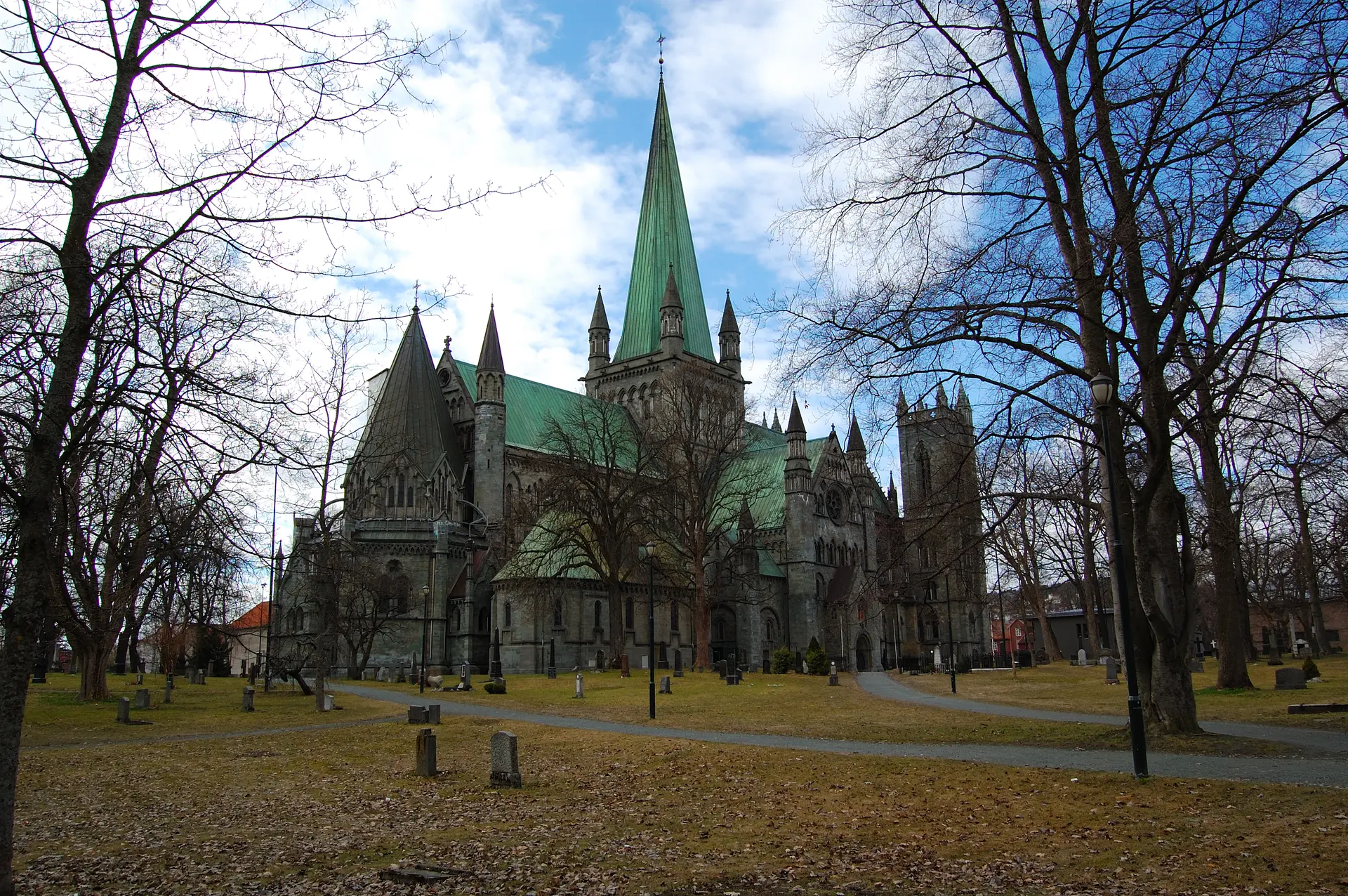
Nidaros Cathedral
Trondheim, Trøndelag, Norway
38.5 km away

Stiklestad Church
Stiklestad / Verdal, Stiklestad / Verdal, Trøndelag, Norway
41.4 km away
References
Sources consulted for this page. Source categories describe the publication, not a guarantee that every claim is verified. Traditional accounts and outside interpretations may differ.
- 01These rocks were made for walking: Rock art at Leirfall, Trøndelag, Norway — Kalle SognnesacademicPeer-reviewed article in the Oxford Journal of Archaeology (2011). Key source for processional interpretation, ritual landscape theory, and the idea of the rock face as a ritual theater/stage
- 02The Open-Air Rock-Art Site at Leirfall, Central Norway, Within the Context of Northern Scandinavian Rock-Art Conservation and Management Practices Over the Past 50 Years — Gordon Turner-Walker, Eva Lindgaard, and Kalle SognnesacademicAcademic paper on conservation practices at Leirfall including biocide treatments, land ownership history (state-owned since 1972), and management by NTNU University Museum and Nord-Trøndelag County Council
- 03Helleristningene på Leirfall - DigitaltMuseum — DigitaltMuseum / Stjørdal MuseumofficialNorwegian digital museum catalogue entry with cultural heritage context and site management information
- 04Bergkunstmuseet - Det magiske berget — Stiklestad Nasjonale KultursenterofficialOfficial page for the on-site rock art museum (Bergkunstmuseet) operated as part of Stiklestad Nasjonale Kultursenter, stating approximately 1,200 figures over 2,000 years of carving
- 05Welcome to Stjørdal museum — Stjørdal museum VærnesofficialOfficial museum website for the museum associated with the Leirfall site, with opening hours and visitor details
- 06Pilegrimsleden - Stjørdal museum Værnes — Pilegrimsleden (St. Olav's Way)Source contextThe pilgrimage trail network notes Stjørdal museum as a point of interest along St. Olav's Way, contextualizing the area within Norwegian pilgrimage heritage
- 07Leirfall rock carvings - Wikipedia — Wikipedia contributorsencyclopediaEnglish Wikipedia article with detailed overview of the site, discovery history, figure counts, motif descriptions, interpretation by Sognnes and Marstrander, and dating
- 08Leirfall Rock Art - The Megalithic Portal and Megalith Map — The Megalithic PortalofficialDetailed site listing with coordinates (63.468515N, 11.165328E), description of all major motif groups, visitor information, and nearby archaeological sites
- 09Rock carvings in Central Norway - Wikipedia — Wikipedia contributorsencyclopediaContextualizes Leirfall within the broader rock art tradition of Central Norway, noting it as the only public site with exclusively Bronze Age carvings
- 10Petroglyphs at Hell in Stjørdal — Anders Gjesdal OliversenblogPersonal blog with visitor experience details and interpretive commentary on the Stjørdal rock art sites including Leirfall
- 11Leirfall Figure Interpretation 1 — Anders Gjesdal OliversenblogDetailed analysis and interpretation of specific carved figures at Leirfall with photographs and scholarly references
- 12Helleristningene på Leirfall - Wikipedia (Norwegian) — Wikipedia contributors (Norwegian)encyclopediaNorwegian Wikipedia article providing additional local context, ownership history, and museum relationship details
- 13Stjørdal Norway - TravelGuideEurope — TravelGuideEuropeofficialTourism guide for the Stjørdal area including Leirfall as a key attraction
Share a photo
Help visitors recognize Leirfall rock carvings. Every submission is reviewed before publication.