Lake Gosainkunda
Shiva’s cooling waters in Nepal’s high mountains
Rasuwa, Bagmati Province, Nepal
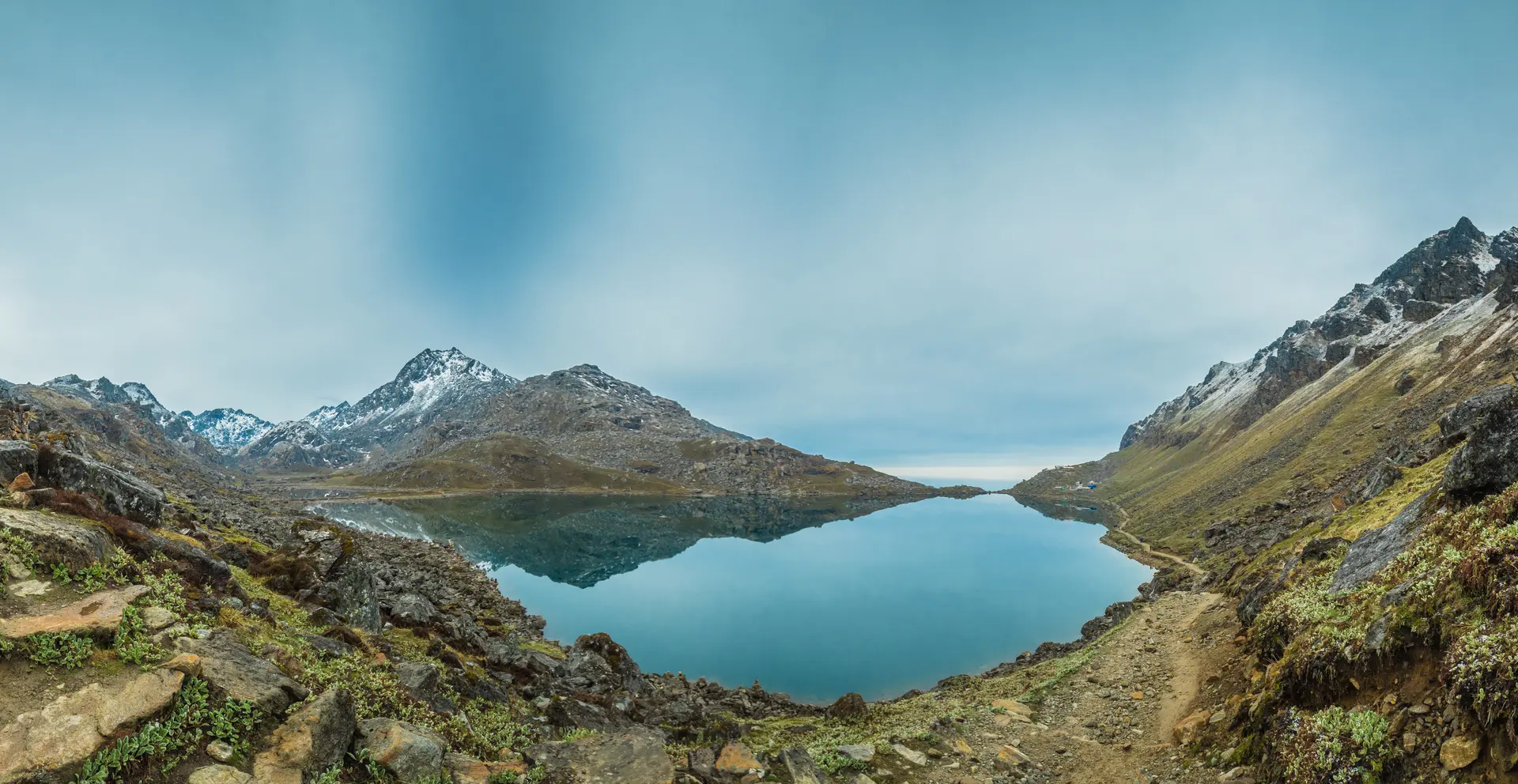
Gosaikunda Lake is one of the most famous religious and pilgrimage sites of Nepal. It is located at an altitude of 4,380 m (14370 ft.) and surrounded by peaks in Langtang National Park in Rasuwa District with a surface of 13.8 ha (34 acres). Gosaikunda, also spelled Gosainkunda, is an alpine freshwater lake. Image source · CC BY-SA 4.0
Visit essentials
Before you go
- Access
- Use current park and responsible guiding information to plan the particular route.
- Address
- Gosainkunda, 45000, Nepal
- Best time
- Confirm the current Janai Purnima date and route conditions.
- Etiquette
- Let local guidance shape your visit.
Overview
Gosaikunda is a high-altitude lake in Nepal’s Langtang region. Pilgrimage gives it a place in religious life beyond its mountain scenery. The named lake is also part of a larger wetland system; descriptions of that system should not be mistaken for measurements of one body of water.
Why this place is sacred
Nepal Tourism Board connects Gosaikunda with Shiva and the cosmic churning of the ocean. The lake’s sanctity belongs to that religious account. Claims of purification express devotion rather than a medical effect of the water.
Experience and orientation
Give pilgrims space at the shore and let local religious guidance shape any invitation to participate. Leave natural objects and offerings undisturbed.
Context and lineage
In the account published by Nepal Tourism Board, the churning of the cosmic ocean releases a dangerous poison. Shiva takes it into his throat to protect the world, and the poison turns his throat blue. Seeking relief from its heat, he strikes the mountain with his trident. Water springs from the rock and forms Gosaikunda, where he cools himself.
The story joins an act of protection to a particular mountain lake; it does not establish that entering cold water is safe for a visitor.
The Ramsar record concerns Gosaikunda and associated lakes. Its ecological identity and the lake’s pilgrimage traditions describe different aspects of the same landscape. Neither requires turning a traditional account into physical history.
Traditions and practice
Janai Purnima brings pilgrims to the lake. Prayer and ritual bathing belong to the documented festival context, but reading about them is not a recommendation to enter the water or imitate an observance.
Hinduism
ActiveShiva narrative and Janai Purnima pilgrimage.
Perspectives and open questions
Religious accounts and material evidence answer different questions.
Plan your visit
When to visit
Confirm the current Janai Purnima date and route conditions. A festival date alone does not establish that an itinerary is suitable or accessible.
Access and arrival
Use current park and responsible guiding information to plan the particular route. The lake is at high altitude: obtain appropriate preparation and health advice separately. This page does not establish present trail conditions, rescue provision, mobile coverage or a fixed number of walking days. Do not use the lake marker as a trailhead.
Respectful visit
Ask before photographing people or religious activity; observe local restrictions.
Do not improvise offerings or leave objects in the landscape.
Leave religious objects and archaeological remains undisturbed.
Current practical details
Address
Gosainkunda, 45000, Nepal
Hours, fees, and access can change — verify on the official source before you travel. Practical details last checked Jun 2026.
Location
Map loads as you approach this section.
Pilgrim reflections
A portrait of encounter, not a score
Pilgrims describe what they felt, how present they could become, and whether the place would shape a journey. There are no stars and no ranking of traditions.
No reviewed reflections yet
The first pilgrims can help describe the character of being here.
Share a reflection
Available after an account-backed “Been there.” Every reflection is reviewed before publication.
Nearby sacred places
Explore other sacred places in the region. Proximity does not establish access or travel time; check each place’s guidance.


References
Sources consulted for this page. Source categories describe the publication, not a guarantee that every claim is verified. Traditional accounts and outside interpretations may differ.
- 01Gosainkunda, Rasuwa — Nepal Tourism BoardofficialPublic Shiva poison and trident account; no medical or purification efficacy asserted.
- 02Langtang Region — Nepal Tourism BoardofficialHigh-altitude lake and park setting; no current route timetable or communications guarantee.
- 03Gosainkunda and Associated Lakes RIS 1693 — RamsarofficialIndexed official wetland description; do not transfer measurements for the system to one lake.
- 04Janai Purnima — Nepal Tourism BoardofficialAnnual festival association; next date not inferred from an older calendar.
Share a photo
Help visitors recognize Lake Gosainkunda. Every submission is reviewed before publication.