Boudhnath (Boudha)
The spiritual heart of Tibetan Buddhism in exile, where devotees circle endlessly
Understand sacred places, explore living traditions, and learn how to engage respectfully with Pilgrim Map.
Access has not been verified. Check current local guidance before planning a visit.
Gokarneshwar Municipality, Bagmati Province, Nepal

Visit essentials
A quick read before you go
- Duration
- Two to four hours allows for multiple circumambulations, monastery visits, and rooftop…
- Access
- Located in Boudha, 7 km northeast of central Kathmandu.
Overview
Boudhanath's underlying rhythm is the steady, always-clockwise circulation of devotees around its great white dome. The fifth-century stupa's circumambulation practice has likely continued without interruption since, predating living memory.
Before 1959, Boudhanath was significant but relatively quiet. After the Dalai Lama fled Tibet, refugee communities settled around a stupa that recalled home; monasteries multiplied, butter lamps filled windows, and mantras filled the air. This spiritual, cultural, and historical density surrounds a monumental mandala of the Buddhist path. Thirteen steps represent stages from ignorance to awakening.
Above them, the Buddha's eyes watch north, south, east, and west, while question-mark-shaped eyebrows form the Nepali numeral one, symbolizing the single path to enlightenment.
Why this place is sacred
Multiple dimensions contribute to Boudhanath's power as a thin place. The stupa is believed to contain relics of Kashyapa Buddha—the Buddha who preceded Shakyamuni in the cosmic succession. If true, this physical connection to an awakened being grounds the site's sanctity in something more than symbol.
The architecture itself functions as a three-dimensional mandala, mapping the Buddhist cosmos and the path of practice. Walking around the stupa, devotees are not merely exercising; they are tracing the journey from suffering to liberation in spatial form. The practice saturates the space with intention repeated millions of times over centuries.
The post-1959 dimension adds another layer. For Tibetans in exile, Boudhanath represents a spiritual homeland that political circumstances have made inaccessible. The concentration of refugees, monasteries, and practice centers has transformed the neighborhood into the most vibrant center of Tibetan Buddhism outside Tibet itself. This living tradition generates its own field of energy, constantly renewed by practitioners pursuing liberation.
The continuous kora—devotees circling morning to night, in all weather, through all seasons—maintains the site's charge. Each circumambulation adds to the accumulated merit. The prayer wheels that line the base spin from countless touches, each rotation sending mantras outward. The butter lamps flicker in hundreds of windows. The sound of Om Mani Padme Hum rises and falls but never entirely stops.
The stupa was built to house relics of Kashyapa Buddha, creating a physical anchor for Buddhist devotion and merit-making.
The 1959 Tibetan diaspora transformed Boudhanath from an important but modest pilgrimage site into the most significant Tibetan Buddhist center outside Tibet. The 2015 earthquake damaged the structure; the restoration revealed the living importance of the site as donations poured in and repairs proceeded rapidly.
Experience and orientation
Most visitors feel it within minutes of entering the circular plaza surrounding the stupa—a quality of attention in the air, something to do with how people move. The devotees are not walking so much as flowing, their trajectory arcing around the great white dome with the inevitability of planets circling a sun.
To join the kora is to be taken up in this flow. The movement requires no instruction: walk clockwise, pass the spinning prayer wheels, allow the mantras spoken by others to become background music. The body finds its rhythm; the mind, without anything particular to do, may gradually quiet.
The sensory environment is rich but not chaotic. Incense smoke drifts from offering stations. Butter lamps glow in monastery windows. Rooftop restaurants ring the plaza, their diners looking down on the pageant below. Tibetan faces predominate among the circumambulating crowd, but visitors from everywhere join the stream.
Sunrise and sunset bring particular magic. Morning light catches the golden spire; evening light turns the white dome orange and pink. The painted Buddha eyes seem to shift expression with the changing angle. At these threshold hours, the boundary between ordinary tourism and genuine practice feels especially permeable.
The full moon draws the largest crowds, when the kora becomes a dense stream of humanity and the stupa is illuminated by thousands of butter lamps. These monthly peaks demonstrate the living nature of the site—this is not a museum but a functioning center of active devotion.
The stupa sits in a circular plaza surrounded by monasteries, shops, and restaurants. The kora path circles the stupa clockwise. Prayer wheels line the base. Access points from the surrounding streets lead into the plaza.
Context and lineage
The stupa's origin carries multiple legends. One widely told story credits a poultry keeper named Jadzima who wished to build a stupa honoring Kashyapa Buddha. When she asked the king for land, he granted her as much as could be covered by a buffalo hide. Cleverly, she cut the hide into thin strips, which when laid end to end encompassed the entire site.
Historical records place construction during the Licchavi period, likely the fifth century CE. The stupa may have been commissioned by a Licchavi king; some accounts suggest King Ashoka's daughter Charumati placed Kashyapa Buddha's relics here.
The structure as it stands today represents many restorations. The most recent followed the 2015 earthquake, which damaged the upper sections. The speed and generosity of the restoration—funded largely by donations from Tibetans worldwide—demonstrated the stupa's importance to a global community.
While the stupa predates sectarian divisions, the surrounding monasteries now represent all major schools of Tibetan Buddhism: Nyingma, Kagyu, Sakya, and Gelug. This diversity makes Boudhanath an ecumenical center where practitioners of different lineages share sacred space.
Jadzima
Legendary poultry keeper whose cleverness secured the land for the stupa
The 14th Dalai Lama
His 1959 flight from Tibet triggered the refugee influx that transformed Boudhanath
Traditions and practice
The kora defines practice at Boudhanath. Devotees walk clockwise around the stupa, spinning the prayer wheels that line its base, reciting mantras—most commonly Om Mani Padme Hum, the mantra of Avalokiteshvara (Chenrezig), the bodhisattva of compassion. The number of circumambulations varies: some complete three, some 108, some continue until a prayer has been answered.
Prostrations intensify the practice. Devotees lower their bodies fully to the ground, rise, take three steps forward, and prostrate again. Some circle the entire stupa this way, a practice that can take hours.
Butter lamp offerings represent another form of devotion. Pilgrims purchase butter and wicks, filling the lamp arrays that surround the stupa. The flames symbolize the light of wisdom dispelling the darkness of ignorance.
The surrounding monasteries offer programs for visitors: meditation instruction, Buddhist philosophy courses, and longer retreats. Several monasteries provide accommodations for serious practitioners. The neighborhood also supports Tibetan cultural traditions: thangka painting, religious art, traditional medicine.
The rooftop restaurants ringing the plaza have become part of the experience, offering perches from which to observe the kora while sipping butter tea or eating momos.
Join the kora for at least three circumambulations, moving clockwise with the flow. Spin the prayer wheels as you pass. Let your mind settle into the rhythm of movement. For deeper engagement, attend a puja (ritual ceremony) at one of the surrounding monasteries, or arrange meditation instruction through one of the teaching centers.
Sunset brings particular beauty as the light shifts and the butter lamps begin to glow. Full moon evenings draw large crowds but offer the most festive atmosphere.
Tibetan Buddhism
ActiveThe most sacred Tibetan Buddhist site outside Tibet, housing relics of Kashyapa Buddha. Since 1959, the spiritual heart of the Tibetan diaspora and home to monasteries of all major schools.
Kora (circumambulation), mantra recitation, prostrations, butter lamp offerings, prayer wheel spinning, monastery puja attendance, meditation, study.
Perspectives and open questions
Boudhanath exists at the intersection of ancient pilgrimage tradition, Tibetan refugee experience, and global Buddhist practice. Each dimension reveals different aspects of the site's significance.
Scholarly perspective
Archaeological and historical analysis places Boudhanath's origins in the fifth century Licchavi period. The stupa follows classical Buddhist architectural principles, with the dome representing the path to enlightenment and the spire's thirteen steps mapping the stages of awakening. The site's transformation after 1959 represents a significant case study in how refugee communities create spiritual homelands in diaspora.
Living and traditional perspectives
Within Tibetan Buddhist understanding, Boudhanath functions as a wish-fulfilling jewel—a location where prayers receive amplification, merit accumulates rapidly, and connection to enlightened beings becomes more accessible. The relics of Kashyapa Buddha establish a direct link to awakened consciousness that transcends time.
Open questions
The precise origins of the stupa remain uncertain. Whether it contains actual relics of Kashyapa Buddha, or any historical Buddha, cannot be verified. The legend of Jadzima and the buffalo hide, while charming, belongs to oral tradition rather than historical record. What is certain is that over 1,500 years of veneration have established the site's significance regardless of founding circumstances.
Plan your visit
Access and arrival
Located in Boudha, 7 km northeast of central Kathmandu. Taxis are the easiest transport; local buses also run the route. An entrance fee for foreign visitors supports preservation.
The Boudha neighborhood offers accommodations ranging from simple guesthouses to comfortable hotels. Many are run by Tibetans and cater to practitioners. Staying in the neighborhood allows for early morning and late evening kora access.
Respectful visit
Modest dress covering shoulders and legs. No specific requirements but respect for the setting is expected.
Permitted in public areas; ask permission in monasteries and when photographing individuals.
Butter lamps, incense, and khatas (white offering scarves) can be purchased around the plaza.
{"Always walk clockwise","Remove shoes when entering temples","Maintain quiet in monastery interiors"}
Respect the devotional nature of the space. The kora is not a jogging track; match the contemplative pace of the devotees around you.
Current practical details
Address
Boudhha, Kathmandu 44600, Nepal
Hours, fees, and access can change — verify on the official source before you travel. Practical details last checked Jun 2026.
Location
Map loads as you approach this section.
Pilgrim reflections
A portrait of encounter, not a score
Pilgrims describe what they felt, how present they could become, and whether the place would shape a journey. There are no stars and no ranking of traditions.
No reviewed reflections yet
The first pilgrims can help describe the character of being here.
Share a reflection
Available after an account-backed “Been there.” Every reflection is reviewed before publication.
Nearby sacred places
Explore other sacred places in the region. Proximity does not establish access or travel time; check each place’s guidance.


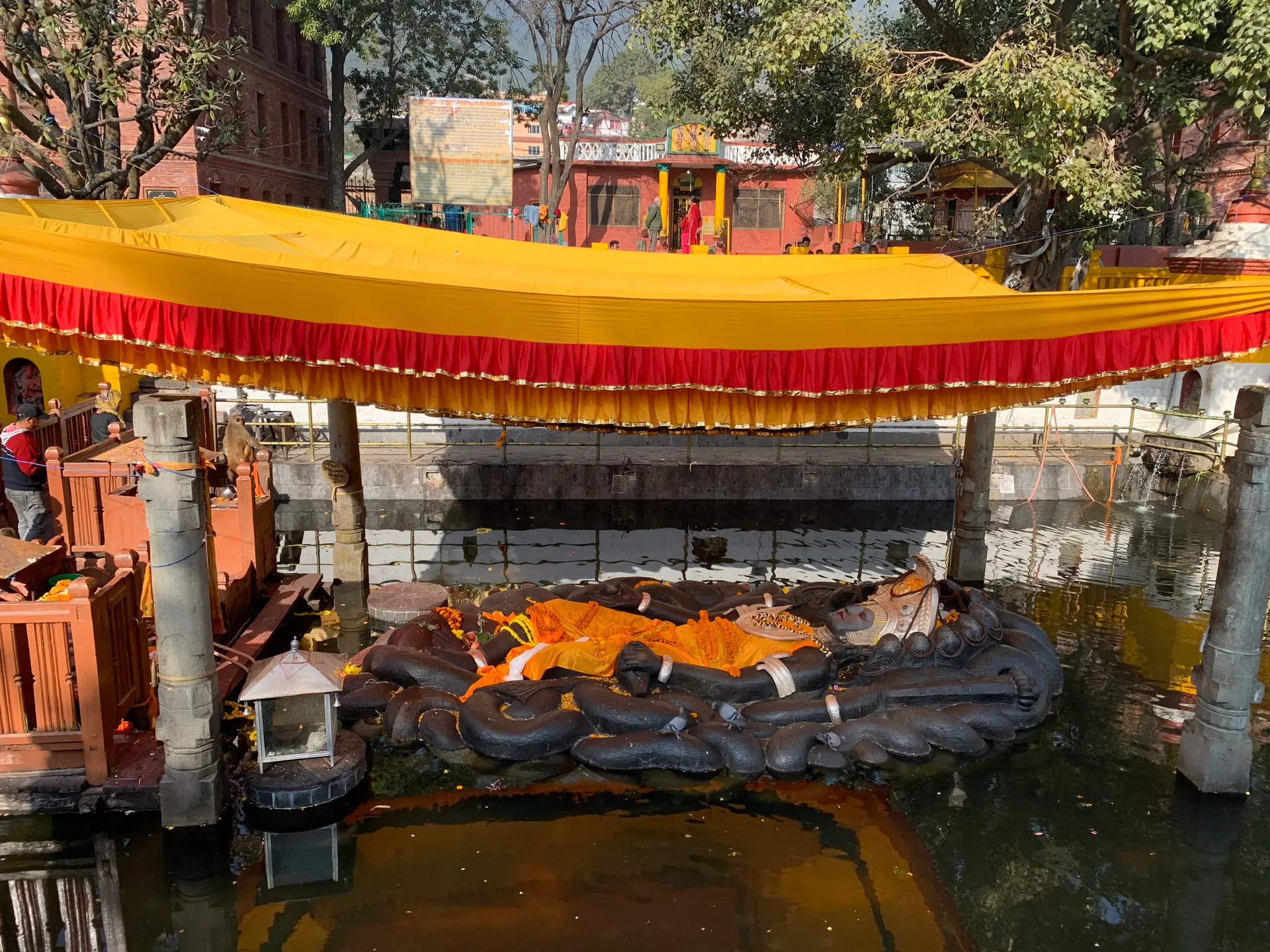
Photo gallery
7 curated photos
Pilgrim glossary
- Bodhisattva
- An enlightened being who postpones full nirvana to help others toward awakening.
- Stupa
- A dome-shaped Buddhist monument that holds relics or marks a sacred place.
- Mandala
- A symbolic diagram of the cosmos used in meditation and ritual.
- Mantra
- A sound, word, or phrase repeated as part of meditation or ritual.
Share a photo
Help visitors recognize Boudhnath (Boudha). Every submission is reviewed before publication.