Hill of the Angels
Where Columba spoke with angels on the fairy mound at the heart of Iona
Understand sacred places, explore living traditions, and learn how to engage respectfully with Pilgrim Map.
Access has not been verified. Check current local guidance before planning a visit.
Iona, Scotland, United Kingdom
Read the sources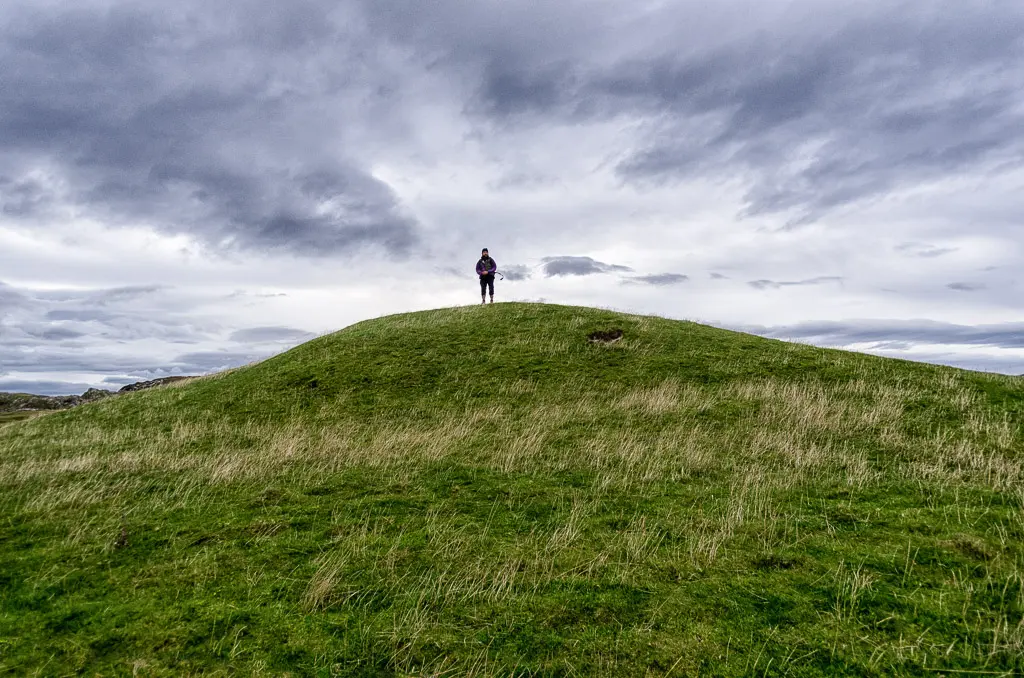
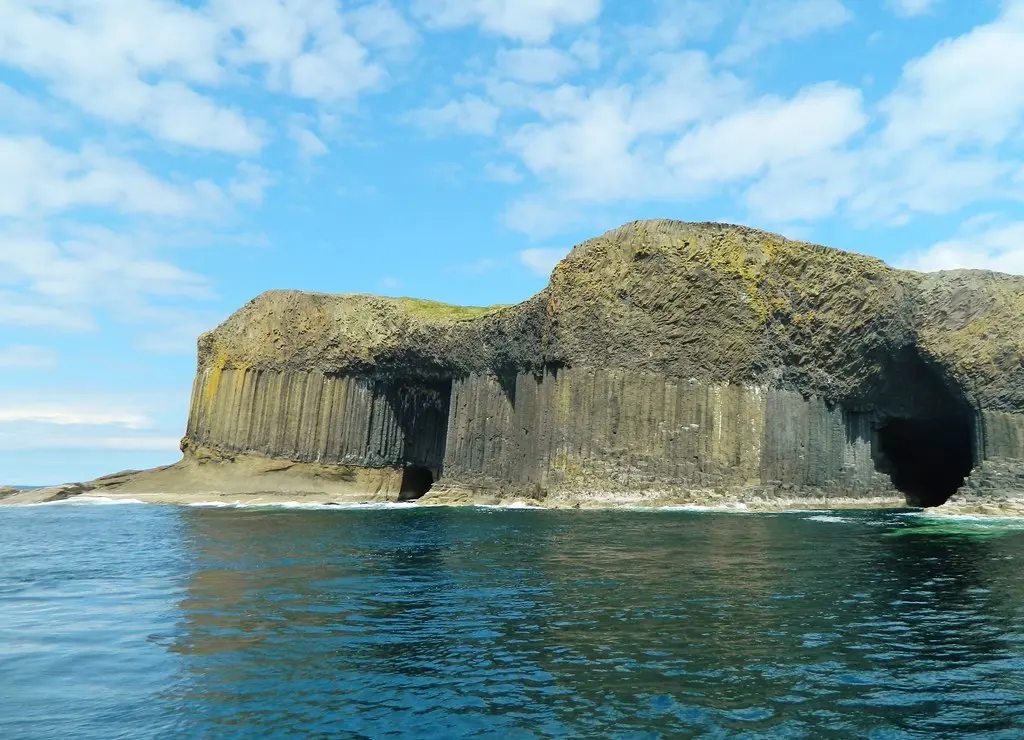
Image of Hill of the Angels. Image source
Visit essentials
A quick read before you go
- Duration
- Allow 30-60 minutes for the walk from the village and time on the hill.
- Access
- From the ferry terminal at Baile Mor, walk west through the village past the abbey.
Overview
Only about twenty-three metres above Iona's Machair grazing plain, the Hill of the Angels looks west to the Atlantic, east to Columba's abbey, and across an island drawing seekers for fifteen hundred years. Its importance rests on an encounter.
Around 697 CE, Iona's ninth abbot Adomnan recorded that a curious monk secretly watched Columba pray alone from a neighboring hill. Angels in white raiment descended swiftly, gathered around the saint as he stretched his arms skyward, briefly exchanged with him, then rose away, and Columba returned to the monastery. He knew he had been seen, gently rebuked the monk, and required silence during his lifetime.
The Gaelic Sithean Mor, 'great fairy mound,' carries a different, perhaps older account. Across Gaelic tradition, a sithean houses Otherworld beings where visible and invisible meet; these are not Victorian miniatures but ancient people of hollow hills, making encounter a crossing and risk.
Survival of both Christian and pre-Christian names suggests neither fully claimed the hill. Adomnan's angels and Gaelic sith may express one quality: a dwelling beyond ordinary experience, held without choosing between traditions.
Why this place is sacred
The thinness of this place begins with its geography. Iona itself has been called a thin place for centuries. Within that already-permeable island, the Hill of the Angels occupies a position of particular exposure. It rises from the Machair, the flat central plain, creating a modest elevation that nevertheless feels significant because the surrounding land is so level.
Standing on the summit, you are slightly above everything around you, exposed to wind and sky, visible from the abbey to the east and from the sea to the west. The hill is both prominent and vulnerable.
This physical openness mirrors the hill's spiritual reputation. In Adomnan's account, the angels descended from heaven to this spot. The direction is downward, from the heights to the hilltop. Columba did not ascend to meet them; they came to where he stood. The hill is not a place of human aspiration toward the divine but a place where the divine chose to descend. This inverts the usual sacred mountain narrative and makes the hill's modesty part of its meaning.
The Gaelic tradition of the sithean adds another dimension. A fairy mound is not simply a haunted place. It is an entrance, a threshold between the visible world and an older, deeper reality. The beings within are not ghosts but inhabitants of a parallel existence that occasionally intersects with human experience. To live near a sithean was to live near a boundary.
The hill's dual naming suggests that early Christians on Iona recognized the same boundary and gave its inhabitants a different name.
Adomnan's rain-making ritual around the 680s adds a further layer. During drought, monks carried Columba's white tunic and books to this hill, shook the tunic in the air, and read from the manuscripts. Rain came. This was not prayer in a chapel but prayer on the hilltop, under open sky, using the saint's physical objects as conduits. The hill was the chosen place for this appeal, as though its proximity to the threshold made intercession more effective.
According to Adomnan's account, the hill was a place where Columba withdrew to pray alone. Its function was solitary communion with the divine, away from the monastery. The angelic visitation suggests it was understood as a place where such communion was particularly possible. The pre-Christian purpose, if any, is undocumented but implied by the name Sithean Mor.
The hill's significance has evolved through several phases. In Columba's time (6th century), it was a place of private prayer and angelic encounter. By Adomnan's time (late 7th century), it had become a place for communal ritual intercession. By the 18th century, Michaelmas horse ceremonies were performed at a stone circle that may have stood on the summit. In 1929, the mysterious death of Netta Fornario, an occultist found naked beside the fairy mound, added modern esoteric associations.
Today the hill is visited by pilgrims walking the St Columba Way and the Iona Community's weekly pilgrim walk.
Experience and orientation
The walk begins on the road heading west from Baile Mor, the small village near the ferry terminal. You pass the abbey, the nunnery ruins, and the scattered crofts, then follow the track toward the Machair. The landscape opens as the built environment falls away. Stone walls give way to open grazing land. Sheep watch your passage without interest.
The hill appears to the south of the track, rising gently from the surrounding flatness. It is not dramatic. Visitors expecting a commanding peak will find instead a grassy knoll, smooth and rounded, the kind of landform that in another setting would attract no attention. Here, on Iona, its modesty is the point. The hill does not demand. It waits.
Climbing takes only minutes. The grass is short, cropped by sheep. At the summit you stand at roughly the same height as the ridge of the abbey church to the east. The views unfold: the Machair spreading north and south, the white sand of the Bay at the Back of the Ocean to the west, the blue-grey bulk of Mull across the sound to the east. On clear days the Treshnish Isles are visible.
The wind, which on Iona is rarely absent, moves constantly across the hilltop.
The stillness, when it comes, is interior rather than auditory. The wind does not stop. The sheep continue their grazing. But something in the quality of the place invites a different kind of attention. Pilgrims who have walked the St Columba Way report a sense of arrival here, as though the journey across the island has been leading to this unadorned hilltop. There is nothing to do except stand or sit. There is nothing to read or touch.
The hill offers only itself, and the tradition that here, once, the space between heaven and earth contracted to nothing.
Descending, you return to the track and can continue west to the Machair and the Bay at the Back of the Ocean, or east to the abbey. Either direction carries you back into the more documented landscape of Iona. But the hill remains behind you, holding whatever it holds.
From the ferry terminal, walk west through the village past the abbey complex. Continue on the road toward the Machair. After approximately one kilometre, the hill is visible to the south of the road as a smooth grassy mound. There is no sign or marker. The hill is freely accessible across the grazing land.
Context and lineage
The founding story comes from Adomnan's Vita Columbae, composed around 697 CE, approximately one century after Columba's death. In Book III, Adomnan describes how one of Columba's monks secretly climbed a hill to observe the saint at prayer on the knoll below. The monk witnessed angels in white descending to surround Columba. Later, when Columba gently confronted the monk, the brother confessed what he had seen. Columba asked him to tell no one during the saint's lifetime.
The story operates on several levels. It establishes Columba's sanctity through angelic attestation. It demonstrates his humility, as he did not seek witnesses. It creates a named sacred place that future generations could visit and venerate. And it records, in writing, a tradition that may have been transmitted orally on Iona for a century before Adomnan set it down.
But beneath the Christian narrative lies the Gaelic name Sithean Mor. Whether this name predates the Christian one cannot be determined, but the tradition it represents, the tradition of fairy mounds as gateways to the Otherworld, is widespread throughout the Gaelic-speaking world and almost certainly older than Columba's arrival. The hill may have been recognized as a place of otherworldly encounter before Christianity gave that encounter a different vocabulary.
The spiritual lineage of the hill moves from whatever pre-Christian tradition recognized it as a sithean, through Columba's personal prayer practice in the 6th century, to Adomnan's written hagiography in the 7th century, to the Michaelmas horse ceremonies documented in the 18th century, to the Iona Community's contemporary pilgrim walks.
Each generation understood the hill differently but recognized the same essential quality: this small rise of ground on Iona's central plain is a place where the ordinary and the extraordinary draw close.
Columba (Colm Cille)
historical/hagiographic
Irish monk who left Ireland in 563, possibly as penance for a battle his actions had provoked, and established a monastery on Iona that became one of the most important centres of Christianity in Britain. On this hill, according to Adomnan, he was witnessed in conversation with angels who descended from heaven to meet him at prayer.
Adomnan of Iona
historical
Ninth abbot of Iona (679-704 CE) and author of the Vita Columbae. He recorded the angelic vision story approximately one hundred years after Columba's death, and himself participated in a rain-making ritual at the hill around the 680s, carrying Columba's tunic and books to the summit during a drought.
Thomas Pennant
historical
Welsh naturalist who visited Iona and described the hill in 1776, recording a small stone circle and cairn on its summit and the tradition of Michaelmas horse ceremonies. His account preserves practices that have since vanished, though the existence of the stone circle is disputed by later observers.
Traditions and practice
Columba withdrew to the hill to pray alone, standing with arms outstretched toward heaven. This posture, the orans position of early Christian prayer, was characteristic of Celtic monastic practice. The monk who observed the angelic visitation was watching this private devotion from a neighboring height.
Around the 680s, Adomnan records a communal ritual: during drought, monks brought Columba's white tunic and books to the hill, raised and shook the tunic in the air, and read from the manuscripts. Rain followed. This practice treated the hill as a place where intercession was particularly effective, and Columba's physical objects as means of accessing his continuing power.
In the 18th century, Thomas Pennant recorded that islanders brought horses to a stone circle on the summit at the feast of St Michael (September 29) and rode around it. This practice may have originated in pre-Christian horse blessing traditions absorbed into the Christian calendar. It ceased before the stone circle, if it existed, disappeared.
The Iona Community, the ecumenical Christian community founded by George MacLeod in 1938, includes the Hill of the Angels on its weekly pilgrim walk around the island. Participants walk the route together, stopping at significant sites for reflection and prayer. The hill is one of these stops.
The St Columba Way (Sli Cholmcille), a modern pilgrimage route, designates the hill as stop 7.6. Walkers following this route visit the hill as part of a longer journey tracing Columba's connection to Scotland.
Individual visitors come to the hill for personal prayer, meditation, or simply to be present in a place saturated with centuries of spiritual encounter. No formal practice is expected or required.
Walk to the hill with intention. The path from the village takes fifteen to twenty minutes along the road toward the Machair. When you reach the hill, pause before climbing. Consider what drew Columba here: solitude, exposure, the open sky. Climb the gentle slope to the summit. Stand or sit. Let the wind and the views be enough.
If prayer is your practice, the orans position, arms outstretched, connects you to what Columba is said to have done on this ground. If silence is your practice, the hill offers it generously. There is nothing to perform here. The hill asks only for presence.
Celtic Christianity (Columban)
ActiveThe hill's primary identity in written record comes from Adomnan's Vita Columbae (c. 697 CE), which describes Columba being observed at prayer here by a monk who witnessed angels in white descending from heaven to converse with the saint. This account, composed on Iona itself by the ninth abbot, establishes the hill as a place of direct divine encounter in one of the earliest hagiographic texts in Scotland. Adomnan himself participated in a rain-making ritual at the hill around the 680s, demonstrating its continued ritual function.
Columba prayed here in the orans position, arms outstretched. Adomnan brought Columba's tunic and books to the hill during drought for intercessory ritual. The Iona Community includes the hill on weekly pilgrim walks. The St Columba Way designates it as a pilgrimage stop.
Gaelic Fairy Otherworld
HistoricalThe name Sithean Mor (great fairy mound) places this hill within the widespread Gaelic tradition of sithean, dwelling places of the Otherworld. In this tradition, certain hills and mounds serve as entrances to a parallel realm inhabited by the sith, beings who are neither human nor divine but occupy a separate existence. Oral traditions survive of people entering the hill and encountering its inhabitants. The persistence of this name alongside the Christian designation Cnoc nan Aingeal suggests that neither tradition could entirely subsume the other.
Specific fairy-mound practices at this site are not documented beyond the folklore of encountering the hill's inhabitants. The Michaelmas horse ceremony, recorded in the 18th century, may preserve elements of pre-Christian practice, with horseback circumambulation of a stone circle on the summit at the feast of St Michael.
Iona Community Pilgrimage
ActiveThe Iona Community, founded by George MacLeod in 1938, is an ecumenical Christian community based at the rebuilt Iona Abbey. Their weekly pilgrim walk around the island includes the Hill of the Angels as a stop for reflection and prayer. This contemporary practice connects modern seekers to the ancient tradition of Columba's prayer on this hilltop and maintains the hill's role as a place of spiritual encounter.
The weekly pilgrim walk occurs during the Iona Community's program season, typically late March through October. Participants walk together, stopping at significant sites including the Hill of the Angels. Readings, prayers, and silence are shared. The walk is open to guests staying with the community.
Perspectives and open questions
The Hill of the Angels carries two names and two traditions that need not be reconciled. Scholars trace the textual history of the angel story to Adomnan's 7th-century hagiography. Celtic tradition recognizes the hill as a fairy mound, a gateway to the Otherworld. Neither tradition invalidates the other. The hill holds both without requiring visitors to choose.
Scholarly perspective
The primary textual source is Adomnan's Vita Columbae (c. 697 CE), a hagiographic work written approximately one century after Columba's death. Scholars classify the angelic vision as a hagiographic topos, a literary convention used to establish sanctity, rather than a historical event susceptible to verification. This does not mean Adomnan fabricated the story; it may reflect genuine oral tradition preserved on Iona. But the text's purpose was to demonstrate Columba's holiness, and angelic attestation served that purpose.
The Iona Namescape project at the University of Glasgow has examined the hill's dual naming in detail. Their research notes that the relationship between Cnoc nan Aingeal (the Christian name) and Sithean Mor (the Gaelic fairy-mound name) is not straightforward. They may refer to exactly the same feature, or to adjacent parts of the same landscape.
The project also examines the Michaelmas association with St Michael, noting that Michael-dedications are frequently found on prominent hilltops and may represent Christianized pre-Christian veneration of elevated sacred sites.
Thomas Pennant's 1776 description of a stone circle and cairn on the summit is treated with skepticism. Crawford in 1933 found no trace and questioned whether the summit could accommodate such structures. The stone circle, if it existed, may have been removed for building material, or Pennant may have been influenced by the antiquarian fashion for identifying druidical sites.
Living and traditional perspectives
For Christians, and particularly for those in the Celtic Christian tradition, the hill remains a place of genuine sacred encounter. The story of the angelic visitation is not merely literary convention but testimony to the reality of communion between heaven and earth. Columba's prayer on this hilltop, witnessed by a fellow monk, represents the kind of encounter that saints make possible: not by their own power but by their openness to grace.
Adomnan's rain-making ritual adds weight to the traditional understanding. This was not a story told for devotional purposes but a practical ritual performed by the abbot himself, using Columba's physical relics, at this specific place. The choice of the Hill of the Angels for this ritual suggests that its sacred quality was understood as functional, not merely commemorative.
For pilgrims walking the St Columba Way or the Iona Community's weekly route, visiting the hill connects them bodily to the tradition. They stand where Columba stood, on the same grass, under the same sky, exposed to the same wind.
Alternative interpretations
The Gaelic fairy-mound tradition offers a perspective that neither confirms nor denies the Christian account. In this understanding, the hill is a sithean, a dwelling of beings from the Otherworld. These beings are not angels in the Christian sense, but they are not malevolent either. They are the ancient inhabitants of the land, the people of the hollow hills, whose existence parallels human life but rarely intersects with it.
Some contemporary practitioners of Celtic spirituality see the dual naming as evidence of a deeper truth: that both Christians and pre-Christians recognized the same quality in this place, the quality of being a threshold, and named what they encountered according to their own understanding. Angels and fairy folk may be different vocabularies for the same experience of encountering something beyond the ordinary at this particular spot.
The death of Netta Fornario in 1929, found beside the fairy mound under mysterious circumstances, added a modern layer of occult association. Whatever the facts of her death, the event has contributed to the hill's reputation as a place where boundaries between worlds are permeable, for better or worse.
Open questions
Whether the hill held sacred significance before Columba's arrival cannot be determined. The Gaelic name Sithean Mor implies pre-Christian associations, but no pre-Christian practices at the site are documented. Whether a stone circle once stood on the summit, as Pennant claimed, remains disputed. What the Michaelmas horse ceremonies actually involved, and whether they preserved pre-Christian elements, is not recorded in detail. The precise circumstances of Netta Fornario's death in 1929 remain unexplained.
The hill keeps its silence on all these questions.
Plan your visit
Access and arrival
From the ferry terminal at Baile Mor, walk west through the village past the abbey. Continue on the road toward the Machair for approximately one kilometre. The hill is visible to the south of the road as a smooth grassy mound. There is no sign. Reaching Iona requires a ferry from Fionnphort on Mull (CalMac Ferries, approximately 10 minutes). Fionnphort is reached by bus or car from Craignure on Mull (approximately 1 hour).
Craignure is served by ferry from Oban on the mainland. No visitor cars are permitted on Iona.
Limited accommodation on Iona. The St Columba Hotel, the Argyll Hotel, and the Iona Hostel offer varying levels of comfort. The Iona Community's MacLeod Centre provides residential stays with a communal and spiritual focus. Several B&Bs operate seasonally. Booking well in advance is essential in summer. Additional accommodation is available in Fionnphort on Mull.
Respectful visit
No specific requirements. Dress for Hebridean weather: layers, waterproof jacket, sturdy walking shoes or boots. The hilltop is exposed and can be windy even on otherwise calm days.
Photography is permitted. The views from the summit are striking, particularly toward the Atlantic and the Bay at the Back of the Ocean. If others are present in contemplation, be discreet.
Not traditionally associated with offerings. The tradition here is of prayer and presence, not material devotion. Leave nothing behind. Take nothing away.
The hill is on common grazing land and is freely accessible. Do not light fires. Do not camp on the hill. Leave no litter. Respect the environment of the island, which is fragile and dependent on visitor consideration.
The hilltop is exposed to weather. Wind and rain can arrive suddenly in the Hebrides. Dress appropriately. The hill is on common grazing land with sheep; close any gates you pass through. There are no facilities, no shelter, and no markers on the hill itself.
Current practical details
Address
8HHM+H8, Isle of Iona PA76 6SP, UK
Hours, fees, and access can change — verify on the official source before you travel. Practical details last checked Jun 2026.
Location
Map loads as you approach this section.
Pilgrim reflections
A portrait of encounter, not a score
Pilgrims describe what they felt, how present they could become, and whether the place would shape a journey. There are no stars and no ranking of traditions.
No reviewed reflections yet
The first pilgrims can help describe the character of being here.
Share a reflection
Available after an account-backed “Been there.” Every reflection is reviewed before publication.
Nearby sacred places
Explore other sacred places in the region. Proximity does not establish access or travel time; check each place’s guidance.
References
Sources consulted for this page. Source categories describe the publication, not a guarantee that every claim is verified. Traditional accounts and outside interpretations may differ.
- 01Angels, Fairies and St Michael: Some thoughts on Sithean Mor — Iona's Namescape (University of Glasgow)academicAcademic place-name research project with detailed analysis of the hill's multiple names and traditions
- 02Cnoc Angel - articulating a ritual landscape — Iona's Namescape (University of Glasgow)academicAcademic analysis of the hill's role within Iona's sacred landscape
- 03Iona, Cnoc Nan Aingeal — Canmore (Historic Environment Scotland)officialOfficial Scottish heritage database entry with archaeological record
- 04A hill of angels and fairies: Sithean Mor, Iona and the... — Novus (Nordic Open Access Scholarly Publishing)academicAcademic paper on the hill's dual tradition
- 05Life of St Columba (Vita Columbae) — Adomnan of Iona (c. 697 CE)Source contextPrimary source: the earliest written account of the angelic vision, composed approximately one century after Columba's death
- 06Saints in Scottish Place-Names - Cnoc nan Aingeal — University of GlasgowofficialAcademic database entry for the site
- 077.6 Hill of the Angels — Sli Cholmcille / St Columba WayguideOfficial pilgrimage route guide for the St Columba Way
- 08Sithean Mor — Welcome to IonaguideLocal tourism information for the Isle of Iona
- 09Sithean Mor, Shian, Iona — The Northern AntiquarianblogSpecialist megalithic and antiquarian site with detailed descriptions
- 10Marie Fornario: Death on the Faerie Mound — The Curious ForteanblogAccount of the 1929 mysterious death of Netta Fornario on or near Sithean Mor
Share a photo
Help visitors recognize Hill of the Angels. Every submission is reviewed before publication.