Church of the Assumption of the Virgin Mary, Alksnenai
A wooden church of crowned Madonnas and folk carvings where Suvalkija's Catholic and pre-Christian roots intertwine
Understand sacred places, explore living traditions, and learn how to engage respectfully with Pilgrim Map.
Access has not been verified. Check current local guidance before planning a visit.
Stirnėnai, Vilkaviškis, Lithuania
Visit essentials
A quick read before you go
- Duration
- 30-60 minutes to appreciate the interior folk art and architecture.
- Access
- Located in Alksnėnai village, approximately 7 km west of Pilviškiai, in Vilkaviškis District…
Overview
The story begins before Christianity. The broader Alksnėnai area was home to the Jotvingians — a Baltic tribe also known as the Suduvians — whose inscribed sacred stone from Old Alksnėnai bears what scholars believe to be tribal text. That stone was lost after World War II when the border zone became restricted, but its memory persists in local consciousness, a reminder that the human relationship with the sacred in this landscape predates the church by millennia.
The wooden chapel was built in 1867 near the manor on the northern bank of the Alksnė stream. The parish was established in 1921, and the chapel was enlarged and converted into a church in 1925.
The interior holds treasures disproportionate to its modest exterior: a miraculous statue of the Mother of God wearing a crown, a neo-baroque altar incorporating 17th-century design elements — unusual for Lithuania — and a collection of folk carvings of saints and the Crucifix from the 18th and 19th centuries that art historians regard as significant.
Three naves divided by columns create ordered space within the wooden shell. The folk carvings carry a quality distinct from mass-produced devotional art — each saint's face bears the mark of the carver's hand, each crucifix speaks of a particular community's understanding of suffering and transcendence.
On August 15, the Žolinė feast fills the church with the scent of herbs brought for blessing. This tradition, shared across Lithuanian churches, carries particular resonance in Suvalkija, where the pre-Christian Jotvingian relationship with the earth lives on, however faintly, in the act of offering plants for consecration.
Why this place is sacred
The intimacy of the space is the first thing that registers. This is not a church built to impress but one built to hold — to hold a community, a tradition, and a particular relationship with the sacred that only small buildings can sustain. The wooden walls absorb sound. The folk carvings regard the visitor from their niches with expressions shaped by hands that knew this congregation personally.
Beneath the Catholic surface lies something older. The Jotvingian stone from Old Alksnėnai — lost but not forgotten — speaks to a pre-Christian sacredness of this landscape. The act of blessing herbs on Žolinė, nominally a Catholic practice, carries the residue of harvest thanksgivings that predate the church by centuries. In Alksnėnai, these layers do not compete; they compose.
The crowned Madonna presides over this convergence. Her provenance is unclear — when the statue arrived and what events led to its veneration as miraculous are not well documented. This uncertainty is itself a kind of thinness: the statue's power does not depend on verified history but on the generations of the faithful who have knelt before it and found something there.
Wooden chapel built in 1867 to serve the Alksnėnai manor and village community
From wooden chapel (1867) through parish establishment (1921) and expansion to church (1925). Post-WWII renovations led by Canon Bronius Antanaitis. Continues as an active parish in the Vilkaviškio Diocese.
Experience and orientation
The drive to Alksnėnai passes through the flat, fertile landscape of Suvalkija — fields, scattered farmsteads, and the kind of quiet that cities have forgotten. The church does not appear until you are nearly upon it, its wooden form integrated into the village rather than towering above it.
Inside, the three-nave layout gives the small building an unexpected sense of order. The columns divide the space into compartments that reveal their treasures gradually: the neo-baroque altar with its older design elements, the crowned statue of the Virgin, and the folk carvings that constitute the church's greatest artistic treasure. These carvings — saints and crucifixes from the 18th and 19th centuries — deserve patient attention. Each one represents a maker's interpretation of sacred figures, filtered through Suvalkija folk sensibility.
The crowned Madonna draws the devout. Her crown and the veneration surrounding her speak of a community's relationship with a specific image — not an idea of Mary in the abstract but this Mary, in this church, wearing this crown.
The rural setting is not incidental to the experience. The Alksnė stream beside the church, the fields stretching to the horizon, and the absence of competing sounds create a natural container for whatever reflection the interior initiates. On Žolinė (August 15), when parishioners bring herbs and flowers for blessing, the boundary between church and countryside dissolves entirely.
Come with the patience the countryside asks for. This is a place that speaks softly and requires stillness to hear.
Context and lineage
The village of Alksnėnai was first mentioned in 1678. The broader area has pre-Christian significance — an ancient inscribed stone from Old Alksnėnai bears what scholars believe to be Jotvingian (Suduvian) text, suggesting the area was a tribal meeting place and sacred site before Christianization. The wooden chapel was built in 1867 near the manor. The parish was established in 1921, and the chapel was enlarged and converted into a church in 1925.
The church belongs to the Vilkaviškis Deanery of the Vilkaviškio Diocese. The Suvalkija region where it stands was historically Jotvingian territory, and the Catholic devotion practiced here carries traces of the pre-Christian Baltic spiritual heritage.
Canon Bronius Antanaitis
Priest deported from Panevėžys diocese who led post-WWII renovations of the church
Sigitas Birgelis
Scholar who documented the ancient Jotvingian sacred stone from Old Alksnėnai
Traditions and practice
The parish has historically observed four annual atlaidai (feast day celebrations with indulgences), as documented in 1906 records. The Žolinė (Assumption) feast on August 15 is the most significant, involving the blessing of herbs and flowers — a practice blending Catholic liturgy with pre-Christian harvest customs.
Regular Catholic Mass and parish feast days continue. The church remains an active parish under the Vilkaviškio Diocese.
The Žolinė feast on August 15 offers the most immersive experience of local tradition. At any time, the folk carvings reward careful attention — bring a small flashlight if visiting on an overcast day, as the wooden interior can be dim. Spend time with the crowned Madonna and consider how generations of the faithful have shaped this place with their devotion.
Roman Catholicism — Marian Devotion
ActiveThe church is dedicated to the Assumption of the Blessed Virgin Mary and houses a miraculous statue of the Mother of God wearing a crown. This Marian devotion has been the spiritual heart of the parish since its establishment. The annual Žolinė feast blends Catholic liturgy with pre-Christian harvest customs.
Žolinė celebrations on August 15 with herb blessing, veneration of the crowned statue, regular parish Mass, annual atlaidai celebrations.
Perspectives and open questions
Alksnėnai invites approach as a treasury of Lithuanian folk sacred art, as a site where Catholic and pre-Christian traditions quietly coexist, or as a window into the intimate spiritual life of rural Suvalkija.
Scholarly perspective
Scholars regard the church as a valuable example of Lithuanian wooden sacred architecture, notable for its 18th-19th century folk carvings and the unusual neo-baroque altar incorporating older design elements. The Vilkaviškio krašto e-etnografijos akademija has documented it as part of the region's ethnographic heritage.
Living and traditional perspectives
For the parish community, the crowned Madonna and the folk carvings are living devotional objects, not museum pieces. The Žolinė herb-blessing connects Catholic worship to the agricultural rhythms that have shaped life in Suvalkija for centuries.
Alternative interpretations
The pre-Christian Jotvingian sacred stone from Old Alksnėnai attests to the area's spiritual significance predating Christianization. The herb blessing during Žolinė preserves, in Catholic form, harvest thanksgiving practices that are likely pre-Christian in origin.
Open questions
The exact provenance of the miraculous crowned statue of the Virgin Mary remains unclear — when it arrived and what events led to its veneration as miraculous are not well documented. The ancient Jotvingian stone from Old Alksnėnai was lost after WWII and its current whereabouts remain unknown.
Plan your visit
Access and arrival
Located in Alksnėnai village, approximately 7 km west of Pilviškiai, in Vilkaviškis District Municipality, Marijampolė County. Accessible by car from Marijampolė (approximately 25 km). No public transport directly to the village — a car is necessary. Mobile phone signal may be limited in this rural location; no specific signal information was available at time of writing. Vilkaviškis (approximately 15 km) is the nearest town with full services.
No accommodation in Alksnėnai. Marijampolė (25 km) offers a range of hotels and guesthouses.
Respectful visit
Modest dress appropriate for a Catholic church — shoulders and knees covered. Head covering optional but considered respectful for women in Lithuanian churches.
Photography is generally permitted but ask permission. Avoid flash to protect the historic carvings. No photography during active services.
Candle offerings and donations customary at Lithuanian Catholic churches.
Respectful behavior during services. Quiet contemplation expected.
As a small rural parish, the church may not be open outside of scheduled services. No keyholder or contact information was available at time of writing — check with the Vilkaviškio Diocese (vilkaviskiovyskupija.lt) for current access arrangements.
Current practical details
Address
70478 Stirnėnai, Lithuania
Phone
Hours, fees, and access can change — verify on the official source before you travel. Practical details last checked Jun 2026.
Location
Map loads as you approach this section.
Pilgrim reflections
A portrait of encounter, not a score
Pilgrims describe what they felt, how present they could become, and whether the place would shape a journey. There are no stars and no ranking of traditions.
No reviewed reflections yet
The first pilgrims can help describe the character of being here.
Share a reflection
Available after an account-backed “Been there.” Every reflection is reviewed before publication.
Nearby sacred places
Explore other sacred places in the region. Proximity does not establish access or travel time; check each place’s guidance.

Keturnaujiena Divine Mercy Chapel, Suodžiai
Suodžiai, Šakiai, Lithuania
19.8 km away

Chapel of Blessed Jurgis Matulaitis, Lūginė
Lūginė, Lūginė, Marijampolė Municipality, Lithuania
20.6 km away
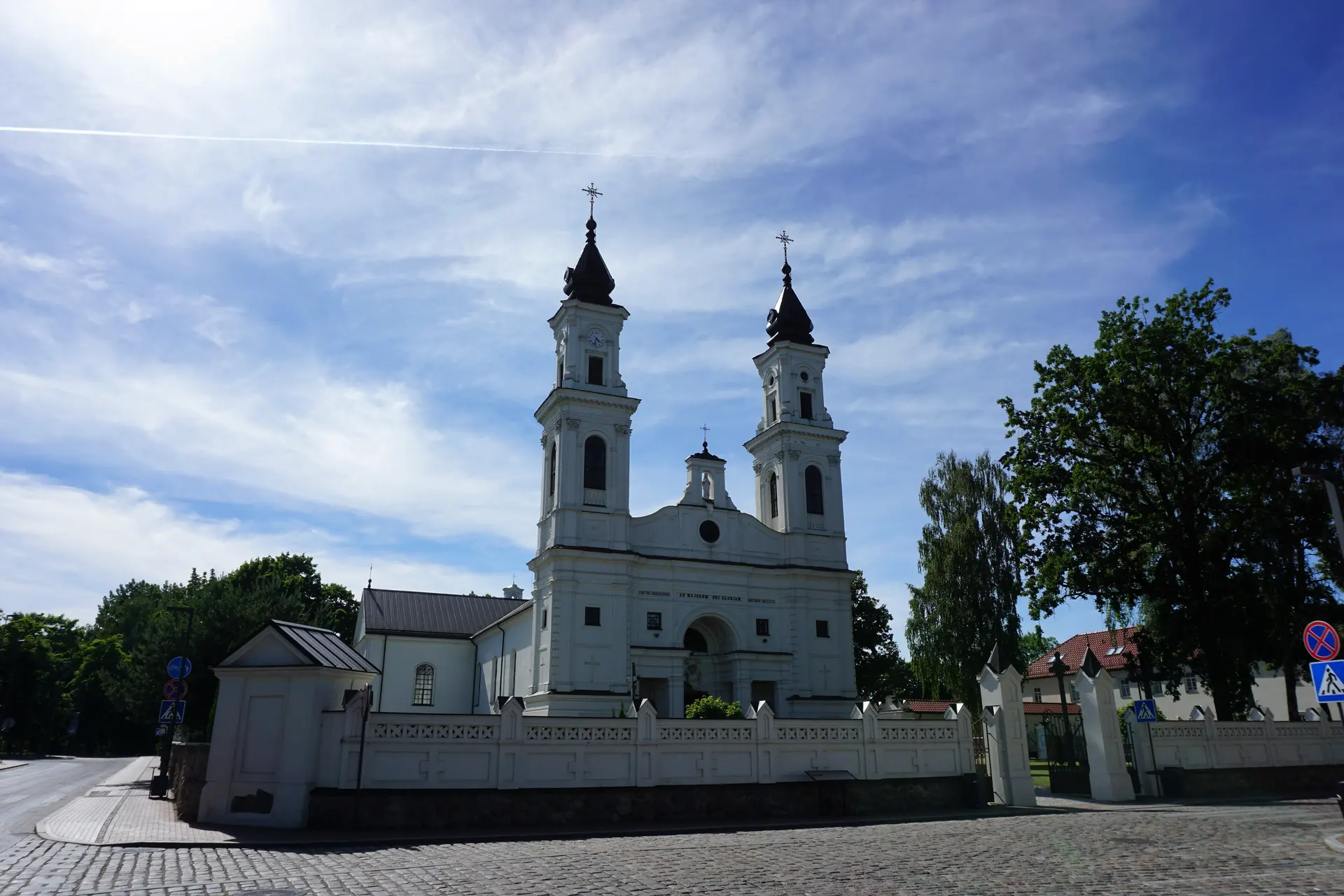
Basilica of Saint Michael the Archangel, Marijampole
Marijampolė, Marijampolė, Lithuania
23.3 km away

Kaunas Cathedral Basilica, Lithuania
Kaunas, Kaunas, Lithuania
53.4 km away
Share a photo
Help visitors recognize Church of the Assumption of the Virgin Mary, Alksnenai. Every submission is reviewed before publication.