Keturnaujiena Divine Mercy Chapel, Suodžiai
A chapel on a former Soviet airstrip where faith reclaimed what oppression tried to erase
Understand sacred places, explore living traditions, and learn how to engage respectfully with Pilgrim Map.
Access has not been verified. Check current local guidance before planning a visit.
Suodžiai, Šakiai, Lithuania

Visit essentials
A quick read before you go
- Duration
- 30 minutes to 1 hour for a regular visit.
- Etiquette
- Modest dress and respectful behavior appropriate for a Catholic chapel.
Overview
The Keturnaujiena Divine Mercy Chapel does not look like a place where the sacred broke through. It stands alone in an open field in southwestern Lithuania, a modest house of worship on the cracked concrete of a former Soviet agricultural airstrip. There is no surrounding town, no pilgrimage infrastructure, no grand approach. The landscape is flat and agricultural and offers nothing to the eye but distance.
This austerity is the point. What happened here did not require a setting. On November 14, 1969, Anele Matijosaitiene, a widow who worked at the local dairy farm, reported that Jesus Christ appeared to her, looking as He appears in the Divine Mercy painting. Ten days later, the Virgin Mary appeared, saying: 'My Son came here, and I came as well.'
Word spread. Pilgrims arrived at her homestead. Healings were reported. The Soviet authorities, who tolerated no rival to state authority, responded with the tools available to them. They demolished her home. They built an agricultural aviation airstrip over the sacred ground. They committed her to a psychiatric hospital for four months. The message was unambiguous: there is nothing holy here.
The Lithuanian people disagreed. After independence in 1990, Matijosaitiene returned. Donations poured in from believers in Lithuania and the diaspora. The chapel was consecrated in 2002, built on the precise location of the apparition, which happened to be the middle of the runway.
The chapel's placement is not incidental. It stands where planes once taxied, reclaiming ground that the Soviet state had seized. The runway, symbol of control and material power, now leads to a place of prayer. The transformation is physical, visible, and complete.
The apparitions have not received formal Vatican approval. The devotion is popular rather than canonical. For the faithful who gather here, particularly on November 14, this distinction matters less than what they experience.
Why this place is sacred
Some sites are thin because of what they contain: relics, icons, centuries of accumulated prayer. Keturnaujiena is thin because of what has been stripped away. There is no architectural grandeur here. No centuries of tradition. No institutional authority certifying what took place. There is only a chapel in a field, the testimony of a woman who endured persecution for what she reported, and the devotion of those who believe her.
The openness of the landscape intensifies the encounter. In every direction, the flat Lithuanian countryside extends to the horizon. The chapel is the only vertical element, the only interruption in a plane of agricultural fields. This isolation, which might diminish another site, amplifies this one. There is nowhere to hide from what you have come to find.
The former airstrip provides an unexpected frame. The concrete runway, cracked and weathered, leads to and from the chapel like a processional way built by those who meant to prevent exactly what it now facilitates. The irony is not subtle, and visitors consistently note it: the infrastructure of Soviet control has become the approach to a place of prayer.
What the faithful report at this site is healing. Physical healing. Spiritual healing. The restoration of what was broken. Whether one interprets these reports through Catholic theology, through psychology, or through suspension of judgment, the pattern is consistent enough to take seriously.
Anele Matijosaitiene died in 2012. Her story, preserved in oral tradition and fragmentary documentation, carries the authority of personal witness. She endured consequences for what she reported. That endurance is itself a form of testimony.
The chapel was built to mark and honor the site of the reported apparitions of Jesus Christ (November 14, 1969) and the Virgin Mary (approximately ten days later) to visionary Anele Matijosaitiene.
From apparition (1969) to Soviet suppression (destruction of visionary's home, airstrip construction, psychiatric hospitalization) to post-independence restoration and chapel consecration (2002). The site evolved from a private homestead to a place of popular pilgrimage, maintaining its connection to Divine Mercy devotion throughout.
Experience and orientation
The road to Keturnaujiena passes through the flat agricultural landscape of southwestern Lithuania, the kind of countryside where the horizon seems to recede as you approach it. Signage is minimal. The chapel does not announce itself.
When it appears, it appears suddenly: a small building in an open field, the concrete of the former airstrip still visible around it. The visual contrast is immediate and unresolvable. The runway speaks of a system that claimed absolute authority over the material world. The chapel speaks of something that system could not control.
Approach on foot across the field. The wind is constant here, unbroken by any structure or tree. The openness creates a sense of exposure that pilgrims describe as both vulnerable and clarifying. There is nothing between you and the chapel, nothing between you and the sky.
Inside, the chapel is modest. There is no attempt at architectural statement. The space is oriented toward prayer and the memory of what occurred here. For those who come seeking healing, the atmosphere is one of concentrated hope.
Visit on November 14, the anniversary of the apparition, and the site transforms. Pilgrims arrive from across Lithuania and abroad, filling the field around the chapel. Mass is celebrated. Prayers are offered. The isolation of an ordinary day gives way to the communal intensity of a feast. The contrast between the site's usual solitude and its annual moment of gathering is part of its character.
The chapel is in an open field setting near the Keturnaujiena settlement. Access is from the road, with a short walk across the field. The former airstrip is visible around the chapel. The interior is a single worship space oriented toward the altar.
Context and lineage
Anele Matijosaitiene was born in 1927 in Uzpjauniai village. A woman of deep piety, she worked at the Keturnaujiena collective farm dairy after the death of her husband Pranas in the mid-1960s. She prayed to Saint Anthony for strength and heard an inner voice saying 'Your prayer has been heard.'
On November 14, 1969, Jesus Christ appeared to her, resembling the Divine Mercy image. Ten days later, the Virgin Mary appeared, saying: 'My Son came here, and I came as well.' Word spread through the village and region. Pilgrims began arriving at her homestead. Healings were reported.
The Soviet response was swift. Authorities demolished her home, constructed an agricultural aviation airstrip over the site, and committed her to a psychiatric hospital for four months. The message was clear: claims of divine visitation would be treated as mental illness, and the ground would be repurposed for the state.
After Lithuanian independence in 1990, Matijosaitiene returned to the site. With donations from believers in Lithuania and the diaspora, the chapel was constructed on the exact spot of the apparition and consecrated in 2002. Matijosaitiene lived to see the chapel completed before her death in 2012.
The chapel connects to the broader Divine Mercy devotion that has particular resonance in Lithuania. The original Divine Mercy image was painted in Vilnius in 1934, commissioned by Saint Faustina Kowalska. Matijosaitiene's report that Jesus appeared 'looking very much like He appears in the painting of Divine Mercy' explicitly links the Suodziai apparition to this tradition. The chapel is part of the Kudirkos Naumiestis parish.
Anele Matijosaitiene
Visionary
Traditions and practice
The original devotion centered on prayer at the visionary's homestead, where pilgrims lit candles, prayed communally, and sought healing. This spontaneous, informal practice was suppressed by Soviet authorities but continued underground throughout the occupation period.
Holy Mass on weekends as part of the Kudirkos Naumiestis parish. Annual pilgrimage on November 14 (Christ Manifestation Day) with Mass and devotions, drawing pilgrims from across Lithuania and abroad. Prayer services during Catholic holidays. Healing prayers. Divine Mercy devotion, including the Chaplet of Divine Mercy.
Visit on November 14 for the annual commemoration to experience the site at its most communal and intense. On other days, come prepared for solitude. Bring your own intentions. The chapel's isolation and simplicity create conditions for unmediated prayer. If you practice the Chaplet of Divine Mercy, this is a fitting place to pray it, given the connection to the Divine Mercy tradition.
Roman Catholicism
ActiveThe chapel is part of the Kudirkos Naumiestis parish and hosts weekend Masses. It represents the resilience of Lithuanian Catholic faith during and after Soviet persecution. The visionary endured forced psychiatric hospitalization and the demolition of her home, making the chapel a symbol of faith surviving oppression.
Weekend Mass, prayer services, annual November 14 commemoration with Mass and devotions, healing prayer.
Divine Mercy Devotion
ActiveThe chapel is dedicated to Divine Mercy, connecting it to the tradition that has particular Lithuanian roots through Saint Faustina Kowalska's visions in Vilnius, where the original Divine Mercy image was painted in 1934. The visionary's report that Jesus appeared looking like the Divine Mercy image explicitly links the Suodziai apparition to this broader tradition.
Divine Mercy prayers, Chaplet of Divine Mercy, healing prayer, veneration at the apparition site.
Perspectives and open questions
The Keturnaujiena chapel sits at the intersection of personal testimony, Soviet-era persecution, popular devotion, and the broader Divine Mercy tradition. Each perspective illuminates different aspects of a site whose meaning resides more in its story than its architecture.
Scholarly perspective
Academic interest has focused on the sociological dimensions: the apparition as an expression of Lithuanian Catholic resistance to Soviet atheism, and the subsequent folk devotion as a case study in popular religion. The chapel's placement on a former Soviet airstrip is noted as a powerful example of sacred space reclaiming secular territory. The LRT (Lithuanian national broadcaster) has produced documentary coverage. Fr. John Burkus wrote a book-length treatment of the apparitions.
Living and traditional perspectives
Lithuanian Catholic popular tradition regards the site as genuinely miraculous, with numerous healings attributed to prayer at the chapel. Matijosaitiene is remembered as a holy woman who suffered for her faith. Her story resonates deeply with Lithuanian Catholics who endured similar persecution. The connection to Divine Mercy devotion adds theological depth through the link to Saint Faustina Kowalska's visions in Vilnius.
Alternative interpretations
Some visitors are drawn by the site's unusual energy, noting the open field setting and the reported healings. The contrast between the airstrip and the chapel is sometimes interpreted as a symbolic victory of the spiritual over the material, of faith over ideology.
Open questions
The apparitions have not undergone formal canonical investigation, and the official position of the Lithuanian Catholic Church hierarchy remains ambiguous. The full extent and nature of reported healings have not been systematically documented or medically verified. The specific content of what Jesus and Mary communicated beyond the brief quotes preserved in oral tradition may have been more fully known to the visionary but were not comprehensively recorded before her death in 2012.
Plan your visit
Access and arrival
Limited accommodation in the immediate area. Sakiai town offers basic options. Marijampole, approximately 50 km east, provides more choices. The site is most commonly visited as a day trip.
Respectful visit
Modest dress appropriate for a Catholic chapel.
Photography permitted at the exterior and grounds. Interior photography should be respectful and avoided during services.
Candle offerings and monetary donations are welcome and customary.
Respectful behavior at the chapel and in the surrounding area. The site is in an open field; be mindful of weather and rural terrain. Quiet during prayer services.
The site is in a rural field setting with limited facilities. Weather can be harsh, particularly in winter. Mobile phone signal may be unreliable in this rural area; confirm before relying on it for navigation. No specific contact information was available at time of writing; check the Sakiai district tourism website for current details.
Current practical details
Address
71353 Suodžiai, Lithuania
Hours
Hours, fees, and access can change — verify on the official source before you travel. Practical details last checked Jun 2026.
Location
Map loads as you approach this section.
Pilgrim reflections
A portrait of encounter, not a score
Pilgrims describe what they felt, how present they could become, and whether the place would shape a journey. There are no stars and no ranking of traditions.
No reviewed reflections yet
The first pilgrims can help describe the character of being here.
Share a reflection
Available after an account-backed “Been there.” Every reflection is reviewed before publication.
Nearby sacred places
Explore other sacred places in the region. Proximity does not establish access or travel time; check each place’s guidance.

Church of the Assumption of the Virgin Mary, Alksnenai
Stirnėnai, Vilkaviškis, Lithuania
19.8 km away

Chapel of Blessed Jurgis Matulaitis, Lūginė
Lūginė, Lūginė, Marijampolė Municipality, Lithuania
40.2 km away
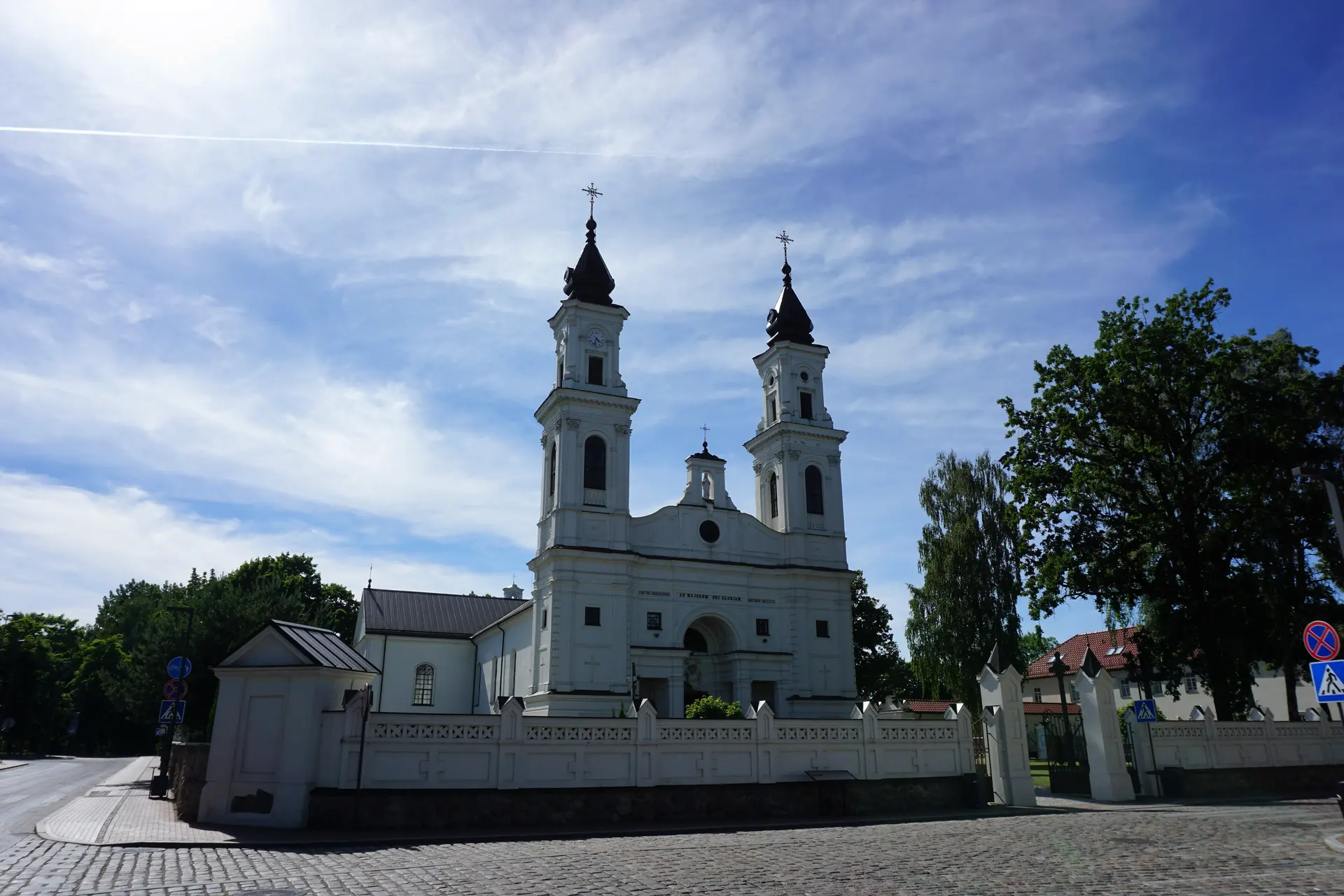
Basilica of Saint Michael the Archangel, Marijampole
Marijampolė, Marijampolė, Lithuania
43.1 km away

Rambynas Hill
Bitėnai, Bitėnai, Pagėgiai Municipality, Lithuania
62.6 km away
Share a photo
Help visitors recognize Keturnaujiena Divine Mercy Chapel, Suodžiai. Every submission is reviewed before publication.