Chapel and wellspring of St. Adalbert
Where Bohemian earth yields sacred water beneath a saint's watchful gaze
Understand sacred places, explore living traditions, and learn how to engage respectfully with Pilgrim Map.
Access has not been verified. Check current local guidance before planning a visit.
Bylany, Central Bohemian, Czechia
Read the sources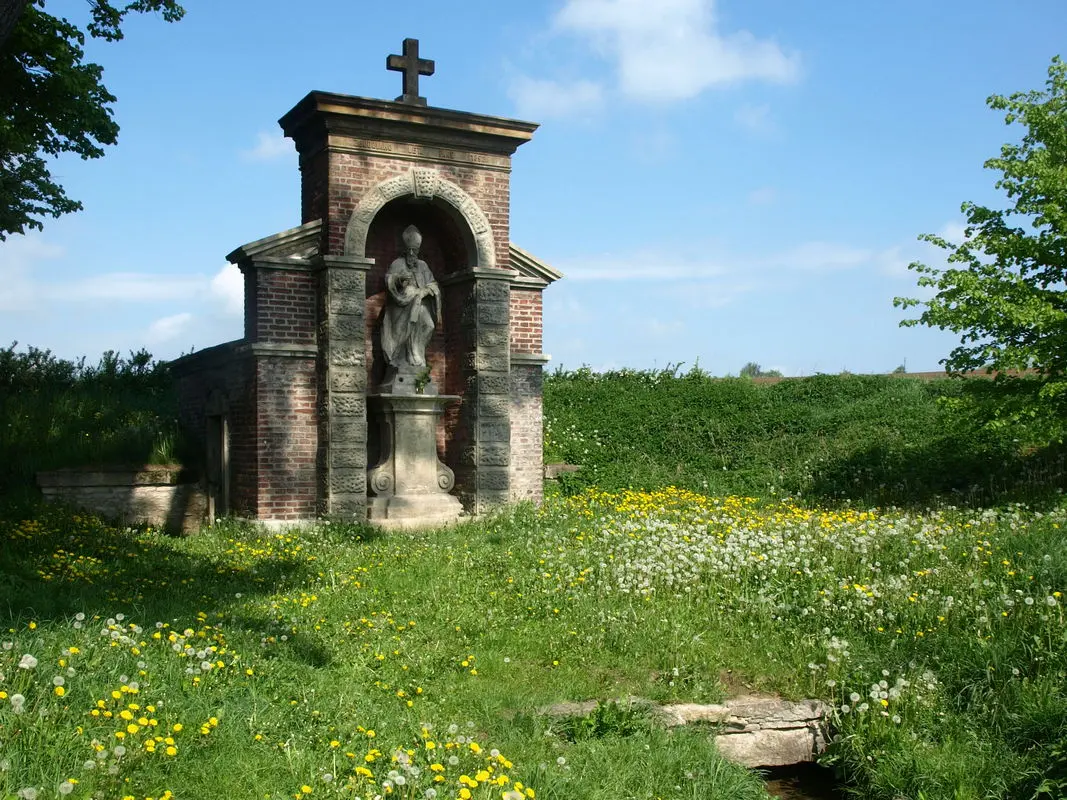
Image of Chapel and wellspring of St. Adalbert. Image source · CC0
Visit essentials
A quick read before you go
- Duration
- Plan 15-30 minutes for the site itself, allowing time to enter the chapel, contemplate the…
- Etiquette
- The Chapel and Wellspring of St.
Overview
Inside the small Chapel and Wellspring of St. Adalbert, the spring rises through stone beneath an 18th-century baroque statue of the saint. The Bohemian countryside extends toward Kutna Hora, the medieval silver-mining city once sustained by this water through a wooden aqueduct running 2.5 kilometers to the Gothic Stone Fountain for four centuries.
St. Adalbert, born Vojtech around 956, was Prague's second bishop and a patron saint of the Czech lands. Tradition says springs burst forth wherever he struck the ground with his bishop's staff. Whether this spring's sanctity comes from such a miracle or Christian consecration of an already ancient sacred source remains unresolved.
For over a century the chapel and its older baroque figure have sheltered an intimate encounter of earth, water, and devotion. The cool, clear spring still offers water to visitors as it did to medieval Kutna Hora and may have done for pre-Christian Celtic and Slavic peoples.
Why this place is sacred
What makes a place thin? Sometimes it is architecture that lifts the eye toward transcendence. Sometimes it is accumulated centuries of prayer. At the Chapel of St. Adalbert, the answer is simpler and older: water rising from earth.
Sacred springs occupy a particular place in human consciousness. Before temples, before scripture, before organized religion of any kind, people gathered at places where water emerged from the ground. Such sites seemed to mark openings in the ordinary fabric of the world, places where something from below reached toward the surface. The spring at Bylany may have been venerated in this way long before Christianity arrived in Bohemia, perhaps by Celts, certainly by pagan Slavs.
The Christianization of such sites was rarely a replacement but more often a continuation. When a spring became dedicated to a saint, its essential character as a threshold remained. The practice of visiting holy wells for healing, blessing, and spiritual renewal simply received a new framework. In the Czech lands, St. Adalbert became associated with springs throughout Bohemia, his legend claiming he could summon water by striking the ground with his staff.
But there is something more here than legend and tradition. The spring still flows. The water still rises. Standing on the flat stone placed over the source to draw water, visitors make direct contact with the same element that sustained medieval Kutna Hora through centuries of silver mining and Gothic cathedral building. The approximately 300-meter flooded tunnel behind the spring speaks to the scale of what lies beneath.
This is not metaphor or memory but a living encounter with earth's generosity.
The chapel concentrates this encounter. A small space sheltering a spring, a baroque statue keeping vigil, fields visible through the door. The setting strips away distraction. What remains is the essential relationship: seeker, water, and whatever sanctity the centuries have gathered here.
The spring's original purpose predates historical record. It may have served as a sacred water source in pre-Christian times, a place where Celtic or Slavic peoples recognized something worthy of veneration. The Christian consecration, likely occurring sometime in the medieval period, reframed this significance within Catholic holy well tradition. The dedication to St. Adalbert connected the spring to Bohemia's patron saint and the broader network of sites associated with his legend.
The spring's practical importance grew in the 15th century when medieval Kutna Hora, flush with silver wealth and expanding population, needed reliable drinking water. Engineers constructed a sophisticated system of wooden pipes to carry water from the spring 2.5 kilometers to the city center, where the Gothic Stone Fountain distributed it to residents. This arrangement served until 1890, binding the sacred spring to the daily life of a major European city for nearly four centuries.
The current chapel dates from the end of the 19th century, circa 1892, built over the spring as the medieval water system was being discontinued. The baroque statue of St. Adalbert, however, is considerably older, dating from the first half of the 18th century. This statue represents continuity with earlier veneration at the site, preserved and housed when the chapel was constructed.
Today, the spring is monitored by the Czech Hydrometeorological Institute as part of their observation network, adding a scientific layer to the site's accumulated meanings.
Experience and orientation
The chapel appears almost unexpectedly in the landscape. Approaching through fields between Bylany and Pritoky, visitors follow paths that feel older than their modern markings. The countryside is working agricultural land, not preserved heritage, and this ordinariness is part of the effect. Sacred sites need not announce themselves.
Inside the chapel, the space is small enough to feel personal. The baroque St. Adalbert, carved in the first half of the 1700s, dominates the interior. His expression has kept watch over countless visitors, each arriving with their own questions, griefs, hopes. The spring emerges within this enclosed space, channeled outside through a conduit but accessible inside for those who wish to draw water.
The moment of standing on the flat stone over the spring source carries particular weight. This is not observation but participation. The stone is worn from use. The water is cool. The act of drawing water, repeated by visitors for generations, connects present to past in a visceral rather than intellectual way. Many visitors report this as the heart of the experience: not looking at something sacred but being in direct relationship with it.
Outside, the Bohemian countryside opens in every direction. Some visitors sit near the chapel and simply let the quiet settle. The nearest villages are visible but distant. The sounds are wind, birdsong, occasional farm equipment. For those accustomed to sacred sites as managed, crowded experiences, this simplicity can feel disorienting at first, then liberating.
The Chapel and Wellspring of St. Adalbert rewards those who approach it as destination rather than detour. Walking from Kutna Hora or surrounding villages allows the countryside itself to prepare you. The 3-kilometer walk provides time to leave behind the concerns of ordinary travel and arrive present.
Consider what you bring with you. A question. A prayer. An intention to set down. The chapel is small enough that your presence fills it. The spring offers water to anyone who comes. What you do with that offering is yours to determine.
The baroque St. Adalbert has kept this vigil for nearly three centuries. Meeting his carved gaze can feel like being seen by accumulated time. If you carry something that needs witnessing, this may be a place to let it be witnessed.
Context and lineage
According to tradition, St. Adalbert could summon springs by striking the ground with his bishop's staff. Churches and chapels were built at such places throughout Bohemia. The spring at Bylany, however, likely predates any such miracle. It emerges from earth that has yielded water since before human memory, and its sanctity may trace to pre-Christian peoples who recognized something worthy of reverence in this place.
The Christian dedication to St. Adalbert represents a consecration of an already sacred site. This pattern repeats throughout Europe: holy wells that bear saints' names often began as pagan sacred springs, their essential character preserved while their meaning was reframed. The genius of such transitions lies in their acknowledgment that the land itself holds something worth honoring.
Medieval Kutna Hora, grown wealthy from silver mining, needed this spring for simpler reasons. In the 15th century, engineers constructed a wooden aqueduct to carry water 2.5 kilometers to the city center. For four centuries, until 1890, the spring that pilgrims visited for spiritual blessing also provided the drinking water that sustained daily life. Sacred and practical were not separate categories.
The spring has served successive communities across perhaps millennia: pre-Christian peoples whose names and practices are lost, medieval Catholics who consecrated it to St. Adalbert, the citizens of Kutna Hora who depended on its water for daily survival, and contemporary visitors who continue to draw from its source. The baroque statue dates from the first half of the 18th century, testifying to formal veneration during that period.
The current chapel, built circa 1892 as the medieval water system was discontinued, preserved and housed this earlier statue, maintaining continuity with the site's devotional past. Today the spring is monitored by the Czech Hydrometeorological Institute, adding scientific observation to the layers of meaning that have accumulated here.
St. Adalbert of Prague
saint
Born circa 956 as Vojtěch to the powerful Slavnik dynasty in Libice nad Cidlinou, he became the second Bishop of Prague. His missionary work extended to Hungary, Poland, and Prussia, where he was martyred on April 23, 997, near Truso (modern-day Elblag, Poland). Canonized in 999 by Pope Sylvester II, he became one of the patron saints of the Czech Republic, alongside St. Wenceslas. His feast day is April 23.
Traditions and practice
The tradition of visiting holy wells for healing and blessing has ancient roots in Bohemia, predating Christianity but continuing vigorously within Catholic practice. Pilgrims would draw water believed to carry the saint's blessing, sometimes bathing affected body parts or drinking the water for healing. Prayers to the patron saint, offerings of candles or flowers, and walking pilgrimages from nearby towns formed the core of traditional practice. St.
Adalbert's feast day on April 23 would have been a particularly significant time for visits, though records of specific ceremonies at this site have not survived.
Visitors today may enter the chapel, contemplate the baroque statue of St. Adalbert, and draw water from the spring source. The practice remains essentially unchanged from historical patterns, though perhaps less formally religious for many visitors. The chapel serves as a destination for walkers exploring the countryside around Kutna Hora, often discovered as part of longer hiking routes.
For those who come with devotional intent, the intimacy of the space allows for personal prayer and meditation without the structures of formal ceremony.
If you come seeking something more than scenery, consider these approaches.
Before entering the chapel, pause outside. Let the journey settle. Notice the countryside, the ordinary fields that frame this site. The transition from walking to arriving deserves attention.
Inside, meet the gaze of the baroque St. Adalbert. He has kept this watch for nearly three centuries. You need not share his faith to recognize what accumulated time feels like in carved stone.
When you stand on the flat stone over the spring source to draw water, you repeat a gesture made by countless visitors before you. Let the water's coolness register. This is the same element that sustained medieval Kutna Hora. If you carry intentions or prayers, this is a moment to offer them.
Before leaving, sit quietly near the chapel. The sound of the spring, the wind across fields, the birdsong. Simple presences that have been here long before any human meaning was assigned to this place.
Roman Catholicism
ActiveSt. Adalbert (Vojtech) is one of the patron saints of the Czech Republic. Born circa 956 to the Slavnik dynasty at Libice nad Cidlinou, he became the second Bishop of Prague before embarking on missionary journeys that took him to Hungary, Poland, and Prussia, where he was martyred on April 23, 997. Canonized in 999, he represents the foundation of Christianity in Bohemia. This chapel and wellspring is one of many sites throughout the Czech lands connected to his legacy and the tradition of springs associated with his name.
Pilgrimage visits to the spring, drawing holy water, prayer and meditation in the chapel before the baroque statue of St. Adalbert. The saint's feast day is April 23, a significant date for sites bearing his dedication.
Holy Well Tradition
ActiveSacred springs and holy wells hold deep roots in Czech lands, often predating Christianity. Springs dedicated to St. Adalbert are found throughout Bohemia, representing the Christianization of pre-existing sacred water sources. This pattern, common across Europe, preserved the essential character of such sites while reframing their meaning within Christian cosmology. The spring at Bylany may have been venerated by Celts and pagan Slavs before receiving its Christian dedication.
Drawing water from the spring for healing or blessing, pilgrimage walks from nearby towns, prayers and offerings at the site. The practices differ little whether understood through specifically Catholic or broader holy well frameworks.
Perspectives and open questions
The Chapel and Wellspring of St. Adalbert invites multiple interpretations that need not compete. Scholars see a typical example of Christianized sacred springs. Traditional Catholics understand a site blessed by association with Bohemia's patron saint. Those interested in older patterns recognize possible pre-Christian veneration. The spring itself, indifferent to interpretation, continues to flow.
Scholarly perspective
Academic perspectives situate the wellspring within the broader phenomenon of sacred springs in Central European Christianity. Holy wells dedicated to saints are common throughout the former Bohemian lands and often represent the Christianization of pre-existing sacred water sources. The dedication to St. Adalbert follows a pattern seen at multiple sites, connecting local devotion to Bohemia's patron saint. The medieval water supply system to Kutna Hora demonstrates how sacred and practical functions could coexist at such sites.
The 19th-century chapel represents a continuation of vernacular devotion even as modernization rendered the practical water system obsolete.
Living and traditional perspectives
For Czech Catholics, St. Adalbert (Vojtech) stands among the nation's patron saints, alongside St. Wenceslas. Born to the powerful Slavnik dynasty, he became Bishop of Prague and ultimately a martyr for his faith. Sites connected to him throughout Bohemia represent the foundation of Christian civilization in these lands. The tradition of holy wells, while not unique to Catholic practice, finds particular expression in devotion to saints associated with water miracles.
The spring's waters are understood as blessed through their association with St. Adalbert, carrying spiritual benefit to those who draw from them with faith.
Alternative interpretations
Holy wells and sacred springs often hold significance beyond their Christian dedications. Some interpret such sites as places where natural earth energies are particularly accessible, their sanctity preceding and transcending any religious framework. The spring at Bylany, emerging in a location that may have been venerated since Celtic times, could represent continuity of sacred geography across traditions.
The proximity to the Bylany Neolithic settlement, one of Europe's largest archaeological sites of its period, suggests this landscape has attracted human presence and reverence for over seven thousand years. From this perspective, the Christian chapel is the latest layer of meaning applied to an inherently powerful place.
Open questions
Several genuine mysteries surround the site. When exactly was the spring first dedicated to St. Adalbert, and what pre-Christian practices occurred here? What is the full extent and age of the underground tunnel and gallery system connected to the spring? Did St. Adalbert himself ever visit this site, or is the dedication based on the broader tradition of springs associated with his legend? The historical record is largely silent on these questions, and the spring's origins reach beyond documented memory.
Plan your visit
Access and arrival
Kutna Hora, 3 km northeast, offers accommodations at various price points, from guesthouses to hotels. The city's UNESCO World Heritage Sites (St. Barbara's Church, Sedlec Ossuary) make it a natural base for exploring the region. For those walking the countryside trails, day trips from Kutna Hora are practical.
Respectful visit
No formal requirements. Dress appropriately for walking in the countryside and for entering a small chapel. Comfortable shoes with good grip are recommended, as the terrain between villages can be uneven.
Photography is permitted. The baroque statue and chapel interior make compelling subjects. However, consider experiencing the space before documenting it. Photography should not disturb others who may be present for prayer or meditation.
Traditional offerings may include flowers or candles. If leaving such offerings, ensure they do not create hazards or litter. Internal offerings, prayers, and intentions require nothing physical and are always appropriate.
The site is in open countryside and freely accessible. There are no entry fees or formal hours, though visiting during daylight is practical given the rural location. The spring water may be collected.
The spring water has historically been described as hard and calcareous but crystal clear. While traditionally drawn for devotional purposes, modern visitors should exercise personal judgment regarding consumption. The site is in open countryside with no facilities. Weather can change quickly; bring appropriate clothing for walking. During agricultural seasons, surrounding fields may be actively worked.
Current practical details
Address
Zámecká, 284 03 Kutná Hora-Kutná Hora 3, Czechia
Phone
Hours
Hours, fees, and access can change — verify on the official source before you travel. Practical details last checked Jun 2026.
Location
Map loads as you approach this section.
Pilgrim reflections
A portrait of encounter, not a score
Pilgrims describe what they felt, how present they could become, and whether the place would shape a journey. There are no stars and no ranking of traditions.
No reviewed reflections yet
The first pilgrims can help describe the character of being here.
Share a reflection
Available after an account-backed “Been there.” Every reflection is reviewed before publication.
Nearby sacred places
Explore other sacred places in the region. Proximity does not establish access or travel time; check each place’s guidance.

Sázava Monastery
Sázava, Sázava, Central Bohemian Region, Czechia
25.1 km away

Želiv Monastery
Želiv, Želiv, Vysočina Region, Czechia
46.1 km away

Church of the Assumption of the Virgin Mary, Stará Boleslav, Czech Republic
Stará Boleslav, Stará Boleslav, Central Bohemian Region, Czechia
48.5 km away

Basilica of St Wenceslas, Stará Boleslav
Stará Boleslav, Stará Boleslav, Central Bohemian Region, Czechia
48.6 km away
References
Sources consulted for this page. Source categories describe the publication, not a guarantee that every claim is verified. Traditional accounts and outside interpretations may differ.
- 01Studánka sv. Vojtěcha - Národní registr pramenů a studánek — Czech National Spring and Well RegistrySource contextOfficial Czech registry of springs and wells with technical data
- 02Walk through the valley of the Vrchlice Creek and back to Kutná Hora via Bylany — Kutná Hora City PortalofficialOfficial city tourist information
- 03Stone Fountain, Kutná Hora — Kutná Hora City PortalofficialInformation on medieval water supply from the spring
- 04Saint Adalbert — Encyclopaedia BritannicaencyclopediaAcademic source on saint's biography
- 05Relics of Bohemia's Patron Saint Adalbert find new resting place — Radio Prague InternationalnewsInformation on saint's veneration and relics
- 06Adalbert of Prague — Wikipedia contributorsencyclopediaComprehensive biography of the saint
- 07Studánka a kaple sv. Vojtěcha u Bylan u Kutné Hory — Turistika.czSource contextCzech tourism site with GPS coordinates and site details
- 08Miskovice — Wikipedia contributorsencyclopediaContext on the municipality
- 09A tour of the historic villages west of Kutná Hora — My Czech WalksSource contextWalking trail guide with directions to the chapel
- 10Vrchlice - Bylany Loop — AllTrailsSource contextHiking trail information
Share a photo
Help visitors recognize Chapel and wellspring of St. Adalbert. Every submission is reviewed before publication.