Cave of La Vieja, Alpera
Where Epipaleolithic hunters painted the sacred on limestone ten thousand years ago
Understand sacred places, explore living traditions, and learn how to engage respectfully with Pilgrim Map.
Access has not been verified. Check current local guidance before planning a visit.
Alpera, Albacete, Spain
Read the sources
Visit essentials
A quick read before you go
- Duration
- Guided visits typically last 45 to 90 minutes, including the walk to and from the shelter and…
- Access
- The shelter is located on Cerro del Bosque on the outskirts of Alpera village, municipality of…
Overview
On the outskirts of Alpera, a limestone overhang on Cerro del Bosque shelters one of the most important concentrations of prehistoric rock art in the Iberian Peninsula. For several thousand years, roughly 8000 to 3500 BC, communities of hunter-gatherers and early farming peoples returned to paint the same surface: archers frozen mid-stride, women in layered skirts and bracelets, deer caught turning, and bees at their hive.
Scholars describe the multi-phase sanctuary and the act of painting there as ceremonial, where the natural world and human symbolic meaning converged repeatedly across generations who likely knew nothing of each other.
Why this place is sacred
What makes Cueva de la Vieja singular is not any one image but the weight of accumulated return. The natural limestone overhang offered shelter, but dozens of comparable shelters dot the same hillside.
Something caused Epipaleolithic hunters to choose this one, to grind ochre and apply it to the wall, and to keep coming back across centuries — and then for Neolithic and Copper Age farming communities, inheriting a landscape already ancient to them, to recognise the same place as worthy of their own marks.
Archaeologists describe the site as an 'authentic sanctuary', a word chosen deliberately: the paintings are not casual graffiti but a sustained, purposeful inscription of belief onto the physical world. The shelter's position on Cerro del Bosque — elevated, open to the valley, yet sheltered above — replicates the threshold quality found at many ancient sacred sites globally: neither fully enclosed nor exposed, a liminal edge between the sky and the earth.
The pictorial programme encompasses both the external world and the interior world of the communities who made it. Hunting scenes record the practical stakes of survival; dance scenes and the honey-gathering figure hint at ceremony, celebration, or altered states. The prominent central female figure — from whose distinguishing features the modern name derives — has no confirmed interpretation, but her placement and scale within the composition suggest deliberate elevation above the surrounding figures.
Whether she represents an ancestor, a ritual specialist, or a cosmological being cannot be determined; her meaning has passed beyond reach.
The later Schematic layer adds a further dimension: those who painted the abstract geometric forms may have known the earlier figures were old, or they may simply have felt the place as powerful without understanding why. The layering itself — one tradition of belief literally on top of another — is the most visible trace of the site's long history as a locus of human attention.
The shelter was used repeatedly by prehistoric communities as a ritual gathering site, with the application of painted figures to the rock wall forming part of communal ceremonies. The specific rites — hunting magic, seasonal celebration, initiation, territorial marking — cannot be confirmed from the paintings alone. The convergence of naturalistic and narrative imagery suggests a sanctuary visited by groups rather than individuals.
The earliest paintings belong to the Levantine art tradition of Epipaleolithic and Mesolithic hunter-gatherers (c. 8000–6000 BC). These were later supplemented and partially overlaid by Schematic art associated with the Neolithic and Copper Age (c. 6000–3500 BC). After the Copper Age the site appears to have lost its active ritual function. It remained a local topographic feature — a notable rock overhang on the hill — until its modern discovery on 15 December 1910.
Since the early twentieth century it has served as a UNESCO-protected heritage monument and subject of ongoing conservation science.
Experience and orientation
The walk to the shelter matters. From the road at the edge of Alpera village the path climbs through open pine woodland on the lower slopes of Cerro del Bosque, the terrain characteristic of the Castilian highlands: pale limestone underfoot, the smell of resin, broad views opening south across the agricultural plain. By the time the iron gates come into view — two barriers set back into the overhang — the change in register has already begun.
The modern world recedes on the walk; the gates mark the threshold.
The painted panel is set into the rear wall of the overhang where natural light reaches it obliquely. There is no artificial illumination.
The guide will draw attention to individual figures that are easy to miss in the first sweep: a group of archers mid-chase, their postures rendered with an economy of line that conveys speed; a woman in a fringed skirt whose hair is gathered and whose arm extends in a gesture that reads, across the millennia, as purposeful; the central female figure from whom the cave takes its name, larger and more detailed than the surrounding painted population.
Higher on the panel, deer move in a herd composition that suggests a specific moment rather than a generic animal type.
The figures are small — many are under ten centimetres tall — which means the density of the panel does not reveal itself immediately. What looks at first like a modest expanse of rock resolves, with attention, into a crowded world. The guide's interpretation is part of the experience: this is not a site where a visitor benefits from solitary lingering, but one where contextual knowledge opens figures that would otherwise remain illegible marks on stone.
The feeling commonly reported is less of awe than of proximity — of standing at a very short distance from people whose names are unknown and whose language is irrecoverable, but whose attention was directed to the same rock face, perhaps in the same light, with intentions that were evidently serious.
Visits are guided and run on weekday mornings by appointment through Alpera Town Hall (+34 967 330 555). Groups are small. The walk from the road to the shelter is short — under fifteen minutes — but involves uneven terrain on an earthen path; sturdy footwear is more practical than formal shoes. No adapted access exists for visitors with limited mobility.
The Rock Art Museum (Museo del Arte Rupestre) in the village offers backlit full-scale reproductions of the panels as a useful orientation before or after the site visit.
Context and lineage
On 15 December 1910, a severe storm on Cerro del Bosque forced a man known in sources as Daniel or Pascual Serrano — possibly a father-and-son pair — to take shelter in the limestone overhang they were passing during a hunting trip. As they waited out the rain, they noticed that the walls of the shelter were painted with figures.
The paintings had, in a literal sense, been preserved by chance: the overhang's natural depth and the dolomitic limestone's surface properties had protected the ochre pigment from the worst of the weathering that exposed art faces. The discovery was reported and reached the attention of Henri Breuil, the most prominent French prehistorian of the era, who visited with Juan Cabré Aguiló and Hugo Obermaier in March 1911 and produced the first systematic documentation of the panel.
Their publication established Cueva de la Vieja as one of the canonical sites of Levantine rock art.
The cave's modern name derives from the painted community itself: a central female figure, larger and more detailed than those surrounding her, attracted local attention and folk legend. She became 'la Vieja' — the Old Woman — and the cave was named for her. The alternative name, Cueva del Venado (Deer Cave), reflects the dominance of deer imagery in the upper register of the composition.
The site's cultural lineage runs from Epipaleolithic hunter-gatherer communities (c. 8000 BC) through Mesolithic and Neolithic phases to Copper Age agro-pastoral groups (c. 3500 BC). After the Copper Age, the site passed out of active ritual use. It was declared a National Historic-Artistic Monument by the Spanish state in 1924 — one of the earliest such formal protections in the country — and became a Bien de Interés Cultural (Asset of Cultural Interest) in 1985.
In 1998 it was inscribed as a component site of UNESCO World Heritage Serial Property No. 874, 'Rock Art of the Mediterranean Basin on the Iberian Peninsula', which encompasses 758 sites across six Spanish autonomous communities. Contemporary stewardship rests with the Alpera municipal government, the Junta de Comunidades de Castilla-La Mancha, and an informal local association (Amigos de la Cueva de la Vieja).
Henri Breuil
French prehistorian and priest; co-documented the cave in 1911
Juan Cabré Aguiló
Spanish archaeologist; co-documented the cave in 1911
Hugo Obermaier
German-Spanish prehistorian; participated in the 1911 documentation
Pascual / Daniel Serrano
Local discoverer(s) of the painted shelter
Prieto-Taboada N. et al.
Conservation scientists; led 2023 desalination study
Traditions and practice
Prehistoric communities used the shelter for repeated ritual gatherings over a period of several thousand years. The painted programme — archers in dynamic pursuit, women in decorated clothing, large cervid herds, dance scenes, a honey-gathering sequence, and combat scenes — indicates ceremonies related to hunting, communal identity, seasonal cycles, or passage rites. The act of pigment application to the rock surface was itself ritual: a transformation of the wall from natural stone into sacred inscription.
The multi-generational return to the same surface, and the later Schematic community's choice to add their own marks beside Levantine figures already ancient in their time, speaks to an enduring recognition of the site as a location where marking mattered.
Cueva de la Vieja functions today as a protected archaeological monument open to guided educational visits. The only contemporary 'practice' at the site is close observation: attending to the panel with time and attention rather than passing quickly. Town hall staff guide visitors through the iconographic vocabulary of the paintings, identifying individual figures, describing the compositional logic of the frieze, and contextualising the historical layering of the two art traditions.
The Rock Art Museum in Alpera village extends this engagement with backlit reproductions and documentary material.
Stand before the central female figure — the Old Woman herself — and allow time for the painted world to populate around her. Begin with the figures the guide identifies, then let your eye move without direction across the panel. Notice what is small. The miniature scale of many figures — some barely a hand's width — means the panel rewards patience.
The honey-gathering scene, one of the oldest known depictions of beekeeping in Iberian art, occupies a peripheral area of the panel: ask the guide to point it out specifically, as it is easy to overlook.
Before or after the shelter visit, walk the exterior of Cerro del Bosque far enough to understand the relationship between the overhang's position and the valley below. The site is not enclosed: the view outward from inside the shelter spans the same landscape the Epipaleolithic hunters surveyed. That continuity of sight-line — painter and visitor sharing the same prospect across ten millennia — is one of the site's more quietly affecting qualities.
Prehistoric Levantine Rock Art (Epipaleolithic / Mesolithic)
HistoricalThe oldest painted layer at Cueva de la Vieja belongs to the Levantine art tradition, produced by the last hunter-gatherer populations of the eastern Iberian highlands between approximately 8000 and 6000 BC. This tradition is characterised by naturalistic, dynamic figures of humans and animals rendered in red ochre. At Alpera the figures are notably detailed — archers in motion, women wearing skirts and bracelets, deer herds, bulls, and carnivores — suggesting a rich symbolic world tied to hunting, fertility, and community identity. Scholars interpret the site as a sanctuary used repeatedly over centuries or millennia for communal ritual acts, with the act of painting itself forming part of those rites.
Repeated application of pigment to the shelter wall over extended time periods; depiction of hunting, warfare, dance, and honey-gathering; gathering of community groups at the shelter for ritual purposes inferred from composition and iconography.
Prehistoric Schematic Rock Art (Neolithic / Copper Age)
HistoricalA second, later layer of paintings at the site belongs to the Schematic art tradition (c. 6000–3500 BC), associated with the first Neolithic farming and herding communities to colonise the peninsula. Schematic art is more abstract and geometric than Levantine art. Its presence at the same shelter indicates the site retained ritual importance across the transition from hunter-gatherer to agro-pastoral societies, suggesting it was already perceived as a place of power or memory by later peoples.
Application of abstract geometric and anthropomorphic motifs over and alongside earlier Levantine figures.
Archaeological and Conservation Scholarship
ActiveSince Breuil and Cabré's 1911 documentation, Cueva de la Vieja has been an active subject of prehistoric art scholarship, comparative iconography, and, most recently, conservation science. The site's ongoing study represents a living tradition of engagement with its material and cultural dimensions.
Archaeological documentation, iconographic analysis, comparative stylistic study, instrumental analysis of pigment chemistry, and active conservation treatment including desalination of the painted panel.
Heritage Tourism and Civic Stewardship
ActiveThe municipal tourism programme, the Amigos de la Cueva de la Vieja association, and the Rock Art Museum in Alpera collectively represent an active local tradition of custodianship and public interpretation. Guided visits have been the primary means of access since the site's protection in the early twentieth century.
Guided tours by appointment, permanent museum exhibition with full-scale panel reproductions, community association activities, and public education programming.
Perspectives and open questions
Cueva de la Vieja sits at the intersection of several interpretive frameworks: rigorous archaeological scholarship, conservation science, popular heritage appreciation, and speculative spiritual inquiry. These perspectives do not always agree on what the site means, but each opens a different dimension of a place that is, by any measure, unusual.
Scholarly perspective
The scholarly consensus, established since Breuil and Cabré's 1911 documentation and substantially unchanged in its main lines, identifies Cueva de la Vieja as a multi-phase ritual sanctuary of the first order. The paintings are executed in iron oxide red ochre on dolomitic limestone; the style, iconographic vocabulary, and compositional logic all place the primary layer within the Levantine art tradition characterised by naturalistic, dynamic human and animal figures with strong narrative qualities.
This tradition is distinct from the better-known Palaeolithic cave art of northern Spain (Altamira, Lascaux) in style, technique, and chronology, and represents the artistic expression of the last hunter-gatherer cultures of the eastern Iberian highlands.
The site's scholarly significance was reinforced by its inclusion in the UNESCO inscription of 1998, which recognised 758 sites across the Iberian Mediterranean Basin as a serial world heritage property. Cueva de la Vieja is cited in that documentation as one of the most significant constituent sites.
Recent conservation science, published in 2023, has brought instrumental analysis of the panel's chemistry to bear: the research identified the degradation products formed by sulfate salt crystallisation — gypsum and epsomite — as a primary threat to the pigment layer, and confirmed the effectiveness of desalination treatment in arresting deterioration. This ongoing engagement with the material conditions of the paintings reflects the site's continued importance to the heritage science community.
Living and traditional perspectives
No living community claims documented spiritual or cultural continuity with the Epipaleolithic and Neolithic painters of Cueva de la Vieja. The hunter-gatherer societies responsible for the Levantine layer have no known living descendants, and their languages, cosmologies, and ritual structures are not recoverable from the material record alone. The site is stewarded as national cultural heritage by the Spanish state and the Castile-La Mancha regional government.
Local engagement is channelled informally through the Amigos de la Cueva de la Vieja association and the municipal tourism office in Alpera. The place belongs, in practical terms, to no tradition currently alive — only to archaeology and, through that, to the broader human inheritance.
Alternative interpretations
Writers working in spiritual heritage and sacred-sites traditions have applied the concept of the 'thin place' — a location where the ordinary membrane between the human world and something larger wears away — to Cueva de la Vieja. The accumulation of intentional ritual presence across more than four thousand years, concentrated onto a single rock surface, is the primary basis for this interpretation.
The central female figure has attracted speculative readings as a shamanic practitioner, an ancestral spirit, a goddess form, or a medicine-woman archetype. No archaeological evidence supports any of these identifications, but the impulse to give her a name and a role reflects something real about how the painting functions: she is not an incidental figure, and the composition's structure elevates her above the surrounding human world.
The debate about her meaning is, in miniature, the debate about Cueva de la Vieja as a whole — a place where inference runs always slightly ahead of evidence.
Open questions
The identity, status, and function of the central female figure remains the most obvious of the site's unresolved questions, but it is not the only one. The exact nature of the ceremonies conducted here — whether hunting magic, seasonal rite, initiation, territorial assertion, or some combination — cannot be reconstructed from the imagery alone.
It is not known whether the Schematic art painters who added their own marks in the Neolithic and Copper Age were aware they were joining an already ancient tradition, or simply responded to a place that felt, without historical knowledge of its earlier use, like a place worth marking.
The honey-gathering figure — one of the oldest known depictions of honey collection in Iberian rock art — raises questions about the cultural and ritual significance of bees and honey in this community that have no current answer. Most fundamentally, why this particular overhang on Cerro del Bosque, among dozens of comparable shelters in the region, became the site of sustained sacred attention across four millennia is not known.
Plan your visit
Access and arrival
The shelter is located on Cerro del Bosque on the outskirts of Alpera village, municipality of Alpera, Albacete province, Castile-La Mancha, Spain. Alpera sits approximately 90 km east of Albacete city and around 110 km from Albacete Airport. The village is reachable by car from the CM-3203 road; parking is available in the village. Bus connections to Alpera exist from Albacete but are infrequent — confirm schedules in advance.
From the village the shelter is reached by a short uphill walk on an earthen path. Prior appointment is mandatory: contact Alpera Town Hall at +34 967 330 555. Guided tours are offered on weekday mornings; hours are subject to change and must be confirmed directly with the town hall. Mobile phone signal in the immediate area of the shelter may be limited — if planning to call for directions, do so before leaving the village.
The site has no adapted access for visitors with reduced mobility.
Alpera is a small village with limited accommodation options. Almansa, approximately 20 km west, offers a broader range of hotels and is a practical base for visiting Cueva de la Vieja alongside other sites in the region. Albacete city, 90 km west, provides full urban accommodation choice for those combining the site with other destinations in the province.
Respectful visit
No religious dress code applies. Practical outdoor footwear is strongly recommended — the path to the shelter involves a short uphill walk on an uneven earthen track. Weather-appropriate layering is sensible, as the hillside is exposed.
Photography policy is determined by the town hall guide on a visit-by-visit basis and should be confirmed at the start of the tour. Flash photography of pigment-based prehistoric art is generally discouraged, as UV and thermal energy from flash units can accelerate the chemical degradation of iron oxide pigments and their binders. Confirm with the guide before taking any photographs inside the shelter.
No offering tradition applies to this site. It has no active cult or votive practice.
Entry is by prior appointment only through Alpera Town Hall (+34 967 330 555). Independent access to the shelter is not possible — the area is fenced and gated. Physical contact with the painted rock surface or the shelter walls is prohibited. Visitors must remain on the paths designated by the guide within the gated enclosure. The site has no adapted access infrastructure and is not suitable for visitors with limited mobility.
Smoking within the enclosure is inadvisable given the sensitivity of the environment.
Do not touch, lean against, or attempt to trace any part of the painted surface. Even the oils from fingertips accelerate pigment degradation. The conservation chemistry of the panel is actively managed: a 2023 peer-reviewed study documented ongoing salt crystallisation damage and the effectiveness of desalination treatment. Physical contact by visitors represents a direct threat to the art's survival. Follow the guide's instructions regarding movement within the gated enclosure, and do not enter areas not included in the guided route.
Location
Map loads as you approach this section.
Pilgrim reflections
A portrait of encounter, not a score
Pilgrims describe what they felt, how present they could become, and whether the place would shape a journey. There are no stars and no ranking of traditions.
No reviewed reflections yet
The first pilgrims can help describe the character of being here.
Share a reflection
Available after an account-backed “Been there.” Every reflection is reviewed before publication.
Nearby sacred places
Explore other sacred places in the region. Proximity does not establish access or travel time; check each place’s guidance.
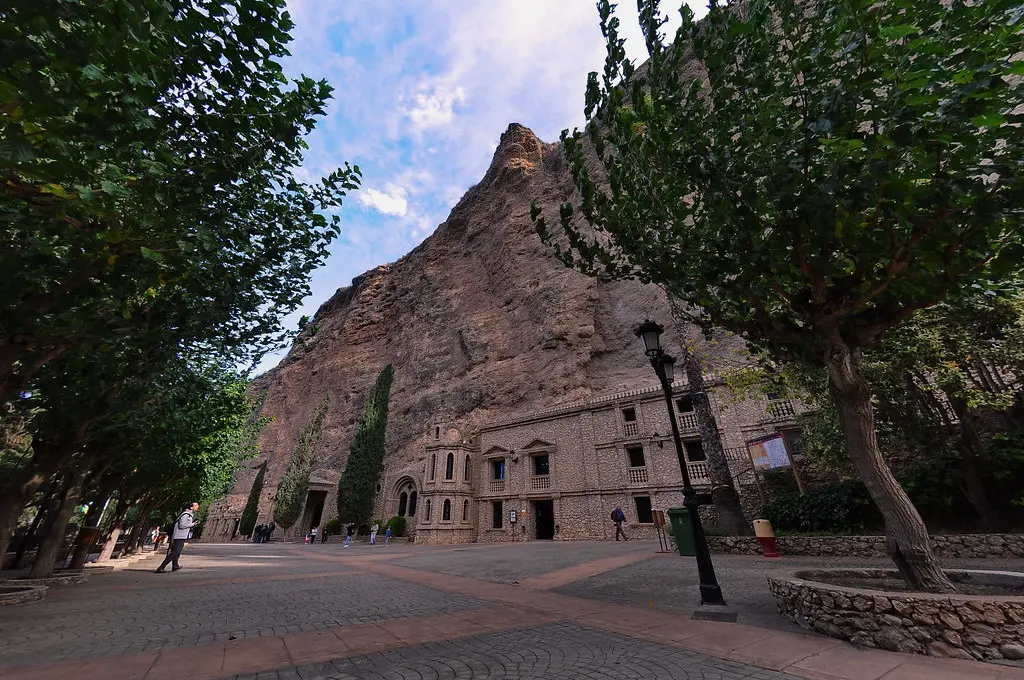
Santuario Virgen de la Esperanza
Calasparra, Murcia, Spain
85.7 km away

Monastery of Santa María de la Valldigna
Simat de la Valldigna, Valencia, Spain
90.3 km away

Basilica of Santa María, Elche
Elche, Alicante, Spain
98.9 km away
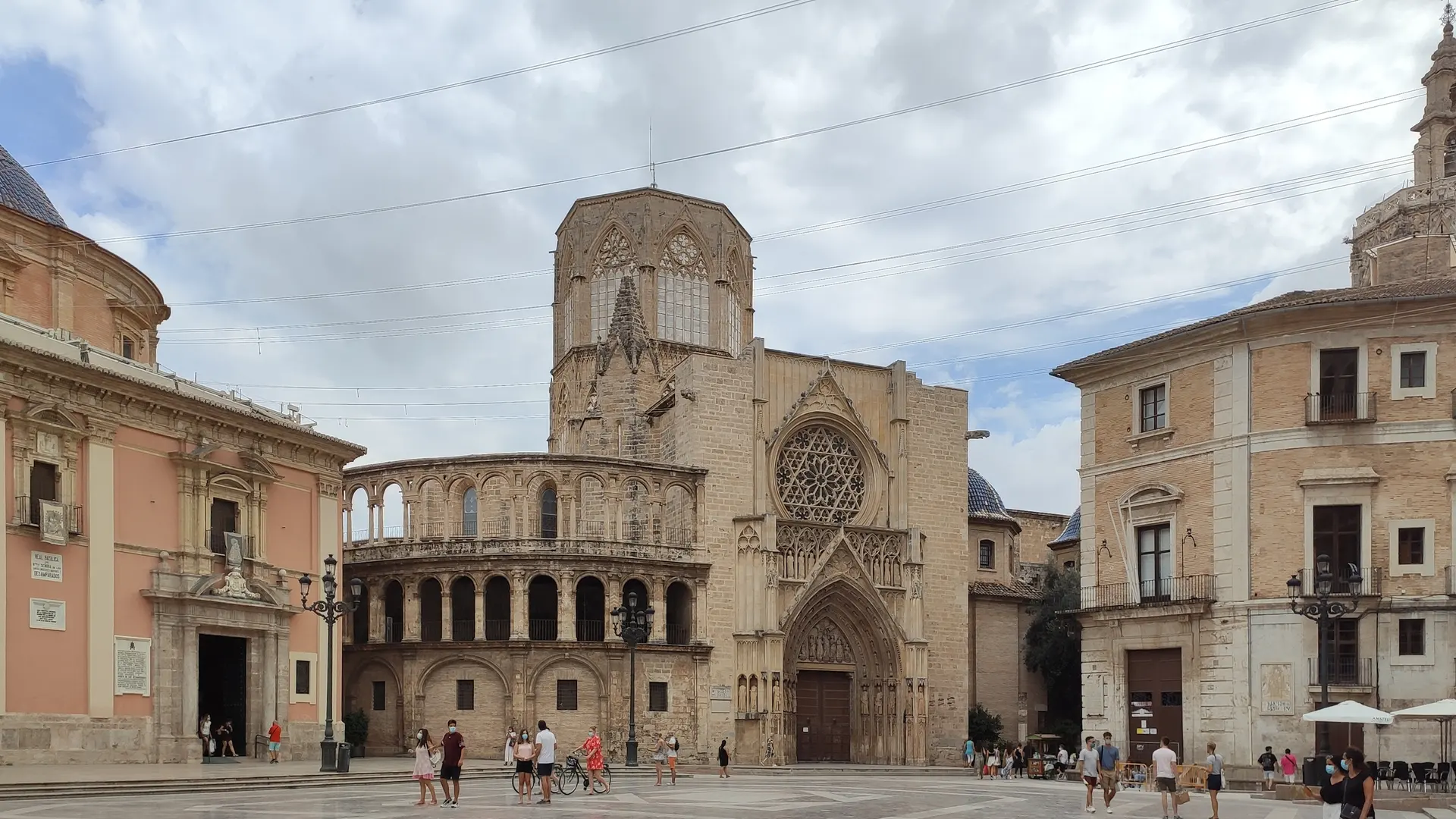
Valencia, Valencia Cathedral, Chalice of the Holy Grail
Valencia, Valencia, Spain
101.2 km away
References
Sources consulted for this page. Source categories describe the publication, not a guarantee that every claim is verified. Traditional accounts and outside interpretations may differ.
- 01Cueva de la Vieja — Turismo Alpera (official tourism site) — Ayuntamiento de AlperaofficialOfficial municipal tourism page. Confirms UNESCO status, discovery year, protected status, visitor arrangements via town hall.
- 02Rock Art of the Mediterranean Basin on the Iberian Peninsula — UNESCO World Heritage Centre (List No. 874) — UNESCO World Heritage CommitteeofficialAuthoritative UNESCO entry. Confirms 1998 inscription, Outstanding Universal Value criteria, and notes Alpera as one of the most significant constituent sites.
- 03Study of Micro-Samples from the Open-Air Rock Art Site of Cueva de la Vieja (Alpera, Albacete, Spain) for Assessing the Performance of a Desalination Treatment — Molecules 2023 — Prieto-Taboada N. et al.academicPeer-reviewed scientific study on conservation chemistry of the painted panel. Identifies pigment composition (iron oxide hematite), degradation products (gypsum, epsomite), and confirms desalination treatment effectiveness.
- 04Visit Rock Art – Levantine Alpera — Tourism Castilla-La Mancha (TCLM) — Junta de Comunidades de Castilla-La ManchaofficialRegional government tourism portal. Confirms motif details, iconographic variety, and access arrangements.
- 05Alpera Shelters — Spain Is Culture (Ministerio de Cultura) — Ministerio de Cultura y Deporte, SpainofficialSpanish government culture portal entry listing the site. Confirms asset-of-cultural-interest status and iconographic details.
- 06Rock-Shelters of La Vieja Cave and Rock Art Museum in Alpera — Prehistour / Cultural Routes of Spain — PrehistourSource contextProvides good overview of site significance, motif counts, discovery history, access, and visitor info. Part of Spain Rock Art Routes project.
- 07Rock art of the Iberian Mediterranean Basin — Wikipedia — Wikipedia contributorsacademicGood overview of Levantine art style, dating debates, and the 758-site UNESCO property. Contextualizes Alpera within the broader tradition.
- 08Caves of Spain: Cueva de la Vieja — ShowCaves.com — ShowCaves editorial teamSource contextDetailed visitor-oriented entry covering discovery story, site dimensions, access logistics, and accessibility constraints.
- 09La Cueva de la Vieja: un lugar sagrado — Lugares con Historia — Lugares con Historia editorialSource contextProvides synthesis of spiritual/sanctuary character of the site and name etymology ('Cave of the Old Woman'). Secondary source drawing on archaeological literature.
- 10La Cueva de la Vieja de Alpera — Tras las Huellas de Adaras (blog) — Tras las Huellas de AdarasSource contextPersonal travel/heritage blog with useful contextual detail on the storm-shelter discovery story and Breuil's 1911 visit.
Share a photo
Help visitors recognize Cave of La Vieja, Alpera. Every submission is reviewed before publication.