Black Madonna of Maria Loretto Peninsula
A Black Madonna's lakeside sanctuary, where Counter-Reformation devotion still holds its vigil
Understand sacred places, explore living traditions, and learn how to engage respectfully with Pilgrim Map.
Access has not been verified. Check current local guidance before planning a visit.
Klagenfurt, Carinthia, Austria

Visit essentials
A quick read before you go
- Duration
- A thoughtful visit to the chapel itself requires 30 to 45 minutes, allowing time for…
- Etiquette
- The chapel remains an active site of Catholic worship and should be treated with corresponding…
Overview
Count Johann Andreas von Rosenberg fought at White Mountain in 1620 and attributed the Catholic victory to divine protection. In gratitude, he built an Italian-style castle on an island in Lake Woerthersee and commissioned a chapel replicating Loreto's Holy House, where tradition places the Annunciation. Completed in 1660, its vaulted interior houses the Black Madonna.
Fire destroyed much of the castle in 1708, but the chapel persisted; the Rosenbergs, later Orsini-Rosenberg, maintained it for over three centuries before the City of Klagenfurt assumed stewardship in 2002.
Now restored on a peninsula amid public parkland, the chapel holds services on the 24th from April through October and hosts weddings. Local tradition describes the Black Madonna as casting a spell that compels no belief but invites presence.
Why this place is sacred
The Holy House of Loreto in Italy ranks among the most venerated Marian shrines in Catholic tradition. According to belief, this simple structure was Mary's dwelling in Nazareth, the very room where the Archangel Gabriel appeared to announce she would bear the Son of God.
How it came to rest in Loreto varies by account, whether translated by angels or transported by crusaders, but its significance as a place where heaven touched earth is uncontested by those who hold it sacred.
To replicate such a structure is no small matter. It suggests the Rosenberg family believed holiness could be carried, that the essence of the original could inhabit a faithful copy. The Maria Loretto Chapel was built to these specifications: a vaulted space holding the presence of the Black Madonna, the dark-faced Virgin whose form appears across European devotion and whose origins scholars and believers interpret differently.
The site's separation adds to its quality of being set apart. Originally an island in Lake Woerthersee, it required intentional crossing to reach. Though landfill and natural silting have since connected it to the shore, the peninsula still feels like threshold territory, neither fully of the land nor of the water. The lake wraps around on three sides. The mountains of Carinthia rise beyond.
Add to this the weight of intention. Count Rosenberg built here because he believed God had answered his prayers at White Mountain. Every stone carries that gratitude. Every prayer offered since adds to what has accumulated. Whether one understands this as sacred geometry, psychological conditioning, or genuine spiritual presence, the effect is consistent: visitors speak of something that settles over them in this space, a stillness that does not feel empty.
The chapel served a dual sacred function from its inception. First, it was a votive offering, a material expression of gratitude for divine intervention in the Catholic victory at White Mountain, a battle that determined the religious fate of Central Europe for centuries.
Second, it was a devotional space replicating the most intimate site in Marian tradition, allowing the Rosenberg family and later visitors to pray before the Black Madonna in a space modeled on the room where Christianity teaches that the Incarnation was announced.
The chapel's meaning has shifted across its three and a half centuries. What began as aristocratic devotion and Counter-Reformation commemoration has become public heritage. The battle of White Mountain has receded from living memory; few who pray here now know or care about the Thirty Years' War. What persists is the Marian devotion, the Black Madonna who draws those seeking her intercession.
The 1708 fire and subsequent rebuilding began a pattern of loss and restoration that continues to this day. The most recent renovation in 2007-2008 restored the chapel to its current condition, preserving 17th and 18th-century icons and fragments of the original altar. The transfer of ownership from the Orsini-Rosenberg family to the City of Klagenfurt in 2002 marked a transition from private aristocratic chapel to public sacred space, democratizing access without diminishing devotion.
Experience and orientation
The approach matters. You come to Maria Loretto through parkland, the castle's grounds now open to all. The lake appears in glimpses through trees. The peninsula narrows, and then you arrive at a space that feels cupped by water on three sides, the Austrian Alps visible in the distance.
The chapel itself is intimate. This is no soaring cathedral but a vaulted room scaled to the Holy House it replicates. The proportions create an enclosing quality, as though the space wraps around rather than rising above. Light enters softened by the lakeside atmosphere. The Black Madonna waits.
Those who come here consistently describe a quality of stillness that operates differently from ordinary quiet. The noise in the mind, the to-do lists and anxieties that accompany most travel, seem to lose traction. Some attribute this to the Madonna herself, to centuries of prayer concentrated in one small room. Others to the lake and light and separation from ordinary ground. The distinction may matter less than the effect.
The art on the walls spans the chapel's history: 17th and 18th-century icons, fragments preserved from the original altar, paintings that have witnessed generations of prayer. These are not museum pieces arranged for aesthetic appreciation but living elements of a space that continues to function as intended. People still come here to pray, not to tour.
Wedding parties often use the chapel now, adding celebrations of new beginnings to a space that has seen the full span of human petition: gratitude and grief, hope and desperation, the thousand things people bring to the Mother of God when they have nowhere else to turn.
The chapel rewards those who bring their own question. Come not merely to observe but to sit with whatever occupies you, whatever needs resolution or release. The Black Madonna does not demand belief; she has witnessed skeptics and devotees alike. What she offers, if anything, depends on what you bring.
If you arrive outside service times, you may find the chapel empty. Do not rush to fill the silence. Let it hold you for a moment before moving. Notice how light falls through the windows. Notice what arises when you stop moving.
For those familiar with Marian devotion, this is a replica of the room where Gabriel spoke to Mary. Let that awareness inform your time here, whether you understand it as historical fact, sacred myth, or something between. For those unfamiliar, simply notice that you stand in a space where people have prayed for three and a half centuries, and something of that intention remains in the walls.
Context and lineage
In 1620, Protestant Bohemian nobles revolted against Habsburg rule, igniting what would become the Thirty Years' War. The conflict's first decisive moment came at White Mountain near Prague, where Catholic forces crushed the rebellion and secured Habsburg control of Bohemia for the next three centuries. Among those who fought that day was Count Johann Andreas von Rosenberg.
The Count attributed his survival, perhaps his side's victory, to divine protection. In thanksgiving, he would build a testament to that gratitude. He chose an island in Lake Woerthersee near Klagenfurt and commissioned a castle in the Italian style, complete with a chapel replicating the Holy House of Loreto.
The family's devotion to Italian Catholic culture ran deep: they built in Italian fashion, named their island after the Italian shrine, and eventually adopted the name of an Italian princely family, becoming Orsini-Rosenberg.
The Count began construction in 1652 but did not live to see its completion. His sons, Wolfgang Andrae and Georg Niklas, finished the chapel in 1660. For the next 342 years, the Orsini-Rosenberg family maintained the site as their private domain, hosting services and preserving the devotion their ancestor had established.
The chapel's lineage is surprisingly continuous. Built by the Rosenberg family, maintained by their Orsini-Rosenberg descendants, and now stewarded by the City of Klagenfurt, the space has never ceased its devotional function. Fire in 1708 destroyed much of the original castle but the sacred center persisted. Restoration in 2007-2008 brought the chapel to its current condition.
This unbroken chain of care distinguishes Maria Loretto from many European sacred sites, which have passed through periods of abandonment, secular appropriation, or dramatic repurposing. The Black Madonna has watched over the same space, hearing the same prayers, since the 17th century. The family that built the chapel to honor her eventually took an Italian name to match their Italian devotion, as though the Madonna's presence gradually Italianized her Austrian patrons.
Black Madonna of Loreto
deity
The dark-faced image of the Virgin Mary whose original resides in the Basilica della Santa Casa in Loreto, Italy. Black Madonnas appear across European devotion; their darkness has been variously attributed to candle smoke, deliberate artistic choice, or connections to earlier goddess traditions. The replica at Maria Loretto continues to draw those seeking Mary's intercession.
Count Johann Andreas von Rosenberg
historical
The Austrian nobleman who fought at the Battle of White Mountain and, in gratitude for the Catholic victory, commissioned the castle and chapel at Maria Loretto. His vow to honor the Black Madonna of Loreto shaped the site's sacred identity.
Orsini-Rosenberg Family
historical
The Rosenberg descendants who, after 1683, adopted the name of the Italian princely Orsini family and maintained the chapel for over three centuries until transferring ownership to the City of Klagenfurt in 2002.
Traditions and practice
Catholic devotion to the Black Madonna of Loreto follows forms developed over centuries. The faithful approach her image with prayers of petition and thanksgiving, seeking her intercession as Mother of God. Rosary devotions, litanies to the Blessed Virgin, and the Angelus hold particular resonance in a chapel modeled on the room where tradition holds the Annunciation occurred.
The Visitation of the Blessed Virgin Mary on July 2 marks the day Mary visited her cousin Elizabeth after learning of her pregnancy, a feast with special significance for Loreto chapels.
The monthly services on the 24th likely reference the date of Loreto devotions, though the specific connection to this number varies across sources. Mass at 6pm from April through October maintains the rhythm of communal worship that has marked this space since its completion.
Most visitors today encounter Maria Loretto outside of service times, finding it as a quiet chapel open for private prayer and contemplation. Wedding ceremonies have become a prominent contemporary use, as couples seek the blessing of the Black Madonna for their new union. The setting, with lake and mountains visible beyond the castle grounds, adds natural beauty to the sacred significance.
Spiritual seekers who are not practicing Catholics may find their own ways to engage: sitting in silence before the Madonna, lighting candles if available, or simply allowing the accumulated stillness of the space to work upon them. The chapel does not require belief for entry; it simply offers what it has: centuries of prayer concentrated in a small room.
If you come seeking more than sightseeing, consider arriving with an intention. What question accompanies you? What needs resolution, release, or blessing? Bring it into the chapel not as demand but as offering, placing it before the Madonna as countless others have placed their burdens here.
Spend time with the art. The 17th and 18th-century icons and paintings are not decoration but devotion made visible. Notice what draws your eye, what seems to address you. These images have witnessed generations of seekers; perhaps they recognize something in your presence.
If you can attend a monthly service, the experience shifts. To pray with others in this space, to add your voice to the accumulated voices of centuries, connects you to the living tradition rather than its historic shell. Even if you do not share the faith, witnessing active devotion reveals what the space was built for.
Roman Catholicism - Loreto Devotion
ActiveThe chapel is a faithful replica of the Holy House of Loreto in Italy, traditionally believed to be Mary's dwelling where the Annunciation occurred. For Catholics, this makes the chapel a space of particular Marian significance, where prayers are offered in architectural proximity to one of Christianity's foundational events. The Black Madonna adds the specific devotional weight of dark-faced Marian images, which carry their own traditions of miraculous intercession.
Monthly Mass is celebrated on the 24th of each month from April through October at 6pm. The Feast of the Visitation (July 2) holds particular significance. Traditional Marian devotions including the Rosary, Angelus, and litanies to the Blessed Virgin are appropriate practices in this space. Wedding ceremonies are frequently celebrated here, seeking the Madonna's blessing on new unions.
Counter-Reformation Memorial
HistoricalThe chapel was originally built to commemorate the decisive Catholic victory at the Battle of White Mountain in 1620, a turning point in the Thirty Years' War that secured Habsburg control of Bohemia and the triumph of the Counter-Reformation in Central Europe. Count Rosenberg's vow after surviving the battle directly shaped the site's creation.
The commemorative function has largely faded from active practice. While the chapel's origin is known, contemporary services do not typically focus on the Counter-Reformation context. The historical significance is preserved through documentation rather than ongoing ritual.
Perspectives and open questions
The Maria Loretto Chapel sits at the intersection of religious devotion, aristocratic culture, and European political history. Understanding it requires holding multiple frames: the Catholic tradition of Marian veneration, the Counter-Reformation context of its construction, and contemporary perspectives on Black Madonna devotion that range from orthodox theology to alternative spirituality.
Scholarly perspective
Historians place the Maria Loretto Chapel within the cultural politics of the Counter-Reformation. The Rosenberg family's construction of an Italian-style castle with a Loreto replica illustrates how Austrian nobility expressed Catholic identity in the aftermath of the Thirty Years' War. Their adoption of the Orsini name in 1683 extends this pattern of cultural aspiration toward Italian Catholicism.
The Battle of White Mountain, which inspired the chapel's construction, was among the most consequential events in Central European history, determining the religious and political character of Bohemia for three centuries. The chapel thus serves as a material artifact of Counter-Reformation victory, a thanksgiving offering that simultaneously commemorated Catholic triumph and demonstrated aristocratic piety.
Art historians note the chapel's preservation of 17th and 18th-century devotional art, including icons and altar fragments that survived the 1708 fire and subsequent restorations. The site represents a relatively intact example of Baroque Marian devotion in the Austrian context.
Living and traditional perspectives
Within Catholic tradition, the Maria Loretto Chapel holds significance as a replica of one of Christianity's most sacred Marian sites. The Holy House of Loreto is traditionally understood as Mary's dwelling in Nazareth, the room where the Archangel Gabriel announced she would bear the Son of God. To build a faithful replica is to extend that sacred geography, to create a space where pilgrims who cannot reach Italy might still pray in proximity to that foundational moment.
The Black Madonna adds another layer. Dark-faced images of the Virgin carry their own devotional weight, often associated with particular miraculous intercessions and healing powers. Those who pray before the Klagenfurt Madonna do so within a tradition that understands certain images as channels of grace, windows through which the Mother of God hears and responds to her children.
Monthly services maintain this living tradition. The chapel is not a monument but a functioning sacred space where the faithful still gather to celebrate Mass and seek the Virgin's intercession.
Alternative interpretations
Black Madonna devotion has attracted attention from scholars and seekers who perceive connections to pre-Christian goddess traditions. Some interpret the dark coloring of these images as deliberate reference to earth goddesses, to the dark fertility of soil and womb, to spiritual currents that Christianity absorbed rather than replaced. From this perspective, devotion to the Black Madonna participates in something older than the Church that houses it.
The lakeside island setting of Maria Loretto resonates with those who understand sacred sites as emerging from natural features. Water, mountains, and places set apart from ordinary land appear across traditions as markers of spiritual significance. Whether the Rosenbergs consciously chose their island for these reasons or simply for its beauty and defensibility, the site now carries associations with natural sacredness that complement its Christian meaning.
These alternative perspectives are not endorsed by the Catholic Church but represent genuine interpretive currents among contemporary spiritual seekers.
Open questions
Several mysteries attend the Maria Loretto Chapel. The 1708 fire destroyed much of the original castle; what precisely was lost and how faithfully the restoration recreated the original remain partially documented. The current appearance of the Black Madonna statue and its relationship to the original 17th-century image are not definitively established in readily available sources.
The site's transformation from island to peninsula through landfill and natural silting altered its character in ways not precisely dated. When the separation from the mainland was complete and when it ended affect how we understand the chapel's original sense of being set apart.
The deeper question concerns all replica sacred sites: can holiness be transferred through faithful replication? The Rosenbergs believed the answer was yes. Whether the Maria Loretto Chapel carries genuine spiritual presence or merely commemorates such presence elsewhere remains, as always, a matter for each visitor to discern.
Plan your visit
Access and arrival
Klagenfurt offers lodging at all price points, from budget pensions to lakeside luxury hotels. The city center lies a short distance from Maria Loretto. For those seeking extended time on Lake Woerthersee, resort towns like Velden and Poertschach offer additional options along the lake's northern shore.
Respectful visit
Modest attire befits the space. Covered shoulders and knees are appropriate, though enforcement is unlikely. This is not about rules but about recognition: you enter a Catholic sacred space where the Virgin Mary is honored. Dress as though you understood this.
Photography is generally permitted but should be practiced with restraint. Do not use flash, which disrupts the atmosphere and can damage historic art. Do not photograph people at prayer without their explicit consent, which in practice means do not photograph people at prayer. If others are in the chapel, consider waiting until they leave before taking pictures.
The goal is documentation that does not diminish the experience for yourself or others. A single thoughtful photograph may serve memory better than dozens captured while attention splits between camera and place.
Traditional Catholic offerings such as candle lighting may be available. If offering candles are present, follow the instructions provided. Financial offerings for the chapel's maintenance may be welcomed through a donation box.
Do not leave physical objects, flowers, or personal items at the altar or elsewhere in the chapel unless specifically invited to do so. Keep any spiritual offerings internal: prayers, intentions, gratitude.
Access may be limited during services, weddings, and private events. The castle grounds are public parkland, but the chapel itself may have specific hours. Check schedules with Visit Klagenfurt or local tourism offices before visiting if interior access is essential to your plans.
The chapel may be closed between monthly services and during private events such as weddings. Check availability before planning a visit centered on interior access. Respect any barriers or roped areas; some spaces within the chapel may be reserved or under conservation.
This remains a living site of Catholic devotion. Visitors of other faiths or no faith are welcome, but treating the chapel as mere tourist attraction rather than sacred space diminishes the experience for everyone. Maintain the quiet that the space requests.
Current practical details
Address
Waaggasse 15, 9020 Innere Stadt, Austria
Phone
Hours
Hours, fees, and access can change — verify on the official source before you travel. Practical details last checked Jun 2026.
Location
Map loads as you approach this section.
Pilgrim reflections
A portrait of encounter, not a score
Pilgrims describe what they felt, how present they could become, and whether the place would shape a journey. There are no stars and no ranking of traditions.
No reviewed reflections yet
The first pilgrims can help describe the character of being here.
Share a reflection
Available after an account-backed “Been there.” Every reflection is reviewed before publication.
Nearby sacred places
Explore other sacred places in the region. Proximity does not establish access or travel time; check each place’s guidance.

City on the Magdalensberg
Magdalensberg, Carinthia, Austria
14.6 km away

Gurk Cathedral and Tomb of St Hemma
Gurk, Gurk, Carinthia, Austria
27.9 km away
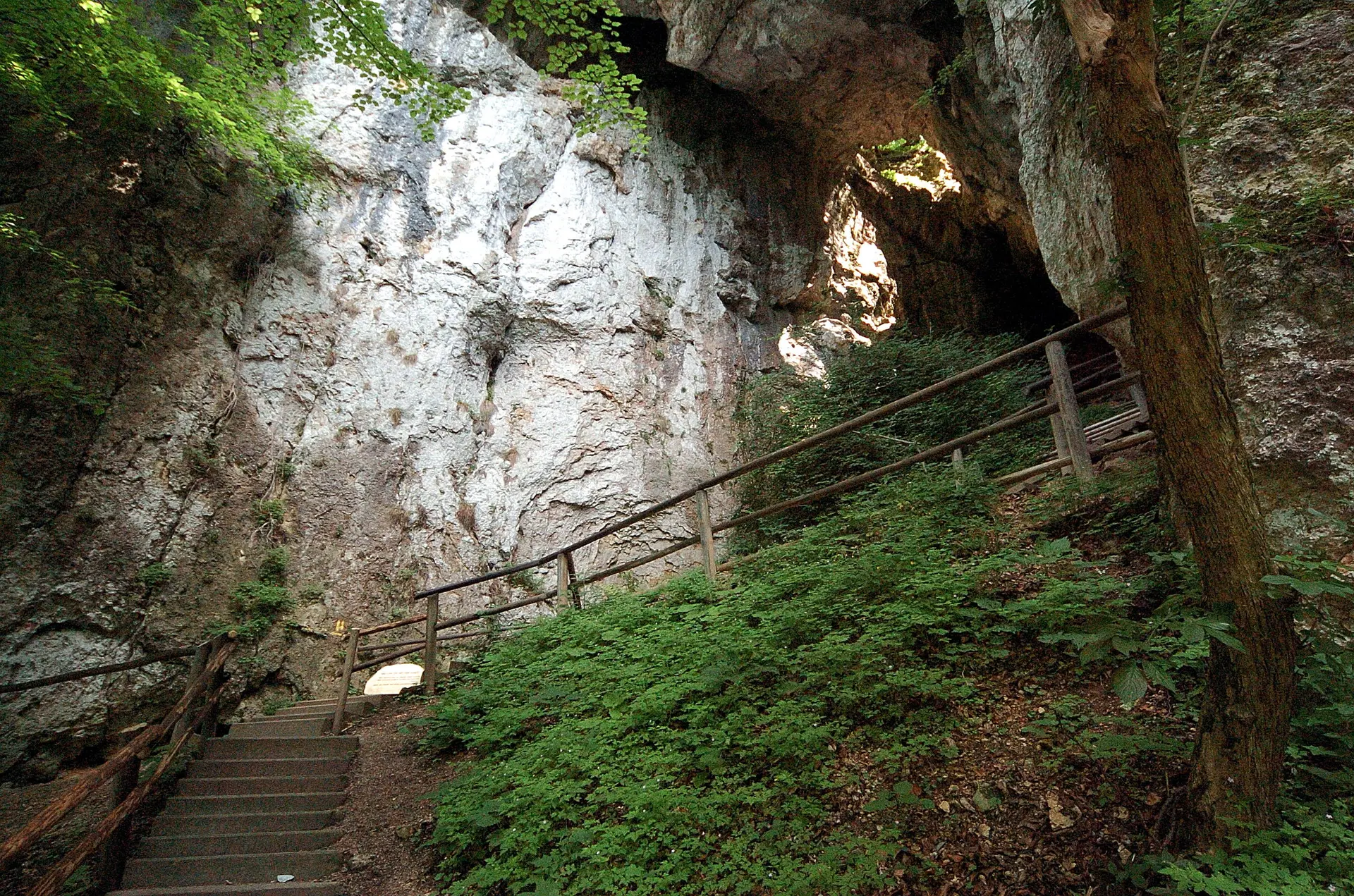
Rosalia Grotto and Hemma Spring
Globasnitz, Globasnitz, Carinthia, Austria
28.4 km away

Hemmaberg Pilgrimage Church
Globasnitz, Globasnitz, Carinthia, Austria
28.6 km away
Share a photo
Help visitors recognize Black Madonna of Maria Loretto Peninsula. Every submission is reviewed before publication.