Basilica Maria Loreto, St. Andra
A Carinthian echo of the Holy House where, tradition holds, heaven first touched earth
Understand sacred places, explore living traditions, and learn how to engage respectfully with Pilgrim Map.
Access has not been verified. Check current local guidance before planning a visit.
St. Andrä im Lavanttal, Carinthia, Austria
Read the sources
Visit essentials
A quick read before you go
- Duration
- A brief visit to view the architecture and pay respects at the Loreto chapel takes approximately…
- Etiquette
- As an active Catholic basilica, Maria Loreto expects respectful behavior befitting a place of…
Overview
Basilica Maria Loreto in St. Andra derives sacred power from what it represents. In 1647, Prince-Bishop Albert von Priamis returned from Italy after visiting Loreto, the Marian sanctuary whose small stone house is believed to be where Mary received the angel Gabriel. Moved by the encounter, he commissioned replicas of both house and Black Madonna for his Lavanttal diocese.
The baroque church built around the chapel from 1678 to 1683 remains one of Carinthia's most significant pilgrimage destinations. Twin sixty-meter towers with copper onion domes rise against the Alpine foothills, while illusionistic paintings draw the eye through forty meters of interior sacred space.
Pilgrims are drawn by intention embedded in stone, centuries of prayer, and the Catholic hinge of history when divinity entered the human world through a young woman's yes. The replica is not the original, yet for nearly four hundred years pilgrims have reported that something of Loreto's grace reached this place.
Sites inside
Why this place is sacred
The concept of sacred replication runs deep in Catholic tradition. Copies of the Holy Sepulchre spread across medieval Europe. Replicas of the Scala Santa, the stairs Christ climbed to Pilate's judgment, exist in churches from Rome to Quebec. The Holy House of Loreto inspired perhaps the most widespread devotional copying of all, with Loreto chapels appearing across the Catholic world during the Counter-Reformation.
What makes such replication meaningful? The question touches something fundamental about how sacredness works. In the rationalist view, a copy is merely a copy, its significance purely symbolic. But pilgrims have consistently reported that something transfers, that grace is not diminished by geography, that devotion creates its own pathways for the sacred to enter.
Prince-Bishop Albert von Priamis understood this when he brought Loreto to Carinthia. The original Santa Casa in Italy is a small stone structure of three walls, its fourth side open where it once joined a grotto. According to accounts dating to the fourteenth century, this house was transported by angels from Nazareth after the Holy Land fell to Muslim control.
Modern scholarship suggests the house may have been physically relocated by a Byzantine noble family named Angelos, the name lending itself to the legend of angelic flight. Either way, the structure became one of Europe's most venerated sites.
The Carinthian replica brings the essence of that devotion to the Lavanttal. The Black Madonna, modeled on Loreto's dark-faced Virgin, gazes with the same serene gravity as her Italian original. The chapel within the church recreates the dimensions and atmosphere of the Santa Casa. And for nearly four centuries, pilgrims have come seeking the same grace attributed to the original: healing, consolation, and encounter with the moment when Mary said yes to the Incarnation.
The chapel's founding in 1647 served multiple purposes that, in the Catholic understanding of the era, were inseparable. Prince-Bishop Albert von Priamis sought to bring the Loreto devotion to his diocese, providing local pilgrims access to a grace otherwise requiring distant travel. The timing, during the intense Counter-Reformation period, also served to strengthen Catholic identity in a region where Protestantism had made inroads. The Santa Casa devotion was explicitly associated with Catholic restoration.
Yet to reduce the foundation to politics misses what the bishop brought back from Italy: a genuine spiritual encounter he wished to share with his people.
The original 1647 chapel was modest. Between 1678 and 1683, Prince-Bishop Kaspar von Stadion undertook the construction of the magnificent baroque church that surrounds it today, completed in the year of the second Turkish siege of Vienna. The timing felt providential to contemporaries, connecting Marian protection with the defense of Christendom.
The Diocese of Lavant, which St. Andra had served as cathedral seat since 1228, relocated to Maribor in 1859, leaving the pilgrimage church without its former institutional prominence. Yet the pilgrims continued coming. Jesuits cared for the site from 1860, followed by Benedictines from 2007. The elevation to Basilica minor by Pope Francis in 2014 recognized what centuries of pilgrimage had already established: this is one of Carinthia's most significant Marian sanctuaries, second only to Maria Luggau in regional importance.
Experience and orientation
The approach prepares you. The twin towers with their copper-green onion domes emerge above the Lavanttal landscape as you near St. Andra, orientation points that have guided pilgrims for centuries. The location on a hill elevates the church above the town, requiring a physical ascent that mirrors the interior intention.
Inside, the eye travels upward. The nave stretches forty meters long and rises seventeen meters high, but the illusionistic ceiling paintings of the eighteenth century create an impression of even greater height, drawing vision toward heaven. The baroque aesthetic serves the theological: earth straining toward the divine, matter transformed by sacred intention.
But the heart of the experience lies in the Loreto chapel itself, the replica of Mary's house nested within the larger church. Here the scale shifts from grand to intimate. The space is small, enclosed, recalling a room rather than a sanctuary. The Black Madonna gazes from her position, dark-faced and serene, holding the infant Christ.
The darkness of her features, whatever its origins, has accrued its own significance: suffering transformed, the shadow side of the sacred, mystery that does not explain itself.
Pilgrims who come specifically for devotion, rather than architectural tourism, often describe a quality of presence they did not expect. The accumulated prayers of nearly four centuries seem to have saturated the stones. Those who kneel and stay find the silence not empty but full, as though listening were happening in both directions. Whether this reflects psychology, grace, or something for which we lack adequate vocabulary, the reports are consistent enough to take seriously.
If you come seeking more than photographs, consider arriving without a schedule. The building will reward attention to detail: the episcopal throne with its Viennese embroidery from the 1760s, the Augsburg reverse glass painting of the Santa Maria Maggiore icon, Jakob Zanussi's masterwork depicting the Annunciation. But these can wait.
Go first to the Loreto chapel. Sit or kneel. Let the space work at its own pace. The Black Madonna does not demand anything of you. She simply gazes. In that gaze, pilgrims have found what they needed to find, though each has named it differently.
If your visit coincides with a wedding ceremony, as it well might at one of Austria's most popular wedding churches, consider this an invitation rather than an interruption. The sacrament of marriage occurring where the Annunciation is commemorated carries its own resonance: human love consecrated in the place associated with divine love entering the world.
Context and lineage
The story begins not in Austria but in Italy, and not in the seventeenth century but the thirteenth. According to tradition, when Muslim forces took control of Nazareth in 1263, the small house where Mary had lived and received the Annunciation was miraculously transported westward. First to Dalmatia in 1291, then to Recanati in 1294, and finally to a laurel grove near Ancona in 1295, the place that would give Loreto its name.
Historical research suggests a more earthly explanation: a Byzantine noble family named Angelos, fleeing the Holy Land, may have physically relocated the structure stone by stone. The family name, meaning angels in Greek, could have inspired the legend of miraculous flight.
Yet the distinction between miracle and human devotion willing to transport a house across continents may matter less than the result: one of Europe's most visited Marian sanctuaries, drawing pilgrims who seek connection to the moment Christians hold as history's turning point.
Prince-Bishop Albert von Priamis made this pilgrimage and returned transformed. The encounter at Loreto moved him deeply enough that he commissioned a replica of both the Santa Casa and its Black Madonna for his diocese. In 1647, the chapel was complete, bringing Loreto to the Lavanttal. The baroque church that followed, rising between 1678 and 1683 under Prince-Bishop Kaspar von Stadion, provided a fitting setting for this precious replica.
St. Andra served as the seat of the Diocese of Lavant from 1228 until 1859, when the diocese relocated to Maribor, now in Slovenia. Throughout this period, the pilgrimage church established in 1647 grew in importance, attracting devotees seeking the grace associated with the Loreto tradition.
Custodianship has passed through several hands. After the diocesan relocation, Jesuits assumed care of the pilgrimage church in 1860, maintaining its devotional life through times of political and social upheaval. In 2007, Benedictine monks took responsibility for the site, bringing their tradition of liturgical prayer and hospitality to pilgrims.
The elevation to basilica status in 2014 placed Maria Loreto among the Catholic Church's distinguished churches worldwide, those granted special connection to the Pope and recognized for historical, spiritual, or artistic significance. Today, pilgrims continue coming as they have for nearly four centuries, adding their prayers to the accumulated devotion of generations.
Prince-Bishop Albert von Priamis
founder
Prince-Bishop of Lavant from 1640 to 1657, whose pilgrimage to Loreto, Italy, inspired him to establish the Maria Loreto chapel in 1647. His act of devotional replication brought the Loreto tradition to Carinthia.
Prince-Bishop Kaspar von Stadion
builder
Prince-Bishop of Lavant who commissioned the current baroque church surrounding the Loreto chapel. The building was completed in 1683, the year of the second Turkish siege of Vienna.
The Virgin Mary
deity
The Black Madonna of Maria Loreto represents Mary as she appeared at the Annunciation. Catholic teaching holds that this moment, when Mary accepted the angel Gabriel's message, made possible the Incarnation of Christ.
Pope Francis
historical
Elevated the pilgrimage church to Basilica minor status on July 21, 2014, making it only the second basilica in Carinthia and affirming its significance as a pilgrimage destination.
Traditions and practice
The practices of Maria Loreto follow the Catholic sacramental tradition. Daily and Sunday masses are celebrated in the basilica, maintaining the rhythm of prayer that has continued here since the seventeenth century. Marian feast days receive particular emphasis, especially the Feast of the Annunciation on March 25 and the Feast of Our Lady of Loreto on December 10.
Pilgrimage devotion centers on the Loreto chapel and its Black Madonna. The traditional practice involves kneeling before the image in prayer, bringing intentions and petitions as pilgrims have done at Loreto shrines across Europe. The act replicates what pilgrims do at the original Santa Casa in Italy: placing oneself in the space associated with the Annunciation and opening to whatever grace that connection might bring.
The lighting of votive candles represents another traditional practice, the small flames standing for prayers that continue after the pilgrim departs. Confession is available, allowing pilgrims to approach the shrine with cleared conscience, a traditional element of Catholic pilgrimage spirituality.
The basilica is recognized as one of Austria's most popular wedding churches. Couples from across the region choose to marry in this space, their vows spoken before the Black Madonna who received her own divine commission in the house this chapel replicates. The connection between the Annunciation, the beginning of sacred history, and the sacrament beginning a marriage carries resonance for those who understand both theologically.
Benedictine monks who have cared for the site since 2007 bring their tradition of structured liturgical prayer to the pilgrimage church. Their presence ensures the regular celebration of the Divine Office, the cycle of psalms and prayers that monastic communities have maintained for fifteen centuries.
The basilica sits along the 266-kilometer Marienpilgerweg, a Marian pilgrimage route through Carinthia connecting Maria Rojach to Maria Luggau. Contemporary pilgrims walking this route find in Maria Loreto a significant station, a place to rest, pray, and deepen their journey before continuing.
For those seeking more than a brief visit, consider timing your arrival to attend mass. Participating in the Eucharist in a space consecrated to the Annunciation adds a dimension that architectural appreciation alone cannot provide. Check schedules in advance, as times may vary.
Spend time in the Loreto chapel specifically. This is the heart of the site, the replica of the Santa Casa that draws pilgrims across centuries. Sit or kneel in the small space. Let the silence do its work. Bring an intention if you have one, or simply come open to what arises.
If you are walking the Marienpilgerweg, consider Maria Loreto as more than a waypoint. The route's Marian focus finds particular concentration here. Allow enough time to let the basilica work on you rather than passing through.
Roman Catholicism
ActiveThe Basilica Maria Loreto is, alongside Maria Luggau, the most significant Marian pilgrimage church in Carinthia. Its elevation to Basilica minor status by Pope Francis in 2014 places it among the Catholic Church's distinguished churches worldwide. The site maintains continuous Catholic worship under Benedictine care, with regular masses, pilgrimage devotions, and wedding ceremonies.
Daily and Sunday masses follow the Roman Catholic liturgical calendar. Pilgrimage devotion centers on the Loreto chapel and Black Madonna, where visitors kneel in prayer bringing intentions and petitions. Confession is available. Votive candles may be lit. The Feast of the Annunciation (March 25) and Feast of Our Lady of Loreto (December 10) receive particular emphasis.
Loreto Devotion
ActiveThe church perpetuates the Loreto tradition, one of the most widespread Marian devotions of Counter-Reformation Catholicism. The Santa Casa in Loreto, Italy, traditionally believed to be the house where Mary received the Annunciation, inspired replicas across Catholic Europe. The Maria Loreto basilica is among the most significant of these Carinthian expressions of a pan-European devotional movement.
Pilgrims visit the replica Loreto chapel seeking connection to the mystery of the Incarnation. The Black Madonna, modeled on the Loreto original, receives veneration from those who understand her as present at the moment when heaven first touched earth. Walking the 266-kilometer Marienpilgerweg through Carinthia, with Maria Loreto as a major station, represents a contemporary expression of this pilgrimage tradition.
Perspectives and open questions
The Basilica Maria Loreto can be understood from multiple angles: as a Counter-Reformation devotional project, as a masterpiece of Carinthian baroque architecture, as a node in the broader Loreto tradition spanning Europe, or as a thin place where pilgrims encounter grace. Each perspective illuminates something true. None exhausts the site's meaning.
Scholarly perspective
Art and architectural historians recognize the Basilica Maria Loreto as one of the finest baroque churches in Carinthia. The spatial effect of the forty-meter nave, the eighteenth-century illusionistic paintings, and the integration of the Loreto chapel within the larger structure demonstrate sophisticated understanding of how architecture can serve theological ends.
Historians of Counter-Reformation Catholicism place the 1647 foundation within the broader movement of Loreto devotion that spread replicas of the Santa Casa across Catholic Europe. This was not merely piety but strategy: the Loreto tradition, emphasizing the Incarnation and Mary's role in salvation, served to reinforce distinctively Catholic teaching against Protestant emphasis on scripture alone. Prince-Bishop Albert von Priamis's foundation thus combined personal devotion with institutional purpose.
The site's relationship to the Diocese of Lavant, its survival after the diocese relocated to Maribor, and its elevation to basilica status in 2014 offer material for ecclesiastical historians studying how pilgrimage sites maintain significance across changing institutional circumstances.
Living and traditional perspectives
Catholic teaching understands the Basilica Maria Loreto as a genuine extension of the Loreto grace. The replica Santa Casa, while not the original structure from Nazareth, participates in the same devotional reality. Grace does not diminish with distance. What was available to pilgrims at Loreto in Italy became available to Carinthians through the bishop's act of devotional replication.
The Black Madonna represents Mary as she appeared at the Annunciation: the young woman who received Gabriel's message and, through her consent, made possible the Incarnation of Christ. To pray before this image is to place oneself in the presence of that moment, to seek the grace that flowed from Mary's yes.
The basilica's elevation by Pope Francis in 2014 represents official Church recognition of what pilgrims have experienced for nearly four centuries: this is a place where encounter happens, where prayers are heard, where the boundary between earth and heaven thins.
Alternative interpretations
The Black Madonna tradition has attracted alternative interpretations suggesting that dark-faced Madonnas preserve pre-Christian goddess veneration within Catholic form. The widespread appearance of such images across Europe, their association with particular healing and protective powers, and their often mysterious origins have led some to see them as survivals of earlier religious impulses absorbed into Christian practice.
The Loreto legend itself, with its account of a house transported by angels, has been analyzed both as miracle narrative and as preservation of sacred space during religious upheaval. The Angelos family theory provides historical grounding while preserving the story's essential meaning: that sacred things require protection and may travel to find safer ground.
The twentieth-century designation of Our Lady of Loreto as patroness of aviation draws on the flight legend in ways that connect ancient narrative to modern technology, an interesting example of tradition adapting to contemporary context.
Open questions
Much remains uncertain about the original Santa Casa in Loreto, Italy, on which this replica is based. Archaeological analysis has confirmed the structure's Holy Land origins, but questions persist about exactly when and how it arrived in Italy. The angel transport legend and the Angelos family theory each explain some evidence while leaving gaps.
The Black Madonna's dark complexion, present in this replica as in the Italian original and countless Loreto copies, has never been definitively explained. Age and candle smoke provide one theory; intentional design reflecting Song of Solomon imagery another; pre-Christian goddess inheritance a third. The mystery persists, adding rather than subtracting from the image's power.
What makes sacred replication work, what allows a copy to carry grace associated with an original, touches theological and phenomenological questions that resist simple answers. Pilgrims at Maria Loreto, like pilgrims at Loreto replicas across Europe, report genuine encounter. How this happens remains, perhaps appropriately, beyond full explanation.
Plan your visit
Access and arrival
St. Andra im Lavanttal offers local hotels and guesthouses suitable for pilgrims and visitors. The broader Lavanttal region provides additional accommodation options. Those walking the Marienpilgerweg will find the town a convenient resting point with basic services.
Respectful visit
Modest dress appropriate for a Catholic church is expected. Shoulders and knees should be covered. This is not rigidly enforced but represents respect for the sacred space and those who come to worship. The basilica is a place where people marry, pray, and seek encounter with the divine. Dress as though these things matter.
Personal photography is generally permitted but should be practiced mindfully. Do not photograph during services or when others are clearly engaged in prayer. Flash and tripods disrupt the atmosphere the space is meant to create. Consider whether you need a photograph, or whether some experiences are better held in memory alone.
Votive candles may be lit with appropriate donation. These small flames represent prayers, intentions that continue burning after you leave. The practice is ancient and meaningful. If it speaks to you, participate. If not, respect those for whom it does.
Monetary offerings support the ongoing maintenance and ministry of the basilica. The Benedictine monks who care for the site depend on pilgrims' generosity to continue their work.
Wedding ceremonies may temporarily close the church to general visitors. This is not inconvenience but living tradition: the sacrament of marriage celebrated in the space commemorating the Annunciation. If your visit coincides with a ceremony, consider it a blessing witnessed rather than an obstruction encountered.
During services, remain at the back of the church if you wish to observe. Do not walk through the nave or approach the altar. The Loreto chapel may be accessed between services but should be approached with particular reverence during mass.
Wedding ceremonies occur frequently and may temporarily restrict access to the church interior. This is not obstruction but the living practice of a pilgrimage site, the sacred continuing to unfold in present time. Check schedules if timing is important to your visit.
The basilica is an active place of worship. Behavior appropriate to this context is expected. Silence or quiet conversation, respectful dress, and awareness that others may be in prayer should govern your presence.
Current practical details
Address
Sankt Andrä 101, 9433 St. Andrä, Austria
Hours
Hours, fees, and access can change — verify on the official source before you travel. Practical details last checked Jun 2026.
Location
Map loads as you approach this section.
Pilgrim reflections
A portrait of encounter, not a score
Pilgrims describe what they felt, how present they could become, and whether the place would shape a journey. There are no stars and no ranking of traditions.
No reviewed reflections yet
The first pilgrims can help describe the character of being here.
Share a reflection
Available after an account-backed “Been there.” Every reflection is reviewed before publication.
Nearby sacred places
Explore other sacred places in the region. Proximity does not establish access or travel time; check each place’s guidance.

Black Madonna of Lavanttal
Sankt Andrä, Carinthia, Austria
0.0 km away

St Paul im Lavanttal Abbey
St. Paul im Lavanttal, St. Paul im Lavanttal, Carinthia, Austria
8.1 km away

Hemmaberg Pilgrimage Church
Globasnitz, Globasnitz, Carinthia, Austria
26.9 km away
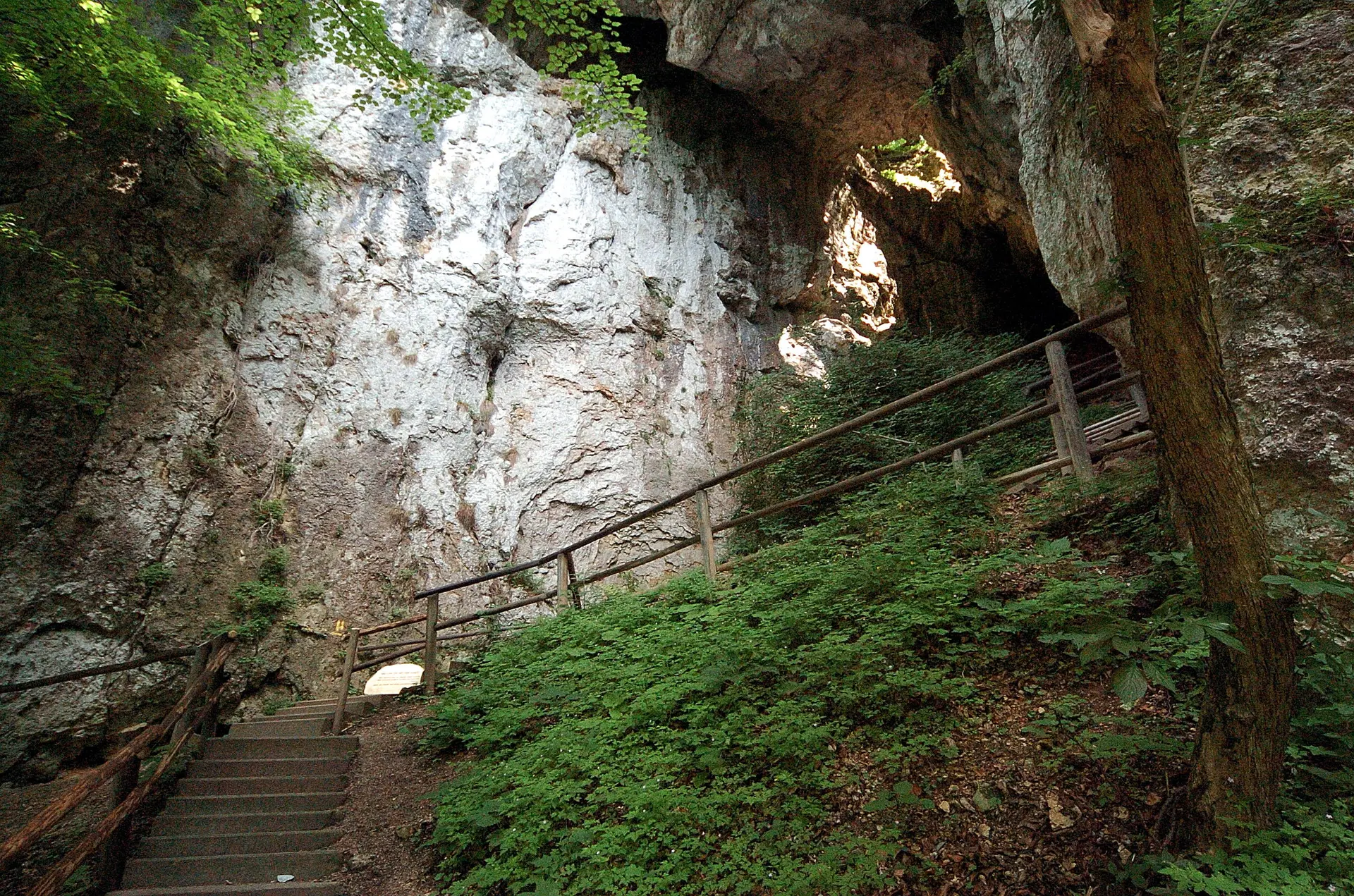
Rosalia Grotto and Hemma Spring
Globasnitz, Globasnitz, Carinthia, Austria
27.0 km away
References
Sources consulted for this page. Source categories describe the publication, not a guarantee that every claim is verified. Traditional accounts and outside interpretations may differ.
- 01Basilika Maria Loreto - Stadtgemeinde St. Andrä — Municipality of St. AndräofficialOfficial municipal website with comprehensive history
- 02Die Basilika Maria Loreto — Catholic Church CarinthiaofficialOfficial diocesan information
- 03Basilika Maria Loreto — Region Lavanttal TourismofficialRegional tourism information
- 04Basilika Maria Loreto - St. Andrä im Lavanttal — Sakralbauten ÖsterreichsSource contextAustrian sacred buildings database
- 05Historically beautiful St. Andrä im Lavanttal — Visit CarinthiaofficialCarinthian tourism information
- 06Bishop Albert von Priamis — Catholic-Hierarchy.orgSource contextInformation about the founding bishop
- 07Roman Catholic Diocese of Lavant — WikipediaencyclopediaHistorical information about the diocese
Share a photo
Help visitors recognize Basilica Maria Loreto, St. Andra. Every submission is reviewed before publication.