Black Madonna of Daurade
InsideBasilica of Notre-Dame de la Daurade
The dark mother who has guarded childbirth for a thousand years
Understand sacred places, explore living traditions, and learn how to engage respectfully with Pilgrim Map.
Access has not been verified. Check current local guidance before planning a visit.
Toulouse, Haute-Garonne, France
Read the sources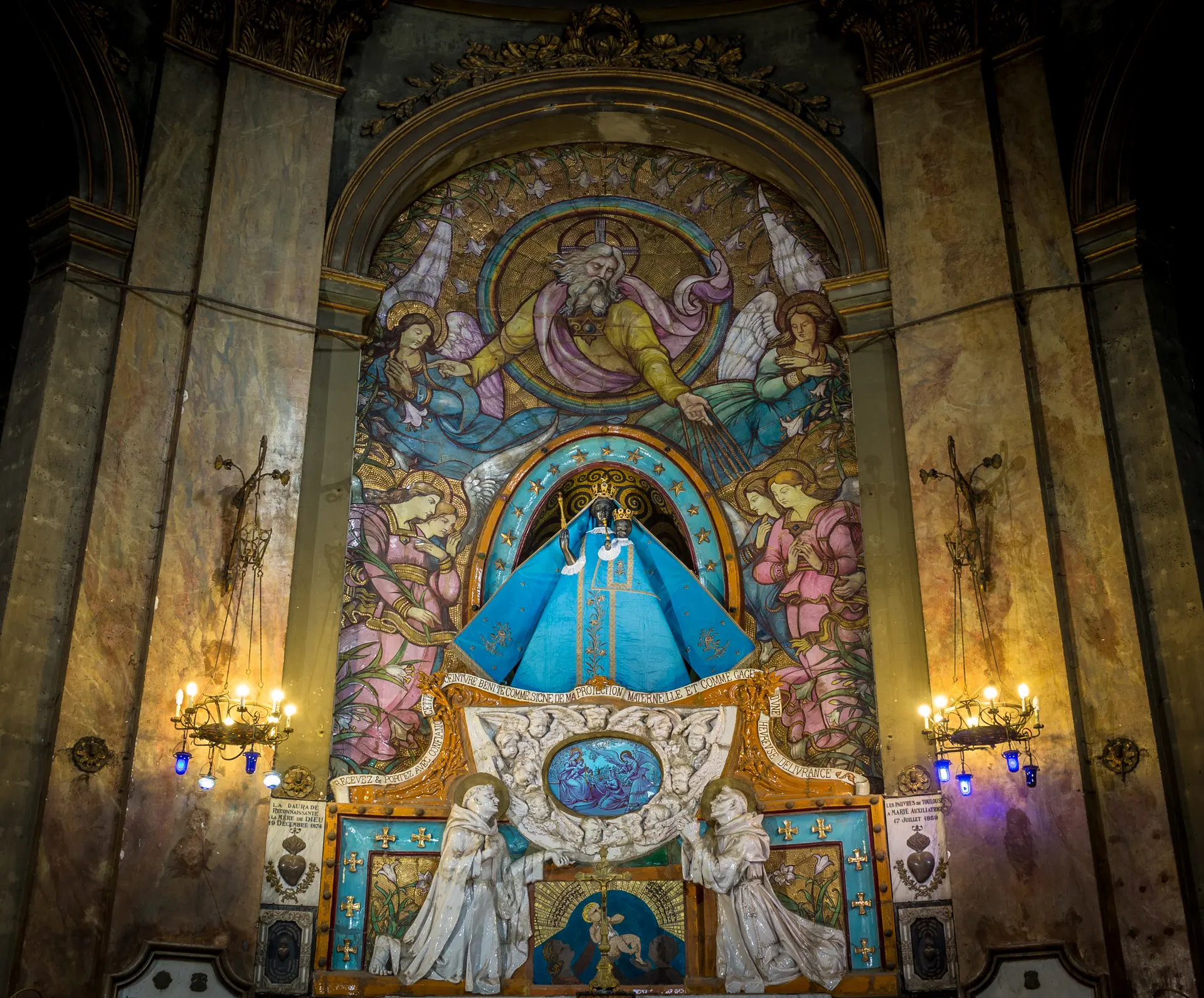
Image of Black Madonna of Daurade. Image source · CC-BY-SA-4.0
Visit essentials
A quick read before you go
- Duration
- Variable; part of basilica visit.
- Etiquette
- Approach with reverence.
Overview
Small beneath a devotion more than a thousand years old, Toulouse's Black Madonna has a face darkened for reasons—age, incense, intention—that remain uncertain. French couturiers have dressed her changing liturgical garments in Prada and Dior, but Notre-Dame la Noire, Our Lady the Black One, remains the mother who protects mothers. Venerated at Notre-Dame de la Daurade since at least the tenth century, she drew pregnant women seeking safe childbirth.
When statue-touched mantles could not meet demand, the church made blessed-cloth birthing belts that could travel to them.
The original statue was burned by revolutionaries in 1799 at the Place du Capitole; the present figure dates to 1807, and the devotion continues unbroken. Expectant mothers worldwide still request belts blessed and mailed by the parish.
Her care also became civic. During the 1631 plague, inhabitants carried her through Toulouse in 'The descent of Our Lady the Black One,' after which the plague gradually disappeared. In 1672 she was credited with saving the Saint Michael district from fire—a birth mother and city mother whose protection extends across thresholds.
Why this place is sacred
Like an old prayer worn smooth by repetition, Toulouse's Black Madonna connects surface to depth. For over a thousand years, women have stood before her facing childbirth, historically a dangerous threshold for mother and child. A Madonna associated with documented rescues offered hope against justified fear.
A cloth belt blessed at the statue's feet and held during labor makes that hope tangible, joining one expectant mother to centuries of others. The practice persists because even with modern medicine, birth remains a threshold and many still seek blessing.
Black Madonnas appear across Europe, their darkness unexplained and perhaps inexplicable. Some see dark earth, deep femininity, or a hidden divine face; others point to smoke and aging wood. The faithful need not resolve it: a dark face can be loving. Changing prayers and constant need have made the space around her unlike ordinary space.
The cult of the Black Madonna of Toulouse is documented from at least the tenth century, with particular focus on protection during childbirth.
The original medieval statue was burned in 1799. The current statue (1807) continues the tradition. In 2008, French couturiers designed new ceremonial garments. The birthing belt tradition continues worldwide.
Experience and orientation
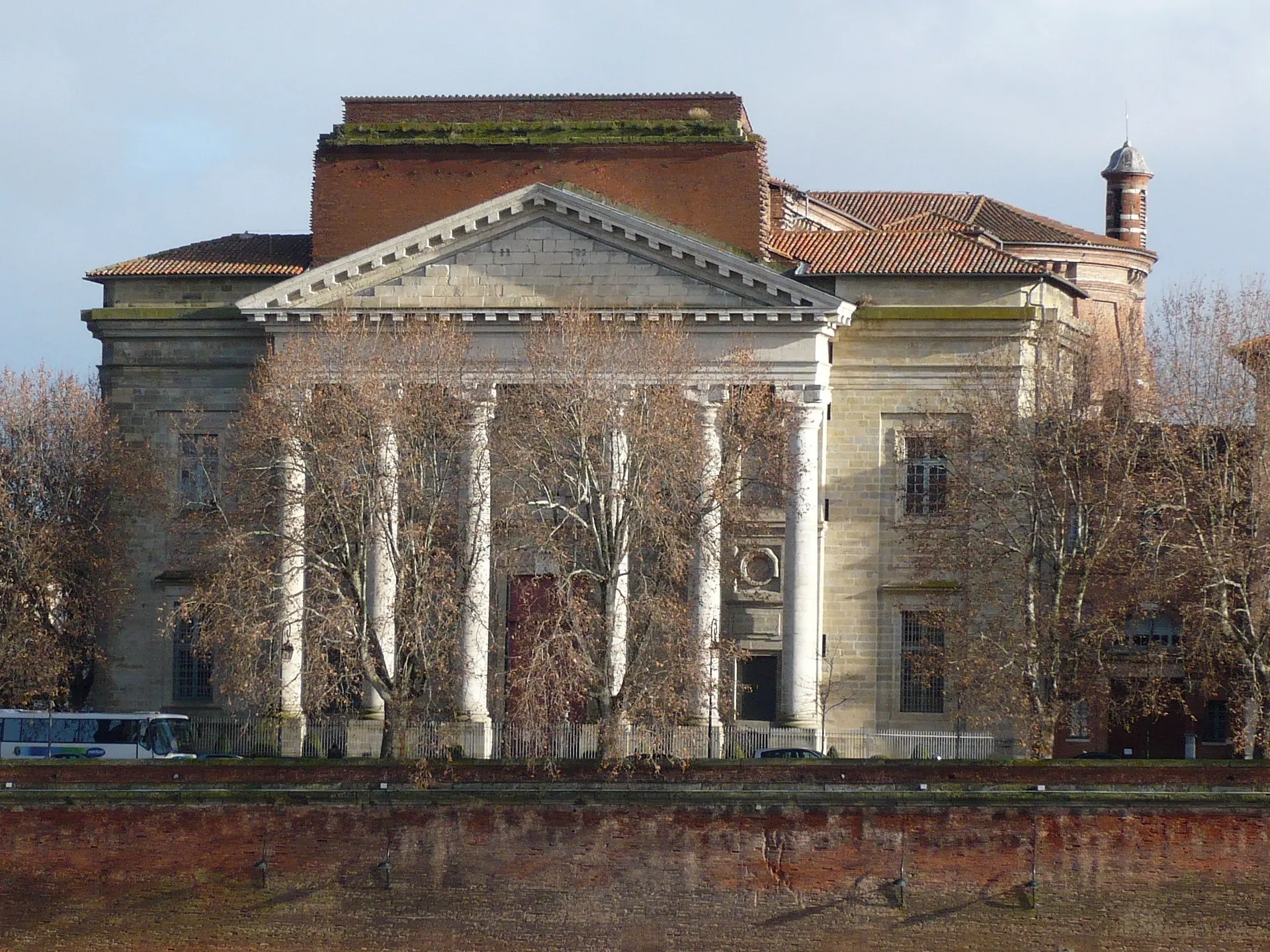
The Madonna occupies a side chapel of the neoclassical Basilica of Notre-Dame de la Daurade beside the Garonne in central Toulouse. Smaller than many expect, her dark face emerges from elaborate, seasonally changing robes amid candles and possible ex-votos to answered prayer. The atmosphere is intimate and devotional.
Expectant mothers and those hoping to conceive may sit, pray, or light a candle for as long as needed, joining a thousand years of women. Birthing belts are requested in person or by letter at the parish office, blessed at the Madonna's feet, and mailed worldwide.
Around the chapel, masses and devotions continue the working parish's ordinary rhythm. Set apart but not separate, the Madonna is its heart and most pilgrims' reason for coming, though not the whole basilica.
The Black Madonna is housed in a side chapel within the Basilica of Notre-Dame de la Daurade, in central Toulouse along the Garonne River.
Context and lineage
The cult of the Black Madonna of Toulouse is documented from at least the tenth century. The city became a major pilgrimage destination for pregnant women seeking safe delivery. The Madonna was credited with numerous miracles, including ending the plague of 1631 when she was processed through the streets.
In 1672, the Black Madonna was credited with saving the Saint Michael district from a devastating fire. These civic miracles expanded her role from guardian of individual mothers to protector of the entire city.
The original statue was stolen in the fifteenth century. Its replacement was burned by revolutionaries in 1799 at the Place du Capitole. The current statue was created in 1807 to continue the tradition.
In 2008, French couturiers including Prada, Dior, and Lacroix were invited to design new ceremonial garments for the statue, blending ancient devotion with contemporary fashion.
The statue and its devotion are part of the Basilica of Notre-Dame de la Daurade, within the Archdiocese of Toulouse.
The Marquis Folco de Baroncelli-Javon
Preservation advocate
Traditions and practice
Processions through the city during times of crisis. Blessing of mantles and birthing belts. Pilgrimage by expectant mothers.
Individual prayer before the statue. Birthing belt blessings requested through the parish and sent worldwide. Ceremonial wardrobe changes on liturgical occasions. Thanksgiving offerings after safe delivery.
Approach with whatever need brought you. Sit before her. Light a candle if you wish. If expecting or hoping to conceive, request a birthing belt through the parish. Join the centuries of mothers who have sought her protection.
Roman Catholicism
ActiveNotre-Dame la Noire has been venerated since at least the tenth century as protector of mothers in childbirth. The birthing belt tradition makes her protection tangible and portable.
Individual devotion, birthing belt blessings, thanksgiving after safe delivery, ceremonial wardrobe changes.
Perspectives and open questions
The Black Madonna of Toulouse can be understood as a focus of Marian devotion, as a survival of pre-Christian goddess traditions, or as evidence of how popular piety creates its own sacred geography.
Scholarly perspective
The cult of the Black Madonna of Toulouse is well-documented and represents a significant tradition of Marian devotion focused on fertility and childbirth.
Living and traditional perspectives
Within Catholic tradition, Notre-Dame la Noire is a powerful intercessor whose specialty is protecting mothers and children through the dangerous passage of birth.
Alternative interpretations
Some researchers connect Black Madonnas to pre-Christian fertility goddesses. The focus on childbirth supports this interpretation, suggesting continuity of divine feminine worship.
Open questions
The original appearance of the medieval statue. The reason for the dark coloring. The full extent of miracles attributed to the Madonna.
Plan your visit
Access and arrival
Full range in central Toulouse.
Respectful visit
Modest dress appropriate for a church.
Ask permission; be sensitive to those in prayer.
Candles may be lit.
Do not disturb those at prayer.
Respect others who are praying. The chapel may be crowded at certain times.
Current practical details
Address
1 Pl. de la Daurade, 31000 Toulouse, France
Phone
Hours
Hours, fees, and access can change — verify on the official source before you travel. Practical details last checked Jun 2026.
Location
Map loads as you approach this section.
Pilgrim reflections
A portrait of encounter, not a score
Pilgrims describe what they felt, how present they could become, and whether the place would shape a journey. There are no stars and no ranking of traditions.
No reviewed reflections yet
The first pilgrims can help describe the character of being here.
Share a reflection
Available after an account-backed “Been there.” Every reflection is reviewed before publication.
Nearby sacred places
Explore other sacred places in the region. Proximity does not establish access or travel time; check each place’s guidance.


References
Sources consulted for this page. Source categories describe the publication, not a guarantee that every claim is verified. Traditional accounts and outside interpretations may differ.
- 01La Daurade, Our Lady of Good Childbirth - Interfaith Mary Page — Interfaith MaryacademicBlack Madonna specialist
- 02A well-dressed Black Madonna - Enthusiastical — EnthusiasticalacademicDetailed article on wardrobe tradition
Photo gallery
3 curated photos
Share a photo
Help visitors recognize Black Madonna of Daurade. Every submission is reviewed before publication.