Basilica of Notre-Dame de la Daurade
Where a Black Madonna has blessed mothers for a thousand years
Understand sacred places, explore living traditions, and learn how to engage respectfully with Pilgrim Map.
Access has not been verified. Check current local guidance before planning a visit.
Toulouse, Haute-Garonne, France
Read the sources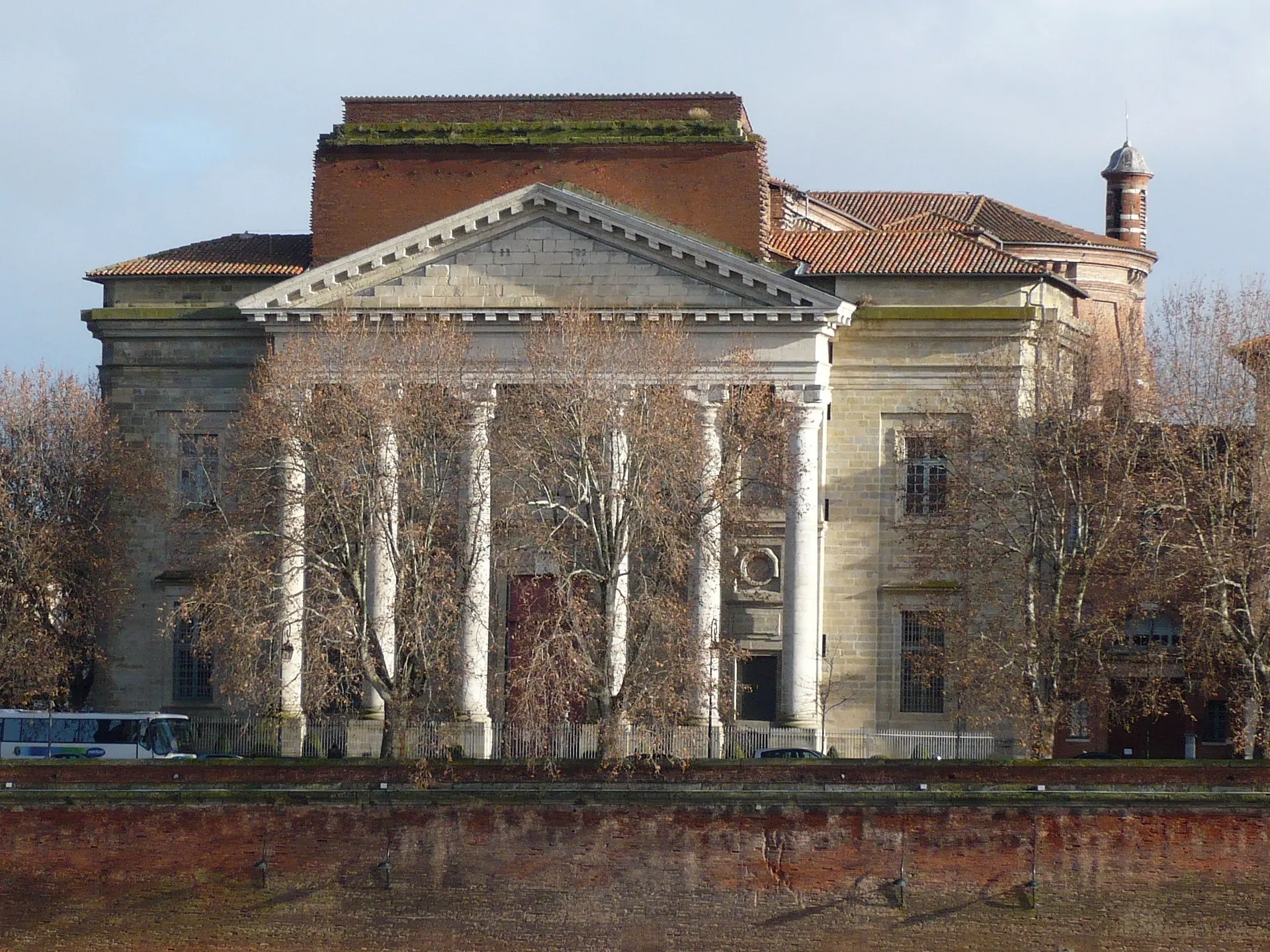
Image of Basilica of Notre-Dame de la Daurade. Image source · CC-BY-SA-3.0
Visit essentials
A quick read before you go
- Duration
- 30 minutes to an hour for most visits.
- Etiquette
- Standard church etiquette applies.
Overview
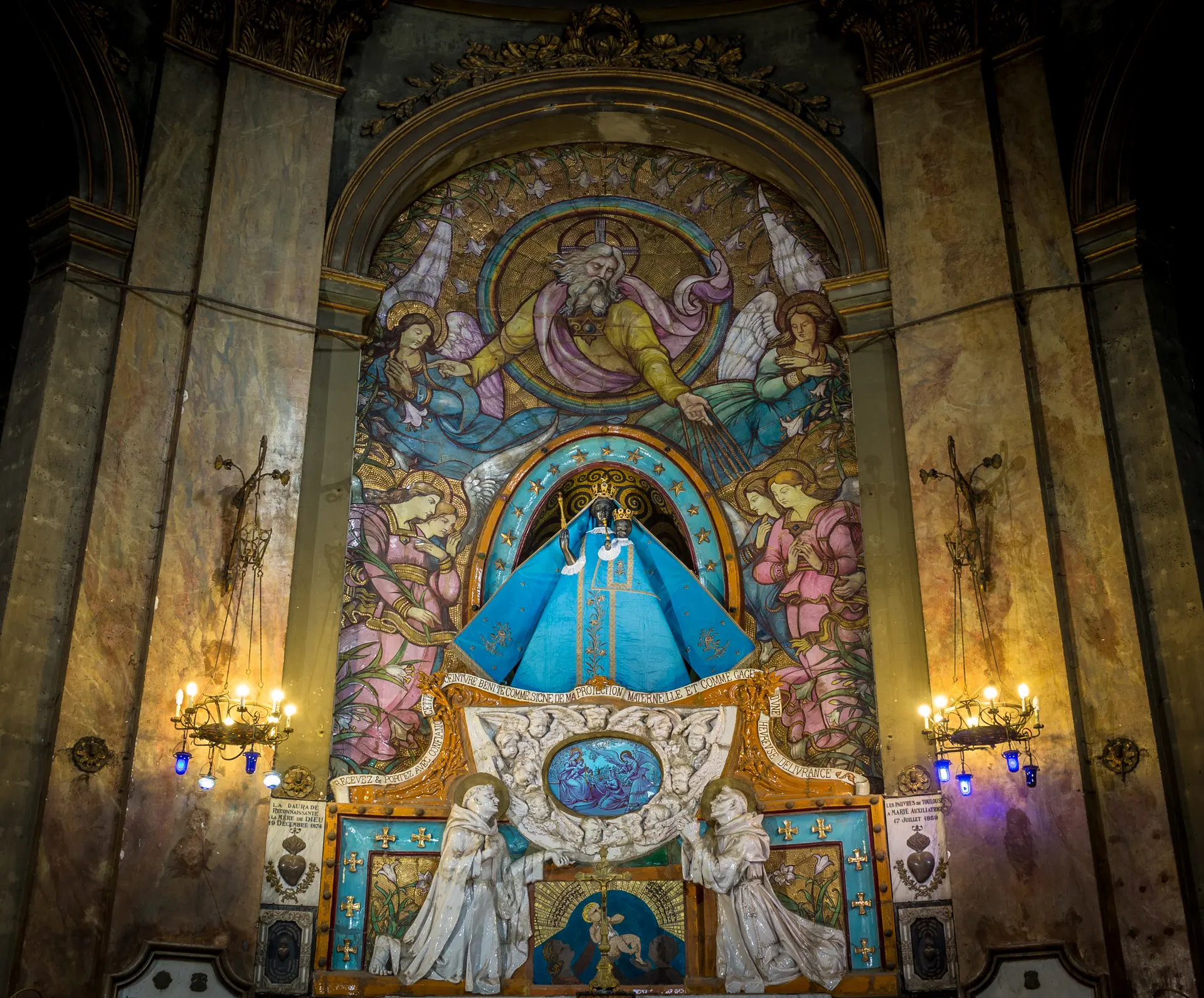
The Basilica of Notre-Dame de la Daurade stands along the Garonne River in Toulouse, on ground sacred for at least two thousand years. Devotion centers on the Black Madonna of Toulouse—Notre-Dame la Noire—venerated since at least the tenth century as an intercessor in crisis and protector of expectant mothers. The current statue dates to 1807 after revolutionaries burned the original in 1799; the devotion continues through prayer, blessed birthing belts, and changing ceremonial garments.
Sites inside
Why this place is sacred
The Basilica of Notre-Dame de la Daurade is thin in the way that old wells are thin—deep, vertical, connecting surface to source. The ground has been sacred since before Christianity arrived. The devotion to the Madonna has continued through medieval glory, revolutionary destruction, and reconstruction.
Something about the conjunction of darkness and motherhood resonates across time. The Black Madonna is a figure of mystery—her dark coloring unexplained, possibly accidental, possibly symbolic. Scholars debate whether Black Madonnas represent African influence, smoke damage, or deliberate theological statement about the hidden nature of the divine. The faithful rarely require explanation. They see a mother who understands what mothers face.
Childbirth was, for most of human history, extremely dangerous. The threshold between life and death that every birth represents was real, immediate, terrifying. A Madonna who specializes in protecting mothers at this threshold speaks to something primal. The birthing belts make this protection tangible—cloth that has been blessed, that can be held, that connects the anxious pregnant woman to centuries of mothers who sought the same protection.
The basilica's neoclassical architecture is relatively recent and unremarkable. The building is not what draws people here. What draws people is the small dark figure in her changing garments, the candles lit before her, the petitions of women about to give birth and the thanksgiving of those who have safely delivered. The thin quality persists because the need persists—the need for divine protection at the moment when new life emerges from the body of the living.
The site was originally a Roman temple to Apollo. In 410 AD it was converted to a Christian church. The cult of the Black Madonna is documented from at least the tenth century.
The golden-mosaic medieval church was demolished in 1761 for quay construction. The current neoclassical building was completed by 1850 and declared a basilica in 1876. The tradition of birthing belt blessings continues.
Experience and orientation
The Basilica of Notre-Dame de la Daurade stands along the Garonne River in central Toulouse, its neoclassical facade part of the city's riverbank ensemble. The building itself is elegant but conventional—columns, pediment, the vocabulary of nineteenth-century ecclesiastical architecture.
Enter and the atmosphere shifts. This is an active parish church with regular worship, not primarily a tourist site. The faithful come to pray; candles burn before the altars; the basilica feels used in the way sacred spaces should feel used.
The Black Madonna is housed in a chapel to the side. She is small—smaller than many visitors expect. Her garments change with the liturgical season, a tradition that extends back centuries and forward into the present (the 2008 couturier designs included). Her dark face emerges from the elaborate clothing, serene and maternal.
Pilgrims who have come specifically for the Madonna may spend extended time in her presence, praying, lighting candles, simply sitting. Those seeking birthing belt blessings can inquire at the parish office; the belts are still produced and sent worldwide to expectant mothers who request them.
Outside, the Garonne flows past as it has for millennia. The quay that required the medieval church's destruction now provides pleasant walking. The basilica draws those who need what it offers—protection for the most vulnerable moment, blessing for those about to become parents. Others may visit and find only a pleasant but unremarkable church. The thin quality depends on what you bring.
The basilica is in central Toulouse along the Garonne River, near the Pont Neuf. Accessible by metro (Esquirol station). The Black Madonna is in a side chapel.
Context and lineage
The site began as a Roman temple to Apollo, one of the city's major pagan shrines. In 410 AD, Emperor Honorius authorized its conversion to Christian use. The early Christian church was decorated with golden mosaics that gave it the name Deaurata—'the gilded one'—which became Daurade.
The cult of the Black Madonna is documented from at least the tenth century. Toulouse became a major pilgrimage center for pregnant women seeking safe delivery. The demand for mantles that had touched the statue led to the production of blessed birthing belts as a more scalable solution.
In 1631, when plague threatened Toulouse, the inhabitants processed the Black Madonna through the streets. The plague gradually disappeared. In 1672, the Madonna was credited with saving the Saint Michael district from a devastating fire.
The medieval church was demolished in 1761 for quay construction—a loss that destroyed the original golden mosaics. The current building was completed by 1850. In 1799, during the Revolution, the original Black Madonna statue was burned at the Place du Capitole. The current statue dates to 1807.
The basilica is part of the Archdiocese of Toulouse. It maintains an active parish alongside its pilgrimage function.
Notre-Dame la Noire
Black Madonna
Traditions and practice
Processions of the Black Madonna through the streets during times of crisis. Blessing of mantles and birthing belts for expectant mothers. Thanksgiving after safe delivery.
Daily masses continue. Birthing belts are blessed and sent worldwide to pregnant women who request them through the parish. The Madonna's ceremonial wardrobe changes with each liturgical season; in 2008, French couturiers including Prada, Dior, and Lacroix designed new garments.
Visit during a quiet time to spend extended time before the Black Madonna. If expecting or hoping to conceive, consider requesting a birthing belt blessing through the parish. Light a candle. Join the centuries of mothers who have sought protection here.
Roman Catholicism
ActiveThe basilica has been a center of Marian devotion since at least the tenth century, with particular focus on protection during childbirth. The tradition of birthing belt blessings represents a living connection between ancient devotion and contemporary practice.
Veneration of the Black Madonna, birthing belt blessings, ceremonial wardrobe changes, regular worship.
Perspectives and open questions
The basilica can be understood as a site of continuous sacred use spanning pagan and Christian eras, as a center of Marian devotion focused on childbirth, or as evidence of how popular devotion persists despite official destruction and reconstruction.
Scholarly perspective
The site demonstrates the Christianization of pagan sacred places. The cult of the Black Madonna of Toulouse is well-documented and represents a significant tradition of Marian devotion focused on fertility and safe childbirth.
Living and traditional perspectives
Within Catholic tradition, the Black Madonna is venerated as a powerful intercessor whose specialty is protecting mothers through the dangerous threshold of childbirth.
Alternative interpretations
Some researchers connect Black Madonnas to pre-Christian goddess traditions, particularly fertility and mother goddesses. The site's origin as a temple to Apollo adds another layer to this interpretation.
Open questions
The original appearance of the medieval Black Madonna. The full history of miracle traditions. The reason for the statue's dark coloring.
Plan your visit
Access and arrival
Full range of options in central Toulouse.
Respectful visit
Modest dress appropriate for a church.
Generally permitted; be respectful and avoid disturbing worshippers.
Candles available. Donations welcomed.
Respect ongoing services; do not disturb those at prayer.
The basilica is an active parish; respect worshippers and ongoing services.
Current practical details
Address
1 Pl. de la Daurade, 31000 Toulouse, France
Phone
Hours
Hours, fees, and access can change — verify on the official source before you travel. Practical details last checked Jun 2026.
Location
Map loads as you approach this section.
Pilgrim reflections
A portrait of encounter, not a score
Pilgrims describe what they felt, how present they could become, and whether the place would shape a journey. There are no stars and no ranking of traditions.
No reviewed reflections yet
The first pilgrims can help describe the character of being here.
Share a reflection
Available after an account-backed “Been there.” Every reflection is reviewed before publication.
Nearby sacred places
Explore other sacred places in the region. Proximity does not establish access or travel time; check each place’s guidance.


References
Sources consulted for this page. Source categories describe the publication, not a guarantee that every claim is verified. Traditional accounts and outside interpretations may differ.
- 01Notre-Dame de la Daurade Basilica - Toulouse Tourisme — Toulouse TourismofficialOfficial tourism
- 02Notre-Dame de la Daurade - Wikipedia — Wikipedia contributorsencyclopediaHistorical overview
- 03La Daurade, Our Lady of Good Childbirth - Interfaith Mary Page — Interfaith MaryacademicBlack Madonna specialist
- 04Toulouse: Our Lady of the Dorada Basilica - Catholic Travel Guide — Catholic Travel GuideacademicCatholic pilgrimage resource
Share a photo
Help visitors recognize Basilica of Notre-Dame de la Daurade. Every submission is reviewed before publication.