Shrines of Sidi Abed and Abu Madyan, Tlemcen
The tomb of Abu Madyan, father of Maghrebi Sufism, in a Marinid architectural masterpiece at the gates of Tlemcen
Understand sacred places, explore living traditions, and learn how to engage respectfully with Pilgrim Map.
Access has not been verified. Check current local guidance before planning a visit.
Tlemcen, Tlemcen, Algeria
Read the sources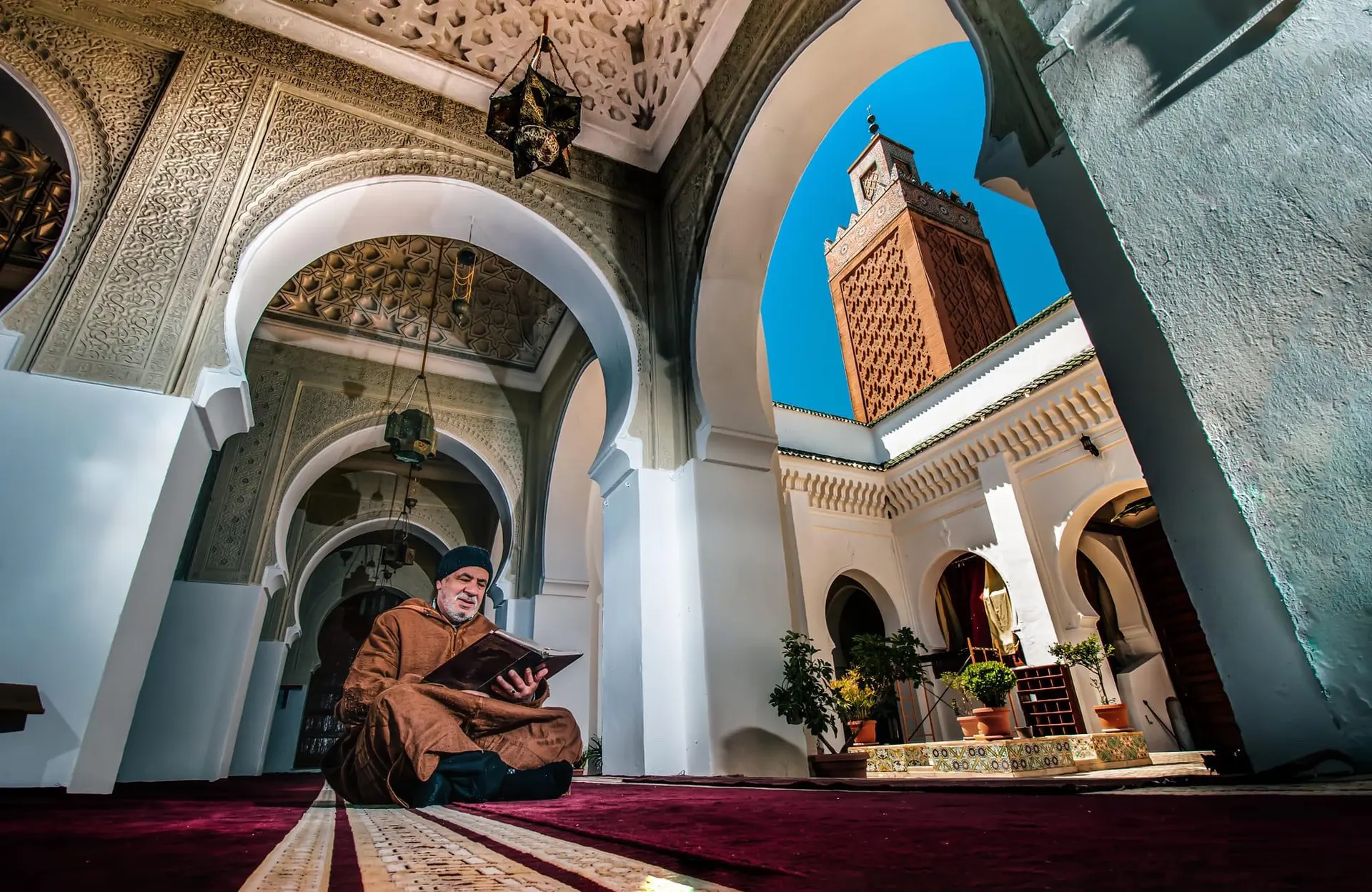
Image of Shrines of Sidi Abed and Abu Madyan, Tlemcen. Image source · CC-BY-SA-4.0
Visit essentials
A quick read before you go
- Duration
- 1 to 2 hours
- Access
- 2 km southwest of Tlemcen.
Overview
Abu Madyan Shu'ayb ibn al-Husayn al-Ansari was born in Seville in 1116 and died near Tlemcen in 1198, on a journey he never completed. His funeral was widely mourned, and the people of Tlemcen have considered him their protector ever since.
The complex that grew around his tomb is a masterpiece of Marinid architecture. The mosque, founded in 1339 and expanded by Sultan Abu Al-Hasan, stands behind a monumental gate seven metres high. The minaret is adorned with intricate tilework. Inside, the mausoleum houses the tomb where pilgrims still come for tawassul. Abu Madyan's significance extends far beyond Tlemcen — he was the teacher whose lineage runs through the Shadhiliyya order and connects to Ibn Arabi.
Why this place is sacred
In the Sufi understanding, baraka flows through chains of transmission from teacher to student. Abu Madyan occupies a position in these chains that gives his tomb extraordinary density. He stands upstream of the Shadhiliyya order. He is in the lineage of Ibn Arabi. To visit his tomb is to stand at a confluence — a living chain of spiritual transmission over eight centuries.
The Marinid architecture amplifies this. It was built by rulers who understood that a saint's tomb requires beauty, that a seven-metre gate announces the transition to sacred ground.
Burial site of Abu Madyan (d. 1198), developed into a devotional complex.
From simple tomb to 14th-century Marinid complex. Continuous devotional use for over 800 years.
Experience and orientation
The seven-metre gate frames the transition from village street to sacred precinct. Inside, the mosque blends Islamic and Andalusian design. The mausoleum is the spiritual center. Pilgrims approach quietly. The madrasa and hammam remains recall the complex's complete spiritual infrastructure.
Enter through the main gate. Visit the mausoleum with quiet respect. Observe devotional patterns before approaching the tomb.
Context and lineage
Abu Madyan died near Tlemcen in 1198 while traveling. The people adopted him as patron saint.
Abu Madyan to Abd al-Salam ibn Mashish to Abu al-Hasan al-Shadhili (Shadhiliyya). Also linked to Ibn Arabi.
Abu Madyan Shu'ayb
Sufi master, patron saint of Tlemcen
Sultan Abu Al-Hasan
Marinid ruler who expanded the complex
Traditions and practice
Tawassul at the tomb. Scholarly study. Regular prayers.
Active mosque. Worldwide pilgrimage. Living Sufi devotion.
Approach the tomb with reverence. Observe other visitors' practices.
Sufism
ActiveFather of Maghrebi Sufism. Spiritual ancestor of the Shadhiliyya.
Tawassul, prayer, study.
Perspectives and open questions
Both an architectural monument and a living Sufi center.
Scholarly perspective
Finest example of Marinid architecture in North Africa. Abu Madyan pivotal in Maghrebi Sufism.
Living and traditional perspectives
For devotees, Abu Madyan is a wali whose baraka is accessible through pilgrimage.
Alternative interpretations
Abu Madyan's position at the intersection of Andalusian, Maghrebi, and Eastern traditions makes the tomb a spiritual crossroads.
Open questions
Full scope of scholarly activity at the madrasa not comprehensively documented.
Plan your visit
Access and arrival
2 km southwest of Tlemcen. Taxi 15-20 minutes.
Tlemcen has accommodation.
Respectful visit
Modest dress. Women bring headscarf.
Ask permission near tomb and during prayers.
None expected.
Remove shoes | Women cover hair | Respect prayer times | Do not touch tomb
Active mosque. Respect prayer times.
Current practical details
Address
VMMQ+FRJ, Tlemcen 13000, Algeria
Hours
Hours, fees, and access can change — verify on the official source before you travel. Practical details last checked Jun 2026.
Location
Map loads as you approach this section.
Pilgrim reflections
A portrait of encounter, not a score
Pilgrims describe what they felt, how present they could become, and whether the place would shape a journey. There are no stars and no ranking of traditions.
No reviewed reflections yet
The first pilgrims can help describe the character of being here.
Share a reflection
Available after an account-backed “Been there.” Every reflection is reviewed before publication.
Nearby sacred places
Explore other sacred places in the region. Proximity does not establish access or travel time; check each place’s guidance.


References
Sources consulted for this page. Source categories describe the publication, not a guarantee that every claim is verified. Traditional accounts and outside interpretations may differ.
- 01Complex of Sidi Bu Medyan - ArchNet — ArchNetofficialDetailed architectural study
- 02The zâwiya of Sidi Boumédiène - Eric Ross — Eric RossacademicAcademic analysis
- 03Sidi Boumediene Mosque - Wikipedia — WikipediaencyclopediaOverview
- 04Abu Madyan - Wikipedia — WikipediaencyclopediaBiographical context
- 05Lonely Planet - Mosque & Tomb of Sidi Boumediene — Lonely PlanetguideVisitor guide
- 06Sidi Boumediene Mosque - Archiqoo — ArchiqooofficialArchitecture details
Share a photo
Help visitors recognize Shrines of Sidi Abed and Abu Madyan, Tlemcen. Every submission is reviewed before publication.