Shey Gompa (Shey Palace)
The Crystal Monastery beneath the younger brother of Mount Kailash
Understand sacred places, explore living traditions, and learn how to engage respectfully with Pilgrim Map.
Access has not been verified. Check current local guidance before planning a visit.
Shey, Karnali Province, Nepal
Read the sources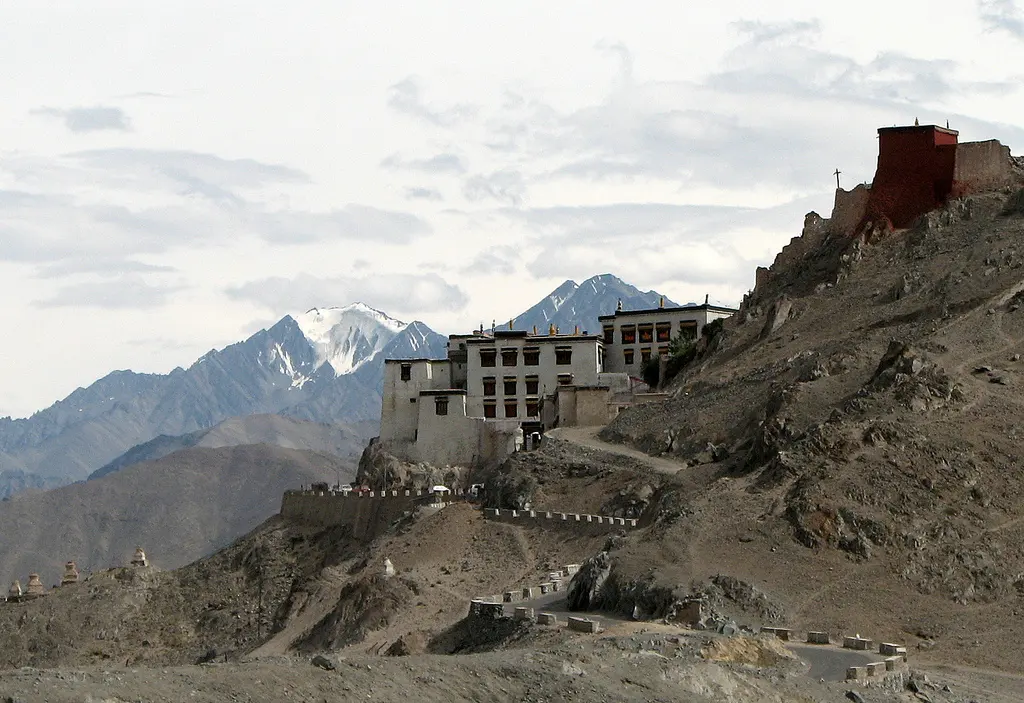
Visit essentials
A quick read before you go
- Duration
- The complete journey from Kathmandu to Shey Gompa and back requires 22 to 30 days.
- Access
- Reach Kathmandu by international flight.
Overview
There are places so remote that reaching them becomes the teaching. Shey Gompa is one of these. The Crystal Monastery stands at 4,200 meters in Nepal's Upper Dolpo, beneath a peak called Ribo Drukta—the Crystal Mountain of the Dragon's Roar—which Tibetan Buddhists consider the younger brother of Mount Kailash. Getting here requires walking for two weeks through the Himalaya, crossing passes above 5,000 meters, sleeping in tents and teahouses, watching the landscape grow more austere with each day's ascent.
The monastery itself is a two-story structure painted the deep red of Tibetan Buddhist tradition, housing ancient scriptures, thangka paintings, and resident monks who maintain practices established in the 11th century. Yet Shey Gompa is not primarily a building. It is a pilgrimage, a kora, a turning—the circumambulation of Crystal Mountain that pilgrims have performed for centuries to accumulate merit and release the weight of accumulated karma. The journey strips away what isn't essential.
By the time you reach Shey, you arrive already changed.
Why this place is sacred
Upper Dolpo is among Earth's most isolated inhabited regions, culturally Tibetan within Nepal and reachable only after weeks on foot through high passes. Oxygen at 60% of sea level subtly alters consciousness. Nearly a millennium of meditation since the 11th century has, in Buddhist understanding, imprinted blessing here, while remoteness preserved structures and unbroken practice.
Shey Ribo Drukta—Crystal Mountain of the Dragon's Roar—is treated as a regional Mount Kailash. Tradition holds that its Dragon Year circumambulation equals eleven other great pilgrimages, and visitors describe the mountain as watchful or aware. Peter Matthiessen arrived in 1973 seeking snow leopards and the Lama of Shey, found neither, and called the pilgrimage “a journey of the heart”: seeking itself became the teaching.
Shey Gompa was established in the 11th century to bring Buddhism to Upper Dolpo and to serve as a meditation sanctuary beneath the sacred Crystal Mountain. According to tradition, Guru Rinpoche (Padmasambhava) blessed the location in the 8th century and prophesied that it would become a place where practitioners could access deep states of realization.
The monastery has remained remarkably consistent in purpose across ten centuries. Its extreme remoteness preserved it from external disruptions while limiting expansion. The 1984 establishment of Shey-Phoksundo National Park added an environmental protection framework. The 12-year Shey Festival continues to draw thousands of pilgrims, maintaining the site's central role in regional Buddhist practice. International awareness increased following Peter Matthiessen's The Snow Leopard, though the difficulty of access has prevented tourism from overwhelming the site's contemplative character.
Experience and orientation
The journey begins with flights to Nepalgunj and Juphal's mountainside airstrip, then walking as villages thin and terrain changes from forest to scrub, rock, and snow. After perhaps ten or twelve days, altitude, exertion, and disconnection create measurable changes in brain state and a rhythm of walking, resting, eating, and sleeping.
Shey's red walls and wind-whipped prayer flags stand below snow-capped Crystal Mountain. Inside, butter lamps bend in drafts, gold leaf catches on shadowed thangkas, and butter and incense scent monks' chanting, prostrations, and prayer wheels. During the Shey Festival, thousands form a tent city for ceremonies, Cham dances, and the communal kora.
Between festivals, walk clockwise through cold air, sit in the courtyard, watch light cross the mountain, accept offered lama blessings, and wake in a tent beneath close-seeming stars. The quieter effect is a loosening of boundaries among self, landscape, monastic practice, and ten centuries of pilgrims.
Shey Gompa sits in a valley beneath Crystal Mountain, at approximately 4,200 meters elevation. The monastery faces southeast, with Crystal Mountain to the northwest. The traditional kora circuit around the mountain takes several hours and crosses terrain ranging from rocky paths to snow depending on season. The monastery itself is a two-story structure with limited interior space; most of the experience happens outdoors, in the landscape itself.
Context and lineage
Three origin stories interweave at Shey Gompa. The earliest places Guru Rinpoche (Padmasambhava), the 8th-century master who brought Buddhism to Tibet, at this location during his journeys through the Himalaya. He is said to have recognized the area's spiritual potency and prophesied that it would become a sanctuary for meditation.
Three centuries later, a monk named Drotob Senge Yeshe—some sources call him Lama Tenzin Ra-Pa—arrived in Upper Dolpo and confronted a powerful mountain spirit that had made the region spiritually inhospitable. Upon subduing this spirit, he established the monastery at the foot of Crystal Mountain. The third story is told by the mountain itself: Ribo Drukta, the Crystal Mountain of the Dragon's Roar, is considered a natural mandala, a sacred geography that needed only recognition rather than creation.
Shey Gompa was the first Kagyupa monastery in Upper Dolpo, following the lineage of Milarepa and the Kagyu masters. The monastery also incorporates Nyingma teachings, reflecting the historical interweaving of these two schools in the Tibetan Buddhist world. The resident monks maintain practices transmitted from the 11th century, including long meditation retreats that can last for months. The monastery serves the Chaiba community, followers of both Padmasambhava and Kagyu traditions.
Guru Rinpoche (Padmasambhava)
8th-century master who blessed the location
Drotob Senge Yeshe / Lama Tenzin Ra-Pa
11th-century founder
Peter Matthiessen
American writer and Zen practitioner
Traditions and practice
The traditional practices at Shey Gompa center on meditation in the Kagyu and Nyingma lineages. Monks undertake extended retreats, sometimes lasting months, practicing concentration and insight meditation according to traditional instructions. Daily rituals include dawn prayers, scripture chanting, butter lamp offerings, and the spinning of prayer wheels. The kora around Crystal Mountain is performed not as exercise but as practice—a walking meditation in which each step, each breath, each mantra accumulates merit while releasing accumulated negative karma.
The Shey Festival, held every twelve years during the Dragon Year, intensifies all practices. Thousands of pilgrims gather to perform communal kora, witness Cham dances performed by monks in elaborate costumes, receive teachings from senior lamas, and participate in ceremonies that strengthen the connection between the human and sacred realms. According to traditional understanding, performing kora during the Dragon Year festival equals the merit of eleven other major pilgrimages.
Contemporary practice at Shey Gompa remains remarkably continuous with historical tradition. The monastery's remoteness has protected it from pressures that have transformed more accessible sites. Resident monks maintain the same practice schedules their predecessors kept. Villagers from surrounding communities still gather annually for teachings and blessings. The Shey Festival continues its twelve-year cycle, most recently held in 2024.
What has changed is the presence of international visitors—still few in number but increasing since Matthiessen's book brought attention to the region. These visitors often come with their own spiritual frameworks, drawn by The Snow Leopard's narrative of seeking and not-finding, loss and presence. The monks accommodate these visitors with characteristic openness, offering blessings without requiring doctrinal alignment.
Visitors seeking meaningful engagement at Shey Gompa might consider walking the kora around Crystal Mountain at least once, moving slowly and with attention. Sitting in silence near the monastery, allowing the altitude and landscape to work on consciousness, can be as valuable as any formal practice. Observing the monks during their ceremonies—maintaining respectful distance—offers a window into living tradition. If the opportunity arises, receiving a blessing from a resident lama requires no particular belief but does ask for receptivity.
Many visitors find that the practices they brought with them—meditation, prayer, simply watching the breath—deepen in this environment.
Tibetan Buddhism (Kagyu)
ActiveShey Gompa was the first Kagyupa monastery in Upper Dolpo, bringing the lineage of Milarepa and the Kagyu masters to this remote region. The monastery remains a Kagyu institution, with resident monks practicing meditation and ritual in the tradition transmitted from the 11th century founders.
Daily prayer and chanting, extended meditation retreats lasting months, butter lamp offerings, scripture study, and the turning of prayer wheels. During the Shey Festival, Cham dances are performed by monks in elaborate costumes representing dharma protectors and symbolic figures. The kora around Crystal Mountain is itself a Kagyu practice, accumulating merit through bodily devotion.
Tibetan Buddhism (Nyingma)
ActiveThe monastery incorporates Nyingma teachings alongside its Kagyu foundation, reflecting the historical interweaving of these lineages in Tibetan Buddhism. Guru Rinpoche (Padmasambhava), founder of the Nyingma school, is said to have blessed this location in the 8th century.
Vajrayana practices, ritual ceremonies honoring Padmasambhava, and terma (revealed teachings) associated with the Nyingma lineage.
Bon
ActiveWhile Shey Gompa itself is a Buddhist institution, the Bon tradition—the indigenous spiritual system predating Buddhism in Tibet—remains active in the wider Dolpo region. Crystal Mountain is sacred to both Buddhists and Bon practitioners.
Bon practitioners circumambulate Crystal Mountain counter-clockwise, opposite to the Buddhist direction. This is not opposition but different understanding—Bon holds that sacred sites rotate in the opposite direction. Nearby Samling Monastery preserves Bon traditions more directly.
Perspectives and open questions
Shey Gompa holds meaning across multiple frames—as a living monastery, an archaeological treasure, a pilgrimage destination, and a symbol of spiritual seeking immortalized in literature. These perspectives do not compete but layer, each adding dimension to the encounter.
Scholarly perspective
Scholars recognize Shey Gompa as one of the most important and well-preserved Buddhist monasteries in the Himalayan region. Its extreme remoteness protected it from the political disruptions that damaged or destroyed monasteries in Tibet and more accessible parts of Nepal. The Nepal Department of Archaeology has engaged in preservation efforts. David Snellgrove's Himalayan Pilgrimage, George Schaller's Stones of Silence, and Peter Matthiessen's The Snow Leopard provide firsthand documentation from different disciplinary perspectives.
The monastery's continuous operation since the 11th century makes it a living museum of Tibetan Buddhist material culture and practice.
Living and traditional perspectives
For the Dolpo-pa community and Tibetan Buddhist practitioners more broadly, Shey Gompa is not a historical site but a living center of spiritual power. The Crystal Mountain is considered the younger brother of Mount Kailash and holds equivalent sanctity for practitioners unable to reach Tibet. According to traditional teaching, circumambulating Crystal Mountain during a Dragon Year equals the merit of eleven other major pilgrimages.
The monastery anchors community identity—oral histories, seasonal festivals, and transmission of Buddhist teachings across generations all flow through Shey. When villagers speak of the monastery, they speak of it as continuous presence, not historical artifact.
Alternative interpretations
Some visitors approach Shey Gompa through the lens of earth energies, ley lines, or universal sacred geography. The coexistence of Buddhist and Bon practices in the region suggests to some an older spiritual understanding predating either tradition. The mountain itself—Crystal Mountain, with its quartz veining and geometric presence—draws interpretations as natural power point or earth chakra. These perspectives are not endorsed by traditional practitioners but represent an authentic thread of contemporary spiritual seeking.
Open questions
Uncertainty persists around Shey Gompa's founding. Different sources attribute the monastery's establishment to different masters—Lama Tenzin Ra-Pa, Drotob Senge Yeshe—and whether these are one figure or two remains unclear. The nature of the mountain spirit said to have been subdued before the monastery's founding is not fully documented. The inner teachings transmitted here, like much of Tibetan Buddhist practice, include elements not shared with outsiders. The mountain keeps its secrets.
Plan your visit
Access and arrival
Reach Kathmandu by international flight. Fly to Nepalgunj (45 minutes), then to Juphal airstrip (weather-dependent, 30 minutes) or continue to Dunai (longer). From Juphal or Dunai, trek 10-14 days to Shey Gompa, crossing multiple passes above 5,000 meters. There is no road access. The trek passes through Shey-Phoksundo National Park, offering views of Phoksundo Lake, one of Nepal's most sacred and beautiful bodies of water.
Required permits: Upper Dolpo Restricted Area Permit ($500 for 10 days, $50 per additional day), Lower Dolpo permit ($20 per week, required for transit), and Shey-Phoksundo National Park permit (approximately $27). All permits must be arranged in Kathmandu before departure. Trekkers must travel with a licensed guide and in groups of at least two people.
This is a challenging trek requiring previous high-altitude experience, excellent physical fitness, and proper equipment. Most visitors arrange logistics through experienced trekking agencies that specialize in Upper Dolpo.
At Shey Gompa itself, accommodation is basic—camping or simple teahouse-style lodging when available. During the Shey Festival, a tent city emerges to house the influx of pilgrims. Along the trekking route, teahouses offer basic food and shelter in villages; between villages, trekkers camp. Trekking agencies provide tents, cooking equipment, and staff for supported treks. Expect simple food, cold nights, and conditions that support rather than distract from contemplation.
Respectful visit
Dress modestly, covering shoulders and knees. Layered clothing is practical for the variable temperatures at altitude. Remove shoes before entering monastery buildings. Remove hats when inside sacred spaces unless instructed otherwise for warmth.
Photography is generally permitted outdoors and of the monastery exterior. Inside the monastery and during ceremonies, ask permission before photographing. Never photograph monks without their consent. Flash photography is typically inappropriate in interior sacred spaces. Consider whether documentation serves your experience or distracts from it.
Butter lamp offerings are traditional and can be arranged with resident monks. Small donations to the monastery support its continued operation in this extremely remote location. If you bring offerings, do so with genuine respect rather than as transaction.
Some inner areas of the monastery may not be open to visitors. Respect all closed doors and barriers. During ceremonies, follow instructions from monks regarding where visitors may and may not be. Do not touch, climb, or remove anything from the monastery structures or surrounding areas.
This is an active pilgrimage site, and the local community's spiritual relationship with the monastery and mountain continues across generations. Visitors are guests in a living practice, not tourists at a historical exhibit. Approach all activities with respect and humility. The altitude itself demands caution—acute mountain sickness can become dangerous quickly. Never rush. Never treat the kora as athletic achievement rather than spiritual practice.
Location
Map loads as you approach this section.
Pilgrim reflections
A portrait of encounter, not a score
Pilgrims describe what they felt, how present they could become, and whether the place would shape a journey. There are no stars and no ranking of traditions.
No reviewed reflections yet
The first pilgrims can help describe the character of being here.
Share a reflection
Available after an account-backed “Been there.” Every reflection is reviewed before publication.
Nearby sacred places
Explore other sacred places in the region. Proximity does not establish access or travel time; check each place’s guidance.



References
Sources consulted for this page. Source categories describe the publication, not a guarantee that every claim is verified. Traditional accounts and outside interpretations may differ.
- 01The Snow Leopard — Peter MatthiessenacademicNational Book Award winner, firsthand account from 1973 pilgrimage
- 02Shey Gompa - Wikipedia — Wikipedia ContributorsencyclopediaBasic factual information, cross-referenced with other sources
- 03Shey Gompa Dolpo | Spiritual Heart of Himalaya — Dolpo Caravan TreksguideLocal trekking operator with detailed cultural knowledge
- 04Shey Festival 2026 | 30 Days Itinerary Guide — Dolpo Caravan TreksguideDetailed festival and permit information
- 05Shey Gompa | Information, Climate, Treks & Guides — SherpanaguideGPS coordinates and trekking information
- 06Shey Gompa Festival Nepal — ScarpanewsFestival documentation and cultural practices
- 07Shey Gompa Crystal Mountain - Spiritual Heart of Upper Dolpo — Himalayan CompanionguideDetailed spiritual significance and kora information
- 08Sacred Monasteries in Dolpo: Nepal's Hidden Spiritual Heart — Nepal Gateway TrekkingguideContext on Dolpo region monasteries and Bon traditions
Pilgrim glossary
- Mandala
- A symbolic diagram of the cosmos used in meditation and ritual.
- Mantra
- A sound, word, or phrase repeated as part of meditation or ritual.
- Dharma
- The teachings of the Buddha; also the universal law underlying them.
Share a photo
Help visitors recognize Shey Gompa (Shey Palace). Every submission is reviewed before publication.