Sanctuary of Our Lady of Nazaré
Where a fog-shrouded cliff-edge rescue gave Portugal one of its oldest Marian pilgrimages
Understand sacred places, explore living traditions, and learn how to engage respectfully with Pilgrim Map.
Access has not been verified. Check current local guidance before planning a visit.
Nazaré, Leiria, Portugal
Read the sources
Visit essentials
A quick read before you go
- Duration
- A visit to the sanctuary church together with the adjacent Ermida da Memória and Bico do Milagre…
- Access
- The sanctuary sits in the Sítio district atop the clifftop above Nazaré town, reachable via a…
Overview
Nazaré's sanctuary stands on a clifftop plateau where a knight's near-fatal gallop through fog became, in Catholic memory, evidence of the Virgin's intervention. The church's small, dark statue is said by tradition to have been carved far from Portugal and to predate its present home by centuries, according to devotional memory recorded on a 1623 memorial stone.
More securely documented, a 14th-century royal foundation transformed a modest grotto shrine into a sanctuary expanded across successive reigns and rebuilt between 1680 and 1691 as today's gilded, azulejo-lined church.
The sanctuary remains a working parish church. Each September the Romaria de Nossa Senhora da Nazaré draws the town uphill, the statue organizing communal memory rather than tourism alone. The promontory holds two registers together: documented royal patronage and living devotion, whether visitors believe the founding miracle or come for the view.
Sites inside
Why this place is sacred
What makes this promontory sacred is not architecture alone. The Sítio clifftop sits more than a hundred meters above the Atlantic, exposed to the same fog and wind that, according to the founding narrative told more fully elsewhere on this page, nearly carried a hunting party over the edge in 1182.
The hoofprint preserved at the nearby Bico do Milagre—venerated as physical evidence of that rescue—gives the site a rare quality: a sacred claim anchored not in scripture or vision alone but in a specific, locatable mark in stone.
Layered onto that founding claim is the statue itself, which devotional tradition holds arrived from far beyond Portugal, carried by monks across centuries before reaching this coastal grotto. Whether or not one accepts that transmission story, its persistence—recorded in stone as early as 1623—suggests how badly the site's early custodians wanted the statue's sacredness to predate its arrival, to root it in something older than the building around it.
The result is a place that asks to be read on two registers simultaneously: a cliff whose fog and exposure would feel significant with or without the legend, and a legend that has organized centuries of devotion around exactly that exposure. Standing at the Bico do Milagre, looking out over open water, makes it easy to see why this particular edge became the edge that mattered.
The grotto beneath the cliff appears to have drawn worship from the early 12th century, before the 1182 miracle narrative and the 14th-century sanctuary gave it formal shape. In Catholic understanding, the site's original purpose was straightforwardly devotional: a place to venerate a statue believed to embody a direct link to Nazareth, later formalized by a chapel built over the grotto to commemorate Dom Fuas Roupinho's rescue.
What began as an isolated grotto shrine grew, through royal patronage across several reigns and a full baroque rebuild in the late 17th century, into a substantial sanctuary complex that in turn anchored an entire settlement—the Sítio district, with its palace, hospice, hospital, theatre, and bullring, appears to have developed around the pilgrim traffic the sanctuary generated.
The sanctuary has never been declared a UNESCO World Heritage Site, but Portugal's national heritage authority classified the church and its azulejo panels as a Property of Public Interest in 1978, formalizing a significance that pilgrimage had already established long before.
Experience and orientation
The approach itself sets the terms of the visit. Most people climb from the beach town below either on foot up a steep path or aboard the Ascensor da Nazaré, the funicular that carries pilgrims toward the sweeping Atlantic views the clifftop is known for. Either way, the church appears first as a plain white façade against open sky—nothing in the exterior prepares visitors for the interior.
Inside, the shift is immediate: gilded altarwork and blue-and-white azulejo panels cover walls that, from outside, gave no hint of ornament. This contrast—plain stone skin, ornate devotional interior—recurs in visitor accounts more than any single architectural detail.
A short walk from the church leads to the Ermida da Memória, the small chapel built over the original grotto, and beyond it to the Bico do Milagre, the promontory where tradition places the 1182 rescue. Here the Atlantic opens out below, often through the same fog and wind the founding narrative describes, and the sweep of coastline gives a clear sense of why this particular edge of land held meaning long before anyone built a church on it.
Visitors pressed for time can see the church interior and reach the Bico do Milagre viewpoint within an hour. Those with more time do well to treat the funicular climb from town as part of the approach rather than a logistical prelude, and to let the cliff-edge quiet at the Ermida da Memória register before moving on.
Context and lineage
Two stories sit at the foundation of this site, and Catholic tradition holds both without treating them as competing.
The older concerns the statue itself: a 1623 memorial stone records the belief that the image was carved by Saint Joseph and painted by Saint Luke in Nazareth, later rescued from Byzantine iconoclasts by a monk named Cyriakos and carried to a monastery near Mérida, from which the hermit-monk Romano is said to have brought it onward to a grotto on this Portuguese coast.
No archaeological or documentary evidence corroborates this transmission; it survives as devotional memory rather than verified history.
The second story is more locally anchored. On September 14, 1182, according to tradition, the knight Dom Fuas Roupinho was hunting deer along the clifftop in heavy fog when his horse bolted toward the cliff's edge in pursuit of a deer. He is said to have invoked the Virgin's aid, and the horse stopped at the very brink—a hoofprint preserved at the promontory now called the Bico do Milagre marks the spot in Catholic memory.
A small chapel, now known as the Ermida da Memória, was built over the grotto shrine to commemorate the rescue and house the statue.
The documentable history begins later and, according to most sources, more solidly: a sanctuary church was founded in the 14th century, with some sources citing the specific year 1377 under King Ferdinand I, replacing or formalizing the grotto shrine. Successive monarchs expanded it: João I added wooden porches, João II enlarged the main chapel, and Manuel I replaced the porches with the arcaded gallery still visible today.
A full baroque reconstruction between 1680 and 1691 gave the church most of its present form, including interior azulejo panels attributed to the Dutch master W. Van Kloet. The identity of the rebuild's master builder remains unknown; no single architect is credited in the available record.
For centuries the sanctuary passed through royal and ecclesiastical stewardship—expanded by successive Portuguese kings, rebuilt in the baroque idiom, eventually recognized by the national heritage authority. It has never lost its function as a working church: the same statue venerated in medieval and early modern devotion remains at the altar today, and the annual romaria that draws pilgrims each September continues a pattern of communal pilgrimage that long predates any of the building campaigns recorded in the historical record.
Dom Fuas Roupinho
traditional/historical
The 12th-century knight whose cliff-edge rescue, according to tradition, prompted construction of the grotto chapel now known as the Ermida da Memória and anchored the site's founding narrative.
King Ferdinand I
historical
The monarch under whose patronage the sanctuary church is commonly said to have been founded in the 14th century, with some sources citing the specific year 1377.
Our Lady of Nazaré
focus of veneration
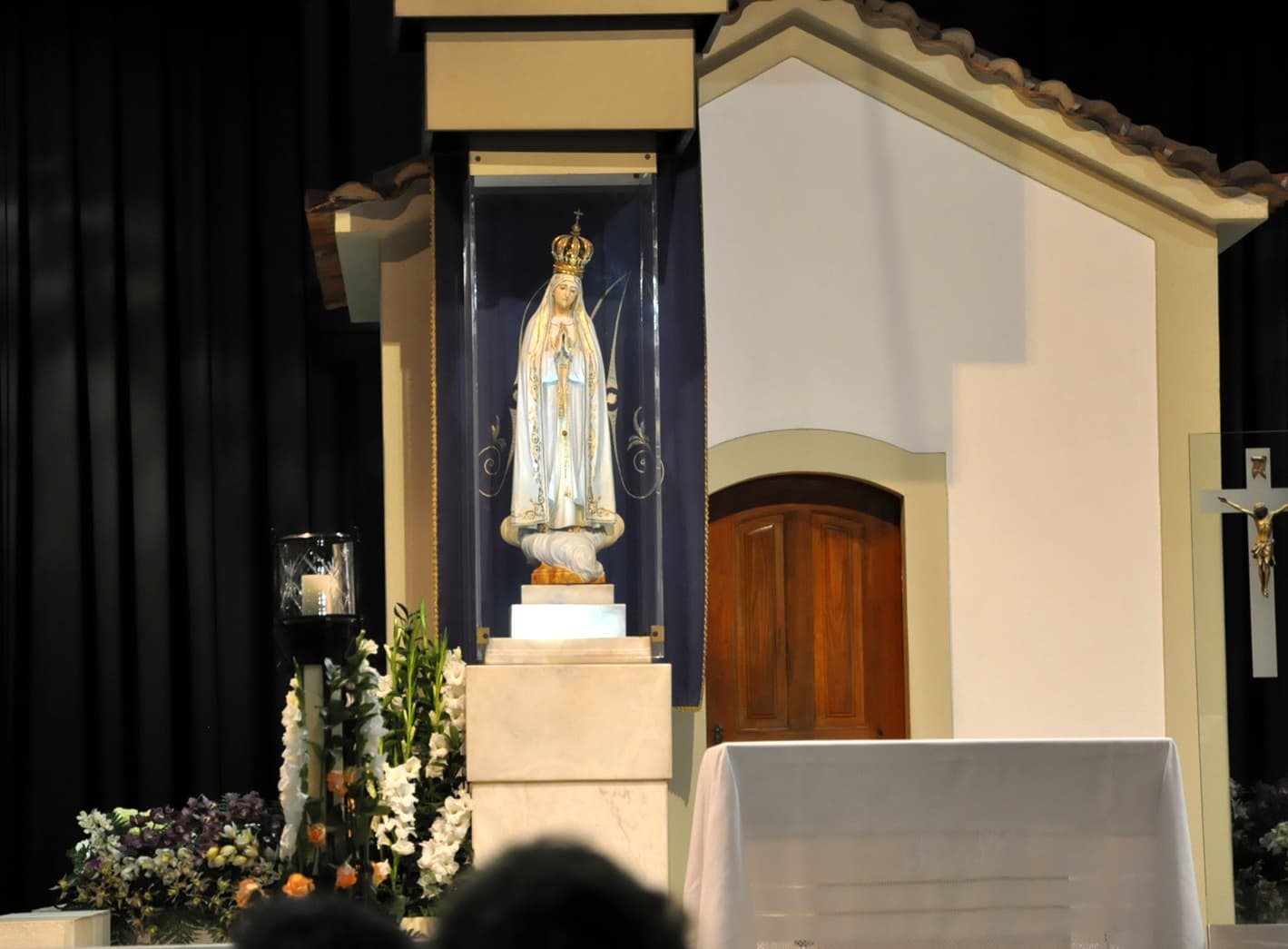
The wooden statue of the Virgin nursing the infant Christ at the center of the sanctuary's devotion, held by tradition—though not verified history—to have originated in Nazareth.
Romano
traditional/legendary
The hermit-monk devotional tradition credits with carrying the statue from a monastery near Mérida to the coastal grotto that became this sanctuary's original shrine.
W. Van Kloet
artist
The Dutch master credited with the interior azulejo tile panels added during the sanctuary's baroque-era decoration.
Traditions and practice
Historical accounts describe the romaria as combining religious procession with folk bullfights and traditional dancing—a blend of devotional and popular festival custom typical of Portuguese Marian feasts. The extent to which bullfighting continues at contemporary scale is not confirmed by current sources.
The Romaria de Nossa Senhora da Nazaré runs September 8 through 17 each year, centered on September 8, the feast of the Nativity of Mary. It includes a religious procession carrying the statue's devotion through the town, folk dancing, and local markets. Outside the romaria, the sanctuary and the adjacent Ermida da Memória remain open to pilgrims and visitors year-round, free of charge, with ongoing parish liturgical use but no romaria-scale ceremony.
Visitors drawn to more than architecture might time a visit around September 8, when the statue's procession makes the site's living devotion visible rather than inferred. Outside the festival window, sitting quietly in the nave before approaching the altar, then walking the short distance to the Ermida da Memória and the Bico do Milagre, lets the two halves of the site's history—documented church, legendary grotto—register in sequence rather than as a single blur of information.
Roman Catholicism
ActiveThe sanctuary is one of Portugal's most important Marian pilgrimage sites, venerating a wooden statue of Our Lady of Nazaré that devotional tradition—though not verified history—holds to trace to Nazareth itself, and commemorating the 1182 rescue of Dom Fuas Roupinho that Catholic memory treats as direct evidence of Marian intercession.
Annual Romaria de Nossa Senhora da Nazaré (September 8-17) with religious procession; ongoing veneration of the statue at the main altar; pilgrim visits to the Ermida da Memória, the chapel built over the original miracle grotto.
Perspectives and open questions
The sanctuary invites at least three distinct readings, and none require dismissing the others. Historians document a royal foundation and later baroque rebuild; Catholic tradition holds a much older statue-transmission story and a specific miraculous rescue; and heritage authorities have classified the site's significance in secular, administrative terms distinct from either. The site is large enough to hold all three.
Scholarly perspective
Historians and heritage documentation treat the founding miracle of 1182 and the statue's Nazareth-origin legend as devotional tradition rather than verified historical fact. The record they can substantiate begins later: a medieval chapel, then a 14th-century sanctuary under royal patronage, expanded across several reigns and rebuilt in baroque style between 1680 and 1691.
According to available heritage records, Portugal's national authority classified the church in 1978 as a Property of Public Interest—a formal recognition distinct from, and less internationally prominent than, UNESCO World Heritage status; no UNESCO inscription has been found for this specific site.
Living and traditional perspectives
Catholic devotional tradition holds the statue as a direct physical link to Nazareth at the time of Christ, carried across centuries and continents through monastic custody, and treats the hoofprint preserved at the Bico do Milagre as tangible evidence of the Virgin's intervention in 1182. For pilgrims who hold this understanding, the sanctuary's significance rests on continuity with that transmission rather than on the later architectural history documented elsewhere.
Open questions
The precise date and authorship of the original statue cannot be independently verified, and its transmission history rests on a 1623 memorial-stone inscription and oral tradition rather than corroborating archaeological or documentary evidence. Likewise, the identity of the rebuild's master builder remains unknown, and the sanctuary's exact founding date is cited inconsistently across sources as either 1377 or a looser '14th century.'
Plan your visit
Access and arrival
The sanctuary sits in the Sítio district atop the clifftop above Nazaré town, reachable via a steep climb on foot or by the historic Ascensor da Nazaré funicular connecting Sítio to the beachfront town below. Entry is free and year-round. The site is functionally and geographically distinct from Praia do Norte, the beach at the base of the cliff known for record-breaking big-wave surfing—pilgrims visiting the sanctuary are on the clifftop plateau, not the surf beach.
Respectful visit
Treat the sanctuary as you would any church still in active use—this is not a roped-off monument but a building where Mass and devotion continue daily, with the September romaria bringing its most intense period of worship.
As an active parish church rather than a museum, the sanctuary asks visitors to expect and accommodate ongoing liturgical use, particularly around Mass times and during the September romaria, when crowds and processions take priority over sightseeing.
Location
Map loads as you approach this section.
Pilgrim reflections
A portrait of encounter, not a score
Pilgrims describe what they felt, how present they could become, and whether the place would shape a journey. There are no stars and no ranking of traditions.
No reviewed reflections yet
The first pilgrims can help describe the character of being here.
Share a reflection
Available after an account-backed “Been there.” Every reflection is reviewed before publication.
Nearby sacred places
Explore other sacred places in the region. Proximity does not establish access or travel time; check each place’s guidance.


References
Sources consulted for this page. Source categories describe the publication, not a guarantee that every claim is verified. Traditional accounts and outside interpretations may differ.
- 01Sanctuary of Our Lady of Nazaré - Wikipedia — Wikipedia contributorsofficialConfirms 14th-century founding under King Ferdinand's pilgrimage, subsequent remodeling by João I, João II, Manuel I, late-17th-century baroque rebuild (1680-1691), interior azulejo panels by Dutch master W. Van Kloet, and 1978 heritage classification
- 02Ermida da Memória da Nazaré - Wikipedia — Wikipedia contributorsofficialConfirms the Ermida da Memória as the original 12th-century worship site on the cliff edge, predating the 14th-century sanctuary, with tile panel depicting the miracle in its crypt
- 03Santuário de Nossa Senhora da Nazaré - SIPA / Direção-Geral do Património Cultural — Direção-Geral do Património Cultural (Portugal)officialPortuguese government heritage inventory (SIPA) record; confirms 17th-18th century religious architecture, promontory setting, surrounding pilgrim-support complex (palace, hospice, hospital, theatre, bullring) forming the genesis of the Sítio urban nucleus
- 04Santuário de Nossa Senhora da Nazaré - Câmara Municipal da Nazaré — Câmara Municipal da NazaréofficialOfficial municipal tourism page for the sanctuary as a listed monument in Sítio
- 05Nazaré, Portugal - Wikipedia — Wikipedia contributorsofficialConfirms the September 8 (Nativity of Mary) Romaria de Nossa Senhora da Nazaré festival dates, and geographic/functional distinction between the clifftop Sítio district (sanctuary) and the beachside town/Praia do Norte (surfing)
- 06Legend of Nazaré - Wikipedia — Wikipedia contributorsSource contextDetails the September 14, 1182 miracle of Dom Fuas Roupinho, the Bico do Milagre, the hoofprint (ferradura) relic, and construction of the memorial chapel over the grotto
- 07Nazare's Other Miracle: The Black Madonna — Surfer MagazineSource contextContextualizes the Black Madonna statue tradition alongside the town's modern big-wave surfing fame, useful for distinguishing Sítio sanctuary from Praia do Norte
- 08Our Lady of Nazareth (Nossa Senhora da Nazaré) — interfaithmary.netspiritualTraditional narrative (per 1623 memorial stone inscription) of the statue's carving by St. Joseph, painting attribution to St. Luke, and the monastic transmission story via Cyriakos and the hermit Romano from Nazareth to Mérida to the cliff grotto — presented as traditional/legendary lore, not verified history
- 09Santuário de Nossa Senhora da Nazaré - 2026 Guide — Nazaré Portugal TourismSource contextVisitor-facing details: free admission, year-round access, description of interior gilded altar and azulejo panels
Share a photo
Help visitors recognize Sanctuary of Our Lady of Nazaré. Every submission is reviewed before publication.