Mt. Hood, Oregon
Oregon's highest peak, where volcanic power meets indigenous reverence
Government Camp, Oregon, United States

Visit essentials
Before you go
- Duration
- 2-3 days to explore multiple access points and allow weather windows for activities
- Etiquette
- Respect indigenous connection to the land.
Overview
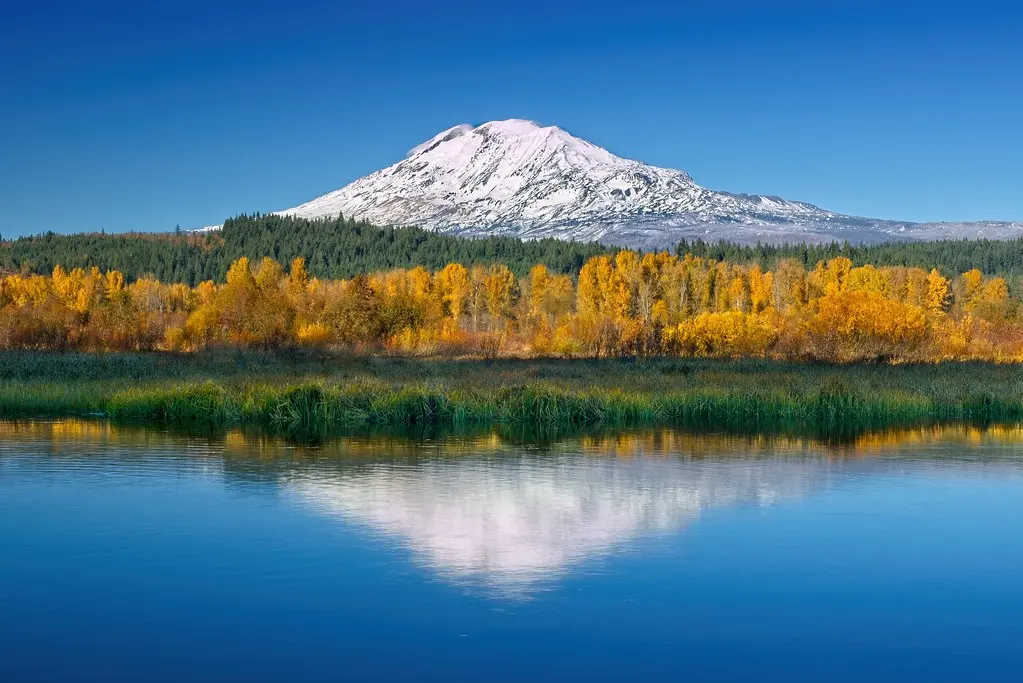
The mountain appears on clear days from a hundred miles away, its white summit floating above the Columbia River Gorge like a beacon. Mount Hood is Oregon's highest peak, a stratovolcano that last erupted around 1865 and scientists say will erupt again. For millions who live in its shadow, Hood is the mountain—the reference point, the horizon's dominant feature, the presence that orients daily life.
For indigenous peoples whose ancestors have lived here for thousands of years, the mountain's significance runs deeper than scenic backdrop. The Sahaptin-speaking peoples knew it simply as patu—snow-capped summit—a word that suggests no ordinary peak but something requiring a name that distinguishes it from lesser terrain. The mountain was regarded as a sacred place, a powerful being, a guardian of the lands.
Though specific ceremonial practices are not well documented in available sources, the mountain's visual presence would have been central to orientation and understanding of the world. The popular legend of Wy'east—the story of warring mountain brothers who battled for the love of a maiden named Loowit—has been told for over a century. But scholars including Professor David Lewis question whether this narrative has authentic indigenous origins or was largely created by author Frederic Balch in his 1890 novel.
The uncertainty matters less than the underlying truth: this mountain has been regarded as sacred, animate, and powerful by those who lived in its presence long before Europeans arrived. Today, the mountain partly sits within the reservation of the Confederated Tribes of Warm Springs, affirming ongoing indigenous connection to the land.
Why this place is sacred
What makes Mount Hood feel sacred? The question admits multiple answers, none entirely sufficient. Begin with the geology: a stratovolcano rising to 11,249 feet, bearing twelve named glaciers, visible from Portland's streets and from mountaintops across three states. The mountain's isolation and height create presence—it dominates every horizon in which it appears. But presence alone does not explain why indigenous peoples regarded this peak as a powerful being rather than mere terrain. The volcanic nature adds another dimension.
This is not static rock but a living system. The mountain's most recent eruption occurred around 1865; geologists assess a 3-7% probability of eruption in the next thirty years. Hot springs and fumaroles on the upper mountain signal ongoing activity. To stand on Hood's slopes is to stand on something that could, at any moment, remind everyone of its power. Indigenous peoples recognized this power. The mountain was understood as animate, capable of action, deserving respect.
The Sahaptin term patu—applied to snow-capped summits—suggests a category of being rather than a type of landform. These peaks were guardians, presences, sources of inspiration and sustenance. They guided choices and shaped understanding of the world. The popular Wy'east legend, whatever its origins, captures something of this understanding: mountains as beings with agency, capable of conflict and transformation.
Whether that particular narrative came from indigenous oral tradition or from Frederic Balch's literary imagination, it resonates because it speaks to something people actually experience in the mountain's presence. Visitors today report the same essential recognition. Standing at Timberline Lodge looking up at the summit, or watching alpenglow turn the glaciers pink at dawn, or simply glimpsing the peak from Portland's bridges, people find themselves addressed by something that resists reduction to scenery. The mountain insists on being noticed.
This insistence—this quality of presence that commands attention—is what thin places share across cultures and continents.
Sacred mountain in indigenous cosmology—a powerful being, a guardian, a shaping presence.
For thousands of years, indigenous peoples of the Columbia River basin regarded Mount Hood as sacred. European contact brought new names—the British Lt. William Broughton named it after Lord Samuel Hood in 1792—and disruption to traditional relationships with the land. Recreational mountaineering began in the late 1800s. The 1930s brought Timberline Lodge and the 41-mile Timberline Trail. Today, over 4 million visitors come annually. The Confederated Tribes of Warm Springs maintain connection to portions of the mountain within their reservation.
Indigenous sacredness persists alongside recreational use, though the specific ceremonial practices are not publicly documented.
Experience and orientation
You do not have to be on Mount Hood to experience it. From Portland, fifty miles away, the mountain appears on clear days above the eastern horizon—a perfect white cone that seems impossibly close, impossibly high. Commuters on the Burnside Bridge glance up reflexively. The mountain orients the city, provides a reference point, reminds everyone that wilderness begins an hour east. But to truly encounter Hood requires approaching.
Highway 26 climbs through forest toward Government Camp, the small mountain community that serves as base for most visitors. Here at 4,000 feet, the air sharpens. The peak, when visible, looms directly overhead. Timberline Lodge sits at 6,000 feet on the mountain's south face, a masterpiece of WPA-era craftsmanship built in the 1930s by hundreds of artisans. The lodge offers more than accommodation—it offers perspective.
From the stone terrace, you look directly up at the summit glaciers, their crevasses visible even from this distance. In summer, hardy wildflowers bloom between patches of snow. In winter, skiers and snowboarders descend runs that remain open nearly year-round. The Timberline Trail circumnavigates the mountain in 41 miles, passing through alpine meadows, across glacial outwash streams, and through forests of mountain hemlock and subalpine fir.
Hikers who complete the full circuit—typically in four to five days—report transformative encounter with the mountain's many faces. Each approach reveals different character: the wildflower meadows of Paradise Park, the stark volcanic terrain of the White River Glacier, the old-growth groves of the north side. For those seeking the summit, the climb is serious mountaineering. The most popular route, the South Side, begins at Timberline Lodge and gains over 5,000 feet in five miles.
Climbers rope together to navigate crevasses, pass the famous Pearly Gates rock formation, and reach the summit plateau where volcanic steam vents warm the rocks. Most summit attempts begin around midnight to reach the top at dawn and descend before afternoon sun softens the snow bridges. The summit experience is both physical triumph and encounter with vastness—views extending from Mount Jefferson to Mount Rainier, from the Pacific Ocean to the desert interior.
But Mount Hood does not require summiting to be experienced. Sometimes the mountain offers itself most fully to those who simply sit on Timberline Lodge's terrace at sunset, watching alpenglow turn the glaciers gold, then pink, then purple as darkness gathers. In those moments, the peak's presence becomes almost palpable—a being attending to those who attend to it.
Mount Hood is located approximately 50 miles east of Portland via US-26. Government Camp is the main staging area at 4,000 feet. Timberline Lodge sits at 6,000 feet on the south face. Multiple trailheads provide access to different aspects of the mountain. The summit (11,249 feet) requires technical mountaineering.
Context and lineage
According to a widely told legend, the Great Spirit had two sons named Wy'east and Pahto, who both loved a beautiful maiden called Loowit. Their battle for her affection was so destructive that the Great Spirit transformed them all into mountains—Wy'east became Mount Hood, Pahto became Mount Adams, and Loowit became Mount St. Helens. Their conflict destroyed the Bridge of the Gods and created the Cascade Rapids of the Columbia River.
This narrative has been repeated for over a century and appears in countless guidebooks and interpretive materials. However, scholars including Professor David Lewis of Oregon State University have raised significant questions about its authenticity. Lewis notes that the name 'Wy'east' first appears in Frederic Balch's 1890 novel 'The Bridge of the Gods' and may be the author's invention rather than authentic indigenous oral tradition. The Sahaptin-speaking peoples knew prominent peaks like Hood simply as patu—a general term for snow-capped summit.
Whether Balch drew on actual traditions that were subsequently lost, or largely invented the legend, remains uncertain. What is certain is that indigenous peoples regarded the mountain as sacred and powerful long before Europeans arrived—even if the specific names and narratives popular today may not reflect authentic pre-contact tradition.
Mount Hood's sacred significance connects to the broader cosmology of Columbia River basin peoples—Sahaptin, Chinookan, Wasco, Klickitat, and others—who regarded prominent landscape features as powerful beings. This understanding places Hood within a sacred geography that includes Mount Adams, Mount St. Helens, the Columbia River, and countless other features. European naming and recreational development overlaid but did not erase indigenous connection, which continues through the Confederated Tribes of Warm Springs.
Lord Samuel Hood
Frederic Balch
Professor David Lewis
Traditions and practice
Available sources do not document specific ceremonial practices conducted by indigenous peoples at Mount Hood. What is known is that the mountain was regarded as a sacred place, a powerful being whose presence shaped understanding of the world. Indigenous peoples would have incorporated the mountain into their spiritual worldview and orientation to the landscape. The Confederated Tribes of Warm Springs maintain cultural and territorial connection to portions of the mountain within their reservation.
No public ceremonies are documented at Mount Hood. The Confederated Tribes of Warm Springs maintain cultural connection to their ancestral lands. Recreational visitors and mountaineers come year-round for hiking, climbing, skiing, and snowboarding. Some visitors report approaching the mountain with spiritual intentionality, though this is personal practice rather than organized tradition.
Spend time simply being present with the mountain. Watch from Timberline Lodge's terrace as light changes on the glaciers. Hike a section of the Timberline Trail and notice how the mountain reveals different aspects from different angles. If you climb, consider the indigenous understanding that summits are where powerful beings dwell—not territory to conquer but presence to encounter with respect. Let the mountain be what it is rather than backdrop for achievement.
Columbia River Indigenous Peoples
ActiveMultiple linguistic communities—Sahaptin, Upper Chinook/Kiksht, and others—regarded Mount Hood as a sacred place, a powerful being, a guardian of the lands. The mountain was a constant presence that guided choices and shaped understanding of the world. In Sahaptin, prominent peaks like Hood are known as patu—snow-capped summit—a term that suggests a category of sacred being rather than mere landform.
Specific ceremonial practices are not well documented in available sources. The mountain's visual presence would have been central to daily life, orientation, and spiritual understanding.
Confederated Tribes of Warm Springs
ActiveThe mountain partly sits within the reservation of the Confederated Tribes of Warm Springs. The tribes maintain cultural and spiritual connection to the mountain as part of their ancestral territory.
Cultural connection and territorial stewardship. Specific contemporary practices are not publicly documented.
Perspectives and open questions
Mount Hood exists at the intersection of indigenous sacred geography, scholarly investigation into naming traditions, geological science, and recreational culture—perspectives that illuminate different aspects of the mountain without fully resolving into a single understanding.
Scholarly perspective
Geologically, Mount Hood is a Cascade Range stratovolcano formed over approximately 500,000 years. Geologists assess a 3-7% probability of eruption in the next 30 years, making it one of the more active volcanoes in the Pacific Northwest. The most recent activity occurred around 1865. Anthropologically, scholars like Professor David Lewis have investigated the popular 'Wy'east' legend and found reason to question its authenticity as indigenous oral tradition.
The name first appears in Frederic Balch's 1890 novel and may be literary invention. The Sahaptin peoples knew prominent peaks simply as patu—snow-capped summit. This does not diminish the mountain's genuine indigenous significance; it complicates the specific narratives that have become popular.
Living and traditional perspectives
For indigenous peoples of the Columbia River basin, Mount Hood was regarded as a sacred place, a powerful being, a guardian of the lands, and a source of inspiration and sustenance. The mountain was a constant presence that guided choices and shaped understanding of the world. While specific practices are not well documented, the Confederated Tribes of Warm Springs maintain cultural and territorial connection to portions of the mountain within their reservation.
The mountain's significance predates European contact by thousands of years.
Alternative interpretations
The Wy'east legend, regardless of its historical authenticity, has become meaningful to many contemporary people. Some spiritual practitioners embrace the narrative of mountain-as-being without requiring academic verification. The story resonates because it captures something people actually experience: the sense that this mountain possesses presence, agency, and power that exceeds ordinary explanation. Whether this perception reflects genuine encounter with something more than geology, or arises from human psychology responding to dramatic landscape, the experience itself is real.
Open questions
Several mysteries remain. What were the authentic pre-contact indigenous names for this mountain? What specific ceremonial practices did Columbia River peoples conduct here? How did Frederic Balch develop his Wy'east legend—did he draw on oral traditions that were subsequently lost, or largely invent the narrative? When will the mountain erupt again, and how will that eruption manifest? The mountain keeps its own counsel.
Plan your visit
Access and arrival
Timberline Lodge (historic, on mountain at 6,000 feet). Government Camp offers hotels, lodges, and vacation rentals. Multiple campgrounds in Mount Hood National Forest. Backcountry camping permitted in wilderness areas with appropriate permits.
Respectful visit
Mountain conditions require appropriate outdoor clothing. Layers essential—weather changes rapidly and temperature drops approximately 3-5 degrees Fahrenheit per 1,000 feet of elevation. Technical climbing gear required for summit attempts.
Permitted throughout public lands. No known restrictions related to ceremonial sensitivity. Consider capturing the mountain's presence rather than only your presence on the mountain.
Not part of documented practice. Leave-no-trace principles apply—do not leave objects on the mountain.
Wilderness permit required for climbing above 10,000 feet ($15-20). Day-use permits required at some trailheads during peak season. Some areas may fall under Warm Springs Reservation jurisdiction. Respect all posted closures and seasonal restrictions.
Summit climbing requires technical mountaineering skills, proper equipment, and often a permit. Weather changes rapidly; conditions that seem benign can become dangerous. Crevasses on the glaciers are serious hazards. Some areas may fall under Warm Springs Reservation jurisdiction—respect tribal boundaries. The mountain is a living volcano; while eruption probability is low, geological activity continues.
Location
Map loads as you approach this section.
Pilgrim reflections
A portrait of encounter, not a score
Pilgrims describe what they felt, how present they could become, and whether the place would shape a journey. There are no stars and no ranking of traditions.
No reviewed reflections yet
The first pilgrims can help describe the character of being here.
Share a reflection
Available after an account-backed “Been there.” Every reflection is reviewed before publication.
Nearby sacred places
Explore other sacred places in the region. Proximity does not establish access or travel time; check each place’s guidance.



References
Sources consulted for this page. Source categories describe the publication, not a guarantee that every claim is verified. Traditional accounts and outside interpretations may differ.
- 01Mount Hood - U.S. Geological Survey — USGSSource contextOfficial geological and volcanic information
- 02Mount Hood - Oregon Encyclopedia — Oregon Historical SocietyencyclopediaState encyclopedia entry
- 03Rewriting Indigenous History — Street RootsacademicInterview with Professor David Lewis on indigenous name authenticity
- 04Mount Hood - Wikipedia — Wikipedia contributorsencyclopediaGeneral overview noting scholarly debate about indigenous names
- 05Native Place Names - How Wy'East Came to Be — Cascadia Department of BioregionSource contextDiscussion of naming history and scholarly debates
- 06The Real Story behind Mount Hood's Native American Name — JP SantiagoSource contextDetailed investigation of the Wy'east name origin
- 07Our Mountain, Mount Hood — Mount Hood MuseumSource contextMuseum interpretation of the mountain's cultural history
Share a photo
Help visitors recognize Mt. Hood, Oregon. Every submission is reviewed before publication.