Mount Teide
Where the Guanche imprisoned their god of darkness, and the sky has never been closer
Understand sacred places, explore living traditions, and learn how to engage respectfully with Pilgrim Map.
Access has not been verified. Check current local guidance before planning a visit.
La Orotava, Santa Cruz de Tenerife, Spain
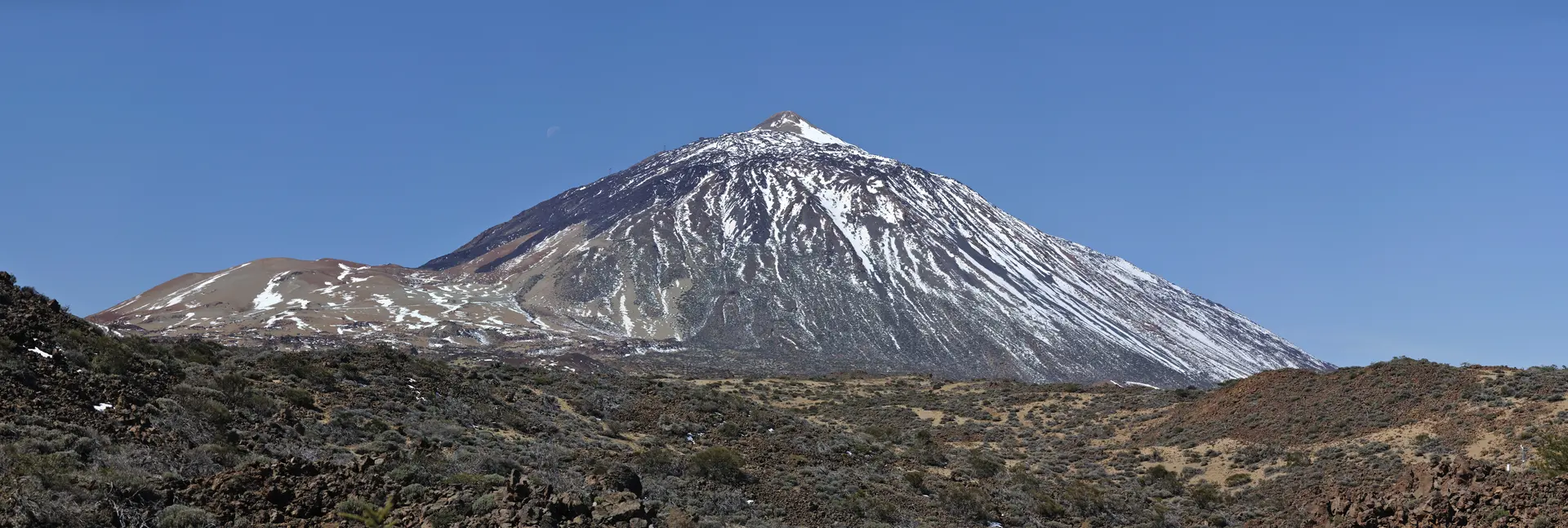
Image of Mount Teide. Image source · CC-BY-SA-3.0
Visit essentials
A quick read before you go
- Duration
- A half-day for the cable car experience and upper trails.
- Access
- Located in the center of Tenerife, Canary Islands, Spain.
Overview
Mount Teide rises 3,718 meters above sea level and more than 7,500 meters from the Atlantic floor, making it the planet's third-tallest volcanic structure and Tenerife's commanding landmark.
For the Guanche, the Canary Islands' indigenous Berber-descended people, Teide was Echeyde, the mountain holding up the sky. Their mythology says the supreme god Achaman imprisoned Guayota, the evil one, inside after rescuing the kidnapped sun god Magec from the volcanic depths. Achaman sealed the crater with the white snow cap, and each eruption was Guayota trying to escape.
The Spanish conquest of 1496 largely destroyed Guanche civilization and the ceremonial traditions animating this landscape. Teide still evokes awe above the cloud layer: sulfurous fumaroles breathe through volcanic rock, and eighty-three of the eighty-eight recognized constellations can be seen in skies legally protected from light pollution. The ascent and altitude bring visitors into an encounter with the cosmos that precedes any single interpretation.
Why this place is sacred
The ascent is the first teacher. From the coastal warmth of sea level, the road climbs through banana plantations, into pine forests fragrant with resin, past the tree line into volcanic moonscape, and finally into the caldera itself, a vast crater-within-a-crater where the earth's interior is exposed in flows and formations that look more like another planet than another altitude.
The cloud layer, which typically settles between 1,200 and 2,000 meters, creates a physical boundary that the ascent crosses. Above it, the sky deepens to a blue so intense it borders on purple. Below, the clouds form a sea that erases the world beneath.
This is not metaphor; this is the literal experience of standing above the weather, in a zone where the atmosphere thins enough that sunlight strikes differently and the stars, even before full darkness, begin to assert themselves.
The Guanche understood this zone as sacred. Archaeological evidence shows they brought offerings of milk, gofio, and pottery to sites around Las Canadas, the high caldera. Fifteen obsidian workshop sites have been identified, and the volcanic glass they produced may have carried ritual as well as practical significance.
Summer pastoral gatherings in the highlands combined practical shepherding with communal spiritual observance, suggesting that the caldera was understood as a place where the boundary between the human world and the realm of the gods grew thin.
The sulfurous fumaroles near the summit add another dimension. Even today, gases seep from the volcanic rock, a reminder that Teide is not extinct but dormant. The earth here is warm. The smell of sulfur pervades certain areas. For the Guanche, these were signs of Guayota stirring in his prison. For the contemporary visitor, they are reminders that this landscape is not fixed scenery but an active geological force, capable of reshaping itself without notice.
In Guanche cosmology, Teide was the structural pillar of the cosmos, simultaneously the abode of evil and the foundation of the sky. The caldera served as a seasonal gathering place where pastoral and spiritual activities merged. The mountain was not so much a place of formal worship as a living presence that organized the Guanche understanding of how the world was constituted.
The Spanish conquest of 1496 brought the near-total destruction of Guanche culture. Their language, ceremonies, and detailed cosmological knowledge were largely lost, surviving only in fragmentary historical accounts and archaeological evidence. Mount Teide subsequently became a scientific curiosity and eventually a national park (1954), a UNESCO World Heritage Site (2007), and a Starlight Tourist Destination (2014). The modern recovery of Guanche heritage has infused the mountain with renewed cultural meaning for Canarian people seeking connection to their pre-colonial past.
Experience and orientation
The caldera itself sets the tone. Entering through one of the mountain passes, the landscape shifts abruptly from pine forest to a vast volcanic basin ringed by ancient crater walls. The rock formations, twisted and colored by volcanic chemistry, create an environment so unlike everyday experience that the mind releases its habitual frames of reference. This is not a landscape that accommodates casual attention.
At the summit, reached either by cable car to the upper station at 3,555 meters or by hiking with the required permit to the peak at 3,718 meters, the experience intensifies. The air is thin. Breathing requires conscious attention. The horizon is impossibly distant, with the other Canary Islands visible as shapes emerging from the ocean.
On clear days, the mountain's triangular shadow stretches across the sea of clouds at sunset, an immense geometry that connects the observer to the planet's relationship with its star.
The silence is particular. Not the silence of empty rooms but the silence of altitude, where the atmosphere itself has thinned and sound carries differently. Dawn visitors, who have either hiked through the night or stayed at the Altavista refuge, report the summit sunrise as among the most affecting experiences available to a traveler: the slow illumination of a world seen from above, the cloud sea burning gold, the first warmth after a cold night of stars.
And the stars. Teide's designation as a Starlight Tourist Destination reflects what visitors have always known: the night sky here is a revelation. With eighty-three of eighty-eight recognized constellations visible and the Milky Way appearing as a physical structure rather than a faint smear, the nighttime experience resets one's sense of scale.
Many visitors report that the stargazing, more than the summit itself, is what stays with them: the realization of how much sky exists above the thin ceiling of light pollution they usually inhabit.
The contemplative potential of Teide reveals itself most fully to those who resist the temptation to rush. Rather than treating the summit as a destination to be achieved, consider the ascent itself as the practice. Notice the ecological transitions as you climb: the shift in vegetation, the change in air quality, the moment the cloud layer falls below you. If possible, stay overnight at the Altavista refuge to experience both sunset and sunrise.
For the stargazing dimension, join one of the certified guided astronomy tours that operate in the caldera; the interpretation transforms the sky from spectacle to encounter.
Context and lineage
In the beginning, Achaman created the world and the Guanche people. Guayota, the evil one, kidnapped Magec, the god of light and sun, and imprisoned him inside Echeyde. The world fell into darkness. The people cried out to Achaman, who fought Guayota, freed Magec, and sealed the evil deity inside the volcano's crater. The white snow cap of Teide is the plug Achaman placed to keep Guayota imprisoned.
If the mountain ever fell, the Guanche believed, the heavens would collapse upon the earth.
This creation narrative placed Teide at the center of everything: the battlefield of cosmic forces, the prison of evil, the pillar of the sky. It was not a place one worshipped at so much as a presence one existed within, the organizing principle of Guanche cosmological understanding.
The Guanche inhabited Tenerife from approximately 200 BCE until the Spanish conquest in 1496. Their relationship with Teide was not one of intermittent worship at a distant shrine but of constant coexistence with a living presence. After the conquest, the mountain became a feature of the colonial landscape, visited by scientists and travelers but stripped of its sacred framework.
The establishment of the national park in 1954 and the UNESCO inscription in 2007 initiated a new phase, one in which the mountain's significance is increasingly understood through both scientific and cultural lenses. The Canarian cultural revival movement has placed Teide at the center of efforts to recover and honor Guanche heritage.
Achaman
Supreme god of the Guanche pantheon, creator of the world, who defeated Guayota and sealed him inside the volcano
Guayota
Evil deity imprisoned inside Teide by Achaman, whose attempted escapes caused volcanic eruptions
Magec
God of light and the sun, kidnapped by Guayota and rescued by Achaman, restoring light to the world
Alexander von Humboldt
Naturalist who climbed Teide in 1799, bringing the mountain to international scientific attention and establishing it as a destination for scientific pilgrimage
Traditions and practice
The Guanche left offerings of milk and gofio at sacred rock formations around Las Canadas. During eruptions, communities lit bonfires on the slopes to frighten Guayota. Summer pastoral gatherings in the high caldera combined practical shepherding with communal spiritual observances, though the details of these ceremonies survive only in fragmentary form. Obsidian collected from the volcanic deposits was worked at fifteen identified workshop sites, and the material may have carried ritual significance alongside its practical utility as cutting tools.
These practices died with the Guanche civilization. What we know of them comes through archaeological evidence and the accounts of Spanish chroniclers who witnessed the final years of an independent culture through the lens of conquest and conversion.
Modern visitors engage with Teide through modes that, while not continuous with Guanche practice, respond to the same qualities of the landscape. Guided stargazing experiences, certified by the Starlight Foundation, take place in the caldera under skies where the cosmos reveals itself with unusual clarity. Sunrise and sunset observation from the summit and upper stations offers encounter with the celestial rhythms that structured Guanche cosmology.
Scientific astronomical research at the Teide Observatory continues a tradition of sky-watching that connects, at least thematically, to the Guanche veneration of Magec and the celestial bodies. Cultural and educational programs within the park interpret Guanche history alongside geological information, creating layered understanding for visitors willing to engage with both dimensions.
Approach the mountain as the Guanche may have: as a journey between worlds. Begin at the coast and drive slowly, noticing each ecological transition. When you enter the caldera, stop the car and stand in the volcanic landscape before proceeding to any specific destination. Let the silence and strangeness of the terrain work on your senses.
If you hike to the summit, treat the ascent as a deliberate practice of attention rather than a fitness challenge. Notice your breathing change with the altitude. Feel the warmth of volcanic rock beneath your boots. At the summit, before reaching for your camera, simply stand and look.
For the stargazing dimension, choose a moonless night and allow at least thirty minutes for your eyes to fully adapt to darkness. The gradual revelation of the Milky Way's structure is worth the patience.
Guanche cosmology and volcano veneration
HistoricalMount Teide was the axis mundi of Guanche cosmology, the prison of the evil deity Guayota, and the pillar holding up the sky. The Guanche understood themselves not as visitors to a sacred place but as inhabitants of a world organized around the volcano's presence. Archaeological evidence confirms extensive use of the caldera for offerings, obsidian working, and seasonal gathering over nearly two millennia.
Offerings of milk, gofio, and pottery were deposited at sacred sites around Las Canadas. During eruptions, bonfires were lit on the slopes to frighten Guayota. Summer pastoral gatherings combined shepherding with communal spiritual observance. Obsidian was collected and worked at fifteen identified workshop sites, the material possibly carrying ritual significance alongside practical utility.
Canarian cultural heritage and identity
ActiveMount Teide has become the central symbol of Canarian identity, appearing on the coat of arms of Tenerife. The recovery and celebration of Guanche heritage is an active cultural movement, with Teide serving as its most potent geographic symbol. The mountain represents continuity between the pre-colonial past and modern Canarian society, a landmark that survived the conquest even as the culture that named it sacred did not.
Cultural events, educational programs, and archaeological research keep Guanche heritage alive within the park and across Tenerife. The national park interprets Guanche history alongside geological information. Canarian cultural organizations invoke Teide in their work of recovering and honoring indigenous identity. The movement is both scholarly and political, connecting heritage preservation to questions of Canarian self-determination.
Astronomical observation and Starlight heritage
ActiveTeide was the first UNESCO World Heritage Site certified as a Starlight Tourist Destination in 2014. The Canarian Sky Law of 1988 legally protects the dark skies. The mountain hosts the Teide Observatory, one of the world's premier astronomical research facilities, continuing a tradition of sky-watching that connects thematically to the Guanche veneration of Magec and the celestial bodies.
Guided stargazing excursions certified by the Starlight Foundation operate regularly in the caldera. Professional astronomers conduct research at the Teide Observatory. The park offers both daytime geological interpretation and nighttime astronomical programs. The confluence of extreme altitude, clean air, and legal sky protection creates conditions that reveal the cosmos with unusual clarity.
Perspectives and open questions
Mount Teide stands at the intersection of geological science, indigenous cultural heritage, and the universal human response to volcanic landscapes. The perspectives one brings to the mountain shape what one finds there.
Scholarly perspective
Archaeologists and anthropologists recognize Mount Teide as the central sacred landmark of Guanche civilization, supported by material evidence including pottery deposits, obsidian workshops, and seasonal habitation sites throughout the caldera. The Guanche mythology of Guayota and Magec reflects universal patterns of volcano mythology found across cultures, connecting the mountain to underworld deities and solar cosmology. The Guanches are understood to be of Berber origin, and some scholars trace parallels between their mountain veneration and North African sacred geography traditions.
Geologically, Teide is classified as a decade volcano by the International Association of Volcanology, indicating both scientific interest and potential hazard.
Living and traditional perspectives
In the Guanche worldview, Teide was not merely a mountain but the structural pillar of the cosmos, simultaneously the abode of evil and the foundation of the sky. Modern Canarian cultural revivalists honor this perspective and work to preserve Guanche place names, legends, and the understanding of the landscape as spiritually animated. For many Canarian people, Teide represents continuity with a pre-colonial identity that centuries of Spanish cultural dominance could not entirely erase.
The mountain appears on the coat of arms of Tenerife, a political as well as spiritual statement.
Alternative interpretations
Some alternative researchers have proposed connections between Guanche culture and Atlantis mythology, noting the Canary Islands' Atlantic location and the sophistication of Guanche mummification practices. Others see Teide as a planetary energy vortex or link it to theories connecting volcanic sites across the Atlantic. These interpretations, while not supported by mainstream scholarship, reflect the mountain's capacity to inspire cosmological thinking across frameworks.
Open questions
Much about Guanche spiritual practice remains unknown due to the near-total destruction of their culture during and after the Spanish conquest. The precise nature of ceremonial activities at Teide, the full pantheon of deities associated with the mountain, and the relationship between the nine Guanche kingdoms' varying traditions regarding the volcano are only partially understood through archaeological evidence and fragmentary historical accounts.
The Guanche language itself is largely lost, and with it, the words they used to describe their relationship with the mountain that organized their world.
Plan your visit
Access and arrival
Located in the center of Tenerife, Canary Islands, Spain. Accessible by car from southern resorts (Costa Adeje, approximately 1 hour) or northern towns (Puerto de la Cruz, approximately 45 minutes) via the TF-21 or TF-38 roads. No public transit to the park. The cable car base station sits at 2,356 meters. Summit permits must be reserved at reservasparquesnacionales.es, ideally two to three months in advance.
Mobile phone signal is available in most of the caldera but may be unreliable at the summit and on some hiking trails. The nearest emergency services are based in the towns surrounding the park.
The Altavista mountain refuge (3,260 m) offers overnight accommodation for hikers, bookable through the national park system. Hotels and rental accommodations are available in the surrounding towns of Vilaflor, La Orotava, and the coastal resorts. No accommodation exists within the park itself beyond the refuge.
Respectful visit
Warm layers essential even in summer, as summit temperatures can drop below freezing. Sun protection is critical due to altitude and thin atmospheric filtering. Sturdy hiking boots required for the summit trail. The temperature difference between the coast and summit can exceed thirty degrees.
Photography is freely permitted throughout the park. Drone use requires special authorization from the park administration. Be mindful that the mountain's photogenic qualities should not override contemplative engagement.
No modern offering traditions exist. Do not leave objects, cairns, or materials in the park. The archaeological sites where Guanche offerings were once deposited are legally protected and must not be disturbed.
Stay on designated trails. Do not collect any geological or botanical material. Summit access requires a free permit limited to 200 people per day, obtainable through the National Parks reservation system. The cable car has health restrictions. Camping is prohibited except at the Altavista mountain refuge, which requires advance booking.
Altitude affects everyone differently. At 3,718 meters, some visitors experience headache, nausea, or lightheadedness. Ascend gradually and stay hydrated. The summit is not recommended for those with cardiovascular conditions, pregnant women, or children under three. Weather changes rapidly at altitude; hypothermia is possible even in summer. The cable car may close without warning due to high winds.
Current practical details
Address
Mount Teide, 38300, Santa Cruz de Tenerife, Spain
Hours, fees, and access can change — verify on the official source before you travel. Practical details last checked Jun 2026.
Location
Map loads as you approach this section.
Pilgrim reflections
A portrait of encounter, not a score
Pilgrims describe what they felt, how present they could become, and whether the place would shape a journey. There are no stars and no ranking of traditions.
No reviewed reflections yet
The first pilgrims can help describe the character of being here.
Share a reflection
Available after an account-backed “Been there.” Every reflection is reviewed before publication.
Nearby sacred places
Explore other sacred places in the region. Proximity does not establish access or travel time; check each place’s guidance.
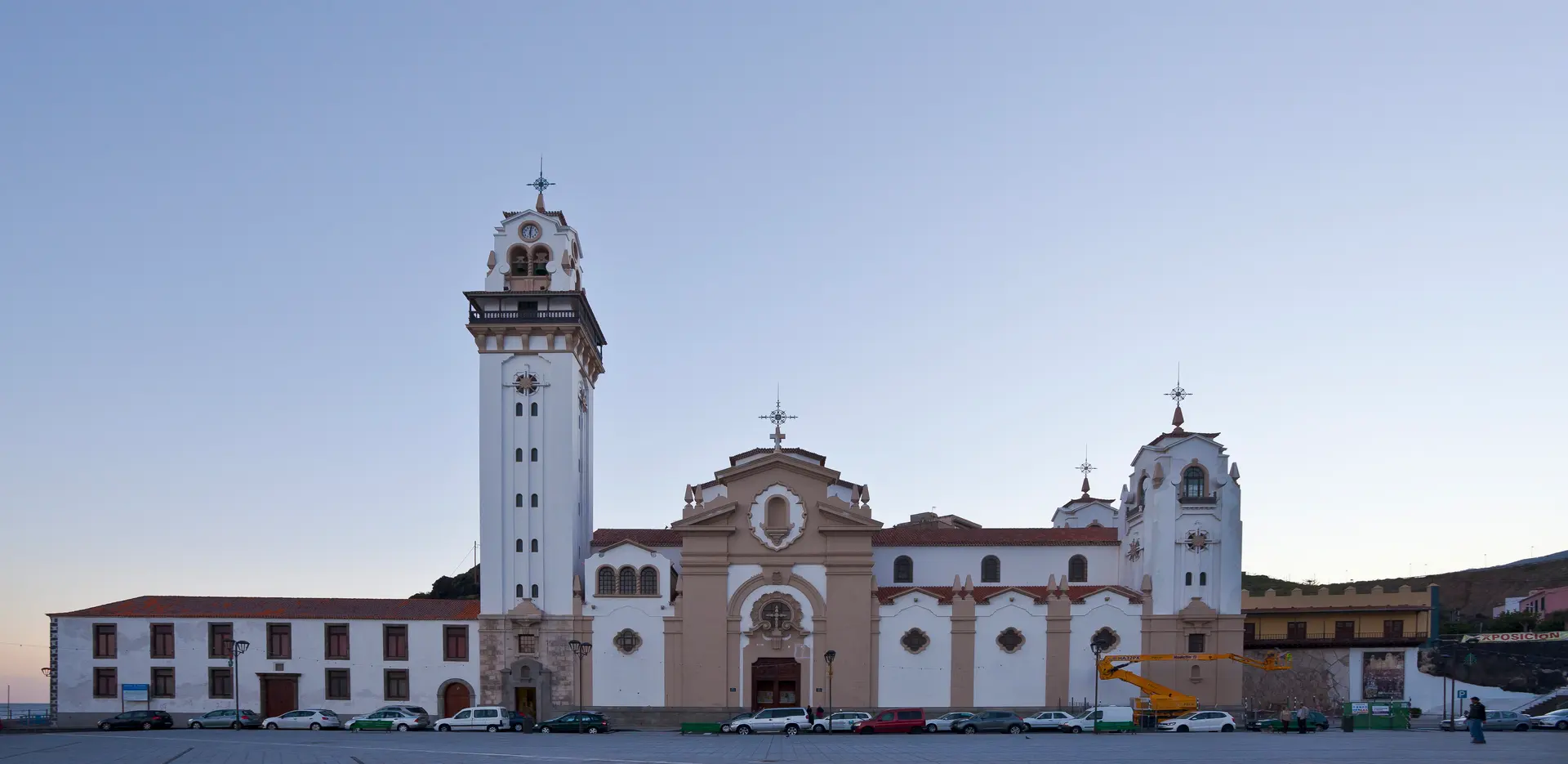
Basilica of the Royal Marian Shrine of Our Lady of Candelaria, Tenerife, Canary Islands, Spain
Candelaria, Santa Cruz de Tenerife, Spain
28.1 km away

Seven Saints of Marrakesh
Marrakesh, Marrakesh-Safi, Morocco
912.4 km away

Koutoubia Mosque
Marrakech, Marrakesh-Safi, Morocco
912.5 km away

Saadian Tombs
Marrakech, Marrakech, Marrakech-Safi, Morocco
912.6 km away
Share a photo
Help visitors recognize Mount Teide. Every submission is reviewed before publication.