Mahan
A turquoise-domed garden shrine holding the tomb of the poet-mystic who founded the Nimatullahi Sufi order
Understand sacred places, explore living traditions, and learn how to engage respectfully with Pilgrim Map.
Access has not been verified. Check current local guidance before planning a visit.
Mahan, Kerman, Iran
Read the sources
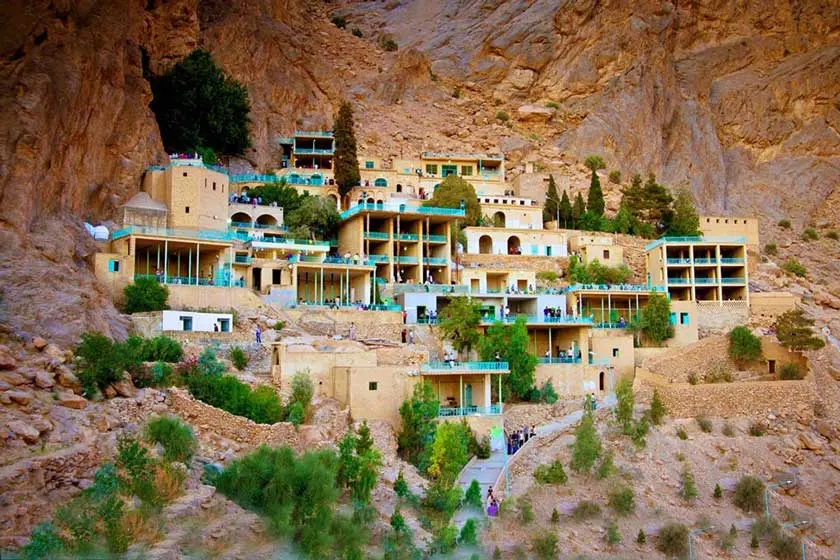
Image of Mahan. Image source · CC-BY-SA-4.0
Visit essentials
A quick read before you go
- Duration
- 1–1.5 hours
- Access
- In Mahan, Kerman Province, southeastern Iran, about 35 km southeast of Kerman city; reached by…
Overview
At the desert's edge, among Mahan's cypress gardens and reflecting pools, stands the shrine of Shah Nematollah Vali, one of Iran's most beloved Sufi sanctuaries. It holds Nur al-Din Ni'matullah (1330–1431), poet, mystic, and founder of the Nimatullahi order, among Iran's most influential Sufi orders, whose path joined master–disciple bonds, communal dhikr, and purification through honest worldly engagement rather than withdrawal. In 1436, soon after his death, Indian devotee and ruler Ahmad Shah Bahmani initiated the sanctuary chamber.
Safavid, Afsharid, and Qajar additions formed four layered courts. Above, a turquoise dome's girih includes rare eleven-point stars, read in Sufi number-symbolism as the created soul's union with the divine. Since 1436, Nimatullahi adherents and the wider Shia public have continuously come to honor the saint, recite his poetry, and pray in architecture that speaks the mystic path.
Why this place is sacred
What gives the shrine its quality is the convergence of a person, a path, and a place. The person is Shah Nematollah Vali, whose poetry and teaching shaped Persian Sufism for centuries and who is still revered as a spiritual master and intercessor. The path is the Nimatullahi order he founded, with its emphasis on remembrance, love, and the union of the soul with God — a lineage that remains alive.
And the place gives all this architectural form: the serene turquoise dome with its eleven-point stars, the Cheleh Khaneh room marking the saint's forty-day retreat, and the cypress gardens and reflecting pools that compose a desert-edge sanctuary built for contemplation.
A mausoleum and pilgrimage shrine enshrining the founder of the Nimatullahi Sufi order, intended as a place of devotion to the saint and of Sufi spiritual practice.
The sanctuary chamber was erected in 1436, shortly after the saint's death in 1431, and expanded across the Safavid, Afsharid, and Qajar periods (16th–19th centuries) into a four-courtyard complex. It remains an active pilgrimage destination and a listed Iranian national heritage site.
Experience and orientation
Visitors describe the shrine as a place of calm beauty. The turquoise dome and twin minarets rise above a sequence of garden courtyards with reflecting pools and cypress trees, and the tilework and inscriptions reward slow looking. Pilgrims move quietly between the courtyards and the tomb chamber, and the atmosphere is contemplative rather than crowded. Late afternoon to sunset is widely recommended for the way the light deepens the colour of the dome.
Take time in the courtyards before approaching the tomb chamber, where shoes are removed and quiet is kept; notice the eleven-point stars in the dome's girih tiling and the Cheleh Khaneh, the small room linked to the saint's forty-day retreat. The nearby Bagh-e Shazdeh garden makes a natural companion to the visit.
From Kerman, Mahan is about 35 km southeast, reached by car or taxi. Dress modestly — women wear a headscarf — and remove your shoes before entering the sanctuary and tomb chamber. Move through the courtyards first, then approach the tomb with quiet; some inner areas may be reserved for prayer.
Context and lineage
Shah Nematollah Vali died in 1431 after a long life as a mystic, poet, and founder of the Nimatullahi Sufi order. His path stressed the master–disciple relationship, communal dhikr, and purification through honest work and social engagement rather than retreat. After his death, the Indian ruler Ahmad Shah Bahmani of the Deccan, a devotee, commissioned the sanctuary chamber in 1436, establishing the shrine as a pilgrimage destination.
Later patrons enlarged it: the Safavids added the Mir Damad Courtyard, the Afsharids and Qajars further structures including the Vakil-ol-Molk Courtyard. The full extent of original 15th-century fabric versus later restoration is not fully documented.
Sufism (the Nimatullahi order) within a broader Twelver Shia Islamic culture of ziyarat, the devotional visitation of holy tombs.
Shah Nematollah Vali (Nur al-Din Ni'matullah)
Saint enshrined; founder of the Nimatullahi order
Ahmad Shah Bahmani
Original patron
Safavid, Afsharid, and Qajar patrons
Later builders
Adherents of the Nimatullahi order
Devotees and pilgrims
Traditions and practice
Ziyarat to the tomb, recitation of Shah Nematollah Vali's poetry, dhikr (remembrance of God), and the cheleh-neshini forty-day retreat tradition associated with the Cheleh Khaneh.
Daily pilgrimage and prayer, with devotional visitation by Nimatullahi adherents and the wider public; the on-site mosque serves prayer within the broader Shia culture of tomb visitation.
The shrine lends itself to unhurried contemplation. Sit in the garden courtyards and let the reflecting pools, cypresses, and the colour of the dome settle the attention before approaching the tomb. The eleven-point stars in the dome and the Cheleh Khaneh both reward a moment's reflection on the Sufi themes of remembrance and the soul's union with the divine.
Sufism (Nimatullahi order)
ActiveThe shrine holds the tomb of Shah Nematollah Vali (1330–1431), the poet-mystic who founded the Nimatullahi order, one of the most influential Sufi orders of Iran. His path emphasized the master–disciple bond, communal dhikr, and spiritual purification through social engagement and honest work rather than withdrawal. The Cheleh Khaneh marks where he undertook a forty-day retreat.
Pilgrimage to the saint's tomb, recitation of his poetry, dhikr, and the tradition of forty-day spiritual retreat associated with the Cheleh Khaneh.
Twelver Shia Islam
ActiveAs the resting place of a revered saint, the shrine is also visited within the broader Iranian Shia culture of ziyarat, the devotional visitation of holy tombs, with a mosque and prayer spaces in the complex.
Ziyarat, prayer at the on-site mosque, and supplication at the tomb.
Perspectives and open questions
The shrine is read as a major work of Persian architecture, as the living heart of a Sufi lineage, and through the symbolism woven into its dome.
Scholarly perspective
The shrine is a major Timurid-to-Qajar Persian architectural ensemble enshrining the founder of the Nimatullahi Sufi order, with a celebrated turquoise dome and four historically layered courtyards; it is a listed Iranian national heritage site and an enduring pilgrimage destination.
Living and traditional perspectives
Nimatullahi Sufis and Iranian Shia pilgrims revere the saint as a spiritual master and intercessor, undertaking ziyarat to his tomb.
Alternative interpretations
The dome's rare eleven-point stars are interpreted in Sufi number-symbolism as the union of the created soul with the divine, expressing the mystical goal of the path.
Open questions
The full extent of original 15th-century fabric versus later restoration, and details of early devotional practice at the shrine, are not fully documented.
Plan your visit
Access and arrival
In Mahan, Kerman Province, southeastern Iran, about 35 km southeast of Kerman city; reached by car or taxi from Kerman.
Mahan has guesthouses near the shrine and gardens; Kerman, about 35 km away, offers a wider choice of hotels.
Respectful visit
Modest dress; women wear a headscarf; remove shoes before entering the sanctuary and tomb chamber.
Generally permitted in the courtyards; be discreet inside the tomb chamber and during prayer.
Prayer and devotional recitation; respectful conduct at the tomb.
Maintain quiet and decorum near the tomb and observe any areas reserved for prayer.
This is an active shrine and Sufi devotional center; treat the tomb chamber and any dervish or prayer gatherings with respect, and keep quiet near the tomb.
Current practical details
Address
Mahan, Kerman Province, Iran
Hours, fees, and access can change — verify on the official source before you travel. Practical details last checked Jun 2026.
Location
Map loads as you approach this section.
Pilgrim reflections
A portrait of encounter, not a score
Pilgrims describe what they felt, how present they could become, and whether the place would shape a journey. There are no stars and no ranking of traditions.
No reviewed reflections yet
The first pilgrims can help describe the character of being here.
Share a reflection
Available after an account-backed “Been there.” Every reflection is reviewed before publication.
Nearby sacred places
Explore other sacred places in the region. Proximity does not establish access or travel time; check each place’s guidance.



References
Sources consulted for this page. Source categories describe the publication, not a guarantee that every claim is verified. Traditional accounts and outside interpretations may differ.
- 01Nur al-Din Ni'matullah Vali Shrine, Mahan — Archnet — Archnet / Aga Khan Documentation CenteracademicScholarly architectural documentation of the shrine complex, courtyards, and dome.
- 02Shah Nematollah Vali Shrine — Wikipedia — Wikipedia contributorsacademicConfirms coordinates (30.05972N, 57.29000E), 1436 CE founding by Ahmad Shah Bahmani, four courtyards, turquoise dome, Iran National Heritage listing.
- 03Shah Nimatullah Wali — Wikipedia — Wikipedia contributorsacademicBiography of the saint (1330–1431), founder of the Nimatullahi Sufi order, poet and mystic.
- 04Tomb of Shah Nimatullah Vali — Iran Tourism and Touring Organization (ITTO) — ITTOofficialOfficial tourism description; pilgrimage destination near Kerman.
- 05Shrine of Shah Nematollah Vali — Architectural Journey — Architectural JourneySource contextDetails girih-tiled dome with rare 11-point stars, Cheleh Khaneh 40-day retreat room, four-courtyard layout, shab-kolah dome profile.
- 06Mahan — World Pilgrimage Guide — Martin GrayspiritualPilgrimage context for the shrine of the Nimatullahi founder.
- 07Shah Nematollah Vali Shrine: An Iconic Pilgrimage Destination — EavarTravel — EavarTravelSource contextVisitor information, Safavid/Afsharid/Qajar expansions, dervish and pilgrim spaces.
Share a photo
Help visitors recognize Mahan. Every submission is reviewed before publication.