Jerónimos Monastery
A king's thanksgiving vow, carved into five centuries of Manueline stone
Understand sacred places, explore living traditions, and learn how to engage respectfully with Pilgrim Map.
Access has not been verified. Check current local guidance before planning a visit.
Belém, Lisbon, Lisbon, Portugal
Read the sources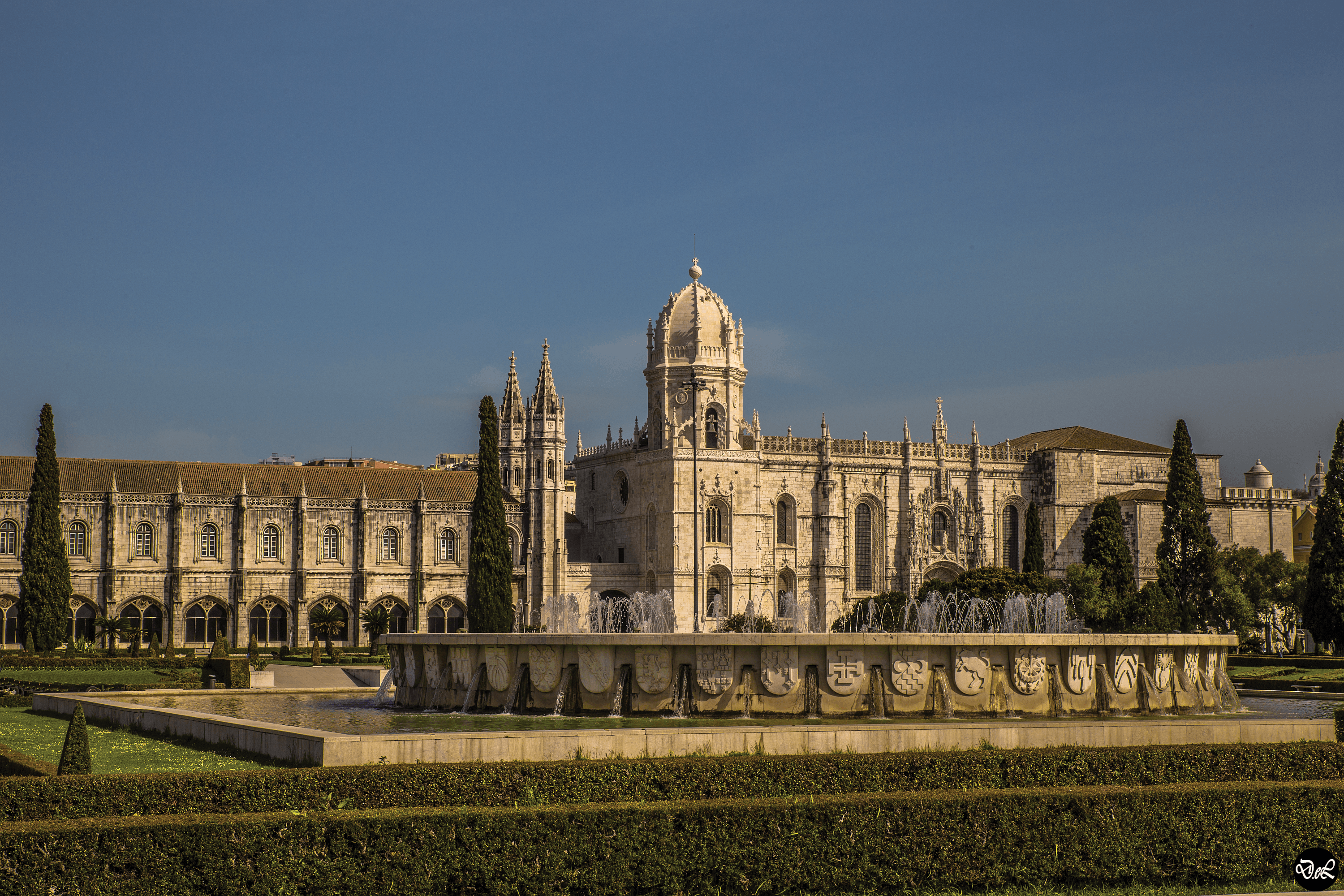
Image of Jerónimos Monastery. Image source
Visit essentials
A quick read before you go
- Duration
- Most visitors spend one to one and a half hours in the church, cloister, and refectory; those…
- Access
- The monastery stands in Lisbon's Belém parish on Praça do Império, near the Tagus riverfront,…
Overview
Before Jerónimos existed, sailors spent their last night on Portuguese soil in a small hermitage here, praying before entering waters no European had charted; Vasco da Gama's crew did so in 1497. When da Gama returned, King Manuel I is said to have vowed a monastery on this ground in thanksgiving to the Virgin Mary. Over the following century, it became a supreme expression of Manueline style, with columns resembling rope, coral, and rigging, as though sea became stone.
For more than 400 years, Hieronymite monks prayed daily for the king's soul and those departing below until a state decree ended their community in 1833. The site now holds a museum of empire with the tombs of da Gama and poet Luís de Camões beside a working parish church where a smaller congregation still gathers for Mass. Many arrive for the carving and remain for the hush that settles in the cloister after tour groups thin.
Why this place is sacred
The site's power rests on a doubled crossing: the hermitage vigil before departure, and the vow of thanksgiving that followed a safe return (see the founding story below). What makes the monastery more than a monument to that one vow is what it became afterward — a place where departure and return were held together in the same architecture.
The nave's soaring verticality was built, in effect, over a threshold, and the building's later role as resting place for da Gama, the poet Luís de Camões, Portuguese monarchs, and later Fernando Pessoa extended that logic. This is where Portugal chose to keep the people it associated with going out and coming back.
The monastery was built to be, at once, a monastic house under the rule of St. Augustine, a royal pantheon for the House of Aviz, and a permanent institution of prayer for the king and for sailors departing from Restelo — functions Manuel I and the Hieronymite order treated as one integrated purpose.
The 1833 dissolution of the monastic order marks the site's turn from a single monastic purpose to the layered civic, scholarly, and devotional uses it holds today — museum wings alongside continued worship next door.
Experience and orientation
The first encounter is scale and detail at once — columns carved as if twisted rope, capitals sprouting coral and armillary spheres, a vaulted ceiling that seems to need no visible support. It is easy to spend the first ten minutes simply looking up. This is also the most crowded part of any visit: cruise groups, school trips, and tour buses converge here, especially late morning through mid-afternoon.
The tombs of da Gama and Camões flank the entrance, close enough that many visitors pause there before the crowd has thinned. Further in, the cloister is where the register changes — visitors and travel writers repeatedly note how much stiller it feels than the nave, particularly early in the day, when the eastern arches catch soft morning light.
A smaller number find their way to the adjoining Church of Santa Maria de Belém through its separate free entrance. Accounts of this space tend toward the same note: a working parish church, modest next to the museum wing, where the sense of tourism recedes and ordinary devotion is still taking place.
Arrive at opening if the goal is the cloister's quiet — it fills quickly. Give the nave and tombs their due first, then slow down in the cloister, where there is little to do but walk its arcades. A visit to the Church of Santa Maria de Belém is best treated as a separate stop, not an extension of the museum ticket — it keeps its own hours, tied to services rather than visitor traffic.
Context and lineage
According to tradition, sailors — Vasco da Gama's crew among them — prayed through the night before their 1497 departure for India at the Ermida do Restelo, a hermitage founded here around 1450 by Prince Henry the Navigator. When da Gama's voyage succeeded, Manuel I is said to have vowed to build a monastery in thanksgiving to the Virgin Mary, petitioning the Holy See in 1496.
Construction began January 6, 1501, per the Portuguese heritage authority and most academic sources, though some general accounts round this to "the early 1500s." The Hieronymite order was installed to fulfill the vow: perpetual prayer for the king's soul and spiritual support for departing sailors.
Hieronymite monks maintained continuous prayer here from the early 1500s until 1833, when the Portuguese state dissolved the country's religious orders. The buildings passed through use as a school and orphanage before the 20th century brought the National Archaeology Museum and Maritime Museum into the former monastic wings.
The Church of Santa Maria de Belém, by contrast, was never given over to secular use and continues as an active parish church — a line of worship separate from the monastic order that once occupied the rest of the complex.
Manuel I
founder
King who petitioned the Holy See in 1496 and commissioned the monastery in thanksgiving for da Gama's voyage, funding it through a levy on trade with Africa and the Orient. He is buried in the church he founded.
Vasco da Gama
historical
Navigator whose 1497-1499 voyage to India prompted Manuel I's founding vow. His remains were moved to a neo-Manueline tomb near the church entrance in 1880.
Luís de Camões
historical
Author of the epic poem Os Lusíadas, which dramatizes da Gama's voyage. His tomb sits opposite da Gama's near the church entrance.
Diogo de Boitaca
builder
Architect credited with founding the Manueline style and beginning construction; later architects, including Juan de Castillo, Nicolau Chanterene, and Diogo de Torralva, continued the century-long work.
Traditions and practice
Under the rule of St. Augustine, Hieronymite monks devoted roughly seven hours a day to prayer, sustained for over four centuries as an obligation tied to Manuel I's founding vow. Before the monastery existed, crews including Vasco da Gama's kept overnight vigils at the predecessor hermitage before departing. Both practices ended in the 19th century: the monastic prayer with the 1833 dissolution, the departure vigils with the end of the Age of Discoveries itself.
Roman Catholic Mass and services continue at the Church of Santa Maria de Belém, accessible without charge through its own entrance, separate from the paid museum and cloister. The specific practices of the present-day congregation, distinct from the far larger population of museum-going visitors, are not well documented in available sources — what is confirmed is that services take place regularly and the church may close temporarily to tourist visits while they do.
The site has also hosted state ceremonies unrelated to worship, including the 2007 signing of the Treaty of Lisbon.
There is no ritual to perform here as a visitor, but the cloister rewards unhurried attention. Walk its arcades slowly rather than photographing them in sequence, noticing how the carved capitals shift as the light moves — some find it useful to pause where the nave's crowd noise fades into the cloister's quiet. Those drawn to the church rather than the museum might simply attend a service as any worshipper would.
Roman Catholicism (Order of Saint Jerome / Hieronymites)
ActiveThe monastic community founded to fulfill Manuel I's vow was dissolved in 1833, but the adjoining Church of Santa Maria de Belém remains an active Catholic place of worship, and the site continues to hold weight in Portuguese Catholic and national memory as a place linking faith, monarchy, and the Age of Discoveries.
Regular Mass at the Church of Santa Maria de Belém, open to the public through its own entrance, separate from the paid museum visit.
Heritage stewardship and museum interpretation
ActiveThe former monastic wings have housed the National Archaeology Museum and Maritime Museum since the 20th century, and the complex has held UNESCO World Heritage status since 1983 — a living tradition of conservation and interpretation for a public that vastly outnumbers the worshipping congregation next door.
Ongoing conservation of the Manueline stonework, curated museum exhibits, and guided interpretation for the complex's large annual visitor numbers.
Perspectives and open questions
The monastery draws distinct readings — architectural history, Portuguese Catholic memory, and the looser language of travel writing — and each leaves real questions unresolved.
Scholarly perspective
Art and architectural historians treat the monastery as the fullest realization of the Manueline style, a Portuguese idiom fusing maritime motifs — ropes, armillary spheres, coral-like forms — with Christian symbolism, financed directly by the profits of overseas trade. Historians broadly agree on the sequence of patronage and architects and on the site's dual function as royal pantheon and institutional support for Portuguese maritime expansion; disagreement, where it exists, concerns emphasis and dating rather than these fundamentals.
Living and traditional perspectives
Within Portuguese Catholic and royal-dynastic memory, the monastery is understood as a covenantal act of thanksgiving — a promise kept in stone, linking the House of Aviz, the Age of Discoveries, and divine providence in a single narrative. The vow, the voyage, and the building are treated as one continuous act of gratitude rather than three separate events.
Alternative interpretations
No distinct esoteric or alternative-spirituality tradition specific to the monastery appears in the sources consulted. Some travel-spiritual writing frames the cloister in the language of thin places, but this reflects individual writers' impressions of the site's stillness rather than any established framework attached to Jerónimos itself.
Open questions
The precise content of Manuel I's 1495-1496 devotional intent, beyond thanksgiving for da Gama's voyage, is not fully documented. Likewise, the lived religious experience of the present, much-diminished congregation at Santa Maria de Belém — distinct from the museum-going public that vastly outnumbers them — remains largely undescribed. What they make of sharing their building with a national monument is, at this point, simply not on the record.
Plan your visit
Access and arrival
The monastery stands in Lisbon's Belém parish on Praça do Império, near the Tagus riverfront, reachable by tram 15E, bus, or suburban train to Belém station. The Church of Santa Maria de Belém has its own free entrance, separate from the paid museum ticket entrance.
Respectful visit
No dress code is strictly enforced anywhere in the complex, but modest attire covering shoulders and knees is recommended out of respect, particularly when entering the Church of Santa Maria de Belém for worship rather than sightseeing. Open-toed shoes and sandals are permitted throughout.
General photography is allowed in most museum and cloister areas, though flash, tripods, and professional equipment are typically prohibited indoors, and some areas restrict photography entirely; posted signage varies by section. Photography during active services in the Church of Santa Maria de Belém should be avoided even where not explicitly posted.
No formal offering customs are documented for tourist visitors to the museum or cloister. Those attending Mass or other services at the Church of Santa Maria de Belém may take part in standard Catholic liturgical practice, including the collection.
No food or drink is permitted inside the monument, and smoking is strictly prohibited. Visitors are asked to maintain quiet, respectful conduct throughout. The Church of Santa Maria de Belém may close temporarily to tourist visits during services, independent of the museum's posted hours.
The Church of Santa Maria de Belém is a place of active worship, not a museum annex; entering during a service to look rather than to participate is a different kind of visit than the cloister tour. No physical offerings are documented as customary for tourist visitors within the monument.
Location
Map loads as you approach this section.
Pilgrim reflections
A portrait of encounter, not a score
Pilgrims describe what they felt, how present they could become, and whether the place would shape a journey. There are no stars and no ranking of traditions.
No reviewed reflections yet
The first pilgrims can help describe the character of being here.
Share a reflection
Available after an account-backed “Been there.” Every reflection is reviewed before publication.
Nearby sacred places
Explore other sacred places in the region. Proximity does not establish access or travel time; check each place’s guidance.


References
Sources consulted for this page. Source categories describe the publication, not a guarantee that every claim is verified. Traditional accounts and outside interpretations may differ.
- 01Monastery of the Hieronymites and Tower of Belém in Lisbon — UNESCO World Heritage CentreofficialOfficial UNESCO World Heritage listing (ref. 263, inscribed 1983, criteria iii and vi); confirms founder King Manuel I, Hieronymite monks' role praying for the king and assisting seafarers.
- 02Mosteiro dos Jerónimos — Direção-Geral do Património Cultural (DGPC), Portuguese Ministry of CultureofficialOfficial Portuguese cultural heritage body; confirms 1496 petition to the Holy See, construction 1501-1502 onward over roughly a century, National Monument status since 1907.
- 03Jerónimos Monastery — Wikipedia — Wikipedia contributorsacademicComprehensive overview with citations: architects (Diogo de Boitaca, Juan de Castillo, Nicolau Chanterene, Diogo de Torralva, Jérôme de Rouen), tombs (Vasco da Gama, Luís de Camões, Manuel I, João III, Fernando Pessoa), secularization in 1833, current use as Archaeology and Maritime Museums.
- 04Who rests in the tombs of the monastery? — Google Arts & CultureacademicDetails on the 1880 transfer of Vasco da Gama's and Luís de Camões's remains to neo-Manueline tombs sculpted by Costa Mota.
- 05Jerónimos Monastery – Tickets, Tours & Visitor Information — Mosteiro dos Jerónimos (official site)officialSemi-official visitor information portal; used for opening hours and practical visiting details, corroborated by DGPC and other tourism sources.
- 06Jerónimos Monastery Opening Hours & Best Time to Visit — jeronimos-monastery.ptSource contextOpening hours: Tuesday-Sunday 9:30am-5:30pm, closed Mondays, Jan 1, Easter Sunday, May 1, Dec 25; last entry 5pm.
- 07Jerónimos Monastery – the Portuguese voyages and the lion's paw — Portugal ResidentSource contextRecounts the traditional Legend of Saint Jerome and the lion, referenced in the monastery's Hieronymite dedication and iconography.
- 08Jeronimos Monastery - Lisbon, Portugal — Sacred DestinationsspiritualFrames the site within a spiritual/pilgrimage-travel context, noting its founding vow tied to Vasco da Gama's voyage and its continuing function as a place of prayer and reflection.
- 09Jerónimos Monastery Dress Code | What to Wear & Avoid — jeronimosmonasterytickets.comSource contextDetails on visitor dress expectations, modest attire recommended especially for the active Church of Santa Maria de Belém; no strict enforcement of shoulder/knee covering.
- 10Ultimate Guide to Visiting Jerónimos Monastery (Tickets, Tips & Timing) — The Jeronimos TourSource contextCrowd pattern and best-light timing details: early morning arrival recommended, 11am-2:30pm is the peak overlap of cruise passengers, tour groups, and school groups; eastern cloister arches catch soft morning light.
Share a photo
Help visitors recognize Jerónimos Monastery. Every submission is reviewed before publication.