Church of the Virgin of the Poor, Banneux
Where Mary identified herself as the Virgin of the Poor and pointed an eleven-year-old girl to a woodland spring
Understand sacred places, explore living traditions, and learn how to engage respectfully with Pilgrim Map.
Access has not been verified. Check current local guidance before planning a visit.
Sprimont, Liege, Belgium
Read the sources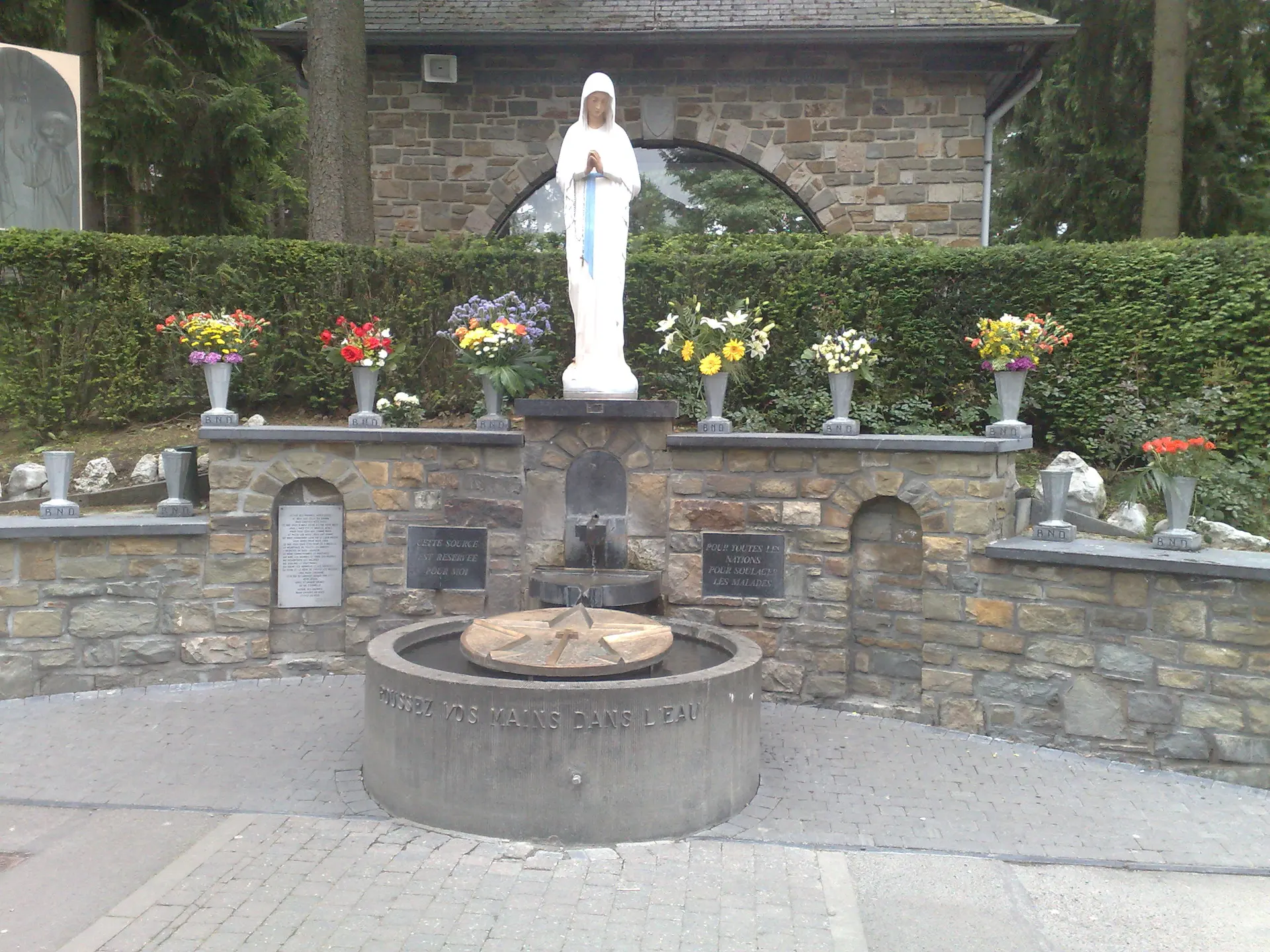
Featured in this guide
98 Sacred Springs and Holy Wells Around the World
Sacred water, community stories and spring sanctuaries worldwide
Featured in this guide
100 Sacred Sites of Healing and Pilgrimage
100 places of healing devotion, sacred water, and ancient sanctuary traditions
Featured in this guide
Marian and Christic Apparitions
Catholic-recognised and disputed sites where Mary is said to have appeared
Visit essentials
A quick read before you go
- Duration
- Two to three hours for a focused visit to the Chapel of the Apparitions, the path Mariette…
- Access
- Banneux is in the commune of Sprimont, Province of Liège, Wallonia, about 25 km south-east of…
Overview
Banneux, among the quietest great Marian shrines, occupies a narrow woodland strip beside a working-class village in Sprimont, about twenty-five kilometres south-east of Liège in the Belgian Ardennes. In January 1933, amid the Great Depression, the Virgin Mary is reported to have appeared eight times in the family garden and adjoining wood to Mariette Beco, the eleven-year-old eldest child of a poor, unbelieving family.
The brief apparitions named her at the second encounter as “the Virgin of the Poor—La Vierge des Pauvres.” She led Mariette along a footpath to a spring, knelt, and called it “reserved for me… for all the nations… for the sick,” adding, “I come to relieve suffering.” At the eighth and final apparition she said, “I am the Mother of the Saviour, Mother of God. Pray much. Adieu,” and never returned.
Bishop Louis-Joseph Kerkhofs of Liège canonically recognized the apparitions on 22 August 1949 after provisional steps in 1942 and 1947, making Banneux one of few twentieth-century Marian apparitions with full ecclesial approval. Its consolation for the poor and sick and spring “for all the nations” have shaped an ecumenical, internationally welcoming character across more than ninety years of pilgrimage.
Why this place is sacred
What gives Banneux its concentrated thinness is the scale-shift between the smallness of the place and the global reach of its pilgrimage. The whole core of the sanctuary — the Beco family garden where the first apparition occurred, the path Mariette walked, and the spring she knelt beside — can be internalised in a single slow circuit lasting less than an hour.
The first chapel, consecrated on 15 August 1933 only months after the apparitions ended, still stands at the edge of the Beco garden. Around it the diocese later built a wider sanctuary of chapels for nations and groups, but the founding itinerary remains a small woodland path under beech trees.
The rectors have emphasised silence at the spring and inside the Chapel of the Apparitions since the early decades, and even on busy days pilgrim talk drops away as the path narrows.
The shrine's theology — that God has a particular concern for the poor and that the spring is 'for all the nations' — is enacted spatially: the international chains of intercession that fill the summer calendar assign each nation a designated week, so that pilgrims from many countries hold the spring in turn rather than crowd it together.
Many pilgrims arrive with chronic illness, poverty, or grief, and visitors who come without these intentions still describe a softened, slowed-down quality after the path.
Healing traditions
Apparition and healing-water tradition
In Banneux's account of the 1933 apparitions, Mary leads Mariette Beco to a spring and identifies it with the relief of suffering and a welcome for all nations. The image of the Virgin of the Poor places sick and vulnerable people at the heart of the pilgrimage. This is the source of the spring's healing association; the reviewed sanctuary material does not supply a named recovery for this section.
Ways to participate
At the spring, pilgrims place their hands in the water and pray for relief, strength, or someone they love. The sanctuary explicitly says that this water is not intended for drinking. You can also remain beside the spring, visit the apparition chapel, or request pastoral support without using the water.
These accounts describe religious traditions and reported experiences. They do not promise a cure or replace medical care.
Experience and orientation
Most pilgrims begin at the Chapel of the Apparitions on the edge of the original Beco garden, then walk the short path through the wood that Mariette walked with the lady. The footpath is unhurried by design, lined with stations recalling each of the eight apparitions, and ends at the spring. There visitors place their hands in the water at the designated point, and pause in silence.
The wider sanctuary precinct adds chapels for international groups, a large esplanade church for the Saturday Mass for the Sick during the pilgrimage season, and a hostel for retreats. The atmosphere is markedly different from louder Marian shrines: there is no commercial market between the path and the spring, the chapels are kept small in scale, and the rectors discourage extended speeches at the apparition site.
Saturday Masses for the Sick during the summer season carry the strongest devotional charge; weekday afternoons in spring and autumn are best for solitude. The Ardennes beech wood around the path leafs in May and turns in October, and the seasonal rhythm of the trees is itself part of the experience.
Allow two to three hours for the Chapel of the Apparitions, the path Mariette walked, the spring, and the principal sanctuary chapels. A full day allows participation in Mass, the Stations of the Cross, and the Mass for the Sick on Saturday during the season. Two to three days at the sanctuary's hostel is a common retreat length. 15 January (feast of the Virgin of the Poor) and 11 February (World Day of the Sick) are the principal liturgical days.
Context and lineage
On the evening of 15 January 1933, eleven-year-old Mariette Beco — the eldest of seven children in a family that did not practise — saw a luminous lady in the garden of the family cottage at Banneux. Her mother dismissed the report; Mariette persisted. Over the following seven weeks the lady returned seven more times, on dates that the shrine still commemorates: 18, 19, and 20 January, 11 and 15 February, 20 February, and finally 2 March.
On 18 January the lady identified herself as 'the Virgin of the Poor — La Vierge des Pauvres,' led Mariette by a small footpath into the wood, knelt by a spring she said was 'reserved for me… for all the nations… for the sick,' and said, 'I come to relieve suffering.' Mariette's testimony, reluctant and consistent, was taken first by the parish priest of Banneux and then by a diocesan commission.
Bishop Louis-Joseph Kerkhofs of Liège granted provisional permission for public veneration in 1942 and 1947, and on 22 August 1949 issued the definitive decree recognising the supernatural character of the eight apparitions. Mariette herself lived quietly in Banneux for the rest of her life, married, raised a family, refused publicity, and died on 2 December 2011 at the age of ninety.
Banneux belongs to the Latin Church under the Diocese of Liège. The sanctuary is administered by a rector and a pastoral team under the bishop, with chapels and pilgrim provisions for many national groups. The Virgin of the Poor devotion has spread to more than thirty countries through chapels and oratories dedicated to her since 1933.
Mariette Beco
Eleven-year-old visionary, eldest of seven children in a working-class Banneux family. Her testimony, reluctant and consistent across decades, is the documentary core of the shrine. She lived in Banneux her entire life and avoided publicity.
Bishop Louis-Joseph Kerkhofs of Liège
Bishop of Liège who oversaw the diocesan investigation of the apparitions and issued the definitive decree of canonical recognition on 22 August 1949 after provisional steps in 1942 and 1947.
René Laurentin
French Mariologist whose scholarly study of Banneux is the principal academic treatment. Laurentin was the leading twentieth-century historian of Marian apparitions and applied the same critical method to Banneux as to Lourdes and other major cases.
Pope John Paul II
Did not visit Banneux but instituted the World Day of the Sick on 11 February in 1992, deliberately echoing the date of the 'I come to relieve suffering' apparition, which strengthened the shrine's identification with the universal Catholic care for the sick.
Traditions and practice
The core devotional act is to walk slowly from the Chapel of the Apparitions to the spring, in the small woodland strip Mariette crossed eight times in 1933. Pilgrims place their hands in the water at the designated point. The sanctuary says that this spring water is not drinking water. The Rosary is prayed along the pilgrim ways. Candles are lit at the Chapel of the Apparitions and written petitions left in the chapel.
The Saturday Mass for the Sick during the pilgrimage season includes the Anointing of the Sick and is the strongest devotional moment of the week. International pilgrim weeks distribute the major foreign-language Masses through the summer.
Daily Masses in the sanctuary's chapels, with international Masses in summer; the Mass for the Sick on Saturday during the season; the annual feast on 15 January (anniversary of the first apparition); the great pilgrimage of the sick on 11 February (the date of the 'I come to relieve suffering' apparition, deliberately echoed by John Paul II's 1992 World Day of the Sick); commemorations on each of the eight apparition anniversaries; and the annual feast of the final apparition on 2 March.
Liturgy of the Hours is sung in the sanctuary's chapel.
Walk Mariette's path slowly and in silence; draw water and wash your hands at the spring. If you carry an intention for someone who is sick, leave it at the Chapel of the Apparitions. Saturday afternoons during the season let you participate in the Mass for the Sick; weekday afternoons in spring and autumn are best for contemplative solitude. Consider arriving early in the morning when the wood is quiet.
Roman Catholicism (Marian apparition shrine)
ActiveBanneux is one of the two Belgian apparition shrines recognised by the Catholic Church in the 1940s, alongside Beauraing. The Virgin appeared eight times between 15 January and 2 March 1933 to eleven-year-old Mariette Beco, identified herself as 'the Virgin of the Poor,' and pointed to a small woodland spring she said was 'reserved for all the nations, for the sick.' The shrine's theology emphasises consolation for the poor and the sick and the universality of the spring.
Walking Mariette's path in silence; drinking and washing in water from the spring; praying the Rosary along the pilgrim ways; international chains of intercession during the summer season, with each nation's pilgrims assigned a designated week; Eucharistic adoration in the sanctuary chapels; the Saturday Mass for the Sick during the pilgrimage season, including the Anointing of the Sick; principal liturgies on 15 January (feast of the Virgin of the Poor) and 11 February (World Day of the Sick).
Perspectives and open questions
Banneux is read as one of the most carefully investigated twentieth-century Marian apparitions, as a Belgian companion to Beauraing in the Catholic Church's mid-century reception of new apparitions, and as a contemporary expression of the theology of preference for the poor.
Scholarly perspective
Banneux is one of the most carefully investigated twentieth-century Marian apparitions. The diocesan commissions of the 1930s and 1940s collected and cross-examined testimony from Mariette Beco, her family, the parish priest, and witnesses to the spring; René Laurentin's scholarly study remains the standard reference. Beco's testimony stayed consistent across more than seventy years and her refusal of publicity was itself unusual among twentieth-century visionaries.
Sandra Zimdars-Swartz situates Banneux within the wider sequence of nineteenth- and twentieth-century Marian apparitions — Lourdes 1858, Knock 1879, Fátima 1917, Beauraing 1932–33 — that decisively shaped modern Catholic devotion.
Living and traditional perspectives
In Catholic devotion, the eight apparitions are authentic encounters of an eleven-year-old girl with the Virgin Mary, and the spring 'is reserved' for the sick of all nations. The shrine's pastoral life is built on this premise, and the rectors have insisted from the beginning on a theology of consolation rather than spectacle.
Alternative interpretations
Some comparative writers situate Banneux as part of a twentieth-century cluster of Marian apparitions to working-class children — La Salette, Lourdes, Fátima, Beauraing, Banneux — read as the Virgin appearing in moments of economic and political crisis to the most marginal. The reading is descriptive rather than esoteric, and consistent with the shrine's own self-understanding.
Open questions
Why these apparitions concentrated in the working-class Beco household at the height of the Great Depression, and why Mariette never publicly elaborated beyond the original eight encounters, remain part of the shrine's intentional reticence. The exact number of officially documented cures attributed to the spring has never been published as a single tally.
Plan your visit
Access and arrival
Banneux is in the commune of Sprimont, Province of Liège, Wallonia, about 25 km south-east of Liège and 100 km from Brussels. Bus connections from Liège and Verviers serve the village; many pilgrims arrive by coach from Belgium, the Netherlands, Germany, France, and beyond. The sanctuary precinct is fully walkable and disability-accessible. Mobile signal in the village is reliable. The shrine office can answer specific access questions and arrange group bookings.
The sanctuary's own hostel offers retreat accommodation and is the most contemplative option. Small hotels and guest houses serve the village of Banneux and the nearby town of Sprimont. Liège, Verviers, and Spa offer fuller hotel choice within thirty to forty minutes by car. Book well in advance for 15 January and 11 February, and for the major national pilgrim weeks in summer.
Respectful visit
Modest, weather-appropriate clothing covering shoulders and knees inside the chapels. Sturdy shoes for the woodland path. Wet-weather clothing is wise — the Ardennes are reliably damp.
Permitted on the grounds and paths. Discretion expected inside the chapels and during liturgy. Avoid photographing pilgrims at the spring without permission. No flash near the apparition site.
Candles, written prayer requests, donations for the upkeep of the sanctuary, and intentions left at the Chapel of the Apparitions. Many pilgrims take a small bottle of spring water for sick relatives at home.
Silence at the spring and inside the Chapel of the Apparitions. Use only the designated water points. Do not cross processions in motion during national pilgrim weeks.
Silence is requested at the spring and inside the Chapel of the Apparitions; the rectors take this seriously and pilgrim talk falls away as the path narrows. Pilgrims are asked not to wash anywhere other than the designated water points. The path can be icy in winter; sturdy shoes are needed in any season.
Current practical details
Address
Rue de l'Esplanade 57, 4141 Sprimont, Belgium
Phone
Hours
Hours, fees, and access can change — verify on the official source before you travel. Practical details last checked Jun 2026.
Location
Map loads as you approach this section.
Pilgrim reflections
A portrait of encounter, not a score
Pilgrims describe what they felt, how present they could become, and whether the place would shape a journey. There are no stars and no ranking of traditions.
No reviewed reflections yet
The first pilgrims can help describe the character of being here.
Share a reflection
Available after an account-backed “Been there.” Every reflection is reviewed before publication.
Nearby sacred places
Explore other sacred places in the region. Proximity does not establish access or travel time; check each place’s guidance.

Church of Our Lady of the Recollects
Verviers, Liege, Belgium
10.0 km away

Black Virgin of the Recollects
Verviers, Liege, Belgium
10.0 km away
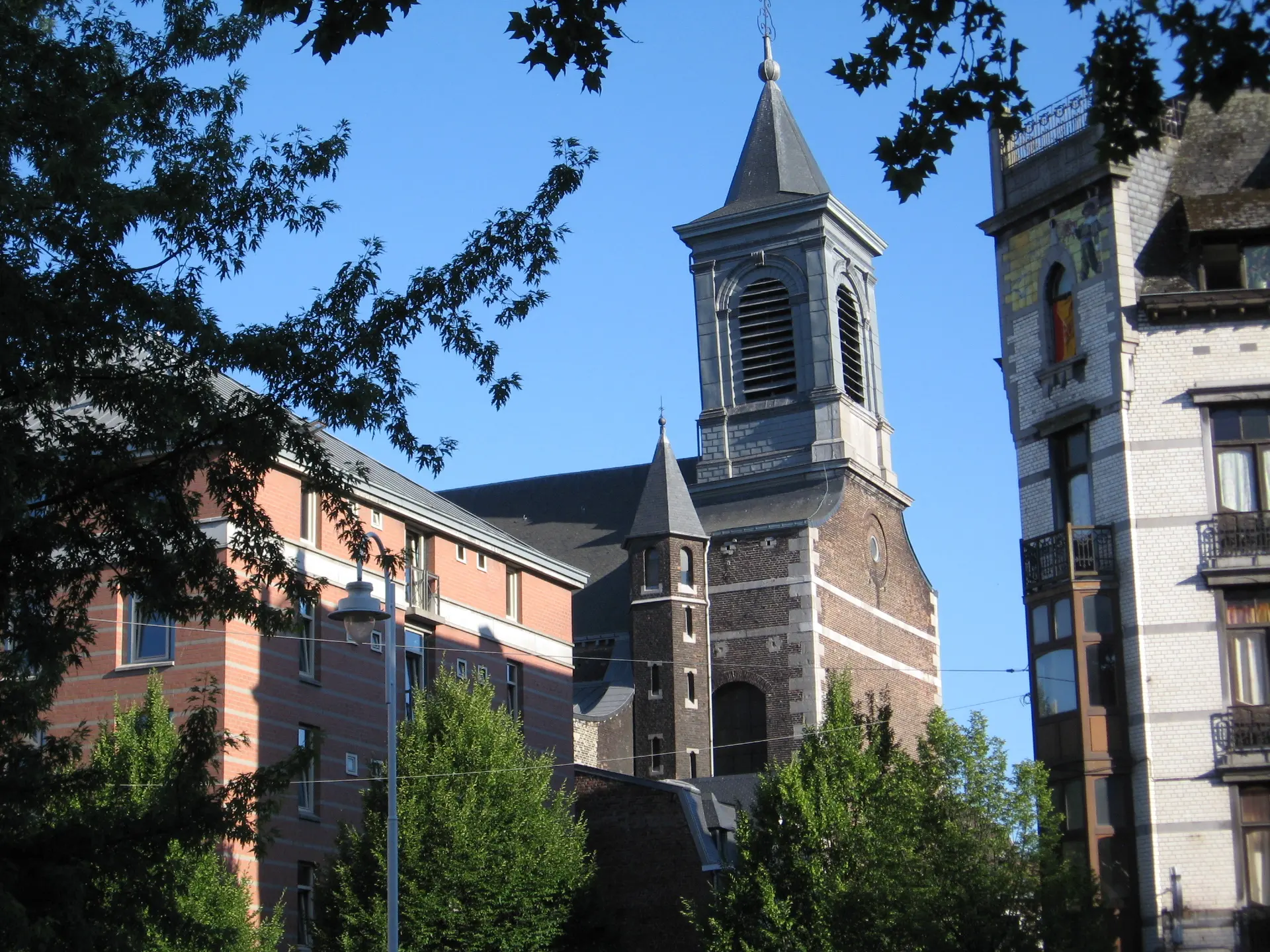
Church of St. Nicholas of Outremeuse (Black Virgin)
Liège, Liege, Belgium
16.4 km away

Klooster Wittem Pilgrimage Centre
Wittem, Wittem, Limburg, Netherlands
32.6 km away
References
Sources consulted for this page. Source categories describe the publication, not a guarantee that every claim is verified. Traditional accounts and outside interpretations may differ.
- 01The apparitions — Banneux sanctuaryofficialSupports the attributed account or visitor practice in the healing section; not evidence of clinical efficacy.
- 02The spring — Banneux sanctuaryofficialSupports the attributed account or visitor practice in the healing section; not evidence of clinical efficacy.
Photo gallery
3 curated photos
Share a photo
Help visitors recognize Church of the Virgin of the Poor, Banneux. Every submission is reviewed before publication.