Church of Saint Mary of Eunate
An octagonal Marian church ringed by arches, alone in the Navarrese wheat fields
Understand sacred places, explore living traditions, and learn how to engage respectfully with Pilgrim Map.
Access has not been verified. Check current local guidance before planning a visit.
Muruzábal, Navarre, Spain
Read the sources
On this pilgrimage
Camino de Santiago — Selected Sacred SitesVisit essentials
A quick read before you go
- Duration
- Roughly 15–30 minutes, consistent with its role as a brief detour and rest stop rather than a…
- Access
- About 2 km southeast of Muruzábal, Navarre, at the point where the Camino Aragonés meets the…
Overview
Eunate does not announce itself. It sits apart from any village, reached by a short walk off the main Camino Francés at the point where the Aragonés route joins from the east, its octagonal silhouette rising out of wheat and fallow fields with nothing else nearby to compete for attention.
Pilgrims have been making this small detour for the better part of nine centuries, drawn to a church whose form is unusual for Romanesque Navarre and whose history is genuinely uncertain.
Its octagonal plan echoes the Church of the Holy Sepulchre in Jerusalem. Popular Templar claims lack documentary support; scholarly readings instead connect the available evidence to the Hospitallers and a possible funerary or pilgrimage-hospice function, but the history remains uncertain.
What draws people today is less the unresolved history than the atmosphere it has produced: a small, centrally planned church standing alone under open sky, encircled by an arcade that visitors must walk through before they can enter.
Why this place is sacred
Eunate's sacredness has two layers that don't fully resolve into each other. The first is documentary: a twelfth-century church, likely built to bury or shelter pilgrims dying along the Camino, associated with the Hospitallers rather than the Templars despite the enduring popular claim to the contrary. The second is experiential: an octagonal building standing alone in farmland, walked around before it is walked into, its arcade creating a slow, deliberate threshold between the open fields and the interior.
The two layers meet in the building's form. The octagon recalls the Church of the Holy Sepulchre, and Romanesque architects across Europe used centralized plans like this one specifically for funerary or memorial purposes — buildings meant to mark and honor the dead rather than serve as parish churches for a living congregation.
Eunate's isolation, unusual even by the standards of Camino churches, reinforces this: there is no town here, no other reason for the building to exist except in relation to the road and the people who died walking it.
The legends that have accumulated — the Templar founding, the giant who built one portico and the jealous mason who built the twin, aided by witches — are told and retold by guides and blogs but are explicitly not supported by archival research. They are folklore, not fact, though the fact that they persist says something about the building's effect on people passing through: a place that invites explanation because its plain form and empty setting don't fully explain themselves.
Most plausibly a funerary chapel and/or hospice for Camino pilgrims, associated documentarily with the Order of St. John of Jerusalem (Hospitallers) rather than the Knights Templar, though no single source settles the question definitively.
Built in the second half of the twelfth century (c. 1170–1210); maintained by a medieval confraternity that held an annual funerary rite for its legendary noblewoman founder; continues today as an active parish hermitage on the Camino Francés.
Experience and orientation
The approach is on foot or by a short drive from Muruzábal, across open agricultural land with little to shelter the eye but the church itself and the arcade around it. Thirty-three arches form a gallery encircling the building — walking this loop before entering is, whether or not visitors think of it this way, a small act of procession, a physical delay built into the architecture.
Inside, the octagonal nave is compact and plain by comparison with the grander churches further along the Camino Francés. Light filters through narrow window slits rather than expansive stained glass, and the effect most visitors describe is not grandeur but quiet — an emptiness that feels deliberate rather than neglected. Given the church's likely funerary origin, this restraint may be closer to its original intent than the ornament of later pilgrimage churches.
Because Eunate requires a deliberate detour rather than sitting directly on the main route, it receives far fewer visitors than Santo Domingo de la Calzada or the great cathedrals further along the Way, and pilgrims frequently cite this relative solitude as central to what makes the stop worthwhile.
Located about 2 km southeast of Muruzábal, Navarre, roughly 10 km from Puente la Reina, at the point where the Camino Aragonés meets the Camino Francés. Reachable by a short walk or drive off the main route; parking is available nearby.
Context and lineage
No foundation charter for Eunate survives, so its beginnings are reconstructed from architectural dating and later legend rather than a single documentary record. Local tradition credits a wealthy noblewoman — sometimes called a queen in popular retellings — with founding the church after being moved by what the tradition frames as divine inspiration; her remains are said to have been uncovered during excavations in the surrounding cloister.
This story is unverified: no historical source names her, and it should be read as pious legend rather than established fact.
What is documented is a 1251 letter connecting the site to a confrater of the Order of St. John of Jerusalem, which is the strongest surviving evidence for the site's early institutional affiliation.
The persistent claim that the Knights Templar built or held Eunate — repeated in tourism material because of the church's resemblance to the Holy Sepulchre and to genuinely Templar centrally-planned churches elsewhere — has no support in Spanish archival research; historians have found no record of a Templar presence in this part of Navarre. The Hospitaller connection, while thinner than most visitors are led to believe, is the one actually attested by a surviving document.
Twelfth-century foundation of uncertain patronage (likely Hospitaller-affiliated, per 1251 documentary evidence) → medieval Cofradía (confraternity) maintaining the church and an annual funerary rite → continuous use as a waypoint chapel on the Camino Francés → active parish hermitage today
Traditions and practice
A Cofradía (lay confraternity) maintained the church through the medieval period and, according to its bylaws, held an annual funerary rite honoring the church's legendary noblewoman founder. Local romería-style processions are also associated with the hermitage.
The church operates as an active parish site, holding Catholic Mass, weddings, and religious celebrations; visits and events can be arranged directly through the parish.
Walk the full arcade before entering rather than cutting across to the door — the thirty-three arches were built to be walked, not merely viewed. Once inside, sit rather than circulate; the octagonal nave rewards stillness more than inspection. If arriving on the Camino itself, treat the short detour off the main route as part of the point: Eunate's relative quiet compared to larger waypoint churches is a function of the effort required to reach it.
Roman Catholicism
ActiveEunate is a Marian hermitage and active parish church on the Camino de Santiago, valued as a place of prayer, rest, and reflection for pilgrims following the Way of St. James.
Masses, weddings, and religious celebrations are held at the church; pilgrims commonly stop to pray or sit quietly inside the octagonal nave.
Camino de Santiago pilgrimage
ActiveEunate sits near where the Camino Aragonés joins the Camino Francés before Puente la Reina, making it a waypoint experienced by many pilgrims walking to Santiago de Compostela.
Pilgrims take a short detour off the main route to visit, often using the stop as a point of quiet reflection given the site's isolation.
Perspectives and open questions
Eunate is read differently depending on whether the frame is documentary history, Camino devotional practice, or the popular esoteric literature that has grown up around its Templar legend.
Scholarly perspective
Historians and architectural scholars date the church to the second half of the twelfth century and trace its octagonal plan to the influence of the Church of the Holy Sepulchre, a common model for centrally planned Romanesque buildings of the period. Archival research, including work in Spain's national archives, has found no documentation placing the Knights Templar in this part of Navarre; the Templar-origin theory is now considered discredited by most historians.
The one documented institutional connection is to the Order of St. John of Jerusalem (Hospitallers), attested by a 1251 letter, and the likely original function was as a funerary chapel and/or pilgrim hospice — a reading supported by excavated burials containing scallop shells.
Living and traditional perspectives
Within local and Catholic tradition, the church is understood through its founding legend of the pious noblewoman and through its continuing role as a Marian hermitage on the Way of St. James — a place for prayer, rest, and reflection experienced primarily through devotional visits rather than academic debate over its origins.
Alternative interpretations
Popular and esoteric literature continues to associate Eunate with the Knights Templar, sacred geometry, and mystical energy, citing the octagonal form and its resemblance to the Dome of the Rock and the Temple of Solomon. These claims circulate widely in travel blogs and some guidebooks but are not supported by documentary or archaeological evidence, and are best understood as popular legend rather than history.
Open questions
The building's precise original purpose — funerary chapel, pilgrim hospice, or parish church, or some combination — remains debated, as does the identity of its founder and the exact date of construction. No surviving document settles these questions, which is precisely the gap the Templar legend has filled.
Plan your visit
Access and arrival
About 2 km southeast of Muruzábal, Navarre, at the point where the Camino Aragonés meets the Camino Francés, roughly 10 km from Puente la Reina. Reachable by a short walk or drive off the main Camino Francés; parking is generally available nearby.
No accommodation on site; Puente la Reina and Muruzábal offer standard pilgrim lodging along the route.
Respectful visit
No formal dress code is documented, but modest dress is generally advisable given the church's continuing use for Mass and weddings.
No explicit restriction is documented; general etiquette for active churches applies — avoid flash or disruptive photography, particularly during services.
No documented tradition of offerings; a donation box may be present but this was not confirmed in available sources.
Visitors should be quiet and respectful, especially since the church hosts weddings and other religious celebrations; access may be limited during private ceremonies.
The church is a functioning place of worship, used for weddings and religious celebrations; access may be limited during private ceremonies. No formal dress code is published, but modest dress is advisable, particularly if a service is underway.
Location
Map loads as you approach this section.
Pilgrim reflections
A portrait of encounter, not a score
Pilgrims describe what they felt, how present they could become, and whether the place would shape a journey. There are no stars and no ranking of traditions.
No reviewed reflections yet
The first pilgrims can help describe the character of being here.
Share a reflection
Available after an account-backed “Been there.” Every reflection is reviewed before publication.
Nearby sacred places
Explore other sacred places in the region. Proximity does not establish access or travel time; check each place’s guidance.
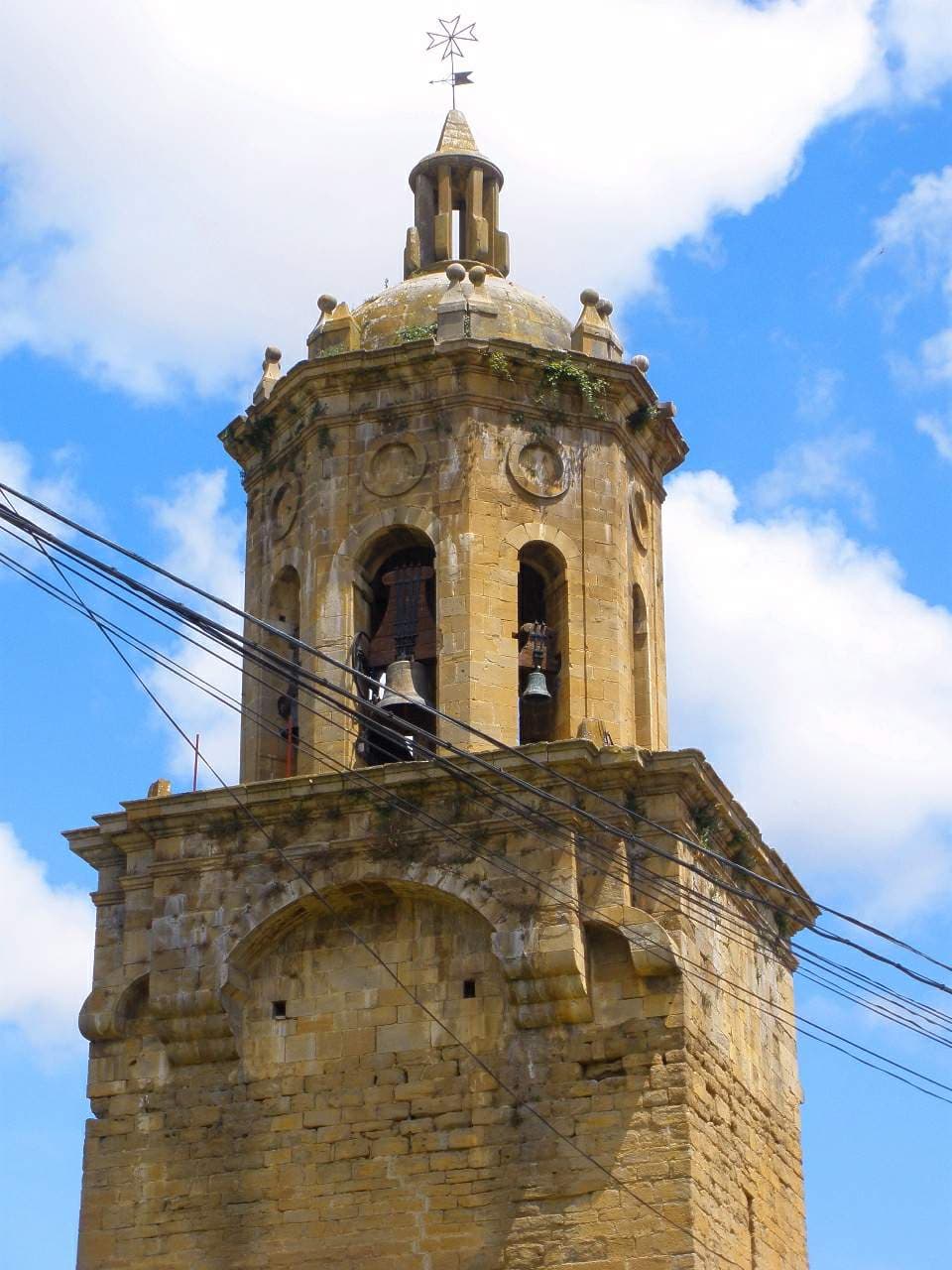
Iglesia del Crucifijo, Puente la Reina
Puente la Reina, Puente la Reina, Navarra, Spain
9.7 km away
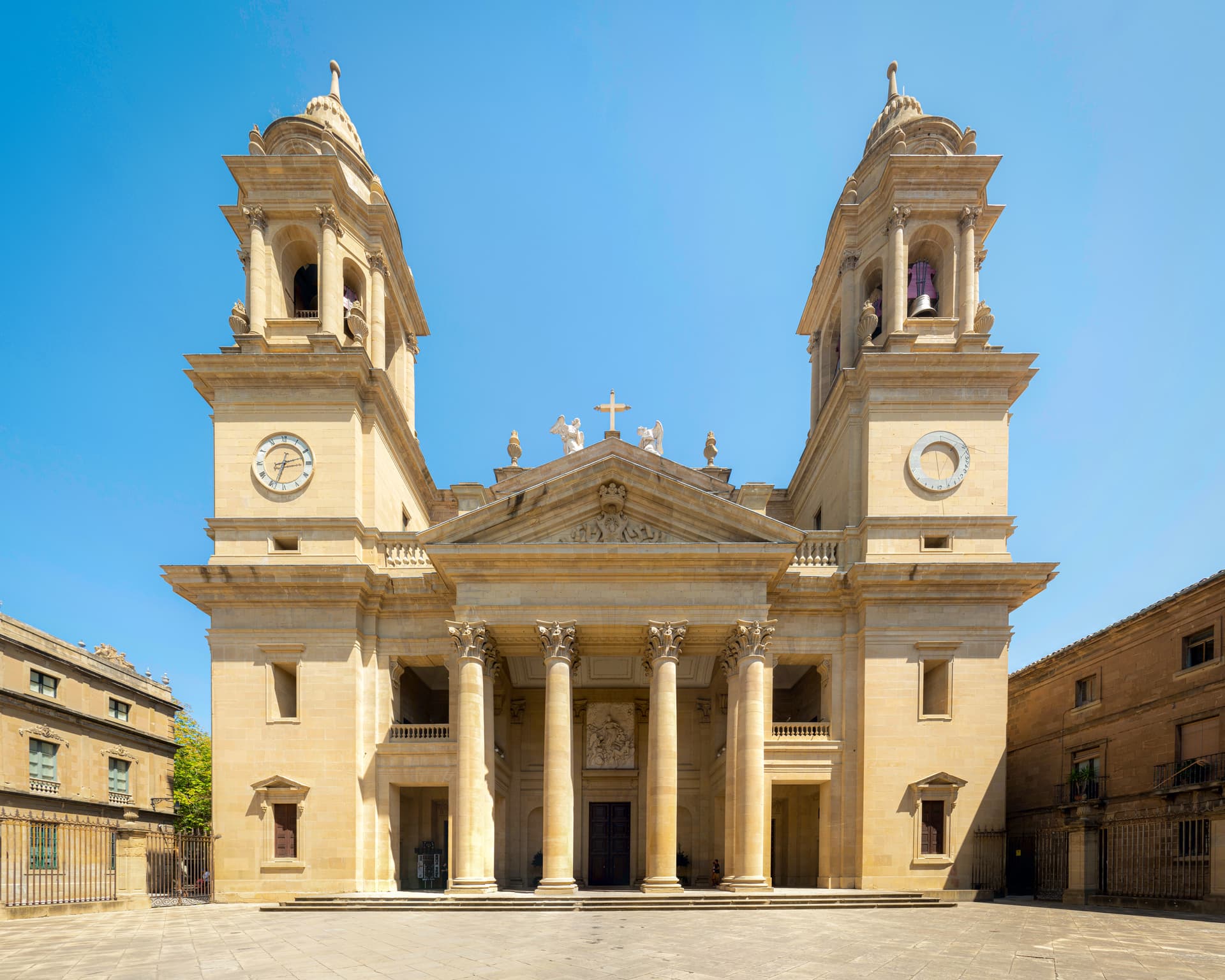
Pamplona Cathedral (Santa María la Real)
Pamplona, Pamplona, Navarra, Spain
20.5 km away

Ujué Sanctuary-Fortress
Ujué/Uxue, Navarre, Spain
21.6 km away
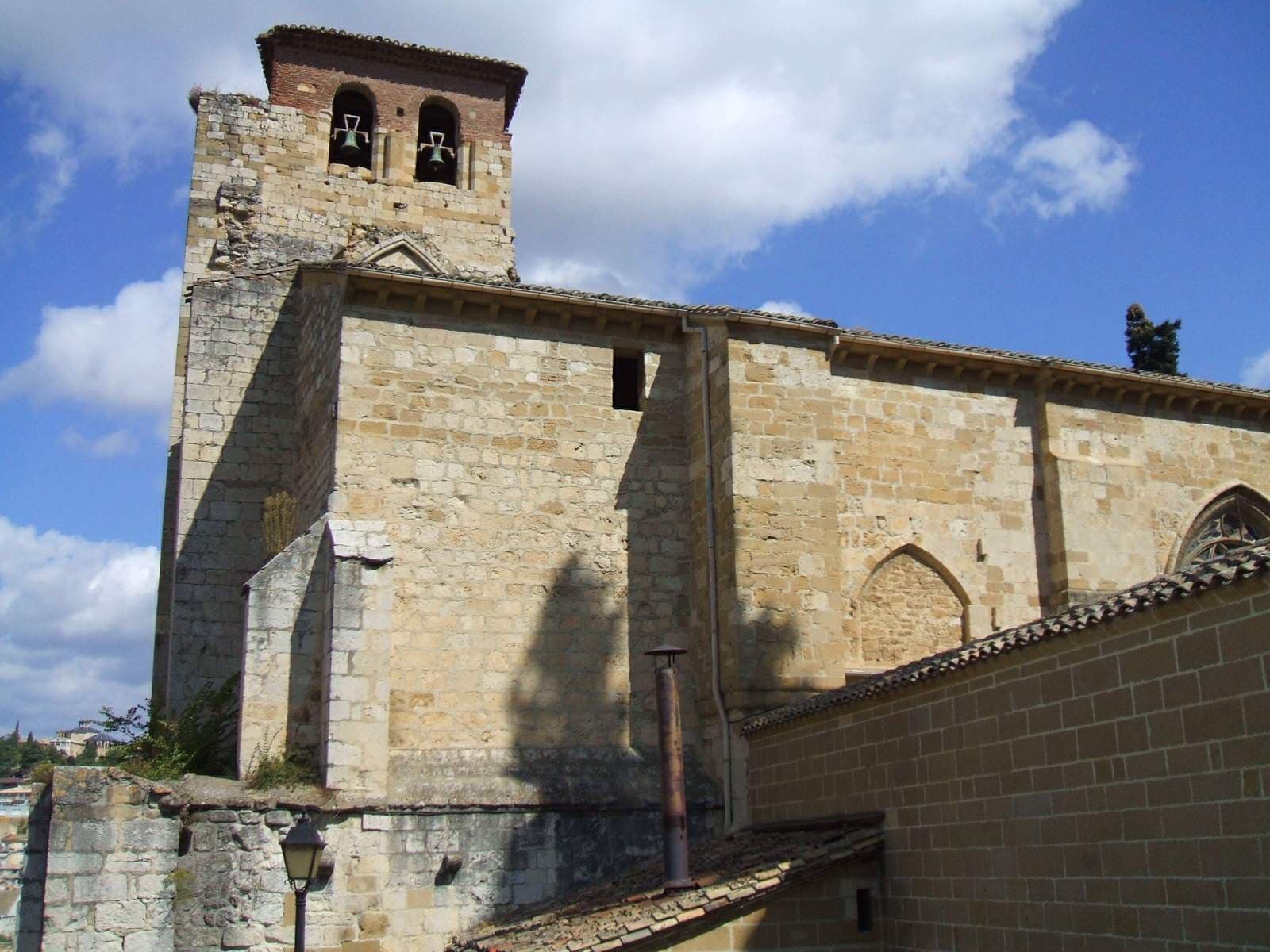
Iglesia de San Pedro de la Rúa, Estella
Estella, Estella, Navarra, Spain
27.1 km away
References
Sources consulted for this page. Source categories describe the publication, not a guarantee that every claim is verified. Traditional accounts and outside interpretations may differ.
- 01Historia — Parroquia/Fábrica de Santa María de Eunate (official site)officialSite's own historical page; describes founding legend, the Cofradía, explicit rejection of Templar affiliation per archival research, and current active parish use.
- 02Church of St. Mary of Eunate — VisitNavarra (official Navarre tourism board)officialRegional government tourism authority; practical visitor information.
- 03Location Museums and Visitable Spaces: Church of Santa María de Eunate — Government of Navarre (navarra.es)officialOfficial regional government page listing opening hours and access details.
- 04Routes of Santiago de Compostela: Camino Francés and Routes of Northern Spain — UNESCO World Heritage CentreofficialOfficial UNESCO listing for the pilgrimage route; Eunate lies on this route but is not confirmed as one of the individually named component structures.
- 05Church of Saint Mary of Eunate — Wikipedia contributorsacademicWell-cited overview covering dating, architecture, Templar debate, and Hospitaller documentation; verify key claims independently.
- 06Iglesia de Santa María de Eunate — Wikipedia contributors (Spanish)academicSpanish-language article; provides name etymology (Onate/Eunate), Sanjuanista documentation via 1251 letter, and founding legend detail.
- 07The Church of Saint Mary of Eunate — Walk The CaminoSource contextCamino-focused travel guide; corroborates architectural description and Holy Sepulchre comparison, notes Aragonés/Francés route confluence near Eunate.
- 08Church of Eunate — Wise Pilgrim (Camino Francés guide)Source contextCamino guidebook publisher aimed at pilgrims; practical and historical summary.
- 09Iconic Camino Monuments: Ermita de Santa María de Eunate — Spain Is MoreSource contextCamino tour operator blog; used for corroborating detail on burials and hospice theory.
- 10Santa María de Eunate, y la leyenda de la Iglesia Templaria — Mochileros Dos Puntos Cero (Spanish travel blog)Source contextPopular blog retelling the Templar legend and the twin-portico giant/witches legend; used only for folklore content, not factual claims.
Share a photo
Help visitors recognize Church of Saint Mary of Eunate. Every submission is reviewed before publication.