Burg Teck, Cave of Sybillenloch
A medieval castle ruin and prophetic cave where Swabian folklore meets deep time
Understand sacred places, explore living traditions, and learn how to engage respectfully with Pilgrim Map.
Access has not been verified. Check current local guidance before planning a visit.
Owen, Baden-Württemberg, Germany
Read the sources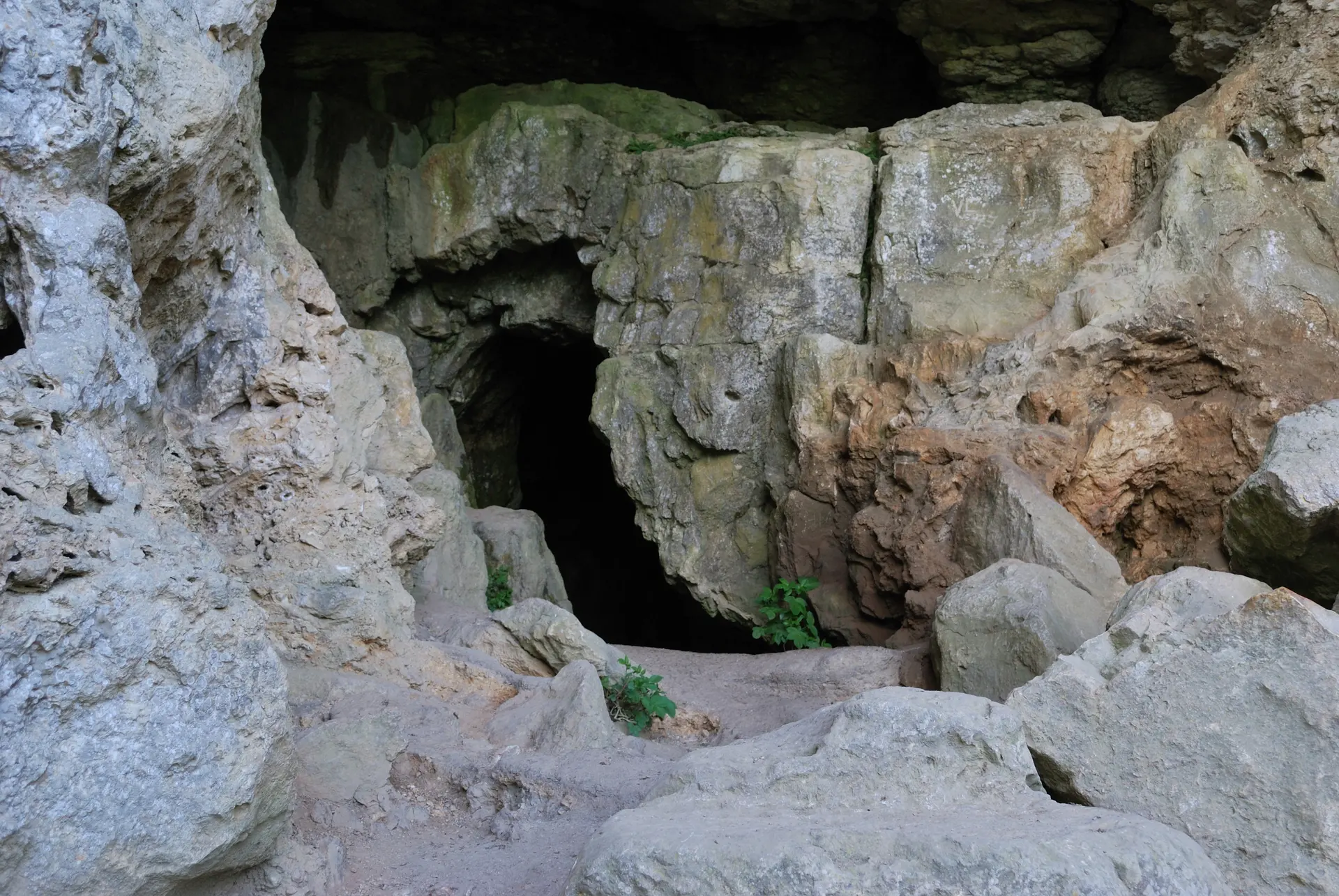
Visit essentials
A quick read before you go
- Duration
- Half day to fully explore the Sibyllenloch, climb the tower, enjoy refreshments, and take in the…
- Access
- The site lies near Owen in Baden-Wurttemberg, Germany.
Overview
The trail climbs through orchards into forest, with Burg Teck's ruined walls above and the dark, legendary Sibyllenloch hidden in limestone below. It forms a vertical pilgrimage from the everyday toward something older than memory.
The Sibylle belongs to a tradition reaching ancient Greece and Rome, where Sibyls were prophetesses through whom divine knowledge flowed. Her residence in a Swabian cave reflects a persistent European sense that certain places and the earth itself hold forgotten wisdom. Excavations in 1898-99 found bones of cave bears and lions, mammoths, and rhinoceroses from fifteen thousand years ago. Ice Age hunters surely knew this opening, though what they thought of it cannot be said.
The Dukes of Teck, a cadet branch of the Zahringer dynasty, ruled from the castle. Their descendant Mary of Teck became Queen of England and Elizabeth II's grandmother. The Schwabischer Albverein, one of Europe's oldest hiking organizations, now maintains the site, turning aristocratic fortress into democratic refuge reached on foot, with the ascent itself a practice.
Why this place is sacred
Thin places emerge where boundaries blur. At the Teckberg, multiple thresholds converge, each contributing to the site's liminal character.
The first threshold is altitude. At 775 meters, the Teckberg rises sharply from the surrounding landscape, creating a sense of departure from ordinary ground. The steep ascent requires effort, each step an incremental separation from the world left below. By the time visitors reach the castle, they have earned their elevation. This physical crossing prepares the psyche for other crossings.
The second threshold is the cave itself. Caves are archetypal portals, openings into the underworld, places where light gives way to darkness and solid ground reveals hidden chambers. The Sibyllenloch extends 35 meters into the mountain, its connected Sibyllenhohle adding another 22 meters of passage. To enter is to descend, to move from the world of sun and sky into something older and more fundamental.
The third threshold is temporal. The Ice Age bones discovered in the cave connect visitors to a time before agriculture, before cities, before writing. Cave bears, cave lions, cave hyenas, mammoths, woolly rhinoceroses. These creatures walked this landscape when glaciers covered northern Europe. Their presence gives the Sibyllenloch a depth of time that makes human history seem fleeting.
The fourth threshold is mythological. The Sibylle legend transforms the cave from geological formation to sacred dwelling. A wise woman who knew everything and foresaw the future made her home here, offering counsel to those who sought her. Her flight in a golden carriage, the tracks becoming flowers, inscribes the landscape with story. The Sibyllenweg hiking trail literalizes this myth, inviting walkers to trace the prophetess's path.
These thresholds accumulate. Ascent, descent, deep time, living legend. The Teckberg holds all of them, creating a site where the ordinary world grows thin and something else becomes perceptible.
The Sibyllenloch's original purpose remains unknown. Archaeological evidence indicates the cave served as a den for Ice Age predators, but whether humans of that era assigned sacred significance to the site cannot be determined. The Sibylle legend suggests folk memory of oracular or wise-woman traditions, though the legend's origins are unclear. The cave may have functioned as a ritual site, a shelter, or simply a notable geological feature that later generations invested with meaning.
The honest answer is that we do not know what the cave meant to those who first encountered it.
The Sibyllenloch's meaning has transformed across millennia. During the Ice Age, it sheltered large predators whose bones accumulated in its chambers. At some unknown point, humans began to interact with the cave, though the nature of this interaction remains speculative. The Sibylle legend emerged in the medieval or early modern period, connecting Swabian folklore to the broader European tradition of prophetic women. The castle above, constructed beginning in the late eleventh century, added aristocratic significance.
The destruction of the castle in the 1525 Peasants' War marked an end to feudal authority. The nineteenth century brought antiquarian interest, archaeological excavation, and the founding of the Schwabischer Albverein, which rebuilt the observation tower and transformed the site into a hiking destination. Today, the Teckberg functions as nature reserve, heritage site, and secular pilgrimage destination for those drawn to its layered history.
Experience and orientation
The experience begins in Owen, a village at the mountain's base. The Sibyllenweg climbs through orchards, past fruit trees that in spring bloom white and pink. Legend holds these flowers mark the path of the Sibylle's golden carriage, her tire tracks transformed into perpetual blossoming. Whether visitors know the legend or not, the beauty of the orchard ascent opens something in the psyche.
The trail steepens into forest. Beech and oak replace apple and cherry. The Swabian Alb reveals itself as a landscape of limestone and ancient geology, the kind of terrain that hides caves. The effort of the climb creates a transitional state. Breath quickens. The world below recedes. Something ahead draws the walker forward.
The Sibyllenloch appears as an opening in the hillside, unremarkable from a distance. Approaching, visitors sense the darkness within. The cave extends 35 meters, with a connected chamber of 22 meters discovered in 1937. A flashlight is essential. Inside, the temperature drops. Sound changes. The rough limestone walls, shaped over millions of years, bear no trace of the Ice Age creatures whose bones were found here.
Yet knowing they were present, knowing this darkness sheltered cave bears and lions, transforms the experience. This is deep time made tangible.
The legend adds another layer. Somewhere in this cave, folklore says, the Sibylle lived in a castle of her own, receiving visitors who sought her counsel. Her sons disappointed her, and one night she fled in her golden carriage, never to return. Standing in the cave's interior, visitors may find themselves asking questions they did not plan to ask. What would you seek from a wise woman who knew everything? What answer might change your path?
Emerging from the cave, the trail continues upward to the castle. The medieval walls, rebuilt and stabilized, enclose a restaurant, hostel, and observation tower. The tower climb offers its own threshold, ascending 31 meters to panoramic views across the Swabian Alb and Neckar Valley. On clear days, the Alps appear on the southern horizon. The view contextualizes the journey, revealing the landscape from which you rose.
The descent offers integration. Walking down through the nature reserve, past grazing sheep and wildflowers, visitors carry what they encountered. The physical exertion, the darkness of the cave, the height of the tower, the legend woven through it all. Something shifts in the encounter with this place, though each visitor names it differently.
Most visitors begin from Owen, following the Sibyllenweg upward. The trail is well-marked with distinctive signage referencing the legend. Alternative starting points include Bissingen an der Teck and Dettingen unter Teck. For the full experience, plan to visit the Sibyllenloch cave, then continue to the castle for food, drink, and the tower climb. Those with more time can explore the nearby Veronikahohle, a deeper cave system 770 meters from the Sibyllenloch.
The return journey can follow the same path or create a loop through the nature reserve.
Context and lineage
The castle's origin lies in medieval power politics. The Counts of Nellenburg established an initial fortification around 1050. After 1100, the Zahringer dynasty expanded the structure into a substantial ducal residence. Duke Konrad I of Zahringen, who ruled from approximately 1091 to 1152, oversaw major construction. His descendants, taking the title Dukes of Teck, ruled from this mountain until political and financial pressures forced the castle's sale.
The Sibyllenloch's origin is geological, a karst cave formed in the Jurassic limestone of the Swabian Alb. Ice Age animals used it as a den, their bones accumulating over thousands of years. The legend that gives the cave its current name emerged at an unknown point, connecting this specific place to the broader European tradition of Sibyls, prophetic women who spoke divine truth.
The most famous origin story belongs to folklore. In a castle within the cave lived the Sibylle, a wise woman who knew all things and could see the future. Those seeking guidance found their way to her. But her sons caused her grief through their wayward behavior, and one night she fled in her golden carriage. The tracks of her wheels became the blooming flowers that line the Sibyllenweg to this day.
She was never seen again, but her wisdom persists in the landscape itself.
The Teckberg holds multiple lineages in tension. The geological lineage stretches back millions of years, the limestone forming in ancient seas, the cave opening over eons. The faunal lineage connects to the Pleistocene, when Ice Age predators ruled this landscape. The legendary lineage links to the pan-European tradition of Sibyls, prophetic women whose wisdom transcended ordinary knowing. The aristocratic lineage traces through the Dukes of Teck, from the Zahringers through centuries of Swabian power to the British royal family.
The democratic lineage began with the Schwabischer Albverein in 1888, transforming noble fortress into public refuge. Each lineage persists at the site, available to visitors who bring the appropriate attention.
Duke Konrad I of Zahringen
Adalbert I, Duke of Teck
Conrad II, Duke of Teck
Mary of Teck
The Sibylle
Traditions and practice
Original practices associated with the Sibylle legend remain unknown. The tradition suggests she offered prophecy and counsel, connecting to the broader European pattern of oracular consultation. Whether actual divination, healing, or wise-woman practices occurred at the cave cannot be determined. The medieval castle would have hosted Christian observances, though no chapel remains are documented. The honest answer is that we have legend without liturgy, story without specific ritual.
The Schwabischer Albverein maintains the site as a hiking destination, their stewardship constituting a kind of secular priesthood. The hiking hostel accommodates overnight visitors seeking extended engagement with the mountain. Seasonal festivals and hiking events bring groups to the castle. The Sibyllenweg trail, with its explicit reference to the legend, structures a form of secular pilgrimage. Some visitors engage in personal spiritual practice, meditation among the stones or quiet contemplation in the cave.
The freedom of the site allows each visitor to create their own practice.
For seekers approaching the Teckberg as sacred space, consider arriving early when trails are quiet and light is soft. Begin in Owen and follow the Sibyllenweg, allowing the orchard ascent to create transition. At the Sibyllenloch, bring a flashlight and allow your eyes to adjust. Sit in the darkness if you can. Consider what question you would ask a wise woman who knew everything. Emerging, continue to the castle.
Climb the tower and take in the view, letting the panorama expand your perspective. Before descending, spend time with the ruined walls, touching stone that has stood for centuries. The descent offers integration, time to carry what arose back into ordinary life.
Sibylline Prophetic Tradition
HistoricalThe Sibyllenloch connects to the ancient Mediterranean tradition of Sibyls, prophetic women who delivered divine revelations. The most famous, the Cumaean Sibyl, guided Aeneas through the underworld in Virgil's Aeneid. That a Sibyl should appear in Swabian folklore suggests the remarkable persistence of the oracular archetype across European culture. The cave as prophetic dwelling echoes the Cumaean Sibyl's cave at Cumae and the Delphic Oracle's chasm.
According to legend, the Sibylle knew everything and could foresee the future. Those seeking advice visited her cave dwelling. The tradition suggests divination, prophecy, or counsel from a wise-woman figure, though specific practices are not documented.
Swabian Hiking Pilgrimage
ActiveThe Schwabischer Albverein, founded in 1888 partly to complete the Teck observation tower, represents one of Europe's oldest and largest hiking organizations. Their stewardship has transformed the Teckberg into a secular pilgrimage destination. The Sibyllenweg trail deliberately connects hikers to the ancient legend while traversing the sacred landscape.
Hikers follow marked trails from Owen and other starting points, ascending through orchards and forest to reach the castle. The journey involves physical effort, encounter with the Sibyllenloch cave, and culmination at the panoramic tower. The blooming flowers along spring trails are understood as marking the Sibylle's legendary flight path.
Cave as Underworld Portal
HistoricalCaves throughout European tradition served as entrances to the underworld, dwelling places of prophets and oracles, sites of transformation and initiation. The Sibyllenloch, with its Ice Age bones and deep passages, embodies this liminal quality. Entering the cave means leaving the world of light and descending toward something older.
The exact prehistoric and early historic practices are unknown. The presence of Ice Age fauna indicates the cave was significant to that landscape for millennia before human arrival. What later peoples did here, if anything beyond shelter and storage, cannot be determined.
Perspectives and open questions
The Teckberg invites multiple ways of knowing. Archaeological evidence establishes the Ice Age presence and medieval construction. Folklore preserves the Sibylle legend. Contemporary seekers bring their own frameworks. Each perspective illuminates aspects of the site while leaving others in mystery. The Sibylle herself, whether historical figure, folk memory, or pure myth, represents the persistence of oracular tradition in the European imagination.
Scholarly perspective
Archaeology confirms the Sibyllenloch's use by Ice Age fauna, with excavations in 1898-99 recovering over 2,000 skeletal remains from cave bears, cave lions, cave hyenas, mammoths, and woolly rhinoceroses. Dating places these deposits at 15,000-20,000 years ago. Historical research documents the castle's construction from the late eleventh century, its occupation by the Dukes of Teck, and its destruction in 1525. The Sibylle legend is classified as Swabian folklore, though its precise origins and dating remain uncertain.
Scholars note the connection to the broader European tradition of Sibyls, prophetic women known from ancient Greece and Rome, suggesting possible syncretism between Mediterranean oracle traditions and Germanic wise-woman figures.
Living and traditional perspectives
The Sibylle legend constitutes the primary traditional perspective. A wise woman dwelling in a castle within the cave, offering prophecy and counsel to all who sought her, eventually fleeing in sorrow from her disappointing sons. Her golden carriage left tracks that became flowers. This narrative frames the landscape as enchanted, the trail as her path, the cave as her former dwelling.
No continuous ritual tradition accompanies the legend, but the story itself functions as traditional knowledge, passed through generations and now institutionalized in the Sibyllenweg trail name.
Alternative interpretations
Some interpret the Sibyllenloch as an earth energy site, caves serving as points where telluric forces concentrate. The prophetic tradition associated with the Sibylle connects to broader ideas about caves as places of vision and altered consciousness. The transformation of carriage tracks into flowers suggests alchemical themes of material transformation. Others see the legend as preserving memory of pre-Christian wise-woman traditions, the Sibylle a Christianized survival of earlier prophetic practices.
These interpretations cannot be proved or disproved; they represent ways contemporary seekers make meaning of the site's genuine mystery.
Open questions
What remains unknown is substantial. We cannot date the Sibylle legend's origin or determine whether it preserves memory of actual practices. We do not know if the cave was used ritually in prehistoric or early historic times. The identity of any historical figure behind the legend, if one existed, is lost. The relationship between the Swabian Sibylle and classical Mediterranean Sibyl traditions remains unclear. Whether the Dukes of Teck incorporated the cave legend into their self-understanding is undocumented.
The cave keeps its secrets, offering experience rather than explanation.
Plan your visit
Access and arrival
The site lies near Owen in Baden-Wurttemberg, Germany. Main address: Teckstrasse 100, 73277 Owen. Train service to Owen station, then hiking access. By car, parking at Wanderparkplatz Hornle near Bissingen an der Teck or in Owen. GPS coordinates approximately 48.59 N, 9.45 E. Stuttgart is approximately 30 minutes by car. Kirchheim unter Teck, 5 km away, offers additional services.
Wanderheim Burg Teck, the hiking hostel at the castle, accommodates up to 20 guests for overnight stays. Additional lodging available in Owen and Kirchheim unter Teck. Stuttgart, 30 minutes away, offers extensive options. For those seeking immersive experience, staying at the castle hostel allows dawn and dusk visits to the landscape.
Respectful visit
No specific dress requirements. Sturdy hiking boots are essential for the steep and sometimes uneven terrain. Layers are advisable, as temperatures drop significantly in the cave and can vary with elevation. Warm clothing recommended for cave exploration regardless of season.
Photography permitted throughout the site. Bring a flashlight with sufficient power for cave photography. Exercise consideration for others, particularly those in contemplation.
Not traditional at this site. If you feel called to leave something, choose biodegradable materials that will not harm the environment or wildlife. Water poured at a stone's base, flower petals, a strand of hair. Remove anything that would appear as litter.
Dogs must be kept on leads due to grazing sheep in the nature reserve. Some areas may be temporarily closed for conservation. Driving access to the summit requires a permit. The castle restaurant and hostel are closed Mondays and Tuesdays. Cave exploration requires a flashlight.
The Sibyllenloch requires a flashlight for safe exploration. The terrain is uneven and can be slippery. The observation tower climb is not suitable for those with mobility limitations. Dogs must be kept on leads in the nature reserve. Respect the protected landscape by staying on trails and leaving no trace. If you encounter others in contemplation, maintain appropriate distance. The castle restaurant and hostel have limited hours, particularly closed on Mondays and Tuesdays.
Current practical details
Address
Unnamed Road, 73277 Owen, Germany
Hours
Hours, fees, and access can change — verify on the official source before you travel. Practical details last checked Jun 2026.
Location
Map loads as you approach this section.
Pilgrim reflections
A portrait of encounter, not a score
Pilgrims describe what they felt, how present they could become, and whether the place would shape a journey. There are no stars and no ranking of traditions.
No reviewed reflections yet
The first pilgrims can help describe the character of being here.
Share a reflection
Available after an account-backed “Been there.” Every reflection is reviewed before publication.
Nearby sacred places
Explore other sacred places in the region. Proximity does not establish access or travel time; check each place’s guidance.

Maulbronn Monastery Complex
Maulbronn, Maulbronn, Baden-Württemberg, Germany
66.6 km away

Maria Vesperbild Pilgrimage Church
Ziemetshausen, Ziemetshausen, Bavaria, Germany
86.2 km away

Birnau Pilgrimage Basilica
Uhldingen-Mühlhofen, Uhldingen-Mühlhofen, Baden-Württemberg, Germany
95.2 km away

Maria Brünnlein Pilgrimage Basilica
Wemding, Wemding, Bavaria, Germany
96.5 km away
References
Sources consulted for this page. Source categories describe the publication, not a guarantee that every claim is verified. Traditional accounts and outside interpretations may differ.
- 01Wanderheim Burg Teck — Schwabischer AlbvereinofficialOfficial operator of the castle hiking hostel and observation tower
- 02Sibylle von der Teck — regional traditional account — Schwäbische Alb TourismusofficialPublic regional retelling locates Sibylle in the Sibyllenloch below Burg Teck; tradition, not archaeological evidence.
- 03Burg Teck — WikipediaacademicWell-referenced article on castle history and current state
- 04Teckberg — WikipediaacademicOverview of the mountain including caves and nature reserve
- 05Duke of Teck — WikipediaacademicHistorical information about the noble house
- 06Mary of Teck — WikipediaacademicBiography of Queen Mary and connection to Teck dynasty
- 07Hike Sibyllenweg to Burg Teck! — Military in GermanySource contextDetailed hiking guide with legend information
- 08Sibyllenloch Routes for Walking and Hiking — KomootSource contextHiking information and cave details
- 09Burg Teck Reviews — TripAdvisorSource contextVisitor experiences and practical information
- 10Owen - Burg Teck Trail — AllTrailsSource contextTrail details and visitor reviews
- 11Sibyllenloch — Wikipedia (German)academicGerman Wikipedia with archaeological and legendary details
Share a photo
Help visitors recognize Burg Teck, Cave of Sybillenloch. Every submission is reviewed before publication.