Site type guide
Burial Site
Crawlable taxonomy page generated from the current site detail schema and used in the internal linking graph.
Countries to explore next
Traditions represented here
4 sites
Browse this type across countries, traditions, and sacred landscapes.

Domus de janas San Sebastián, Buddusò
Uddusò/Buddusò, Sardinia, Italy
Domus de janas San Sebastián, Buddusò is a prehistoric burial site of sacred significance. Approximate coordinates: 40.58099, 9.26325. Attributes: natural, cultural, archaeological. Located in Uddusò/Buddusò, Sardigna/Sardegna, Italy.
Hamza ibn Abdul-Muttalib, Medina, Saudi Arabia
Sidi Hamzah, Medina Province, Saudi Arabia
Hamza ibn Abdul-Muttalib, Medina, Saudi Arabia is a burial site of sacred significance. Approximate coordinates: 24.50407, 39.61178. Attributes: built, cultural, pilgrimage. Tradition: Islamic. Associated figure: Hamza ibn Abdul-Muttalib. Located in المدينة المنورة, منطقة المدينة المنورة, السعودية.

Hebron/Al-Khalil Old Town
Hebron, Judea and Samaria, Palestinian Territories
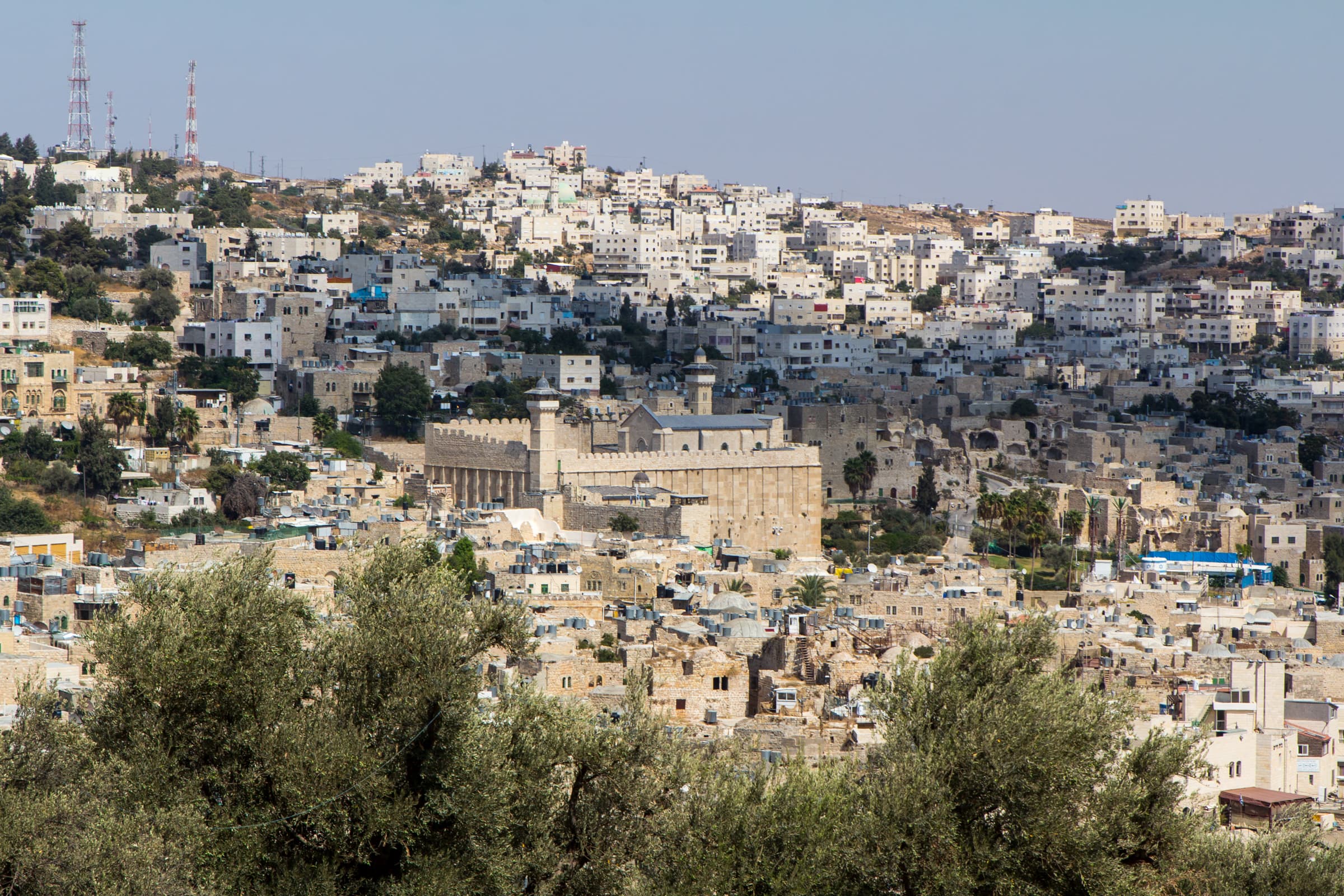
Hebron is a burial site of sacred significance. Approximate coordinates: 31.52470, 35.11072. Attributes: built, cultural, archaeological, pilgrimage. Tradition: Abrahamic; also recognized in Judaism, Christianity, Islam contexts. Associated figure: Abraham, Sarah, Isaac, Rebecca, Jacob, Leah. Mythological context: Biblical. Recognized as a UNESCO World Heritage Site. Hebron (; Arabic: الخليل al-Khalīl, or خَلِيل الرَّحْمَن Khalīl al-Raḥmān; Hebrew: חֶבְרוֹן Ḥevrōn, ) is a Palestinian city in the southern West Bank, 30 kilometres (19 mi) south of Jerusalem. Hebron is capital of the West Bank s largest governorate, known as Hebron Governorate. With a population of 201,063 in the city limits, the adjacent metropolitan area within the governorate is home to over 700,000 people. Hebron spans across an area of 74.1 square kilometres (28.6 sq mi). It is the third largest city in the country, followed by Gaza and Jerusalem. The city is often considered one of the four holy cities in Judaism as well as in Islam and Christianity. It is considered one of the oldest cities in the Levant. According to the Bible, Abraham settled in Hebron and bought the Cave of the Patriarchs as burial place for his wife Sarah. Biblical tradition holds that the patriarchs Abraham, Isaac, and Jacob, along with their wives Sarah, Rebecca, and Leah, were buried in the cave. The city is also recognized in the Bible as the place where David was anointed king of Israel. Following the Babylonian captivity, the Edomites settled in Hebron. During the first century BCE, Herod the Great built the wall that still surrounds the Cave of the Patriarchs, which later became a church, and then a mosque. With the exception of a brief Crusader control, successive Muslim dynasties ruled Hebron from the 6th century CE until the Ottoman Empire s dissolution following World War I, when the city became part of British Mandatory Palestine. The 1929 riots and the Arab uprising of 1936–39 led the British government to evacuate the Jewish community from Hebron. The 1948 Arab–Israeli War saw the entire West Bank, including Hebron, occupied and annexed by Jordan, and since the 1967 Six-Day War, the city has been under Israeli military occupation. Following Israeli occupation, Jewish presence was restored in the city. Since the 1997 Hebron Protocol, most of Hebron has been governed by the Palestinian National Authority. The city is often described as a microcosm of the Israeli–Palestinian conflict and the Israeli occupation of the West Bank. The 1997 protocol divided the city into two sectors—H1 Hebron, controlled by the Palestinian National Authority, and H2 Hebron, managed by Israeli authorities. All security arrangements and travel permits for local residents are coordinated between the Palestinian Authority and Israel via the COGAT. The Jewish settlers have their own governing municipal body, the Committee of the Jewish Community of Hebron. The largest city in the southern West Bank, Hebron is chief commercial and industrial center in the region. It is a busy hub of trade, generating roughly a third of the area s GDP, largely due to the sale of limestone from quarries in its area. Hebron has a local reputation for its grapes, figs, ceramics, plastics, pottery workshops, metalworking and glassblowing industry. The city is home to numerous shopping malls. The Old City of Hebron features narrow, winding streets, flat-roofed stone houses, and old bazaars. It is recognized as a World Heritage Site by the UNESCO. Hebron is also known as a regional educational and medical hub. Located in الخليل, الضفة الغربية, Palestinian Territory.
Jebel Haroun
Wadi Araba Sub-District, Aqaba, Jordan
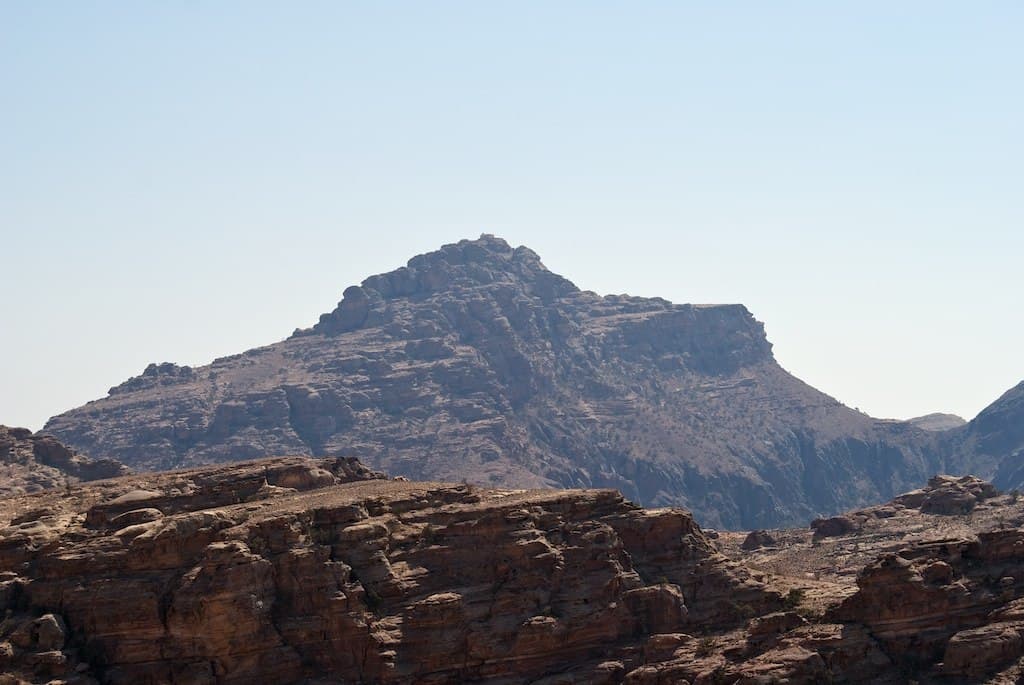
Jebel Haroun is a burial site of sacred significance. Approximate coordinates: 30.31721, 35.40668. Attributes: natural, cultural, pilgrimage. Tradition: Islamic. Associated figure: Prophet Aaron (Harun bin Imran). Mythological context: Islamic. Located in معان, الأردن.