Country guide
Uzbekistan
Uzbekistan brings together sacred architecture, pilgrimage traditions, and landscapes shaped by memory, ritual, and local devotion.
39 sacred sites across 16 regions. Use the tradition links to narrow in.
Browse by region
Explore Uzbekistan region by region
Open a regional guide to see its sacred sites, traditions, and map.
Explore Uzbekistan by facet
Refine the atlas
Related Uzbekistan guides
Showing 1-39 of 39 sites in this country guide

Arab-Ata Mausoleum
Tim, Navoiy Region, Uzbekistan
Arab-Ata Mausoleum is a documented sacred site in Tim, Navoiy Region, Uzbekistan, connected with Islam....
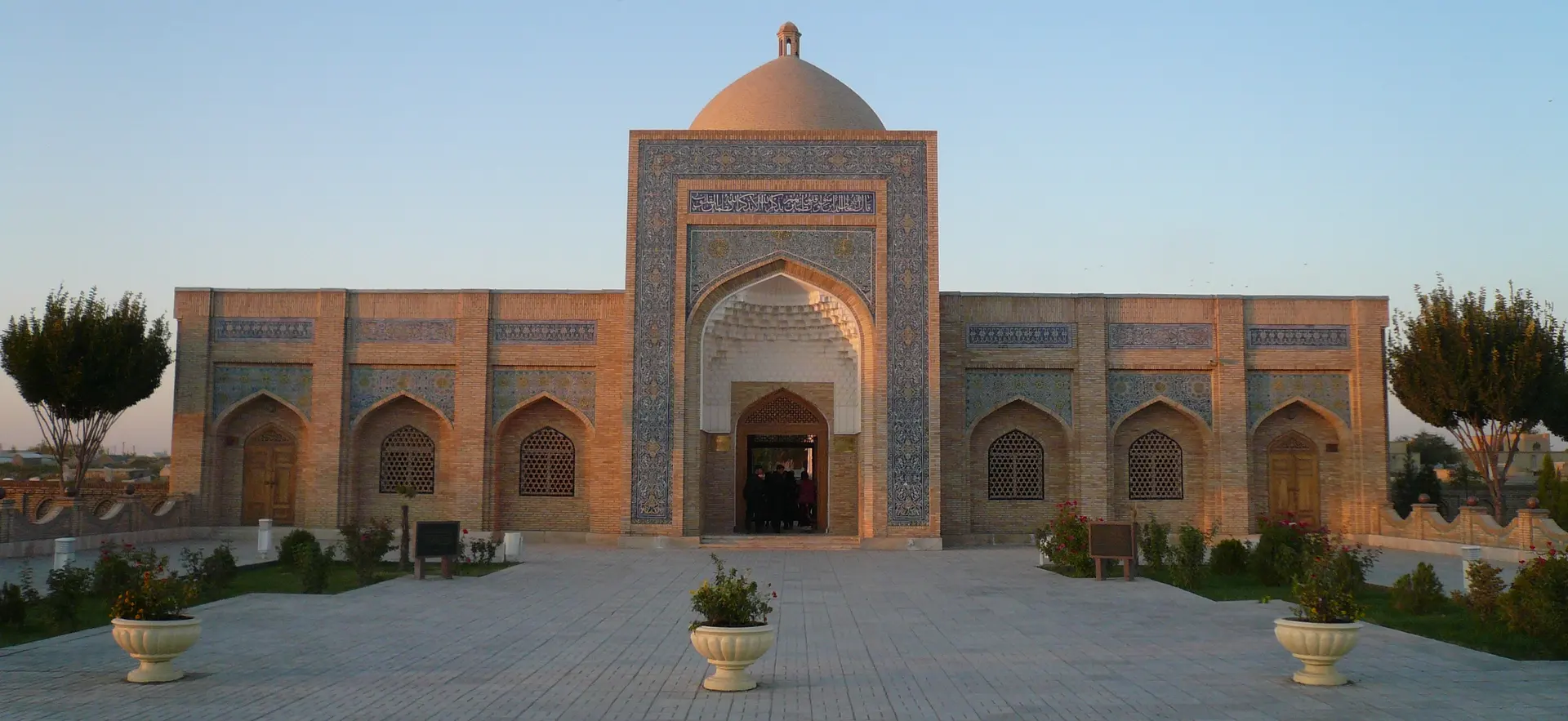
Bahauddin Naqshband Memorial Complex
Bukhara, Bukhara, Uzbekistan
In a village outside Bukhara, pilgrims have gathered for six centuries at the tomb of Baha-ud-Din Naqshband, founder of one of the largest Sufi orders in the world....

Bibi-Khanym Mosque
Samarkand, Samarqand Region, Uzbekistan
Bibi-Khanym Mosque is a documented mosque in Samarkand, Samarqand Region, Uzbekistan, connected with Islam....

Chashma Sacred Spring
Nurota, Navoiy, Uzbekistan
Chashma’s water lies at the heart of a pilgrimage complex in Nurota.

Chashma-Ayub Mausoleum
Bukhara, Bukhara Region, Uzbekistan
Chashma-Ayub Mausoleum is a documented sacred site in Bukhara, Bukhara Region, Uzbekistan, connected with Islam....

Chilpik Tower of Silence
Chilpik, Karakalpakstan, Uzbekistan
Chilpik Tower of Silence is a documented sacred site in Chilpik, Karakalpakstan, Uzbekistan, connected with Zoroastrianism....

Chor-Bakr Memorial Complex
Sumitan, Bukhara Region, Uzbekistan
Chor-Bakr Memorial Complex is a documented sacred site in Sumitan, Bukhara Region, Uzbekistan, connected with Regional religious heritage....

Deggaron Mosque
Hazara, Navoiy Region, Uzbekistan
Deggaron Mosque is a documented mosque in Hazara, Navoiy Region, Uzbekistan, connected with Islam....

Dorut Tilovat Complex
Shakhrisabz, Qashqadaryo Region, Uzbekistan
Dorut Tilovat Complex is a documented sacred site in Shakhrisabz, Qashqadaryo Region, Uzbekistan, connected with Regional religious heritage....

Fayaz Tepe Buddhist Monastery
Termez, Surxondaryo Region, Uzbekistan
Fayaz Tepe Buddhist Monastery is a documented archaeological site in Termez, Surxondaryo Region, Uzbekistan, connected with Historical regional religious traditions....

Gur-e-Amir Mausoleum
Samarkand, Samarqand Region, Uzbekistan
Gur-e-Amir Mausoleum is a documented sacred site in Samarkand, Samarqand Region, Uzbekistan, connected with Islam....

Hazrati Imam Complex
Tashkent, Tashkent City, Uzbekistan
Hazrati Imam Complex is a documented sacred site in Tashkent, Tashkent City, Uzbekistan, connected with Islam....

Imam al-Bukhari Memorial Complex
Hartang, Samarqand Region, Uzbekistan
Imam al-Bukhari Memorial Complex is a documented sacred site in Hartang, Samarqand Region, Uzbekistan, connected with Islam....

Ishratkhana Mausoleum
Samarkand, Samarqand Region, Uzbekistan
Ishratkhana Mausoleum is a documented sacred site in Samarkand, Samarqand Region, Uzbekistan, connected with Islam....

Itchan Kala
Khiva, Xorazm, Uzbekistan
Rising from the Khorezm desert, Itchan Kala preserves twenty-five centuries of sacred history within mud-brick walls that have witnessed Zoroastrian fire worship, Silk...

Kampir Tepe
Kampirtepa, Surxondaryo Region, Uzbekistan
Kampir Tepe is a documented archaeological site in Kampirtepa, Surxondaryo Region, Uzbekistan, connected with Historical regional religious traditions....

Kara Tepe Buddhist Complex
Termez, Surxondaryo Region, Uzbekistan
Kara Tepe Buddhist Complex is a documented archaeological site in Termez, Surxondaryo Region, Uzbekistan, connected with Historical regional religious traditions....

Khoja Abdu Darun Complex
Samarkand, Samarqand Region, Uzbekistan
Khoja Abdu Darun Complex is a documented sacred site in Samarkand, Samarqand Region, Uzbekistan, connected with Islam....

Khoja Amin Mausoleum
Namangan, Namangan Region, Uzbekistan
Khoja Amin Mausoleum is a documented sacred site in Namangan, Namangan Region, Uzbekistan, connected with Islam....

Khoja Daniyar Mausoleum
Samarkand, Samarqand Region, Uzbekistan
Khoja Daniyar Mausoleum is a documented sacred site in Samarkand, Samarqand Region, Uzbekistan, connected with Islam....

Magoki Attori Mosque
Bukhara, Bukhara Region, Uzbekistan
Magoki Attori Mosque is a documented mosque in Bukhara, Bukhara Region, Uzbekistan, connected with Islam....

Mir-Sayid Bakhrom Mausoleum
Karmana, Navoiy Region, Uzbekistan
Mir-Sayid Bakhrom Mausoleum is a documented sacred site in Karmana, Navoiy Region, Uzbekistan, connected with Islam....

Pakhlavan Mahmud Mausoleum
Khiva, Xorazm Region, Uzbekistan
Pakhlavan Mahmud Mausoleum is a documented sacred site in Khiva, Xorazm Region, Uzbekistan, connected with Islam....

Pir Siddiq Complex
Margilan, Fergana Region, Uzbekistan
Pir Siddiq Complex is a documented sacred site in Margilan, Fergana Region, Uzbekistan, connected with Regional religious heritage....

Poi Kalyan Complex
Bukhara, Bukhara Region, Uzbekistan
Poi Kalyan Complex is a documented sacred site in Bukhara, Bukhara Region, Uzbekistan, connected with Regional religious heritage....

Qutayba ibn Muslim Mausoleum
Pakhtaabad, Andijan Region, Uzbekistan
Qutayba ibn Muslim Mausoleum is a documented sacred site in Pakhtaabad, Andijan Region, Uzbekistan, connected with Islam....

Registan square, Samarkand
Samarkand, Samarqand, Uzbekistan
In the center of Samarkand, three magnificent madrasas frame a square that was once the intellectual heart of Central Asia....

Ruhabad Mausoleum
Samarkand, Samarqand Region, Uzbekistan
Ruhabad Mausoleum is a documented sacred site in Samarkand, Samarqand Region, Uzbekistan, connected with Islam....

Samanid Mausoleum
Bukhara, Bukhara Region, Uzbekistan
Samanid Mausoleum is a documented sacred site in Bukhara, Bukhara Region, Uzbekistan, connected with Islam....

Sarmishsay Petroglyphs
Sarmishsay, Navoiy Region, Uzbekistan
Sarmishsay Petroglyphs is a documented archaeological site in Sarmishsay, Navoiy Region, Uzbekistan, connected with Historical regional religious traditions....

Shah-i-Zinda Necropolis
Samarkand, Samarqand Region, Uzbekistan
Shah-i-Zinda Necropolis is a documented sacred site in Samarkand, Samarqand Region, Uzbekistan, connected with Regional religious heritage....

Sheikh Zainiddin Bobo Mausoleum
Tashkent, Tashkent City, Uzbekistan
Sheikh Zainiddin Bobo Mausoleum is a documented sacred site in Tashkent, Tashkent City, Uzbekistan, connected with Islam....

Sheikhantaur Ensemble
Tashkent, Tashkent City, Uzbekistan
Sheikhantaur Ensemble is a documented sacred site in Tashkent, Tashkent City, Uzbekistan, connected with Islam....

Sultan Saodat Memorial Complex
Termez, Surxondaryo Region, Uzbekistan
Sultan Saodat Memorial Complex is a documented sacred site in Termez, Surxondaryo Region, Uzbekistan, connected with Islam....

Suzuk Ota Complex
Tashkent, Tashkent City, Uzbekistan
Suzuk Ota Complex is a documented sacred site in Tashkent, Tashkent City, Uzbekistan, connected with Regional religious heritage....

Zangi Ota Memorial Complex
Zangiota, Tashkent Region, Uzbekistan
Zangi Ota Memorial Complex is a documented sacred site in Zangiota, Tashkent Region, Uzbekistan, connected with Regional religious heritage....

Zarautsoy Rock Paintings
Zarautsoy, Surxondaryo Region, Uzbekistan
Zarautsoy Rock Paintings is a documented archaeological site in Zarautsoy, Surxondaryo Region, Uzbekistan, connected with Historical regional religious traditions....

Zul-Kifl Mausoleum
Aral-Paygambar Island, Surxondaryo Region, Uzbekistan
Zul-Kifl Mausoleum is a documented sacred site in Aral-Paygambar Island, Surxondaryo Region, Uzbekistan, connected with Islam....

Zurmala Stupa
Termez, Surxondaryo Region, Uzbekistan
Zurmala Stupa is a documented archaeological site in Termez, Surxondaryo Region, Uzbekistan, connected with Historical regional religious traditions....
Key questions
Uzbekistan sacred-site questions
What sacred sites can I explore in Uzbekistan?
Pilgrim Map lists sacred places in Uzbekistan across living worship sites, heritage landmarks, pilgrimage destinations, and culturally significant landscapes. The current guide lists 39 sites organized by region and tradition.
Which traditions are represented in Uzbekistan?
The most represented traditions include Islam, Regional religious heritage, Historical regional religious traditions, Zoroastrianism.
How should I plan a sacred-site visit in Uzbekistan?
Start with regional clusters, compare nearby places on the map, then open individual site pages for coordinates, etiquette, and sacred context where available.
Can I view Uzbekistan sacred sites on a map?
Yes. Switch to map view to compare geographic clusters, then open individual site pages for coordinates, visiting context, and related places.