Country guide
Libya
Libya brings together sacred architecture, pilgrimage traditions, and landscapes shaped by memory, ritual, and local devotion.
2 sacred sites across 2 regions. Use the tradition links to narrow in.
Browse by region
Explore Libya region by region
Open a regional guide to see its sacred sites, traditions, and map.
Explore Libya by facet
Traditions
Refine the atlas
Related Libya guides
Showing 1-2 of 2 sites in this country guide

Mausoleum (Zawiya) of Sidi Abdul-Salam Al-Asmar Al-Fituri, Zliten, Libya
Zliten, Misrata, Libya
On the Libyan coast at Zliten stands the tomb and zawiya of Sidi Abd al-Salam al-Asmar, founder-figure of the Arusiyya-Shadhili Sufi order....
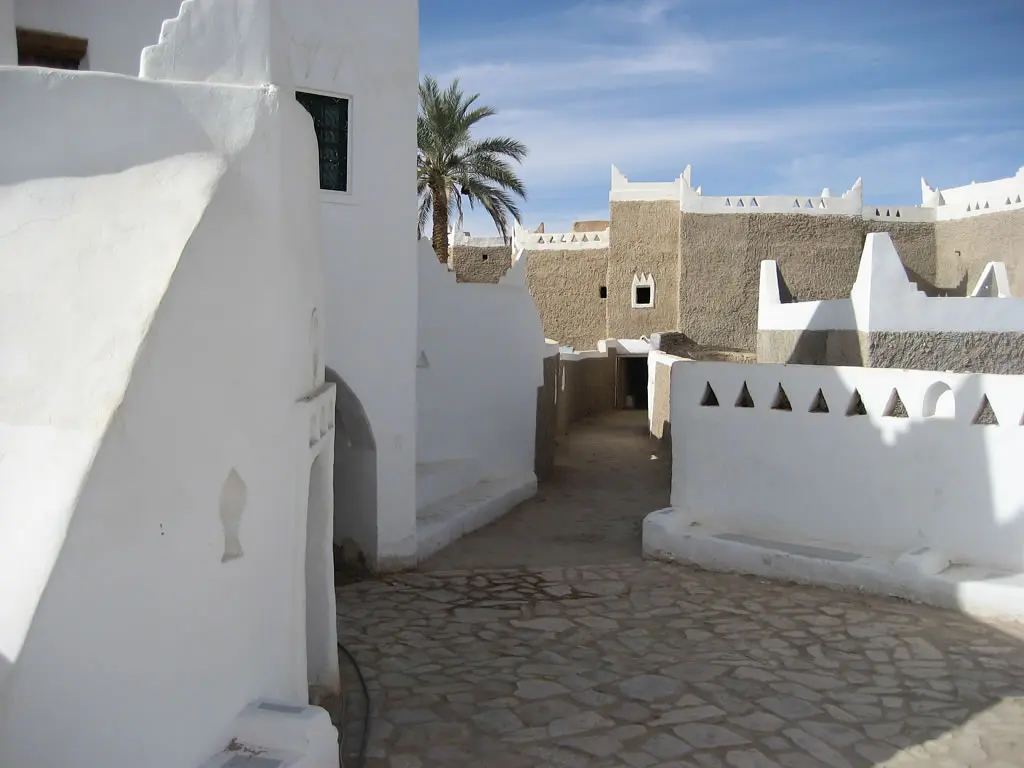
Old Town of Ghadames, Libya
Ghadames, Nalut, Libya
Rising from the Sahara at the confluence of three ancient trade routes, the Old Town of Ghadames has sheltered travelers, merchants, and pilgrims for over two millennia....
Key questions
Libya sacred-site questions
What sacred sites can I explore in Libya?
Pilgrim Map lists sacred places in Libya across living worship sites, heritage landmarks, pilgrimage destinations, and culturally significant landscapes. The current guide lists 2 sites organized by region and tradition.
Which traditions are represented in Libya?
The most represented traditions include Islam.
How should I plan a sacred-site visit in Libya?
Start with regional clusters, compare nearby places on the map, then open individual site pages for coordinates, etiquette, and sacred context where available.
Can I view Libya sacred sites on a map?
Yes. Switch to map view to compare geographic clusters, then open individual site pages for coordinates, visiting context, and related places.