Wells Cathedral
England's first Gothic cathedral rises above ancient sacred springs that have drawn seekers for millennia
Understand sacred places, explore living traditions, and learn how to engage respectfully with Pilgrim Map.
Access has not been verified. Check current local guidance before planning a visit.
Wells, England, United Kingdom
Read the sources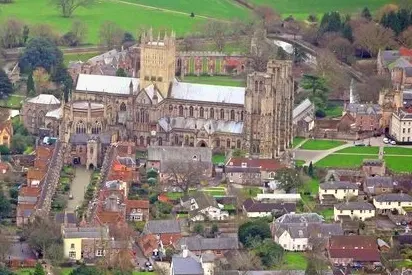
Aerial view of Wells Cathedral and the cathedral precinct including Vicars' Close.. Image source · CC BY-SA 2.0
Visit essentials
A quick read before you go
- Duration
- 2-3 hours including Chapter House, cloisters, and cathedral close
- Etiquette
- Wells welcomes all seekers while maintaining the reverence appropriate to a place of continuous…
Overview
Long before cathedral stone, Mendip-fed springs surfaced in pools that drew human veneration from at least Roman times, likely earlier. The Anglo-Saxons called them wella, giving Wells its name. Upon this ancient sanctity, King Ine of Wessex built a minster around 705 CE. When Bishop Reginald de Bohun began the current building in 1175, he created England's first fully Gothic cathedral, breaking entirely from the Romanesque tradition that had shaped sacred building before.
Scissor arches inserted in 1338 to save the sinking tower stand as symbols of faith's response to crisis. The Chapter House's single column supports thirty-two vaulting ribs in geometric perfection, while the west front's sculpture program constitutes England's finest medieval carving. Beneath this architectural sublimity, the waters continue to flow. Medieval engineering serves the same impulse that drew people to these springs before history was written.
Over 300,000 visitors come each year, and Choral Evensong fills the nave with music as it has for centuries.
Why this place is sacred
What makes Wells feel different from other cathedrals? Perhaps it is the layering: water sacred before Christ meets stone that was revolutionary in its own time, and both are held within living worship that has not ceased for eight centuries. The scissor arches, inserted in 1338 when the tower threatened to collapse, became the cathedral's most recognized feature. They are not merely functional but beautiful, their crossing geometry a meditation on how faith responds to crisis.
Stand beneath them and look up: the problem became the symbol. The Chapter House achieves a different kind of presence. A single central column divides into thirty-two vaulting ribs, creating a canopy of stone that architectural historian Alec Clifton-Taylor called 'architecturally the most beautiful in England.' On sunny days, light through the medieval glass casts colored patterns across the floor. The springs are harder to access but equally significant.
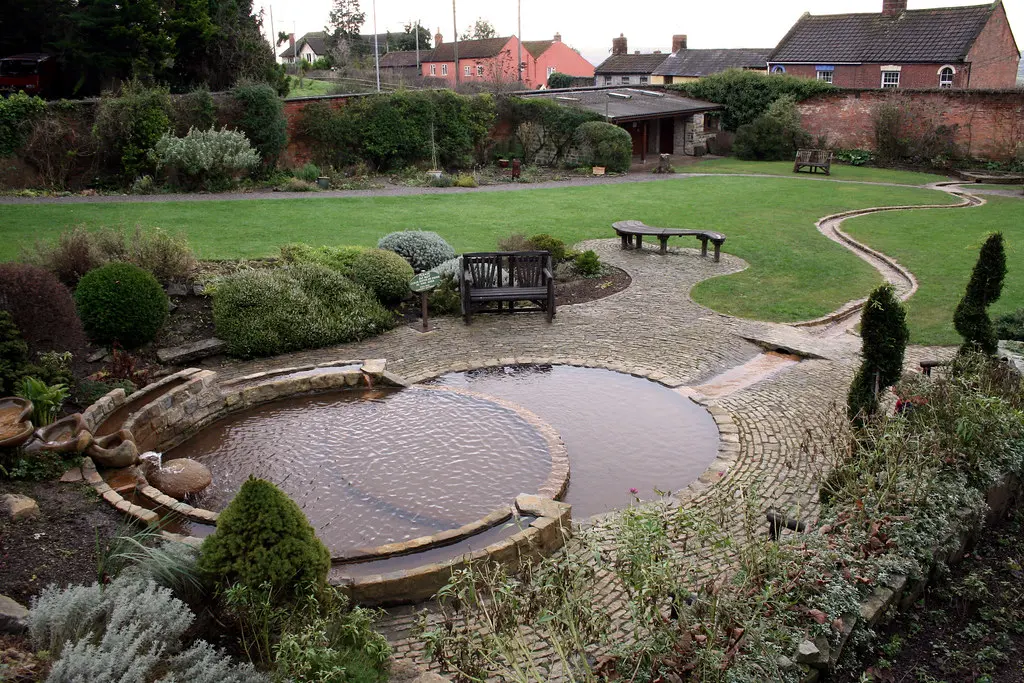
In the Bishop's Palace gardens, water surfaces in pools that on calm days reflect the cathedral's southeast face. Four million gallons flow daily, as they have since before human memory. The British Pilgrimage Trust notes that 'when these holy wells are integrated back into the devotional life of the cathedral, this will be one of the most perfect places of pilgrimage in the country.'
The sacred springs drew veneration from at least Roman times. King Ine built the first Christian minster around 705 CE. The current cathedral was designed to be a revolutionary expression of Gothic architecture: England's first building in the new style from France that would reshape sacred architecture across Europe. The west front's sculptures taught biblical narratives to a largely illiterate population while proclaiming the glory of God.
A bishopric was established in 909, though it was moved to Bath in 1090 and Wells became co-cathedral only in 1218. The Gothic building begun c.1175 represented Europe's cutting edge. The west front was completed in the 13th century, the Chapter House around 1310. The scissor arches responded to 14th-century structural crisis. The towers and cloisters continued the Gothic vision into the 15th century. The Reformation transformed Catholic cathedral into Anglican, but worship continued.
Today Wells balances heritage tourism with living faith.
Experience and orientation
The west front stops most visitors before they enter. Over 300 medieval sculptures populate its niches, from Christ in Majesty to apostles, prophets, angels, and the resurrection of the dead. Though weathering has softened details, the overall effect remains overwhelming: a wall of sacred story in stone. Passing through into the nave, the scissor arches demand attention. Their inverted curves cross at the center, creating a geometry that seems both impossible and inevitable.
Above, the central tower whose weight they support rises toward heaven. The eye cannot help but follow. Move through the cathedral slowly. The Chapter House requires climbing the worn stone staircase that curves 'like flowing water,' in one writer's description. Inside, the octagonal room achieves architectural perfection. A single column of Purbeck marble rises to support thirty-two ribs spreading to the eight walls.
The stone seats around the perimeter were carved seven centuries ago for the cathedral chapter to conduct their business beneath this canopy of geometry. If you can attend Choral Evensong, make the time. The Wells Cathedral Choir is among England's finest, and the service of Evening Prayer sung in the quire continues a tradition that has defined Anglican cathedral worship since the Reformation. The music rises to the vaulted ceiling and something of the accumulated centuries rises with it.
Enter through the west front for the intended experience, though other entrances are available. The scissor arches are immediately visible in the crossing. The Chapter House is accessed via the staircase from the north transept. The astronomical clock is in the north transept. Choral Evensong takes place in the quire (5:15pm Monday, Tuesday, Thursday; 3pm Sunday during term time).
Context and lineage
The wells that gave the city its name were sacred long before Christianity reached Britain. Stone Age flints and Roman pottery found near the springs suggest very early human presence, and Native British tribes likely worshipped at these waters, dedicating shrines to nature spirits. The most northerly spring was dedicated to St Andrew when Christianity came.
King Ine of Wessex built the first minster around 705 CE, and by 766 a document mentions both the minster and the holy well, one of the earliest references to any holy well in Britain. A bishopric was established in 909, making Wells a major ecclesiastical center. When Bishop Reginald de Bohun began the current cathedral around 1175, he brought revolutionary ideas from France.
Architectural historian John Harvey considers Wells 'Europe's first truly Gothic structure, breaking from the last constraints of the Romanesque style.' The building that emerged would take three centuries to complete, each generation adding to the vision.
Wells represents the arrival of Gothic architecture in England and its development through three centuries. The building influenced cathedral construction throughout the country. The cathedral chapter maintained traditions of worship and learning through medieval, Reformation, and modern eras. The choral tradition, though transformed by the Reformation, continues unbroken.
King Ine of Wessex
Bishop Reginald de Bohun
William Joy
Bishop Thomas Beckington
Traditions and practice
Medieval worship centered on the Mass and the daily offices sung by the cathedral chapter. The elaborate liturgical cycle marked the Christian year with processions, special observances, and seasonal celebration. The Chapter House hosted meetings following patterns influenced by monastic rule. Pilgrims visited seeking indulgences and spiritual merit. The west front's sculptures taught the faith to those who could not read.
Daily Morning Eucharist at 8am (Monday-Friday). Sunday services include Holy Communion at 8:30am (Book of Common Prayer), Cathedral Eucharist at 10:30am, and Choral Evensong at 3pm. Weekday Choral Evensong at 5:15pm (Monday, Tuesday, Thursday, during term time). Said Evening Prayer on Fridays. The Wells Cathedral Choir maintains one of England's finest choral traditions. The cathedral also hosts concerts, exhibitions, and educational programs.
Attend Choral Evensong for the full experience of Anglican cathedral worship: the voices rising, the prayers ancient, the setting sublime. If time is limited, simply sitting in the nave allows the accumulated centuries to work. The Chapter House rewards contemplation of its geometry. The sacred springs in the Bishop's Palace gardens offer connection to the site's pre-Christian origins. Walking the pilgrimage route from Glastonbury creates intentional journey.
Church of England/Anglican
ActiveWells Cathedral is the seat of the Bishop of Bath and Wells, the mother church of the diocese, and one of England's most significant Anglican cathedrals. Continuous worship has been maintained since the Saxon minster.
Daily services include Morning Eucharist at 8am, Sunday Cathedral Eucharist at 10:30am, and Choral Evensong (5:15pm weekdays, 3pm Sunday). The cathedral maintains one of England's finest choral traditions.
Christian pilgrimage
ActiveThe cathedral has drawn pilgrims for 850 years. The British Pilgrimage Trust recognizes it as a major pilgrimage destination, offering routes connecting Wells to Glastonbury.
Walking pilgrimage from Glastonbury (6 miles). Contemplative visiting within the cathedral. Prayer and candle lighting. The cathedral explicitly welcomes pilgrims alongside heritage visitors.
Sacred springs veneration
ActiveThe springs giving Wells its name have been sacred since at least Roman times. Four million gallons flow daily in the Bishop's Palace gardens, connecting visitors to pre-Christian veneration.
Visiting the springs in the Bishop's Palace gardens. Contemplation at the pools. The British Pilgrimage Trust suggests these wells could be 'integrated back into the devotional life of the cathedral.'
Medieval Catholic worship
HistoricalFrom its foundation through the Reformation, Wells was a center of Catholic worship, pilgrimage, and ecclesiastical power. The building itself was shaped by Catholic liturgy.
The Mass and daily offices structured medieval life. The Chapter House hosted the cathedral chapter. The west front sculptures taught the faith. Pilgrims sought indulgences and venerated relics.
Perspectives and open questions
Wells Cathedral holds significance across multiple frameworks: architectural history, continuous Christian worship, and connection to pre-Christian sacred landscape.
Scholarly perspective
Architectural historians recognize Wells as potentially 'Europe's first truly Gothic structure' (John Harvey), completely breaking from Romanesque tradition. The west front's sculpture program is England's finest medieval carving, though much weathered. The scissor arches represent innovative structural engineering responding to crisis. The Chapter House is described by Alec Clifton-Taylor as 'architecturally the most beautiful in England.' The cathedral's significance extends far beyond religious function to encompass the history of European architecture.
Living and traditional perspectives
The sacred springs predate Christianity and were likely venerated by Romano-British and earlier peoples. The Christian church was built upon this ancient sanctity. Anglican tradition sees the cathedral as continuing the Catholic heritage through the Reformation, maintaining worship and the choral tradition. The cathedral explicitly welcomes pilgrims seeking 'stillness and a sense of the divine,' positioning itself as a center of contemporary pilgrimage.
Alternative interpretations
Some see the cathedral's Gothic geometry as embodying sacred proportions connected to earth energies. The spring location is sometimes interpreted through geomancy. The relationship between Wells and Glastonbury, both positioned where springs emerge from the Mendip Hills, creates a sacred landscape that alternative spiritual frameworks map onto older patterns of veneration. The Chapter House's geometry particularly attracts those interested in sacred architecture.
Open questions
The identity of the original master mason who designed this revolutionary building is unknown. The full extent of Romano-British and earlier worship at the springs remains archaeologically unexplored. Many details of the west front's sculptures are now too weathered to read, their original meanings lost. What the medieval builders knew about earlier sacred use of this site may never be recovered.
Plan your visit
Access and arrival
Wells is a small cathedral city with limited but charming accommodation. The Swan Hotel and The Crown at Wells offer historic options near the cathedral. B&Bs cluster in the surrounding streets. Glastonbury (6 miles) provides abundant alternative accommodation with different character.
Respectful visit
No specific requirements, though modest dress appropriate to a place of worship is appreciated. This is not a museum but an active church.
Photography permitted in most areas for personal use. Flash and tripods may be restricted. Be mindful of those at prayer and during services. The cathedral's beauty invites photography, but capturing should not displace experiencing.
Candles available for lighting with suggested donation. Admission charges for visitors support the cathedral's ministry and conservation. The cathedral shop offers religious items and books. Donations beyond admission are welcomed.
Parts of the cathedral close for services. The quire closes at 4pm for Evensong preparation. Some areas may be restricted for conservation or special events. Sunday visiting begins at 11:45am. Check the cathedral website for current closures.
The cathedral is an active place of worship. Parts close for services, particularly before Evensong. Sunday morning visiting begins at 11:45am after services. Respect those at prayer. Admission charges apply for visitors; entry for worship, prayer, or candle lighting is free.
Current practical details
Address
Cathedral Grn, Wells BA5 2UE, UK
Phone
Hours
Hours, fees, and access can change — verify on the official source before you travel. Practical details last checked Jun 2026.
Location
Map loads as you approach this section.
Pilgrim reflections
A portrait of encounter, not a score
Pilgrims describe what they felt, how present they could become, and whether the place would shape a journey. There are no stars and no ranking of traditions.
No reviewed reflections yet
The first pilgrims can help describe the character of being here.
Share a reflection
Available after an account-backed “Been there.” Every reflection is reviewed before publication.
Nearby sacred places
Explore other sacred places in the region. Proximity does not establish access or travel time; check each place’s guidance.


References
Sources consulted for this page. Source categories describe the publication, not a guarantee that every claim is verified. Traditional accounts and outside interpretations may differ.
- 01Wells Cathedral — Wells CathedralSource contextOfficial cathedral website
- 02Wells Cathedral, Wells — British Pilgrimage TrustSource contextPilgrimage perspective and routes
- 03The Bishop's Palace — The Bishop's PalaceofficialInformation on sacred springs and gardens
- 04Wells Cathedral — A Church Near YouSource contextChurch of England official directory
- 05Wells Cathedral — National Churches TrustofficialHeritage body assessment
- 06Wells Cathedral — WikipediaencyclopediaWell-referenced article
Photo gallery
2 curated photos
Share a photo
Help visitors recognize Wells Cathedral. Every submission is reviewed before publication.