Wallowa Lake, Oregon
Ancestral homeland of the Nez Perce, where a people's 120-year return continues
Understand sacred places, explore living traditions, and learn how to engage respectfully with Pilgrim Map.
Access has not been verified. Check current local guidance before planning a visit.
Joseph, Oregon, United States
Read the sources
Visit essentials
A quick read before you go
- Duration
- A day visit allows time for the state park, Old Chief Joseph's gravesite, and the interpretive…
- Access
- From Joseph, Oregon, drive six miles south on Highway 351 to reach the lake.
Overview
Places from which a people were removed but never stopped belonging carry particular weight. Wallowa Lake's glacial water rests beneath mountains where the Nez Perce sought weyekin, guardian spirits guiding their lives. For millennia, the Wallowa Band of the Nimi'ipuu fished salmon, gathered meadow camas, and raised the Appaloosa horses they made legendary.
In 1877 the U.S. Army forced the Wallowa Band from their homeland, beginning a 1,400-mile flight toward Canada. It ended with Chief Joseph's surrender and one of American history's most eloquent expressions of grief: 'From where the sun now stands, I will fight no more forever.'
For over 120 years, the Nez Perce have worked to return. A longhouse again stands in the valley, and the annual Tamkaliks celebration brings tribal members home each July. On the lake's northern shore lies Old Chief Joseph, reinterred in 1926 near the homeland he told his son to defend with his dying breath. The return remains incomplete but ongoing. Land and people remember.
Why this place is sacred
Water holds the most important place in Nez Perce spirituality. It purifies the body, preparing it to receive the Creator's gifts. The waters of Wallowa Lake have served this function for longer than memory reaches, sustaining both physical and spiritual life for the Wallowa Band.
The mountains surrounding the lake were sites of vision quests, where young Nez Perce would retreat to receive their weyekin, the guardian spirit who would accompany them through life. These were not casual spiritual excursions but foundational experiences that shaped identity and purpose. The peaks still hold this quality of invitation, of threshold.
Yet what makes Wallowa Lake distinctively thin is the layering of profound loss over enduring connection. The Nez Perce were not simply removed from land they happened to occupy; they were severed from a landscape that was inseparable from their identity as Nimi'ipuu, 'the real people.'
The valley, the lake, the mountains, the salmon, the camas meadows, the Appaloosa horses, their weyekin territories, the burial sites of ancestors, all of it formed an integrated whole that was torn apart in 1877.
And yet the bond did not break. For over a century, while prohibited from returning, the Nez Perce maintained their connection to this place. When they began acquiring land again in the 1990s, it was not a new relationship but the continuation of one that had never ended. Visitors today enter this ongoing story. The thin quality here is not of ancient mystery alone but of living continuity against all odds.
The Wallowa Valley served as the homeland of the Wallowa Band of the Nez Perce for thousands of years before contact. The lake and its salmon runs provided physical sustenance, while the surrounding mountains offered sites for vision quests and spiritual development. The valley was central to the band's seasonal rounds, moving between fishing, gathering, and hunting grounds as the year turned.
The 1877 forced removal marked the beginning of a long separation but not an ending. After over a century of exile, the Nez Perce began reclaiming pieces of their homeland in the 1990s through land purchases. The establishment of the Wallowa Band Nez Perce Trail Interpretive Center and Longhouse, the creation of the Iwetemlaykin State Heritage Site protecting Old Chief Joseph's gravesite, and the annual Tamkaliks celebration represent stages in an ongoing return.
The site has evolved from occupied homeland to site of exile to place of active cultural revitalization.
Experience and orientation
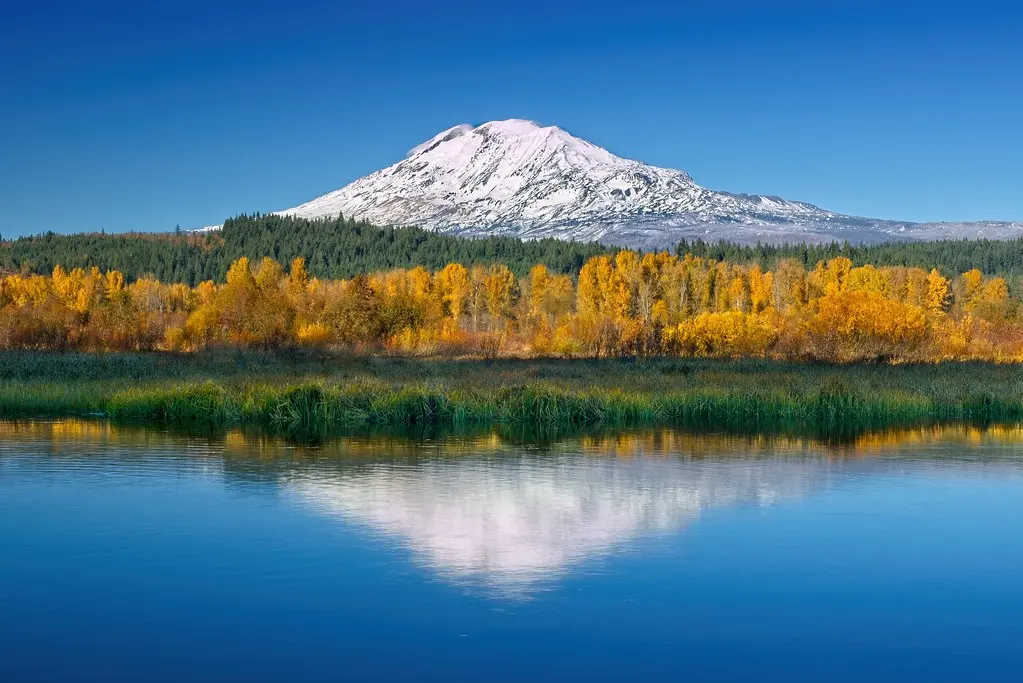
The first thing that strikes most visitors is the beauty. The Wallowa Mountains rise dramatically from the lake's southern shore, their glaciated peaks catching light in ways that seem painted rather than real. The lake itself, carved by ancient ice, holds that particular blue-green of glacial waters. In summer, wildflowers carpet the meadows; in autumn, aspens and larches turn gold against evergreen slopes.
But beauty alone does not account for what people feel here. Visitors frequently describe a sense of presence that goes beyond landscape appreciation. Some locate it in the weight of history, knowing they stand where a people were torn from their home. Others report something less easily explained, a quality of the land itself that seems to warrant the significance the Nez Perce have always placed upon it.
At Old Chief Joseph's gravesite, the experience often intensifies. The simple marker at the north end of the lake memorializes not just one man but an entire relationship between people and place. His dying words to his son, instructing him never to sell the bones of his ancestors, carry particular poignancy when standing at the very spot where those bones now rest.
The Tamkaliks celebration in July offers another mode of encounter entirely, not contemplation of loss but participation in continuation. Seeing Nez Perce families gathered in their homeland, the longhouse in use, the dances and ceremonies active, transforms abstract historical tragedy into living resilience.
Wallowa Lake does not offer comfortable resolution. The story is not complete; the return is ongoing; the injustice remains partially unremedied. Visitors who come seeking easy spiritual experience may find something more challenging and ultimately more valuable: the opportunity to witness persistence and to consider what homeland truly means.
Approaching Wallowa Lake with awareness means understanding you are entering someone else's homeland, a homeland from which they were violently removed and to which they are actively returning. This is not ancient history but ongoing story. The natural beauty is real and worth experiencing, but so is the human dimension that makes this place what it is.
Context and lineage
According to Nez Perce traditional knowledge, the Great Spirit once became angered and took the greatest brave from among the people. This event instilled a sacred awareness in the people, a recognition that the Great Spirit's power demanded reverence. The story passed from generation to generation, shaping the Nez Perce understanding of their relationship to this land and to the Creator.
The Wallowa Valley itself was understood as the heart of Wallowa Band territory, with the lake central to their way of life. The name wal'awa, meaning 'winding water,' referred to the river flowing from the lake, while Iwetemlaykin, 'at the edge of the lake,' named the place where fish could be caught as salmon completed their long journey from the ocean.
The mountains surrounding the valley were not simply backdrop but active participants in Nez Perce spiritual life, the places where young people went to receive their weyekin, the guardian spirits who would shape their adult identities.
The Nez Perce, who call themselves Nimi'ipuu ('the real people'), occupied the Wallowa Valley as part of their larger territory spanning present-day Oregon, Washington, and Idaho. The Wallowa Band was one of several bands within the larger Nez Perce nation. After removal in 1877, many Wallowa Band descendants were eventually settled on the Colville Reservation in Washington. Today, the Nez Perce Tribe of Idaho and Wallowa Band descendants work together on homeland reclamation through the Nez Perce Wallowa Homeland Foundation.
Old Chief Joseph (Tuekakas)
Chief of the Wallowa Band who refused to sign the 1863 treaty ceding Nez Perce lands. His dying words to his son, instructing him never to sell the bones of the ancestors, became a sacred charge. He was reburied at the north end of Wallowa Lake in 1926.
Chief Joseph (Hinmatoowyalahtq'it)
Son of Old Chief Joseph, born in the Wallowa Valley. Led the Wallowa Band during the 1877 war and flight. His surrender speech became iconic in American history. He spent the rest of his life advocating for his people's return but died on the Colville Reservation in 1904, never having permanently returned.
Traditions and practice
Water purification formed the foundation of ceremonial life. Before and after receiving the Creator's gifts through feasts and ceremonies, the Nez Perce used water to purify the body, preparing it for sacred encounter. The lake's waters served this function for countless generations.
Vision quests in the surrounding mountains were transformative experiences for young Nez Perce. Ascending to high places, fasting, and praying, they sought to receive their weyekin, a guardian spirit in animal or elemental form who would accompany and guide them through life. The specific traditions of these quests at Wallowa remain partially undocumented, held within the community rather than shared publicly.
Salmon fishing at Iwetemlaykin connected physical and spiritual sustenance. The salmon's long journey from the Pacific to this inland lake, and the rituals surrounding their harvest, expressed the reciprocal relationship between people and the more-than-human world that sustained them.
The Tamkaliks celebration each July gathers Nez Perce families in their homeland for dancing, ceremony, and community. The name means 'where you can see the mountains,' affirming the connection between people and landscape. The celebration is both cultural revitalization and ongoing practice, not a reenactment but a continuation.
The longhouse, reestablished through the Nez Perce Wallowa Homeland Foundation, serves as a gathering place for ceremonies and community events. Its presence represents not just physical return but the restoration of a structure central to Nez Perce communal life.
Honoring ancestors at Old Chief Joseph's gravesite continues as a practice for tribal members and others who wish to pay respects. The site, now protected as Iwetemlaykin State Heritage Site, serves as a place of pilgrimage and reflection.
Visitors seeking meaningful engagement with Wallowa Lake might begin at the Wallowa Band Nez Perce Trail Interpretive Center in the town of Wallowa, where tribal history and perspective are presented by the community itself. The center provides context that enriches any subsequent visit to the lake and surrounding areas.
At Old Chief Joseph's gravesite, quietude is appropriate. This is not a tourist attraction but a place of ongoing significance. Sitting in silence, offering internal acknowledgment of whose land you stand upon, and reading the words inscribed there can constitute a meaningful practice for visitors of any background.
Walking slowly rather than rushing through allows the landscape itself to register. The Wallowa Mountains held vision quest sites; even without undertaking traditional practice, spending time with attention in this landscape can be valuable.
Nez Perce (Nimi'ipuu)
ActiveThe Wallowa Valley is the ancestral homeland of the Wallowa Band of the Nez Perce, who call themselves Nimi'ipuu, 'the real people.' For thousands of years before the 1877 removal, the band lived in this valley, fishing for salmon, gathering camas, hunting, and raising the Appaloosa horses they developed. The lake and surrounding mountains were central to spiritual and cultural life, with water holding fundamental importance in Nez Perce religion as the purifier that prepares the body to receive the Creator's gifts.
Traditional practices included vision quests in the mountains to receive weyekin (guardian spirits), salmon fishing ceremonies at Iwetemlaykin, water purification rituals, and ceremonial feasts giving thanks to the Creator. Contemporary practices continue through the annual Tamkaliks celebration, ceremonies at the reestablished longhouse, and honoring ancestors at burial sites.
Perspectives and open questions
Understanding Wallowa Lake requires holding multiple perspectives simultaneously. Historians document the events of 1877 and their aftermath. The Nez Perce experience this place as homeland, a relationship far deeper than historical narrative can capture. Contemporary visitors encounter the convergence of natural beauty, historical tragedy, and ongoing resilience.
Scholarly perspective
Historians recognize the Wallowa Valley as the ancestral homeland of the Wallowa Band of the Nez Perce and document the 1877 forced removal as one of the tragic chapters of American western expansion. Chief Joseph's strategic retreat, covering nearly 1,400 miles over four months while evading and engaging multiple U.S. Army units, is studied as a remarkable military achievement. His surrender speech has become one of the most quoted statements in American history.
The historiography has evolved from early accounts that portrayed the Nez Perce War as inevitable conflict to contemporary scholarship that emphasizes the legal and moral dimensions of treaty violations that preceded the war. The 1855 and 1863 treaties, the latter rejected by the Wallowa Band, are now understood as key contexts for Chief Joseph's resistance.
Living and traditional perspectives
For the Nez Perce, this is not history but ongoing relationship. The Wallowa Valley is wal'awa, the land where ancestors fished and hunted, received their weyekin, and are buried. Old Chief Joseph's dying instruction to his son, to never sell the bones of the ancestors, was not rhetorical but literal: the ancestors remain here, requiring defense and eventual reunion.
The ongoing work to return to this homeland, through land purchases, the establishment of the longhouse, and the Tamkaliks celebration, is not cultural preservation but continuation. The Nez Perce never left in the sense that matters most; their relationship to this land persisted through exile. The current return is the outward manifestation of a connection that never broke.
Alternative interpretations
The natural beauty of the Wallowa region has attracted various spiritual seekers who respond to the landscape's sacred quality. Some describe the area as a power spot or energy center, though these interpretations are not endorsed by the Nez Perce and should be understood as external frameworks applied to land that already holds deep significance for its indigenous people.
The popularity of 'Chief Joseph Country' as a tourism brand raises questions about the commodification of indigenous tragedy. While increased awareness can support tribal efforts, it can also flatten complex history into marketable narrative.
Open questions
Much remains undocumented about pre-contact Nez Perce ceremonial practice at Wallowa Lake. The specific traditions of vision quests in the Wallowa Mountains, the details of salmon fishing rituals, and the full significance of particular sites within the valley are held within the community and appropriately not shared with outsiders.
The complete meaning of the traditional story about the Great Spirit's anger and the loss of the greatest brave remains within oral tradition, with only fragments available in written sources.
The future of homeland return is also unknown. How much land can be reclaimed, what forms of sovereignty or co-management might emerge, and how the relationship between the Nez Perce and the current residents of Wallowa County will evolve remain open questions.
Plan your visit
Access and arrival
From Joseph, Oregon, drive six miles south on Highway 351 to reach the lake. The nearest airports are in Pendleton (2.5 hours) or Boise (5.5 hours). The area is remote; plan accordingly. Wallowa Lake State Park charges a $5 day-use fee. The Iwetemlaykin State Heritage Site (Old Chief Joseph gravesite) is at the north end of the lake. The Nez Perce Wallowa Homeland interpretive center is in the town of Wallowa, about 30 miles north.
Wallowa Lake State Park offers 209 campsites ranging from tent sites to full hookups. Yurts and cabins are available for reservation. Private lodges and cabins surround the lake, while the town of Joseph offers hotels and vacation rentals. Enterprise, the county seat, provides additional lodging options.
Respectful visit
No specific dress code exists for the general area. At tribal facilities or during ceremonies, modest attire demonstrates respect. Avoid clothing with inappropriate imagery or messaging.
Photography is generally permitted at the state park and scenic areas. At Old Chief Joseph's gravesite, consider whether photographs are necessary, and if so, approach with reverence rather than tourism. During tribal ceremonies, ask permission before photographing and respect any restrictions. Never photograph individuals without consent.
No traditional offerings are expected from non-tribal visitors. The most meaningful offering is respect and recognition: acknowledging whose land this is, learning the history, supporting tribal efforts to reclaim their homeland.
Access to most areas is unrestricted, but tribal sacred sites and ceremonies may have limitations. Follow posted guidelines at the Iwetemlaykin State Heritage Site. During Tamkaliks and other tribal gatherings, respect any areas designated as closed to non-tribal members.
Do not attempt to replicate traditional Nez Perce practices without genuine connection and invitation. Vision quests and ceremonial practices belong to the tradition and should not be appropriated by outsiders. Attending Tamkaliks requires respectful presence, not participation in tribal-specific ceremonies unless explicitly invited.
Location
Map loads as you approach this section.
Pilgrim reflections
A portrait of encounter, not a score
Pilgrims describe what they felt, how present they could become, and whether the place would shape a journey. There are no stars and no ranking of traditions.
No reviewed reflections yet
The first pilgrims can help describe the character of being here.
Share a reflection
Available after an account-backed “Been there.” Every reflection is reviewed before publication.
Nearby sacred places
Explore other sacred places in the region. Proximity does not establish access or travel time; check each place’s guidance.


References
Sources consulted for this page. Source categories describe the publication, not a guarantee that every claim is verified. Traditional accounts and outside interpretations may differ.
- 01Nez Perce Wallowa Homeland — Nez Perce Wallowa Homeland FoundationSource contextOfficial tribal organization for the Wallowa homeland
- 02Spiritual Relationship - Nez Perce Wallowa Homeland — Nez Perce Wallowa Homeland FoundationSource contextTribal perspective on spiritual practices
- 03Nez Perce Homelands - Sacred Land Film Project — Sacred Land Film ProjectspiritualDocumentary project on sacred lands
- 04The Nez Perce people build an ongoing story about return in Wallowa — OPB (Oregon Public Broadcasting)academicNews coverage of Tamkaliks celebration
- 05Wallowa Lake State Park - Oregon State Parks — Oregon State ParksofficialOfficial state park information
- 06Chief Joseph (1840-1904) — HistoryLinkencyclopediaHistorical encyclopedia entry on Chief Joseph
- 07Precious Lands Wildlife Area - Trust for Public Land — Trust for Public LandSource contextLand conservation organization
- 08Old Chief Joseph Gravesite - Travel Oregon — Travel OregonofficialTourism information on historic site
Photo gallery
2 curated photos
Share a photo
Help visitors recognize Wallowa Lake, Oregon. Every submission is reviewed before publication.