The Virtuous Well
Where Celtic goddess became Christian saint, and cloth offerings still hang from hawthorn trees
Trellech, Wales, United Kingdom

Plan this visit
Practical context before you go
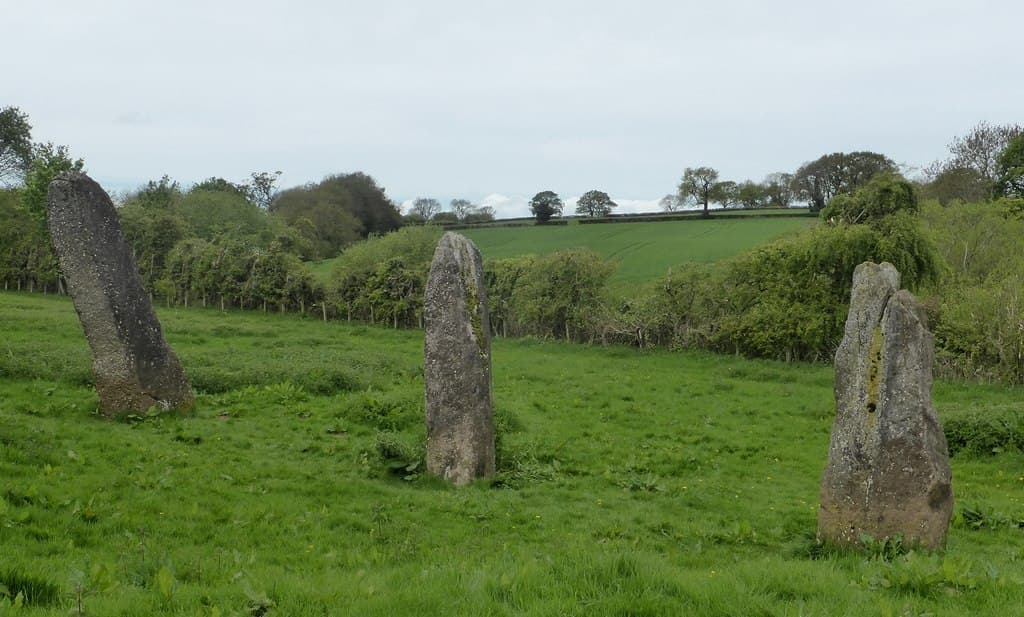
Allow 20-30 minutes at the well itself. Combine with a visit to Harold's Stones for a longer experience of the sacred landscape around Trellech.
The well lies southeast of Trellech village, off Llandogo Road. Park at the road junction and walk approximately 270 meters. The path crosses meadowland; wear appropriate footwear. The site is part of the Wonders of Trellech trail.
The Virtuous Well is a place of ongoing practice, not merely a historical site. Approach with respect for the tradition that has brought people here for millennia. Leave natural offerings only; take nothing except water if you wish. Respect others who may be present for their own purposes.
At a glance
- Coordinates
- 51.7378, -2.7217
- Suggested duration
- Allow 20-30 minutes at the well itself. Combine with a visit to Harold's Stones for a longer experience of the sacred landscape around Trellech.
- Access
- The well lies southeast of Trellech village, off Llandogo Road. Park at the road junction and walk approximately 270 meters. The path crosses meadowland; wear appropriate footwear. The site is part of the Wonders of Trellech trail.
Pilgrim tips
- No formal requirements, but dress practically for walking through a meadow. The approach can be muddy in wet weather.
- Photography is permitted. Be sensitive to others who may be present for sacred purposes. The cloth-draped hawthorns make compelling images; the well itself photographs less dramatically but is equally significant.
- The well water is untreated spring water. While the healing tradition involves drinking and bathing, those with health concerns should exercise appropriate caution. The iron content gives the water a distinctive taste and color. If you leave a clootie, use natural fabric that will decompose; synthetic materials that do not decay violate the tradition's logic and create litter.
Overview
In a quiet meadow southeast of Trellech, four springs rise through a medieval well structure still festooned with cloth offerings. The Virtuous Well has served seekers for perhaps three thousand years, transforming from Celtic water shrine to Christian healing well without losing its essential character. Visitors today leave strips of fabric on the surrounding hawthorns, continuing a practice that bridges pagan and Christian, ancient and contemporary. The iron-rich waters still flow, red-tinged and reportedly efficacious.
Some sacred sites announce themselves with architecture. Others hide in fields, known only to those who seek them. The Virtuous Well belongs to the second category, waiting in a Monmouthshire meadow as it has waited for millennia.
Four springs rise here, three of them iron-rich, their waters carrying the distinctive color that gave the well its alternate name, the Red Pool. An eighteenth-century stone structure frames a medieval basin, creating an enclosed space that feels held, protected, set apart. Steps descend to a paved area where stone benches invite sitting. An arched recess holds two niches, perhaps for drinking vessels, perhaps for votive offerings. The arrangement speaks to sustained, careful attention across centuries.
The Celts who first venerated this site associated it with Annis, goddess of rivers, water, wells, magic, and wisdom. Christianity arrived and transformed the name to Anne, mother of the Virgin Mary, allowing the well's sacred character to continue under new management. The transition was seamless; the waters kept flowing; the sick kept coming.
An ancient Welsh manuscript speaks of healing waters running beneath the Caer of Three Stones, likely Harold's Stones nearby, suggesting Druidic significance that predates even the Celtic goddess cult. The well sits within a landscape dense with prehistoric monuments, part of a sacred geography that later religions inherited rather than erased.
The cloth offerings on the hawthorn trees are the most visible evidence that practice continues. Known as clooties, these strips represent prayers, petitions, healings sought or acknowledged. As the cloth rots, tradition holds, so does the affliction. The trees are ragged with them, layers of hope from visitors who came with faith that the waters, the saint, or something older still could help.
Context and lineage
The well's origins are lost in prehistory. An ancient Welsh manuscript mentions healing waters running beneath the Caer of Three Stones, likely referring to Harold's Stones nearby, suggesting Druidic significance. The Celts associated the site with Annis, goddess of rivers, water, wells, magic, and wisdom. Her name, or a variant, appears in other Celtic sacred sites, suggesting widespread veneration.
Christian missionaries reinterpreted the goddess as St Anne, mother of the Virgin Mary, allowing devotion to continue under acceptable cover. The well became famous for cures, drawing pilgrims as late as the eighteenth century. The stone structure visible today includes medieval elements within an eighteenth-century surround, reflecting sustained investment in the site across centuries.
The transition from goddess to saint represents the common pattern of Christianization across Celtic lands: rather than suppressing sacred sites, the church redirected them. The well continued to serve healers and healed alike, its reputation for efficacy undiminished by the change of patronage.
Medieval pilgrimage brought visitors seeking cures for eye ailments, digestive problems, and women's conditions. The tradition of leaving cloth offerings appears to date from this period, though similar practices occur at pre-Christian sites elsewhere. The well's fame persisted into the eighteenth and nineteenth centuries, when visitors still reported cures. Contemporary use is quieter but real, as the cloth offerings testify.
Annis
deity
Celtic goddess of rivers, water, wells, magic, and wisdom. The well was originally dedicated to her, drawing on Celtic understanding of springs as entrances to the otherworld and dwelling places of spirits.
St Anne
saint
Mother of the Virgin Mary, grandmother of Jesus. The well's Christianization attached her name to Annis's site, allowing continued veneration under Christian patronage. Her feast day is July 26.
Why this place is sacred
Four springs rise where one might expect. Whatever geological formation produces this multiplication, it invited special attention from those who first discovered it. Springs were liminal places in Celtic understanding, points where water emerged from the underworld into the world of the living. A spring that was actually four springs, each with slightly different properties, seemed to offer multiple kinds of help.
The iron content of three springs produced visibly red water, a coloring that early peoples would have found significant. Blood-colored water emerging from the earth suggested powerful medicine, a correspondence between the human body's vital fluid and the land's hidden circulation. The wells became associated with specific ailments: eye problems, digestive complaints, conditions affecting women. Each spring was said to cure different illnesses, creating a site that could address various needs.
The Christianization of the well followed patterns common across Celtic lands. The goddess Annis became St Anne; the water shrine became a holy well; the pilgrims kept coming. The medieval structure that frames the well speaks to ongoing investment, careful construction that assumed the site would continue to serve.
Today, the cloth offerings provide the most immediate evidence of continuing practice. People still come seeking what their ancestors sought: healing, help, connection to powers beyond the everyday. The fabrics they leave range from natural fibers that will decompose as tradition intends to synthetic materials that resist decay. The mixture represents the contemporary approach to ancient practice: continued participation, imperfect understanding, genuine hope.
The well's earliest use is lost to prehistory. The reference to waters running beneath the Caer of Three Stones suggests Druidic significance, a connection to the major stone monument nearby. Celtic peoples would have recognized the site as a dwelling place of spirits, an entrance to the otherworld, a location where the barrier between realms thinned. The goddess Annis, associated with the well, was a powerful figure in Celtic mythology, patron of waters, magic, and wisdom.
Christian missionaries transformed the goddess into a saint, redirecting devotion without suppressing it. The medieval well structure, including the current basin and surrounding stonework, formalized the site's sacred status. The eighteenth-century surround added another layer, reflecting continued investment in the well's maintenance.
The well remained famous for cures into the eighteenth and nineteenth centuries, drawing visitors seeking help for eye ailments, digestive problems, and women's health concerns. Pilgrimage declined in the twentieth century but never entirely ceased. The clootie offerings visible today suggest revival as well as continuity, contemporary seekers joining ancient practice.
Traditions and practice
Historical practices included drinking the iron-rich water for digestive complaints, bathing eyes in the water for vision problems, and leaving coins or small offerings on the ledge. The clootie tradition involved dipping a strip of cloth in the water, applying it to the afflicted area, then tying it to a hawthorn tree. As the cloth rotted, tradition held, so did the affliction.
Pilgrims came seeking specific cures. Each of the four springs was associated with different ailments, creating a site that could address various needs. The tradition of visiting on specific days, particularly saints' days, may have structured pilgrimage in earlier centuries.
Visitors today continue to leave cloth offerings, the most visible evidence of ongoing practice. The hawthorns are dense with fabric strips, representing prayers, petitions, and gratitude from contemporary seekers. Some visitors take water for healing purposes; others simply sit in contemplation within the ancient structure.
No formal ceremonies occur at the well, but individual practice requires no official sanction. The site remains open, accessible, available to anyone willing to seek it out. Some visitors come with specific intentions; others come simply to encounter a place where intention has been brought for three thousand years.
If you wish to leave a clootie, bring natural fabric that will decompose. Cotton, wool, or linen are appropriate. Dip the cloth in the well water, apply it to whatever concerns you, physical or otherwise, then tie it to a hawthorn branch. The tradition holds that as the cloth decays, so does the affliction.
If you wish to take water, bring a small container. The tradition supports drinking or bathing with the water, though modern caution suggests awareness that it is untreated spring water. If you prefer not to consume it, you might carry it home as a connection to the place.
Sitting quietly within the well structure offers its own kind of engagement. The stone benches were built for sitting; the enclosure was designed for contemplation. Let the place work on you before deciding what to do or think about it.
Celtic Water Worship
HistoricalThe Celts understood springs as dwelling places of spirits, entrances to the otherworld, locations where the sacred became accessible. The Virtuous Well was associated with Annis, goddess of rivers, water, wells, magic, and wisdom. This tradition shaped how the site was understood and used, creating the framework within which healing practices developed.
Historical practices would have included offerings to the goddess, ritual bathing or drinking, and perhaps ceremonies at significant dates. The clootie tradition may have Celtic roots, representing a form of sympathetic magic in which the decay of the cloth enacts the decay of the affliction.
Christian Holy Well Tradition
ActiveChristianity transformed Annis into Anne, redirecting devotion without suppressing it. The well became a pilgrimage site within Christian practice, its healing reputation continuing under the patronage of Mary's mother. This tradition represents the church's capacity to incorporate existing sacred places rather than eliminate them.
Christian practice at the well included pilgrimage, prayer, taking water for healing, and leaving offerings of gratitude or petition. The clootie tradition continued under Christian patronage, reinterpreted as supplication to the saint rather than offering to the goddess.
Folk Healing Tradition
ActiveBeyond formal religious frameworks, the Virtuous Well functioned within a folk tradition of healing that drew on local knowledge rather than ecclesiastical authority. The well's reputation for curing specific ailments, the lore about which spring treated what condition, and the clootie practice all belong to this tradition, which persisted alongside and sometimes independent of formal religion.
Folk practice involved taking water for specific conditions, bathing affected areas, and leaving cloth offerings that would decay as the affliction healed. The practice required no priest, no prayer in any formal sense, only the act itself and the faith that the act would work.
Experience and perspectives
The approach from the road takes you through ordinary farmland before the well appears. There is no sign of the sacred until you arrive at it, and this hiddenness is part of the experience. You must seek the well; it does not announce itself.
The structure sits partly sunken into the meadow, creating a sense of enclosure even under open sky. Steps lead down to the paved area where stone benches invite sitting. The water rises through the basin, clear but often tinged red from the iron. The arched recess, with its niches, suggests purposes that the historical record does not fully explain.
The hawthorns behind the well draw immediate attention. They are ragged with cloth strips, some fresh, some weathered, some barely visible among the branches. Each represents someone's prayer or petition or gratitude. The practice requires no permission, no intermediary, no belief beyond the willingness to act. You tie a cloth, you release your intention, you let time and decay do their work.
Many visitors describe the atmosphere as charged, expectant. The well seems to wait. The hawthorns seem to hold what has been brought to them. The sense of entering a long conversation, adding your voice to voices that have spoken here for three thousand years, can be powerful.
Fairy folklore adds another dimension. Local tradition tells of fairies dancing around the well, of a farmer who disturbed the fairy ring and caused the well to dry until he restored what he had damaged. Whether or not you take this literally, it speaks to the sense that something other than the ordinary inhabits this place.
Come on foot if possible, walking from Trellech village. The approach through fields creates transition, preparing you for the threshold the well represents. If you drive, park at the junction and walk the remaining distance.
At the well, take time before engaging. Sit on the stone benches. Notice the water, the cloth offerings, the quality of the silence. Let the place establish itself before you decide how to participate.
If you wish to leave a clootie, bring fabric that will biodegrade. Natural cotton, wool, or linen are appropriate. Synthetic materials, which will not decay, violate the tradition's logic: as the cloth rots, the affliction heals. Tie your fabric to a hawthorn branch, understanding that you join a practice perhaps three thousand years old.
The water is still traditionally taken for healing. If you wish to drink or bathe eyes or hands, do so, understanding that the water is untreated spring water. The tradition supports this engagement; modern caution may suggest alternatives.
The Virtuous Well invites interpretation from multiple frameworks: as an archaeological site preserving prehistoric water worship, as a holy well within Celtic and Christian tradition, and as a living site of folk practice. Each perspective illuminates something genuine about this place where tradition has persisted for three thousand years.
Archaeological and folkloric research confirms the well's long use as a healing site, with documented traditions continuing into the nineteenth century. The connection to Harold's Stones and other Trellech monuments places the well within a broader sacred landscape of prehistoric significance. The medieval and eighteenth-century stonework represents sustained investment in the site's maintenance. The well is recognized as one of few in Monmouthshire retaining significant early fabric.
For those who hold the Christian tradition, the well is a holy well of St Anne, a place where the saint's intercession has been sought for centuries. The healing traditions attached to the well fit within the broader practice of pilgrimage to holy wells, a devotional pattern that persists in Catholic and some Anglican practice. The transition from goddess to saint represents Christianity's capacity to sanctify existing sacred places.
For those who look to Celtic tradition, the well is a dwelling place of Annis, goddess of waters and wisdom, a point where the otherworld becomes accessible. The continuation of the clootie practice represents survival of pre-Christian religious expression within Christianized form.
Some contemporary visitors understand the well through the lens of earth energies or ley lines, noting the concentration of prehistoric monuments in the Trellech area as evidence of ancient recognition of the land's power. The four springs, each with distinctive properties, invite interpretation as offering different energetic qualities. The fairy folklore attached to the well suggests otherworldly associations that some visitors take seriously.
Genuine mysteries remain. The full extent of prehistoric use is unknown. The connection between the well and Harold's Stones, mentioned in ancient manuscripts, is not fully understood. Why four springs emerged at this location, and whether the different ailments each was said to cure reflected genuine differences in mineral content, remains unclear. The efficacy of the reported cures, whatever caused them, cannot be evaluated by historical or archaeological methods.
Pilgrim reflections
A portrait of encounter, not a score
Pilgrims describe what they felt, how present they could become, and whether the place would shape a journey. There are no stars and no ranking of traditions.
No reviewed reflections yet
The first pilgrims can help describe the character of being here.
Share a reflection
Available after an account-backed “Been there.” Every reflection is reviewed before publication.
Visit planning
The well lies southeast of Trellech village, off Llandogo Road. Park at the road junction and walk approximately 270 meters. The path crosses meadowland; wear appropriate footwear. The site is part of the Wonders of Trellech trail.
Trellech village has a pub but limited accommodations. Monmouth, approximately 8 kilometers north, offers a full range of lodging. The Wye Valley provides numerous bed-and-breakfasts and hotels.
The Virtuous Well is a place of ongoing practice, not merely a historical site. Approach with respect for the tradition that has brought people here for millennia. Leave natural offerings only; take nothing except water if you wish. Respect others who may be present for their own purposes.
No formal requirements, but dress practically for walking through a meadow. The approach can be muddy in wet weather.
Photography is permitted. Be sensitive to others who may be present for sacred purposes. The cloth-draped hawthorns make compelling images; the well itself photographs less dramatically but is equally significant.
Coins on the ledge, cloth strips on the hawthorns. Use natural fabric for clooties. Biodegradable materials are essential; synthetic offerings become litter.
Stay on the path through the surrounding land. Do not disturb the well structure. Leave nothing that will not decompose.
Plan your visit
Address
Llandogo Rd, Monmouth NP25 4PE, UK
Phone
Hours
Hours, fees, and access can change — verify on the official source before you travel. Practical details last checked Jun 2026.
Nearby sacred places
Sacred places within a half-day’s reach. Pilgrims often visit them together: walk one, stay for the other.
References
Sources consulted when researching this page. Independent verification by readers is welcome.
- 01St Anne's Well / Virtuous Well, Trellech — British Pilgrimage Trusthigh-reliability
- 02Virtuous Well — The Megalithic Portalhigh-reliability
- 03The Virtuous Well, Trellech United — Ancient Monuments UKhigh-reliability
- 04The Virtuous Well - Visit Monmouthshire — Visit Monmouthshire
Key questions
What pilgrims usually ask
- Why is The Virtuous Well considered sacred?
- Visit the Virtuous Well near Trellech, where healing pilgrims have left cloth offerings for three thousand years. Explore Wales's living holy well tradition.
- What should I wear at The Virtuous Well?
- No formal requirements, but dress practically for walking through a meadow. The approach can be muddy in wet weather.
- Can I take photos at The Virtuous Well?
- Photography is permitted. Be sensitive to others who may be present for sacred purposes. The cloth-draped hawthorns make compelling images; the well itself photographs less dramatically but is equally significant.
- How long should I spend at The Virtuous Well?
- Allow 20-30 minutes at the well itself. Combine with a visit to Harold's Stones for a longer experience of the sacred landscape around Trellech.
- How do you visit The Virtuous Well?
- The well lies southeast of Trellech village, off Llandogo Road. Park at the road junction and walk approximately 270 meters. The path crosses meadowland; wear appropriate footwear. The site is part of the Wonders of Trellech trail.
- What offerings are appropriate at The Virtuous Well?
- Coins on the ledge, cloth strips on the hawthorns. Use natural fabric for clooties. Biodegradable materials are essential; synthetic offerings become litter.
- What etiquette should visitors follow at The Virtuous Well?
- The Virtuous Well is a place of ongoing practice, not merely a historical site. Approach with respect for the tradition that has brought people here for millennia. Leave natural offerings only; take nothing except water if you wish. Respect others who may be present for their own purposes.
- What is the history of The Virtuous Well?
- The well's origins are lost in prehistory. An ancient Welsh manuscript mentions healing waters running beneath the Caer of Three Stones, likely referring to Harold's Stones nearby, suggesting Druidic significance. The Celts associated the site with Annis, goddess of rivers, water, wells, magic, and wisdom. Her name, or a variant, appears in other Celtic sacred sites, suggesting widespread veneration. Christian missionaries reinterpreted the goddess as St Anne, mother of the Virgin Mary, allowing devotion to continue under acceptable cover. The well became famous for cures, drawing pilgrims as late as the eighteenth century. The stone structure visible today includes medieval elements within an eighteenth-century surround, reflecting sustained investment in the site across centuries.